Zinc Sulfate Monohydrate: A Ground-Level Perspective on a Crucial Chemical
Historical Development
Chemists and manufacturers have relied on Zinc Sulfate in many forms for well over a century. Ever since its early identification in the late 1700s, people looked for ways to put zinc-based salts to use. Early European industries discovered that basic zinc compounds helped stave off blights in grape vineyards, leading to agricultural revolutions. Scientists experimented with different hydrations, but it was the monohydrate that stood out. Its stability, along with its relative ease of handling and storage, encouraged further production. By the early 20th century, zinc sulfate monohydrate found regular use in agriculture, industry, and medicine. The growth of global food production forced a closer look at micronutrient management, and soon enough, many countries labeled zinc as an essential micronutrient for crops and animals.
Product Overview
Zinc sulfate monohydrate, with the formula ZnSO4·H2O, has earned its spot as a staple in the chemical world. Farmers count on it for zinc supplementation in animal feeds and fertilizers. Industrial users find it useful for electroplating, leather preservation, and textile processing. Health professionals also spot its presence in certain over-the-counter zinc lozenges and supplements, though in those contexts, it becomes more highly refined and scrutinized for purity. This chemical doesn’t work in isolation; it ties directly to broader issues like food nutrition, environmental management, and industrial advances. When zinc levels drop in soils, crops suffer, and ultimately, so do people who depend on those crops for nourishment.
Physical & Chemical Properties
You can spot zinc sulfate monohydrate by its white crystalline appearance. It dissolves easily in water, turning into a clear, colorless solution. It carries a molecular weight of about 179.48 g/mol, and in humid environments, it keeps absorbing water until it settles into monohydrate form. The melting point sits comfortably above the boiling point of water, meaning it won’t break down under average storage temperatures. It doesn’t create fumes at room temperature. In practical use, its solubility and stability give it a leg up on alternatives, letting farmers and manufacturers blend it into solutions without special equipment. Chemically, this compound behaves as a typical sulfate salt. It reacts with bases, reducing agents, and strong acids, and it releases zinc ions in solution almost instantly.
Technical Specifications & Labeling
The product typically follows specifications set by regulatory agencies in every country it enters. USP and FCC provide clear benchmarks for purity and acceptable impurity levels, especially in medical and food-grade applications. For animal feed, finished content often hits 35 to 36 percent elemental zinc, with sulfur sitting slightly above 17 percent. Labels describe both the chemical content and intended end use, since industrial and agricultural forms don’t always meet the same standards for heavy metals and other trace contaminants. Bagged or bulk product usually comes in lined containers to prevent moisture absorption and caking. A good supplier won’t leave out hazard warnings about inhalation or skin contact, even though zinc sulfate monohydrate doesn’t rate among the most dangerous chemicals in the storeroom.
Preparation Method
Manufacturing relies on the reaction of zinc metal or zinc-containing raw minerals with sulfuric acid. The zinc reacts steadily with diluted acid, bubbling off hydrogen gas and forming a zinc sulfate solution. The solution cools and crystallizes, then producers filter and wash the raw product. Depending on the industry, further purification may follow, including recrystallization or dissolution/re-precipitation cycles, to bring impurities down to trace levels. The process itself leaves few byproducts, besides small amounts of hydrogen and minimal waste residue. Operators tend to reuse the sulfuric acid once impurities have been filtered away, keeping production costs from spiraling. Some newer factories lean on pressure reactors or energy-saving evaporation systems to raise output and cut energy demands.
Chemical Reactions & Modifications
In chemistry labs, zinc sulfate monohydrate shows predictable behavior. It reacts with alkali carbonates, forming zinc carbonate, sulfur dioxide, and water. These features open paths to synthesizing other zinc compounds for industry and academia. Zinc sulfate also works as a catalyst precursor and lab reagent. It decomposes only at higher temperatures, meaning it rarely creates surprises during use. Chemists have explored modifications, producing double salts with ammonium or potassium under controlled conditions. These tweaks change up properties like solubility or melting temperature. The underlying zinc ion remains active, which is vital for its feed and fertilizer functions.
Synonyms & Product Names
On a bill of lading or technical data sheet, you might see names like zinc vitriol, white vitriol, or just “zinc sulfate.” Labs and logistics firms know it as CAS 7446-19-7. In agricultural supply, product names vary widely, especially from country to country—some suppliers brand it for use in fertilizers, others for feed-grade markets. Distributors sometimes add terms like “soluble powder” or “granular,” signaling physical form or intended use. These naming quirks help buyers avoid confusion with zinc sulfate heptahydrate or anhydrous zinc sulfate, which have different handling and application details.
Safety & Operational Standards
Practical safety policies treat zinc sulfate monohydrate as an irritant, demanding gloves and goggles for anyone handling loose powder or concentrated solutions. In poorly ventilated areas, dust can cause coughing and mild respiratory symptoms, so dust masks or proper ventilation matter. Liquid spills, while not acutely toxic to most plants or animals at low concentrations, can contribute to zinc runoff in surface water if not contained and cleaned up promptly. Facilities storing larger amounts install leak-prevention measures and train staff to spot early signs of corrosion or spillage. Emergency responders don’t rate this material as highly dangerous, but in case of accidental mixing with strong bases or reducing agents, they keep neutralizing agents and water sprays on hand. Local and international standards for workplace exposure follow closely behind general chemical guidelines, reflecting the compound’s middling risk profile.
Application Area
The biggest driver for zinc sulfate monohydrate is agriculture. Modern farming relies on it to address zinc deficiencies in soils and livestock. Zinc deficits in soil mean stunted crops with poor nutritional value. When added to commercial blends, zinc sulfate monohydrate supports healthy plant growth and increases yields. Feed manufacturers boost animal health by mixing it into vitamin and mineral premixes for poultry, cattle, and swine. Industrial users draw on its reliable action in galvanizing baths, flotation agents in mining, and wood preservation formulas. Some textile and leather plants use it to fix dyes or tan hides, benefiting from its chemical stability. Pharmaceutical applications remain a smaller but persistent piece, with pharmaceutical-grade product ending up in lozenges or dietary supplements. The water treatment industry introduces it in trace quantities to manage algae growth or aid in flocculation. Researchers keep finding more obscure uses, from battery manufacturing to reagent production, but agriculture and feed applications remain the bread and butter.
Research & Development
Much of the research revolves around making zinc supplementation cheaper and more effective. Agronomists trace zinc pathways from soil to plant to animal, looking for new delivery methods or enhanced bioavailability. Fertilizer scientists experiment with coatings, blends, and micronutrient carriers to fine-tune zinc uptake by different crops. Researchers in animal nutrition test how zinc sulfate stacks up against organic zinc sources for growth performance, immune health, and reproduction. Environmental scientists assess runoff and soil leaching to spot risks and recommend safer practices. Recent industrial breakthroughs focus on lowering heavy metal impurities and increasing product flowability. Very few technologies have made it from university lab to full-scale practice, but several pilot projects are underway to develop slow-release zinc compounds, aiming to reduce losses from leaching and improve long-term crop absorption.
Toxicity Research
Zinc, in small amounts, keeps plants and animals in balance, but in higher doses, it turns toxic. Toxicity research shows that at manageable concentrations, zinc sulfate monohydrate poses a low hazard to humans, though it deserves respect as an irritant. Overuse in feed or fertilizer can lead to zinc accumulation in soils, which upsets microbial balances and, in the worst cases, leads to stunted growth in sensitive crops or polluted waterways. Toxicology databases report no significant risk of carcinogenicity or chronic harms at typical occupational exposures, but lab animals exposed to very high doses experience digestive upset, reduced weight gain, and tissue accumulation. Based on my experience working alongside agronomists, most problems come from poor dosing and inadequate mixing, not from the compound itself. Practical risk comes from acute spills, dust inhalation, or improper disposal—problems managed through clear labeling, training, and oversight.
Future Prospects
People searching for sustainable crop yields and healthier livestock diets won’t lose interest in zinc sulfate monohydrate anytime soon. New crop varieties and precision farming force suppliers to rethink micronutrient blends. As agriculture leans on efficiency, demand for more targeted, less wasteful fertilizers rises. Asia and Africa’s expanding farmlands are driving global demand upward. On the industrial side, developers continue to chase better zinc recovery, lower energy consumption, and tighter impurity controls to keep costs and risks in check. Unpredictable climate patterns could shift the need for micronutrient addition as new regions see deficiencies that weren’t common before. Clean-label trends in food and feed are also putting pressure on manufacturers to document provenance and purity. In my work with industry buyers, I see a clear expectation: deliver reliable product, document the trace metals, and stay ahead of changing compliance rules. Zinc sulfate monohydrate, in its humble white crystalline form, continues to adapt and stay relevant as science and society push for more responsible, productive solutions to global food and industrial needs.
What is Zinc Sulfate Monohydrate used for?
Zinc’s Role in Agriculture
Ask any seasoned farmer about common pitfalls in crop health, and micronutrient deficiencies make the list every time. Among them, zinc shortage crops up in soils that see a lot of fertilizer or irrigation. Plants can’t grow right without it—leaves yellow, yields drop, and food loses nutritional punch. Zinc sulfate monohydrate steps in as an efficient way to boost zinc. It dissolves in water, so crops can take up the mineral quickly. One season with the right application, and you see greener leaves, better growth, and more food per acre. Quality animal feed relies on it too: mixing zinc sulfate monohydrate into feed ensures livestock get enough for healthy bones, strong hooves, and fertility. This mineral isn’t some add-on—it’s foundational.
Clean Water and Public Health
Tap water might look clear, but a host of invisible threats like bacteria and algae can make it unsafe. Zinc sulfate monohydrate controls microbial growth in water systems. Some municipalities turn to it as part of their water treatment routines, especially for swimming pools or public fountains. With bacteria kept in check, communities dodge outbreaks and keep water safe for families.
Essential in Human Health
Doctors sometimes prescribe zinc sulfate monohydrate to patients low on zinc—often the elderly, pregnant women, or those dealing with chronic illnesses. Zinc helps fight off colds, strengthens the immune system, and keeps skin and eyes healthy. Even small shifts in zinc levels can spark problems, from delayed wound healing to trouble concentrating. The monohydrate form makes supplementation practical: tablets contain steady, reliable doses without harsh side effects common to some other forms.
Industrial Touchpoint
Outside of farms and clinics, zinc sulfate monohydrate plays a less-known role behind the scenes. Textile mills rely on it to keep dyes fixed in fabrics, which keeps colors from fading fast. It’s also common in making rayon fibers and protecting timber from fungi. Galvanizing shops use this mineral to treat steel, which helps prevent rust on bridges, streetlights, and guardrails. This cuts repair costs that would otherwise siphon city budgets.
Environmental Considerations and Safer Practices
Longtime gardeners and commercial growers alike know that heavy-handed application of zinc sulfate monohydrate can disrupt natural balances. Soil tests keep levels in check, protect waterways, and benefit wildlife. Companies in mining or manufacturing now face more rules about proper handling. Spills or disposal into streams damage fish and aquatic plants. Following responsible guidelines protects both crops and communities. Newer methods—like slow-release granules or tailored mixing rates—minimize waste and target only where zinc is actually needed.
Finding Better Solutions
Researchers continue working on plant varieties that need less added zinc, but for now, careful supplementation remains crucial. On the health front, clear labeling and accurate dosing help folks avoid both deficiency and excess. In industrial settings, recycling zinc and reducing run-off help cut pollution. The world runs smoother when all sectors pay attention, use resources wisely, and balance today’s needs with tomorrow’s supply.
What is the recommended dosage of Zinc Sulfate Monohydrate?
What Matters About Zinc Sulfate Monohydrate
People seek out zinc sulfate monohydrate for a reason that’s easy to understand: zinc helps keep our bodies running. Immunity, wound healing, and cell growth all can slow down when zinc drops too low. Zinc deficiency happens more often than many realize, especially for older adults, those with digestive disorders, or people eating mostly plant-based diets.
Zinc sulfate monohydrate stands out in supplements and medicine shelves. Hospitals use it, pharmacy shelves stock it, and nutritionists keep talking about it. Getting the right dosage, though, has more impact than one might think. Too little won’t fix a deficiency. Too much can bring on nausea, cramps, or even long-term problems like copper deficiency.
Recommended Dosage for Adults and Kids
Doctors usually figure out the right zinc dose based on the purpose. For healthy adults, the National Institutes of Health suggests 8mg daily for women and 11mg for men from all sources. Supplements like zinc sulfate monohydrate don’t get used unless blood work or symptoms suggest it’s time to act.
For people treating an actual zinc deficiency, doctors often recommend 220mg of zinc sulfate monohydrate (about 50mg elemental zinc) taken once or twice a day. This isn’t a permanent routine. Most plans last a few weeks, then taper down once zinc levels pick up again. Kids require lower doses. Pediatricians usually work off age and weight. A common approach: 20mg to 40mg elemental zinc daily, spread out over several doses, in growing kids with a proven deficiency. Too much zinc can stunt growth or disrupt iron and copper, so nobody should guess at their own numbers.
Why Dosing Matters
Getting the right amount isn’t guesswork. Long-term high doses, especially above 40mg elemental zinc a day, can wreck the body’s ability to balance other minerals. Studies have linked excess zinc to nausea, headaches, and even weaker immune response. On the other side, not addressing a true deficiency can lead to frequent illness, hair loss, or even delayed wound healing.
Doctors and registered dietitians use blood tests and a patient’s story to decide on the right dose and duration. For most folks, zinc from a healthy mix of meat, shellfish, nuts, and beans usually does the trick. Over-the-counter supplements can fill in shortfalls, but nobody benefits from popping pills just because labels look promising.
Solutions and Best Practices
Sticking to expert advice is the safest path. Before starting a supplement, talk to a doctor or dietitian, especially for kids, pregnant women, or people managing chronic illness. Labs help pinpoint whether low zinc is even a problem, and if so, how much is enough to bring levels back on track.
For those who need supplements, try not to double up with other vitamins or cold remedies that already contain zinc. The Food and Drug Administration doesn’t regulate supplements as tightly as prescription medicine, so it’s smart to look for options tested by third-party labs. Eating real food still provides a stronger safety net than any pill, and for most, this forms the backbone of better zinc status over the long haul.
Are there any side effects of taking Zinc Sulfate Monohydrate?
Balancing Benefits with Risks
Plenty of folks reach for zinc supplements, especially during cold season or on a doctor’s advice for zinc deficiency. Zinc sulfate monohydrate crops up on many pharmacy shelves. But before swallowing those pills, it makes sense to ask, “Could this cause trouble?” Based on what I’ve seen, paying attention to how your body responds always matters.
Common Side Effects and How They Show Up
Stomach issues stand out as the thing people mention most. Sometimes, taking zinc sulfate leads to nausea, vomiting, or a metallic taste in the mouth. I’ve heard from friends who feel queasy or get mild stomach cramps after a zinc tablet on an empty stomach. The science lines up with these stories. Clinical studies point out that gastrointestinal irritation happens fairly often, especially with higher doses.
Sometimes diarrhea joins the list. Mild to moderate diarrhea can crop up in both adults and kids after short-term use. My neighbor, after starting zinc tablets for immune health, called her clinic for advice about sudden stomach upset. Her doctor said to always combine the pills with a meal or switch to a lower dose if stomach aches hit hard.
More Serious Risks, But Less Common
Big problems from zinc sulfate, like severe allergic reactions, pop up rarely. Serious reactions include rashes, itching, swelling, trouble breathing, or a dizzy spell. Medical journals keep records of rare cases where liver enzymes jump or kidney function drops after large or long-term use, but these effects don’t usually happen after short stints or low doses.
Taking too much over months can mess with other minerals. Zinc blocks copper absorption. In real life, I’ve seen copper deficiency turn up in patients who stuck with zinc for too long, thinking “more is better.” These folks end up with nerve tingling, anemia, or low energy—not what anyone hopes for when trying to fix a single problem. Overdosing can also weaken the immune response. One long-term study from the National Institutes of Health makes it clear: extra zinc isn’t always a free pass to better health.
Weighing the Decision
It helps to keep facts in front of us. The recommended dietary allowance for zinc usually falls between 8-11 mg a day for adults, based on sex and age. Taking more from supplements sends that number up fast. Folks with chronic conditions or on multiple medications face greater chances for complications. Senior citizens often metabolize metals differently than younger people. Kids have their own limits. If you have questions about zinc sulfate monohydrate, your own doctor or pharmacist remains your best source.
Steps That Help Reduce Trouble
A couple of strategies make life easier. Take the supplement with food to ease stomach woes. Track any new symptoms and report back to your care team. Most people don’t need a supplement without documented low zinc. Good food sources still beat out pills most days—beans, nuts, meats, seeds, and whole grains do the trick for the vast majority.
With anything aimed at improving health, people deserve solid facts and straight answers. Asking about side effects before starting something new always puts you ahead of the curve. Paying attention to signals from your own body makes sense—because you know your own story better than anyone else.
Can Zinc Sulfate Monohydrate be taken with other medications?
Mixing Zinc with Prescriptions: What to Know
Zinc sulfate monohydrate shows up in many pill boxes—people take it to boost their immune system or treat a zinc deficiency. Plenty of folks already take pills for blood pressure, cholesterol, or diabetes, and the question often pops up at the pharmacy counter: is it safe to take zinc with those prescriptions? Some answers come from personal headaches and close calls, and some from years of medical research that continues to evolve.
The Interactions You Can't Ignore
Not all drugs play nice together. Zinc can tie up with antibiotics like tetracyclines and fluoroquinolones, making both less effective. I once worked with a client who found his pneumonia sticking around longer than expected—he was sipping a zinc supplement right before every dose of doxycycline. Turns out, metal ions such as zinc latch onto drugs in the gut and block their path to the bloodstream. Doctors and pharmacists now remind folks to space these pills out by two hours or more.
Digoxin, a heart medicine, can see its absorption change when zinc enters the scene. Diuretics, those 'water pills' many seniors keep on their counter, sometimes cause people to lose even more zinc in urine, pushing their levels too low. On the other hand, zinc can also slow down how some drugs, like penicillamine for rheumatoid arthritis, do their job. Research from the Mayo Clinic and several hospital case studies back this up—it's not just theory.
A Real-World Balancing Act
Many folks figure a supplement can't hurt. The supplement aisles at supermarkets and drugstores send a message that zinc is harmless. This mindset ignores the real problem of unplanned drug interactions. Our bodies aren't perfect chemical factories—they react to what we put in.
Before adding zinc to a routine, it helps to list out everything you already take, prescription or not. Pharmacists have software that checks for these clashes if you ask them. That advice keeps some hospitalizations off the books. Patients on medications for HIV, cancer, or transplant recovery deal with even tighter windows—with their drugs, absorption troubles or interference can mean real danger.
Solutions: Clear Steps That Work
Old habits die hard. Sometimes folks still take a handful of pills at breakfast with orange juice and hope for the best. A practical fix comes from doctors who encourage pill schedules—write out which meds are essential, which can be spaced from zinc, and double-check with your care team.
A good rule: take zinc sulfate on an empty stomach and wait at least one to two hours before swallowing anything else, unless a doctor says otherwise. Sticking with simple routines prevents many issues down the road. Keeping a list of your meds, sharing it with both doctors and pharmacists, and asking about new combinations really makes a difference.
Information from trusted places—like the National Institutes of Health, major hospital systems, or state health departments—helps steer decisions. People can visit these online to check up on updates or call pharmacy hotlines. Real conversations, not just labels on bottles, lead to fewer problems and better results.
Experience Matters
Having seen family and friends manage complicated pillboxes, it’s clear that most struggles come from unclear instructions and quick assumptions. Zinc sounds natural and harmless, but it’s one more piece in a balancing act that needs real attention. Good medicine comes from treating every supplement like it counts. That big-picture view gives people real control—and better health.
Is Zinc Sulfate Monohydrate safe for children and pregnant women?
The Realities Behind Zinc Supplements
Zinc sits on the list of nutrients we all need, with the body using it for growth, immune function, skin healing, and more. In a world with rising awareness about nutrition, parents and expecting mothers often turn to supplements like zinc sulfate monohydrate, especially after hearing about zinc’s role in staving off infections and ensuring healthier pregnancies. Safety concerns usually crop up, so the question isn’t just about whether zinc is good, but whether the supplement form—specifically, zinc sulfate monohydrate—belongs in the medicine cabinets of families with young kids or expecting mothers.
Understanding The Source
Zinc sulfate monohydrate turns up in everything from oral supplements to topical creams. It’s a source of zinc that’s highly absorbable, which makes it useful in both medical and nutritional settings. But there’s a difference between ‘useful’ and ‘safe at any dose,’ especially for the youngest and the most vulnerable in a household.
Zinc and Children
I’ve watched parents give vitamins to their kids without a second thought. Too much optimism, not enough caution. Clinical studies have shown that a little extra zinc helps children fighting diarrhea, pneumonia, and even common cold symptoms. The World Health Organization and UNICEF approve the use of zinc sulfate monohydrate in treating acute childhood diarrhea, alongside oral rehydration solutions, at medically recommended doses.
This doesn’t mean the supplement acts as a magic pill or that all doses are safe. The body needs only a small amount of zinc. Kids who get too much—especially long term—can wind up with nausea, vomiting, stomach pain, and lower immunity. Excessive zinc over time messes up copper absorption, making for its own set of health issues. Lab-tested, pharmacy-grade supplements at prescribed doses minimize risk. Still, the safest route is using these under the care of a pediatrician who checks growth, lab values, and ongoing symptoms.
What Pregnant Women Face
Pregnancy pushes every system in the body, especially when it comes to nutrient needs. Zinc deficiency links to birth complications, slowed fetal growth, and even immune problems for the newborn. American and European prenatal guidelines often include zinc, but dosing matters. Only measured, low-to-moderate doses help. High doses can damage both mother and fetus. Nausea, kidney strain, and copper loss are real risks for the pregnant woman, and these complications show up more often with self-prescribed or internet-bought products.
Ensuring Safe Supplementation
I’ve sat in enough clinics to know how easy it is to miss signs of overdose or deficiency. Keeping safety in focus means starting with a simple approach: food first. Foods like red meat, poultry, nuts, beans, and fortified cereals bring zinc without risk of too much. For most people, especially in countries with diverse diets, these sources cover daily needs.
For families facing either confirmed deficiency or high-risk medical states like chronic diarrhea or malabsorption, a doctor’s input makes all the difference. Doses have to fit age, weight, and health status. Well-made supplements, batch-tested for purity, offer the most trustworthy form if tablets or liquids become unavoidable. Checking product certifications, manufacturer reputation, and paying attention to batch recalls help make healthy choices safer.
Building Awareness
Zinc sulfate monohydrate serves a clear purpose in both childhood illnesses and maternity care, but the line between benefit and risk depends on oversight and education. Reliable guidance from healthcare professionals, access to pure products, and public health awareness campaigns about supplement dosing push safety front and center. Nutrition works best as part of a broader health discussion, not a quick fix pulled off the pharmacy shelf.
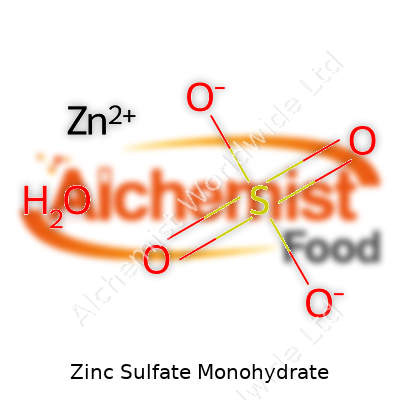
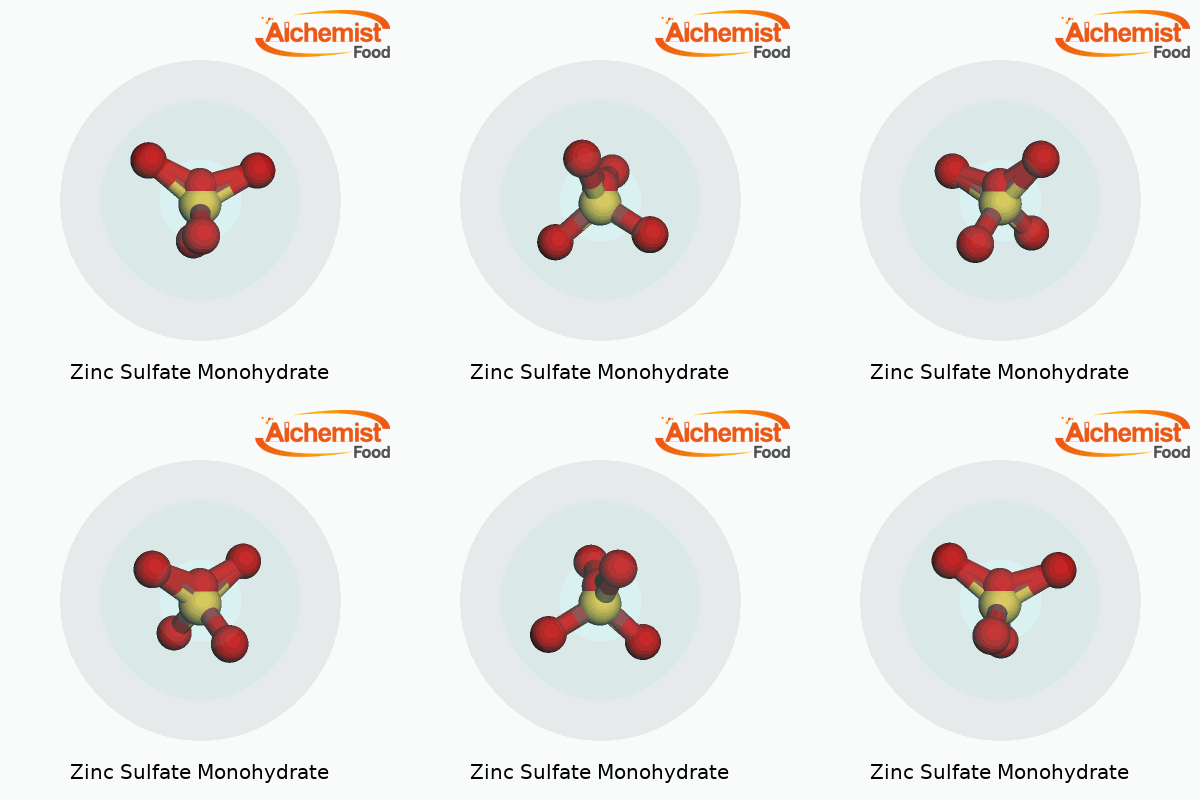
| Names | |
| Preferred IUPAC name | zinc sulfate monohydrate |
| Other names |
Zinc(II) sulfate monohydrate Zinc sulphate monohydrate Zinc vitriol White vitriol Zinc monosulfate monohydrate |
| Pronunciation | /ˈzɪŋk ˈsʌl.feɪt ˌmɒn.oʊˈhaɪ.dreɪt/ |
| Preferred IUPAC name | zinc sulfate monohydrate |
| Other names |
Zinc(II) sulfate monohydrate Zinc sulphate monohydrate Sulfuric acid, zinc(2+) salt (1:1), monohydrate White vitriol monohydrate |
| Pronunciation | /ˈzɪŋk ˌsʌl.feɪt ˌmɒn.oʊˈhaɪ.dreɪt/ |
| Identifiers | |
| CAS Number | 7446-19-7 |
| Beilstein Reference | 355558 |
| ChEBI | CHEBI:131144 |
| ChEMBL | CHEMBL1201538 |
| ChemSpider | 23314875 |
| DrugBank | DB09322 |
| ECHA InfoCard | 03bba52f-7eb8-41d0-87c7-cf0bf64fbc17 |
| EC Number | 231-793-3 |
| Gmelin Reference | 77882 |
| KEGG | C00295 |
| MeSH | D015936 |
| PubChem CID | 25109 |
| RTECS number | ZH5300000 |
| UNII | N7WR7L6V39 |
| UN number | “UN3077” |
| CAS Number | 7446-19-7 |
| Beilstein Reference | 3920131 |
| ChEBI | CHEBI:131186 |
| ChEMBL | CHEMBL1200847 |
| ChemSpider | 86505333 |
| DrugBank | DB09322 |
| ECHA InfoCard | 03aa97ba-9323-498c-9b7d-996bfc60ae01 |
| EC Number | 231-793-3 |
| Gmelin Reference | 84028 |
| KEGG | C00606 |
| MeSH | D015547 |
| PubChem CID | 25193765 |
| RTECS number | ZH5300000 |
| UNII | N7D6J3J675 |
| UN number | UN3077 |
| Properties | |
| Chemical formula | ZnSO4·H2O |
| Molar mass | 179.47 g/mol |
| Appearance | White powder |
| Odor | Odorless |
| Density | 3.28 g/cm3 |
| Solubility in water | 960 g/L (20 °C) |
| log P | -4.2 |
| Vapor pressure | Negligible |
| Acidity (pKa) | 6.4 |
| Basicity (pKb) | 7.7 |
| Magnetic susceptibility (χ) | -5.2·10⁻⁶ cm³/mol |
| Dipole moment | 0.0 D |
| Chemical formula | ZnSO4·H2O |
| Molar mass | 179.47 g/mol |
| Appearance | White powder |
| Odor | Odorless |
| Density | 3.28 g/cm³ |
| Solubility in water | 960 g/L (20 °C) |
| log P | -4.2 |
| Vapor pressure | Negligible |
| Acidity (pKa) | 6.4 |
| Basicity (pKb) | 11.3 |
| Magnetic susceptibility (χ) | '−1.2×10⁻⁶ cm³/mol' |
| Dipole moment | 0 D |
| Thermochemistry | |
| Std molar entropy (S⦵298) | 207.1 J·mol⁻¹·K⁻¹ |
| Std enthalpy of formation (ΔfH⦵298) | -1285.3 kJ/mol |
| Std enthalpy of combustion (ΔcH⦵298) | -1050.7 kJ/mol |
| Std molar entropy (S⦵298) | 206.0 J·mol⁻¹·K⁻¹ |
| Std enthalpy of formation (ΔfH⦵298) | -1320.0 kJ/mol |
| Std enthalpy of combustion (ΔcH⦵298) | -204.1 kJ/mol |
| Pharmacology | |
| ATC code | A12CB01 |
| ATC code | A12CB01 |
| Hazards | |
| Main hazards | Harmful if swallowed, causes serious eye irritation, may cause respiratory irritation. |
| GHS labelling | GHS07, GHS09 |
| Pictograms | GHS05,GHS07 |
| Signal word | Warning |
| Hazard statements | H302: Harmful if swallowed. |
| Precautionary statements | P264, P270, P301+P312, P330, P501 |
| NFPA 704 (fire diamond) | 2-0-1 |
| Lethal dose or concentration | LD50 Oral Rat: 2,150 mg/kg |
| LD50 (median dose) | 2150 mg/kg (Rat, oral) |
| PEL (Permissible) | PEL (Permissible Exposure Limit) for Zinc Sulfate Monohydrate is "15 mg/m³ (total dust), 5 mg/m³ (respirable fraction) |
| REL (Recommended) | 30 mg |
| Main hazards | Harmful if swallowed. Causes serious eye damage. Causes skin irritation. May cause respiratory irritation. |
| GHS labelling | GHS05, GHS07 |
| Pictograms | GHS05 |
| Signal word | Warning |
| Hazard statements | Hazard statements: Causes serious eye irritation. |
| Precautionary statements | P264, P270, P301+P312, P330, P501 |
| NFPA 704 (fire diamond) | 2-1-0 |
| Explosive limits | Non-explosive |
| Lethal dose or concentration | LD50 Oral - rat - 2,150 mg/kg |
| LD50 (median dose) | 2150 mg/kg (rat, oral) |
| NIOSH | ZH4812500 |
| PEL (Permissible) | PEL (Permissible Exposure Limit) for Zinc Sulfate Monohydrate: 15 mg/m³ (total dust), 5 mg/m³ (respirable fraction) |
| REL (Recommended) | 30 mg |
| IDLH (Immediate danger) | Not listed |
| Related compounds | |
| Related compounds |
Zinc sulfate Zinc sulfate heptahydrate Zinc sulfate hexahydrate Zinc chloride Zinc acetate Zinc nitrate |
| Related compounds |
Zinc sulfate (anhydrous) Zinc sulfate heptahydrate Zinc acetate Zinc chloride Magnesium sulfate Copper sulfate Iron sulfate Manganese sulfate |



