Zinc Sulfate Heptahydrate: A Closer Look at Its Role and Future
Historical Development
Zinc sulfate heptahydrate shows up in history books long before the chemical industry got formal. Alchemists recognized zinc compounds while dissolving ores in the Middle Ages, and by the 18th century, manufacturers tapped into the value of zinc for agriculture and medicine. Production shifted from extracting from natural mineral deposits to synthesizing the heptahydrate from zinc ore more reliably, solving issues with inconsistent purity. Factories scaled up during the industrial revolution, responding to rising interest in fertilizers and chemical treatments. By the 20th century, research steered production toward highly controlled processes, ensuring steady supply and predictable results for farmers, veterinarians, and manufacturers. Today, the material stays well established due to its mix of effectiveness and practical handling.
Product Overview
Zinc sulfate heptahydrate, known by many as simply "zinc sulfate," offers zinc in a form that dissolves easily in water, making it practical for use in agriculture and industry alike. It shows up as transparent, white crystals, packing a reliable dose of zinc for everything from soil treatment to food fortification. Its role as a micronutrient unlocks potential in crops and livestock where soils fall short. Each bag or drum brings consistency, supporting global food production and countless industrial processes. That steady supply chain holds value for development projects and research teams focused on nutrition and sustainability.
Physical & Chemical Properties
The heptahydrate form of zinc sulfate stands out due to its crystalline appearance, melting at temperatures just above 100°C once it starts to lose water molecules. With a molecular formula of ZnSO₄·7H₂O, the chemical contains about 22% zinc by weight. Its solubility in water means quick mixing in agricultural applications, leaving little residue. The compound carries no significant smell and won’t volatilize at room temperature, simplifying storage and usage. Exposure to air causes gradual dehydration, a property that operators notice every time storage isn’t airtight. Its relatively low toxicity compared to other heavy metals keeps risk lower when used as directed, though large doses carry risks anytime.
Technical Specifications & Labeling
Labels on commercial zinc sulfate heptahydrate call out minimum zinc content, usually above 21% Zn, and note the presence of water of crystallization. For laboratory or pharmaceutical preparations, standards require tighter limits on impurities, with lead, cadmium, and arsenic measured in tiny fractions. Particle size matters in fertilizer applications and each bag needs a clear batch code for traceability in the field. Packaging carries hazard symbols thanks to its irritant properties, and instructions for disposal make sure it stays out of the water table in excessive doses. The push for sustainable sourcing grows with demands from global supply chains, so clear labeling increasingly reflects best practices as well as legal mandates.
Preparation Method
The most common method of preparing zinc sulfate heptahydrate starts by reacting zinc oxide or zinc metal with sulfuric acid. In industry settings, this reaction happens in a controlled vessel where temperature and acid concentration smooth out the crystallization of the heptahydrate form. After cooling, the solution yields dense, plate-like crystals ready for separation and drying. Factories recycle by-products into other streams to cut waste. Upstream sourcing of zinc ore and acid controls purity, so producers regularly monitor input quality. Older approaches took longer and allowed more contamination; today’s processes keep results cleaner and environmental releases lower.
Chemical Reactions & Modifications
Zinc sulfate heptahydrate’s chemical nature keeps it stable around neutral pH but reactivity ramps up with acids or bases. Adding alkali produces zinc hydroxide, a staple in pigment and catalyst production. Gentle heating drives off water, yielding lower hydrates or anhydrous zinc sulfate. In the lab, this dehydration showcases how crystal water stabilizes the compound at everyday conditions. Aqueous zinc sulfate stands as a versatile starting point for synthesizing other zinc salts and organometallic compounds, supporting a wide range of research and industrial processes. Its compatibility with many other nutrients supports mixture with phosphates, nitrates, and urea without risk of unexpected side-reactions under normal storage.
Synonyms & Product Names
In catalogs and on drums, zinc sulfate heptahydrate often appears as white vitriol. Other names such as zinc sulphate (British spelling) or seven-water zinc sulfate pop up depending on region. Chemical databases reference it as CAS 7446-20-0. Regulatory and supply chain paperwork list various translations—"Sulfato de cinc heptahidratado" in Spanish or "Sulfate de zinc heptahydraté" in French. For end-users, these alternates matter when searching regulatory registrations or verifying product purity before shipment. Common pharmaceutical and agricultural grades each come with their own trade names tailored to their target sectors.
Safety & Operational Standards
Beyond its usefulness, zinc sulfate heptahydrate requires proper handling. While not highly toxic, dust can cause irritation to the eyes, skin, and lungs. Protective gloves and goggles are routine for anyone working with the powder at scale. Spills pose slip hazards and must stay out of rivers and lakes due to toxicity to aquatic life at higher concentrations. EU REACH and US OSHA guidelines call for safe limits in workplace air and restrict hand-to-mouth contact. First-aid procedures recommend thorough rinsing after exposure. Regular auditing of handling practices keeps compliance high and accidents rare. Container integrity matters—any breech exposes workers and product to moisture loss or unintended reactions.
Application Area
Farmers and agronomists know zinc sulfate heptahydrate for its power to reverse and prevent crop deficiencies. Zinc-deficient soils—the kind found in wide swathes of Asia and Africa—yield stunted plants unable to reach their potential. Regular application of water-soluble zinc sulfate revives growth, bringing food plants back toward healthy yields. Livestock producers add it to animal feeds for growth and immune function. In public health, zinc sulfate shows up in supplements and oral rehydration salts, especially vital for children in low-income countries. Chemical manufacturers draw on it for making rayon, dyes, and electrolytes. Its presence in pyrotechnics and flame retardants underscores how one product threads into both basic nutrition and modern industry. Each bag that enters a supply chain supports food security or critical manufacturing.
Research & Development
Current research explores novel application methods that limit runoff and enhance uptake in challenging soil conditions. Teams test microgranules and chelated zinc preparations alongside classic forms for better results in marginal fields. In medical research, controlled-release tablets and new formulations aim for improved efficacy against diarrheal diseases and certain deficiencies. Analytical chemists refine rapid test kits to measure soil and tissue zinc levels, closing feedback loops for tailored fertilization. In environmental science, researchers monitor zinc cycling and long-term impacts of repeated use, searching for clues to optimal use without harm to ecosystems. Collaboration between universities, governments, and companies continues to unlock new roles for zinc sulfate, especially as the pressure to boost food production grows.
Toxicity Research
Toxicity research into zinc sulfate heptahydrate draws a line between useful dose and hazard. Studies confirm that, for humans and animals, exposure at levels seen in fortified foods and supplements stays well within safe boundaries. Problems show up with accidental ingestion of large quantities or chronic overuse in industrial settings, leading to gastrointestinal symptoms and disruptions in copper metabolism. Environmental studies raise concern when runoff from farms concentrates zinc in water bodies, impacting aquatic life. Regulatory bodies worldwide set clear limits for occupational exposure and maximum allowable concentrations in water. Continuous review of real-world outcomes shapes these rules, driving product stewardship and responsible usage.
Future Prospects
Zinc sulfate heptahydrate finds itself in the spotlight as global agriculture adapts to shifting soil health and food security demands. Precision farming tools promise to match application with exact crop needs, reducing waste and protecting the environment. In manufacturing, trends toward greener chemistry spark efforts to recycle zinc-rich wastes into new batches, lowering resource pressure. Ongoing development of specialty formulations and custom blends targets both large agribusiness and smallholder farmers, increasing access and impact. Public health programs continue to rely on zinc supplementation, and advocacy grows for wider adoption in regions where childhood deficiencies trouble development. As research expands, smart use of zinc sulfate shapes how communities and industries address future challenges in nutrition, sustainability, and responsible resource use.
What is Zinc Sulfate Heptahydrate used for?
Why Does Anyone Care About Zinc Sulfate Heptahydrate?
Walk into any farming supply store or glance at the ingredient list of certain supplements, and this chemical pops up. It looks like a tongue-twister but boils down to a pretty familiar concept: providing zinc, a mineral our lives quietly depend on. Our bodies and our crops both crave zinc, so this substance quietly supports practical needs right on the ground.
Farming Needs More than Sunshine
Corn, rice, and wheat often struggle in soils with almost zero zinc. Farmers in those regions notice their plants look sickly, grow slowly, or don’t yield as much come harvest. Zinc sulfate heptahydrate steps in as a reliable fertilizer additive. By offering a dose of zinc, it helps plants develop sturdy roots, healthier leaves, and better grain. This isn’t just about boosting a bottom line. Weak harvests translate directly into less food, especially where diets lean heavily on homegrown grains and vegetables.
An interesting point: according to the Food and Agriculture Organization, over 50 percent of soils in some countries lack enough zinc. Without action, families may find their meals missing vital nutrients. In my own experience growing backyard tomatoes, giving the soil a small amount of zinc made leaves darker and fruits more flavorful. Multiply that difference by a million acres—suddenly the stakes rise.
Keeping Animals Healthy
Raise livestock, and you see another side to this. Pigs, chickens, and cattle all need a steady supply of zinc to support immune systems, skin, hooves, and bones. A zinc deficiency doesn’t just hit animal health; it can mean less productive flocks, more illness, and extra costs at the vet. Feed manufacturers mix zinc sulfate heptahydrate into rations to keep herds strong and productive.
Science backs up the benefit. The National Research Council points to improvements in feed efficiency and animal wellbeing with regular zinc in the mix. Farms that make the switch often see fewer cases of foot rot, better milk yields, and quicker growth rates.
Beyond the Field and Farm
What about people? Human bodies need zinc to keep the immune system alert, skin in good repair, and wounds healing. Doctors prescribe zinc sulfate heptahydrate to help folks fighting off colds, treating zinc deficiency, or managing certain digestive disorders. For patients who can’t absorb enough zinc from food, supplements make a real difference. Zinc also takes an important place in IV therapies for people with burns or severe injuries.
Every pharmacy stocks tablets, syrups, and even some topical creams with this compound. In parts of the world where zinc-poor diets are common, giving young children zinc sulfate during bouts of diarrhea saves lives. The World Health Organization even lists it as an essential medicine for this reason.
Everyday Uses and New Directions
Walk past a water purification plant or a textile mill, and you may spot huge sacks of the stuff stacked against the walls. Zinc sulfate heptahydrate helps remove impurities in water and plays a part in dyeing fabrics. Its use in chemical labs and as an electrolyte in batteries keeps quietly powering industry and research.
Solutions aren’t always high-tech. Teaching farmers how to spot zinc deficiency or encouraging schools to include supplements in meals builds stronger communities. Investing in soil testing and supporting crop variety development also go a long way. Real change always comes back to humble minerals like this, proving small things deliver big results.
Is Zinc Sulfate Heptahydrate safe for human consumption?
What Is Zinc Sulfate Heptahydrate?
Zinc sulfate heptahydrate pops up on labels for plant fertilizers, animal feed, and sometimes dietary supplements. It’s basically zinc, a mineral everybody’s body needs, teamed up with water molecules. For humans, zinc isn’t just a nice mineral—it’s essential. Our immune systems, skin, eyesight, and sense of taste all rely on it.
Applications in Food and Supplements
I remember growing up taking multivitamins when my diet slacked. Most zinc supplements you’ll buy at the pharmacy use this compound or something close to it. The U.S. Food and Drug Administration recognizes zinc sulfate as “generally recognized as safe” (GRAS) when used in small doses related to dietary supplements or food fortification. In simple language, experts agree it’s safe at the amount your body needs daily—11 mg for adult men and 8 mg for adult women according to the National Institutes of Health.
How the Body Handles Zinc Sulfate Heptahydrate
People absorb zinc sulfate heptahydrate in about the same way as other common zinc compounds. The body breaks it down in the stomach, grabs the zinc, and flushes out the rest. If you’re thinking about toxicity, the numbers can help. The recommended upper daily intake is 40 mg for adults. Staying under this cap keeps you in the safe zone and steers clear of side effects like nausea, stomach cramps, or a metallic taste. Big doses, way over the top, can knock off your copper balance and weaken your immune response.
Risks and Regulatory Oversight
The big risks show up at high exposure—which isn’t going to happen with a regular diet or a typical supplement. Most cases of zinc poisoning pop up when people take handfuls of high-dose tablets or work in industrial settings where dust or powder goes airborne. The Environmental Protection Agency and Occupational Safety and Health Administration set high standards for what’s safe in air and water. These are way above what anyone would get from food or supplements. But keep medicine cabinets out of reach of kids, because young ones could get sick swallowing adult-strength mineral pills.
Consumer Tips
I check my labels and keep in mind how much I’m really getting from everything I eat. Processed breakfast cereals often come fortified, and multivitamins have plenty, so piling on another supplement could push you past safe levels. If you follow a special diet that keeps you away from zinc-rich foods—like red meat, beans, or whole grains—your doctor might recommend supplementation anyway. Vegans and vegetarians may sometimes need a little extra due to plant-based diets affecting absorption.
Smart Solutions for Safe Use
Manufacturers can tighten safety by sticking with regulated dosages, clear labeling, and third-party testing. As a shopper, I pay attention to supplement certifications from outfits like the United States Pharmacopeia. Health professionals can help people decide if they genuinely need extra zinc or if their regular diet does the trick. Consistent testing and education at every level, from farm to pharmacy to kitchen table, help keep mistakes in check.
Takeaway
Zinc sulfate heptahydrate stands out as a safe source of dietary zinc, used responsibly. The problem creeps in only when doses jump way past what the body can handle. Smart labeling, education, and respecting serving sizes set everybody up for success with this essential mineral.
How should Zinc Sulfate Heptahydrate be stored?
Why Storage Choices Matter
Families rely on farms for healthy food, and farmers rely on fertilizers and supplements to keep crops strong. Zinc sulfate heptahydrate sits in the middle of this chain—a common feed and crop additive because it offers an affordable way to deliver zinc. Too much heat or moisture, though, turns it lumpy or sends it dissolving into the air. Nobody wants spoiled product or wasted money.
Understanding What You’re Dealing With
Zinc sulfate heptahydrate looks like colorless crystals or a white powder, and it picks up water from the air easily. Back in my university lab days, I saw what happens when someone left a bag untied. In just a week, it clumped so tight you needed a hammer to break it up. Without careful storage, those crystals start to stick together or break down, changing how they dissolve and mix. This can upset a feed mix or mess up a batch of fertilizer.
Simple Steps to Protect Your Investment
A cool, dry spot always seems to work best. Every farm has that forgotten shed corner—use that, but check for leaks or condensation. Moisture is a real enemy. Dew or rain blowing inside a shed spells trouble. Humidity creeps in, so try putting up a shelf rather than leaving bags on the ground where water pools after a heavy storm.
Plastic bins with lids also help. I’ve stored all sorts of supplements this way, from salt to trace minerals. Bags break or rip open easily, and with kids or pets around, you want something sturdy. Plus, storing zinc sulfate away from feed stops accidental mix-ups. If big bins aren’t handy, double-bag and tie tightly—one farmer I know uses old fertilizer sacks for an extra layer.
Watch What It Stays Near
Chemicals act up when stored near strong acids or bases. Zinc sulfate heptahydrate falls apart faster if it mingles with things like lime, or material with ammonia in it. This isn’t about chemical theory—it’s something I’ve seen firsthand with tightly packed supply rooms where buckets get shoved together and lids pop open.
Keep it away from direct sun. Sunlight heats up those crystals, sweating out water and caking up the product. Shade offers some protection in an open warehouse. Wall-mounted thermometers are handy for keeping an eye on temperatures year-round.
Staying Safe in Everyday Use
It’s tempting to skip gloves, but the powder irritates skin. Avoid breathing it in, too—dust masks work, especially in dusty barns or feed rooms. I always told new workers to put on goggles, since an eye splash brings a burning sting.
Don’t eat, drink, or smoke where you handle the powder. I saw a worker once set his lunch next to open bags, and someone nearly grabbed a sandwich coated in white dust. It sounds like common sense, but busy days make folks forget.
Handling Spills and Clean-Ups
Even careful hands spill things. Get out the broom and dustpan instead of sweeping with your boots, and toss anything contaminated with the chemical in a sturdy trash bag, not the regular garbage. In muddy spots, shovel up the top layer of soil. Failing to clean up right leads to residues in soil or water, which can harm plants and fish if it builds up.
Storing Right Makes a Difference
Looking after zinc sulfate heptahydrate boils down to respecting its chemistry and using plain sense. Smart storage protects not just the investment, but also workers, animals, and the land itself. That’s how communities keep farms thriving for another season.
What is the recommended dosage of Zinc Sulfate Heptahydrate?
Zinc and Its Role in Everyday Health
Zinc plays a quiet but crucial part in the daily workings of the human body. Without enough zinc, people start seeing signs such as slow wound healing, more infections than usual, or struggles with growth and learning in kids. Zinc sulfate heptahydrate offers a way to fill the gaps when diets fall short. This form gives a measured and consistent release of zinc, making it a trusted choice in both health products and agriculture.
Recommended Dosage: What Health Experts Say
Reliable sources like the National Institutes of Health set guidelines to stay safe. For adults, the general recommended dietary allowance sits around 8 mg per day for women and 11 mg per day for men — this refers to elemental zinc and not the total compound weight. Zinc sulfate heptahydrate tablets usually contain 220 mg, which delivers about 50 mg of elemental zinc. That dose works as a therapeutic amount, not a daily maintenance one.
Daily supplements should not exceed 40 mg of elemental zinc for adults unless advised by a medical professional. Kids need much less: toddlers need less than half the adult dose, and teens fall somewhere in the middle. Pregnant and breastfeeding women might need extra zinc, but always under medical supervision.
Risks From Too Much Zinc
Some folks think if a little is good, more must be better. That simply leads to trouble. Taking too much zinc for too long upsets the balance of other trace minerals, like copper or iron. Side effects pop up fast with high doses: nausea, stomach cramps, loss of appetite, or headaches. The immune system actually works worse if someone keeps topping up far beyond recommendations.
I’ve seen friends use high-dose zinc in a rush during flu season, only to battle heartburn and metallic taste in the mouth for days. Emergency rooms sometimes see people with severe supplement overdoses—this isn’t a rare scare. Sticking to the suggested dose always pays off.
Checking Your Real Zinc Needs
Popping pills without cause brings little reward. Most balanced diets cover zinc requirements just fine, with foods like beef, chickpeas, peanuts, or pumpkin seeds filling in the gaps. Doctors sometimes recommend zinc sulfate heptahydrate for folks with diagnosed deficiencies, certain digestive conditions, or after surgery to help with healing.
Before grabbing a supplement bottle, a simple blood test tells the whole story. Medical professionals look out for signs of deficiency before suggesting extra zinc. This keeps everyone safe from side effects and helps treat the cause, not just the symptoms.
Getting the Dose Right
For those with a clear diagnosis, following doctor’s orders gives the best shot at healing without risk. Keep an eye on the product label and make sure to calculate the dose as elemental zinc rather than compound weight. Pharmacy staff and registered dietitians offer great advice if the math seems tricky.
Careful attention to dosage and listening to health professionals protects both long-term health and the purse strings. It’s easy to get swept up by marketing or internet trends, but facts and experience keep us grounded.
Are there any side effects of using Zinc Sulfate Heptahydrate?
The Good Zinc Brings—and The Risks It Carries
Zinc sulfate heptahydrate turns up in everything from animal feed to dietary supplements. Part of its appeal comes from the basic human need for zinc. Our immune systems, skin, senses of taste and smell all count on enough of it. Farmers use it to prevent deficiencies in livestock. Gardeners sprinkle it to boost yields. Some folks take it hoping to kick a cold a bit quicker.
Side effects matter, though, because “essential” doesn’t always mean “safe at any dose.” I’ve seen everyday people scoop up mineral supplements at pharmacies without much thought, thinking more must be better. That easy access can mask risks—especially in folks with underlying health problems like kidney disease or in children.
Common Junk: Upset Stomachs and the Rest
Pop a supplement or swallow a solution with a big dose of zinc sulfate, and you might feel nauseous. Stomach pain, vomiting, even diarrhea can follow. I found out the hard way with one multivitamin—my stomach flipped halfway to work. These stomach troubles show up most often if someone swallows zinc on an empty belly or takes too much. The taste doesn’t help either; zinc sulfate has a sharp, metallic tang that clings to the tongue and throat.
Throat irritation comes up as well. Gargling, using zinc sulfate drops, or even working with the dust for long stretches on a farm can burn a bit. Industrial workers sometimes report headaches, coughing, and feeling weak.
More Serious, Less Common Risks
Large amounts over time wear on the kidneys. Zinc pushes out copper, a mineral we also need. If copper drops too low, anemia and nerve problems creep in—numbness, tingling, fatigue. People with kidney disease or kids, who take smaller doses to see bigger changes, face higher risks. The U.S. National Institutes of Health sets 40 mg per day as an upper limit for adults; kids need much less.
Breathing zinc sulfate dust on the job brings “metal fume fever.” Fevers, chills, and short-term flu symptoms pop up after inhaling fine particles—ask welders. Most shake it in a day or two, but these cases hit hard at once and can push folks into the hospital.
Staying Smart with Zinc
Most healthy people eating a balanced diet rarely need more zinc on top. Food brings enough: beef, shellfish, beans, nuts, fortified cereals. Doctors jump in with supplements when someone shows clear signs of deficiency or has a special case like Wilson’s disease, where balancing copper and zinc matters.
If a doctor does recommend zinc sulfate heptahydrate or you handle it at work, a few habits help: avoid taking it on an empty stomach, ask about any drug interactions, and use gloves or respiratory masks around powders and liquids. At the pharmacy or hardware store, reading the label closely keeps people from going overboard. Long-term, blood tests can catch problems early, especially drops in copper.
Zinc can help, but more isn’t always better. Asking medical pros before starting or continuing a supplement makes sense. Sticking close to the daily recommended value—and remembering that every pill or powder holds real power—sets people up for safer results.
What is Zinc Sulfate Heptahydrate used for?
Essential for Health and Agriculture
Zinc sulfate heptahydrate shows up in many corners of daily life, though most folks probably don’t see it working. It plays a major role in agriculture and nutritional health. Farmers often apply it directly to soil or blend it into fertilizers because many crops, like corn and wheat, struggle with stunted growth or faded leaves if the ground doesn’t carry enough zinc. Plants pull zinc from the ground to make enzymes that drive important steps like protein creation and energy production. When crops falter, yields drop, and food security takes a hit. By giving plants a boost, zinc sulfate heptahydrate keeps fields productive and helps put food on tables.
Livestock can’t be overlooked either. Cows, sheep, and poultry need ample zinc in their diets to avoid slow growth, poor feathering or skin problems. Feed makers add zinc sulfate heptahydrate to ensure herds and flocks get their share. Without it, animal health costs rise, and farmers struggle to maintain herd productivity.
Supporting Human Nutrition
Zinc ranks as an essential trace element in the human diet. It keeps the immune system sharp and helps wounds heal. People living on grain-heavy diets or in regions with zinc-poor soils sometimes face deficiencies. Doctors and nutrition brands turn to zinc sulfate heptahydrate to produce supplements and oral solutions, especially for children who need extra support. The World Health Organization lists zinc supplements among its essential medicines, using them to help treat diarrhea and boost recovery in young children. Supplementing zinc can clearly save lives and brighten futures, especially where malnutrition still hurts communities.
Water Treatment and Industrial Uses
Beyond farms and nutrition, industries put zinc sulfate heptahydrate to work cleaning water. Cities and factories use it as a coagulant to remove impurities and keep drinking supplies safe. Factories making rayon fabric use it in textile production lines. The compound shows up in electroplating, too, where it helps protect metals from corrosion and wear. Zinc alloys resist rust and extend the lifespan of steel structures. These practical uses happen behind the scenes, but public health and industry both benefit.
Risks and Responsible Handling
Chemicals like zinc sulfate heptahydrate demand careful management. Spills or careless use can harm waterways and disrupt local ecosystems. Too much zinc in soil may hold back plant growth or leach into rivers, causing trouble for fish and aquatic life. Workers exposed to dust or concentrated solutions need solid training and decent protective equipment. Regulations already encourage safe handling, and further investment in training and monitoring would help cut accidents.
Looking Forward: Supply and Sustainability
Farmers depend on dependable sources. So do medical workers and water treatment plants. Reliable and responsible supply chains matter, from the mines producing zinc upstream to the blending facilities that mix chemicals at the very end. Tightening the loops between production, safe application, and recycling stands out as a smart move. Lowering waste and runoff will help both profits and the planet.
Conclusion
A seemingly simple chemical like zinc sulfate heptahydrate quietly supports global food, health, and industry. By paying close attention to quality, training, and sustainability, we can use its benefits wisely, without risking future health or resources.
How should Zinc Sulfate Heptahydrate be stored?
The Real-World Importance of Safe Zinc Sulfate Storage
Most people barely give a thought to how chemicals like zinc sulfate heptahydrate are stored until something goes wrong. I remember a neighbor who kept his garden additives in a shed with a leaky roof. The bag of zinc sulfate soaked up enough rainwater over the season that he found a blue puddle instead of a solid powder. Not only did he lose his product, but he also ended up with damaged tools, ruined floors, and a bigger clean-up job than expected.
Zinc sulfate heptahydrate pulls in moisture from the air. This stuff loves water. Given enough humidity, the crystals turn sloppy and clump together, creating a mess straight out of a chemistry horror story. Proper storage isn’t just a chemistry rule — it’s about saving money, avoiding contamination, and keeping accidents off your weekend to-do list.
Keep It Dry, Keep It Clean
The biggest factor? Moisture. If the air in your area feels sticky or your basement sweats in the summer, zinc sulfate doesn’t stand a chance. Sealed, airtight containers give real protection. I’ve seen people use old paint buckets with rubber gaskets or even glass jars for smaller amounts. The idea is simple: keep the crystals away from damp air. Food-grade plastic or hard-sided containers work better than thin bags that rip or leak powder with just one careless move.
Don’t use stacks of torn bags or recycled boxes in a humid garage. All it takes is a rainy week and you risk more than just a ruined batch—you might face accidental spills, skin contact, or even problems for pets and kids who get curious.
Room Temperature Rule
Heat speeds up changes in any chemical, and zinc sulfate is no exception. Storage spaces should stay cool, away from direct sunlight, radiators, or old water heaters. In my experience, organizing chemicals on sturdy shelves in a cool corner saves a lot of headaches. Don’t crowd it in with pool chemicals, acids, or weed killers — some powders, when mixed by mistake, can give off fumes or cause other reactions. A garage shelf, storage cabinet, or even a lockable closet works if it’s dry and cool.
Labeling Isn’t Optional
For anyone with a busy household, clear labeling can prevent guesswork and accidents. I can’t count the number of times I’ve visited workshops with jars full of mystery powders. Slap a clear label with the name, purchase date, and hazard info on every container. White electrical tape and a permanent marker do the trick if you don’t want to fuss with a label maker. Legibility can stop someone from grabbing the wrong product and using it in the wrong spot.
Small Steps, Big Impact
Good storage also means keeping an eye out for chemical leaks and checking lids once in a while. If liquid seeps out or the color changes, the batch deserves a closer look. Some folks use moisture-absorbing packets inside containers, which helps stretch the shelf-life. Always wash your hands after handling, even if you wore gloves.
Protecting Your Investment — And Health
Chemicals aren’t just a line in a budget. They shape plant health, animal welfare, and personal safety. Following a few tried-and-true storage habits, you keep zinc sulfate working at peak performance. No wasted money, surprise spills, or unnecessary risks — just a simple, reliable approach that makes life a bit less complicated.
Is Zinc Sulfate Heptahydrate safe to handle?
Understanding the Chemical
Zinc sulfate heptahydrate shows up across industries. From agriculture, where it helps boost crop yields, to animal feeds, to its niche in medical products treating zinc deficiency, it shows up in places many folks never consider. Safety questions matter here because the compound can leave its mark on people who aren’t careful. Most people who handle it regularly—say, farmers dusting their fields or workers stocking fertilizer sacks—never think twice about its chemical makeup. But anyone dumping a bag of it into a mixer will tell you: that fine powder gets everywhere, and not in a good way.
Health and Handling Risks
Eye irritation kicks in quickly for unprotected users. A light breeze and suddenly you’re blinking and tearing up. Skin contact rarely feels dangerous, but after hours, rashes sometimes show up, especially if sweat pools under gloves. If someone ends up breathing in clouds of the dust, coughing and throat tightness become a real problem. Swallow even a small amount, and stomach issues soon remind you that these crystals belong out of your food. Too much exposure could set off headaches, nausea, or worse, especially in poorly ventilated sheds. NIOSH points out that zinc sulfate dust acts as a mild irritant, urging anyone handling large quantities to seriously respect gloves, goggles, and masks.
Facts Backing Safety Measures
The Centers for Disease Control stack their fact sheets with plenty of reasons to take the stuff seriously. Chronic exposure has associations with metal fume fever, a condition familiar to welders. Factory workers in zinc processing plants sometimes report respiratory irritation and minor skin conditions. That isn’t hype—it’s linked to actual data collected from workplace cases over decades. There’s no widespread evidence of devastating long-term harm from low-level exposure, but accident reports show mishandling can ruin a day and sometimes trigger emergency room visits.
Label warnings on any commercial-grade bag of zinc sulfate tell the same story: avoid breathing the dust, protect your eyes, wash your hands afterward. Agricultural workers often keep a jug of water nearby, more out of habit than science, but it helps. I’ve seen people wear respirators in poorly ventilated barns because the cloud from spreading fertilizer gets thick and gritty. Few people want to spend an afternoon coughing or scratching at their arms. Safety officers at chemical warehouses count on protective gear as insurance, not just protocol. No one there wants to end up logged in an injury report.
Solutions For Safer Handling
Practical safety steps make all the difference. Gloves and goggles stand as the first line of defense. Nitrile or rubber gloves block direct contact. Tight-fitting goggles or face shields guard against splashes and stray dust. Disposable masks or half-face respirators with P100 filters take care of dust inhalation. Ventilation makes a huge difference in sheds and barns where the powder gets dumped or mixed. I’ve seen workers pressure test their gear before starting, a habit learned after one bad afternoon where masks failed and coughs lingered for days.
Some people rinse off with water stations after finishing a shift, and that simple ritual cuts down risk. Storing zinc sulfate away from strong acids stops accidental reactions and potential releases of sulfuric acid, which crank up the hazards. Staff training helps the most. Nobody wants rookie mistakes, so the best-run operations drill everyone on safe handling. Farmers and warehouse staff swap stories about near misses, and those stories teach folks far more than a warning label can. Following best practices keeps zinc sulfate heptahydrate from becoming more than just another job to finish.
What is the chemical formula of Zinc Sulfate Heptahydrate?
Understanding Its Chemical Formula
Zinc Sulfate Heptahydrate carries the chemical formula ZnSO4·7H2O. Hidden inside these symbols is a story that connects the lab bench to agriculture, medicine, and water purification. Science class once made it look like a simple combination of zinc, sulfur, oxygen, and water. In practice, those seven molecules of water—“heptahydrate”—make it a very different substance than plain zinc sulfate. Water locks into the crystal, forming pale blue crystals that dissolve easily and deliver zinc ions where humans, animals, or crops desperately need them.
The Vital Role of Zinc in Life and Industry
Zinc on its own helps drive over 300 enzymes in the human body, supports immune defense, and plays a hand in wound healing. Zinc sulfate supplies a form of zinc the body can absorb. For people who deal with zinc deficiency, doctors often lean on this very compound. Over-the-counter vitamins and prescription supplements often use ZnSO4·7H2O for this reason. Hospitals in developing regions choose it for treating acute diarrhea in children, as the World Health Organization recommends.
On farms, zinc sulfate heptahydrate supports plant health. Soils often run low on zinc, a micronutrient crops depend on for growth, seed development, and resistance to disease. Modern farming strips out micronutrients faster than nature can replace them. Over years in gardening, stunted and yellowed leaves often point me toward using a micronutrient fertilizer that contains zinc. Marrying chemistry with practical needs keeps fields green and people fed.
From Lab Shelf to Water Treatment Plant
Many folks don't realize that water treatment plants use ZnSO4·7H2O to manage algal blooms or limit heavy metal contamination. Zinc salts can clarify water and help settle impurities that would otherwise flow straight into the tap. Working a summer internship at a rural water plant drove home for me how the right dose of a chemical protects public health. It is crucial for operators to measure out just the right amount, balancing benefits with environmental safety.
Safety and Environmental Issues
It’s easy to see the upside of such a versatile chemical, but it deserves respect. Excess application—especially as fertilizer or supplement—brings risk. High doses of zinc in soil or water can upset local ecosystems, harming fish or beneficial bacteria. Too much zinc in the body causes nausea and throws off the absorption of other nutrients. This isn't only about science—it’s about care. The right amount helps; too much hurts.
Responsible sourcing matters as much as safe use. Chemical factories that manufacture ZnSO4·7H2O must manage byproducts and emissions; what washes out ashore or enters water tables affects both wildlife and communities. Regulators should set tighter standards on waste management and support better recycling technology. For everyday users, reading product labels and following guidelines does more good than pushing for “more is better.”
Looking Ahead
Sustainable chemistry looks like a world where agriculture, medicine, and manufacturing train people on safe use and invest in cleaner production. The ZnSO4·7H2O formula will stick around—a workhorse in the chemical toolbox. Responsible use benefits health, farmers, and the environment alike. It starts with understanding that the simplest formulas carry real-world consequences for all of us.
What industries commonly use Zinc Sulfate Heptahydrate?
Agriculture and Crop Nutrition
Walk past farms in spring and you’ll probably spot folks feeding their crops more than just water and sunlight. Zinc sulfate heptahydrate goes straight into the soil for one main reason: plants get sickly without enough zinc. Farmers have seen how wheat leaves turn yellowish and corn stunts, all because of missing zinc. This isn’t rare—in fact, about half of the soils worldwide don’t hold enough zinc to grow healthy grain. Adding a handful of zinc sulfate granules lets corn, soybeans, and rice develop deep green leaves and bigger, healthier yields. In my own gardening, even small doses perk up struggling tomato plants. Big producers depend on this for consistency and to keep up with rising food demand.
Animal Feed and Livestock Care
Healthy animals need zinc just like people do. From pig farms in Iowa to cattle ranches in Brazil, the people mixing feed bring in zinc sulfate heptahydrate to help livestock build strong hooves, shiny coats, and working immune systems. Deficiency hits young calves and chickens hardest—they weaken, lose appetite, and end up more prone to disease. Studies prove proper zinc supplementation can boost egg output and promote faster weight gain. After seeing what poor hoof health does to dairy productivity, it’s no wonder this supplement is a staple in most feeding operations across continents.
Industrial and Chemical Manufacturing
Factories that put out car tires, rubber gloves, and specialty glass depend on stable supplies of this zinc salt. I’ve watched workers use zinc sulfate heptahydrate as part of the vulcanization process, which strengthens everything from cheap rain boots to airliner tires. In the world of dyes, it acts as a mordant, making colors last longer on cloth. Some water treatment plants use it in small doses to limit bacteria and prevent scale formation, especially where clean water matters for public health. The battery industry, especially those making zinc-carbon cells, relies on steady-quality zinc sulfate too.
Pharmaceuticals and Medicine
Zinc deficiency still affects parts of the global population. Hospitals use zinc sulfate solutions to treat patients suffering from diarrhea, especially children in low-income countries. Research from UNICEF and the World Health Organization supports zinc’s role in improving outcomes during infection, making this compound a quiet player in pediatric wards. Drug labs also use this mineral salt as an ingredient in topical creams that help with skin healing and wound care. You might spot it listed on the ingredient labels of some eye drops or dietary supplements, proving its reach goes beyond clinical settings.
Electroplating and Metal Finishing
Manufacturers that need smooth, shiny finishes on nuts and bolts turn to zinc sulfate heptahydrate for the job. The process includes bathing metal parts in solutions containing zinc ions—electroplating—so they resist rust and look good. Anyone restoring classic cars or making industrial fasteners knows how finishing quality keeps parts working longer in the field. As a bonus, parts treated with zinc coatings stand up better to weather, keeping structures and machines in use with fewer repairs.
Looking Forward
Each of these industries uses zinc sulfate heptahydrate with a goal in mind—better crops, healthier livestock, tougher materials, and safer medical care. Growing global populations and industrial output mean demand for this compound keeps climbing. Soil testing, nutritional monitoring, and responsible chemical handling help keep balance between supply and safe use. Clear policies, robust research, and practical training on handling zinc-based products can help protect workers, consumers, and the environment for the long haul.
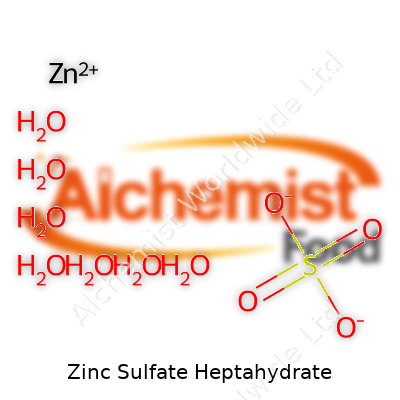
| Names | |
| Preferred IUPAC name | zinc(2+) sulfate heptahydrate |
| Other names |
White Vitriol Zinc(II) sulfate heptahydrate Goslarite Zinc sulphate heptahydrate |
| Pronunciation | /ˈzɪŋk ˈsʌl.feɪt ˌhɛp.təˈhaɪ.dreɪt/ |
| Preferred IUPAC name | zinc sulfate heptahydrate |
| Other names |
White Vitriol Goslarite Zinc(II) sulfate heptahydrate Zinc sulphate heptahydrate |
| Pronunciation | /ˈzɪŋk ˈsʌl.feɪt ˌhɛp.təˈhaɪ.dreɪt/ |
| Identifiers | |
| CAS Number | 7446-20-0 |
| Beilstein Reference | 1695149 |
| ChEBI | CHEBI:86357 |
| ChEMBL | CHEMBL1201147 |
| ChemSpider | 69240 |
| DrugBank | DB09323 |
| ECHA InfoCard | 03cf727c-f756-40f1-ae5e-7fedc127d924 |
| EC Number | 231-793-3 |
| Gmelin Reference | 1267 |
| KEGG | C14819 |
| MeSH | D019215 |
| PubChem CID | 24823 |
| RTECS number | ZH5300000 |
| UNII | V87QW5M2J8 |
| UN number | UN3077 |
| CAS Number | 7446-20-0 |
| Beilstein Reference | 2114737 |
| ChEBI | CHEBI:32499 |
| ChEMBL | CHEMBL1201012 |
| ChemSpider | 23527 |
| DrugBank | DB09322 |
| ECHA InfoCard | 03b00d8a-8e44-46ba-a3ff-6b025be3b7b3 |
| EC Number | 231-793-3 |
| Gmelin Reference | 12993 |
| KEGG | C00344 |
| MeSH | D015285 |
| PubChem CID | 24424 |
| RTECS number | ZH5300000 |
| UNII | J6R39F08RK |
| UN number | UN3077 |
| Properties | |
| Chemical formula | ZnSO4·7H2O |
| Molar mass | 287.54 g/mol |
| Appearance | White crystalline powder |
| Odor | Odorless |
| Density | 2.072 g/cm³ |
| Solubility in water | 960 g/L (20 °C) |
| log P | -4.2 |
| Vapor pressure | Negligible |
| Acidity (pKa) | 4.4 (H₂O) |
| Basicity (pKb) | 6.04 |
| Magnetic susceptibility (χ) | -0.000018 |
| Refractive index (nD) | 1.445 |
| Viscosity | Viscous |
| Dipole moment | 6.49 D |
| Chemical formula | ZnSO4·7H2O |
| Molar mass | 287.54 g/mol |
| Appearance | White crystalline powder |
| Odor | Odorless |
| Density | 2.072 g/cm³ |
| Solubility in water | 960 g/L (20 °C) |
| log P | -4.7 |
| Vapor pressure | Negligible |
| Acidity (pKa) | 4.4 |
| Basicity (pKb) | 6.04 |
| Magnetic susceptibility (χ) | -5.3 × 10⁻⁶ cm³/mol |
| Refractive index (nD) | 1.463 |
| Viscosity | Viscous liquid |
| Dipole moment | 0 D |
| Thermochemistry | |
| Std molar entropy (S⦵298) | 322.7 J·K⁻¹·mol⁻¹ |
| Std enthalpy of formation (ΔfH⦵298) | -2037.6 kJ/mol |
| Std molar entropy (S⦵298) | 344.4 J·mol⁻¹·K⁻¹ |
| Std enthalpy of formation (ΔfH⦵298) | -2037.6 kJ/mol |
| Std enthalpy of combustion (ΔcH⦵298) | -2347 kJ/mol |
| Pharmacology | |
| ATC code | A12CB01 |
| ATC code | A12CB01 |
| Hazards | |
| Main hazards | Harmful if swallowed. Causes serious eye irritation. |
| GHS labelling | GHS05, GHS07 |
| Pictograms | GHS05,GHS07 |
| Signal word | Warning |
| Hazard statements | H302: Harmful if swallowed. |
| Precautionary statements | P264, P270, P273, P301+P312, P330, P391, P501 |
| Lethal dose or concentration | LD50 Oral Rat: 2,150 mg/kg |
| LD50 (median dose) | LD50 (oral, rat): 2,150 mg/kg |
| PEL (Permissible) | 15 mg/m³ |
| REL (Recommended) | Zinc (as Zn): 1 mg/kg feed |
| IDLH (Immediate danger) | Not listed. |
| Main hazards | Harmful if swallowed. Causes serious eye irritation. Causes skin irritation. May cause respiratory irritation. |
| GHS labelling | GHS05, GHS07 |
| Pictograms | GHS05,GHS07 |
| Signal word | Warning |
| Hazard statements | H302: Harmful if swallowed. |
| Precautionary statements | P264, P270, P273, P301+P312, P330, P391, P501 |
| NFPA 704 (fire diamond) | 1-0-0 |
| Lethal dose or concentration | LD50 Oral Rat: 2,150 mg/kg |
| LD50 (median dose) | Oral rat LD50: 2,150 mg/kg |
| NIOSH | ZSJ |
| PEL (Permissible) | PEL (Permissible Exposure Limit) of Zinc Sulfate Heptahydrate: **15 mg/m³ (total dust), 5 mg/m³ (respirable fraction) as zinc compound** |
| REL (Recommended) | 30 mg Zn |
| IDLH (Immediate danger) | Not listed |
| Related compounds | |
| Related compounds |
Zinc sulfate monohydrate Zinc sulfate hexahydrate Zinc chloride Zinc acetate Ferrous sulfate heptahydrate Magnesium sulfate heptahydrate |
| Related compounds |
Zinc sulfate monohydrate Zinc sulfate hexahydrate Zinc sulfate (anhydrous) Copper sulfate Iron(II) sulfate Magnesium sulfate Zinc chloride |



