Zinc Propionate: A Closer Look at an Overlooked Chemical
Historical Development of Zinc Propionate
Zinc propionate did not come out of nowhere. Its story goes back to a time when the search for better preservatives and more effective antimicrobial agents pulled chemists in both the food and agriculture sectors to dig deeper into zinc salts. Zinc itself has ancient roots, used for centuries in medicine and industry, but the marriage of zinc and propionic acid only received significant attention as new preservation strategies grew in demand during the twentieth century. Post-war manufacturing brought more processed foods and animal feeds. These sectors became desperate for solutions to fight mold and bacterial spoilage. Traditional zinc salts—like zinc sulfate and zinc oxide—had their limitations, so propionate’s extra kick, its antifungal properties and mild taste profile, nudged it into commercial applications. Research in the last several decades uncovered new uses beyond food, branching into pharmaceuticals, plastics, and agriculture. Anyone following industry development at that time could see how the push for longer shelf lives and safer animal feed opened a real market for compounds like this.
Product Overview and Characteristics
Zinc propionate appears as a fine, white powder—sometimes a compact crystalline material—generally odorless with a faintly acrid tang. It carries a chemical formula of C6H10O4Zn. Manufacturers, aiming for purity, often let it exceed ninety-eight percent as pure zinc propionate, with only trace amounts of water, chloride, or other metals. The product dissolves sparingly in water, a feature that controls its release and reduces its immediate reactivity. Labeling follows established chemical regulations: batch numbers, date of manufacture, lot tracking, and zinc content percentage all get listed to support traceability and regulatory compliance. Each pack also displays recommended safety measures due to the low but real risk if it’s handled improperly. It doesn’t attract much moisture, so storerooms keep it cool and dry to discourage any caking or reaction with ambient air.
Understanding Its Physical and Chemical Properties
Few people think twice about zinc propionate’s basic chemistry, but that information maintains relevance in its application. It melts at about 200°C and stands stable at room temperature, resisting decomposition unless exposed directly to flame or strong acids. Water solubility is limited, around 200 milligrams per 100 milliliters at 20°C, so its dissolution happens gradually. This trait makes it preferable in controlled-release applications, particularly animal feed supplements, where immediate leaching could lead to overdosing or waste. Zinc propionate resists oxidation reasonably well but breaks down under prolonged UV exposure or in strong acid and alkali environments. Its molecular structure—where zinc hooks onto the propionate groups—makes for a stable, predictable performance across a range of storage and processing conditions.
Technical Specifications and Labeling Standards
Technical details matter for both safety and performance. Any specification sheet for zinc propionate highlights zinc content—usually 21-23% by weight—along with propionic acid equivalence and moisture levels under 2%. Impurities like arsenic and lead rarely exceed one to two parts per million, lining up with global safety standards. Bulk shipments to manufacturers arrive sealed, labeled with Comprehensive Safety Data Sheets citing handling precautions, recommended storage, and appropriate disposal techniques. Compliance with both REACH and local EPA guidelines keeps this product on the market without regulatory headaches, and every reputable supplier should show batch test certificates for each shipment. Laboratories measuring compliance use titration or atomic absorption spectroscopy to verify regularity between lots, which keeps quality consistent.
Preparation Method
Manufacturing zinc propionate means synthesizing it from propionic acid and a basic zinc substance—often zinc oxide or zinc carbonate. The process succeeds in closed reactors by slowly adding propionic acid to the zinc source under agitation and mild heat, usually around 50–80°C, with careful monitoring to avoid over-acidification. Water evolves as a byproduct and gets separated by distillation or filtration. The end suspension cools, the crystals filter out, and multiple washing cycles rid the solid of any unreacted acid or leftover metallic residue. A final drying step, under vacuum or gentle heat, brings the product to market-ready condition. Yields push past ninety percent if conditions stay right and equipment stays clean. The byproduct water gets treated before discharge, following modern environmental restrictions for factory outflows.
Chemical Reactions and Modifications
Zinc propionate reacts as most carboxylate salts do. Contact with strong acids like hydrochloric or sulfuric acid swaps the propionate for chloride or sulfate, liberating propionic acid vapor. Exposure to high alkali concentrations pushes the zinc to precipitate as zinc hydroxide or zincate salt. Few manufacturers bother modifying zinc propionate except for lab research, where tinkering with the carbon backbone or introducing chelating ligands helps tune bioavailability or reactivity in specialized settings. Pyrolysis, or intense heating beyond 300°C, splits it down to zinc oxide with propionic acid and water vapors. These chemical behaviors prove useful both in synthesis and in end-of-life disposal planning.
Synonyms and Trade Names
In the world of commerce and catalogs, zinc propionate goes by several names. Some references call it zinc dipropionate, others list zinc propanoate. Industry trade names sometimes just shorten it to “Zn Prop.” Across North America and Europe, its European Inventory of Existing Commercial Chemical Substances (EINECS) number, as well as its Chemical Abstracts Service (CAS) number, both pop up on technical data sheets, making it easy to verify product authenticity and global compatibility.
Safety and Operational Standards
Safe handling takes center stage with zinc propionate, even if its risks seem minor compared to many industrial chemicals. Inhalation of dust or prolonged skin contact can irritate mucous membranes or cause mild dermatitis, so workers don gloves, goggles, and dust masks. Facilities supply local exhaust ventilation and train staff to deal with spills or accidental releases with absorbent materials and prompt reporting. Safe Transport regulations classify it as non-hazardous for short-term exposure, yet the rules require robust labeling and emergency contact information on every package. The Occupational Safety and Health Administration (OSHA) and the European Chemicals Agency (ECHA) both issue directives for occupational limits—typically around 5 mg/m3—and rely on regular monitoring to protect vulnerable workers. Sites handling bulk quantities keep spill kits and eye wash stations at the ready.
Applications Across Sectors
Zinc propionate turned into a quiet workhorse in animal husbandry, especially for swine and poultry. It fights off molds and bacteria in feed, stretching out storability and reducing the financial sting of spoilage. Some manufacturers add a pinch to processed foods, a use regulated tightly to prevent overexposure and to assure the zinc content doesn’t threaten nutrition guidelines. Modern research looks into zinc propionate’s performance in plastics, where it lines up as a stabilizer to defend against heat and microbial attack. Farmers and food processors both rely on its affordable price and the long-standing evidence that it poses minimal environmental risk if handled correctly. Lately, pharmaceutical researchers dig into its role as a dietary zinc supplement, exploring whether its slow-release profile offers advantages over traditional zinc pills. Some specialty coatings and bioplastic blends make use of its mild fungistatic action for consumer-facing applications.
Research & Development Efforts
Academic labs and industry research both set their sights on better delivery systems for zinc propionate, targeting release rates that support animal health without triggering toxicity. They develop encapsulation techniques, test new carriers, and run controlled studies on nutrient absorption. A handful of projects look into using zinc propionate as a biodegradable preservative in packaging film—a move toward greener chemistry and smarter food safety. As antibiotic use in livestock continues to face criticism, alternatives like zinc propionate grow in appeal. Some start-ups even chase its antiviral properties in non-food settings, such as medical textiles and disinfectants, hoping to catch new waves in antimicrobial resistance management.
Toxicity Research and Findings
Toxicology studies keep zinc propionate on safe ground when used at proper concentrations. Acute toxicity follows the general pattern for zinc salts: rapid ingestion in high doses can cause gastrointestinal upset, but no evidence supports mutagenicity or carcinogenicity. Long-term studies on livestock show that supplementing diets with recommended levels improves growth rates and immune profiles, with few adverse effects. Research in aquatic species warns about chronic discharge—if processing plants don’t capture wastewater, zinc compounds can accumulate in river sediment and stress sensitive fish populations. Regulators keep maximum allowable concentrations under tight control, with annual review ensuring that environmental—and worker—safety don’t get overlooked as demand rises.
Future Prospects
No one can ignore the growing pressure for sustainable, effective food and feed additives as the world population balloons and climate volatility stretches supply chains. Zinc propionate fills a niche: affordable, with a history of low toxicity and reliable performance. Product engineers continue looking at fine-tuning both the production process for less waste and the application spectrum for more targeted results. If research in biodegradable plastics and green packaging succeeds, new consumer sectors could open up, expanding beyond feed mills and into grocery store shelves. The antimicrobial activity keeps it relevant amid concerns about food safety and preservation, especially as global trade complicates storage and transport conditions. If industry leaders invest in thorough end-of-life studies and promote responsible disposal or recycling options, then zinc propionate will likely stay in the toolbox, adapting as commerce and regulations demand safer solutions for years to come.
What is Zinc Propionate used for?
A Closer Look at Zinc Propionate
Zinc propionate may sound like a chemical you’d only find in a laboratory, but it shows up in some surprising places. Most people probably don’t realize it works behind the scenes in the agriculture and food worlds. It serves a simple function—preserving and protecting products like animal feed, and at times, certain foods. I learned this fact firsthand from a family friend who runs a dairy farm. He explained that healthy livestock need more than a scoop of grain and a field to roam—they require minerals and careful attention to nutrition.
Making Animal Feed Work Harder
My own research and direct questions at feed stores helped me learn that zinc is vital for animal growth. Zinc propionate offers an efficient way to deliver this mineral. Why propionate? The propionic acid part acts as a mild preservative, keeping molds and bacteria at bay. In warm, humid environments, animal feed can spoil easily, especially silage and grains. A spoiled batch means sick animals and lost income. Adding this compound boosts the feed’s shelf life and helps prevent digestive issues linked to moldy feed. USDA data shows that mold in animal feed can cut overall herd productivity by up to 15%, which puts a real strain on any farm budget.
Human Health Under the Lens
Curiosity led me to dig into its use in food. Regulatory agencies like the FDA allow small amounts in baked goods—think bread and tortillas. The reason is simple: it can help prevent the growth of unwanted microbes. Still, health authorities monitor its use closely and set strict limits. Safety studies haven’t turned up red flags, but some consumers remain skeptical about additives, and I get that—trust in the food supply can’t be taken for granted. Zinc itself plays a role in human health, supporting the immune system and wound healing. The question is whether people are comfortable getting part of their daily zinc from sources like food preservatives. Open labeling and transparent communication from companies can ease these concerns and let shoppers make their own informed choices.
Farm, Food, and Responsible Use
After talking with local farmers and reading trade publications, I realized misuse is a real risk. Too much zinc propionate in animal diets can upset the natural mineral balance. Animals exposed to excessive zinc might develop digestive problems, and zinc runoff doesn’t help river ecosystems downstream. Environmental agencies now keep a closer watch on metal levels in manure and runoff. This reminds me how easy it is for well-meaning improvements to create new problems if folks ignore the details.
Producers and regulators have started tackling these worries by updating feed formulas and improving testing. More precise dosing and more training for farmers could go further in protecting livestock and the environment. I see room for more research, too, particularly around long-term health effects in animals—and whether residue ends up in milk or meat. A science-based approach keeps food and feed suppliers accountable and supports healthier choices on both sides of the dinner plate.
Looking Ahead
Zinc propionate may not be a household name, but its impact is real. Farmers and feed makers rely on it to keep animals productive and healthy. Shoppers want safe, wholesome food on their plates, minus unexpected risks. With better oversight, a stronger focus on responsible use, and honest conversations, zinc propionate can keep playing its helpful, if quiet, role in agriculture and food.
Is Zinc Propionate safe for animals and humans?
The Role of Zinc Propionate
Zinc keeps body systems running. It helps cells repair themselves, the immune system defend the body, and even skin heal from wounds. Zinc propionate comes up often in livestock nutrition, farm animal feed, and some specialty applications for humans. What matters most is how the body absorbs it and whether it affects health in ways nobody expects.
Animal Feed and Human Safety
Farmers want healthy animals. Sick livestock slow down food production and increase costs. Zinc propionate usually ends up in feed mixes because it serves as a trace mineral supplement. The U.S. Food and Drug Administration (FDA) lists it as a Generally Recognized as Safe (GRAS) substance when added to animal feeds in defined amounts. Research from universities and veterinary agencies backs up the idea that low, recommended doses won’t harm cattle, poultry, or swine. The real concern kicks in at high or chronic exposure, where zinc can throw off the delicate balance of minerals and even cause toxicity—symptoms include appetite loss, diarrhea, and in worse cases, nerve damage.
Humans get far less direct exposure to zinc propionate than livestock, but the compound can make its way into our diets through animal products. The FDA sets limits for mineral content in these products to ensure safety for consumers. Food scientists run regular quality control checks to keep meals on the right side of safe. No broad surveys have uncovered dangers from this route, so typical diets rarely cross the threshold where problems would surface.
Supporting Evidence and Best Practices
Veterinary journals report dozens of feeding trials each year, usually tracking growth, immune response, and overall health in animals. These studies almost always confirm that zinc propionate helps prevent or reverse zinc deficiency. Growth rates improve, fur or feather condition brightens, and infections fade faster. Human clinical research around zinc propionate specifically is rare but general studies on zinc salts confirm benefits for immune health and proper enzyme function.
Problems pop up only with careless dosing or in chemical production settings. Dust from concentrated zinc propionate can irritate skin, eyes, and lungs; workplace safety rules require gloves, goggles, and proper ventilation for factory workers handling large quantities. That’s not something your average person faces at a grocery store or farm.
Concerns Over Misuse
Some risks come from over-the-counter supplements that promise more than they deliver. Too much zinc in pill or powder form can block copper absorption and disrupt the gut. People with certain health conditions, such as chronic kidney disease, should keep an eye on total mineral intake, including trace sources from food additives like zinc propionate.
Animal feed makers juggle between mineral requirements and possible negative interactions with other ingredients. Regular lab tests and honest packaging help guard against accidental overdosing. Responsible use always calls for sticking with science-backed feeding guidelines and workplace protections where bulk chemicals come into play.
Building Trust Through Transparency
Transparency supports trust in ingredients like zinc propionate. Publishing findings from feeding trials, showing third-party lab results, and listening to farmer and consumer concerns helps spot risks before they turn into headlines. People want to know what’s in their food and how it affects health—clear answers and evidence go a long way.
What is the recommended dosage of Zinc Propionate?
Why Zinc Propionate Gets So Much Attention
Zinc doesn’t get as much spotlight as iron or calcium in daily conversations. That said, people who work with livestock and animal nutrition pay close attention to zinc propionate. This compound steps up as a dietary supplement for animals, especially cattle, pigs, and poultry. The goal is to boost growth, immune function, and reproductive performance. I’ve seen farms keep close tabs on zinc levels because too little leads to sickly animals and slow weight gain, but too much can tip things into toxic territory.
Recommended Dosage in Animal Nutrition
Animal nutritionists usually settle on a dosage for zinc propionate based on current research, government regulations, and the needs of the animal. For poultry, the World Health Organization and NRC (National Research Council) suggest a zinc inclusion rate from all sources of about 40 to 80 mg per kilogram of feed. With supplementation, this often translates to zinc propionate being added at levels that deliver between 10 to 25 mg of actual zinc per kg of feed. Dairy cows and beef cattle typically get somewhere between 30 mg and 60 mg of zinc per kg of dry matter in their feed, though this figure can be nudged up or down if there’s a concern about underlying deficiency or toxicity risks.
Most feed manufacturers carefully calculate the concentration of elemental zinc in zinc propionate (about 21% zinc by weight) so the actual amount going into an animal’s body meets, but doesn’t overshoot, nutritional targets. That runs parallel to my own experience on family farms where careful measurement means fewer health problems and lower costs for supplements in the long run.
Why Getting the Dosage Right Makes a Difference
Zinc plays a key part in enzyme systems, immune response, hoof health, and fertility. If livestock don’t get enough zinc, their immune system slows down, and skin and hoof issues show up quickly. On the other side, overdosing wastes money, risks mineral imbalances, and can even push animals toward zinc toxicity. In swine, research from land-grant universities shows that zinc propionate helps control diarrhea in weaning piglets, but pushing higher than recommended levels hasn’t shown extra benefits and sometimes causes copper deficiency.
Safety and Regulation
American and European regulators keep a close eye on mineral additives in animal feed, especially for residues that could find their way into the food chain. The FDA in the U.S. sets limits for safe use, and the European Food Safety Authority reviews any ingredient intended for food-producing animals. Regularly, these agencies stick close to the diet recommendations set by established bodies like the NRC.
Practical Takeaways and Solutions
Feed companies and farmers can team up with animal nutritionists to stay within safe levels. Routine mineral analysis of feed ingredients and water can catch problems early. Farms that rotate supplements based on forage mineral content often save money and see healthier animals. Someone once told me, “Make decisions with numbers, not hunches.” That line sticks with me every time I see a farm that keeps records and works with veterinarians to tweak diets when health problems crop up.
No single recommendation fits every situation. Monitoring and specialist advice matter most, especially as feed ingredients and animal genetics change. Supplements like zinc propionate can improve animal health and farm profits, but the right dosage is what keeps good intentions from turning into trouble.
How should Zinc Propionate be stored?
Why Storage Matters for Zinc Propionate
From my years working around feed ingredients and additives, something like zinc propionate commands respect in the storage room. The way this mineral salt gets handled can make a big difference in both safety and performance. Folks count on zinc propionate to help keep livestock healthier by tackling bacteria in their feed, and the trouble starts when it clumps, spoils, or even loses its punch. Pay attention to storage details now, and you’ll avoid problems that cost both money and peace of mind down the line.
Keep It Dry and Cool
Moisture remains the real enemy for zinc propionate. It clumps up fast in humid rooms, turning what should pour smoothly into a hard, unusable block. Most warehouses don’t come with perfect climate control, and I’ve seen people try to fix a damp stockpile with shovels. To dodge this headache, keep the pails or sacks tightly closed after scooping, and steer clear of puddles or leaks. If the storage spot sweats during hot afternoons, check for ventilation, or at least cover with a heavy tarp that won’t let water seep through. It’s surprising how something as basic as cracked windows can help.
On one farm I visited in Oklahoma, supplies sat by a drafty door. Bags near the bottom always felt “spongy” and stuck together. After moving them away from walls and stacking on pallets, the problem faded. Elevating containers gave some air movement underneath, so even the sticky summer air didn’t ruin the whole lot.
Sunlight and Heat Are Trouble
Direct sunlight can mess with zinc propionate far faster than people think. Ultraviolet rays, combined with heat from a sunlit window, speed up chemical changes that reduce effectiveness. Drums or sacks left outside—sometimes just for convenience—take on extra warmth and break down faster. Storerooms with stable, mild temperatures keep the product as close to its original state as possible. Most handbooks call for “no more than 25°C” (about 77°F), but the goal is consistency. Swinging from freezing cold nights to scorching midday heat can be just as bad as piling bags in a sunny spot. Use shaded shelving or pick a north-facing storage wall, if possible. The extra effort protects both the ingredient’s shelf life and the company’s bottom line.
Keep Chemicals Apart
One mistake people make: cramming different chemicals together “just to save room.” Zinc propionate can react with acids and some oxidizing powders, creating unwanted byproducts or reduced performance. Never let it share space with cleaners, bleach, or other feed additives unless you’ve separated everything with a physical barrier or use color-coded containers. A dairy mill I worked with marked zones on the floor, so bulk ingredients never swapped places. Their zinc propionate always delivered consistent results in feed.
Labeling and Inventory Controls
Expired zinc propionate can cause more harm than good. Always check dates and rotate the stock, making sure the oldest gets used up first. Sealed packaging labeled with the arrival date makes tracking easier, saving the headache of hunting down forgotten bags behind newer shipments. If powders spill, sweep and dispose of them right away to keep powder out of the air or off clean surfaces.
Protecting Workers and Community
People handling this ingredient should wear gloves and avoid inhaling dust. Good storage protects them as much as it preserves the product. A well-run storage area not only respects the needs of livestock, it respects the health of everyone working close to the supply chain.
With thoughtful storage, zinc propionate doesn’t lose value to spoilage or error. A bit of care pays off every step of the way—from the warehouse floor to the animals that depend on what goes in their feed bucket.Are there any side effects or precautions with Zinc Propionate?
Understanding Its Role and Risks
Zinc propionate pops up in agriculture, medicine, and food. It works as a preservative because it fights fungus and bacteria. Many know zinc as an important mineral, and propionates lend themselves to keeping products fresh. That might sound promising, but not everything that keeps mold away treats the body kindly. I’ve seen questions come my way from people who worry about what they consume—so it’s worth digging deeper.
What Happens in the Body
Eating too much zinc in general isn’t harmless. High doses can cause stomach cramps, nausea, and headaches. The propionate part, as a food additive, may irritate the gut for those sensitive to preservatives. Researchers studying mice found that too much propionic acid may alter gut bacteria and mood. In most folks, tiny traces won’t spell disaster, but doubling up on zinc supplements or taking in several propionates through breads, cheeses, or fortified grains creates a different ballgame.
Who Should Take It Easy?
Pregnant people, growing kids, and anyone with kidney or liver trouble don’t process minerals as well. Taking extra zinc without medical advice can shake up copper and iron balance, sometimes leading to further deficiencies. Some kids react poorly to food additives such as propionates: upset stomach, rash, or even behavior changes have cropped up in rare reports. Allergic reactions can’t be ruled out, either, though they look uncommon in published case studies.
Drug Interactions and Mineral Balance
Zinc is a team player with other nutrients in the body—sometimes, though, it muscles into the wrong position. Large intakes mean copper and iron lose out, leading to anemia or poor immune response. Antibiotics and certain medications used for arthritis or diuretics connect with zinc in odd ways. Taking zinc at the wrong time may weaken the treatment’s punch, or let the body hold onto too much zinc for comfort. I’ve met people surprised by how a “simple” supplement threw off months of other treatments.
Paying Attention to Dosage
The U.S. National Institutes of Health points out adults generally need around 8–11 milligrams of zinc daily. Most folks eating varied diets hit those marks. Too much, over 40 milligrams daily, starts to raise risk of nausea and longer-term mineral imbalance. Eating bread or cheese with zinc propionate adds small amounts, but stacking that with supplements makes it easy to cross the line into overdose territory—especially since some fortified foods hide that information in fine print.
What to Look Out For
Labels matter more than people admit. Seeking “propionate” in the fine print helps folks who have had odd food reactions before. Anyone already on a supplement regimen ought to talk with a doctor before switching or adding more zinc from other sources. Brands with poor manufacturing oversight risk contamination, so buying from trusted companies is advice worth gold. In my job, it’s clear that nobody wins by guessing about their nutrient intake. Bloodwork can clear up any doubts and point out silent deficiencies or toxicities before symptoms hit.
Safer Use and Moving Forward
Education goes a long way. Doctors and dietitians help plot out which products or supplements fit specific needs. If symptoms crop up after adding new foods or supplements—upset stomach, strange rashes, mood changes—those clues shouldn’t be ignored. Early action keeps minor hiccups from turning into lasting health problems. That’s true for zinc propionate, as for any compound mixed into our foods, meds, or supplements. It all boils down to mindful use and honest conversations with healthcare teams.
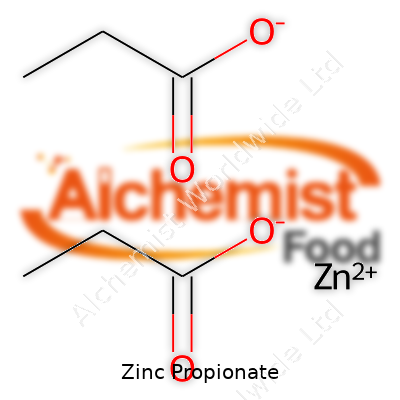
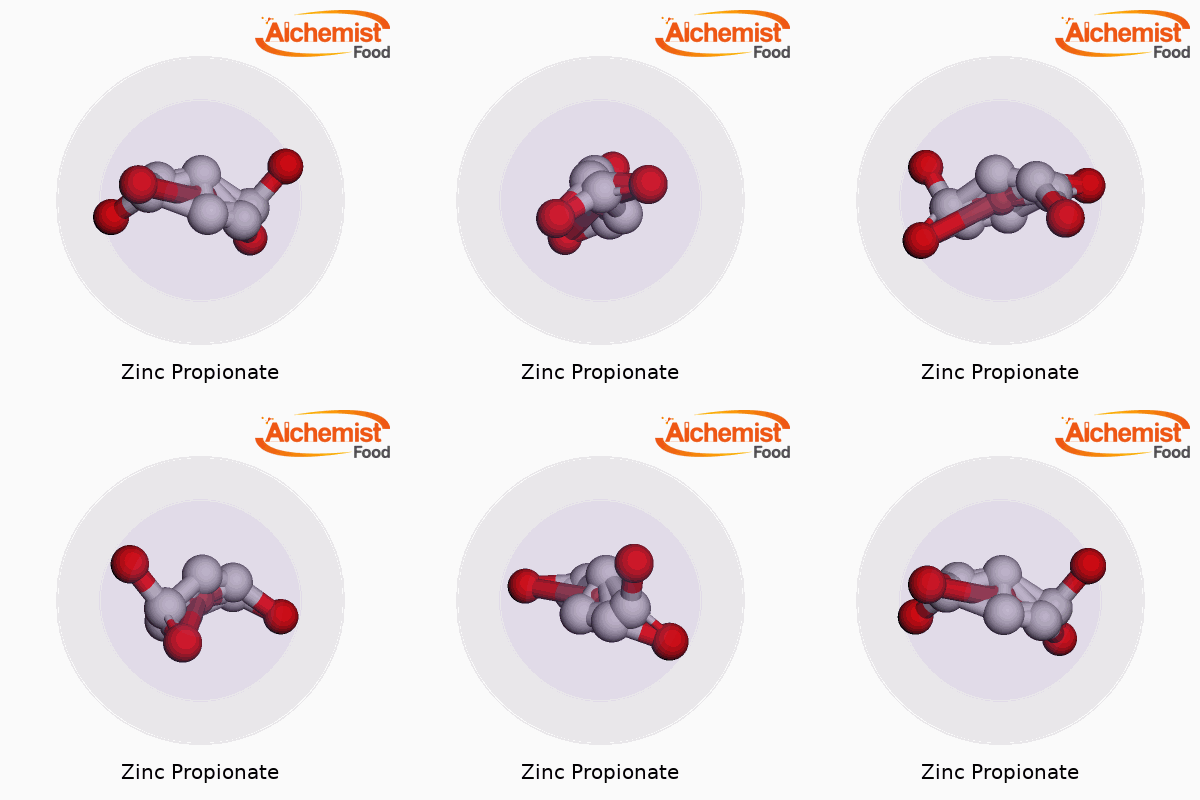
| Names | |
| Preferred IUPAC name | zinc propionate |
| Other names |
Propionic acid, zinc salt Zinc dipropionate Zinc propanoate Zinc(II) propionate |
| Pronunciation | /ˈzɪŋk proʊˈpiː.ə.neɪt/ |
| Preferred IUPAC name | zinc propionate |
| Other names |
Propionic acid zinc salt Zinc dipropionate Zinc(II) propionate Propanoic acid, zinc salt Zinc propanoate |
| Pronunciation | /ˈzɪŋk proʊˈpɪəneɪt/ |
| Identifiers | |
| CAS Number | 557-28-8 |
| Beilstein Reference | 1207210 |
| ChEBI | CHEBI:86465 |
| ChEMBL | CHEMBL1547142 |
| ChemSpider | 24114 |
| DrugBank | DB15899 |
| ECHA InfoCard | 03b6d0e9-5ee8-448a-bc1d-9625bb43c4b4 |
| EC Number | 206-736-0 |
| Gmelin Reference | 1277444 |
| KEGG | C18693 |
| MeSH | D015842 |
| PubChem CID | 24544 |
| RTECS number | UZ9100000 |
| UNII | 4B6S3D1Q7M |
| UN number | UN3077 |
| CompTox Dashboard (EPA) | urn:epa.comptox.dashboard:DTXSID6047640 |
| CAS Number | 557-28-8 |
| Beilstein Reference | 1900784 |
| ChEBI | CHEBI:86455 |
| ChEMBL | CHEMBL154922 |
| ChemSpider | 54754 |
| DrugBank | DB11121 |
| ECHA InfoCard | 100.232.384 |
| EC Number | 209-151-9 |
| Gmelin Reference | 607747 |
| KEGG | C18615 |
| MeSH | D015798 |
| PubChem CID | 24556 |
| RTECS number | UF8225000 |
| UNII | 64R7VDG2RW |
| UN number | UN3077 |
| CompTox Dashboard (EPA) | urn:epa.comptox.dashboard:DTXSID6021159 |
| Properties | |
| Chemical formula | C6H10O4Zn |
| Molar mass | 185.53 g/mol |
| Appearance | White crystalline powder |
| Odor | slight, characteristic |
| Density | 1.52 g/cm³ |
| Solubility in water | soluble |
| log P | 0.11 |
| Vapor pressure | Negligible |
| Acidity (pKa) | 4.87 |
| Basicity (pKb) | 8.71 |
| Magnetic susceptibility (χ) | -0.9×10⁻⁶ |
| Refractive index (nD) | 1.520 |
| Viscosity | Viscous liquid |
| Dipole moment | 3.14 D |
| Chemical formula | C6H10O4Zn |
| Molar mass | 183.54 g/mol |
| Appearance | White crystalline powder |
| Odor | Slightly unpleasant |
| Density | 1.54 g/cm³ |
| Solubility in water | Slightly soluble |
| log P | 0.65 |
| Vapor pressure | Negligible |
| Acidity (pKa) | 5.1 |
| Basicity (pKb) | 6.28 |
| Magnetic susceptibility (χ) | -0.9×10⁻⁶ |
| Refractive index (nD) | 1.530 |
| Dipole moment | “2.78 D” |
| Thermochemistry | |
| Std molar entropy (S⦵298) | 223.51 J·mol⁻¹·K⁻¹ |
| Std enthalpy of formation (ΔfH⦵298) | -504.7 kJ/mol |
| Std enthalpy of combustion (ΔcH⦵298) | –2554.7 kJ/mol |
| Std molar entropy (S⦵298) | 244.6 J·mol⁻¹·K⁻¹ |
| Std enthalpy of formation (ΔfH⦵298) | -504.47 kJ/mol |
| Std enthalpy of combustion (ΔcH⦵298) | -1524.8 kJ/mol |
| Pharmacology | |
| ATC code | A12CB05 |
| ATC code | A12CB06 |
| Hazards | |
| Main hazards | Harmful if swallowed. Causes skin irritation. Causes serious eye irritation. May cause respiratory irritation. |
| GHS labelling | GHS07, GHS09 |
| Pictograms | GHS07 |
| Signal word | Warning |
| Hazard statements | H315, H319, H335 |
| Precautionary statements | P261, P264, P271, P272, P273, P280, P302+P352, P304+P340, P305+P351+P338, P312, P321, P332+P313, P333+P313, P337+P313, P362+P364, P501 |
| NFPA 704 (fire diamond) | 1-1-0 |
| Lethal dose or concentration | LD50 (oral, rat): 3,400 mg/kg |
| LD50 (median dose) | LD50 (median dose): Rat oral > 2000 mg/kg |
| NIOSH | WH6300000 |
| PEL (Permissible) | PEL: 15 mg/m³ |
| REL (Recommended) | '5 mg Zn/kg diet' |
| GHS labelling | GHS05, GHS07 |
| Pictograms | GHS07 |
| Signal word | Warning |
| Hazard statements | H410: Very toxic to aquatic life with long lasting effects. |
| Precautionary statements | P264, P270, P301+P312, P330, P501 |
| NFPA 704 (fire diamond) | 1-0-0 |
| Lethal dose or concentration | LD50 Oral Rat 2,900 mg/kg |
| LD50 (median dose) | LD50 (median dose): Rat oral >2000 mg/kg |
| NIOSH | WZ3850000 |
| PEL (Permissible) | PEL: 15 mg/m³ (total dust), 5 mg/m³ (respirable fraction) |
| REL (Recommended) | 10 mg/kg |
| Related compounds | |
| Related compounds |
Calcium propionate Magnesium propionate Sodium propionate |
| Related compounds |
Zinc acetate Zinc butyrate Zinc gluconate Zinc lactate Zinc stearate Zinc sulfate |



