Trisodium Phosphate: Looking Through Science, Safety, and Our Chemical Future
Historic Growth of Trisodium Phosphate
Trisodium phosphate, often called TSP, carries a long history that spans from early industrial cleaning to today’s broad chemistry landscape. In the late nineteenth century, the shift toward industrial-scale manufacturing made a straightforward salt like TSP a big player in factories and food plants. By the 1940s, its powerful grease-cutting ability caught the eye of manufacturers and municipal governments, especially in the US, turning TSP into a standard for cleaning up after urban sprawl. Over time, local waterways began picking up excess phosphates, which triggered algae blooms and public health concerns by the 1970s. This led to tighter regulations, pushing chemists to rethink TSP’s role in society and bring it from a household staple to a more thoughtfully monitored chemical. The journey of TSP highlights how industry answers social and environmental needs with changing standards and ongoing innovation.
Product Overview
Trisodium phosphate is a white, crystalline powder or granule, known by scientists and industry workers by its formula Na₃PO₄. It dissolves easily in water and creates a basic solution, which gives it a spot in many cleaning and food-processing applications. Its strong alkaline property lets it break down fats, oils, and proteins quickly. On a store shelf, TSP shows up in hardware stores for wall prepping, sometimes hidden behind brand names used by painters. In the food world, it slips under other synonyms as part of baked goods, meat processing, and even toothpaste, with each use reflecting its ability to alter pH, buffer acidity, or stabilize emulsions.
Physical and Chemical Properties
In its pure form, trisodium phosphate appears as dense white crystals that attract water, making them hygroscopic. TSP’s density sits around 2.5 g/cm³. It melts just below 150°C, releasing water in multiple steps as it shifts into higher phosphate forms. Water solubility creates strong alkalinity, raising the pH sharply. This base-building action enables the breakdown of organic matter and neutralizes acidic residues. Chemists know that TSP’s chemical backbone – made up of three sodium ions balancing one phosphate anion – stands out in ionic reactions, giving it versatility in industry. It pairs well with calcium and magnesium, acting as a water softener, and the extra sodium ions can replace other cations easily in various reactions.
Technical Specifications and Labeling
From a technical standpoint, TSP comes with its own set of industrial standards for purity, moisture content, and granule size. Regulatory groups such as the Food Chemicals Codex and ASTM outline what counts as food-grade or industrial-grade. Typical food-grade TSP must meet strict limits for heavy metals and impurities, capping arsenic and lead content at under 2 ppm. In the US, labeling needs to state “trisodium phosphate,” the grade, net weight, country of origin, and handling instructions. This detail aims for transparency, so industries and consumers know exactly which version enters their workflow or finished product, whether in food, cleaning, or building surfaces.
Production Methods
Making trisodium phosphate involves reacting phosphoric acid with sodium carbonate or sodium hydroxide. The choice of reactant shapes both process efficiency and by-products. Large-scale producers typically mix phosphoric acid with sodium carbonate in water, creating a slurry that yields TSP and carbon dioxide. For a cleaner route, sodium hydroxide reacts with phosphoric acid, with water as the only by-product. After the initial reaction, purification requires crystallization, washing, and drying. Temperature control at every step ensures that dihydrate or dodecahydrate forms do not dominate unless specifically wanted for the application. Plants monitor these steps with automated sensors, since batch consistency matters as much as purity.
Chemical Reactions and Structural Modifications
TSP supports both basic and advanced chemical transformations. In aqueous solutions, it can sequester calcium and magnesium ions, keeping them from forming scale or interfering in industrial washes. When heated, it loses water of hydration and forms anhydrous TSP. Higher temperature leads to condensation, with sodium metaphosphate forming if conditions get hot enough. As a phosphate, TSP participates in buffer systems, acting as either an acid neutralizer or a source of phosphorus in more complex syntheses. Modified variants—such as those blended with sodium silicates or surfactants—expand performance for specific metals or soils. Researchers continue to experiment with how TSP interacts with organic and inorganic molecules, aiming to design tailored formulas for new industries while keeping environmental safety in mind.
Synonyms and Commercial Product Names
TSP goes by a slew of names beyond its common tag. Commercial catalogs and chemical handbooks list names such as sodium phosphate tribasic, trisodium orthophosphate, and E339(iii) in food labeling. Older product brands, especially in North America, use “trisodium phosphate,” “TSP,” or “phosphate of soda,” though these days many replacements include “TSP substitute” on packaging to comply with tighter safety rules. Chemists sometimes identify it by its CAS number, but for laypeople and renovators, the simple name “TSP” rings most familiar.
Safety and Operational Standards
Safe handling of TSP calls for proper personal protective equipment – gloves and goggles at a bare minimum. Direct contact with skin or eyes burns and irritates. Fine dust causes respiratory irritation and poses a hazard if inhaled in large amounts. Regulations in many countries force companies that package or ship TSP to display hazard statements and pictograms, so workers know to wash thoroughly after exposure. Environmental agencies crack down on the drainage of TSP solutions into water systems, since phosphate runoff triggers rapid algae growth and biological imbalance in lakes and streams. On-site, operators must collect and neutralize used TSP, capturing waste phosphates and sending them for controlled treatment. Safety training and documentation show up as recurring requirements for warehouses, painting contractors, and food plants.
Industries and Applications
TSP’s range of uses covers decades of practical needs. Its cleaning power made it a favorite for surface preparation in painting and construction, scrubbing away mildew and greasy residues before priming walls. In commercial kitchens, the food-grade version cleans equipment, breaking down proteins and stubborn fats. The food industry leans on TSP as an acidity regulator, emulsifier, and stabilizer, especially in processed cheese and baked goods. In municipal water treatment, TSP softens hard water, trapping ions that would otherwise clog up pipes. Even in firefighting, it helps load water with wetting agent qualities to suppress stubborn flames. Toothpastes and oral care products sometimes list sodium phosphates for pH regulation, linking chemistry straight to hygiene. Over time, ecology-minded regulations have trimmed back some of the chemical’s use in household detergents to curb phosphate pollution.
Research and Development
Research teams continue to probe the boundaries of TSP in modern science and manufacturing. As urban sanitation needs grow, chemists design greener versions of TSP or look for substitutes that match its cleaning ability without the environmental hangover. Advanced microscopy and spectroscopy help map out how TSP interacts with fats and proteins at a molecular scale, opening paths to even tougher stains or higher-value applications in pharmaceuticals and biomedical devices. Universities and startups run predictive algorithms to test how modified sodium phosphates might outperform TSP in water softening or mineral sequestration, eyeing energy savings and lower waste production. Each new study explores balancing TSP’s utility with stricter safety or ecological rules, showing that the quest for better results never stops.
Toxicity and Health Research
Medical and toxicological literature digs deep into the health impacts of trisodium phosphate. Short-term exposure, especially as a powder or strong solution, can burn skin, corrode the eye’s surface, and irritate the lungs. Ingesting large quantities upsets electrolyte balance, causing nausea or more serious issues in vulnerable people. Chronic workplace exposure concerns have led to tight limits on air and water concentrations, especially for workers sandblasting or cleaning with TSP-rich mixes. Animal studies driven by food safety concerns track phosphate accumulation and excretion; repeated ingestion at high doses changes calcium metabolism, affecting kidney health. Food scientists dig through epidemiological evidence to clarify if phosphate additives like TSP raise risks for long-term metabolic or cardiovascular trouble, especially as processed foods become a staple across the globe. Long-term data suggest that keeping TSP within recommended limits keeps risks low, but medical monitoring and regular review remain watchwords in food science and industrial hygiene.
What the Future Holds
Future developments for trisodium phosphate look both optimistic and challenging. Environmental regulators increasingly push for substitutes or formulations that maintain performance without dumping reactive phosphorus into rivers and lakes. Scientists try to engineer new molecules that copy TSP’s grease-breaking properties using calcium, magnesium, or organic acids, opening a path for biodegradable competitors. Industrial users push for higher-purity and lower-residue grades, reducing the overall chemical footprint left behind. Food industry research steers toward phosphate forms that support mineral absorption or tooth health without stressing other organs. The debate between TSP’s unique strengths and its ecological baggage sharpens focus on innovation and responsibility, as every stakeholder – from chemists and factory managers to policymakers and consumers – works the trade-off between technical prowess and a cleaner future.
What is trisodium phosphate used for?
Understanding Trisodium Phosphate’s Place in Everyday Life
Trisodium phosphate, or TSP, stands out on cleaning and home improvement shelves. Old paint stains, grease spots in the garage, and mildew on siding don’t fade by themselves. After years spent helping my neighbor repaint his porch, I learned pretty quickly that plain soap and water miss the tough stuff. Trisodium phosphate cuts right through what other products leave behind.
Backbone of Heavy-Duty Cleaning
Homeowners and professionals both rely on TSP for the way it breaks down oil, grime, and stubborn residues. It hits the sweet spot in home projects requiring a deep surface clean before painting or refinishing. Once we scrubbed dingy kitchen cabinets down with a TSP solution, they looked and felt fresh — ready for new paint, which held on much longer because of it. Science backs this up: TSP bonds to oils and changes their structure, making dirt slide away with a quick rinse.
Painters and contractors avoid failed paint jobs by recommending TSP, especially on old surfaces. It not only lifts dirt but also dulls glossy paints, making new layers grip better. The chemical sharpens up outdoor projects too. I’ve used it on weathered decks and concrete before staining; the difference between cleaned and uncleaned surfaces jumps out right away.
Powerful Tool in Industrial Settings
Beyond homes, food industry workers and maintenance crews see TSP as an economical way to sanitize surfaces. Industrial kitchens need to avoid cross-contamination, so they rely on solutions that scrub away organic matter with minimal hassle. TSP fits the bill, loosening stubborn food residues and sanitizing prep areas. The CDC even lists TSP as an agent used in cleaning up after flooding or situations where mold poses a risk to health.
Water Treatment and Science Connections
Municipal water treatment plants use TSP to control pH and manage mineral scaling in pipes. Some pool owners add it to balance their water, supporting both comfort and longer lifespans for equipment. The chemical’s ability to adjust pH and soften water ties into basic chemistry — it interacts with calcium and magnesium, reducing buildup that clogs plumbing.
Raising Concerns and Choosing Responsibly
Even with these benefits, not everyone gives TSP a free pass. Some local governments and environmental groups question its impact on waterways. The phosphate in TSP nourishes algae blooms, which can choke lakes and streams, so hardware stores in a few states sell phosphate-free substitutes. I’ve switched to phosphate-free products in my own yard to do my part for the nearby pond.
Simple precautions can cut down on negative effects. Wearing gloves and rinsing carefully keeps skin safe and stops extra solution from running into drains. Small steps like this, along with following usage instructions on the package, make TSP a responsible choice where it still works best. Looking ahead, research promises more eco-friendly cleaners, but TSP remains a staple for jobs that require real muscle. Knowing where and how to use it makes all the difference in protecting both property and the wider environment.
Is trisodium phosphate safe for cleaning?
Understanding What’s In Your Cleaning Supplies
Growing up, I watched my dad attack grimy walls and dirty decks with a bucket of water and a box labeled “TSP.” To him, trisodium phosphate was the stuff that meant business. He’d mix a scoop with warm water, grab an old sponge, and go to town. The results always spoke for themselves. Stubborn stains, nicotine haze, and even greasy residue didn’t stand a chance.
I didn’t think much about what was actually in the box until news stories started popping up about chemical ingredients in household cleaners. Now, whenever I see TSP sitting on a hardware store shelf, I see it through a different lens. Trisodium phosphate, an inorganic compound, isn’t some fringe cleaner. Builders, painters, and homeowners have trusted it for decades to prep surfaces and strip grime, especially in tough renovation jobs.
Is Trisodium Phosphate Dangerous?
TSP’s muscle comes with a catch. This powder packs a potent punch because it’s so alkaline—meaning it can irritate your skin and eyes, and upset your gut if swallowed. The substance can burn hands and even corrode surfaces if left on too long. Reading the back panel of the box, safety warnings aren’t there for decoration.
Environmental groups raised the red flag years back. Phosphate runoff from household and industrial cleaners doesn’t just float harmlessly down the drain. Those extra phosphates eventually reach rivers and lakes, where they help turn freshwater into soupy green stretches full of algae. Algae blooms suck oxygen out of the water and rob fish and other critters of their habitat. Because of that, many state and city regulations clamp down on phosphorus in cleaning products.
The Shift Toward Safer Alternatives
Because of phosphate rules, many TSP boxes lining hardware shelves don’t actually contain real trisodium phosphate anymore. The replacements—sometimes labeled as “TSP substitute”—drop the phosphate and opt for milder chemicals. These alternatives still scrub decently, but old-school users will tell you nothing matches the original’s grease-cutting power.
Health agencies like the Centers for Disease Control and the Environmental Protection Agency don’t call for an outright ban of trisodium phosphate in household cleaning, but they encourage common-sense precautions. Gloves, goggles, and good ventilation go a long way. Instructions make a difference. Diluting TSP water properly, never mixing with other chemicals, rinsing cleaned areas thoroughly—these habits stop TSP from becoming a bigger health headache.
What Actually Works for Most Homes?
In my own experience sprucing up rental units, vinegar and baking soda often handle basic scuffs, grime, and greasy hoods without any of the chemical caution tape that TSP requires. For mold or mildew in shower grout, a hydrogen peroxide-based spray delivers power with far less risk. Most of the time, sticking to gentler products adds a layer of safety without sacrificing much in results.
Making Smarter Cleaning Choices
Sometimes a tough job still calls for tough tools. Maybe nothing else will cut the mess before you repaint smoke-stained walls or clean up after a renovation. In those rare cases, trisodium phosphate gets results, but using it wisely matters. Lightweight gloves, careful mixing, well-ventilated rooms—these steps feel like common sense, and experience says they work. Looking ahead, more folks pay attention to what we wash down our drains. We’ve got plenty of ways to clean up without making bigger messes somewhere else.
Can trisodium phosphate be used in food?
Understanding Trisodium Phosphate
Most folks see trisodium phosphate, or TSP, labeled on heavy-duty cleaning products or paint removers at the hardware store. It sounds more like something you'd find under a kitchen sink than inside the kitchen pantry. Still, take a closer look at ingredient labels in processed foods—like breakfast cereals, baked goods, and some cheeses. There it is: TSP. The question pops up a lot—why is there a cleaner in food?
The Role in Food Processing
TSP works as a “buffer” and an “emulsifier” in the food industry. Food companies use it to manage acidity levels, improve texture, and keep fat and water from separating. It keeps some packaged foods shelf-stable and safe to eat longer. In making cheese, it gets added to help cheese sauces stay smooth instead of turning grainy or oily. It also plays a part in speeding up the cooking process—think quick-cooking oatmeal or pancake mixes. The FDA lists TSP as “Generally Recognized As Safe” (GRAS) at set levels.
Concerns About Safety and Health
Seeing TSP linked to industrial cleaning sparks worry. The dose makes the poison, though. In cleaning products, TSP comes in much higher concentrations than what food makers use. Eating cereal or a cheese slice with tiny amounts of TSP does not equal scrubbing a floor with the raw powder. For perspective, the FDA allows up to 70 milligrams per kilo of flour in baked goods. A slice of store-bought bread likely contains less than one milligram of TSP.
Phosphates aren’t rare in food. Our bodies depend on phosphorus: bones and teeth need it, cells rely on it to store energy. Problems show up when phosphorus levels run too high. For most healthy adults, phosphate additives in food won’t tip the scale. Folks with chronic kidney disease face real risk, though. Damaged kidneys can’t clear out extra phosphorus, so high phosphate intake wears down bone and heart health. This group benefits from low-phosphate, less-processed eating.
Industry Standards and Transparency
Packaged food brings convenience but also raises the risk of hidden additives. The European Union sets tighter phosphate limits than the US does, erring on the side of caution. Several health watchdogs and dietitians argue for clearer labeling and public education about phosphate additives, especially as more research links added phosphates with possible heart and kidney strain. Manufacturers that cut down on unnecessary additives win trust, and more people would appreciate easy-to-read ingredient lists.
Better Choices for Consumers
Cooking at home from scratch cuts out most phosphate additives by default. Ingredient choices matter: fresh veggies, fruit, meat, and unprocessed grains don’t come with a side of chemical jargon. If you buy packaged or processed foods—especially if you deal with kidney disease—read ingredient lists and look for words that end with “phosphate.” Swap out heavily processed foods for simpler options when possible. Lobbying for clearer labels and more research funding helps put power back in the hands of everyday people.
The Bottom Line
Trisodium phosphate does show up in food, but in much lower doses than in industrial use. For people in good health, current levels do not cause alarm when eaten as part of a balanced diet. Those with kidney issues have to steer clear. The rest of us can push for cleaner labels, make homemade meals from whole foods, and keep asking questions about what goes in our food and why.
How do you properly dilute trisodium phosphate?
Practical Tips From Years of Experience
Trisodium phosphate, more often called TSP, keeps showing up on cleaning supply shelves for a simple reason. The stuff works. I’ve scrubbed mildew off siding, prepped walls for painting, and even tackled sooty fireplace bricks with it. Most headaches pop up when people ignore the mixing instructions, thinking more powder adds more oomph. In reality, mixing TSP correctly keeps people, pets, and surfaces safe. That means clear measuring and patience, not overdoing it for the sake of speed.
What Makes TSP a Fan Favorite
TSP brings real cleaning muscle. Painters still use it to cut through layers of grease and dust, so new paint clings better. Homeowners swear by it for bright patios and decks. The powder breaks up heavy stains without the fuss of scrubbing for hours. But TSP acts pretty strongly on skin and eyes too. Left too concentrated, it eats right into wood fibers or etches glass, and can burn your hands.
The Right Way to Mix for Safety and Results
Measuring matters. Most box labels point to one tablespoon of TSP per gallon of warm water for light cleaning. Dried-on, greasy messes might call for up to half a cup per gallon, but that’s nearly as strong as you’d ever need around the house. My old painting foreman had a simple rule: If hands started getting slippery instead of squeaky, the mix was too strong.
Pour cold water in a clean plastic bucket. Then add TSP on top, stirring slowly. Try to work outside or in a spot with plenty of ventilation. TSP powder floats up into the air and stings the nose and eyes if you're not careful. Never use metal containers, since the powder can pit the surface. The same goes for any leftover mixture—dump it outside, not into the garden or storm drains. Public water systems don’t need more phosphates.
Better Protection and Smarter Choices
Even at low strength, TSP will dry the skin and can cause rashes. Old-timers used to joke about losing their fingerprints. I always wear dish gloves and goggles, especially if mixing more than a splash. Rinse anything you clean with fresh water, especially masonry, to wash away leftover powder. When jobs call for TSP—like removing smoke stains from walls after a house fire—nobody skips safety gear.
Some people have concerns about phosphates leaking into lakes and rivers. Algae blooms thrive on phosphates, choking out fish and clogging shorelines. TSP isn’t as easy on the planet as baking soda or vinegar, so it pays to save it for serious jobs. For most weekly chores, soap and water work just fine.
Trouble-Shooting Common Pitfalls
Skip rough guessing and avoid “eyeballing” the mix. TSP undiluted or too strong wrecks paint—and can turn your latest project into an expensive fix. If the label looks faded or you lose the scoop, check trustworthy manufacturer websites for updated ratios. Spraying isn’t smart either: airborne powder spreads and lingers indoors. Stick to sponges and scrub brushes.
Honest working with chemicals always circles back to respect: respect for your own safety, for anyone in the house, and for your downstream neighbors. Anything stronger than what’s needed just risks more problems, not better cleaning.
What precautions should be taken when handling trisodium phosphate?
Why Trisodium Phosphate Deserves Respect
Trisodium phosphate often shows up in cleaning products and even some food processing tasks, yet few folks realize how powerful it really is. It cuts through grease and breaks down tough stains, but this same toughness makes it risky during handling. Once, I saw someone treat it like regular soap powder. Minutes later, he was nursing irritated skin and stinging eyes. Trisodium phosphate doesn’t mess around, and neither should you when working with it.
Precaution Starts with Knowledge
The white, crystalline form looks harmless, but even a small amount can cause burns or irritation. Getting a bit in your eye or on your skin feels miserable and can leave you with lingering pain or redness. It also throws off the balance of whatever it touches. If it gets into waterways or the lawn, plants and aquatic life pay the price. Direct exposure can lead to rashes and inhaling its dust can trigger coughing or even worse, breathing troubles.
Protecting Yourself the Right Way
Basic safety gear makes all the difference. Gloves that resist chemicals should go on before breaking open the box. Goggles or safety glasses help protect eyes from accidental splashes, especially when mixing powder with water. Never touch your face when handling trisodium phosphate. After use, wash hands well and change out of work clothes to avoid carrying residue home.
Good ventilation cuts down on the risk too. Even sweeping up spills stirs dust into the air. Get a fan going or keep windows open. In work settings, proper extractor fans and local ventilation help a lot. Breathing in dust over time invites lung irritation, so a dust mask or even a simple respirator becomes important if the space feels stuffy or the product swings airborne.
Mixing and Cleaning Methods That Work
Dumping the powder straight into hot water can send particles into the air. Pour slowly and stir with a non-metal, long-handled spoon or stick. For heavy-duty cleaning, always check labels for safe concentrations. Adding more of the product doesn’t mean better cleaning; it only raises the risk level.
Never use trisodium phosphate near food, cooking utensils, or pets. I’ve seen folks pour TSP into outdoor drains, thinking it just goes away. The runoff flows to rivers, where it affects fish and water plants. It can also leach into garden soil, making it harder for your vegetables to thrive.
Know What to Do If Something Goes Wrong
Quick action makes all the difference if there’s a spill or an accident. If any powder touches skin, rinse with plenty of water right away. In the eyes, flush water for at least 15 minutes and seek medical help. If someone swallows it, never try to force vomiting — get medical advice at once. Storing the product on a high shelf and in a tightly closed container cuts down on mishaps, especially if children or pets wander into your workspace.
Better Options and Community Responsibility
Plenty of greener cleaners have come onto the market, many working just as well without the risks. For outdoor cleaning jobs, pressure washers and scrubbing brushes go a long way. Keeping trisodium phosphate away from storm drains and using it sparingly as a last resort reduces its environmental impact. Communities benefit when everyone handles harsh chemicals with care and responsibility, looking out for neighbors, pets, and nature at the same time.
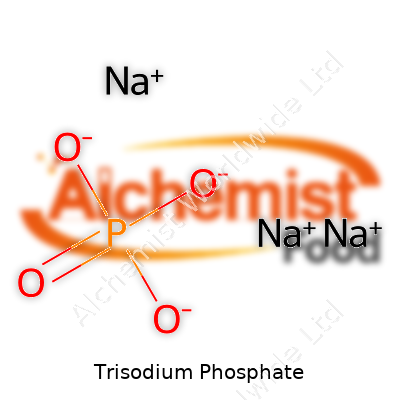
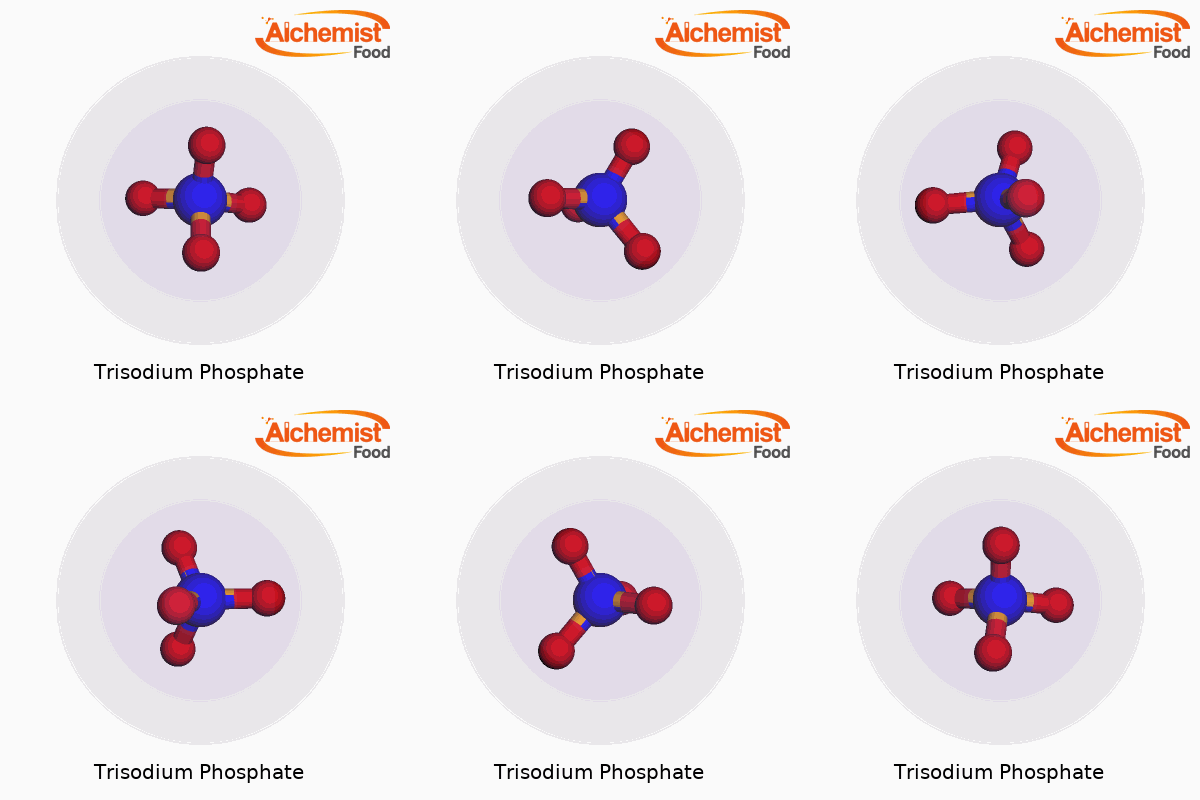
| Names | |
| Preferred IUPAC name | Trisodium phosphate |
| Other names |
TSP trisodium orthophosphate sodium phosphate tribasic phosphoric acid trisodium salt E339 trisodium salt of phosphoric acid |
| Pronunciation | /traɪˌsəʊdiəm ˈfɒsfeɪt/ |
| Preferred IUPAC name | trisodium phosphate |
| Other names |
TSP Sodium phosphate tribasic Trisodium orthophosphate Phosphoric acid trisodium salt |
| Pronunciation | /traɪˌsoʊdiəm fəˈsfeɪt/ |
| Identifiers | |
| CAS Number | 7601-54-9 |
| Beilstein Reference | 1713886 |
| ChEBI | CHEBI:18367 |
| ChEMBL | CHEMBL1359 |
| ChemSpider | 14256 |
| DrugBank | DB11062 |
| ECHA InfoCard | ECHA InfoCard: 13-100-00-3 |
| EC Number | 201-529-9 |
| Gmelin Reference | 922 |
| KEGG | C01183 |
| MeSH | D014293 |
| PubChem CID | 10049 |
| RTECS number | WC4500000 |
| UNII | K5QYC3ZUXF |
| UN number | UN3262 |
| CAS Number | 7601-54-9 |
| Beilstein Reference | 1713880 |
| ChEBI | CHEBI:18367 |
| ChEMBL | CHEMBL1357 |
| ChemSpider | 7416 |
| DrugBank | DB10371 |
| ECHA InfoCard | ECHA InfoCard: 03-2119487268-30-XXXX |
| EC Number | 231-509-8 |
| Gmelin Reference | 639406 |
| KEGG | C01836 |
| MeSH | D015821 |
| PubChem CID | 24243 |
| RTECS number | WC4500000 |
| UNII | VWX72LO6X7 |
| UN number | UN3262 |
| Properties | |
| Chemical formula | Na3PO4 |
| Molar mass | 163.94 g/mol |
| Appearance | White, granular or crystalline powder |
| Odor | Odorless |
| Density | 2.536 g/cm³ |
| Solubility in water | 28.7 g/100 mL (25 °C) |
| log P | -4.24 |
| Vapor pressure | Negligible |
| Acidity (pKa) | 12.3 |
| Basicity (pKb) | ~2.23 |
| Magnetic susceptibility (χ) | −81.0·10⁻⁶ cm³/mol |
| Dipole moment | 5.62 D |
| Chemical formula | Na3PO4 |
| Molar mass | 163.94 g/mol |
| Appearance | White, granular or crystalline powder |
| Odor | Odorless |
| Density | 1.62 g/cm³ |
| Solubility in water | freely soluble in water |
| log P | -4.0 |
| Vapor pressure | Negligible |
| Acidity (pKa) | 12.3 |
| Basicity (pKb) | 2.23 |
| Magnetic susceptibility (χ) | -13.0e-6 cm³/mol |
| Refractive index (nD) | 1.52 |
| Dipole moment | 7.64 D |
| Thermochemistry | |
| Std molar entropy (S⦵298) | 206.0 J·mol⁻¹·K⁻¹ |
| Std enthalpy of formation (ΔfH⦵298) | -1271.9 kJ/mol |
| Std molar entropy (S⦵298) | 206.0 J·mol⁻¹·K⁻¹ |
| Std enthalpy of formation (ΔfH⦵298) | -2854.7 kJ/mol |
| Std enthalpy of combustion (ΔcH⦵298) | -4000.2 kJ/mol |
| Pharmacology | |
| ATC code | V07AB |
| ATC code | A07XA12 |
| Hazards | |
| Main hazards | Causes severe skin burns and eye damage. Harmful if swallowed. |
| GHS labelling | Warning, Exclamation Mark |
| Pictograms | GHS05,GHS07 |
| Signal word | Danger |
| Hazard statements | H315: Causes skin irritation. H319: Causes serious eye irritation. |
| Precautionary statements | P264, P280, P305+P351+P338, P310, P301+P312, P330, P303+P361+P353, P304+P340, P501 |
| NFPA 704 (fire diamond) | 2-0-1 |
| Lethal dose or concentration | LD50 (oral, rat): 5000 mg/kg |
| LD50 (median dose) | LD50 (median dose) oral-rat: 7400 mg/kg |
| NIOSH | TTQ228N0JQ |
| PEL (Permissible) | PEL: 5 mg/m³ |
| REL (Recommended) | 600 mg/L |
| IDLH (Immediate danger) | Not listed |
| Main hazards | Causes severe skin burns and eye damage. |
| GHS labelling | GHS05, GHS07 |
| Pictograms | GHS05,GHS07 |
| Signal word | Danger |
| Hazard statements | H315: Causes skin irritation. H319: Causes serious eye irritation. |
| Precautionary statements | P264, P280, P301+P312, P301+P330+P331, P305+P351+P338, P310, P330, P337+P313, P402+P404, P501 |
| NFPA 704 (fire diamond) | Health: 2, Flammability: 0, Instability: 0, Special: – |
| Lethal dose or concentration | LD50 (oral, rat): 7,400 mg/kg |
| LD50 (median dose) | LD50 (oral, rat): 7400 mg/kg |
| NIOSH | WG2935000 |
| PEL (Permissible) | 5 mg/m³ |
| REL (Recommended) | 30 mg/m³ |
| IDLH (Immediate danger) | Not listed. |
| Related compounds | |
| Related compounds |
Disodium phosphate Monosodium phosphate Tetrasodium pyrophosphate |
| Related compounds |
Disodium phosphate Monosodium phosphate Tetrasodium pyrophosphate Sodium tripolyphosphate |



