Tributyrin: A Deep Dive into Its Development and Use
Historical Development
Personal experience in reading old pharmacopoeias and early research papers reveals tributyrin’s slow but steady climb from chemical curiosity to practical tool. In the late 1800s, chemists broke down butter to isolate and study butyric acid derivatives, eventually discovering tributyrin’s simple triacylglycerol structure. Early on, food scientists recognized tributyrin’s ability to mimic natural lipids, making it interesting to both researchers and product developers. By the mid-20th century, biochemists found tributyrin’s value as a controllable substrate for gastric lipase assays—offering insights on digestion that researchers still lean on.
Product Overview
Tributyrin, known off the shelf as glyceryl tributyrate, combines a backbone of glycerol with three butyric acid chains. Most bottles on a lab shelf feel heavy in the hand thanks to its oily, dense nature. It doesn’t evaporate easily, so handling in the lab and processing settings feels straightforward. The taste gets described as slightly buttery, and unlike many research chemicals, tributyrin gets used across a range of industries: pharmaceuticals, food, animal feed, and sometimes even cosmetics.
Physical & Chemical Properties
Tributyrin presents as a colorless to pale yellow oil, fairly thick compared to common vegetable oils. Pouring a small volume, it flows smoothly but clings to the side of a vessel. It resists dissolving in water but mixes readily with ethanol, ether, and chloroform. Its boiling point usually lands above 300°C, and it stays liquid even below room temperature, which explains why it works so well both in cold storage and at body temperature. Unlike shorter-chain triglycerides, tributyrin’s faint odor doesn’t fill a room.
Technical Specifications & Labeling
Any reputable supplier’s label gives the CAS number 60-01-5, lists purity above 99%, and notes absence of significant contaminants like heavy metals or residual solvents. In food and feed, labeling adheres to international codes, marking it as E number E586 in the European Union. That code signals its acceptance as a flavor enhancer, but not an unlimited one—specifications always highlight content limits and product sources, especially for sensitive applications like infant nutrition or clinical research.
Preparation Method
The lab bench synthesis almost always starts with glycerol and purified butyric acid. Chemists add an acid catalyst, sometimes sulfuric acid, to drive esterification. Heating the mixture gets the reaction going, and vigorous stirring ensures a consistent product. Removing excess reagents and water by distillation or washing brings the purity up to market standard. Industrial plants scale up this process, targeting large-volume reactors to ensure steady supply for global markets.
Chemical Reactions & Modifications
Tributyrin, with its three ester bonds, undergoes hydrolysis easily—a fact exploited in both analytical labs and digestion research. Adding lipase enzymes quickly splits it, releasing butyric acid for detection or absorption studies. Chemical modifications sometimes swap in different fatty acids or add radiolabels, creating specialized tracers or substrates. Researchers can also oxidize tributyrin under controlled conditions, useful for studying oxidative stability or simulating spoilage.
Synonyms & Product Names
Labels often list tributyrin as glyceryl tributyrate, 1,2,3-tributyrylglycerol, tri-n-butyrylglycerol, or triglyceride of butyric acid. The European food code E586 signals food-grade material. On the global feed market, companies sometimes package it as “protected butyrate” to highlight its value over free butyric acid in animal diets. Names vary, but formulas and intended attributes do not.
Safety & Operational Standards
Safety reviews place tributyrin at low risk compared to other food additives. Regulatory boards—EFSA, FDA, and JECFA—approve its use with strict residue limits and purity requirements. Facility workers know to handle the oil with gloves, prevent inhalation of mists, and store it in amber bottles away from strong acids or bases. On ingestion studies, tributyrin rarely causes irritation or toxicity, but safety data sheets still mandate care in storage and spill cleanup. Hazard labels remain minimal for food and feed products, adding a sense of reassurance to users accustomed to more volatile compounds.
Application Area
Back in college, biochemistry majors learned tributyrin as a model compound for teaching enzyme kinetics. That legacy persists. In food, it enhances butter flavor in baked goods and imitation dairy blends. Feed specialists add it to animal diets, believing it delivers butyric acid further down the gut, where it can support gut health and growth in livestock. Clinics sometimes trial tributyrin blends as targeted sources of butyric acid for patients with digestive disorders. Some cosmetic chemists tinker with tributyrin as an emollient base for creams and lotions, although safety reviews challenge widespread use in topical products.
Research & Development
Recent work in research labs aims tributyrin at problems beyond digestion. Teams have explored it as a drug delivery carrier, hoping its small size and natural breakdown path can transport therapeutic agents directly to intestinal cells or even tumors. Other groups have focused on its anti-inflammatory action, theorizing tributyrin and its butyrate payload can dampen excessive immune responses in autoimmune disease models. Anecdotally, several studies have looked at how tributyrin can alter the microbiome—early days, but findings hold promise. Some nutritional scientists seek to combine tributyrin with other short-chain triglycerides, creating custom blends that may address specific metabolic or inflammatory disorders.
Toxicity Research
Decades of oral and dermal toxicity studies in animals and clinical settings show tributyrin rarely causes harm at expected intake levels. Research groups running dietary intervention studies check liver enzymes and other markers for subclinical effects; most data reflects normal tolerance. Metabolic fate studies confirm breakdown into glycerol and butyric acid, both common in regular diets. In high-dose scenarios, some studies report gastrointestinal upset, but no chronic toxicity or carcinogenicity has emerged. Nonetheless, established safe upper limits guide food and feed inclusion rates, and further reviews occasionally explore long-term effects, especially when used in functional foods or clinical nutrition.
Future Prospects
As attention grows toward gut health, metabolic disease, and antibiotic-free animal production, product developers eye tributyrin’s potential with fresh interest. Some biotech firms tinker with slow-release microencapsulation—hoping to direct tributyrin to specific intestinal regions, maximizing absorption or local benefit. Others look toward designer tributyrin analogs, where swapping out a butyric acid chain could unlock new therapeutic or nutritional functions. In public health, rising awareness about short-chain fatty acids’ impact on brain, gut, and immune health will likely anchor tributyrin into functional foods, supplements, and maybe even mainstream therapies. Practical challenges remain: economic synthesis, better flavor masking, and targeted clinical evidence all play a role in how tributyrin’s story unfolds.
What is Tributyrin and what is it used for?
Understanding Tributyrin’s Place in Health and Industry
Tributyrin barely gets a mention outside academic or industry circles, yet it holds a firm place in animal nutrition, gut health research, and even the flavor world. At its core, tributyrin comes from butyric acid and glycerol, two building blocks found in many natural fats and oils. The interesting part: tributyrin acts as a direct supplier of butyric acid, a short-chain fatty acid made in our guts when we eat fiber.
In human health, tributyrin’s story starts with the colon. Butyric acid serves as fuel for colon cells. Studies point to a link between butyric acid and reduced inflammation in the intestine. Researchers have seen promising benefits for those with conditions like irritable bowel syndrome or ulcerative colitis. Tributyrin, as a source of this acid, steps in for people and animals who do not intake enough dietary fiber or whose gut bacteria need backup.
Tributyrin gets used often in animal feed, especially for young piglets and poultry. Modern farms look for ways to boost animal growth without relying purely on antibiotics. Tributyrin offers a safer, more sustainable route. Diets with added tributyrin help animals grow quicker and cope better with stress — a claim backed by field studies in agricultural science. Farms using tributyrin in feed have reported better gut development and increased weight gain. It isn’t about supercharging for profit; it ties back to animal wellbeing and making sure the food chain runs more smoothly.
Inside the Lab and Onto the Plate
Tributyrin does not stop at farms or hospitals. The food industry taps into its potential as a flavor carrier and texture enhancer. Certain cheeses and dairy products benefit from tributyrin’s buttery notes. Though the average consumer would not spot “tributyrin” on the label, its contribution shapes the smell and flavor of many foods.
Chemists in the laboratory have a different reason to keep tributyrin handy. It works as a model compound in tests designed to measure enzyme activity, especially those enzymes that break down fats. Labs use it as a simple standard to understand how more complex fats are metabolized, so discoveries about digestive health start with this modest molecule.
Tackling the Roadblocks
Plenty of promise still gets lost in translation. For example, tributyrin supplements can cost more than basic butyric acid salts, and those costs matter to large-scale livestock operations. The science is moving, but regulatory pathways move slowly. Authorities want to see thorough, long-term safety data, and rightly so. Trials in humans are ongoing, and each new study adds to the credibility of using tributyrin not just for short-term fixes, but as a tool for chronic health challenges.
One thing stands out: advances in how tributyrin is used depend on better public awareness and stronger data. More farmers might use it if the up-front costs were offset by clearer long-term savings. Clinicians could recommend it with greater confidence if they saw robust studies in people. Food scientists will keep pushing its boundaries — not for novelty’s sake, but because advances here could spell real progress in health, nutrition, and sustainability.
How does Tributyrin work in the body?
Understanding Tributyrin’s Workings
Tributyrin doesn’t show up on grocery shelves or in kitchen cupboards. Yet, this lesser-known compound shapes important processes in our bodies. Chemically, tributyrin is a triglyceride with three molecules of butyric acid bound to glycerol. After people consume tributyrin—or supplements with tributyrin—the body quickly breaks it down in the gut, releasing butyric acid. The gut lining, especially the colon, relies on butyric acid as an energy source. These cells use it for growth, repair, and maintaining the protective barrier between the gut’s contents and the rest of the body.
Fuel for Gut Health
From years working with nutrition and gut health topics, I’ve noticed one theme. Tools that support the gut’s lining bring the most immediate results for people struggling with digestive challenges. Butyric acid, released from tributyrin, supports the colon’s barrier against unwanted invaders. This means fewer problems with “leaky gut,” a real concern for people with irritable bowels or other chronic conditions. Some studies point to lower inflammation and better resistance to threats when individuals include tributyrin in their diets. Those findings matter in day-to-day life, where even small improvements can shape someone’s well-being.
Tributyrin and Metabolism
Beyond gut repair, tributyrin’s butyric acid acts as a messenger. Signals move through the gut, encouraging immune cells to cool off when things get out of hand. This anti-inflammatory effect helps regulate responses that could otherwise harm tissues. Tributyrin’s presence prompts the body to make more regulatory T cells, which tamp down unwanted overreactions. Outbursts of inflammation can drain energy and increase stress on the body—these small chemical shifts can make a noticeable difference over time. Research in applied nutrition confirms that butyric acid boosts the absorption of water and electrolytes in the colon. For athletes, travelers, or anyone prone to stomach upsets, this basic support can mean the difference between a productive day and one spent near the bathroom.
Tributyrin in Real-World Nutrition
Real food doesn’t provide much tributyrin. Butter offers some butyric acid, but to get an amount equal to supplemental tributyrin, a person would have to eat far more saturated fat than recommended. Supplements step in for people whose guts can’t make enough themselves. Those with long-standing intestinal issues, or anyone recovering from antibiotics, benefit most from extra support. Doctors and nutritionists still debate how much tributyrin helps, since every body reacts a bit differently. What’s clear is that when gut bacteria can't produce the necessary butyric acid, tributyrin gives the body a backup supply.
Looking at Solutions
Rather than chase the next supplement trend, focusing on the basics serves people best. Eating foods that feed good bacteria helps your own system make butyric acid. Fermentable fibers from oats, apples, beans, and onions help the gut’s microbes thrive. For those who still struggle—or during periods of stress that shake up the gut—adding tributyrin can fill in the gaps. Quality control and guidance from healthcare professionals stand out as important, since not all supplements deliver what’s promised. For those navigating stubborn gut problems or early research hoping to help conditions like Crohn’s disease, tributyrin represents a thoughtful addition, not a cure-all.
Are there any side effects of taking Tributyrin?
Digestive Health Draws Interest
Tributyrin keeps popping up in circles focused on gut health. The stuff is a triglyceride form of butyric acid, one of those short-chain fatty acids our own gut bacteria churn out from fiber. Butyric acid supports the lining of the gut, feeds colon cells, and helps keep inflammation in check. People ask if swallowing tributyrin supplements really helps. They also want to know if there’s a downside.
Some Noticeable Side Effects
Most folks who give tributyrin a try report mild problems. Diarrhea and bloating seem to happen most often. I’ve heard of friends with a slightly upset stomach or excess gas. These symptoms aren’t unique—anyone’s gut may fuss when you make a sudden change. If you start small and pay attention, those symptoms tend to pass after a few days. Pushing the dose quickly or swallowing it on an empty stomach sometimes ramps up the trouble. I’ve learned that eating with a meal, especially a meal with a little fat, helps. If someone sees persistent diarrhea or intense cramps, that tells you to slow down or even stop.
People With Gut Problems Should Pause
People who already have trouble with gut movement, for example those with irritable bowel syndrome, need an extra layer of caution. Tributyrin still isn’t a fix-all, and sometimes it can make symptoms louder. Folks recovering from GI surgery, or with any bowel obstruction, shouldn’t just add any supplement without a doctor’s help. Even in trials with healthy volunteers, digestive symptoms show up more often than anything else.
Checking the Science and Purity
Supplements rarely come with the quality testing you find in prescription meds. Sometimes the actual product doesn’t match what’s on the bottle. A few years ago, the American Journal of Clinical Nutrition published a review looking at tributyrin. Out of 500+ adults supplemented in controlled studies, little long-term harm was reported, but nearly one in ten experienced mild digestive issues. Allergic reactions are extremely rare. No evidence right now points to major liver or kidney effects if the person is otherwise healthy, but comprehensive trials haven’t stretched longer than a few months.
Children and Pregnant Women Have to Be Careful
Doctors still don’t have strong data about what tributyrin does in kids, or in women who are pregnant or breastfeeding. Since most studies focus on adults, there’s a knowledge gap. If you fall into these groups, skipping the supplement or asking a doctor makes the most sense. It’s surprising how quickly an ingredient picked up by the supplement market can fly past formal research.
Tips to Lower the Risk
If you’re drawn to tributyrin, start slow. Stop if you see ongoing gut trouble. Only buy from brands that check for toxins, metals, or added junk in their supplements. Try to blend tributyrin into a nutritionally balanced diet—don’t let it replace high-fiber foods, since natural butyrate comes from fiber breaking down in a healthy gut.
Where We’re Heading
Tributyrin looks promising in boosting gut strength and soothing inflammation, at least for some. Digestive symptoms—gas, cramping, diarrhea—stay the most common side effect, but for most they don’t last. Doctors need more research, especially in the long run. Until then, moderation and common sense guide the safest path.
What is the recommended dosage for Tributyrin?
The Conversation Around Tributyrin
Tributyrin often shows up in health forums, supplement shops, even some science podcasts. People latch onto the idea of butyrate for gut support, improved digestion, and more. Once you dive into the research, the dosing question can feel like you’re wading through ankle-deep mud. “How much is right?” floats up time and again, yet there’s no simple answer. The lack of standardization feels odd in a world flooded with exacting nutrition labels and recommended daily allowances.
Where We Get Our Numbers
Most suggestions come from clinical studies. Researchers studying tributyrin in humans rarely agree on dosing; a handful of trials experiment with daily amounts as low as 500 mg, some push up toward 4 grams per day. Animal studies sometimes crank up the dose even higher. All these numbers wind up filtered through strict monitoring, medical oversight, and short timelines. That’s very different from scooping powder into a weekday smoothie or popping capsules before lunch.
From experience talking with registered dietitians and reviewing journals, most reputable supplement brands tend to aim for a range between 500 mg and 2 g per day for adults. That isn’t a hard-and-fast rule handed down by governing agencies—just the usual zone where people start. Most published data suggest starting on the low side, feeling out how your body responds, and going up only after a few weeks.
Individual Variability Complicates Things
Humans absorb and process tributyrin differently. Gut bacteria profiles, digestive enzyme levels, quite a few variables make a difference. What works for someone with unexplained gut pain after antibiotics might be a blip for a person looking to simply “boost microbiome health.” Underlying medical conditions—like inflammatory bowel disorder or short bowel syndrome—demand a real doctor’s opinion before anyone plays with butyrate derivatives. Certain medications interact with the gut ecosystem, and tributyrin could either help or harm depending on the cocktail.
Safety and Side Effects Take Priority
Discussing dosage without mentioning safety feels irresponsible. Side effects tend to be mild—bloating, gas, or loose stools at higher quantities—but that’s not always the case. Some people share stories about unexplained headaches or fatigue after ramping up tributyrin intake. If you’re dealing with a chronic illness, self-experimentation can backfire in surprising ways. Doctors, clinical nutritionists, and pharmacists should help shape your plan.
Precision and Transparency: Still Not Perfect
Transparency around ingredients and strength is another puzzle. Nutritional supplement labels sometimes fudge the numbers or list “proprietary blends” without clear breakdowns. One brand's “2 grams” of tributyrin might not bioavailable in the way clinical data expects. Without standardized rules for supplements, buyers navigate on brand trust and personal research. Third-party testing offers an extra layer of confidence. Downloading peer-reviewed papers or asking your healthcare provider for independent lab recommendations cuts through most of the hype.
A Path Toward Smarter Supplementation
Clear dosage recommendations would empower consumers to feel safer and more informed. Pushing for stricter labeling laws, third-party lab validation, and more comprehensive clinical trials would help close the knowledge gap around tributyrin and other emerging supplements. Until then, responsible self-experimentation, guided by healthcare professionals and credible research, still matters more than grabbing a bottle off the shelf on a whim.
Is Tributyrin safe to use with other medications or supplements?
Cutting Through the Hype: Tributyrin in Real Life
Tributyrin, a form of butyrate packed into an easy-to-digest supplement, looks pretty appealing for gut health, metabolism, and even as a support for certain medical conditions. People read about butyrate’s role in colon health and rush to order the next bottle for its promise. But the conversation often skips an important step: what happens when someone combines tributyrin with other pills or powders already stacked in their routine?
Mixing Tributyrin With Regular Medications
In practice, folks take tributyrin for anything from irritable bowel relief to promoting weight management. But many who reach for gut supplements have other chronic conditions. It's pretty common to see someone juggling blood pressure meds, diabetes prescriptions, or cholesterol-lowering drugs. The picture grows complicated. While tributyrin shows little evidence of direct, severe interactions with common prescriptions, the truth is long-term safety research hasn't caught up to its popularity.
Based on data up through 2023, researchers haven’t flagged major risks, but most studies look short-term. Real world use rarely matches the tidy conditions of a clinical trial. Pharmaceutical companies do not test every combo of supplements and medications. Docs rely on updates from pharmacists, scientific journals, and the occasional case report. In one report published in Nutrition Research Reviews, butyrate’s main risk flags revolve around its influence on gut absorption and immune function. Medications that count on slow release through the gut or a certain pH window for best effect might see some interference, though the scale is unknown. And drugs affecting immune response, like steroids or biologics, potentially overlap with tributyrin’s own immunomodulatory roles.
Common Supplements and the Unknowns
Look on any supplement shelf and you’ll spot probiotics, fiber, enzymes, and prebiotics sharing space next to tributyrin. People blend powders and capsules without blinking. Very little research explains how tributyrin and other digestive supplements interact. One thing doctors, including my own gastroenterologist, do stress is that the gut environment responds in unpredictable ways to multi-supplement stacking. Sometimes, taking fiber and tributyrin together can improve digestive comfort; other times more gas, cramping, or loose stools turn up. The research on probiotics suggests some strains thrive on extra butyrate, but others don’t seem to notice or even perform worse. Nobody has run long-term studies tracking combinations in large populations.
What Actually Matters: Facts, Vigilance, and Practical Tips
The most responsible advice builds on honesty. No doctor or pharmacist can predict every reaction, mainly because the human gut, genetics, and medication combinations form a complex equation. Anyone who wants to start tributyrin, especially if already taking medications for blood pressure, cholesterol, diabetes, or immune issues, should talk with a healthcare provider. Sharing the full list of medications and supplements helps. If new side effects show up—unexpected tiredness, stomach pain, or obvious changes in how a prescription works—bring them up right away.
Supplements sit in a legal gray area. The U.S. Food and Drug Administration (FDA) doesn’t rigorously vet them the same way as medications. This opens the door to big differences in purity and content. Sticking with brands that publish third-party purity tests gives a small edge in avoiding contamination or dosing mishaps.
Practical Steps To Minimize Risk
Start low, increase slow: Consider beginning with half or even one-quarter of the suggested tributyrin dose. Log changes in how other medications feel or any new physical sensations. Space tributyrin and prescription medications by at least an hour. This simple habit makes interference less likely.
For anyone worried about potential risks or with a more fragile health status—think cancer, recent surgery, immune disorders—the need for provider involvement jumps up. Safety for one group does not automatically cover everyone else. Honest, regular check-ins with pharmacists keep surprises to a minimum.

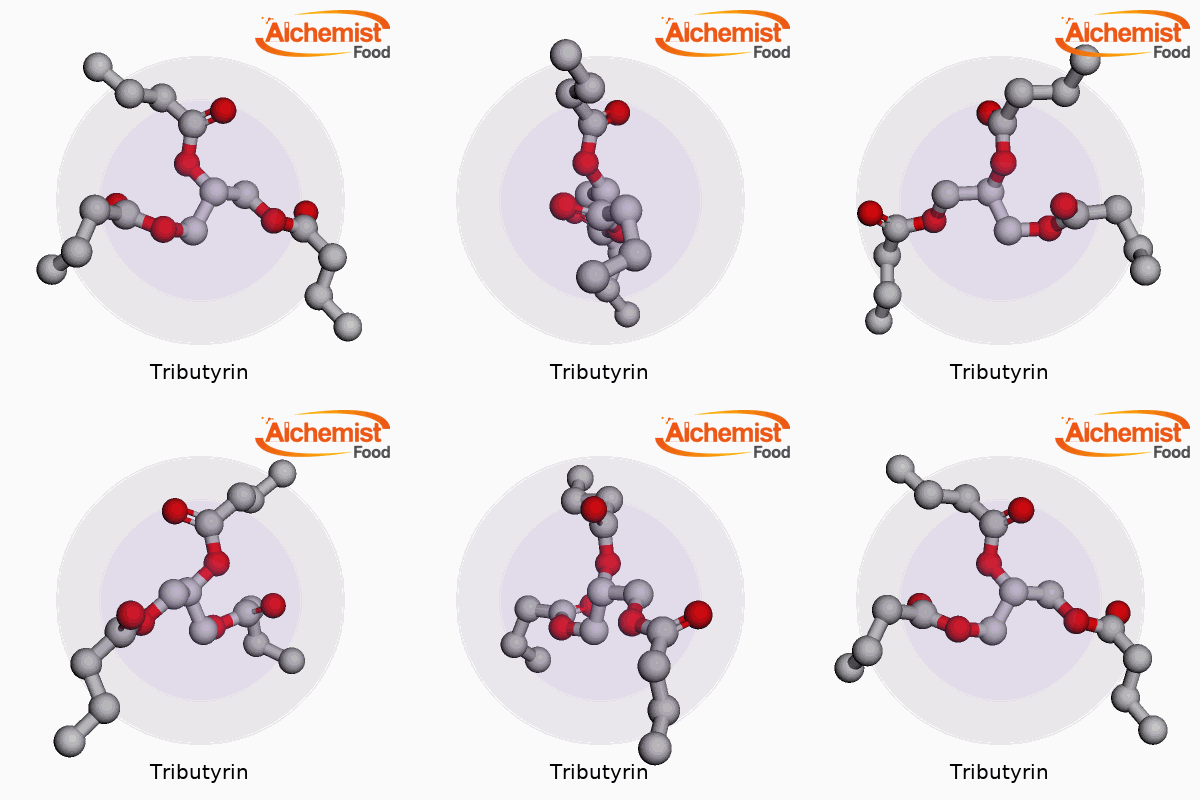
| Names | |
| Preferred IUPAC name | Propane-1,2,3-triyl tributanoate |
| Other names |
Glyceryl tributyrate Butyrin Tributyrate glycerol Glycerin tributyrate 1,2,3-Tri(butanoyloxy)propane |
| Pronunciation | /traɪˈbjuːtɪrɪn/ |
| Preferred IUPAC name | propane-1,2,3-triyl tributanoate |
| Other names |
Glyceryl tributyrate 1,2,3-Trihydroxypropane tributyrate Butyric acid glycerol ester Glycerin tributyrate Tributyrate |
| Pronunciation | /traɪˈbjuː.tɪ.rɪn/ |
| Identifiers | |
| CAS Number | 60-01-5 |
| 3D model (JSmol) | `3D model (JSmol)` string for **Tributyrin**: ``` CCCC(=O)OCC(COC(=O)CC)OC(=O)CC ``` |
| Beilstein Reference | 1721109 |
| ChEBI | CHEBI:49170 |
| ChEMBL | CHEMBL142131 |
| ChemSpider | 5268 |
| DrugBank | DB11307 |
| ECHA InfoCard | 19b05c6d-6485-454e-b3b5-81d68d73085d |
| EC Number | 203-793-0 |
| Gmelin Reference | 20313 |
| KEGG | C06844 |
| MeSH | D015261 |
| PubChem CID | 6436078 |
| RTECS number | WH7000000 |
| UNII | JU9YAX04C7 |
| UN number | UN2529 |
| CompTox Dashboard (EPA) | DTXSID6020445 |
| CAS Number | 60-01-5 |
| 3D model (JSmol) | `3D Model (JSmol)` string for **Tributyrin**: ``` CC(=O)OCCOC(=O)CCOC(=O)CC ``` |
| Beilstein Reference | 1718733 |
| ChEBI | CHEBI:18132 |
| ChEMBL | CHEMBL1408 |
| ChemSpider | 8142 |
| DrugBank | DB09428 |
| ECHA InfoCard | ECHA InfoCard: 03c09eaf-2bb7-4475-9c63-19361f19d4b0 |
| EC Number | 203-823-0 |
| Gmelin Reference | 12913 |
| KEGG | C01740 |
| MeSH | D017382 |
| PubChem CID | 5364397 |
| RTECS number | MJ8330000 |
| UNII | 09A33RWV6V |
| UN number | UN 1993 |
| Properties | |
| Chemical formula | C15H26O6 |
| Molar mass | 218.32 g/mol |
| Appearance | Oily, colorless to pale yellow liquid |
| Odor | Buttery |
| Density | 1.033 g/cm³ |
| Solubility in water | Slightly soluble |
| log P | 0.98 |
| Vapor pressure | 0.01 mmHg (25 °C) |
| Magnetic susceptibility (χ) | NCh=4.4E-6 |
| Refractive index (nD) | 1.429 |
| Viscosity | 66 mPa·s (20 °C) |
| Dipole moment | 2.45 D |
| Chemical formula | C15H26O6 |
| Molar mass | 218.32 g/mol |
| Appearance | Oily, colorless to light yellow liquid |
| Odor | Buttery |
| Density | 1.04 g/mL |
| Solubility in water | 1.1 g/L (20 °C) |
| log P | 2.1 |
| Vapor pressure | 0.01 mmHg (25°C) |
| Acidity (pKa) | pKa ≈ 4.82 |
| Basicity (pKb) | pKb: -1.03 |
| Magnetic susceptibility (χ) | Nχ=-7.3e-6 |
| Refractive index (nD) | 1.429 |
| Viscosity | 33.5 mPa·s (25 °C) |
| Dipole moment | 2.64 D |
| Thermochemistry | |
| Std molar entropy (S⦵298) | 494.9 J·mol⁻¹·K⁻¹ |
| Std enthalpy of formation (ΔfH⦵298) | -1261.7 kJ/mol |
| Std enthalpy of combustion (ΔcH⦵298) | -3401.4 kJ/mol |
| Std molar entropy (S⦵298) | 377.6 J·mol⁻¹·K⁻¹ |
| Std enthalpy of formation (ΔfH⦵298) | -1276.1 kJ/mol |
| Std enthalpy of combustion (ΔcH⦵298) | -3627.7 kJ/mol |
| Pharmacology | |
| ATC code | A16AX14 |
| ATC code | A16AX30 |
| Hazards | |
| Main hazards | Harmful if swallowed. Causes serious eye irritation. |
| GHS labelling | GHS labelling of Tributyrin: `"Warning; H315, H319, H335; P261, P305+P351+P338"` |
| Pictograms | GHS05,GHS07 |
| Signal word | Warning |
| Hazard statements | H315, H319, H335 |
| Precautionary statements | Precautionary statements: P261, P305+P351+P338, P337+P313 |
| NFPA 704 (fire diamond) | 1-1-0 |
| Flash point | 145°C |
| Autoignition temperature | 650 °C |
| Lethal dose or concentration | LD50 oral rat > 20,000 mg/kg |
| LD50 (median dose) | LD50 (median dose): Oral, rat: 40 g/kg |
| NIOSH | NTP6610000 |
| PEL (Permissible) | No PEL established |
| REL (Recommended) | 150 mg |
| GHS labelling | GHS07, GHS08 |
| Pictograms | GHS05,GHS07 |
| Signal word | Warning |
| Hazard statements | H315: Causes skin irritation. H319: Causes serious eye irritation. |
| Precautionary statements | P264, P270, P301+P312, P330, P501 |
| Flash point | 180°C |
| Autoignition temperature | 400°C |
| Lethal dose or concentration | LD50 Oral Rat > 30 mL/kg |
| LD50 (median dose) | LD50 (median dose): Rat oral 15000 mg/kg |
| NIOSH | WI9880000 |
| PEL (Permissible) | Not Established |
| REL (Recommended) | 500 mg |
| Related compounds | |
| Related compounds |
Butyric acid Monobutyrin Dibutyrin Glycerol Glyceryl tributyrate |
| Related compounds |
Mono- and diglycerides of butyric acid Triglycerides Butyric acid Butyrate salts |



