Triacetin: Evolution, Usage, and Future Directions
Historical Development
Triacetin, also known by its chemical name glyceryl triacetate, started drawing attention from chemists back in the late 19th century. As researchers learned to transform naturally available glycerol into more useful forms, triacetin came up as a versatile compound. Originally, it filled a need for stable plasticizers in industries just beginning to experiment with new polymers. Over the years, as technology advanced, the use of triacetin spread beyond industrial chemistry. My first glance at old manufacturing records revealed pharmaceutical and food companies adopted triacetin for its reliable safety profile and mild, agreeable character. The compound’s adaptability told a story of innovation rooted in practical problem-solving.
Product Overview
At its core, triacetin flows as a clear, oily liquid, with a faint fruity smell. Inside the bottle, it packs function: helping maintain moisture, carrying flavors, making plastics more flexible, or acting as a solvent. In the modern marketplace, triacetin’s flexible spirit keeps it bound to pharmaceuticals, food products, cosmetics, and even explosives—one bottle might thicken a lipstick, another might boost the performance of rocket propellant. Companies around the globe bottle this multi-faceted chemical under aliases like glyceryl triacetate, 1,2,3-propanetriol triacetate, or emulsifier E1518 in food factories. Its character as an ingredient keeps factories running and shelves stocked.
Physical & Chemical Properties
Getting hands-on with triacetin means dealing with a liquid that stands out for stability and compatibility. With a boiling point north of 258°C and a melting point just below -78°C, the material slips easily between roles—even extreme temperature swings don’t cause much bother. Its moderate viscosity lets it move without dribbling away uncontrollably, and high solubility in alcohols and some organics allows chemists to mix it into diverse recipes. The molecular formula C9H14O6 might mean little on the surface, but the combination of three acetate groups snuggled onto a backbone of glycerol drives much of triacetin’s utility. Chemical stability means it resists oxidation and keeps for years sealed in airtight containers. In day-to-day plant work, this means fewer worries about waste or surprise chemical reactions.
Technical Specifications & Labeling
Quality control specialists look for a product that’s colorless, with a light odor, and a purity surpassing 99%. Residual moisture falls below 0.5%. The food and pharma trades demand documentation that guarantees the absence of heavy metals and no presence of prohibited solvents. Regulations, from the US FDA and European agencies, point to clear tolerance levels and labeling practices. Triacetin might show up as E1518 on food ingredient lists or labeled by CAS number 102-76-1 in technical documents. Certificates of analysis run pages long, reassuring buyers on batch-to-batch consistency. Over the years, the expectation that suppliers track and report data honestly has increased considerably. In my own fieldwork, poorly documented triacetin has always set off red flags.
Preparation Method
Industrial production starts with glycerol, a renewable byproduct of biodiesel, and acetic anhydride, a briskly reactive chemical. Chemists combine them in the presence of a strong acid catalyst, steering glycerol toward a full replacement of its original hydrogen atoms with acetyl groups. Heat and agitation drive the reaction forward, while careful distillation ensures only the purest product escapes the vessel. Modern operations often recycle unused reagents and energy, cutting down on waste and making processes leaner. In older facilities, production sometimes left troubling byproducts; those lessons have shaped today’s trade-off between cost and environmental safety. The yield and efficiency found in large-scale reactors show how decades of trial and improvement benefit the day-to-day supply chain.
Chemical Reactions & Modifications
Triacetin’s reactivity allows it to play both substrate and product in chemists’ hands. Under basic conditions, the molecule breaks apart—“hydrolyzes”—to give back glycerol and acetic acid. In the lab, altering reaction speed and temperature can fine-tune which products get made. In later processing, triacetin mixes well with nitrocellulose, turning brittle materials into flexible films found in everything from playing cards to early camera film. In flavor chemistry, slow hydrolysis releases a mild, sweet note, making it a favored base. Since it resists oxidation, triacetin often steps in as a mild stabilizer for fats and volatile compounds. Even with all these transformations, careful stewardship in the plant remains vital: stray water shortens shelf life, and impurities can push products out of regulatory tolerance.
Synonyms & Product Names
Triacetin appears in supply catalogs under many handles. Glyceryl triacetate tops the list for chemical and pharmaceutical circles. Food technologists spot it as E1518 or as a food additive under various trade names. In perfumery and aroma science, catalogues call it 1,2,3-propanetriol triacetate. Each industry seems to pick its own label, fueling the need for cross-reference tables in global commerce. Tracing records for regulatory compliance means keeping tabs on every synonym—a point all too clear to anyone handling audits or customs forms.
Safety & Operational Standards
Despite its steady and mostly benign reputation, triacetin brings some safety demands in warehouse and factory settings. It poses little risk by skin contact or inhalation under normal conditions. In my lab, spills have never caused alarm—plenty of soap and water make cleanup simple. Handling in quantity kicks in standard chemical hygiene: gloves, goggles, and solid ventilation to tamp down the faint vinegar scent from the acetic acid core. Routine exposure studies have not pointed to serious acute or chronic effects at work or in downstream consumer products. Still, the lessons of chemical safety always apply—no sense letting even minor hazards slip past unchecked.
Application Area
Triacetin lands in an impressive array of end uses, spanning chewing gum, gelatin capsules, beverage flavorings, and even smokeless tobacco. Pharmaceutical firms lean on it as a plasticizer, helping gelatin capsules stay supple and airtight until delivery. Food scientists put it to work as a carrier or solvent for artificial flavors and sweeteners. Cosmetic and personal care companies favor triacetin for packaging compatibility and its stable, neutral profile. Upstream in industrial supply, it brings essential flexibility to explosives, adhesives, and even polymer films. In technical service calls for clients, I’ve always found triacetin among the first options for problems tied to moisture, viscosity, or texture. Its cross-industry track record confirms the respect it commands.
Research & Development
Ongoing research tracks triacetin into new frontiers. Biomedical developers see potential in using triacetin as a drug-delivery enhancer. Medical device engineers have experimented with coatings based on triacetin. Flavor and fragrance chemists continue to probe its subtle reaction pathways for better-tasting or longer-lasting food ingredients. Recent academic papers highlight trial formulations in liposomal delivery, controlled-release medicines, and sustainable resins. Reviewing lab notebooks over the years shows clear advances when triacetin joins the mix—better shelf life, easier processing, improved safety. Still, questions about process efficiency, byproduct management, and downstream health effects push research ahead. Each step forward enters the world only after tough regulatory scrutiny.
Toxicity Research
Scientists have dug deep into triacetin’s toxicity. Oral and inhalation studies, drawn from both human and lab animal trials, report generally low toxicity at reasonable exposure levels. The compound gets metabolized quickly, breaking down into glycerol and acetate—both natural in the human body. Reports from the US FDA, European Food Safety Authority, and World Health Organization confirm safe consumption in regulated quantities. High-dose research shines a light on potential for mild irritation or digestive upset, but the quantities needed to cause harm far exceed realistic workplace or consumer exposures. Prolonged daily handling in factories hasn’t raised alarms, and personal experience working with the material echoes the official findings. For allergy-prone consumers or sensitive workers, clear labeling keeps surprises to a minimum.
Future Prospects
The growing push for safer, greener, and more reliable specialty chemicals has set triacetin up as a staple of future chemical manufacturing. With global industry chasing new uses for biobased raw materials, glycerol sourcing for triacetin will likely stay cost-effective and sustainable. Researchers look to tweak production processes, aiming for even cleaner syntheses and lower waste. Emerging fields—such as bio-based packaging, better oral drug delivery systems, and even next-generation energy storage—already list triacetin among their building blocks. Conversations with colleagues in R&D often circle back to triacetin’s dependability in pilot plant runs. With demand broadening and new applications on the horizon, triacetin’s century-long career looks set to keep growing—anchored in solid science and day-to-day practicality.
What is Triacetin used for?
What’s Inside Common Products
Anyone flipping through the ingredients list on a pack of chewing gum or a bottle of medicine might spot a tongue-twister like “triacetin.” It sounds technical, and most people walk right past it, but this compound shows up in more places than folks realize. Triacetin, also called glyceryl triacetate, packs an interesting resume and holds its own in the world of food, pharma, and even tobacco.
Food’s Silent Helper
Most people never taste triacetin directly, but it helps flavors stick around in things like gum, baked treats, and drinks. Triacetin acts as a stabilizer for flavors. Without it, many sweets and processed foods would lose their punch, especially after sitting on store shelves. The FDA recognizes triacetin as safe for use in food, so you won’t find scientists wringing their hands over a little gum-chewing.
A Role in Medicine
Pills and capsules often contain more than just the active drug. Most tablets need something to hold them together, and liquids need a way to keep their ingredients from clumping. Triacetin joins this lineup as a plasticizer, making the outer shell of capsules flexible rather than brittle. Anyone who’s swallowed a gel cap has probably used triacetin’s benefits without a second thought. The pharmaceutical world wouldn’t run the way it does without these helpers smoothing things out.
Sneaky Additive in Cigarettes
Some cigarette manufacturers use triacetin in their filters. The story is simple: filters need to hold together and stay firm when moistened. Triacetin helps the filter fibers stick, and makes the experience more consistent for smokers. It doesn’t make cigarettes safe—nothing does—but it’s one of those unseen tweaks that keeps the product consistent. Public health folks watch these kinds of additives to monitor safety and push for transparency.
Industrial and Cosmetic Uses
Beyond food and pharma, triacetin goes to work in cosmetics, printing inks, and even explosives. Some lipstick makers use it for texture. In inks, it improves adhesion to certain papers and helps ink flow more easily. While not as famous as parabens or phthalates, triacetin makes things blend together, spread smoothly, and stay intact.
Safety and Regulation
Regulators give triacetin a pretty clean bill of health across food and pharmaceuticals. Toxicology studies show low risk at the levels used in products. That said, safety doesn’t always mean it can go anywhere and everywhere. Scientists still study long-term effects, especially with additives in products kids use or consume frequently.
The Bigger Picture
Food science, pharma, and cosmetics rely on small pieces working together in harmony. Triacetin helps keep flavors fresh, pills easy to swallow, and cosmetics appealing. While it’s usually buried deep on the ingredient list, it highlights the complex dance behind modern manufacturing. Industry transparency and ongoing research matter. Nobody wants to discover decades later that a “helpful” ingredient brought unexpected problems. Constant scrutiny, testing, and clear labeling allow everyone—from parents to scientists to everyday shoppers—to make smarter choices. Regulators, watchdogs, and regular folks all play a part in creating products that are safe to use and enjoyable, without mystery or hidden risks.
Is Triacetin safe for human consumption?
What is Triacetin and Why Is It in Food?
Triacetin pops up in ingredient lists on foods, chewing gum, and even in pharmaceuticals. Food companies have used it as a solvent and a plasticizer. The stuff keeps capsule shells flexible and prevents foods from drying out. Some manufacturers favor it for maintaining texture in baked goods and extending shelf life in other products. Triacetin also serves a purpose in flavors, helping certain taste compounds hang around longer.
Opinions from Health Agencies
Regulators often review food additives thoroughly before allowing them into the market. The U.S. Food and Drug Administration (FDA) considers triacetin safe when used as intended in foods. The European Food Safety Authority (EFSA) did its own assessment, reviewing animal studies and available human data, and did not find reason for concern when used within approved limits. Both organizations set acceptable daily intake levels. For triacetin, usual consumption for most people falls well below these safety margins.
Scientific Findings and Human Experiences
I’ve come across multiple studies while researching food additives for consumer advocacy groups. Researchers tested triacetin in animals with doses much higher than anyone eats in a normal diet. Even at these high levels, no clear health risks turned up. This doesn’t mean people should pour triacetin on salad, but it offers some reassurance.
Common drugs and gums with triacetin tend to go unnoticed by most people, with few complaints about bad reactions. I have yet to hear from someone who got sick just from the small amounts in food. Still, anyone with known sensitivities to food additives should check labels, just in case.
Potential Areas of Concern
Processed foods often contain a mix of many additives, making it tough to pin down what causes rare side effects. The safety data relies on tests around short-term consumption and animal studies. Some advocates worry about how chemicals interact with each other over long periods. Real world situations always bring more complexity than controlled lab studies. The current research does not link triacetin to cancer or other diseases, but nobody studies every possible outcome.
Some watchdog organizations would like regulators to require more research on the subtle, long-term health effects of food additives, especially on children. Infants, for instance, have a different metabolism than adults. Current rules already prevent the use of triacetin in baby formula and other sensitive products, out of extra caution.
Navigating the Grocery Store
Anyone concerned about consuming too many additives could read ingredient lists more closely and choose more whole foods. I find it easier to cook at home, sticking with basic ingredients, to avoid most additives. People with specific allergies or health conditions should always check with a medical doctor before drastically changing their diet.
What Keeps Triacetin Safe?
The safety of chemicals like triacetin relies on honest labeling, consistent monitoring by regulators, and new scientific research. The food system stays safest when agencies, scientists, and industry keep up a healthy conversation, keep gathering data, and listen to concerns from real people. Triacetin carries a solid safety record so far in the amounts found in regular diets. People deserve both trustworthy information and choices when it comes to what goes in their food.
What are the side effects of Triacetin?
Triacetin in Everyday Life
Triacetin shows up in more places than most people realize. It’s often found in food as a flavor carrier, in pharmaceuticals as a solvent, and in cosmetics as a plasticizer. My first encounter with the name came from reading the back of a sugar-free gum package, which made me wonder: what does this chemical do, and is it safe?
Common Side Effects and Real-World Experiences
For most people, using products containing triacetin does not cause trouble. Mild digestive upset can crop up after consuming triacetin in food, especially if someone already deals with a sensitive gut. Stomach pain, gas, and occasional diarrhea get reported, especially in larger servings. Parents sometimes notice these reactions after kids chew a lot of sugar-free candy or gum. This isn’t unique to triacetin; many food additives have similar effects when taken in quantity.
There’s not much evidence of toxic effects in humans at typical levels. Studies show triacetin gets broken down into acetic acid and glycerol, both familiar to most diets already. Scientists agree that triacetin can be safe, and international food safety panels set levels that keep intake well below anything worrisome. Still, high doses given in animal studies have raised flags — lab rats, for instance, showed lower body weight gains and loose stools at excessive intake, data that help guide safe limits for human products.
Allergy and Sensitivity
True allergies to triacetin look rare. In my years chatting with pharmacists and reading adverse event reports, I haven’t heard of a convincing allergic reaction traced back to triacetin alone. Instead, most complaints boil down to intolerance or general digestive sensitivity. Anyone with known reactions to additives in foods or medications should stay alert when trying something new.
Long-Term Safety Questions
Long-term exposure remains a key area that science keeps rechecking. People worry most about everyday chemicals building up over time. So far, research hasn't linked triacetin to cancer or reproductive harm at levels found in diets or cosmetics. The European Food Safety Authority and the U.S. Food and Drug Administration both back its use, so long as companies stay inside specific safety limits. That said, scientists keep watch, reviewing new data as it lands.
Being Informed Matters
Reading labels and questioning unfamiliar ingredients comes naturally for people dealing with food allergies or young children’s diets. Information straight from public agencies, like the FDA or national poison centers, gives the clearest advice. For households with medical conditions like IBS or food intolerance, tracking any new symptoms after using a triacetin-containing product can answer questions quickly.
Practical Choices and Solutions
A balanced approach always works best. Sticking to recommended amounts, staying curious about new symptoms, and talking to healthcare providers build better experiences. If someone feels uneasy about food additives, plenty of natural alternatives exist. Companies often offer similar products without triacetin or related additives for people who want to take no chances.
People can drive change with their wallets and questions. Stores respond when shoppers ask for more transparency, and manufacturers adjust ingredients based on market demand and new science. Education, clear conversation with medical teams, and informed choices protect health in the real world.
Is Triacetin natural or synthetic?
Looking At The Roots of Triacetin
Triacetin, also known as glyceryl triacetate, pops up in everyday products ranging from chewing gum to medicines. Some folks want to know if this ingredient comes from nature or gets whipped up in labs. The answer isn’t as simple as reading a label—what matters is production, source, and purpose.
From Nature or A Lab Bench?
Triacetin’s backbone is glycerol, which shows up naturally—our bodies even make it as part of metabolizing fat. Acetic acid, its other building block, is the sour side of vinegar and comes from natural fermentation. But the moment factories churn out triacetin to sell, the process takes place in a lab. Chemists react glycerol with acetic anhydride or acetic acid and heat, leading to triacetin. That’s not a tree branch or a fruit. It’s a clean, predictable reaction for food, pharmaceuticals, and industry.
Whether this counts as “synthetic” or “natural” can get political and confusing. Most food companies will call triacetin synthetic, especially in Europe and North America. Yet the ingredients that combine to form it exist in nature, and that’s what causes debates among regulators and watchdogs.
Why People Care
With shoppers paying attention to food labels, anything that sounds “chemical” sparks concern. The demand for simple, “natural” ingredients shapes how the food and cosmetics world thinks. Many people believe that “synthetic” means risky by default, but that’s not the whole story. Every batch of triacetin for food use passes purity tests and safety standards laid out by agencies like the U.S. Food and Drug Administration and the European Food Safety Authority. Studies on triacetin show it breaks down in the body to harmless compounds like glycerol and acetic acid—materials our bodies already see every day.
Social media tends to amplify misunderstandings about chemical names. My own mom once called in a panic after seeing triacetin on her coffee creamer, thinking it was something new and dangerous. I explained that she’s already eaten similar forms naturally when she enjoys a spoonful of honey or a cup of yogurt. The fact that a chemical has a long name doesn’t mean it’s unsafe.
The Trust Factor: E-E-A-T and Ingredient Transparency
A big part of trusting what we eat and use comes down to open communication. Companies gain credibility by showing where ingredients come from, how they’re made, and who checks their work. A brand that discloses how it manufactures triacetin and lists studies on digestibility has a leg up in earning customer trust.
Independent, qualified experts reviewing both published safety studies and manufacturing audits matters more than buzzwords. If a company can back up the safety and the source with solid science, folks can make informed choices instead of falling for clickbait fears. I always encourage people to dig past the headlines or marketing claims and check the facts from reputable regulatory bodies or peer-reviewed studies.
Moving Toward Solutions and Clarity
One solution lies in clear, consumer-friendly language on packaging and websites. Instead of hiding behind vague terms, brands could explain how they source or manufacture ingredients, why they choose them, and what research supports their use. This kind of honesty helps cut through confusion and shine a light on the science. Teaching the basics of how ingredients like triacetin behave in the body arms shoppers with the power to decide what fits their personal comfort and diet.
Public conversations grounded in real evidence, not just fear or hype, will always set a stronger foundation for health choices. Triacetin sits at the intersection of “natural origin” and “synthetic production,” so real answers call for curiosity and context, not just a spot on a list.
Where can I buy Triacetin?
Why Triacetin Matters More Than You Think
If you’ve ever checked the label on a pack of gum, a bottle of e-cigarette liquid, or even some pharmaceuticals, chances are Triacetin made a cameo. For me, it was during a project on food additives that the name really jumped out. Sometimes it’s called glyceryl triacetate, but what matters is what it does: acts as a solvent, improves texture, keeps things moist, or helps flavors stick around longer.
You rarely see people hunting for this stuff in regular stores like you would for table salt. Back at the university lab, we ordered Triacetin from scientific suppliers, checked the chemical grades pretty carefully, and handled it with gloves. Outside of research, most folks in the food industry or even hobbyists making vape juice chase suppliers online. There’s a pivotal difference between having the right ingredient for your craft and risking counterfeit materials packed with impurities.
Sourcing Safe Triacetin
Search engines show endless options—chemical distributors, flavor houses, and e-commerce sites. Some people have asked me if Amazon or eBay is safe. Major e-commerce platforms list Triacetin for sale, but proof of quality sits at the heart of things. I’ve spent time reading the reviews, scouring the vendor ratings, and emailing suppliers for documentation. You want a certificate of analysis, clear information on purity (usually 99% or higher for food or pharmaceutical grade), and a proper Material Safety Data Sheet.
Legit chemical supply companies like Sigma-Aldrich, Fisher Scientific, Vigon International, and TCI America stand out for transparent sourcing and compliance. Going through these suppliers, you’ll need to provide a business license or academic credentials—keeping the material out of unqualified hands. On the flip side, smaller vendors with vague listings or drastically different prices raise serious questions. More than once, I’ve seen “too good to be true” deals, and a quick peer check online often revealed missing paperwork, suspect customer support, or flat-out scams.
Practical Laws and Regulations
Triacetin falls under general chemical regulations. The Food and Drug Administration (FDA) recognizes it as Generally Recognized as Safe (GRAS) for specific uses, but regulations can change fast. If you’re thinking about using it in food or vaping, you’d better check local laws. In the U.S., the FDA keeps an eye on what’s added to foods. European buyers usually check specifications under E1518. It’s rare to see restrictions on Triacetin itself, but blending it with unregulated products or trying to skirt food-grade standards can backfire. I’m always struck by how little some smaller sellers mention legal responsibilities—and how much trouble that can cause.
Trusted Tips from Real Experience
Start by identifying the true need for Triacetin. If it’s for lab work, go with academic suppliers. For food, insist on food-grade labeling and ask for documentation. I once waited two weeks for paperwork from a sketchy supplier; the shipment never arrived and the credit card company got involved. That wasted time and probably cost more than paying a trusted company in the first place. Large suppliers may take longer to process small orders, but the peace of mind counts. Local specialty chemical shops sometimes stock Triacetin, but U.S. buyers usually need to deal with shipping restrictions or hazmat fees.
To sum up: do your due diligence. Finding Triacetin isn’t like picking up flour from the grocery store. Spend a bit of effort to research reputable suppliers, confirm purity, and check legal status for your intended use. Don’t risk your health or project for the sake of convenience or a cheap price tag. Real safety and quality come with good research—and asking the right questions before you buy.
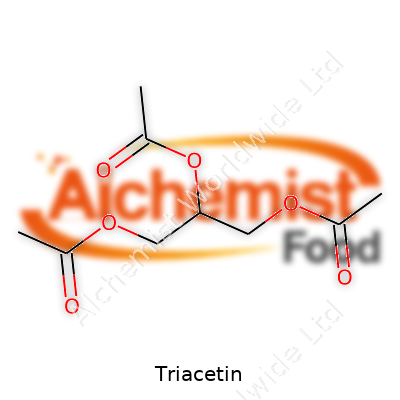
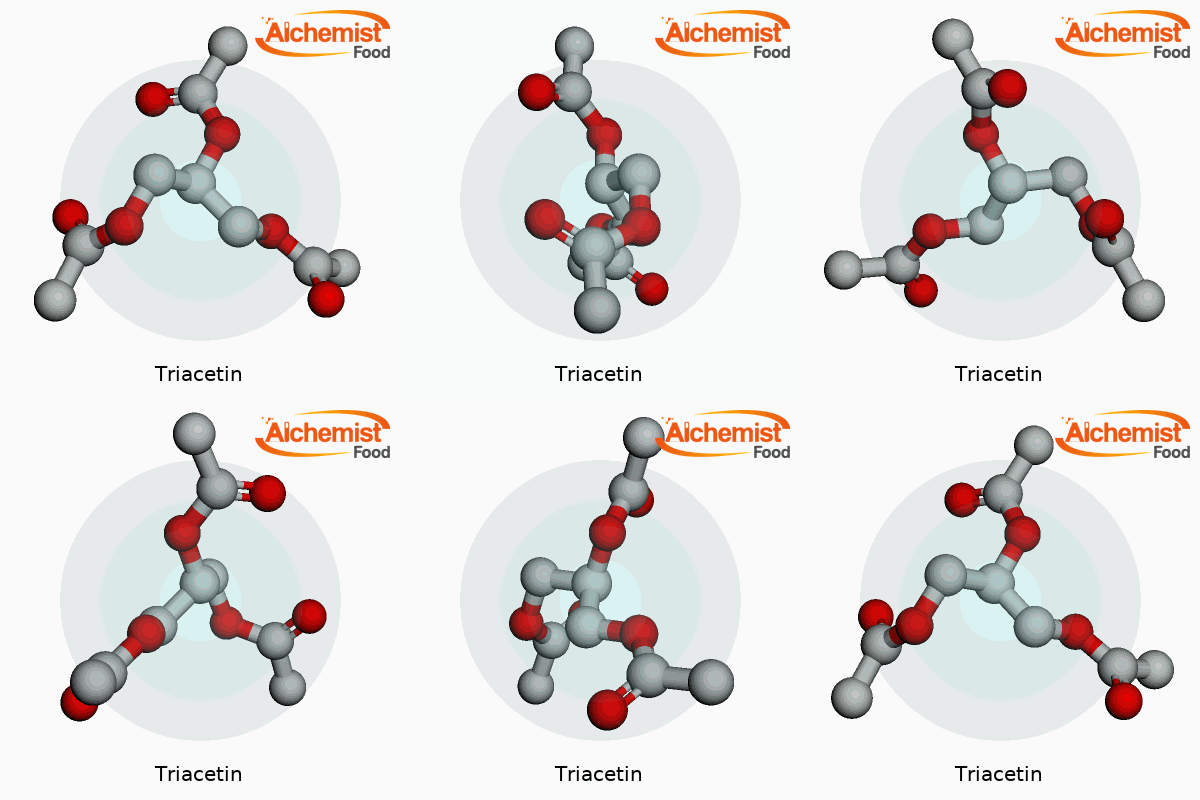
| Names | |
| Preferred IUPAC name | propane-1,2,3-triyl triacetate |
| Other names |
Glycerol triacetate Glyceryl triacetate 1,2,3-Triacetoxypropane |
| Pronunciation | /traɪ.əˈsiː.tɪn/ |
| Preferred IUPAC name | propane-1,2,3-triyl triacetate |
| Other names |
Glycerol triacetate 1,2,3-Triacetoxypropane Glyceryl triacetate |
| Pronunciation | /traɪ.əˈsiː.tɪn/ |
| Identifiers | |
| CAS Number | 102-76-1 |
| 3D model (JSmol) | `3D model (JSmol)` string for Triacetin: ``` C1(C(OC(=O)C)OC(=O)C)OC(=O)C ``` |
| Beilstein Reference | 1818739 |
| ChEBI | CHEBI:4865 |
| ChEMBL | CHEMBL1406 |
| ChemSpider | 16315 |
| DrugBank | DB04618 |
| ECHA InfoCard | 03d6e249-97ad-470f-8358-3aa5baa6a6e3 |
| EC Number | 204-611-0 |
| Gmelin Reference | 30984 |
| KEGG | C19684 |
| MeSH | D017253 |
| PubChem CID | 5548 |
| RTECS number | TR7400000 |
| UNII | 4KY4040MGM |
| UN number | UN2624 |
| CAS Number | 102-76-1 |
| 3D model (JSmol) | `C(C(=O)OC)(C(=O)OC)C(=O)OC` |
| Beilstein Reference | 1910802 |
| ChEBI | CHEBI:4884 |
| ChEMBL | CHEMBL14238 |
| ChemSpider | 7296 |
| DrugBank | DB03755 |
| ECHA InfoCard | 100.024.447 |
| EC Number | 203-969-2 |
| Gmelin Reference | 6079 |
| KEGG | C06555 |
| MeSH | D014252 |
| PubChem CID | 5548 |
| RTECS number | TY5770000 |
| UNII | GB6FR1R53M |
| UN number | UN2625 |
| Properties | |
| Chemical formula | C9H14O6 |
| Molar mass | 218.204 g/mol |
| Appearance | Colorless, oily liquid |
| Odor | Odorless |
| Density | 1.16 g/cm³ |
| Solubility in water | Miscible |
| log P | 0.25 |
| Vapor pressure | 0.004 mmHg (25°C) |
| Acidity (pKa) | 13.1 |
| Basicity (pKb) | Triacetin has a pKb of 13.10 |
| Magnetic susceptibility (χ) | -7.64 × 10⁻⁶ |
| Refractive index (nD) | 1.429 |
| Viscosity | 22 - 28 mPa·s (at 20°C) |
| Dipole moment | 8.37 D |
| Chemical formula | C9H14O6 |
| Molar mass | 218.20 g/mol |
| Appearance | Clear, colorless, oily liquid |
| Odor | Odorless |
| Density | 1.16 g/cm³ |
| Solubility in water | Miscible |
| log P | -0.11 |
| Vapor pressure | 0.0225 mmHg (25°C) |
| Acidity (pKa) | 13.1 |
| Basicity (pKb) | Triacetin has a pKb of 14.4 |
| Magnetic susceptibility (χ) | -62.6·10⁻⁶ cm³/mol |
| Refractive index (nD) | 1.430 |
| Viscosity | 24 mPa·s (25 °C) |
| Dipole moment | 8.53 D |
| Thermochemistry | |
| Std molar entropy (S⦵298) | 416.6 J·mol⁻¹·K⁻¹ |
| Std enthalpy of formation (ΔfH⦵298) | -1807.7 kJ/mol |
| Std enthalpy of combustion (ΔcH⦵298) | -1790.7 kJ/mol |
| Std molar entropy (S⦵298) | 256.6 J·mol⁻¹·K⁻¹ |
| Std enthalpy of formation (ΔfH⦵298) | -1656.7 kJ/mol |
| Std enthalpy of combustion (ΔcH⦵298) | -1913.7 kJ/mol |
| Pharmacology | |
| ATC code | A16AX09 |
| ATC code | A24AC04 |
| Hazards | |
| Main hazards | May be harmful if swallowed, inhaled, or absorbed through the skin; causes eye, skin, and respiratory irritation. |
| GHS labelling | GHS07, Warning, H319 |
| Pictograms | GHS02, GHS07 |
| Signal word | Warning |
| Hazard statements | H412: Harmful to aquatic life with long lasting effects. |
| Precautionary statements | Precautionary statements for Triacetin: "P264, P280, P305+P351+P338, P337+P313 |
| Flash point | 120 °C |
| Autoignition temperature | 850°F (454°C) |
| Lethal dose or concentration | LD50 Oral Rat 7,500 mg/kg |
| LD50 (median dose) | LD50 (median dose) of Triacetin: 7,500 mg/kg (rat, oral) |
| NIOSH | TX2697000 |
| PEL (Permissible) | PEL: Not established |
| REL (Recommended) | 40 mg/kg bw |
| GHS labelling | GHS07, GHS08 |
| Pictograms | GHS07 |
| Signal word | Warning |
| Hazard statements | H319: Causes serious eye irritation |
| Precautionary statements | P210, P233, P240, P241, P242, P243, P280, P303+P361+P353, P305+P351+P338, P370+P378 |
| Flash point | Flash point: 138°C |
| Autoignition temperature | 850 °F (454 °C) |
| Lethal dose or concentration | LD50 (oral, rat): 7,200 mg/kg |
| LD50 (median dose) | LD50 (median dose) of Triacetin: 7,500 mg/kg (oral, rat) |
| NIOSH | TY5600000 |
| PEL (Permissible) | PEL (Permissible Exposure Limit) for Triacetin: Not established |
| REL (Recommended) | ADI 0-5 mg/kg bw |
| Related compounds | |
| Related compounds |
Monoacetin Diacetin Glycerol |
| Related compounds |
Glycerol Diacetin Monoacetin |



