Stearic Acid: Practical Insights from Lab to Life
Historical Development
Stearic acid has traveled a long road since its discovery. Since the early 19th century, chemists extracted this fatty acid from animal fat during soap making. Michel Eugène Chevreul, a French chemist, unlocked some of its secrets in the 1820s, recognizing its distinct nature compared to other fatty acids. By the late 19th century, industrial stearic acid production relied heavily on rendering animal tallow and saponification. Later, as vegetable oils started serving as raw material, producers scaled up extraction, improving quality and sustainability. The material found its way into candles, lubricants, cosmetics, and even rubber, making it not just a laboratory curiosity but a workhorse of everyday products. Every decade since, practical improvements in extraction, purification, and predictive understanding of its chemistry have allowed stearic acid to fit into new roles, meeting both industrial and consumer demands.
Product Overview
This saturated fatty acid shows up in forms ranging from pearly white flakes and powder to tough cakes. It gets sold as both cosmetic and industrial grades, but the differences go deeper than just packaging. Companies set standards for the levels of free acidity, color, moisture, and unsaponifiable matter. People toss around names like "octadecanoic acid" in laboratories, but outside that world most just call it stearic acid, whether they’re sourcing it for rubber manufacturing, pharmaceuticals, or soap. Its link to animal and vegetable sources raises questions about sustainability and allergen safety, making traceability and labeling a recurring topic for responsible businesses.
Physical & Chemical Properties
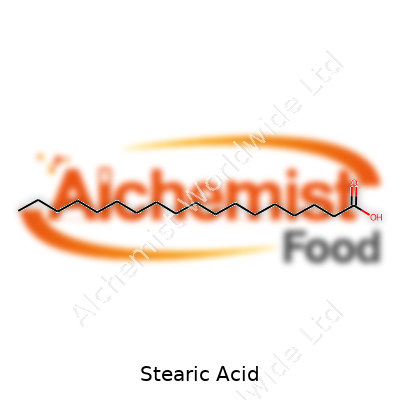
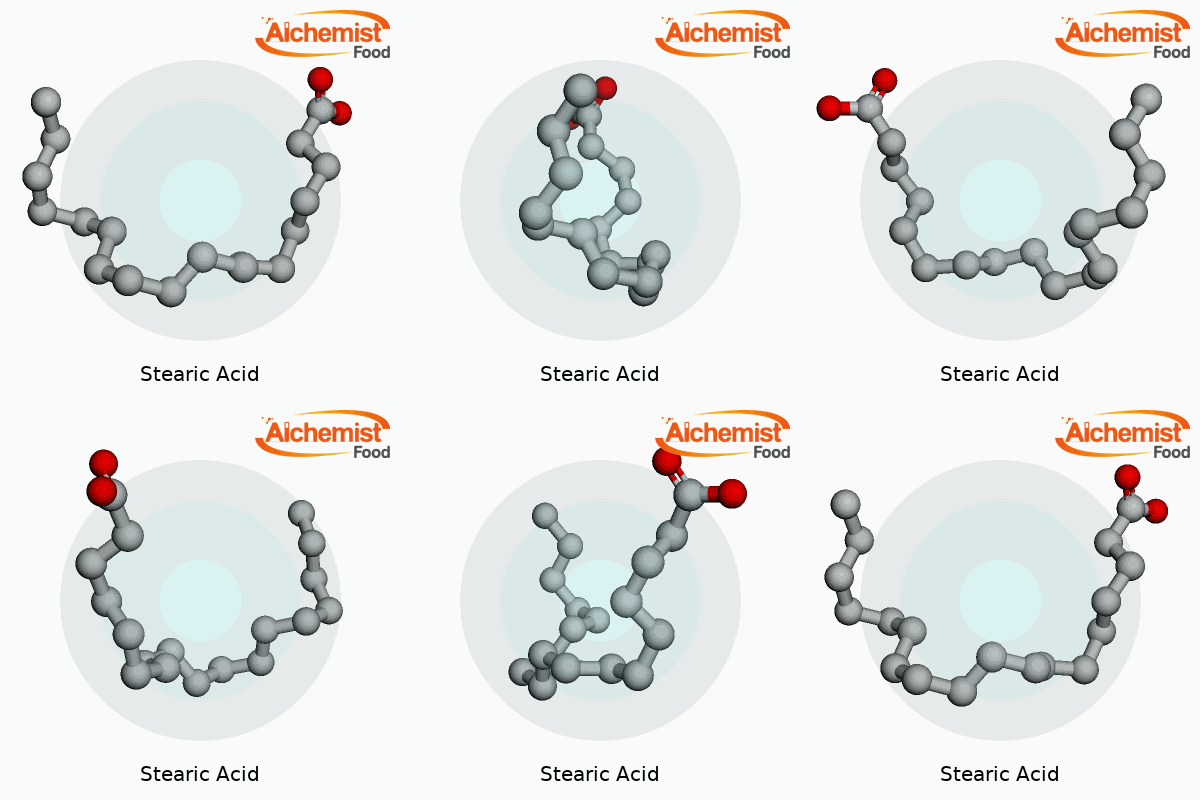
Stearic acid carries the formula C18H36O2. Out of the bottle, it looks like a white, waxy solid but melts around 69–70°C. Its long hydrocarbon chain means it shrugs off water, yet dissolves reasonably well in hot alcohol and some solvents. The acid end loves chemical tinkering—ready to form salts, esters, and other derivatives. Since the molecule resists oxidation and high temperature, it makes steady appearances in high-heat or long-shelf-life applications. It doesn’t carry much odor, which is handy, since those who blend soaps, lipsticks, or tablets want consistency over surprise. Its pH in suspension rests on the acidic side, so it pairs nicely with substances that handle or need acidic conditions.
Technical Specifications & Labeling
When it comes to buying or selling stearic acid, nobody just grabs “any old” powder. Purity takes the spotlight, with North American and European Pharmacopoeias stipulating assay limits, typically above 95%. Moisture content matters to avoid clumping and odd reactions during storage or mixing. Color gets measured carefully, sometimes using the Lovibond scale or similar equipment, since yellow tints can signal impure material or improper storage. Industrial buyers scrutinize heavy metal levels, looking for lead, arsenic, cadmium, and mercury below mandated thresholds. Kosher or Halal certifications can sway procurement decisions, especially for food, pharmaceuticals, and personal care products. Packaging must show batch numbers, shelf life, net weight, and storage guidance, tying quality to traceability.
Preparation Method
Production has shifted from animal-only sources to blends where sustainable palm and coconut oil play starring roles. Industrial-scale hydrolysis of triglycerides (the major components in fats and oils) gets done using steam at high pressure. The stearic acid splits away, then crystallizes out as the mixture cools. Distillation, often under vacuum, follows to get higher purity, skimming off other fatty acids like palmitic or oleic. Some facilities hydrogenate unsaturated fats to drive up stearic acid yield, especially if they start with grades heavy in unsaturated chains. Many modern operations reclaim split-off glycerol—a valuable byproduct for pharmaceuticals and food.
Chemical Reactions & Modifications
Stearic acid lends itself to a host of transformations. In the lab, one common modification is producing its salts by combining it with alkaline materials—these metallic soaps form the backbone of many lubricants, antifouling agents, and cosmetic bases. The esterification route with alcohols makes lubricants and plasticizers. Hydrogenation of unsaturated feedstock can push output toward pure stearic acid, improving stability. Cross-linking with polyesterification lets specialty polymer applications take root. Its straightforward reduction delivers stearyl alcohol, a cosmetic favourite. Every modification tweaks its solubility or melting profile, allowing formulators to turn one substance into a suite of functional additives.
Synonyms & Product Names
People label stearic acid with a collection of names that depend on its market and chemistry: octadecanoic acid, stearophanic acid, or even simply “C18 fatty acid” in some technical sheets. In trade, product codes may start with “SA” or initials that hint at plant or animal origin. Rubber makers often speak in terms of “hard acid” or “soaping grade”. In pharmaceutical and food contexts, you spot it as E570 or INS570. Cosmetic raw material suppliers might brand it with proprietary names or blends, based on purity and additives.
Safety & Operational Standards
Handling stearic acid feels routine—nobody wears hazmat suits—but safety isn’t an afterthought. Inhalation of fine dust or contact with eyes can trigger mild irritation. Workers use dust masks, gloves, and goggles to dodge repeated exposure. Industry-wide Material Safety Data Sheets flag the need to prevent static build-up in powder storage; fine stearic acid, like many organics, can form dust clouds that ignite. Facilities keep workspaces ventilated, sweep up spills promptly, and store drums tightly lidded. The US FDA recognizes stearic acid as “Generally Recognized as Safe” (GRAS) in food at specific limits. Still, its origin can sometimes link back to allergens, including traces of peanut oil or latex, so responsible vendors document supply chains meticulously. Labeling laws in the EU and US reinforce this traceability.
Application Area
Stearic acid pulls its weight in more sectors than most chemicals its size. In plastics and rubber, it acts as a processing aid, helping with release from molds and stabilizing the finished product. Soap makers count on it to deliver the right hardness and creamy lather. In pharmaceuticals, it often works as a lubricant in tablet manufacturing, preventing mixtures from sticking to sensitive machinery. In cosmetics, its presence supports texture and shelf life in products from lotions to sticks. You’ll also find it in food production, usually as a GRAS additive to aid blending or stabilization. Candles burn longer and steadier thanks to its high melting point. Its metallic stearates—created by reacting it with calcium, magnesium, or zinc—help in everything from plastics, to paints, to powders.
Research & Development
Ongoing research pushes stearic acid beyond traditional uses. Material scientists study its behavior in biodegradable plastics, enhancing their strength without reliance on petroleum derivatives. Cosmetic industry researchers test molecular modifications aimed at increasing moisturizing capacity or reducing potential for pore blockage. Analytical chemists develop ways to trace its plant or animal origins at the molecular level, supporting demands for sustainable sourcing and transparent labeling. Biomedical researchers probe stearic acid’s biocompatibility, with hopes it can stabilize certain drugs or improve delivery systems. In the past decade, collaborations between food scientists and sustainability advocates focus on lowering the resource and emissions footprint of both feedstock production and processing steps.
Toxicity Research
Human toxicity studies on stearic acid repeatedly show a low toxicity profile. People consume small amounts regularly—every chocolate bar or beef steak brings a little stearic acid along. It doesn’t appear to raise LDL cholesterol, and some research even suggests neutral or beneficial effects compared to other saturated fats. Localized irritation is the main issue with occupational exposure, especially in dusty environments. Animal toxicity studies reflect similar results: low acute toxicity, with only exceptionally high doses leading to gastrointestinal distress or minor organ impacts. Environmental impact studies find the substance readily biodegrades, with minimal concerns under normal usage, but regulators continue testing breakdown byproducts as industry expands uses and processing intensifies.
Future Prospects
The next decade promises to revamp the lifecycle and applications of stearic acid. Demand for “palm-free” and sustainable alternatives drives research into lab-optimized yeast and algae strains engineered for fatty acid production. Brands in the cosmetics and food industries look for clean-label grades, with minimal contaminants and full supply chain visibility. Specialty polymers and biocompatible materials rely on tuning stearic acid derivatives for greener, longer-lasting performance. In energy, researchers test its use as a phase-change material in thermal storage, capturing waste heat in everything from solar panels to district heating grids. In pharmaceuticals, microencapsulation and improved delivery systems exploit its properties. The range of functional blends available for plastics and rubber grows each year, packing in more performance with fewer ingredients and less environmental impact. With rules tightening globally on feedstock traceability and production waste, future-ready manufacturers invest in closed-loop systems to recycle and valorize every output from the stearic acid line.
What is stearic acid used for?
Everyday Encounters: Where Stearic Acid Shows Up
Most people touch or even eat compounds made with stearic acid every day without realizing it. Take a look at your bathroom shelf—soaps, shampoos, shaving foams, and lotions almost always list stearic acid high up among the ingredients. What does it do? Its waxy texture brings substance to these products, helping them form rich, stable lather and giving body creams that satisfying, thick consistency. A bottle that says “moisturizing” likely includes stearic acid to keep the lotion creamy and not watery, based on my own years watching product formulas evolve in skincare brands.
In the Kitchen: Hidden in Plain Sight
Packaged cakes, chocolates, and even chewing gum often contain stearic acid—not for the flavor, but for texture and shelf life. It keeps chocolate glossing smoothly, stops chewing gum from sticking to wrappers, and helps flour in baking separate and blend more easily. The safety of stearic acid in food keeps coming up; the US Food and Drug Administration lists it among substances “generally recognized as safe.” Still, processed foods get blamed for all sorts of health issues, so every additive—including harmless ones—tends to be questioned. I grew up in a house where my mom read every label, and this taught me that ingredient names shouldn’t automatically make us suspicious. A little looking up can go a long way.
Medicines and Supplements: Behind the Scenes
Pills usually don’t come out neat and compact by accident. Stearic acid acts as a lubricant in the machines that press vitamins or medicines into tablet form, keeping powders from sticking on the punch or the die. This isn’t some rare trick—pretty much every major pharma company and supplement maker depends on it. Some do wonder whether stearic acid interferes with absorption, but several studies in medical journals show it doesn’t block your body from getting nutrients from supplements.
Manufacturing: More than a Raw Material
Industrial factories use stearic acid for much more than mixing up creams and pills. Rubber gloves, car tires, and many plastic products rely on it for flexibility and for preventing material from sticking in molds. In candle making, stearic acid, a byproduct from animal fats or vegetable oils, produces candles that burn slowly and evenly. Candlemakers in family businesses where I once bought supplies definitely preferred stearic acid for quality, and it shows in the finished product.
The Sourcing Dilemma: Animal or Plant?
One ongoing concern has been the source of stearic acid: sometimes it’s derived from animal fats, other times from sustainable palm or coconut oil. For vegans or those who avoid certain animal products for religious or ethical reasons, this matters. Not every brand discloses where its stearic acid comes from, especially in non-food products, which can complicate life for people with strict dietary codes. There have been solid pushes for clearer labeling and more plant-based sourcing. Personal care brands and food producers large and small are hearing these requests and shifting toward transparent supply chains and plant-based ingredients.
Better Choices for the Future
Transparency in sourcing and processing stands out as one of the biggest gaps around stearic acid. From what I’ve seen—both as a consumer and through research—people want to make choices that line up with their values, and companies hold the responsibility to help them do so. Industry and advocacy groups could do more to support honest labeling and sustainable sourcing of ingredients like stearic acid. That’s going to help build trust and let consumers use products they’re comfortable with.
Is stearic acid safe for skin?
Looking at What Stearic Acid Actually Does
Stearic acid steps into a lot of skincare products for a reason. Chemically, it’s a saturated fatty acid found in palm oil, cocoa butter, and animal fats. Manufacturers add it to moisturizers, cleansing bars, shaving creams, lotions, and even some makeup because it works as an emulsifier. This basically means it holds oil and water together so cream doesn’t split or separate. It also adds thickness, making a lotion feel richer or a bar feel less crumbly.
Safe Use Backed by Research
Decades of research show stearic acid works safely on the surface of healthy skin. Dermatologists like how it helps keep moisture locked in, supporting the skin’s protective barrier. Several peer-reviewed studies have failed to turn up much evidence for irritation or allergic reactions, even in people with sensitive skin. The Environmental Working Group scores it as “low hazard.” Most of the safety discussion comes down to concentration: almost every face cream or cleanser uses a tiny fraction of it, often under 3%.
Why Stearic Acid Rarely Causes Trouble
In my own work with clients who patch-tested products, I’ve seen very few complaints centered on stearic acid. People worry about ingredient names they can’t pronounce, but sometimes the scariest label isn’t the one causing the issues. The main reactions I’ve seen come from other additives or fragrances. When a simple bar cleanser uses stearic acid alongside glycerin and little else, most folks end up happy—skin feels soft, not greasy or dry.
Who Should Look Twice at Stearic Acid?
Some skin conditions call for a little more caution. If you’ve got a known allergy to coconut, cocoa butter, or palm oil, that’s a signal to check where the stearic acid comes from. Those with extremely sensitive or inflamed skin, such as eczema or active dermatitis, should patch test any new product anyway, not just those containing stearic acid. This goes double if you spot redness or stinging with a new cream—even supposedly “safe” ingredients can bug fragile skin. Most people never see a problem, but a few unlucky folks with rare allergies could get itchiness or hives. Doctors recommend stopping use and checking in with a dermatologist if you notice this.
How To Pick Products with Stearic Acid
The buzz around “clean beauty” often gives standard ingredients like stearic acid a bad rap. Based on long-term research, it doesn’t clog pores or trigger acne in most people. If you like simple, gentle cleansers or lotions and find them effective, there’s no reason to hunt for a replacement just because you spot stearic acid on the label. On the other hand, pay attention to the rest of a product’s ingredient list: preservatives, fragrances, and high percentages of synthetic additives matter more for irritating sensitive skin than stearic acid does.
Bigger Picture—Ethical and Environmental Sourcing
There’s one angle that gives me pause: where stearic acid comes from. Palm oil production can fuel deforestation and habitat loss. If sustainability matters to you, look for brands that use RSPO-certified palm derivatives or source from sustainable cocoa. A growing number of companies put ethical sourcing information right on the packaging, so with a little digging, you can find products that support both your skin and your values.
Is stearic acid vegan or animal-derived?
The Source of Confusion
Stearic acid pops up everywhere. I’ve seen its name on soap labels, in candles at the store, inside cosmetics, even in supplements marketed as “vegan friendly.” Looks like a simple ingredient, but the story behind it gets messy. The core issue is its source: animal fats or vegetable oils. Neither the packaging nor the ingredient list usually gives a clear answer, which can leave a lot of people guessing—myself included.
How Stearic Acid Gets Made
Let’s break it down. Originally, people produced stearic acid by breaking down animal fats. Some soapmakers still use that process, so animal-derived stearic acid lives on. These days, big manufacturers often use palm or coconut oil instead because they’re cheap and easy to work with. Almost every time I see “vegetable stearic acid” on a package, it comes from palm or coconut, but companies rarely mention the plant.
Why Vegans Should Care
Folks who follow a vegan lifestyle want more than just animal-free food. They look for personal care products, cleaning supplies, and medications that completely avoid animal ingredients. It’s important to me too—I once tossed a brand of shampoo because they couldn’t tell me where their stearic acid came from. Traces of animal fat slip into all kinds of everyday items. If your stearic acid has animal origins, the product definitely isn’t vegan, no matter the marketing claim. But where palm oil is in play, other big concerns start creeping up—deforestation, habitat loss, human rights issues. So picking plant-based isn’t always a clean win either.
What the Labels Say—and Don’t
Regulations around “vegan” claims don’t force brands to say where stearic acid comes from. Even if a product says “plant-based” broadly, ingredients like stearic acid or glycerin might come from mixed sources. A few companies make it a point to label the ingredient origin. Most don’t bother. I’ve emailed manufacturers and sometimes the answers were vague or delayed. Other times, brands straight up told me, “It may come from either animals or plants, depending on availability.” Imagine trying to shop that way.
What Shoppers Can Do
People who care about animal ingredients have to dig deep. I’ve found calling or emailing customer service can help, but not every company will take the time to clarify ingredient sources. There are ingredient databases, like EWG’s Skin Deep, and vegan certification logos that help, but those aren’t foolproof. Sometimes, community forums fill in the gaps. Social media brings peer reviews and shared findings about brands using plant-based stearic acid. Pressure mounts as more shoppers demand full transparency, and a few brands actually list “100% vegetable-sourced” right on the label. Supporting those brands nudges others to follow suit.
Real Solutions Come From Demand and Honesty
I want clear sourcing in plain language, so nobody has to play detective. Third-party vegan certifications move the needle forward. That certification does more than just signal “vegan-friendly”—it brings some accountability about where key ingredients like stearic acid originate. As more people push for accurate information, brands respond. It can feel frustrating, but the more noise customers make, the higher the standard goes for ingredient transparency. Until then, learning to read past the buzzwords remains the best tool I’ve got.
Can stearic acid cause allergies?
Understanding Stearic Acid in Everyday Life
Open any personal care product at home, and you may spot stearic acid on the label. Lotion, soap, cosmetics, even some food items — all feature this fatty acid. It gets manufactured from both animal and plant fats. Many see it as a “clean” ingredient: it keeps lotions thick, soaps solid, and food textures creamy.
Allergies: Real-World Concerns
Food and skin allergies shape my daily decisions. From experience and research, stearic acid rarely pops up on the allergy radar. Most reactions happen with peanut proteins, dairy, gluten, or harsh preservatives and fragrances. Allergists and dermatologists rarely warn people about stearic acid, unless the starting material is questionable due to religious or ethical reasons.
Research from the American Academy of Dermatology and other leading bodies shows allergic reactions to stearic acid itself remain very rare. The compound’s chemical structure does not make it a likely candidate for causing immune reactions in most individuals. Even people with sensitive skin tolerate it in moisturizers. In hospitals, creams containing it soothe and protect skin that needs gentle care.
Complications in Source and Purity
A few factors muddy the waters. Stearic acid comes from both animal and vegetable sources. Cross-contamination with other proteins during manufacturing can add risk for those with very specific food allergies (like soy or nuts) if the product isn’t highly purified. Good manufacturers test and purify their ingredients, but not every brand invests in rigorous quality control. Smaller companies or less regulated markets introduce risks by not screening for traces of allergenic contaminants.
Label reading matters for anyone with severe food allergies. A call to the product’s support line or an email can clear up questions about raw material origins, though responses often vary in detail. For skincare, dermatologists see contact dermatitis mostly from fragrance, dye, or strong preservatives, not fatty acids like stearic acid.
What’s at Stake for Vulnerable Groups?
Children, people with several allergies, and those with ultra-sensitive skin need to know what they’re putting on or in their bodies. Parents of kids with food protein allergies maintain caution even with “neutral” ingredients. They demand transparency about sourcing and testing. Those with strict vegan or religious dietary needs also check labels since animal-derived stearic acid can slip into vegetarian-looking products.
Better Product Transparency
Solutions trace back to traceability. Manufacturers who provide transparent sourcing and perform regular quality testing cut down the risk of hidden allergens. Regulators should demand clearer ingredient listing and better allergen tracking throughout the supply chain. Retailers can help by urging suppliers to clarify animal or plant origins for ingredients like stearic acid. Medical professionals ought to stay current on the rare case reports and guide patients with complex allergies through ingredient lists.
In the end, allergic reactions to stearic acid are rare, but the broader questions of purity, traceability, and customer education are far from solved. Every decision taken toward transparency protects people who live with allergies — even from ingredients that aren’t obvious culprits.
How is stearic acid produced?
How Stearic Acid Comes to Life
Stearic acid isn’t some rare secret, tucked away in laboratories. It's a common saturated fatty acid, popping up in oils and animal fats. The road from raw ingredient to finished product starts with resources many know: palm oil, tallow from cattle, and coconut oil. These natural fats aren’t wasted. They give stearic acid its beginning.
Factories start by gathering oils or fats from either plants or animals. Workers break down these raw materials using water under high pressure and heat — a method called hydrolysis. That process splits the fat into two parts: fatty acids (like our star, stearic acid) and glycerol. In my time visiting a soap-making co-op, I saw simple buckets, heat, and patience do the work. Larger plants speed things up, but the science doesn’t change much. The goal is always about separating the ingredients cleanly and safely.
Fatty acids next head for purification. Stearic acid’s crew gets isolated through a step called distillation. It’s a bit like how folks distill liquor, but here, they’re harnessing differences in boiling points. Lighter and heavier acids part ways. I’ve seen plant workers monitor dials and check for impurities every step along the way. After distillation, stearic acid cools and solidifies in flakes or powder — shapes ready for factories that need them.
Real Uses, Real Concerns
If you use soap, lotions, or candles, you benefit from stearic acid. In my house, candles fill the cupboards and bars of soap line the sink. That smoothness in shaving cream owes plenty to this single ingredient. Some food products, like certain chocolates, also use small amounts of it. The numbers tell the story: demand for stearic acid topped two million tons across the world last year, according to market research by Grand View Research.
But, nothing is as simple as it looks. Many factories use palm oil because it’s cheap and crops grow fast. Still, palm plantations carve out forests and push wildlife out. Reports by the World Wildlife Fund warn of shrinking habitats in Indonesia and Malaysia, leading to real debates at my own dinner table about switching to different products.
Animal fats can offer an alternative, especially in places where cattle byproducts already exist. Yet, some people avoid animal-based goods, whether for ethical or dietary reasons. Coconut oil gives another path, but yields less stearic acid per ton — and the costs add up.
A Path Forward
Companies big and small can make a difference. Responsible sourcing stands out, with groups like the Roundtable on Sustainable Palm Oil certifying suppliers who protect forests and treat workers fairly. I pay extra for a bar of soap with an RSPO seal, knowing the supply chain takes the environment into account. There’s a long way to go. Consumers, governments, and businesses all steer the conversation, pushing for alternatives and better farming. Stearic acid touches plenty of hands before reaching consumers, and each step offers a choice — mindful sourcing, clean production, and honest labeling. Real progress happens one decision at a time.
| Names | |
| Preferred IUPAC name | octadecanoic acid |
| Other names |
Octadecanoic acid n-Octadecanoic acid C18 fatty acid Stearin |
| Pronunciation | /ˈstɪə.rɪk ˈæs.ɪd/ |
| Preferred IUPAC name | octadecanoic acid |
| Other names |
Octadecanoic acid n-Octadecanoic acid Stearophanic acid C18:0 CH3(CH2)16COOH |
| Pronunciation | /ˈstɪə.rɪk ˈæs.ɪd/ |
| Identifiers | |
| CAS Number | 57-11-4 |
| Beilstein Reference | 1858730 |
| ChEBI | CHEBI:28821 |
| ChEMBL | CHEMBL1448 |
| ChemSpider | 537 |
| DrugBank | DB02702 |
| ECHA InfoCard | DTXSID1028382 |
| EC Number | 200-313-4 |
| Gmelin Reference | 12611 |
| KEGG | C01530 |
| MeSH | D01579 |
| PubChem CID | 5281 |
| RTECS number | WI0500000 |
| UNII | 4ELV7Z65AP |
| UN number | UN 1831 |
| CAS Number | 57-11-4 |
| Beilstein Reference | 1840763 |
| ChEBI | CHEBI:28827 |
| ChEMBL | CHEMBL1429 |
| ChemSpider | 5281 |
| DrugBank | DB03193 |
| ECHA InfoCard | ECHA InfoCard: 100.008.315 |
| EC Number | 200-313-4 |
| Gmelin Reference | 16230 |
| KEGG | C01530 |
| MeSH | D013236 |
| PubChem CID | 5281 |
| RTECS number | WI0300000 |
| UNII | 4ELV7Z65AP |
| UN number | UN3263 |
| CompTox Dashboard (EPA) | DTXSID7020372 |
| Properties | |
| Chemical formula | C18H36O2 |
| Molar mass | 284.48 g/mol |
| Appearance | White, waxy, crystalline solid |
| Odor | Faint odor |
| Density | 0.940 g/cm³ |
| Solubility in water | Insoluble |
| log P | 8.23 |
| Vapor pressure | Negligible |
| Acidity (pKa) | 4.75 |
| Basicity (pKb) | 14.73 |
| Magnetic susceptibility (χ) | `-7.0×10^-6 cm^3/mol` |
| Refractive index (nD) | 1.429 |
| Viscosity | Viscous solid |
| Dipole moment | 1.43 D |
| Chemical formula | C18H36O2 |
| Molar mass | 284.48 g/mol |
| Appearance | White or off-white, waxy, crystalline solid |
| Odor | Faint odor |
| Density | 0.847 g/cm³ |
| Solubility in water | 0.00032 g/100 mL (25 °C) |
| log P | 8.23 |
| Vapor pressure | <0.1 mm Hg (20°C) |
| Acidity (pKa) | 4.75 |
| Basicity (pKb) | 15.85 |
| Magnetic susceptibility (χ) | Diamagnetic |
| Refractive index (nD) | 1.429 |
| Viscosity | 3.15 mPa·s (68 °C) |
| Dipole moment | 1.36 D |
| Thermochemistry | |
| Std molar entropy (S⦵298) | 439.0 J·mol⁻¹·K⁻¹ |
| Std enthalpy of formation (ΔfH⦵298) | -849.8 kJ/mol |
| Std enthalpy of combustion (ΔcH⦵298) | –10,620.0 kJ/mol |
| Std molar entropy (S⦵298) | 286.1 J·mol⁻¹·K⁻¹ |
| Std enthalpy of formation (ΔfH⦵298) | -849.8 kJ/mol |
| Std enthalpy of combustion (ΔcH⦵298) | –10,650 kJ·mol⁻¹ |
| Pharmacology | |
| ATC code | A16AX10 |
| ATC code | A16AX10 |
| Hazards | |
| GHS labelling | GHS07, GHS08 |
| Pictograms | GHS07,GHS08 |
| Signal word | Warning |
| Hazard statements | H319: Causes serious eye irritation. |
| Precautionary statements | P210, P280, P305+P351+P338, P337+P313 |
| NFPA 704 (fire diamond) | 1-2-0-Comb |
| Flash point | > 196 °C (385 °F) |
| Autoignition temperature | 395°C |
| Lethal dose or concentration | LD50 (oral, rat): 4600 mg/kg |
| LD50 (median dose) | LD50 (median dose): Rat oral 4,600 mg/kg |
| NIOSH | RNLLI05HPV |
| PEL (Permissible) | 10 mg/m³ |
| REL (Recommended) | 16 mg |
| GHS labelling | GHS07, GHS08 |
| Pictograms | GHS07,GHS08 |
| Signal word | Warning |
| Hazard statements | H319: Causes serious eye irritation. |
| Precautionary statements | P280, P264, P305+P351+P338, P337+P313 |
| Flash point | > 196 °C (385 °F) |
| Autoignition temperature | 335 °C |
| Explosive limits | Not explosive. |
| Lethal dose or concentration | LD50 oral rat 4600 mg/kg |
| LD50 (median dose) | LD50 (median dose) for Stearic Acid: Oral, rat = 4600 mg/kg |
| NIOSH | SN0700000 |
| PEL (Permissible) | 10 mg/m3 |
| REL (Recommended) | 180 mg |
| IDLH (Immediate danger) | Not established |
| Related compounds | |
| Related compounds |
Lauric acid Myristic acid Palmitic acid Oleic acid Palmitoleic acid Linoleic acid |
| Related compounds |
Lauric acid Myristic acid Palmitic acid Oleic acid |



