Sorbitol: Journey from Discovery to Modern-Day Application
Historical Development
Long before supermarkets filled shelves with sugar substitutes, the story of sorbitol started in the berries of the mountain ash. French chemist Joseph Boussingault first isolated this sweet alcohol from the fruit back in 1872. Crops and food laboratories hadn’t dreamt of sugar shortages, diabetes was barely understood, but the world was already piling up evidence that sometimes, plants carry smart tricks for human problems. Sorbitol spent decades on the fringes until manufacturers searching for alternatives to cane sugar and beet sugar looked back to nature for alternatives. The post-war boom and changing patterns of human health pushed sorbitol into industrial production lines, where it grew far beyond its original, obscure role.
Product Overview
Sorbitol sits in a sweet spot. With about 60% the sweetness of regular sugar and roughly two-thirds the energy, it plays the hero in many industries, not just in kitchens and hospitals. It pops up as a white, odorless powder or a colorless syrup, easily dissolving in water, willing to sit on store shelves or blend quietly into recipes. Its taste offers none of the after-bite that artificial sweeteners sometimes bring, and it doesn’t provoke that frustrating spike in blood sugar that glucose causes. Brands often list it under “Polyol” or simply “sugar alcohol,” making it common in chewing gums, toothpaste, candies, and a surprising number of processed foods labeled “sugar-free.”
Physical & Chemical Properties
Anyone who has handled sorbitol in a lab or in manufacturing notices its stable, non-hygroscopic crystals—meaning it resists clumping and moisture absorption. It melts at about 95–100°C, which makes it easy to use in both liquid and baked products. As a six-carbon sugar alcohol (C6H14O6), sorbitol offers remarkable chemical resilience. It hardly breaks down under normal food processing conditions, resists fermentation by oral bacteria (this is a big reason for its wide adoption in dental products), and shows a pleasant, cooling sensation on the tongue similar to xylitol. At room temperature, it feels a little sticky, but this tactile quality gives foods and pharmaceuticals a smoother mouthfeel, a trait appreciated by chefs, formulation chemists, and patients alike.
Technical Specifications & Labeling
Manufacturers package sorbitol in both food and pharmaceutical grades, and regulations keep watch over purity (often above 98%). Packaging lists not just “Sorbitol,” but identification numbers such as E420 in Europe, and standards for heavy metals, moisture content, and microbiological purity ensure the consumer gets a safe product. Product datasheets spell out optical rotation, pH range, reducing sugars content, and permissible ash content. National guidelines, like those from the European Food Safety Authority and US Food and Drug Administration, mandate clear labeling especially for “sugar-free” or “diabetic-friendly” foods, including warnings about potential laxative effects if overconsumed.
Preparation Method
Large-scale production today typically relies on catalytic hydrogenation of D-glucose, usually sourced from corn starch. Industry uses finely tuned conditions—high pressure, nickel or ruthenium catalysts, and tightly controlled pH. The process turns glucose into sorbitol by saturating the aldehyde group, resulting in nearly quantitative yields. Small-scale or early work often involved extraction from fruit or berries, but that technique fell out of favor due to cost and scalability. Every batch needs purification, using active carbon filtration and ion-exchange resins, producing a food-grade or pharmaceutical-grade powder or liquid concentrate.
Chemical Reactions & Modifications
Chemists appreciate sorbitol for its flexibility as a building block. Oxidizing it leads to sorbose, a useful intermediate for vitamin C synthesis. Dehydration yields sorbitan, which then reacts with fatty acids to produce sorbitan esters, important as emulsifiers in creams and processed foods. Derivatives like isosorbide carve out niches in pharmaceuticals as osmotic laxatives, in polymers as biodegradable plastics, and even as swelling agents in explosives. In the lab, its multiple hydroxyl groups encourage etherification and esterification, opening wide doors for new functional materials and specialty chemicals every year.
Synonyms & Product Names
The name “sorbitol” gets thrown around a lot, but a sharp eye spots terms like D-sorbitol, D-glucitol, or just “sugar alcohol.” Brands may market finished products as “polyols” in technical specifications, or under additive code E420/E420ii in ingredients lists. Pharmacists encounter it under glucitol, used as a sweetening agent, while chemical suppliers might advertise “hexahydric alcohol” or reference special blends for tablet manufacturing.
Safety & Operational Standards
Authorities like the US FDA and the European Food Safety Authority, as well as the World Health Organization, recognize sorbitol as generally safe for consumption. Workers in production facilities follow Occupational Safety and Health Administration (OSHA) standards to manage dust, limit inhalation, and ensure proper personal protective equipment is worn. Most technical guidelines stress the need for spill control, eye wash stations, and procedures for proper ventilation during processing. In my time teaching chemistry lab safety, I have seen firsthand how attention to these protocols reduces accidents. Companies dedicated to responsible sourcing pay close attention to traceability, origins, and environmental impact, tracking each shipment with batch records and safety data sheets.
Application Area
Sorbitol drives innovation in more places than most people suspect. It’s one of the backbone ingredients for sugar-free gum, cough syrups, and even shaving creams. Its humectant abilities help moisturizing lotions stay fresh and silky on skin. Pharmaceuticals rely on its stability both as a sweetener and as an excipient to help tablets dissolve more evenly. In the food world, processed cheese, bakery products, and sugar-free candies frequently use it to retain moisture and fend off spoilage. The toothpaste aisle owes much of its “smooth feel” to sorbitol, and manufacturers value its compatibility in pastes and gels, as it keeps them from drying out too quickly. One surprising use: in concrete curing and antifreeze mixes, sorbitol serves as a plasticizer, giving extra life and flow to the mix.
Research & Development
Research keeps stretching the boundaries for sorbitol. Scientists experiment with new enzymatic and biocatalytic production methods, using genetically engineered microorganisms for improved yields and reduced waste. Some teams investigate the use of sorbitol-based copolymers for bioplastics, aiming to cut down on petroleum dependence. Food technologists test new blends with other polyols to match the flavor and texture of sucrose more closely. In pharmaceutical labs, researchers study slow-release tablets and gels using sorbitol matrices, seeking better absorption and mouthfeel for sensitive populations. Academic journals often share progress on new separation, purification, and monitoring techniques for tighter quality control.
Toxicity Research
Studies on toxicity help build trust both inside and outside the lab. Reports show that most healthy adults can tolerate 20 to 50 grams per day before experiencing digestive issues like bloating or diarrhea. This threshold stands higher than that of many other polyols, making sorbitol a preferred choice for “sugar-free” snacks. Still, patients with hereditary fructose intolerance need to avoid it, since their bodies struggle to process the resulting metabolites. Decades of toxicological studies, including repeat-dose animal tests and long-term human use, show little evidence of cancer risk or lasting toxicity. Regulatory bodies collect reports and update recommendations accordingly, highlighting the need for consumer education on moderation.
Future Prospects
Looking into the next decade, the demand for sorbitol looks set to rise. Health-conscious consumers want less sugar on their plates, and regulatory shifts push manufacturers to innovate with alternative sweeteners. Bioplastics and sustainable packaging markets keep looking for renewable, biodegradable materials, and sorbitol-based polymers are at the top of that list. Process optimization research—using less energy, fewer resources, and smarter catalysts—drives industry to smaller carbon footprints and bigger profits. On the food side, tailored blends with plant proteins and other polyols might bring the taste of sugar closer than ever before, without the drawbacks. Cross-industry collaborations between food, pharma, and coatings promise new patented uses, giving start-ups and established companies plenty of room to invent.
What is sorbitol and how is it used?
What Sorbitol Really Is
Sorbitol shows up a lot more often than most people guess. It’s a type of sugar alcohol – not the kind that goes in drinks, but the kind you find in fruit like apples, pears, and berries. In labs and factories, people make it from corn syrup. You end up with a white powder or clear syrup that’s far less sweet than plain sugar, but it comes with fewer calories and doesn’t spike blood sugar the same way. Diabetics and people watching their calories grab hold of anything that can satisfy a sweet tooth without the nasty side effects, so food producers caught on quick.
Sorbitol in Everyday Life
Anyone who’s ever checked the label on a pack of sugar-free gum or candy has seen sorbitol listed. Toothpaste makers use it too – not for the taste, but because it keeps pastes moist and smooth, so nobody ends up squeezing out a dried lump. Sorbitol helps in keeping baked goods soft, lends bulk to tablets for medicines and vitamins, and sneaks protein bars their chewy texture. Several diet sodas cut in sorbitol since it skips right over the cavities and blood sugar issues regular sugar brings.
Drug companies found value in it too. Folks with constipation sometimes turn to liquid sorbitol, as it pulls water into the gut and gets things moving. Hospitals use it in specific medical procedures, so doctors pay close attention to how patients react.
Why Science Backs Its Widespread Use
Researchers point out that sorbitol doesn’t wreck teeth like regular sugar. Bacteria in the mouth can’t turn it into acid as easily, and less acid means less tooth decay. The American Dental Association supports using it in sugarless gum for this exact reason. The American Diabetes Association puts a cautious seal of approval on it for diabetics—sorbitol pushes blood sugar up slower than sucrose does, making it worth considering for desserts and snacks if you count carbs.
Gut health experts stay alert though. Large doses can bring on bloating, gas, or even diarrhea. People with irritable guts (IBS) notice symptoms faster, since their intestines handle certain carbs poorly. Doctors warn kids and adults not to overdo “sugar-free” snacks made with sorbitol for this reason. The FDA set safety guidelines, stating up to 50 grams per day appears safe in most adults, though that’s a hefty helping and most people never come close to that mark with ordinary diets.
Making Smarter Choices Around Sweeteners
It’s easy for anyone scanning grocery aisles to end up confused about sweeteners. Sorbitol finds space among stevia, sucralose, xylitol, and several others. Each has perks and baggage. Sorbitol stands out because it provides sweetness with only about two-thirds the calories of table sugar, but even more important, it gives a similar mouthfeel for candies and baked goods. On the flip side, someone eating too many “sugar-free” treats after finding them all safe can face digestive trouble and wonder why their stomach sounds like a marching band.
Reading labels helps a lot. Knowing exactly what goes into a product gives parents, diabetics, and anyone else concerned some control. While sorbitol provides a middle ground for those not ready to give up sweets, sticking to moderate amounts keeps most folks on the safe side. The real key involves listening to your own gut – literally. If something sweet brings cramping, it’s worth swapping out or cutting down. Sorbitol lets people strike a balance, especially for those craving sweets while worrying about their waistlines or health.
Is sorbitol safe for consumption?
Understanding Sorbitol’s Place in What We Eat
Sorbitol pops up in a lot of everyday products. Whether it’s sugar-free gum, light yogurt, or some cough syrups, this sugar alcohol finds its way into many foods billed as “healthier” choices. Sorbitol’s biggest appeal sits in its lower calorie count compared to regular table sugar, and for people watching their blood sugar, it doesn’t cause the same spikes.
Is Sorbitol Actually Safe?
Decades of research back its safety for most people in moderate amounts. The FDA classifies it as “generally recognized as safe.” European food authorities have reached a similar conclusion. I think of my aunt who is diabetic—her dietician gave a thumbs-up when she switched to sorbitol-laced sweets to cut down on sugar cravings. Medical journals and long-term studies show that sorbitol doesn’t lead to cancer or organ damage. So the basics are covered.
But like anything, too much sorbitol can bring trouble. I remember during college finals, turning to “diet” candies to keep energy up without crashing. The results, though, weren’t pretty. Sorbitol can act as a laxative if overdone. In fact, foods containing it by the spoonful often carry a warning: “May cause a laxative effect.” That’s not just legalese. For some, even two sticks of gum can give stomach pain or diarrhea. Kids especially don’t tolerate sugar alcohols well.
Gut Health and Sugar Alcohols
Digestion plays a bigger role in all this than most realize. Unlike table sugar, the body doesn’t absorb sorbitol well in the small intestine. It slides down into the large intestine, where bacteria chew it up and produce gas. That can mean bloating, stomach grumbling, or loose stools. Folks with irritable bowel syndrome run higher risks—one weekend with sugar-free ice cream can send them scrambling to the bathroom. Research led by the American Gastroenterological Association links large sorbitol intake with digestive upset even in healthy people.
Kids and older adults seem more vulnerable to these effects. Some might not even realize what’s setting off the discomfort because product labels list sorbitol among ingredients most gloss over. If you've got a sensitive stomach, or have dealt with IBS, you’ve probably learned to scan for unfamiliar sugars before buying snacks.
Sorbitol and Blood Sugar
For diabetes management, sorbitol provides a safer option. It doesn’t bump blood sugar to the same degree as glucose or sucrose. People living with diabetes have relied on this fact for decades. But here’s something worth knowing: even though it impacts blood sugar less, it still supplies calories. Eating too many “sugar-free” products can still sneak extra calories into the diet, contributing to weight gain if folks aren’t careful.
What Makes Sense Moving Forward?
Watching how much sorbitol shows up in your daily foods makes sense, just like with any ingredient unfamiliar to you. Reading labels isn’t about fear—it’s about being comfortable with the choices on your plate. Food manufacturers could do a better job of marking large sources of sorbitol and spelling out possible digestive side effects in clear language. For anyone with health concerns, a registered dietitian offers personal guidance rather than a blanket approach.
It boils down to balance. Sorbitol serves a purpose for many—especially for diabetics. But for anyone who’s ever regretted a handful too many of “sugar-free” mints, remembering that more doesn’t always equal better keeps things safer for everyone at the table.
Does sorbitol have any side effects?
A Sweetener with a Catch
If you’ve chewed sugar-free gum or swallowed a cough syrup, chances are, sorbitol’s made an appearance. Food makers like it because it’s sweet but skips the spike in blood sugar. As someone with a sweet tooth and family members living with diabetes, I’ve seen it show up in everything from mints to diet ice cream. Cost and taste aren’t the only things to watch. Not every stomach treats sorbitol as a harmless treat.
Sorbitol and Your Gut
Eat enough sorbitol, your body will remind you in ways you won’t forget. Sorbitol belongs to a group of compounds called sugar alcohols. Unlike table sugar, it’s only partly absorbed in the small intestine. Leftover sorbitol moves to the large intestine, where gut bacteria feast on it and produce gas. For a lot of folks this spells trouble—bloating, cramping, and sometimes an urgent trip to the bathroom.
It doesn’t take much for sensitive people. Studies from the American Journal of Gastroenterology show that as little as 10 grams in a day can stir up symptoms, especially diarrhea. For perspective, a handful of “sugar-free” candies can push you over that mark. I once thought eating a whole pack of sugar-free gum was harmless. The resulting stomach upset proved otherwise.
Not Everyone Feels the Same Effects
Kids seem to struggle the most with these side effects, followed closely by folks with gut conditions like irritable bowel syndrome (IBS). For people without those issues, moderate amounts usually pass through without much notice. The FDA recognizes sorbitol as safe, but it requires a warning label for products that pack more than 50 grams per day. That’s a rare amount for a single meal, but nibbling all day at low-calorie snacks adds up fast.
Those living with diabetes might see sorbitol as a friend. It won’t push up blood sugar levels as sharply as glucose. Eating too much, though, still disrupts digestion. If you depend on these products for blood sugar control, being aware of the laxative punch matters just as much as counting carbs.
Sorbitol Beyond Food
Pharmacy shelves tell a similar story. Sorbitol sits in some medicines, especially those in syrup or chewable form. Constipation remedies often use it on purpose, harnessing its ability to pull water into the colon and stimulate movement. For someone truly stuck, this effect brings relief. But the same dose in a cough syrup can mean surprise diarrhea, especially in kids. I've had pharmacists warn me to be careful about children's doses, not because of toxicity, but due to the mess it can create.
Making Smart Choices
Reading labels has helped me sidestep a few rough afternoons. “Sugar-free” sounds healthy, but knowing sorbitol’s in the mix means treating these products with respect. Dieticians suggest keeping intake below 10 grams per eating occasion. Chewing gum or snacking on mints? Spacing them out over the day helps avoid cramping or emergencies.
Alternatives exist. Other sugar alcohols like xylitol and erythritol tend to create fewer gut problems for most people, though everyone reacts differently. Real sugar, used sparingly, still has a place in a balanced diet.
Making Sense of the Risks
Balancing cravings and well-being often means paying closer attention to what’s hiding in your treat. Sorbitol isn’t poison, but calling it harmless for everyone would ignore a lot of upset stomachs. If you’ve ever wondered why a “diet” snack left you running for the restroom, now you know where to look. Read, record, and adjust. If symptoms show up, talk to a health professional who understands sweeteners and their side effects.
Can sorbitol be used by people with diabetes?
Understanding Sorbitol
Most people who live with diabetes learn to scan ingredient labels like detectives. Sugar alcohols like sorbitol pop up everywhere—from sugar-free gum to low-calorie flavored yogurts. Sorbitol tastes sweet but lands you less blood sugar drama than regular table sugar. Quite a few food companies reach for sorbitol as a lower-calorie sweetener, especially in “diabetic” or “diet” products.
How Sorbitol Acts Inside the Body
Sorbitol comes from glucose but turns into its own thing inside the gut. The body handles sorbitol much more slowly than white sugar. As a result, you usually see a smaller jump in blood sugar after eating it. For someone who has tracked glucose with finger pricks or a sensor, little swings can make the day so much easier. Tooth decay risk also drops off, since oral bacteria don’t munch on sorbitol the way they do with sucrose.
Still, Not All Sunshine
Folks with diabetes may assume anything with a “sugar-free” label is a green light. Experience says, not so fast. Eat too much sorbitol, and things can get uncomfortable. Bloating, gas, and diarrhea show up especially in those who already have gut sensitivities. Once, after chewing through half a pack of sugar-free mints on a road trip, I learned that lesson the hard way. Digestive side effects come from sorbitol reaching the colon, where bacteria feast and create gas.
Doctors and Dietitians Weigh In
Guidelines from the American Diabetes Association and several peer-reviewed journals support moderate use. They echo that sorbitol doesn’t spike blood sugar like plain sugar. Some people with diabetes count on it in their daily routines. Still, they also remind patients to track total carbohydrates and not to overeat these sugar substitutes. Too much can pile on the calories and affect blood glucose after all.
Measuring Sorbitol’s Impact
Numbers matter. A tablespoon of white sugar brings 12 grams of carbohydrate, while the same spoonful of sorbitol lands you around 9 grams—with a milder blood sugar punch. Not all products list the exact amount of sorbitol; reading labels pays off. For people who use insulin, understanding every source of carbohydrate, even from sugar alcohols, keeps glucose tighter. Even “sugar-free” treats made with sorbitol can contain other sources of carbs, so looking at the full nutrition panel becomes a habit.
Looking for Real-World Solutions
Education stands out here. It helps to talk with a registered dietitian familiar with diabetes tech and nutrition. They can walk through label reading and portion sizes. Keeping snacks with sorbitol limited and balanced with other fiber-rich foods can help steady both appetite and digestion. For people who experience gut issues, trying smaller servings or switching to other non-nutritive sweeteners like stevia could help. Many find that a practical, moderate approach lets them enjoy more variety without sending blood sugar on a roller coaster.
Building Long-Term Trust
Sorbitol offers another tool for managing blood sugar, though not a miracle fix. It fits for some, doesn’t work so well for others. Checking in with a diabetes care team before major diet changes brings peace of mind. Personal experience and real science together make the best guide for these choices.
What foods and products contain sorbitol?
What’s Inside that Sweet Snack?
People grab a pack of sugar-free gum hoping for a fresh breath and fewer calories. Few ever flip the label to ask what gave that sweet, icy flavor. Sorbitol works behind the scenes in all sorts of candy and gum. It brings the sweet, but it doesn’t raise blood sugar as fast as regular sugar. Diabetics look for it in sugar-free snacks and candies. So do kids with braces: sorbitol doesn’t fuel cavities.
It’s not just gum. Sorbitol shows up in chocolate bars, diet jam, and ice cream that claim “no added sugar.” Some protein bars, especially those marked keto or low-carb, use it. The reason is simple: sorbitol is a sugar alcohol made by changing glucose from corn syrup or fruits, and it tastes sweet but brings fewer calories.
The Pharmacy and Beyond
Walking through the pharmacy, you’ll see sorbitol on the backs of cough syrups and liquid medicines. It keeps the liquid from turning hard or gritty. Pharmaceutical makers use sorbitol as a “humectant”—that means it keeps things moist and smooth. This shows up in mouthwashes, toothpaste, and even laxatives. Sorbitol can soften stools by pulling more water into the intestines, making it useful in treatments for constipation.
Cosmetics bring another angle. Sorbitol pulls in moisture and gives lotions a silky finish. This makes it a common sight inside moisturizers, shampoos, and shaving gels. Beauty brands value the way it fights dryness without breaking the bank.
Hidden Corners of the Grocery Store
Move past the obvious sweets and toothpaste, and sorbitol keeps showing up. Packaged baked goods—low-sugar cakes, muffins, or cookies—often have it listed near the bottom of the ingredients. Sorbitol slows down the staling process, so baked treats last longer on the shelf. Some brands spike dried fruit and fruit snacks with the stuff to boost sweetness without adding table sugar.
Snack bars, mints, hard candies, and even some ice pops use sorbitol both to save calories and keep the end product soft and chewy. The food industry keeps reaching for it because it cuts cost and helps avoid the stickiness or crystal crunch that regular sugar can cause.
Health Considerations and Choosing Wisely
My own experience as a parent taught me to read every label after my child had stomach cramps linked to "excess consumption" of sugar-free jelly beans one Easter. That’s the downside. Sorbitol causes digestive upsets for some people, especially kids, or those with sensitive stomachs. Eat too much, and you can face gas, bloating, or diarrhea. The U.S. Food and Drug Administration (FDA) asks food makers to print a warning on products containing over a certain amount because of this effect.
Dietitians recommend small servings and close attention to how your body reacts. For people with irritable bowel syndrome or anyone managing fructose malabsorption, sorbitol can make things worse. Sorbitol causes problems if you keep piling it on from gums, mints, bars, and low-calorie ice cream in the same day.
Eating less processed food brings down intake. Read ingredient lists. Look for “sorbitol,” “glucitol,” or “E420” on the packaging. If you’re buying sugar-free snacks for health reasons, try limiting them and balancing out with fresh foods or less processed options.
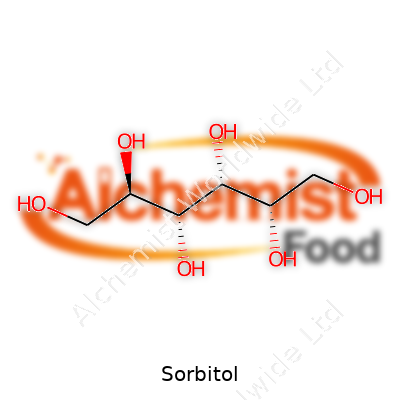
| Names | |
| Preferred IUPAC name | hexane-1,2,3,4,5,6-hexol |
| Other names |
D-glucitol Sorbit Sorbitolum Sorbitole Glucitol Sorbitol solution |
| Pronunciation | /ˈsɔːrbɪtɒl/ |
| Preferred IUPAC name | D-glucitol |
| Other names |
D-glucitol Sorbit Glucitol Diabetic sugar |
| Pronunciation | /ˈsɔːrbɪˌtɒl/ |
| Identifiers | |
| CAS Number | 50-70-4 |
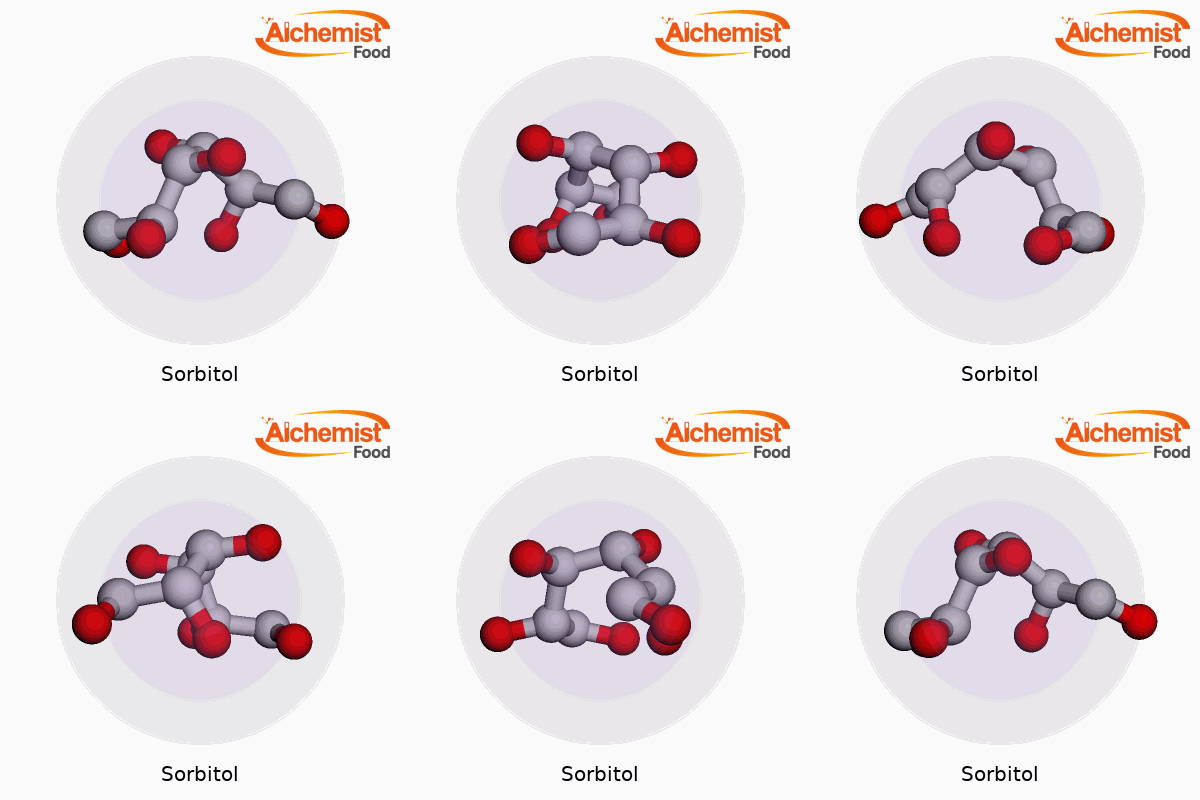
| 3D model (JSmol) | `/data/structures/all/2024-06-09/mol/Sorbitol.mol` |
| Beilstein Reference | Beilstein Reference: 1720247 |
| ChEBI | CHEBI:17923 |
| ChEMBL | CHEMBL42902 |
| ChemSpider | 5299 |
| DrugBank | DB01638 |
| ECHA InfoCard | 100.085.401 |
| EC Number | E420 |
| Gmelin Reference | 7936 |
| KEGG | C00794 |
| MeSH | D013051 |
| PubChem CID | 5780 |
| RTECS number | WG2930000 |
| UNII | C3VIZ65BEM |
| UN number | UN1287 |
| CompTox Dashboard (EPA) | DTXSID2022209 |
| CAS Number | 50-70-4 |
| Beilstein Reference | 1850463 |
| ChEBI | CHEBI:17919 |
| ChEMBL | CHEMBL1127 |
| ChemSpider | 54610 |
| DrugBank | DB01638 |
| ECHA InfoCard | 100.012.596 |
| EC Number | E420 |
| Gmelin Reference | 82087 |
| KEGG | C00794 |
| MeSH | D013015 |
| PubChem CID | 5780 |
| RTECS number | WL3675000 |
| UNII | WA8Z9XEE9R |
| UN number | UN-Spot Number: "UN2646 |
| CompTox Dashboard (EPA) | DTXSID1020668 |
| Properties | |
| Chemical formula | C6H14O6 |
| Molar mass | 182.17 g/mol |
| Appearance | White crystalline powder |
| Odor | Odorless |
| Density | 1.285 g/cm³ |
| Solubility in water | Very soluble |
| log P | -2.20 |
| Vapor pressure | Negligible |
| Acidity (pKa) | 14.35 |
| Basicity (pKb) | 13.92 |
| Magnetic susceptibility (χ) | -7.72e-6 |
| Refractive index (nD) | 1.457 |
| Viscosity | Viscosity: 108 cP (25°C) |
| Dipole moment | 2.99 D |
| Chemical formula | C6H14O6 |
| Molar mass | 182.17 g/mol |
| Appearance | White crystalline powder |
| Odor | Odorless |
| Density | 1.285 g/cm³ |
| Solubility in water | Very soluble |
| log P | -2.20 |
| Vapor pressure | < 0.01 hPa (20 °C) |
| Acidity (pKa) | 13.82 |
| Basicity (pKb) | 13.82 |
| Magnetic susceptibility (χ) | -8.2e-6 |
| Refractive index (nD) | 1.457 |
| Viscosity | Viscous liquid |
| Dipole moment | 2.88 D |
| Thermochemistry | |
| Std molar entropy (S⦵298) | 309.5 J·mol⁻¹·K⁻¹ |
| Std enthalpy of formation (ΔfH⦵298) | -1667 kJ/mol |
| Std enthalpy of combustion (ΔcH⦵298) | –3770 kJ/mol |
| Std molar entropy (S⦵298) | 327.2 J·mol⁻¹·K⁻¹ |
| Std enthalpy of formation (ΔfH⦵298) | -1669 kJ/mol |
| Std enthalpy of combustion (ΔcH⦵298) | -3775 kJ mol⁻¹ |
| Pharmacology | |
| ATC code | A06AD18 |
| ATC code | A06AD18 |
| Hazards | |
| Main hazards | May cause mild gastrointestinal irritation if ingested in large amounts |
| GHS labelling | GHS labelling for Sorbitol: `"Not classified as hazardous according to GHS"` |
| Pictograms | GHS07 |
| Signal word | Warning |
| Hazard statements | The product 'Sorbitol' does not have any hazard statements. |
| Precautionary statements | P264, P270, P301+P312, P501 |
| NFPA 704 (fire diamond) | 1-0-0 |
| Flash point | > 210 °C |
| Autoignition temperature | 420 °C |
| Explosive limits | Non-explosive |
| Lethal dose or concentration | LD50 (oral, rat): 15,300 mg/kg |
| LD50 (median dose) | 15,900 mg/kg (rat, oral) |
| NIOSH | WI4630000 |
| PEL (Permissible) | 15 mg/m³ |
| REL (Recommended) | 2.5 mg/kg bw |
| IDLH (Immediate danger) | No IDLH established. |
| Main hazards | May cause mild irritation to eyes and gastrointestinal discomfort if ingested in large amounts. |
| GHS labelling | GHS labelling for Sorbitol: "Not classified as a hazardous substance or mixture according to the Globally Harmonized System (GHS). |
| Pictograms | GHS07 |
| Signal word | Warning |
| Hazard statements | No hazard statements. |
| Precautionary statements | Precautionary statements: P264: Wash hands thoroughly after handling. P270: Do not eat, drink or smoke when using this product. P301+P312: IF SWALLOWED: Call a POISON CENTER/doctor if you feel unwell. P330: Rinse mouth. |
| NFPA 704 (fire diamond) | 1-0-0 |
| Flash point | > 210°C (410°F) |
| Autoignition temperature | 420 °C |
| Explosive limits | Not explosive |
| Lethal dose or concentration | LD50 (oral, rat): 15,900 mg/kg |
| LD50 (median dose) | 15 g/kg |
| NIOSH | WN6500000 |
| PEL (Permissible) | 15 mg/m³ |
| REL (Recommended) | 20 mg/kg bw |
| IDLH (Immediate danger) | No IDLH established |
| Related compounds | |
| Related compounds |
Mannitol Isosorbide Glycerol Xylitol Sorbitan Sorbitan monostearate Sorbitan tristearate |
| Related compounds |
Mannitol Isomalt Xylitol Glycerol Erythritol Sorbitan Sorbitan monostearate |



