Pyridoxine Hydrochloride: A Down-to-Earth Look at a Vital Nutrient
Historical Development
Pyridoxine Hydrochloride, more widely recognized as Vitamin B6, came onto the radar of nutrition science in the mid-20th century. Back then, doctors began to notice certain neurological and skin disorders in people whose diets lacked this nutrient. Researchers followed their lead, eventually fishing out the crystalline substance from wheat germ and fish. World War II created a boom in vitamin research, pushing industries to establish synthetic methods for mass production. Ever since then, chemistry labs churn out Vitamin B6 reliably for use in food fortification, pharmaceutical applications, and animal feed. The evolution from isolating B6 in the lab to producing it in ton-scale quantities mirrors the broader growth in the nutrient industry, proving how crucial vitamin science can be for both health and industry.
Product Overview
Pyridoxine Hydrochloride stands apart for its versatility. As a fine, white crystalline powder, it easily dissolves in water and blends into a host of products. The food industry values it most for supplements and fortified cereals, but it's rarely missing from multivitamin tablets or pharmaceutical preparations aimed at treating B6 deficiency. For animal nutritionists, a pinch of this vitamin makes the difference between healthy flocks and sickly ones. Its relatively mild flavor and chemical stability under normal conditions let it settle into many formulas, from infant nutrition to energy drinks.
Physical & Chemical Properties
Scan the chemical profile of Pyridoxine Hydrochloride and you’ll find a molecular formula of C8H11NO3·HCl. The powder doesn’t give off a strong scent and resists breaking down at room temperature. It melts above 200°C, so it survives typical food processing temperatures. Water snaps it up quickly, but it stays almost unbothered by alcohol or ether. Expose it to strong sunlight or oxidizing agents, though, and it begins to degrade—a reminder that even in its pure form, Vitamin B6 needs careful handling.
Technical Specifications & Labeling
Every batch sold for industrial or pharmaceutical use comes labeled with tight technical specifications. Makers guarantee minimum purity—often above 98%—and monitor for heavy metals, residual solvents, and microbial contamination. Labels show not only concentration but instructions for storage, expiry, and safe handling. Regulatory frameworks shape the allowable limits for impurities, which helps keep product quality high. In many countries, nutrition supplement regulations demand additional disclosure of origin, lot number, and compliance with food or drug safety laws. These practices help buyers trace products back to their source, promoting both accountability and consumer safety.
Preparation Method
Large-scale production draws on chemical synthesis, starting from petrochemical derivatives like pyridine. Manufacturers oxidize and then react intermediates with hydrochloric acid to crystallize Pyridoxine Hydrochloride. Each step requires temperature control and purification to knock out unwanted byproducts. Although some researchers still extract Vitamin B6 from plant sources for small-batch or organic needs, industry relies on the efficiency and scalability of synthetic routes. This approach produces consistent, high-purity product, not easily matched by traditional extraction.
Chemical Reactions & Modifications
Vitamin B6 reacts with strong acids, strong bases, and oxidizing agents, which change its form and reduce its nutritional power. Chemical modification often focuses on improving water solubility or increasing absorption in the body. Researchers have worked on salt forms and prodrugs to overcome certain stability issues. In the lab, the hydrochloride version holds up better under heat and humidity compared to the non-salt variant, which makes it a favorite in commercial applications. It can convert into other B6 vitamers under the right conditions, helping the body tap into all the diverse pathways this vitamin serves.
Synonyms & Product Names
You’ll find Pyridoxine Hydrochloride on product lists under many names: Vitamin B6, Pyridoxol Hydrochloride, and 4,5-bis(hydroxymethyl)-2-methylpyridin-3-ol hydrochloride. Brands catering to the supplement market might dress it up under label-friendly names that inspire trust, but keen-eyed consumers look for the chemical name to know what they’re paying for. Pharmacists and ingredient purchasers recognize the same identifiers, regardless of regional preference or language.
Safety & Operational Standards
Stringent safety standards govern how industries make, transport, and utilize Pyridoxine Hydrochloride. The Occupational Safety and Health Administration, along with similar agencies worldwide, sets exposure limits for manufacturing workers and requires clear labeling in storage areas. Companies must report spills, implement dust control, and provide training in the case of accidental contact or inhalation. For end consumers, regulatory oversight helps guarantee dosing precision—unlike fat-soluble vitamins, B6 leaves the body relatively easily, but chronic high intake from supplements deserves careful monitoring. Good Manufacturing Practice (GMP) certification stands as the current gold standard for vitamin production plants seeking business with large buyers or public health agencies.
Application Area
Health authorities acknowledge Pyridoxine Hydrochloride as essential, given its role in metabolism, immune function, and red blood cell formation. Doctors prescribe it to treat diagnosed B6 deficiency, which can show up as anemia, confusion, or neuropathy. Dieticians recommend fortified foods for groups at higher risk, such as pregnant women and elderly people. Outside human nutrition, veterinarians count on B6 supplements to prevent nervous disorders in poultry and livestock. The beauty industry, eager for functional additives, includes Vitamin B6 for skin creams and hair formulas that claim to strengthen and nourish. Beverage makers, bread bakers, and baby formula companies also rely on dependable vitamin enrichment, driven by regulatory guidelines and consumer expectation.
Research & Development
Hundreds of research teams continue to study Pyridoxine Hydrochloride’s impact on health outcomes. Some focus on how it supports neurotransmitter synthesis in the brain, aiming to shed light on links to depression or cognitive decline. Others chase connections with immune response and chronic inflammation, seeking ways to boost resilience or slow the impact of aging. Researchers also keep working to develop better delivery systems, from timed-release tablets to more body-friendly derivatives. This ongoing curiosity keeps B6 in the research spotlight, fueling product innovation and occasionally shifting dietary recommendations.
Toxicity Research
Despite its essential role, Pyridoxine Hydrochloride can cause trouble at high, prolonged doses. Clinical reports tell of sensory neuropathy in people who took massive daily quantities—ten or more times the recommended dietary allowances—over months or years. Toxicity research now sets upper intake limits and guides supplement makers in responsible formulation. Medical professionals track side effects, particularly in patients with underlying kidney problems, because excess B6 flushes out more slowly in those cases. Animal studies inform guidelines, but real-world case reports drive safety messaging and future research priorities.
Future Prospects
Demand for Pyridoxine Hydrochloride keeps climbing with global population growth and a rising interest in preventive medicine. For years to come, B6 will play a prominent role in public health initiatives, especially as new clinical evidence emerges around brain health, diabetes support, or mood stabilization. Technical improvements in synthesis could lower costs and shrink environmental impact, allowing broader access in lower-income communities. Looking beyond pills and powders, food scientists design more bioavailable B6 variants for specialized health needs. Manufacturers may soon blend synthetic and fermentation-derived sources, making sourcing more sustainable and traceable. National guidelines for optimal intake might shift again as researchers clarify the vitamin's broader impact on chronic disease and wellness. This evolving landscape promises a busy future for both science labs and industry partners working on smarter, safer delivery of this indispensable nutrient.
What is Pyridoxine Hydrochloride used for?
What is Pyridoxine Hydrochloride?
Pyridoxine Hydrochloride is a vitamin supplement, otherwise known as Vitamin B6. Most people don't think about B6 until their doctor brings it up at a routine checkup. This nutrient plays a big part in turning food into energy. It also helps nerves and red blood cells work as they should. If you've ever felt weak or run down without knowing the reason, sometimes a B6 shortage plays a role, especially if you rely mainly on cereal grains or processed foods.
Why the Body Needs It
There's a reason B6 shows up in discussions about immunity and metabolism. About ten years ago, I watched my grandfather recover from surgery. His doctor added a B-complex vitamin to his daily pills. Not just for general health, but because antibiotics and some heart medicines can drain certain vitamins out of the system, Pyridoxine included. A shortage affects mood, weakens the immune system, and even brings nerve pain or tingling.
The Mayo Clinic and similar groups say adults need between 1.3 and 2 mg of B6 each day. Without enough, anemia creeps up, mental clarity drops, and the skin dries out or cracks, especially at the corners of the mouth. B6 helps with forming hemoglobin, which means oxygen gets delivered throughout the body. That explains why fatigue can develop quickly after becoming deficient.
Where Do People Find It?
Eggs, poultry, fish, and bananas give a bump of natural B6. Sometimes, though, medical issues like kidney disease, alcoholism, or malabsorption keep the body from soaking up enough vitamin B6 from food. In these situations, doctors reach for Pyridoxine Hydrochloride. It comes in tablet form, injections, or added into prenatal vitamins. Pregnant women need more B6 to help the fetus grow properly and to counter episodes of nausea.
I learned through pharmacy work how certain seizure and tuberculosis drugs can sap B6 levels. Neuropathy creeps in if this side effect goes unchecked. So, anyone taking medicines such as isoniazid might be handed a B6 supplement at the same time. Young children and seniors face more risk, especially those with diets lacking eggs, chicken, or vegetables. They've got the most to lose if their stores run low.
Paying Attention to Dosages
Research from the National Institutes of Health shows most healthy adults in North America get enough B6 through diet. Still, over-the-counter supplements flood the market. It’s easy to think more is better, but too much never does anybody a favor. High levels above 100 mg per day can give persistent tingling or nerve damage.
If a doctor suspects a shortage, a simple blood test gives the answer. A supplement should always go with a plan to eat a wider range of whole foods. If food alone can't bridge the gap, targeted use of Pyridoxine Hydrochloride can help, but there's no sense in guessing the dose. A professional weighs in with the right amount and schedule.
Moving Forward with Better Nutrition
There’s value in teaching people about nutrients like B6 before symptoms start. Nutrition classes in middle school, clearer food labels, and community programs all help. Doctors and pharmacists can spot who needs extra support and guide a safe use of supplements. Pyridoxine Hydrochloride fills a gap when diet or illness gets in the way, but nothing beats a balanced plate in the long run.
What are the possible side effects of Pyridoxine Hydrochloride?
What People Notice After Taking Pyridoxine Hydrochloride
Stepping into the pharmacy, vitamin B6 covers an entire shelf, and Pyridoxine Hydrochloride is written on plenty of bottles. I still remember picking up my own supplement for the first time, hearing stories about how B6 helps everything from nerve health to better moods. But flipping to the back of the bottle, that big block of side effect warnings stared right back.
Many people come to Pyridoxine Hydrochloride looking for an energy boost or treatment for a deficiency diagnosed by their doctor. It plays a real role in nerve signals, breaking down the food we eat, and keeping blood healthy. But too much of it, or sometimes even small amounts in the wrong body, can bring on some frustrating, and sometimes alarming, effects.
Nerve Problems: Tingling, Numbness, and Balance Trouble
The first thing some notice, especially with higher intake, is tingling in their hands or feet. I’ve talked to a neighbor who realized her fingers kept feeling like they’d “fallen asleep.” She’d started a new B6 supplement she picked up at the grocery store. Studies back this up—doses above 100 milligrams a day over weeks or months create real risk for nerve damage, sometimes leading to numbness that lingers long after discontinuing the supplement. With prolonged use, some folks struggle to walk properly or lose balance.
Skin Rash and Sensitivity
Dermatologists and general practitioners both keep an eye out for rashes that don’t fit patterns of allergy or common irritation. Some reported itchy, scaly red spots after starting high doses of Pyridoxine Hydrochloride. More rarely, people develop skin sensitivity to sunlight. The science community isn’t exactly sure why, but dropping the supplement usually makes the rash go away. After hearing from enough patients, doctors have learned to consider supplements like this one as part of their detective work.
Gastrointestinal Upset
Nobody enjoys stomach aches, and B6 can sometimes do just that. Upset stomach, nausea, or mild abdominal pain show up more in the early days for some. Most folks find these issues go away quickly if they lower the dose or switch brands. Consistent nausea remains a sign to talk to a healthcare provider about what’s really needed for your body.
Headaches, Drowsiness, and Mood Changes
A couple of my friends on social media mentioned headaches cropping up as soon as they jumped to a higher dose. Although less frequent, dizziness and a heavy, drowsy feeling push people to rethink their supplement routine. There’s talk about B6 shifting serotonin levels, though research continues. Either way, mood swings or irritability should never get brushed aside.
Who Should Watch Out Most?
Anyone already living with kidney disease, nerve disorders, or those pregnant should tread carefully. For pregnant women, doctors closely monitor any vitamin supplementation, including B6, sticking to tested dosages.
Finding Safer, Smarter Paths Forward
Doctors always encourage open conversation—listing every supplement during checkups, asking about all the brand names in your cabinet, and flagging any changes in sensation or behavior. Even reliable supplements can create bigger problems if taken past recommended levels. Labs and regulatory bodies set clear daily upper limits. If anyone notices symptoms that match what’s described here, stopping the supplement and reaching out for professional advice matters much more than trying to push through the discomfort.
How should Pyridoxine Hydrochloride be taken or dosed?
Understanding What Pyridoxine Hydrochloride Does
Pyridoxine Hydrochloride, better known as vitamin B6, shows up on a lot of supplement labels. It helps turn food into energy and keeps nerves and the immune system on track. Anyone who struggles with tiredness, mood swings, or certain nerve problems has probably looked up vitamin B6 before. Some people need more than others, and the way it’s taken can make a big difference.
Personal Experiences with Dosing
Doctors handed my grandmother vitamin B6 when she faced nerve issues triggered by her diabetes medications. The pharmacist took the time to explain the right dose: not too little, not too much, and only as prescribed. That stuck with me. The internet throws around plenty of advice about “mega-doses” for brain function or energy, but throwing a handful of pills at the problem can backfire. High doses over months sometimes stack up and trigger nerve pain, tingling, or trouble moving—nobody needs that.
What the Science Says
Recommended intakes vary. Adult men and women need about 1.3 to 2 mg each day, based on guidance from the National Institutes of Health. People over 50, pregnant women, and folks with some health conditions may need a bit more. Guidance for kids steers toward even lower, age-based doses. Supplement makers sell everything from tiny pills to mega-dose capsules, but higher numbers on the label don’t mean better results.
More isn’t always better. Cases have come up where patients landed in the hospital with nerve damage after popping large doses for months. Even some energy drinks and shakes sneak in high amounts. The FDA issued warnings about not exceeding 100 mg a day for adults from all sources combined—food plus pills. For most, a balanced meal plan covers the basics. Supplements step in for folks with certain medical conditions or diets—vegans, for instance, or those on certain medications.
Taking Pyridoxine Safely
Doctors and pharmacists recommend starting low and adjusting if specific deficiencies come up. They walk folks through the process, check for other drugs or supplements that might clash, and listen for unusual symptoms. With so many multivitamins and specialty formulas on the market, one supplement can stack with others. It's worth reading every label. For anyone taking medicine for seizures, tuberculosis, or arthritis, talking with a prescriber makes a world of difference. Some drugs drain the body's store of B6 faster than it can be replaced.
Reducing Risks and Getting Results
To avoid trouble, get a blood test before making big changes. Personal experience shows that many worries about deficiency vanish once a doctor confirms everything’s on track. Genuine low levels call for supplementation, guided by a health professional. Dropping into a routine of self-diagnosis leads to waste or, worse, real side effects. For families and caregivers, the safest route is to use dosing cups or spoons for liquids, and pill organizers to keep track. Most people who stick with a health provider’s plan see improvements in symptoms and keep side effects at bay.
Practical Steps for Anyone Considering Vitamin B6
Stick to doses tailored for age, diet, and health status. Bring any supplement into the open with a doctor or pharmacist. Watch out for high doses over time, and use food as the main source whenever possible—whole grains, chicken, salmon, bananas, and potatoes pack plenty. For those who truly need more, follow advice from the experts and check in on symptoms and side effects regularly. Reliable health comes from balance, insight, and a measure of patience—not quick fixes or guesswork.
Is Pyridoxine Hydrochloride safe during pregnancy or breastfeeding?
Understanding Pyridoxine Hydrochloride
Pyridoxine hydrochloride shows up on many prenatal vitamin bottles. It’s just another name for vitamin B6, a nutrient found in food some people eat every day. Women hear a lot about the need to get enough vitamins and minerals while expecting. Vitamin B6 supports brain development, hormone balance, and immune health. Meat, fish, potatoes, avocados, and bananas all carry this vitamin, but sometimes, a supplement helps fill the gaps. During pregnancy, some women experience nausea and vomiting—morning sickness that doesn’t always go away by noon. For decades, doctors have written prescriptions for pyridoxine to help calm that sickness.
Safety Record and Medical Guidance
Medical research covers pyridoxine hydrochloride use in pregnancy more than most vitamin supplements. Obstetricians trust pyridoxine, especially at low doses, because clinical trials show no spike in birth defects linked to it. The American College of Obstetricians and Gynecologists routinely suggests vitamin B6 as a front-line choice for mild morning sickness. Studies usually examine daily amounts between 10 and 50 mg. These numbers line up with the levels many prenatal multivitamins supply. At much higher doses—beyond 200 mg every day and taken for months, for example—some people have reported nerve-related side effects. Most pregnant women using standard supplements or combination pills for nausea stay well below these limits.
Pyridoxine Hydrochloride and Breastfeeding
After pregnancy, the conversation sometimes shifts to breastfeeding. Mothers pass on small amounts of water-soluble vitamins, like B6, through breast milk. Vitamin B6 helps babies develop a healthy nervous system. If a mother eats a diet lacking in foods with vitamin B6, her milk may not deliver enough. Most lactation experts feel comfortable with typical supplement doses—close to what’s recommended for pregnancy. Doses prescribed for nausea do not affect infant growth or brain development. Only when someone takes megadoses for a long time do concerns about side effects begin popping up. Data shows no harmful effects from routine pyridoxine use while nursing.
Why Normal Doses Are Key
Like most vitamins, more isn’t always better. The U.S. National Institutes of Health reminds pregnant and breastfeeding women to aim for around 1.9 to 2 mg of B6 daily, much less than doses used for morning sickness, and far less than the levels that can cause harm. Health authorities caution against high-dose supplements unless checked first with a care provider. Most people using regular prenatal vitamins or B6 for short-term nausea stick with much lower, well-studied amounts.
Smart Supplement Choices
Anyone worried about vitamin safety should talk with a doctor or qualified provider. Reading supplement labels and sticking to recognized dosing guidelines helps keep things simple and safer. For most women, getting enough B6 through food feels easiest, but some pregnancies and upbringings make supplements smart or even necessary. National health organizations urge everyone to avoid guessing—ask for guidance, especially during pregnancy and nursing, when tiny details matter most. Overall, using pyridoxine hydrochloride within routine prenatal or postnatal recommendations gives reassurance, grounded in decades of science and medical practice.
Can Pyridoxine Hydrochloride interact with other medications or supplements?
Pyridoxine and Everyday Health Choices
Most people know pyridoxine hydrochloride as vitamin B6. Doctors recommend it for a range of problems like nerve pain, pregnancy-related nausea, and B6 deficiency. It comes easy to buy in pharmacies and health food stores, and people add it to their supplement regimens hoping for better energy or nerve support.
What doesn’t always get talked about is the way B6 can clash with other drugs and supplements. Doctors don’t always bring it up unless they’re prescribing it specifically. People who self-medicate with over-the-counter vitamins rarely think of B6 as something that could cause a drug reaction. In my own life, relatives taking pyridoxine for “energy” rarely asked their healthcare provider before starting, even when they took other prescriptions. Yet, the risks exist, and it’s worth knowing the details.
Mixing B6 with Prescription Drugs
Certain medicines for seizure disorders stand out as a concern. For instance, phenytoin and phenobarbital rely on consistent blood levels to control seizures. High-dose B6 may speed up the breakdown of these drugs in the liver. This can lower drug levels and put someone at unnecessary risk of having breakthrough seizures. For people on a delicate medication schedule, even small changes make a difference. The Mayo Clinic points out that large and unplanned doses of B6 can reduce the effectiveness of L-dopa, a key drug for Parkinson’s disease. People using carbidopa-levodopa should not add B6 without professional guidance, as it might limit the ability of L-dopa to reach the brain and help with symptoms.
Interaction risk isn’t limited to serious neurological medications. Certain tuberculosis treatments such as isoniazid can block the body’s handling of B6, which means the doctor should keep an eye on nerve trouble and supplement with B6 only as needed—not as a casual daily vitamin.
The Supplement Crowd
B6 also shows up in plenty of multivitamins, protein shakes, and “energy” formulas. Plenty of folks don’t read labels closely. A close family friend kept taking a “hair growth” supplement containing B6 on top of her daily multivitamin, thinking nothing of it. She ended up with nerve symptoms, tingling hands, and feet, all traced back to vitamin B6 toxicity after blood tests. Chronic over-supplementation catches people off guard because the early symptoms creep in gradually.
B6 plays a role in breaking down homocysteine, so people with certain heart-risk profiles take B6 with other B vitamins. The catch is, more isn’t always better—stacking supplements could push total vitamin B6 above safe limits. The Institute of Medicine recommends an upper limit of 100 mg per day for adults to avoid nerve issues. Sneaking above this number, even with “natural” supplements, leads to trouble.
Staying Safe and Asking the Right Questions
Medication routines can get complicated fast; multiple specialists may be involved, and one hand doesn’t always know what the other prescribes. Pharmacists see drug-supplement duplications all the time. Open conversations matter. Anyone starting B6 should check ingredient lists on all products and let healthcare providers know about every pill or drink they take—especially if they use medications for seizures, mood balance, or Parkinson’s disease.
Drug-diet interactions rarely get as much attention as they deserve. Honest conversations, curiosity about label details, and a bit of skepticism can keep a small vitamin from becoming a big health problem.
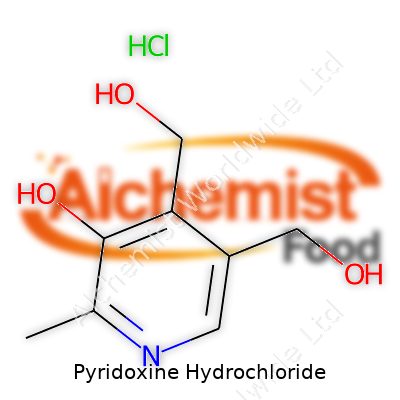
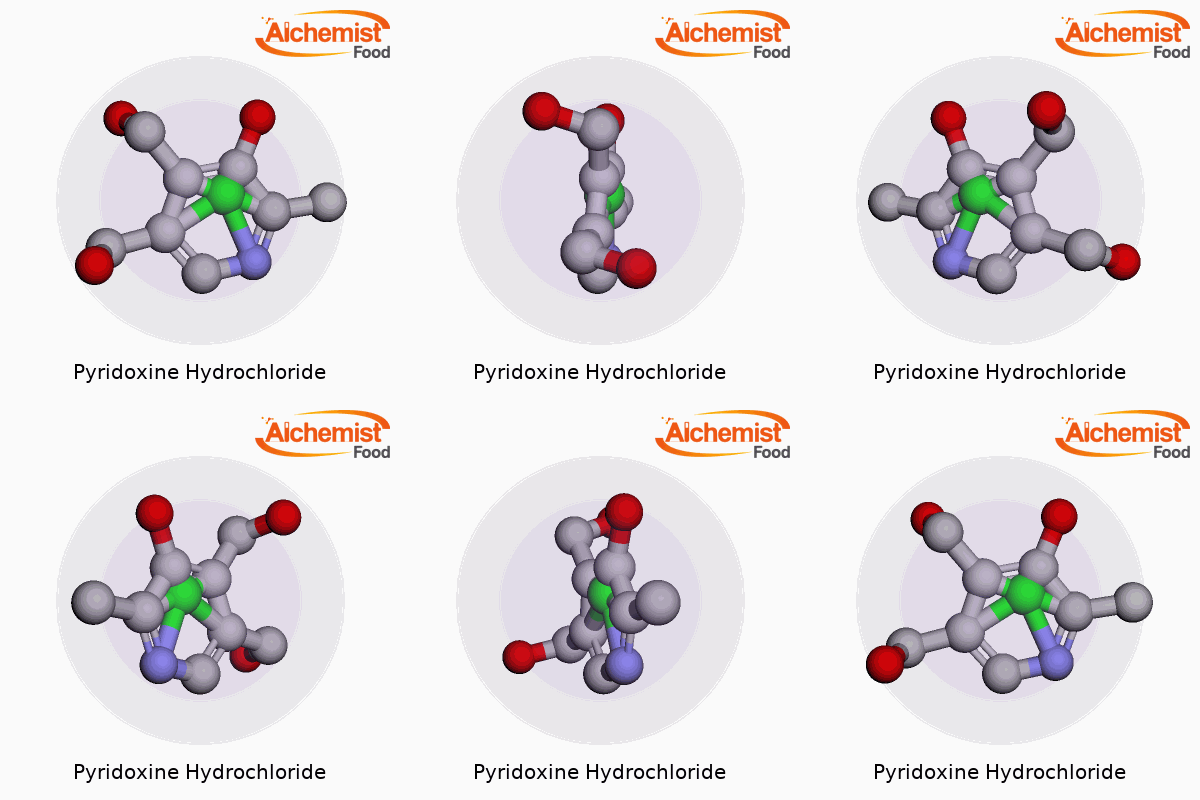
| Names | |
| Preferred IUPAC name | 4,5-Bis(hydroxymethyl)-2-methylpyridin-3-ol hydrochloride |
| Other names |
Vitamin B6 Pyri-do Pyridoxol hydrochloride Pyridoxine HCl Adermine hydrochloride |
| Pronunciation | /paɪˌrɪd.əkˌsiːn haɪ.drəˈklɔː.raɪd/ |
| Preferred IUPAC name | 4,5-bis(hydroxymethyl)-2-methylpyridin-3-ol hydrochloride |
| Other names |
Vitamin B6 Pyridoxine HCl Pyridoxine hydrochloridum Pyridoxinum hydrochloricum |
| Pronunciation | /ˌpaɪ.rɪˈdɒk.siːn haɪ.drəˈklɔː.raɪd/ |
| Identifiers | |
| CAS Number | 58-56-0 |
| Beilstein Reference | 1118591 |
| ChEBI | CHEBI:17439 |
| ChEMBL | CHEMBL1547 |
| ChemSpider | 1436 |
| DrugBank | DB00165 |
| ECHA InfoCard | 100.019.600 |
| EC Number | 3.6.1.27 |
| Gmelin Reference | 2767 |
| KEGG | C00314 |
| MeSH | D010865 |
| PubChem CID | 10533 |
| RTECS number | YX8975000 |
| UNII | 8D9QNW0445 |
| UN number | UN2811 |
| CompTox Dashboard (EPA) | DJ1ZAO9488 |
| CAS Number | 58-56-0 |
| Beilstein Reference | 1207937 |
| ChEBI | CHEBI:15915 |
| ChEMBL | CHEMBL1547 |
| ChemSpider | 5761 |
| DrugBank | DB00165 |
| ECHA InfoCard | 100.033.388 |
| EC Number | 3.6.3.26 |
| Gmelin Reference | 3794 |
| KEGG | C00314 |
| MeSH | D010888 |
| PubChem CID | 1051 |
| RTECS number | TH9650000 |
| UNII | 68Y4CF58BV |
| UN number | UN1939 |
| CompTox Dashboard (EPA) | DTXSID7020182 |
| Properties | |
| Chemical formula | C8H12ClNO3 |
| Molar mass | 205.64 g/mol |
| Appearance | White or almost white crystalline powder |
| Odor | Odorless |
| Density | 0.988 g/cm³ |
| Solubility in water | soluble in water |
| log P | -1.9 |
| Acidity (pKa) | 8.6 |
| Basicity (pKb) | 8.57 |
| Magnetic susceptibility (χ) | -62.0x10^-6 cm³/mol |
| Refractive index (nD) | 1.613 |
| Dipole moment | 4.07 D |
| Chemical formula | C8H11NO3·HCl |
| Molar mass | 205.64 g/mol |
| Appearance | White or almost white crystalline powder |
| Odor | Odorless |
| Density | 0.988 g/cm³ |
| Solubility in water | Freely soluble in water |
| log P | -1.9 |
| Acidity (pKa) | 8.6 |
| Basicity (pKb) | 8.89 |
| Magnetic susceptibility (χ) | -7.2 × 10⁻⁷ cm³/mol |
| Refractive index (nD) | 1.613 |
| Viscosity | Free flowing crystalline powder |
| Dipole moment | 2.56 D |
| Thermochemistry | |
| Std molar entropy (S⦵298) | 210.5 J·mol⁻¹·K⁻¹ |
| Std enthalpy of formation (ΔfH⦵298) | -382.6 kJ/mol |
| Std molar entropy (S⦵298) | NaN |
| Std enthalpy of formation (ΔfH⦵298) | -382.5 kJ/mol |
| Std enthalpy of combustion (ΔcH⦵298) | -3731 kJ/mol |
| Pharmacology | |
| ATC code | A11HA02 |
| ATC code | A11HA02 |
| Hazards | |
| Main hazards | May cause eye, skin, and respiratory tract irritation. |
| GHS labelling | GHS07, GHS08 |
| Pictograms | GHS07 |
| Signal word | Warning |
| Hazard statements | May cause eye irritation. |
| Precautionary statements | Store locked up. Dispose of contents/container in accordance with local/regional/national/international regulations. |
| Autoignition temperature | > 405 °C (761 °F; 678 K) |
| Lethal dose or concentration | LD50 Oral Rat 4,000 mg/kg |
| LD50 (median dose) | LD50 (median dose): Oral rat LD50 = 4 g/kg |
| NIOSH | EH3730000 |
| PEL (Permissible) | Not established |
| REL (Recommended) | 25 mg |
| Main hazards | May cause eye, skin, and respiratory tract irritation |
| GHS labelling | GHS07 |
| Pictograms | GHS07 |
| Signal word | Warning |
| Hazard statements | H302: Harmful if swallowed. |
| Precautionary statements | Keep container tightly closed. Store in a cool, dry, well-ventilated place. Avoid breathing dust. Wash thoroughly after handling. Use with adequate ventilation. Avoid contact with eyes, skin, and clothing. |
| Flash point | 130°C |
| Autoignition temperature | 410 °C |
| Lethal dose or concentration | LD50 Oral Rat 4,000 mg/kg |
| LD50 (median dose) | LD50 (median dose): 4 g/kg (oral, rat) |
| NIOSH | WH1575000 |
| PEL (Permissible) | 10 mg/m³ |
| REL (Recommended) | 2 mg |
| Related compounds | |
| Related compounds |
Vitamin B6 Pyridoxal Pyridoxamine Pyridoxal phosphate Pyridoxamine phosphate |
| Related compounds |
Pyridoxine Pyridoxal Pyridoxamine Pyridoxal phosphate Pyridoxamine phosphate |



