Propyl Paraben: Shaping Modern Preservation
Historical Development
People have reached for safe food and skincare preservation since before the word “chemical” ever hit daily use. Propyl paraben stepped onto the scene in the early 20th century, answering a growing concern: Spoilage wastes money, opens the door for infection, and limits the reach of everyday goods. The chemical came as a response from both scientists and manufacturers pushing for better shelf-life without heavy metals or questionable formaldehyde derivatives. Over the decades, propyl paraben gained popularity as synthetic methods improved. The compound made its way into everything from bread to baby lotion, becoming one of the best-known parabens on the planet. Synthetic preservative technology, guided by trial, error, and a lot of regulatory input, made it possible for global trade in prepared goods to scale up. This legacy weighs heavily, because what gets into food and topical products runs right up against public trust.
Product Overview
Propyl paraben stands as a white, odorless powder. The world recognizes it most clearly as a preservative, frank and simple. Its reputation isn’t flashy, but it pulls heavy weight by keeping fungi and bacteria at bay. You see it written on ingredient lists for cosmetics, personal care items, pharmaceuticals, and processed foods. It’s valued partly because it doesn’t tinge scents, flavors, or textures. No one craves funky aftertastes or sudden skin irritation. Propyl paraben brings reassurance that the serum you love today won’t grow mold tomorrow. That dependability earned it loyal defenders among product formulators and some fierce detractors in public debates over clean living.
Physical & Chemical Properties
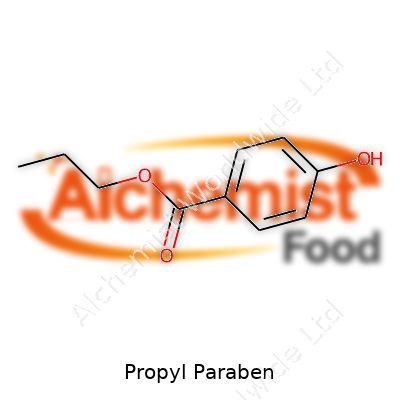
This compound, with the chemical formula C10H12O3, forms colorless crystals or a fine, white powder at room temperature. It melts at around 96°C, staying intact without breaking down at typical storage or manufacturing temperatures. It dissolves well in alcohol and ether but resists mixing with cold water—so dissolving it in a heated batch is common industry practice. On the molecular side, it carries an ester group attached to a hydroxybenzoic acid framework. That simple shift in its chain—methyl, ethyl, propyl—changes preservative power and solubility. You can spot the change on a chromatograph or NMR, but most people know the difference through stability tests and regulatory paperwork.
Technical Specifications & Labeling
Every market expects precise documentation. Manufacturers package propyl paraben at purity levels of 98 percent or higher to earn a spot in regulated fields. Specifications detail melting range, moisture content, pH effect in solution (typically neutral), assay methods, and acceptable impurity limits. These figures show up in government registration filings, safety sheets, and industrial catalogs. Labeling gets complicated by the tangle of synonyms—propyl-p-hydroxybenzoate, E216, and several more. Legal frameworks demand listing parabens on product ingredient labels, especially after a wave of concern about end-user awareness. Documentation now follows Good Manufacturing Practice, with QR codes on industrial drums letting regulators track product origins.
Preparation Method
Manufacturers synthesize propyl paraben by reacting p-hydroxybenzoic acid with propanol under acidic conditions. This process, called esterification, sets water loose as a byproduct. Large-scale production uses strong mineral acids (like sulfuric) as catalysts, and the reaction proceeds in solvent baths under controlled heat. Afterward, the reaction mixture cools, and technicians pull out the crystalline product through filtration or recrystallization. Years ago, folks working on smaller scales would coax out cleaner yields using vacuum distillation or column chromatography, but industry workers now rely on refined batch processes optimized for both purity and energy efficiency.
Chemical Reactions & Modifications
Propyl paraben stands up against mild acids and bases, making it tough enough for use in lotions and foods that see variable pH. It hydrolyzes slowly when exposed to strong alkali, breaking back into benzoic acid and propanol. Chemical tweaks—such as introducing longer or shorter alkyl groups—let companies tailor antimicrobial power and solubility for niche products. These modifications feed a family of parabens, widening the toolbox for formulators. In my years of consulting for small cosmetics labs, the right tweak to a paraben often spelled the difference between smooth batch stability and a return shipment full of spoiled cream jars.
Synonyms & Product Names
Markets globally have learned to juggle chemical jargon. This molecule shows up as Propyl 4-hydroxybenzoate, Nipagin P, Aseptoform P, and the E-number E216. That jumble creates headaches for compliance staff checking paperwork and ingredient lists. I’ve seen manufacturers botch export paperwork due to missed synonym flags, leading to painful import holds and expensive relabeling. This naming confusion prompts proactive education on ingredient transparency, both with customers and within factory teams. Supply chains for sensitive sectors, like pharmaceuticals and baby care, avoid ambiguity by demanding supplier declarations spelled out with every possible alias.
Safety & Operational Standards
Working with propyl paraben requires respect. Both raw powder and formulated blends should be handled to minimize dust and spills. Safety protocols in professional labs include gloves, goggles, source ventilation, and good hygiene—an approach rooted in lessons learned the ugly way, via accidental exposure or batch contamination. Key standards, like those set by the FDA (Food & Drug Administration) or the European Medicines Agency, limit concentrations in finished goods and guide risk assessments. Manufacturers conducting batch production follow detailed SOPs (standard operating procedures) to cut down on inhalation risks and to keep the factory environment above board for both workers and regulatory inspections. For all the negative headlines, daily handling of this compound doesn’t pose more risk than other common preservatives, provided teams treat it with ordinary professional caution.
Application Area
Propyl paraben stays in favor for one core reason: it knocks out molds and most bacteria, stretching shelf lives beyond what most natural preservatives accomplish. You see its mark across processed foods, from baked goods to dairy products, cosmetics like creams and lotions, shampoos, ointments, and even liquid pharmaceuticals. The compound acts more strongly in slightly acidic formulas, which matches the pH of many foods and personal items. Some specialty fields, such as lens cleaning solutions, also exploit its low scent and strong antifungal edge—qualities that natural alternatives often miss. In packaging plants and formulating labs, I’ve watched teams grapple with the trade-off between shelf life and consumer demand for “free from” labels; propyl paraben often gets cut back but rarely vanishes unless another preservative can shoulder its microbial load.
Research & Development
Ongoing studies keep propyl paraben in the headlines. Researchers work on tweaking core synthesis for greener processes, like lower-temperature reactions or recovery of spent solvents. Others chase after analytical methods that spot trace levels in biological fluids—aimed at answering public health critics. Brands with R&D departments pour resources into blends pairing parabens with natural extracts, searching for synergy or reduced overall usage. Academics focus on tracking breakdown pathways and environmental persistence, spurred by the molecule’s detection in urban rivers and even human tissue. I’ve steered teams facing “clean beauty” demand to double down on alternative blends, but the stability hurdles set by parabens remain high. The best research collaborations often spring from looking at old preservatives in new ways, not just scrambling for novel molecules.
Toxicity Research
No discussion gets far without tackling toxicity. Most regulatory bodies—including the World Health Organization and longstanding food and drug safety agencies—deem propyl paraben safe at approved concentrations. Studies in the mid-2000s made headlines about possible links to hormone disruption and cancer, but large reviews found no repeatable evidence of harm at normal exposure. Researchers still monitor absorption, metabolism, and excretion, especially as emerging data trickles in about low-level chronic exposure. Multiple studies agree that the compound doesn’t persist or build up meaningfully in living tissue, breaking down and exiting the body quickly. Lab findings occasionally fuel online worry, but human trial data and decades of safe use keep propyl paraben near the top of the preservative shortlist. Still, it pays to keep validation ongoing, because trust only grows with continued vigilance.
Future Prospects
Public pressure leaves an unmistakable dent in the roadmap for preservatives. Major markets now demand “paraben-free” options in every aisle. Formulators race to balance costs, performance, and consumer demands, leading to deeper dives into fermentation-derived peptides, essential oils, antioxidant blends, and food-grade acids. Propyl paraben might lose share in some sectors but continues to serve as a benchmark: If a new ingredient doesn’t stack up in antimicrobial testing, it rarely lasts long against the established standard. Government regulators and research bodies propose stricter transparency rules, sharper exposure monitoring, and fresh safety standards. As a result, the industry pushes new analytical methods and develops faster toxicity screens. Propyl paraben rides the wave as a proven stalwart while also facing the challenge of renewal and reinvention. The future of preservatives likely rests with hybrid systems—pairing the reliability of old standards with the reassurance of plant-based or biodegradable tech, tallied against cost and consumer trust. In that mix, propyl paraben continues to influence both science and purchasing power, a testament to its role both as a workhorse and lightning rod in the chemistry of modern life.
What is Propyl Paraben used for?
A Common Ingredient in Personal Care
Walk down any drugstore aisle and the odds are high you’ll come across Propyl Paraben, even if you never notice it. This chemical lands in everything from shampoo and lotions to face creams and shaving gels. Its job? To help keep mold and bacteria from growing in those bottles and jars. Just imagine opening a moisturizer after a few weeks and finding it spoiled. That’s where Propyl Paraben steps in, which explains its widespread use over the past several decades.
Preservation Matters
Long before I ever scanned ingredient lists for what I put on my skin, I just wanted my products to last. It’s easy to forget how much goes into keeping those creams fresh once the lid comes off. Propyl Paraben delivers reliable protection, especially in formulas with water. Water helps bacteria grow, which means products need a defense. Studies have shown that parabens, including Propyl Paraben, stop microorganisms in their tracks, keeping personal care products usable and safe longer.
Safety Concerns and Hard Questions
Concerns about parabens have sparked plenty of debate. People worry about their link to hormone disruption and possible cancer risks. Some research found parabens in breast tissue, raising fears that these preservatives might act a bit like estrogen in the body. The Food and Drug Administration keeps reviewing new evidence, and so far, they consider Propyl Paraben safe at the low levels found in cosmetics. The European Commission also keeps a close watch, setting strict concentration limits to protect consumers.
Years ago, I began noticing “paraben-free” labels popping up everywhere. Brands responded to customer worries and the demand for alternatives. It makes sense—no one wants to feel uneasy about what they put on their skin. Still, Propyl Paraben’s reputation for reliability and its safety record at standard concentrations keep it present in many household staples.
Food and Pharmaceuticals
Besides personal care, Propyl Paraben gets used in processed food and medicines. In food, it keeps baked goods, syrups, and even dried meats mold-free. In pharmaceuticals, it acts as a preservative in liquid medications and creams, ensuring they work longer and don’t grow something harmful. Food and drug watchdog agencies review the available science constantly. According to the World Health Organization and other public health bodies, the current levels found in food and drugs do not pose significant health risks.
Alternatives and Consumer Choice
Plenty of people prefer to skip synthetics altogether and switch to products with shorter ingredient lists. Natural preservatives like rosemary extract, grapefruit seed extract, or vitamin E now get more love from brands marketing to conscious consumers. These options don’t always provide the same reliability, so they often come with shorter shelf lives and higher prices. As someone who’s gone the natural route, I know the frustration of tossing a half-finished cream because it spoiled too fast.
Navigating Labels and Making Decisions
Reading labels takes more effort today than ever before. Understanding what ingredients like Propyl Paraben do—and why manufacturers use them—helps guide smarter decisions about what goes on your skin and into your body. For some, avoiding synthetic preservatives feels right. For others, the convenience and peace of mind of longer-lasting products outweigh concerns based on current science. Staying informed, asking questions, and choosing what works for your lifestyle matter more than buzzwords on a label.
Is Propyl Paraben safe in cosmetics and personal care products?
What Is Propyl Paraben?
Propyl paraben gets used to keep shampoo, face cream, and deodorant fresh for longer by stopping bacteria and mold from turning them rancid. Walk down the pharmacy aisle, and you'll likely spot it on the ingredients list of several lotions and makeup products. Some shoppers toss anything with parabens straight into the “no-go” pile. Others believe its decades of use speak for themselves. As someone who’s spent plenty of time comparing ingredients, I recognize the confusion.
Reliable Evidence and Everyday Experience
Scientists have poked and prodded at propyl paraben for years. The U.S. Food and Drug Administration keeps tabs on it, reporting that these preservatives rarely cause irritation or allergies for most folks. Testing has shown that our bodies break it down and clear it out within hours. In small concentrations—less than 0.19%, according to the European Commission—the evidence lines up on the “safe” side. Regulatory bodies including the FDA keep track of reports, and so far serious health problems tied to real-world use remain extremely rare.
That doesn’t mean the debate is settled for everyone. Some studies have looked at how parabens can mimic estrogen in the body, prompting questions about possible risks for hormone-related problems, like reduced fertility or a higher cancer risk. Lab tests do show some weak estrogen-like activity, but real-world exposure from products like moisturizers ends up far below the levels used in those experiments. I know a few friends who try to limit anything linked to hormone disruption, just to be safe. For them, peace of mind feels worth it, even if the numbers say chances of harm are slim with typical use.
Sticking to the Science
I trust experience, but backing things up with facts matters. The strong opinions you see online rarely point to actual poisonings or widespread allergic reactions. Clinical data from millions of folks worldwide over decades hasn’t confirmed the worst fears about propyl paraben. Both U.S. and European safety review panels have looked at the latest research within the last ten years and have not moved to ban it at low levels. That tells me it performs its job without raising real-life safety alarms for the vast majority of users.
Transparency and Consumer Choice
Shoppers want all the facts at their fingertips. Easy-to-read labels offer more control over what goes on their skin. It makes sense that some brands now choose plant-based preservatives or highlight “paraben-free” on packaging. That gives people more room to follow personal preferences or avoid rare allergic reactions without losing sleep over incomplete or misleading information. Cosmetologists, pharmacists, and even neighbors who share tips in online forums help keep companies honest, pushing for better studies and clear answers. I see that improving the landscape for everyone, whether you avoid parabens or not.
Moving Forward
As someone who talks to neighbors, family, and experts, I think clear communication matters most whenever chemicals touch our skin. Propyl paraben can keep creams shelf-stable and safe from germs, but listening to new research and responding to genuine concerns—without overreacting to rumors—will help the beauty industry keep its trust. Shoppers deserve both protection from harmful bacteria and a say in what goes onto their shelves. The solution lies in making information more accessible, not more alarming, while supporting genuine scientific review over internet panic.
Does Propyl Paraben have any side effects or health risks?
What Is Propyl Paraben?
Propyl paraben pops up in all sorts of everyday items—hand creams, face cleansers, makeup, shampoo, even some snacks. It preserves products, stopping fungus and bacteria from turning a lotion or yogurt into a breeding ground. Most people use at least one product daily with it inside the ingredients list. Almost nobody asks questions about it during a shopping trip.
Health Concerns: Where Worries Start
Stories about parabens catch people’s eyes because the word “chemical” has a bad reputation. Scientists started raising red flags after studies showed parabens can act like weak versions of estrogen in lab and animal tests. That effect, in theory, could mess with hormones. For adults, exposure at normal doses looks harmless based on today’s research. Regulators in the United States and Europe both allow propyl paraben use with limits on concentration.
Yet, “weak estrogen” does not mean “no effect.” The European Scientific Committee on Consumer Safety ended up reducing the allowed amount of propyl paraben in cosmetics, targeting products left on the skin. Some animal studies connect high doses to shifts in reproductive systems, lower sperm counts, or changes in the testes and ovaries. Those levels run much higher than what any person gets from daily cosmetics or even diet. But the evidence does not disappear with a wave of the hand.
Daily Life: Who Should Watch Out?
Some people—pregnant women, babies, anyone with hormone-sensitive health problems—might want to avoid extra exposure. The science points at a need for more targeted research on children and unborn babies since they may be more sensitive to hormone mimics. Product makers in Europe cut out parabens in items for kids under three. That shift says something: nobody wants surprises around children.
Food matters too. Most diets include tiny amounts of propyl paraben. The U.S. Food and Drug Administration still calls its use in food “Generally Recognized As Safe” at very low levels. Yet, a 2022 JAMA Network Open study noticed that teenagers with the highest parabens in their urine had more odds of early puberty. Some experts say the link could come from mixture effects—getting tiny bits from many sources may matter more than any single bottle of lotion.
Fact-Checking Media Hype
Rumors fly fast, but real risks come down to dose and long-term effect. Hundreds of studies pile up. Most say the levels found in creams and foods are much lower than what scientists use to spark trouble in lab animals. Still, that does not mean no risk at all—especially if new findings reveal effects at much lower doses over time. One lesson from past chemicals: underestimating risk often hurts the most vulnerable.
Calls for safer options push companies to change recipes. Some brands print “paraben-free” on every package, but often swap one preservative for another. Yet not all alternatives last as long on the shelf, which brings its own safety trade-offs. Experts recommend reading ingredient lists and rotating personal care products, especially for people with health worries. Everyone needs choices backed by good science instead of buzzwords or quick judgment.
Is Propyl Paraben approved by regulatory agencies?
Common Place in Our Daily Products
Anyone who has ever read the ingredient list on the back of a shampoo bottle or a body lotion jar has probably stumbled across the name Propyl Paraben. This preservative shows up just about everywhere, keeping products fresh and safe to use for longer. It stops bacteria and mold from growing. The idea of chemicals in personal care raises questions for many. Are these substances really safe? Who gets to decide?
Agencies Keep a Watchful Eye
In the United States, the Food and Drug Administration (FDA) monitors parabens like Propyl Paraben. The FDA allows its use in food and cosmetics, not stepping in to ban or restrict it based on current evidence. Over in Europe, the European Commission keeps strict tabs on personal care products. The European Union permits Propyl Paraben but sets limits on how much manufacturers can use—no more than 0.14% in a single product. Other places, including Canada and Japan, also approve regulated use.
What Science Has Uncovered
Most scientific studies have not found evidence that ordinary use of Propyl Paraben causes harm. A large amount of research explores its link to hormone disruption, but typical product exposure doesn’t stack up to levels that show worrisome effects in animals. Health experts and toxicologists review new data as it appears, sometimes looking at skin reactions, sometimes checking for links to hormone issues. No solid proof has appeared so far pointing to risk at the allowed concentrations. The FDA and the Scientific Committee on Consumer Safety (SCCS) in the EU have both backed up current regulations with these findings.
Public Concerns and the Push for Transparency
Folks care a lot about what they put on their bodies. Debates spark every year over what “safe” really means, especially with marketing language tossing around buzzwords like “paraben-free.” Not everyone feels satisfied with existing rules. Some worry about build-up over time, or the effects on kids. Survey after survey shows people want to understand the long-term story. Maybe that’s less about the science and more about trust. When people trust the regulators, they tend to feel safer about the ingredients, even if the name sounds like it belongs in a lab.
Demanding Better Information—and Choices
Companies could do a better job spelling out why each ingredient goes into their products and whether safer alternatives exist. Some brands have started using different preservatives that don’t have the same baggage, though not all substitutes work as well or last as long. Strong, ongoing research keeps everyone honest. People deserve clear, up-to-date safety data, with plain language summaries that won’t take a chemistry degree to read.
Striking the Right Balance
Navigating these decisions means leaning on science as much as gut instinct. Current regulations around Propyl Paraben result from years of review by independent scientists and health authorities worldwide. Like anyone buying shampoo or lotion, I want choices, and I want the truth about what goes into the bottle. Regulators have a responsibility to keep digging into the details. Companies have a role in keeping the conversation open and honest. Giving shoppers options—clearly labeled, well-tested—builds trust and keeps everyone safer in the long run.
Can Propyl Paraben cause allergic reactions?
Living With Sensitive Skin in a Modern World
Stepping down the aisles of any supermarket, I see personal care products packed with ingredients ending in “-paraben.” My own skin reacts to some of these labels, so I’ve learned to read them carefully. Propyl paraben, found in lotions, shampoos, and even processed foods, serves as a preservative that helps products last longer and stay free from mold and bacteria. That all sounds productive—until sensitive skin flares up.
Why Some People React to Propyl Paraben
I used to believe most reactions would come from something obvious, like strong fragrances or harsh cleaning products. But it turns out, preservatives can trigger red, itchy, or bumpy skin for some people, too. The American Contact Dermatitis Society names parabens (including propyl paraben) as potential allergens, especially for those prone to skin irritation or eczema. While propyl paraben tends to cause fewer issues than preservatives such as methylisothiazolinone, it can still spark contact dermatitis.
Published studies back up what people with sensitive skin report. A study in the journal Contact Dermatitis found a low but real rate of allergy to parabens. Patch testing, used by dermatologists to spot sensitivities, can pinpoint whether propyl paraben is a problem. Cosmetics brands like Clinique advertise their paraben-free formulas for a reason—enough people have asked for products without these preservatives, pointing to growing awareness.
The Risk Factors No One Tells You About
Having atopic dermatitis, dry skin, or a long history of allergies bumps up your risk. Using products with broken or irritated skin makes it even easier for propyl paraben to penetrate and stir up trouble. Kids and aging adults, with their thinner skin barriers, feel these effects even more.
Food contains propyl paraben, usually in baked goods or dairy products, though reactions from eating it are much less common. The skin proves more sensitive than the stomach lining, so most allergic reactions show up on the surface.
Reading Between the Lines on Product Labels
Anyone who has ever spent a morning in the dermatology office or the drugstore aisle knows: learning to spot “propyl paraben” or “E216” on a label is a real skill. I keep a running mental list of products that have left my skin calm, and I check any new item before it ever hits my basket.
Scientists haven’t found strong links between parabens and cancer, despite online fear-mongering. The main issue remains direct sensitivity. For those who do react, ditching products with propyl paraben helps, but so does switching to simpler formulas with fewer irritants overall. Testing new products on a small patch of skin cuts down on surprises.
What Works for Sensitive Skin
Some brands go “paraben-free” to avoid these allergic reactions. Stores now offer hypoallergenic, fragrance-free options for folks who break out easily. For anyone who struggles long-term, seeing a dermatologist makes sense. Patch testing narrows down triggers and helps sort through ingredient confusion.
Propyl paraben won’t bother everyone. But for people with a tendency toward allergic reactions, knowing ingredients and how your skin responds gives you more control. A good routine and label literacy make a real difference in daily comfort.
| Names | |
| Preferred IUPAC name | propyl 4-hydroxybenzoate |
| Other names |
Propyl 4-hydroxybenzoate Nipasol Propyl p-hydroxybenzoate E216 |
| Pronunciation | /ˈproʊpɪl ˈpærəˌbɛn/ |
| Preferred IUPAC name | propyl 4-hydroxybenzoate |
| Other names |
Propyl 4-hydroxybenzoate Propyl parahydroxybenzoate Propyl p-hydroxybenzoate E216 Propylparaben |
| Pronunciation | /ˈproʊpɪl ˈpærəˌbɛn/ |
| Identifiers | |
| CAS Number | 94-13-3 |
| Beilstein Reference | 3563600 |
| ChEBI | CHEBI:8465 |
| ChEMBL | CHEMBL1552 |
| ChemSpider | 5468 |
| DrugBank | DB02300 |
| ECHA InfoCard | 03c4de6b-5a06-44d4-8369-a16d7fbbeae4 |
| EC Number | 202-307-7 |
| Gmelin Reference | 8983 |
| KEGG | C10791 |
| MeSH | D011374 |
| PubChem CID | 7175 |
| RTECS number | DB9000000 |
| UNII | HG18B9YRS7 |
| UN number | UN3077 |
| CAS Number | 94-13-3 |
| 3D model (JSmol) | propylparaben |
| Beilstein Reference | 81872 |
| ChEBI | CHEBI:4583 |
| ChEMBL | CHEMBL1599 |
| ChemSpider | 5466 |
| DrugBank | DB02359 |
| ECHA InfoCard | 100.004.372 |
| EC Number | 202-307-7 |
| Gmelin Reference | 5537 |
| KEGG | C10790 |
| MeSH | D011374 |
| PubChem CID | 7184 |
| RTECS number | DJ3150000 |
| UNII | HG18B9YRS7 |
| UN number | UN3077 |
| Properties | |
| Chemical formula | C10H12O3 |
| Molar mass | 180.20 g/mol |
| Appearance | White crystalline powder |
| Odor | Odorless |
| Density | 1.06 g/cm³ |
| Solubility in water | Slightly soluble |
| log P | 2.87 |
| Vapor pressure | <0.1 mm Hg (20°C) |
| Acidity (pKa) | 8.47 |
| Basicity (pKb) | 8.05 |
| Magnetic susceptibility (χ) | -65.0e-6 cm³/mol |
| Refractive index (nD) | 1.434 |
| Viscosity | Viscous liquid |
| Dipole moment | 4.06 D |
| Chemical formula | C10H12O3 |
| Molar mass | 180.20 g/mol |
| Appearance | White crystalline powder |
| Odor | Faint odor |
| Density | 1.06 g/cm3 |
| Solubility in water | 0.05 g/100 mL |
| log P | 2.87 |
| Vapor pressure | Vapor pressure: <0.01 mmHg (25°C) |
| Acidity (pKa) | 8.40 |
| Basicity (pKb) | 8.52 |
| Magnetic susceptibility (χ) | -62.5·10⁻⁶ cm³/mol |
| Refractive index (nD) | 1.434 |
| Viscosity | Viscosity: 5.4 mPa·s (20 °C) |
| Dipole moment | 3.23 D |
| Thermochemistry | |
| Std molar entropy (S⦵298) | 367.8 J·mol⁻¹·K⁻¹ |
| Std enthalpy of formation (ΔfH⦵298) | -509.6 kJ/mol |
| Std enthalpy of combustion (ΔcH⦵298) | -6598.7 kJ/mol |
| Std molar entropy (S⦵298) | 306.6 J·mol⁻¹·K⁻¹ |
| Std enthalpy of formation (ΔfH⦵298) | -542.0 kJ/mol |
| Std enthalpy of combustion (ΔcH⦵298) | -6551.8 kJ/mol |
| Pharmacology | |
| ATC code | A01AB03 |
| ATC code | A01AB03 |
| Hazards | |
| Main hazards | May cause eye, skin, and respiratory irritation. |
| GHS labelling | GHS02, GHS07 |
| Pictograms | GHS07 |
| Signal word | Warning |
| Hazard statements | H317: May cause an allergic skin reaction. |
| Precautionary statements | Keep container tightly closed. Store in a cool, dry place. Avoid contact with eyes, skin, and clothing. Wash thoroughly after handling. Use with adequate ventilation. |
| NFPA 704 (fire diamond) | 1-1-0-0 |
| Flash point | 96°C |
| Autoignition temperature | > 550°C |
| Lethal dose or concentration | LD50 (Rat, oral): 6,170 mg/kg |
| LD50 (median dose) | LD50 (median dose): Rat oral 6,170 mg/kg |
| NIOSH | No data |
| PEL (Permissible) | 10 mg/kg |
| REL (Recommended) | 2 mg/kg bw |
| Main hazards | Causes serious eye irritation. |
| GHS labelling | GHS07, Warning, H315, H319, H335 |
| Pictograms | GHS07 |
| Signal word | Warning |
| Hazard statements | H319: Causes serious eye irritation. |
| Precautionary statements | P210, P233, P240, P241, P242, P243, P273, P280, P303+P361+P353, P305+P351+P338, P337+P313, P370+P378 |
| Flash point | 96.6 °C |
| Autoignition temperature | > 530°C |
| Lethal dose or concentration | LD50 (Rat, oral): 6,170 mg/kg |
| LD50 (median dose) | 6,170 mg/kg (rat, oral) |
| NIOSH | SN 8871 |
| PEL (Permissible) | 5 mg/kg |
| REL (Recommended) | 2 mg/kg bw |
| IDLH (Immediate danger) | No IDLH established. |
| Related compounds | |
| Related compounds |
Methyl paraben Ethyl paraben Butyl paraben Heptyl paraben Sodium propylparaben |
| Related compounds |
Methyl paraben Ethyl paraben Butyl paraben Isopropyl paraben Benzyl paraben |



