Potassium Stearate: Exploring a Ubiquitous Fatty Acid Salt
Historical Development
Potassium stearate found its way into industrial chemistry during the late 1800s, right as modern soap-making steered away from traditional animal fats and wood ash. Chemists started recognizing the value of fatty acid salts, like potassium stearate, due to their solubility in water and mild nature compared to sodium-based alternatives. Early records from manufacturers show that soap-makers looking to produce liquid soaps relied on potassium salts for a softer final product, while sodium salts produced firmer, bar soaps. This distinction helped set potassium stearate apart, driving refinements in processing and extraction throughout the twentieth century. Its history closely follows the broader journey of fatty acid chemistry, with advancements shaped by both increased scientific understanding and the fast-changing requirements of detergents, pharmaceuticals, and even cosmetics.
Product Overview
Potassium stearate, known for its role in soaps and cosmetics, belongs to the family of stearates—salts derived from stearic acid. The combination of stearic acid, typically sourced from animal or vegetable fats, and potassium hydroxide forms this material. The result: a white powder or flake, with a subtle fatty smell, that dissolves easily in warm water but does not cling to oils or solvents. Potassium stearate’s amphiphilic structure—one end attracts water, the other repels it—turns it into a useful emulsifier, surfactant, and stabilizer across several fields. Whether it’s helping suspend lipstick pigments, contribute to shaving cream smoothness, or stabilize latex, this compound plays a quiet but steady hand in products many people use daily.
Physical & Chemical Properties
Most potassium stearate products come as white, lightweight powders or flaky crystals. This material absorbs moisture from the air, turns slippery to the touch with even minor exposure to humidity, and tends to clump if left open. It tastes slightly soapy, though tasting isn’t recommended for obvious reasons. Chemically, the formula C18H35KO2 spells a simple blend of potassium, stearic acid’s fatty tail, and oxygen. Melting kicks in at roughly 215°C, higher than sodium stearate, and a breakdown occurs above 350°C, producing acrid smoke that stings the nose. Potassium stearate holds its structure in both acid and mildly basic conditions, only giving ground when exposed to strong acids, where it decomposes to its starting acid. The compound works with water best around room temperature, supporting its most common uses in solutions and emulsions.
Technical Specifications & Labeling
Many suppliers detail potassium stearate purity above 98.5%, with the rest largely trace moisture and residual fatty acids. Granule size runs between 30 and 60 mesh, a measure borrowed from the food and chemical additives sector. Products are labeled with batch numbers, manufacturing dates, shelf-life estimates, and clear safety instructions, making traceability possible—no small feat for consumer-facing brands. Safety data sheets include recommendations on storage (cool, dry, sealed) and clearly list hazards related to inhalation or eye contact, since poorly handled powder can cause respiratory irritation. Products destined for the food sector work under tight purity criteria, flagged for potential animal or vegetable origins. Cosmetics, in particular, require “cosmetic grade” designation and must pass microbiological controls.
Preparation Method
Manufacturers usually obtain potassium stearate through the direct reaction of stearic acid and potassium hydroxide in water. The process starts by heating stearic acid until it melts, then slowly adding potassium hydroxide solution under controlled temperatures. The reaction requires careful agitation to keep the mixture uniform, prevent local overheating, and avoid clumping. The new salt crystallizes out as the water cools and evaporates. Workers then collect, wash, and dry the solid to strip away unwanted residues. Alternative methods include saponification of potassium soap stock or direct precipitation from mixed fatty acid solutions, shaped by the demands of scale and available raw materials. These batch processes remain largely unchanged from their roots a century ago, though energy efficiency, waste management, and automation receive more focus now.
Chemical Reactions & Modifications
Potassium stearate shows modest reactivity: it yields back stearic acid under highly acidic conditions, and reacts with most bivalent and trivalent metal ions to form insoluble soaps, seen with calcium and magnesium in so-called “lime soap” scum. From a technical angle, chemists sometimes modify potassium stearate by blending it with co-surfactants or adding it into polymerization baths, which allows for fine-tuning of end properties, from foam stability to pigment suspension. In certain catalyst preparations, potassium stearate serves as an organic phase transfer agent, helping ferry ions between non-polar and aqueous environments. These tweaks, driven by advances in surface chemistry and green chemistry practices, reflect shifting demands for both performance and regulatory compliance.
Synonyms & Product Names
Potassium stearate pops up under a handful of trade and chemical names: “potassium octadecanoate,” “stearic acid potassium salt,” and even the food-coded E470b in some jurisdictions. Personal care product labels sometimes shorten this to “potassium stearate” for consumer clarity, while older soap manufacturing guides called it “potash stearate” before formal IUPAC naming took hold. The multitude of names traces to its global footprint—a single product known differently by regulatory bodies across North America, Europe, and Asia.
Safety & Operational Standards
Potassium stearate ranks quite low on the hazard scale compared to many industrial chemicals. Direct contact may irritate skin or eyes, and inhaling fine dust can bother the throat. Workers handling bulk powders wear masks, goggles, and gloves as a routine precaution. Environmental profiles list potassium stearate as biodegradable, posing minimal threat to water tables unless spilled in extraordinary quantities. Regulatory organizations, including the FDA and European Commission, list potassium stearate as generally recognized as safe (GRAS) for use in foods and cosmetics, though companies must certify low levels of heavy metals, dioxins, and pesticide residues. Handling guidelines reflect these standards: store the material cool and dry, away from acids and oxidizers; train staff in safe weighing, mixing, and spill response.
Application Area
Potassium stearate levels up the playing field for both industrial and everyday products. Most folks interact with it through personal care: creams, ointments, and lotions rely on potassium stearate for that spreadable, pillowy texture. In liquid soap and shaving foam, it boosts foam, stabilizes emulsion, and stops runny streaks. The food industry uses it as an emulsifier and anti-caking agent, especially in powdered mixes that stick without it. Manufacturers of rubber, latex, and certain plastics leverage it to stop particles from clumping, while tablet makers deploy it as a lubricant to keep pills from sticking during pressing. Concrete workers once used related fatty acid salts as waterproofing agents, though newer additives have taken over that job. Even in laboratories, potassium stearate sits in beaker racks for use as a model surfactant in physical chemistry experiments.
Research & Development
Academic and industrial researchers in the past few decades have started looking closely at modifying potassium stearate for greener, safer, and more versatile applications. Some researchers work with its structure at the nano-scale, investigating whether potassium stearate coatings can stabilize bioactive nanoparticles for drug delivery. Others probe how it interacts with skin or environmentally sensitive materials, trying to develop gentler or more biodegradable alternatives to synthetic surfactants. Engineers at major chemical firms invest in producing potassium stearate from renewable, non-GMO feedstocks, trying to keep up with consumer demand for transparent supply chains and sustainably sourced ingredients. Some researchers even mix potassium stearate with other organic salts, looking for ways to improve froth and foam stability in both cleaning and food products. Every year, the number of studies and patents nudges upward as companies try to tweak this old-fashioned material in new directions.
Toxicity Research
Toxicologists studying potassium stearate have found that it breaks down to stearic acid and potassium ions—both of which occur naturally in the human body. Repeated skin exposure can trigger mild irritation, especially in people with eczema or allergic tendencies, but chronic toxicity concerns don’t show up at concentrations used in commercial applications. Ingestion in typical food additive amounts falls well under international safety limits, with studies in rats and dogs revealing no evidence of carcinogenicity, reproductive harm, or bioaccumulation. The main risk sits in poor manufacturing controls: batches contaminated with heavy metals or leftover processing residues introduce health hazards that prompt rapid product recalls. Regulatory authorities continue to monitor long-term safety, with researchers focusing fresh attention on microplastic contamination in the supply chain, especially for cosmetic-grade materials.
Future Prospects
Potassium stearate, despite being an old workhorse, keeps finding new jobs. As personal care companies seek palm oil alternatives, suppliers look at synthesizing stearic acid from algae or enzymatic processes, which could shrink the environmental footprint of potassium stearate even more. Smart coatings in electronics, especially anti-static or dust-repelling films, name potassium stearate among the shortlist of eco-friendly surface modifiers. Biomedical engineers continue to examine how its biocompatibility can facilitate topical drug delivery, or prevent ingredient separation in high-value creams. Major food and drink brands, facing regulatory pressure down the road, push for more transparent labeling, showing not just the presence of potassium stearate, but its full production origins. As regulatory scrutiny intensifies and sustainability rises in priority, potassium stearate will probably see further innovation—whether as a cleaner alternative to non-biodegradable surfactants or as part of the next generation of green chemistry.
What is Potassium Stearate used for?
Why Potassium Stearate Matters in Daily Products
Most people have brushed their teeth or washed their hands this morning. Few pause to check what’s actually in toothpaste or soap. Potassium stearate, a white powder, crops up on the back of these bottles and tubes all the time. It's made by combining stearic acid, which comes from both animal fat and plants, with potassium salt. It sounds technical, yet the role it plays is simple and essential.
Cleaning Up: The Workhorse in Soaps and Detergents
Potassium stearate works as a surfactant, which means it lets oil and water mix. Everyone has struggled with greasy dishes or stubborn stains. Without surfactants, scrubbing gets harder. Companies use potassium stearate in liquid soaps, shaving creams, and some mild household cleaners because it breaks up grease and produces the rich, easy-to-rinse lather folks expect. The potassium part helps the soap dissolve quickly in water, which makes it better for liquid formulas than traditional sodium-based soap.
Personal Care and Cosmetics: Not Just for Cleaning
The cosmetic aisle showcases all sorts of products: creams, lotions, makeup. Potassium stearate acts as an emulsifier here, keeping oil and water from separating. No one wants to open a tube of face cream and find a watery mess at the top. Besides, it keeps creams smooth and stable for months, which matters for both consumers and manufacturers. It also adds a silky texture, which gives skincare and makeup a light, pleasant feel. Research in cosmetic chemistry confirms that potassium stearate is safe to use on skin in typical concentrations. That sort of safety, combined with effectiveness, keeps it popular.
Food-Related Roles: Behind the Scenes
Potassium stearate turns up in food packaging, helping prevent products from sticking together. Some supplements and pills rely on it as a flow agent. These small uses rarely make headlines, but they make a difference in how foods and medicines handle during manufacturing. The U.S. Food and Drug Administration recognizes it as generally safe as an ingredient, provided companies stick to strict guidelines. Transparency on labels matters—people want to know what they’re eating or putting on their bodies, which speaks to greater consumer trust.
Concerns and Solutions: Environment, Health, and Future Choices
Some folks worry about palm oil or animal fats as sources because of concerns about sustainability and animal welfare. More manufacturers now turn to plant-based, sustainably harvested stearic acid. False rumors about potassium stearate’s health risks have floated around online, but so far, peer-reviewed data shows low toxicity and no evidence of harm at typical concentrations. For people with allergies, reading ingredient lists closely always helps. Researchers continue to explore natural alternatives for those seeking plant-only or minimal-ingredient products.
Potassium stearate rarely takes center stage, but its work behind the scenes makes life easier and cleaner. Choosing products labeled with responsible sourcing or certified safe formulas lets people balance function with peace of mind.
Is Potassium Stearate safe for skin?
What Potassium Stearate Does in Skincare
Potassium stearate pops up often on ingredient lists for cleansers, serums, and even lotions. It works as an emulsifier, pulling together oil and water, so you don’t get that weird separation. It can also keep products feeling smooth and easy to spread. Most people never notice it, but formulators like its ability to help products go on evenly and rinse off clean.
Digging Into the Science
The real question people ask: will potassium stearate irritate the skin, clog pores, or cause breakouts? A lot of people see “potassium” and “stearate” and wonder what this even is. Potassium stearate comes from stearic acid—a fatty acid found in vegetable oils or animal fats—and a form of potassium. Once mixed, it turns into a white, waxy powder. You’ll find stearates in food and medicine as well.
Dermatologists and chemists have turned potassium stearate upside down in lab settings. Their findings: it rarely triggers reactions, especially compared to fragrances or harsh detergents. Canada’s Cosmetic Ingredient Hotlist, the European Union, and the US Food and Drug Administration all count it as a safe ingredient when used as intended. In over-the-counter strengths, this compound does not cause concern for healthy skin.
Potential Concerns
Allergic reactions remain possible, but highly unusual. For people with eczema or open wounds, any soap or fatty salt poses a risk for stinging or drying. In my own experience managing sensitive-skin households, direct contact with poorly formulated bar soap sometimes leaves hands tight, but this effect fades when using the same ingredient in a well-made lotion. Dryness, not true allergies, tends to show up most.
To find hard evidence, I went through reports from consumer safety groups and peer-reviewed journals. Published case studies come out blank—the ingredient scores low on risk. For most people, reactions come from other ingredients used alongside potassium stearate, not the compound itself.
Why Some Fear Additives Like Potassium Stearate
Social media often stirs up anxiety over any unfamiliar chemical name. One headline can spark panic over “toxic” or “unnatural” chemicals. Potassium stearate’s name looks scientific, but that doesn’t make it unsafe. Many natural compounds have complicated names. The real test comes from how an ingredient acts on human skin, both short and long term. Global regulators watch for repeat complaints, but potassium stearate has been cleared for decades.
Better Practices for Healthy Skin
The number one rule I stick to: patch test new products. Apply the formula on a spot like your inner forearm and wait. If there’s any burning, redness, or itching, the skin signals it’s time to stop using the product. For those with chronic skin problems, picking gentle, fragrance-free formulas helps.
Some brands go the extra step and tell exactly where their stearates come from, catering to folks avoiding animal byproducts. Asking questions about sources shows ingredient transparency, and companies with nothing to hide often publish this info up front.
Looking Forward
As research grows, and consumers expect more honesty in labeling, pressure mounts on companies to spell out ingredient origins and potential health impacts. Dermatologists keep pressing for data on rare reactions, yet potassium stearate continues to appear in gentle cleansers and cosmetics across the board. The ingredient remains a solid choice for most people wanting basic, functional skincare.
Is Potassium Stearate natural or synthetic?
Everyday Encounters with Potassium Stearate
Check the label on any soap or face wash around the house, and potassium stearate pops up more often than most realize. It’s a compound that helps soaps lather, keeping skin clean and fresh. This ingredient also sneaks its way into food as an additive, and it holds pills together in the pharmacy aisle. With so many uses, questions about where it comes from begin to matter even to people outside the chemistry lab.
The Building Blocks
At the core, potassium stearate comes from two raw materials: stearic acid and potassium hydroxide. Stearic acid shows up naturally in many animal fats and plant oils. Potassium hydroxide, meanwhile, arrives through an industrial process, usually crushing down potassium carbonate with calcium hydroxide until a strong, white powder emerges. Blend the two and the familiar soap ingredient takes shape.
Nature and the Lab Bench
It’s tempting to look at something made from stearic acid—found in shea butter, cocoa butter, or beef tallow—and call it “natural.” Yet, in most factories, the path from these raw oils to potassium stearate takes a turn through chemistry labs. Potassium hydroxide rarely comes directly from nature; it’s synthesized in plants designed to control purity and safety. Then, under strict temperature and pressure, stearic acid and potassium hydroxide react, and only then do we get potassium stearate.
The Gray Zone Between Natural and Synthetic
Some shoppers spot “derived from natural oils” on a label and feel relief. Still, the chemical reaction required to produce potassium stearate pushes it into the synthetic category. The starting materials can be natural, but the transformation isn’t something nature accomplishes alone. This isn’t just splitting hairs. For people worried about allergies, animal-derived ingredients, or environmental impact, knowing the source and process matters.
I have seen conversations in food safety circles; they almost always drift into the question of what counts as “natural.” U.S. Food and Drug Administration and European Food Safety Authority both rope in factors like extraction, chemical change, and synthetic reagents. Using reagents from industrial sources instead of extracting mineral alkali from burned wood means mass-produced potassium stearate will land on the synthetic side, even if it started with coconut oil.
Why Clarity Matters for Potassium Stearate
Misunderstandings can trip up those with ethical or health priorities. Vegan consumers checking labels need assurance about animal fats. People with allergies must probe the source of the fatty acids. Labeling that spells out “plant-derived” or “synthetic” can make decisions easier, especially where regulations lag behind modern manufacturing. Clearer definitions from governments and brands do help but don’t always keep up with supply chains.
Possible Roads to Greater TransparencyFood and cosmetic companies can volunteer details about how potassium stearate is produced—beyond just saying “from natural oils.” Clearer third-party certification, such as “vegan” or “synthetic-free,” provides guidance. Scientists can work with consumer advocates to press for better ingredient tracing, especially as synthetic biology adds more options to the market.
Potassium stearate won’t drop out of everyday life soon. Knowing more about its journey from farm to factory to face wash lets everyone decide with more confidence what they use, eat, or put on their skin.
Can Potassium Stearate cause allergies?
What is Potassium Stearate?
Potassium stearate shows up in a wide mix of personal care items, soaps, cosmetics and sometimes in foods as an emulsifier. It comes from stearic acid, which gets mixed with potassium salts to give products their smooth or creamy feel, help ingredients blend, or keep them from separating. Nobody spends much time thinking about these long-named ingredients in the shower. In truth, unless you’re really allergic or sensitive to something in the mix, most of us never pause to worry—until a red rash or itchy patch appears.
Allergy Potential: What’s The Real Story?
Potassium stearate isn’t officially flagged as a common allergen. Most folks can wash, lather, and rinse without drama. But allergy depends a lot on the person. It matters whether your skin gets along with fats from palm or animal sources, which get used in making stearates. Some people already react to soaps and creams—and sometimes those reactions trace back to preservatives, dyes, or fragrance, not the potassium stearate itself. Rare stories pop up in skin journals. Someone winds up with red hands or a rash, and it turns out potassium stearate played a role, but always with other variables in the mix.
Stories from Real Life
Working in retail, I watched customers chase down the root of mysterious rashes that came and went with a switch in soap. More than once the problem circled back to a blend of ingredients, odd fragrances, or the sheer number of chemicals packed into one bottle. Dermatologists hear about these journeys every day. They do patch testing in clinics—with strips of sticky ingredients stuck to a patient’s back—to find which chemical causes the reaction. Potassium stearate rarely tops the list, but it isn’t immune. I’ve seen at least one patient find relief only after swapping to a completely additive-free soap—probably overkill for most, but it made a difference for them.
Fact Check: What Scientists Say
Scientific reviews and evaluations by groups like the Cosmetic Ingredient Review and European Chemicals Agency put potassium stearate in the “low risk” category. It breaks down into fatty acids already present in many kinds of foods and in the skin’s own oil. Still, science can’t promise zero risk for everybody. People with eczema, or those with very sensitive skin, show higher rates of reaction to all sorts of additives. In practice, potassium stearate shows up in products tested and approved for use, yet those rare cases of allergy remind us no ingredient works for absolutely everyone.
What To Do If You Suspect an Allergy
If your skin gets red, itchy or breaks out after using a new soap or face cream, narrow down the culprit. Scan ingredient labels. Look up common triggers: fragrance, preservatives, artificial color. Swap to something simple—maybe a soap with just a handful of pronounceable ingredients. If the rash disappears, reintroduce products one at a time. For any reaction that sticks around or gets worse, head to a dermatologist. Patch tests don’t take long, and they bring real answers.
How to Choose Smartly
Trusting ingredient labels only goes so far, since manufacturers don’t always spell out every tiny component. Still, groups like the FDA and their European counterparts keep a close watch on additives like potassium stearate. That oversight brings some peace of mind. If you’ve never had a problem, chances are you can keep using your favorite soap or lotion. People with sensitive skin might look for “fragrance free” or “for sensitive skin” right on the label, which often trades out harsh additives for gentler substitutes.
Looking Ahead
No additive can play the villain for everyone. Potassium stearate keeps big brand soaps creamy and smooth. For the vast majority, allergy just won’t show up, but people with real sensitivities should always trust their skin—and find a formula that doesn’t spark a reaction. In the age of endless product choices, no one should have to settle for skin irritation.
Is Potassium Stearate vegan?
Understanding Potassium Stearate’s Origins
Potassium stearate turns up quite a bit in soaps, cosmetics, and even some foods. Skim through an ingredients list and there it is, quietly blending in with the crowd. Think of it as a salt made from stearic acid and potassium hydroxide—sounds simple enough. But for those of us paying attention to what goes in and on our bodies, a question always comes up: where did that stearic acid come from?
Animal or Plant—It Matters
Stearic acid doesn’t bring its own label explaining its story. Since I went vegan, reading the back of a shampoo bottle or snack bar has become second nature. It surprised me how quickly I learned that stearic acid can show up from animal tallow or from plant oils, including coconut or palm. The ingredient’s name doesn’t shift at all, so the only way to know is by asking the manufacturer directly or searching for product certifications. Without that bit of transparency, the same ingredient might fit a vegan lifestyle—or it might not.
Transparency Depends on Brands
Everyone wants easy answers. Companies focused on plant-based living often go out of their way to highlight vegan-friendly ingredients. They’ll display a vegan certification or explain their sourcing. When a label omits that detail, I’ve found myself emailing companies or searching their websites for ingredient origins. Many cosmetics brands source their potassium stearate from plant oils—sometimes even from palm, which carries its own baggage when it comes to environmental impact. Animal-based sources cost less in many cases, and some manufacturers stick with them unless consumers push back.
Wider Impact of Ingredient Sourcing
For folks living vegan, the choice matters beyond personal health. Sourcing from animal fats supports factory farming, which brings heavy consequences for the planet and ethical concerns. Using plant-based stearic acid helps avoid some of that, but I’ve noticed how often this relies on large-scale palm oil farming. That system has torn down forests and threatened wildlife. So, it’s not just about animal vs. plant; it’s about smart sourcing from start to finish.
Practical Steps for Conscious Shoppers
After years of scanning ingredient lists and reaching out to companies, here’s what helps: Check for third-party vegan certifications. Look up brand transparency on their ingredient sourcing. Read reviews from the vegan community. Sometimes, companies update their formulas without warning, so staying informed pays off.
The conversation around potassium stearate highlights the gap between ingredient labels and real knowledge about what’s inside the products we use daily. That gap affects not just vegans, but anyone who wants more control over the footprint they leave behind. Manufacturers responding to curiosity and concern have started offering more answers, but it often starts with consumers demanding honesty.
Encouraging Better Practices
This all points back to the power shoppers wield—when people call out ingredient sources, companies listen. Those emails and questions build up pressure. With every product inquiry, the industry nudges closer toward clarity and more ethical choices.
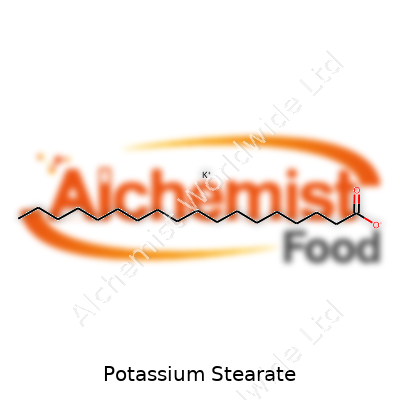
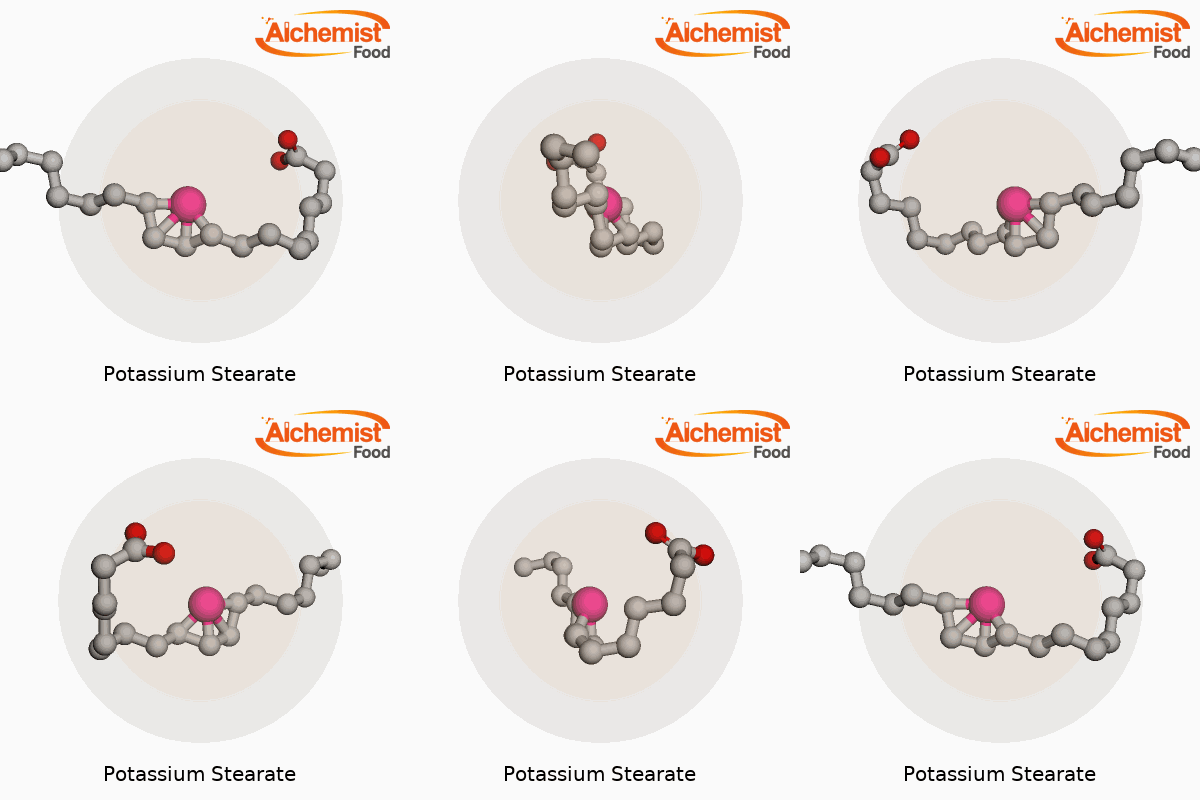
| Names | |
| Preferred IUPAC name | potassium octadecanoate |
| Other names |
Octadecanoic acid potassium salt Stearic acid potassium salt Potassium octadecanoate |
| Pronunciation | /pəˈtæsiəm ˈstɪəreɪt/ |
| Preferred IUPAC name | Potassium octadecanoate |
| Other names |
Potassium octadecanoate Stearic acid potassium salt |
| Pronunciation | /pəˈtæsiəm ˈstɪəreɪt/ |
| Identifiers | |
| CAS Number | 593-29-3 |
| Beilstein Reference | 1711016 |
| ChEBI | CHEBI:13131 |
| ChEMBL | CHEMBL1201777 |
| ChemSpider | 5951 |
| DrugBank | DB14784 |
| ECHA InfoCard | ECHA InfoCard: 100.029.751 |
| EC Number | 209-150-3 |
| Gmelin Reference | 131840 |
| KEGG | C18696 |
| MeSH | D020081 |
| PubChem CID | 23682373 |
| RTECS number | WNK3700000 |
| UNII | L5M10OFP8Q |
| UN number | UN1325 |
| CAS Number | 593-29-3 |
| Beilstein Reference | 1209077 |
| ChEBI | CHEBI:61112 |
| ChEMBL | CHEMBL1201574 |
| ChemSpider | 62790 |
| DrugBank | DB11097 |
| ECHA InfoCard | 17e698069ff-49a9-4ccf-98d7-4fdc7b657d0c |
| EC Number | 209-529-3 |
| Gmelin Reference | 7754 |
| KEGG | C14319 |
| MeSH | D017748 |
| PubChem CID | 23682255 |
| RTECS number | TI0350000 |
| UNII | UN1Y830V8Z |
| UN number | UN 1309 |
| CompTox Dashboard (EPA) | DTXSID1020663 |
| Properties | |
| Chemical formula | C18H35KO2 |
| Molar mass | Molar mass of Potassium Stearate: "322.57 g/mol |
| Appearance | White powder |
| Odor | Odorless |
| Density | 0.97 g/cm³ |
| Solubility in water | soluble in water |
| log P | log P: 10.14 |
| Vapor pressure | Negligible |
| Acidity (pKa) | 10.0 |
| Basicity (pKb) | 1.2 |
| Magnetic susceptibility (χ) | -50.0e-6 cm³/mol |
| Refractive index (nD) | 1.357 |
| Dipole moment | 2.05 D |
| Chemical formula | C18H35KO2 |
| Molar mass | 322.56 g/mol |
| Appearance | White powder or granule |
| Odor | Odorless |
| Density | 1.08 g/cm³ |
| Solubility in water | soluble in water |
| log P | 0.23 |
| Vapor pressure | Negligible |
| Acidity (pKa) | pKa ~ 5.5 |
| Basicity (pKb) | pKb ≈ 3.7 |
| Magnetic susceptibility (χ) | Paramagnetic |
| Refractive index (nD) | 1.363 |
| Viscosity | Viscous liquid |
| Dipole moment | 2.72 D |
| Thermochemistry | |
| Std molar entropy (S⦵298) | 505.3 J·mol⁻¹·K⁻¹ |
| Std enthalpy of formation (ΔfH⦵298) | -781.4 kJ/mol |
| Std enthalpy of combustion (ΔcH⦵298) | –9710.7 kJ/mol |
| Std molar entropy (S⦵298) | 472.3 J·mol⁻¹·K⁻¹ |
| Std enthalpy of formation (ΔfH⦵298) | -726.7 kJ/mol |
| Std enthalpy of combustion (ΔcH⦵298) | -9712.8 kJ/mol |
| Pharmacology | |
| ATC code | AIt is: "A16AX |
| ATC code | A24AA04 |
| Hazards | |
| Main hazards | Causes serious eye irritation. |
| GHS labelling | GHS07, GHS08 |
| Pictograms | GHS07 |
| Signal word | Warning |
| Hazard statements | Causes serious eye irritation. |
| Precautionary statements | Wash thoroughly after handling. Wear protective gloves/eye protection/face protection. IF ON SKIN: Wash with plenty of water. If skin irritation occurs: Get medical advice/attention. Take off contaminated clothing and wash it before reuse. |
| NFPA 704 (fire diamond) | 1-0-0-🌟 |
| Lethal dose or concentration | LD50 (oral, rat): >2000 mg/kg |
| LD50 (median dose) | LD50 (median dose): Oral, rat: 10,000 mg/kg |
| NIOSH | Not Listed |
| PEL (Permissible) | Not established |
| REL (Recommended) | 10 mg/m³ |
| IDLH (Immediate danger) | Not listed |
| Main hazards | May cause eye, skin, and respiratory irritation. |
| GHS labelling | GHS07 Warning |
| Pictograms | GHS07 |
| Signal word | No signal word |
| Precautionary statements | Wash thoroughly after handling. Wear protective gloves/eye protection. IF ON SKIN: Wash with plenty of water. If skin irritation occurs: Get medical advice/attention. Take off contaminated clothing and wash before reuse. |
| NFPA 704 (fire diamond) | 1-0-0-~ |
| Lethal dose or concentration | LD50 (oral, rat): >5,000 mg/kg |
| LD50 (median dose) | > 2000 mg/kg (Rat, oral) |
| NIOSH | Not established |
| PEL (Permissible) | Not established |
| REL (Recommended) | 10 mg/m³ |
| IDLH (Immediate danger) | No IDLH established. |
| Related compounds | |
| Related compounds |
Sodium stearate Calcium stearate Magnesium stearate Lithium stearate Aluminium stearate |
| Related compounds |
Potassium palmitate Potassium oleate Sodium stearate Calcium stearate Magnesium stearate |



