Potassium Nitrite: Unpacking an Industrial Mainstay
Historical Development
Potassium nitrite entered the industrial landscape as chemists and manufacturers hunted for stable, yet highly active, oxidizing agents. The late 19th century marked a shift, as widespread synthetic processes brought new inorganic salts into factories, and potassium nitrite followed on the heels of potassium nitrate’s widespread agricultural and pyrotechnic use. Researchers found potassium nitrite by reducing potassium nitrate, an age-old technique still relevant. Military applications, agriculture, and analytical chemistry widened demand, pushing manufacturers to refine processes for better purity and cost control. In the twentieth century, the chemical found its footing in laboratories, food processing, and textile manufacturing. Regulatory agencies started to notice, calling for tighter oversight and studies into toxicity.
Product Overview
Potassium nitrite stands as a pale yellow, odorless, crystalline powder with the chemical formula KNO2. Sold mostly as a solid, it dissolves quickly in water, yielding a strongly basic solution. Commercial grades arrive in tightly sealed containers, often labeled for calibration, laboratory, or industrial purposes, due to the compound’s reactivity and strict handling guidance. While sodium nitrite may hog the limelight in meat curing, potassium nitrite covers a broader set of research applications—analytical reagents, corrosion inhibition, and heat transfer media all rely on its unique chemistry.
Physical & Chemical Properties
Potassium nitrite looks innocuous—a fine crystalline solid, yellow-tinged in high-purity batches. It melts at about 440°C, decomposing rapidly as temperatures inch higher, releasing toxic gases including nitrogen oxides and potassium oxide dust. Solubility in water rises with temperature; at 25°C, nearly 280 grams dissolve per liter. The alkaline nature comes from nitrite hydrolysis. The compound reacts vigorously with strong acids and oxidizing agents, so it can spark dangerous exothermic reactions, especially in mixed chemical environments.
Technical Specifications & Labeling
Reputable suppliers provide detailed technical sheets for potassium nitrite, specifying assay purity (usually above 98%), moisture level, pH of a 10% solution (commonly between 8.5 and 10), and maximum contamination thresholds—metals, insolubles, and chlorides all receive close attention. Packaging falls under UN hazard codes, marking the substance as hazardous in transit. Storage guidelines call for dry conditions, tight seals, and clear hazard symbols; potassium nitrite’s strong oxidizing properties drive these rules. In the workplace, evolving global standards such as GHS require pictograms and signal words, ensuring everyone understands what they’re handling and how to respond to spills or exposures.
Preparation Method
Manufacturers create potassium nitrite by reducing potassium nitrate—usually with methods such as thermal decomposition or by reaction with lead or iron at high temperatures. The nitrate salt melts, then reduction conditions strip one oxygen, yielding nitrite and an oxide byproduct. Scale-up adds complexity: temperature, pressure, and the purity of reactants all sway yield and contamination. Post-reaction purification involves repeated crystallization and filtration, as even trace nitrate or metal ions disrupt analytical and food-related uses. Waste handling matters, too—leftover heavy metals, spent filters, and reaction gases demand careful collection and neutralization.
Chemical Reactions & Modifications
Potassium nitrite plays well in a variety of chemical settings. Acidic environments send it fizzing into nitrogen dioxide and other oxides; even modest acid spills invite risk. In water, it hydrolyzes, making an alkaline solution and releasing nitrous acid—a trait valued in analytical titrations but risky in open-air reactions. Heating nitrite launches it beyond decomposition, giving potassium oxide, nitrogen, and oxygen in quantities that challenge any lab’s fume hood. Reducing agents transform nitrite back to ammonia or nitrogen gas. Each property has found use: in textile dyeing, the color development relies on reduction; in corrosion labs, controlled reactions offer valuable data.
Synonyms & Product Names
Potassium nitrite answers to several names in catalogs and safety data sheets. Chemical suppliers might list it as E249, Potassium salt of nitrous acid, or simply KNO2. International naming standards, such as EC No. 231-555-9 and CAS No. 7758-09-0, help users double-check they’re working with the right compound. In research circles, older names occasionally crop up—sometimes simply “potassic nitrite.” This variety reflects a long history and broad reach in both academic and industrial sectors.
Safety & Operational Standards
Anyone who has spent time in an industrial lab knows potassium nitrite belongs in the “treat with respect” category. As a moderate oxidizer and toxic substance, potassium nitrite demands gloves, goggles, and—above all—proper ventilation. Regulatory groups like OSHA and the European Chemicals Agency set exposure limits, and require that each workplace display detailed safety data sheets nearby. Accidental ingestion, inhalation, or skin contact can trigger symptoms such as hypotension, methemoglobinemia, and severe headache. Storage means keeping away from acids, organic substances, heat sources, and moisture—potassium nitrite’s reactivity calls for these barriers. Emergency protocols must address both personal exposure and environmental release: copious water is best for skin; acids create a headache of toxic vapor; spills require dry cleaning to keep reactions in check.
Application Area
Potassium nitrite has carved out a niche in several industries. Analytical chemists depend on it for precise redox titrations, especially in food quality testing and metallurgical labs. In heat transfer technology, molten salt mixtures containing potassium nitrite handle high-temperature solar and chemical processes efficiently. Food processors have turned to potassium nitrite as an alternative curing agent, though most countries restrict its use because of concerns about nitrosamines and chronic exposure risk. In the textile industry, synthetic dye processes employ potassium nitrite to fix colors and manage reduction steps. Manufacturing often taps nitrites to inhibit corrosion in closed water loops and high-efficiency heating plants, leveraging the compound’s ability to suppress iron oxidation.
Research & Development
Researchers keep digging for safer applications and better substitutes for potassium nitrite. Analytical teams refine detection methods for nitrite residues, using spectrophotometry, ion chromatography, and electrochemical sensors to track timelines and breakdown products. Material scientists work on incorporating potassium nitrite in complex salt blends to boost solar thermal storage capacity or improve the resilience of industrial reactors. Chemists investigate catalytic roles in nitrogen cycle studies, seeking insights that might inform advanced fertilizer or pollution controls. Each of these areas must balance the reactivity and toxicity of potassium nitrite with innovation and new tech demands.
Toxicity Research
Decades of health research spell out clear risks. Potassium nitrite in the bloodstream acts as a potent oxidizer, quick to disrupt hemoglobin function and cause methemoglobinemia—blood unable to carry oxygen. Chronic exposure’s links to cancer come from its ability to form nitrosamines, a group of well-documented carcinogens, during food processing or digestion. Regulatory authorities in Europe, North America, and Asia limit dietary nitrite content, track air and water emissions, and run public advisories for contamination events. Epidemiological studies keep turning up new details about nitrite’s fate in the environment, especially regarding groundwater leaching, and bioaccumulation in wildlife.
Future Prospects
Looking ahead, potassium nitrite’s future seems tangled with efforts to tighten safety and environmental standards. Process chemists search for ways to harness nitrite’s power and reactivity without its downside. Biodegradable substitutes and new encapsulation technologies offer some hope, though so far, none delivers the same reactivity in industrial settings. Automated handling and advanced containment systems now allow industries to use potassium nitrite with less risk, and ongoing studies in food science may revive its reputation if safer dosing becomes feasible. Climate change and water scarcity create a fresh push for corrosion control and heat transfer tech, so potassium nitrite’s unique physical and chemical behaviors keep it on the research agenda. New generations of chemists, industrial hygienists, and regulators must weigh each benefit against long-standing toxicological concerns.
What is Potassium Nitrite used for?
Potassium Nitrite in Food and Beyond
Ask someone about potassium nitrite, and most folks scratch their heads. Potassium nitrite doesn’t appear on grocery lists or in casual conversation. Yet, this chemical quietly plays a role in several industries and raises questions about our choices when it comes to preserving and processing what we eat.
A Place in the Curing Process
Some folks know about sodium nitrite in bacon or ham, but potassium nitrite often works as a stand-in—especially where sodium-reduced or specialty cured meats pop up. It slows the growth of bacteria which can cause botulism, a nasty foodborne illness. By stopping those bugs from spreading, food stays safe to eat over weeks or months. There’s also a side effect fans of deli meat appreciate: a familiar rosy color and that flavor you can recognize with your eyes closed.
Regulators in Europe approved potassium nitrite for use in food, but restrictions keep it in check. Too much nitrite spells trouble due to potential links with cancer, especially where high heat meets processed meat. That’s why producers measure it out, keep it below strict limits, and pair it with ascorbic acid or other compounds to reduce harmful byproducts.
Not Just for Sandwich Meat
Curing meats isn’t the whole story. Potassium nitrite pulls weight in the chemical and pharmaceutical world. Researchers rely on it in the lab to produce nitric oxide, a chemical messenger that opens blood vessels. Agriculture taps into nitrites for fertilizer formulas. Cleaner production and density control for specialty steels and alloys also figure into its resumé. Sometimes, water treatment systems put it to use. Each of these applications rides on the same property: potassium nitrite’s strong ability to give off and accept oxygen atoms, making it useful for changing other chemicals or stopping bacteria.
The Safety Balancing Act
Many of us hear “nitrite” and remember warnings about hot dogs or cancer risk. That concern isn’t misplaced. Too much of this stuff means more chances for nitrosamines to form—those are connected to higher rates of certain cancers. Researchers ran studies for decades; results show risk rises with frequent, high consumption, especially with some kinds of meat and certain cooking methods. The key focus remains controlling how much goes into foods and encouraging folks to eat more fresh foods, along with leafy greens that help counter those harmful byproducts.
Supporting Better Choices
Debates about nitrites won’t settle anytime soon. Regulations demand clear labeling and maximum allowed concentrations. Some meat producers mix in celery juice or other naturally occurring nitrites, but health effects pan out similarly when processed in the body. For now, a widespread push encourages clean-label ingredients, clearer sourcing, and ongoing research. That research helps reviewers like the European Food Safety Authority and the US FDA update guidance based on strong, up-to-date science.
From my own meals, I tend to watch out for cured meats and check ingredient lists. It’s less about panic, more about moderation. That approach, along with a solid understanding of where and why chemicals like potassium nitrite show up, builds trust and gives people clearer choices at the table.
Is Potassium Nitrite safe to handle?
Understanding Potassium Nitrite
Potassium nitrite shows up in many stories about chemicals used in agriculture, water treatment, and some food preservation processes. This chemical, with its bright yellow color, doesn't usually make the headlines like pesticides or heavy metals. Yet, it belongs on the radar for anyone working around chemicals or even experimenting at home.
Risks You Can’t Ignore
Potassium nitrite is classified as an oxidizer. Consider it a sort of spark plug for fires: if it mixes with flammable materials or even just organic dust, it can set off intense reactions. Breathing in potassium nitrite dust or eating even a tiny amount can cause severe health problems. These aren’t hypothetical risks. Medical studies confirm that nitrite compounds can react with hemoglobin in the blood, making it hard for your body to deliver oxygen. Symptoms like dizziness, headaches, and serious shortness of breath show up if you’ve overexposed yourself.
Older cases highlight fatalities from accidental and intentional ingestion. Sometimes, the line between ordinary lab accident and life-threatening emergency gets crossed because someone underestimates what “safe” means in practice. My experience in university chemistry labs taught me: simple procedures turn dangerous when folks take shortcuts—forgetting gloves, skipping the goggles, or postponing cleanup. It takes just one careless move to end up at the campus clinic with a chemical burn or a worse story for the safety board.
Safety Measures Make a Difference
Reading a safety data sheet isn’t busywork. OSHA and European chemical agencies classify potassium nitrite as hazardous, not just a mild irritant. Regulations exist because the threat is real—not because someone needed to fill out paperwork. Gloves rated for chemicals, fitted lab coats, and tight-sealing goggles matter. Storing this compound separately from acids, combustibles, or a sunny window cuts the chances of unwanted reactions.
Disposal needs its own plan. Pouring potassium nitrite down the drain can contaminate waterways and put wildlife at risk. Water treatment workers have flagged nitrite contamination as a real environmental concern. Municipal plants treat nitrites with expensive safeguards because high nitrate and nitrite levels in drinking water can cause “blue baby syndrome” and other health problems for infants. These facts push companies and schools to invest in correct disposal systems instead of taking the easy way out.
The Knowledge Gap
The biggest danger lurks in not knowing exactly what you’re handling. I’ve spoken to students and hobbyists who thought that if a chemical wasn’t “radioactive or explosive” it must be fine. That false sense of security leads to mixing products or ignoring warning labels. Each year, poison control centers field calls from users misusing industrial-grade chemicals at home. The Centers for Disease Control and Prevention have published safety recommendations and track incidents involving nitrite poisoning. These warnings come from real-world mistakes, not just legal disclaimer language.
Solutions That Go Beyond Warning Labels
Clear education works better than posting a printed list of side effects near the lab sink. Training sessions, hands-on demonstrations, and open discussion about real incidents help drive the message home. Supervisors and teachers need to reach people where they are: showing why procedures matter with examples from actual cases. Good habits stick when people know what’s at stake.
Manufacturers also play a role by designing better storage containers—child-resistant packaging, better labeling, and even adding colorants or distinct odors can help reduce accidental exposure. Suppose stores only sold potassium nitrite after buyers answered some basic safety questions or watched a quick online tutorial—it wouldn’t eliminate accidents, but it would cut down on ignorance.
Final Thoughts on Safety
Potassium nitrite isn’t “just another chemical”—it demands respect and careful handling. Those who treat it with the same caution they’d use for a live wire won't end up in the next emergency room report. Respect for rules, coupled with real-world education, builds a better safety record inside laboratories, classrooms, and homes.
What is the chemical formula of Potassium Nitrite?
The Basics: Potassium Nitrite's Formula
Potassium nitrite stands as a well-known compound in both commercial and laboratory settings. The chemical formula for potassium nitrite is KNO2. This tells us a lot more than just which elements come together. It signals the kind of properties you can expect and, more importantly, how you should handle and use this substance. With potassium (K), nitrogen (N), and oxygen (O) combined in this particular way, the compound behaves differently than other potassium or nitrogen-based chemicals.
Safety First: Understanding Through Chemistry
Knowledge goes hand in hand with safety. Years spent working with chemicals in various labs have shown me how knowing the exact formula helps in reading between the lines of safety instructions. A single misplaced number or letter in a chemical formula can change the story — sometimes with dangerous consequences. Here, KNO2 is not just about labeling. It's about recognizing that, due to the nitrite ion (NO2-), this compound acts as a strong oxidizing agent. This changes how you should store it, what kind of reactions you might expect, and what to do if an accident occurs.
The Real-world Impact: Agriculture, Food, and Industry
Potassium nitrite shows up in more places than most people realize. Some farms use it as a fertilizer, and certain industries lean on its oxidizing strength. In food processing, especially meat curing, nitrites—often potassium nitrite—help preserve products and create the right texture. That being said, nitrites have made headlines over health concerns. Too much exposure or incorrect use can lead to the formation of harmful compounds such as nitrosamines, which studies have connected to cancer risks. Food scientists and public health agencies from around the globe — the U.S. FDA included — have put limits in place for exactly this reason.
The Knowledge Gap: What We Can Do Better
From my own teaching experience, I see too many students memorize formulas without getting the bigger picture. Potassium nitrite's formula, KNO2, should spark questions. Why does this arrangement matter? What makes nitrite behave differently from nitrate? By emphasizing these connections, science education becomes more than memorization — it becomes a tool for safer labs and smarter choices in industry and at home.
Solutions: Smarter Chemistry for Safer Use
Raising awareness stands out as the biggest step. Schools, workplaces, and policy makers can step up efforts to make chemical literacy part of everyday life. From better labels to clearer safety datasheets and hands-on training, each step boosts public safety. In agricultural and food sectors, regular checks on nitrite levels go a long way to prevent unsafe exposure. Every new discovery, every clearer explanation, turns the formula KNO2 into something more — a reminder that chemistry shapes nearly everything we touch and eat.
How should Potassium Nitrite be stored?
Understanding the Risks
Potassium nitrite carries a reputation for being both useful and risky. Many warehouses and labs rely on it for its strong oxidizing properties, but that same chemical spark can kick off major problems if it lands in the wrong spot—think accidental fires or toxic gas release. As someone who has spent years in agriculture and materials science, I’ve seen how a split-second mistake can turn a regular workday into a scramble for safety showers and ventilators.
The Basics of Safe Storage
The wrong storage conditions invite disaster. Anybody working around potassium nitrite needs to give it more than just a spot on a shelf. Shelf location matters. Keep it away from heat sources like radiators or sunlight—just a few degrees over normal room temperature and the risk jumps. Some folks get casual and stack it with common organics or even other oxidizers, not realizing these combinations spark fires or cause pressure to build up in containers.
Moisture spells trouble. Potassium nitrite clumps and degrades, but worse, water can help kick off dangerous reactions with flammable materials. Good practice calls for sealed, airtight containers—glass or tough plastic work well—labeled clear enough for anyone to spot from across the room. Metal lids invite reaction and shouldn’t touch the material.
Avoiding Unwanted Reactions
Busy storerooms sometimes morph into danger zones. Picture a shelf filled with acids, reducing sugars, and potassium nitrite all together. A single accidental leak, and you get toxic nitrous gases. I once walked into a facility where nitric acid stored above a bag of potassium nitrite had dripped down—luck narrowly kept anyone from major injury, but the lesson stuck. Stock potassium nitrite away from anything combustible, like paper, wood, or chemicals like ammonium salts and sugars.
Some safety sheets mention separate chemical storage cabinets for oxidizers. This isn’t paperwork theater; I’ve seen them save lives. Get a well-ventilated, fire-resistant cabinet. Don’t overfill the cabinet—leave room for air to move, so fumes can’t build up.
Real-World Compliance and Safety
Rules exist for a reason. The Occupational Safety and Health Administration (OSHA), along with NFPA (National Fire Protection Association), lay down guidelines: dry, cool, well-ventilated spaces; weatherproof containers; safety signage. I remember a small lab fined heavily just for leaving oxidizers exposed on open shelving—nobody was injured, but inspectors wanted no repeat. It hit home that even the best employees slip up, so solid labeling and routine checks matter more than basic training.
Fire extinguishers suited to chemical fires should stay within easy reach, and workers should know the emergency plan. Don’t rely on a single person’s memory. Set up and practice drills—uncomfortable at times, but everyone learns how fast things can go wrong and what they need to grab on the way out.
What's Next?
Storage sounds simple but shapes the day-to-day safety and trust of anyone near potassium nitrite. Companies and labs need clear policies, real training, and tough oversight. I trust a workplace that invests in storage as much as equipment or staff—protecting people and property starts long before anything goes wrong.
What are the potential health risks of Potassium Nitrite exposure?
Understanding Potassium Nitrite
Potassium nitrite pops up in places people don’t always expect—from certain meat-curing processes to some industrial uses. Its job often involves prevention of bacterial growth and preservation of color in foods, mostly in processed meats. Yet, handling or consuming this chemical can bring real health hazards to the table. Coming from a food science background, I’ve seen how something seemingly helpful in one setting can turn risky fast if not treated with respect.
How the Body Reacts
Potassium nitrite changes inside the human body. After ingestion, it can form compounds called nitrosamines, especially in the acidic environment of the stomach. Studies have shown that nitrosamines link to an increased chance of certain cancers, like stomach or esophageal cancer. Even government agencies like the CDC and WHO flag this as a serious public health worry.
Short-term exposure often sparks quick reactions. One of the biggest concerns: methemoglobinemia. This mouthful refers to a state where hemoglobin—the molecule in blood that carries oxygen—can’t do its job because it’s been altered by the nitrite. Infants face greater danger, leading to the nickname “blue baby syndrome.” Too much potassium nitrite leaves them gasping for air, their skin taking on a bluish tint. Adults can also experience headaches, dizziness, rapid heart rate, or even collapse if they take in enough.
Handling and Environmental Risks
Exposure is not just about eating. Industrial workers face risk from inhaling dust or touching potassium nitrite powder with bare skin. Acute toxicity cases, though not common, show up in the ER after accidents or sometimes deliberate misuse. Symptoms range from throat irritation and stomach pain to more severe issues like seizures or shock. Chemicals in food-grade applications can drift into water supplies if handled carelessly, causing broader environmental harm. In my lab days, glove protocols and fume hoods were just standard steps—some may shrug at the safety training, but the dangers are real.
Prevention Still Matters
Daily exposure for most people remains low, but regulatory bodies keep a close watch. Rules limit how much potassium nitrite may go into cured meats. The USDA, for example, puts caps on allowable levels, and food processors must track usage tightly. While eating bacon or ham occasionally won’t tip most adults into danger, eating large amounts frequently adds up, especially if there's little variety in the diet.
Looking for better solutions, food scientists and public health leaders suggest using natural alternatives to potassium nitrite in processed foods. Celery powder and other plant-based preservatives have gained ground—they still contain natural nitrites, but the overall levels and processing tend to result in fewer nitrosamines. In industrial settings, strict worker training, PPE (personal protective equipment), and frequent safety checks help reduce the risk to those working directly with this chemical.
Shifting Toward Safer Choices
Growing awareness of food additives has parents, chefs, and everyday shoppers reading labels more carefully. Studies from top universities show that reducing consumption of processed meats and nitrite-containing foods can lower the risk for some health problems. Industries continue pushing for cleaner, safer alternatives, knowing that public trust and worker safety keep business alive. From my own kitchen and from stories of people I’ve met in health care over the years, it’s clear that even a small chemical like potassium nitrite casts a long shadow, one that demands both respect and ongoing attention.
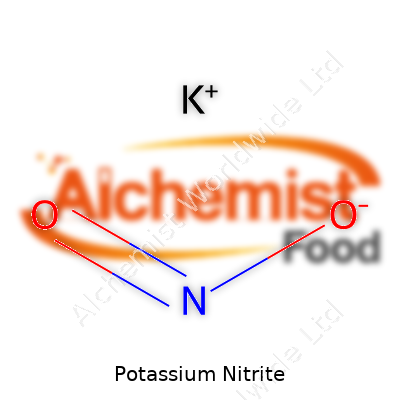
| Names | |
| Preferred IUPAC name | Potassium nitrite |
| Other names |
Nitrous acid, potassium salt Potassium(I) nitrite E249 |
| Pronunciation | /poʊˈtæsiəm ˈnaɪtraɪt/ |
| Preferred IUPAC name | Potassium nitrite |
| Other names |
Nitrous acid, potassium salt Potassium salt nitrous acid E249 Potassium nitrite (KNO2) |
| Pronunciation | /pəˈtæsiəm ˈnaɪtraɪt/ |
| Identifiers | |
| CAS Number | 7758-09-0 |
| Beilstein Reference | 358993 |
| ChEBI | CHEBI:77650 |
| ChEMBL | CHEMBL1647862 |
| ChemSpider | 68124 |
| DrugBank | DB01431 |
| ECHA InfoCard | ECHA InfoCard: 029-003-00-4 |
| EC Number | 007-010-00-4 |
| Gmelin Reference | Gmelin Reference: **1679** |
| KEGG | C14361 |
| MeSH | D017765 |
| PubChem CID | 24924 |
| RTECS number | TT2975000 |
| UNII | 7Q4109N1CO |
| UN number | UN1488 |
| CAS Number | 7758-09-0 |
| Beilstein Reference | 358715 |
| ChEBI | CHEBI:77544 |
| ChEMBL | CHEMBL1352 |
| ChemSpider | 57925 |
| DrugBank | DB14808 |
| ECHA InfoCard | ECHA InfoCard: 031-003-00-2 |
| EC Number | 231-832-4 |
| Gmelin Reference | 1642 |
| KEGG | C14647 |
| MeSH | D017784 |
| PubChem CID | 24450 |
| RTECS number | TT2975000 |
| UNII | 7S8IYK1WYN |
| UN number | UN1488 |
| Properties | |
| Chemical formula | KNO2 |
| Molar mass | 85.103 g/mol |
| Appearance | white to slightly yellowish crystalline solid |
| Odor | odorless |
| Density | 1.915 g/cm³ |
| Solubility in water | 281 g/100 mL (20 °C) |
| log P | -3.4 |
| Vapor pressure | Negligible |
| Acidity (pKa) | 3.4 |
| Basicity (pKb) | 10.07 |
| Magnetic susceptibility (χ) | Paramagnetic |
| Refractive index (nD) | 1.997 |
| Dipole moment | 0 D |
| Chemical formula | KNO2 |
| Molar mass | 85.103 g/mol |
| Appearance | White to slightly yellow crystalline solid |
| Odor | odorless |
| Density | 1.915 g/cm³ |
| Solubility in water | 281 g/100 mL (20 °C) |
| log P | -3.4 |
| Vapor pressure | Negligible |
| Acidity (pKa) | 3.4 |
| Basicity (pKb) | 10.07 |
| Magnetic susceptibility (χ) | Paramagnetic |
| Refractive index (nD) | 1.997 |
| Dipole moment | 11.6 D |
| Thermochemistry | |
| Std molar entropy (S⦵298) | 116.0 J/(mol·K) |
| Std enthalpy of formation (ΔfH⦵298) | -360.3 kJ/mol |
| Std enthalpy of combustion (ΔcH⦵298) | -391 kJ/mol |
| Std molar entropy (S⦵298) | 114.0 J·mol⁻¹·K⁻¹ |
| Std enthalpy of formation (ΔfH⦵298) | -360.3 kJ/mol |
| Std enthalpy of combustion (ΔcH⦵298) | -391 kJ/mol |
| Pharmacology | |
| ATC code | V03AB04 |
| ATC code | V03AB17 |
| Hazards | |
| Main hazards | Oxidizer, toxic if swallowed, may cause fire or explosion, harmful to aquatic life |
| GHS labelling | GHS02, GHS03, GHS06, GHS09 |
| Pictograms | GHS03,GHS06 |
| Signal word | Danger |
| Hazard statements | H272, H301, H319, H335 |
| Precautionary statements | P210, P222, P221, P264, P270, P273, P280, P301+P312, P302+P352, P305+P351+P338, P330, P370+P378, P362, P405, P501 |
| NFPA 704 (fire diamond) | 3 0 0 OX |
| Autoignition temperature | 410 °C |
| Lethal dose or concentration | LD50 Oral - rat - 180 mg/kg |
| LD50 (median dose) | LD50 (median dose) = 85 mg/kg (oral, rat) |
| NIOSH | 01461827 |
| PEL (Permissible) | PEL: 0.2 mg/m³ |
| REL (Recommended) | Use of potassium nitrite as a food additive is not recommended due to its potential health risks, including the formation of carcinogenic nitrosamines. |
| IDLH (Immediate danger) | IDLH: 75 mg/m³ |
| GHS labelling | GHS02, GHS03, GHS06 |
| Pictograms | GHS03,GHS06 |
| Signal word | Danger |
| Hazard statements | H272, H301, H319, H335 |
| Precautionary statements | P210, P220, P221, P261, P264, P270, P273, P301+P312, P305+P351+P338, P306+P360, P310, P370+P378, P501 |
| NFPA 704 (fire diamond) | 2-3-0-OX |
| Autoignition temperature | 540 °C |
| Lethal dose or concentration | LD50 oral rat 180 mg/kg |
| LD50 (median dose) | 85 mg/kg (oral, rat) |
| NIOSH | NA |
| REL (Recommended) | 0.2 mg/kg bw |
| IDLH (Immediate danger) | 200 mg/m3 |
| Related compounds | |
| Related compounds |
Sodium nitrite Potassium nitrate Sodium nitrate |
| Related compounds |
Potassium nitrate Sodium nitrite Sodium nitrate |



