Potassium Formate: A Deep Dive into Its Story, Uses, and Prospects
Historical Development
Potassium formate didn’t suddenly appear in chemical supply catalogs. Its story began more than a century ago, tied to the growth of industrial chemistry. Early researchers sought alternatives to calcium chloride for deicing and discovered potassium formate worked better at lower temperatures while causing less metal corrosion. Chemical suppliers in the mid-20th century caught on and started producing the salt for the oil and gas sector, where it played a role in deep drilling fluids. As demand for safer, eco-friendly deicing agents ramped up, potassium formate gained attention outside laboratories, moving into airfields and city streets. Folk in cold regions might remember slick, brownish fluids replacing harsh salt sprays on airport runways. These changes didn’t happen overnight but reflected years of trial, error, and adaptation.
Product Overview
Potassium formate usually comes as a clear solution or white, crystalline powder. The chemical formula, HCOOK, reflects its basic structure—a formate anion paired with a potassium cation. Producers offer it in concentrations that suit everything from heat transfer to snow removal. Potassium formate stands out because it doesn’t introduce heavy metals or persistent pollutants into soil and water. That’s a big deal when municipal engineers weigh public safety against environmental impact. Instead of piling up like rock salt, potassium formate dissolves and breaks down, leaving fewer worries about groundwater contamination or plant damage.
Physical & Chemical Properties
This compound comes with a melting point near 167°C. It dissolves easily in water, creating dense brines that outmatch regular salt for melting ice at very low temperatures. Some folks note the slight smell of formic acid when handling it in the lab, which hints at the organic roots. In pure form, potassium formate avoids clumping and resists caking, which matters for bulk storage. It doesn’t attack aluminum and steel as fiercely as other deicers might. Its low toxicity and fast biodegradability also set it apart. I’ve watched road crews in Norway and Canada spray potassium formate solutions with less worry about rusting vehicles or poisoning nearby plants compared to older chloride-based methods.
Technical Specifications & Labeling
Producers give concentration in weight percent, with solutions ranging from 20% to 75%. Each drum or tote comes with a lot number, net content, date of production, and safety info. Regulations ask for hazard pictograms and handling instructions on the labels. Workers responsible for storage or use look for clarity here—questions about maximum shelf life, necessary personal protective equipment, and temperature limits should find answers right on the packaging. All this fits nicely with the chemical regulations drafted in both Europe and North America.
Preparation Method
Potassium formate forms through a straightforward reaction between potassium hydroxide (KOH) and formic acid (HCOOH). Producers take care during this exothermic step—temperature control matters to prevent splattering. Once neutralized, the solution gets concentrated by evaporation or left to crystallize. Contaminants like residual acid or alkali show up under quality control, where titration and spectroscopy help keep impurities in check. In large-scale plants, closed systems and careful pH monitoring stop the process from veering off course.
Chemical Reactions & Modifications
Potassium formate doesn’t just sit still in storage tanks. It takes part in organic syntheses, acting as a reducing agent in processes like transfer hydrogenation. Scientists have used it in making certain pharmaceuticals and polymers, taking advantage of its mild nature and easy handling. It also serves as a starting material for other potassium salts. Under heat and with the right catalyst, potassium formate can decompose, releasing hydrogen and forming potassium carbonate. This property led researchers to consider it for small-scale hydrogen storage. The simple structure means easy modification for specific uses, like adjusting pH or blending with other salts to alter melting points.
Synonyms & Product Names
Potassium methanoate pops up in older chemistry books, along with K-Formate, and Potassium salt of formic acid. Trade catalogs sometimes list “liquid runway deicer,” “potassium formate brine,” or “substitute brine for roadways.” International suppliers translate the name to fit local standards, but industry folks recognize the basic label no matter where they work.
Safety & Operational Standards
Safety folks at chemical plants insist on goggles and gloves when anyone handles concentrated potassium formate. It can sting eyes or skin, especially in high concentrations. Inhalation rarely causes trouble unless there’s mist in the air, in which case a dust mask or respirator steps in. Workers check ventilation and spill controls, given that large spills in a storeroom might create slips or short-term headaches for those nearby. Disposal calls for dilution and release into municipal treatment systems, not down storm drains. Regulatory standards—the European Chemicals Agency (ECHA) and the U.S. Environmental Protection Agency—set benchmarks for purity, labeling, and emissions. Complaints about tank leaks or residue often push companies to review drum handling and worker training.
Application Area
The main public face of potassium formate shows up in winter road care and airport maintenance. Airport authorities worldwide lean toward it because it cuts down metal corrosion on expensive infrastructure and doesn’t sabotage sensitive electronics or runway lights. Oil fields use it for drilling fluids, where its stability and high density balance downhole pressures. Plant operators like it for heat-transfer applications—potassium formate brines flow through pipes in refrigeration units, keeping food cold without the risk of fire or toxicity posed by ammonia or glycol. It pops up in laboratory benches and industrial syntheses too, as a mild base and reducing agent. In my own experience, traffic departments in northern climates describe how potassium formate stretched their budgets by saving landing gears and wiring from salt-induced corrosion.
Research & Development
Research labs continue to probe how potassium formate performs as a hydrogen source. Hydrogen-on-demand systems could someday rely on its easy decomposition, with small reactors cracking the salt to feed fuel cells. In the environmental sector, ongoing studies focus on how quickly microbes break down potassium formate residues in soils and rivers. So far, evidence points to rapid degradation with little risk to aquatic organisms, but scientists still test scenarios involving overdose or repeated use. Universities look at new ways to combine this salt with green chemistry processes. In medicine and pharma, research explores whether potassium formate-based buffers create gentler reaction conditions for sensitive molecules.
Toxicity Research
Toxicology experts describe potassium formate as low-risk for both acute and chronic effects, especially compared to sodium chloride and other deicing salts. Mice and fish studies confirm high tolerance levels, with lethal doses rarely encountered under typical usage. Concern shifts to repeated spills or chronic runoff, where formate ions might stack up locally. Soils with poor drainage could see minor buildup, but regular field sampling in highway projects shows levels drop off as rains dilute residues. Skin contact seldom triggers more than a rash, and respiratory effects remain mild outside large, confined spills. Toxicity research continues to reassure communities, though routine monitoring and emergency planning make sense, especially at major storage hubs.
Future Prospects
People looking for sustainable, low-impact chemicals keep potassium formate near the top of their lists. Cities and aviation professionals aim to phase out harsher salts and glycols, and potassium formate fills gaps in both safety and performance. As more jurisdictions ban high-chloride runoff, potassium formate’s profile may rise even further. Researchers targeting hydrogen storage and transfer systems experiment with new reactor designs, hoping the salt unlocks portable energy applications. Manufacturers invest in greener, more efficient formic acid sources, trying to lower both the financial and environmental cost of the supply chain. As chemical companies embrace circular economy models, potassium formate likely finds a home in more product categories. Its straightforward chemistry, decent safety record, and growing versatility suggest a long run ahead in both public and industrial sectors.
What is Potassium Formate used for?
Why This Simple Salt Matters
Potassium formate, despite sounding like something only a chemist should care about, has a real place in everyday life and business. This salt, made from potassium and formic acid, tackles some hefty tasks, especially keeping runways, roads, and industrial sites safer when things get icy. Potassium formate stands out for practical reasons: it melts ice fast, it’s kinder to the planet than most rock salt, and it causes less damage to cars, concrete, and groundwater. My own encounter with its impact came during a particularly harsh winter in the Midwest, where cities switched from sodium chloride to potassium formate for airport runways. Takeoff delays dropped, airplane corrosion complaints faded, and winter maintenance budgets stretched further.
How the World Uses Potassium Formate
Municipal workers rely on potassium formate for de-icing, especially when protecting sensitive environments. Unlike traditional road salts, which can leach toxins and destroy landscaping, potassium formate breaks down quickly and doesn’t bring the same risks to aquatic life or vegetation. In big cities, keeping roads open and bridges safe without poisoning the parks or rivers matters. Potassium formate pulls that off, especially where folks need to walk dogs, push strollers, or avoid salt stains on shoes and pants.
Aviation has embraced potassium formate, not for fashion, but because it fixes more problems than it causes. Aircraft de-icing fluids depend on potassium formate to remove ice layers fast before flights. Unlike glycol-based de-icers, which contaminate airport drainage systems and threaten fisheries, potassium formate leaves a lighter environmental footprint. The Federal Aviation Administration tracks airport runoff, and those using potassium formate post far fewer water quality violations. Less cleanup means lower costs for airports and airlines — good news for travelers who hate delays.
Oilfields and Heavy Industry: Quiet Workhorses
Potassium formate helps oil and gas drillers, too. In drilling fluids, potassium formate controls pressure in high-temperature wells and prevents clay inside the earth from swelling. Using this salt helps companies pull oil and gas out with fewer breakdowns. I’ve met rig workers who swear by it, mostly because their jobs are messy enough without mud turning into concrete downhole.
Potassium Formate and Safety
Potassium formate scores points for safety compared to older options. Skin exposure doesn’t leave the same burning sensation as calcium chloride or traditional salts. Spills won’t trigger hazmat teams. Parents, pet owners, and maintenance crews get fewer worries if granular potassium formate finds its way into playgrounds or gardens. NASA used potassium formate on launchpads—places where every material faces scrutiny—because the risk of environmental backlash from spills or runoff demanded something better.
Challenges and Forward Steps
Switching to potassium formate doesn’t solve everything. It costs a bit more upfront. Some local governments get sticker shock, forgetting that long-term savings can outweigh the initial spend. Suppliers still have to ramp up production to meet growing demand, especially if city after city draws lessons from early adopters. Research suggests making potassium formate from byproducts of the lumber and agriculture industry instead of fossil fuel-derived ingredients will drive prices down. Public education plays a role too; city councils make smarter calls when leaders and residents know the hidden costs behind traditional salts and the win-win opportunity with potassium formate. Sometimes the “better way” isn’t obvious until the benefits show up in cleaner water, pothole-free streets, and fewer chemical burns. Potassium formate, for all its quiet chemistry, deserves a lot more attention.
Is Potassium Formate safe to handle?
Getting Real with Potassium Formate
Potassium formate shows up in industries from oil drilling to de-icing airport runways. On paper, it looks much friendlier than lots of other industrial chemicals. Potassium is a familiar dietary mineral, and formate breaks down in nature. Lab reports show it doesn’t hang around long in the environment, and people rarely mention disastrous accidents involving this salt.
But I’ve taken a few chemistry classes and spent time on industrial sites. Never once did I see anyone take a bag of potassium formate and treat it like table salt. Folks running those operations wore gloves, kept it away from food, and always ran through a safety sheet. If you ever picked up a dusty sack of it yourself, you could see why. Potassium formate comes as little white crystals, and these can pull in water from the air and feel a bit slippy. If crystals or dust get on bare skin, it might cause itching or mild irritation. Not the stuff for open wounds. Get it in your eyes, and you’ll remember it for days.
The Data Says: Respect Required
Scientific journals, safety data sheets, and manufacturers all stress the same points. Potassium formate isn’t classed as “highly dangerous,” but prolonged exposure risks skin and eye irritation. Swallowing it might upset your stomach and, in very large amounts, cause bigger problems. This isn’t household baking soda. Still, it won’t eat through your hands or give off toxic fumes the way something like strong acids would. Big spills need cleaning up, but you won’t clear a city block for it.
The EPA and European Chemicals Agency review it for de-icer and oil use, finding low long-term risks to people and the environment. Fish and plants break it down quickly, so you don’t find it building up in rivers. That’s a relief for anyone worried about wildlife and water.
Protecting Workers and the Curious
Colleagues on factory shifts use goggles, gloves, and basic dust masks if they’re around dry powders. No one there messes about, because chemical dust doesn’t care if someone meant to touch their eyes or not. Eating or drinking near potassium formate isn’t smart. That goes double if someone’s sweaty and rubbing their nose between lifting sacks.
Anyone working with potassium formate at home should store it with the same care they’d give pool chemicals or cleaners. Small children and pets don’t know what’s safe—one wrong grab could lead to a trip to the doctor. That’s why locking cabinets exist.
Keeping Safety Up to Date
Real-world safety means clear training, up-to-date labels, and making sure everyone knows the simple rules: wash hands, don’t touch your face, and call for help if someone gets a big puff in their eyes or on their skin. That sounds simple, but I’ve seen plenty of folks skip those steps and wind up regretting it. Facilities should check their ventilation, make sure showers and eye wash stations work, and keep emergency numbers on speed dial.
Looking at the Bigger Picture
Potassium formate offers a cleaner alternative for many jobs, especially compared to heavy metal salts or harsh corrosives. Still, swapping a risky compound for a milder one never means skipping safety basics. Companies should keep reviewing accident logs, updating guides, and finding smarter ways to reduce dust and splashes. That pays off in health and peace of mind, for everyone from the overnight cleaner to the research chemist. Even for the occasional do-it-yourselfer, a bit of caution costs far less than a trip to urgent care.
What is the chemical formula of Potassium Formate?
A Closer Look at the Formula and Its Real-World Impact
Chemists and folks in industries using de-icing products often cross paths with potassium formate. Its chemical formula reads HCOOK, which comes from a mix of formic acid (HCOOH) and potassium hydroxide (KOH). Potassium formate definitely isn’t just an academic tidbit. For drivers stuck on icy roads or engineers protecting metal components in oil fields, this compound plays a role you can’t ignore.
The Science Behind HCOOK
Behind the scenes, potassium formate contains a simple structure: one potassium ion (K+) pairs up with the formate ion (HCOO-). This pairing not only makes it easy to dissolve in water but also helps it outperform traditional salt in many applications. It comes from a simple reaction, but the result holds valuable properties. In my experience covering industrial topics, practical concerns usually outweigh flashy chemical facts. Potassium formate checks boxes that matter—efficient, less corrosive, and safer for the environment than conventional salt.
Why the Chemical Formula Matters Outside the Lab
Anyone responsible for public safety during winter knows that salt brings headaches. It eats through concrete, rusts vehicles, and raises cleanup costs. Having worked with people in maintenance and construction, I’ve learned first-hand about their search for less damaging solutions. The makeup of HCOOK lets it melt ice at low temperatures without chewing up road infrastructure or damaging aquatic life when runoff occurs. Because of its high solubility, it works faster and at lower concentrations, offering results with a smaller environmental punch.
Potassium formate’s formula reveals its lower corrosiveness to metals compared to sodium chloride or calcium chloride. Crews in airports, refineries, and factories look for this quality. Airports in northern climates started turning to potassium formate decades ago. They saw fewer runway repairs and less damage to landing gear, sparking a trend that’s still picking up today. In places where environmental controls come with strict regulations, this compound’s chemistry makes compliance much easier.
Challenges and Solutions
No chemical comes without challenges. Potassium formate costs more than traditional road salt per ton. Municipal budgets already stretched thin balk at the higher upfront spending. As costs drop, thanks to better production and bulk adoption, more road managers have started adding it to their arsenal. Local governments could consider seasonal blends—mixing potassium formate with cheaper salts in critical places—to stretch budgets while protecting their infrastructure investment.
Another challenge links to the potassium itself. Runoff into waterways, if not controlled, sometimes bumps up local potassium concentrations. Research teams track groundwater to make sure levels stay safe for aquatic life and drinking water. Smart application, guided by accurate weather data and targeted technology, will keep this risk on a manageable scale.
Looking to the Future
Understanding the chemical formula of potassium formate isn’t just for chemists. Communities trying to balance safety, cost, and environmental health care about what goes into their roads and waterways. As city leaders and industries push for greener solutions, they’ll keep looking for substances whose formulas allow for safer, more responsible choices. Potassium formate—with its combination of chemistry and tangible advantages—shows what happens when you match formulas to real-world needs.
How should Potassium Formate be stored?
Hazards Are Real—Preparation Matters
Handling potassium formate asks for respect. Anyone working with chemicals every day knows what happens if corners get cut. Potassium formate looks harmless on paper, yet it draws water right from the air. Over time, this turns a tidy pile of powder into a sticky mess. Sticking that stuff next to acids or strong oxidizers doesn't just cause a headache; it invites nasty chemical reactions you don't want anywhere near people.
Finding the Right Place
Every storeroom tells a story. If you grab potassium formate from a shed, the label needs to be clear, right down to the hazard symbols. Piles of leaking containers, lids left off, or buckets next to incompatible substances—none of those belong in a well-run site. All the advice from years in labs and warehousing points to one thing: dry, cool, and well-ventilated spaces cut the risks dramatically. Sealed bins and drums keep that relentless humidity out and avoid accidental spills, which, by the way, can eat away at concrete and certain metals over time.
Poor Handling Costs More Than Money
One summer, a colleague stored potassium formate as if it were baking soda. Humidity in the warehouse was sky-high, and the material went lumpy in days. Equipment jammed, and clean-up took a solid shift. Lessons from that day hammer home the need for airtight containers and closed shelving—not just for the product but for worker safety. Any time spills go unchecked, the chemical can react and corrode, turning a minor mistake into a full-blown hazard. Putting absorbent pads nearby and training staff on spill response avoids panic if accidents happen.
Labeling and Organization Build Trust
Regulations for chemical handling aren’t there to slow people down. GHS-compliant labels covering hazard and precaution info keep everyone on the same page. In any busy environment, labels fade, bins get swapped, and confusion creeps in. That’s where audits and clear procedures prove their worth. Training sessions help employees recognize which containers belong in which corner, and why certain chemicals never mix. Keeping potassium formate away from acids isn’t just textbook wisdom; it means fewer emergency alarms and fewer calls to the fire department.
The Value of a Steady Routine
Consistency wins over heroics in storage—every container checked, every bin logged. Shelves above ground level stay drier and safer. Placing potassium formate on low racking, somewhere liquids collect, invites both moisture and accidents. Resources from the European Chemicals Agency and the U.S. National Library of Medicine back up these practical steps, and strong safety records come from teams making these choices part of daily culture, not just yearly reminders.
Better Storage Means Safer Workplaces
Smart storage boosts everyone’s reputation. From a small blending plant in the Midwest to global operations, the same rules apply. Airtight packaging, proper labeling, regular checks—all these details add up. Costs for proper storage pale next to lost inventory, injured workers, or regulatory trouble. The best-run facilities trust the team, keep up with training, and make sure guidelines aren’t just posters but lived experience. No matter the scale, good habits around potassium formate storage save money, time, and peace of mind for everyone involved.
What are the common applications of Potassium Formate in industry?
Keeping Roads Safe in Winter
Potassium formate pops up on icy roads during harsh winters. In my own town, you can spot maintenance trucks treating streets just before a storm hits. Potassium formate brine works faster than rock salt and creates less mess. It pulls moisture from the air, turning ice into slush so cars hold their grip. Because it breaks down with minimal harm, it protects waterways and spares steel bridges and vehicles the deep pitting seen with standard salt. For cities aiming to cut maintenance costs and save infrastructure, this chemical outshines older options.
Champion in Oil and Gas Drilling
The oilfields rely on potassium formate for drilling and completion fluids. Their job gets complicated by stubborn clays that swell when mixed with water. Experience in oil service labs shows potassium formate solves swelling problems and lets operators push deeper, faster. Its high solubility helps create fluids that reach greater densities without cement-like thickening. This keeps pressure under control, guards the well, and prevents blowouts. Operators trust it, since it outperforms many alternatives and lands on the safer end of the toxicity scale when compared to older brines.
Managing Heat in Refrigeration
Industrial refrigeration systems prize potassium formate solutions as secondary heat transfer fluids. Grocery store freezers, skating rinks, and cold storage warehouses need a reliable heat conveyor. Potassium formate rises to the challenge thanks to a freezing point below -50°C, carrying cold efficiently without turning into sludge or attacking metal pipes. The result: less downtime, fewer leaks, and lower energy consumption. A properly mixed solution can last through multiple operational years before requiring replacement.
Safe and Selective Cleaning Agent
Potassium formate features in the cleaning world, especially for sensitive metal parts. In aerospace shops, workers can’t risk corrosive cleaners on aluminum or magnesium. Potassium formate breaks down grime without compromising delicate surfaces. Laboratories use it when they need to prepare samples without introducing interference. Its clear, odorless quality makes for easy handling and precise work.
Plays Well with the Environment
Environmental safety influences how companies pick products. The low toxicity and rapid biodegradability of potassium formate keep it ahead of many rivals. Runoff from de-icing won’t poison fish or topple aquatic plants, and there’s less buildup of harmful ions in soil. Most people living near airports treated with this chemical breathe easier knowing it doesn’t linger or stack up in the food chain.
Room to Improve and Grow
No single solution works everywhere. Potassium formate can be pricier than common salt or calcium chloride, keeping it out of some budget-driven markets. Some industries wrestle with supply constraints, especially when demand jumps. Tapping into potassium formate’s value takes long-term planning and commitment from both suppliers and buyers. Big-picture, investing in greener chemistry often pays off—not always as obvious dollars saved, but in healthier communities, longer equipment life, and less regulatory headache.
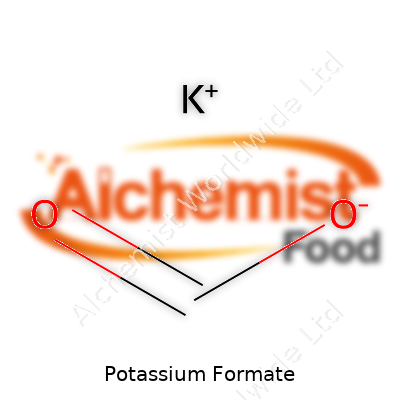
| Names | |
| Preferred IUPAC name | Potassium methanoate |
| Other names |
Formic acid potassium salt Potassium methanoate Potassium salt of formic acid |
| Pronunciation | /pəˈtæsiəm ˈfɔː.meɪt/ |
| Preferred IUPAC name | Potassium methanoate |
| Other names |
Formic acid potassium salt Potassium methanoate |
| Pronunciation | /pəˈtæsiəm ˈfɔː.meɪt/ |
| Identifiers | |
| CAS Number | 590-29-4 |
| 3D model (JSmol) | JSmol 3D model string for **Potassium Formate** (chemical formula: **KHCO₂**): ``` K[C(O)H] ``` This is the SMILES string, suitable for use in JSmol or other molecular viewers. |
| Beilstein Reference | 3586798 |
| ChEBI | CHEBI:63048 |
| ChEMBL | CHEMBL1233495 |
| ChemSpider | 10347 |
| DrugBank | DB14506 |
| ECHA InfoCard | ECHA InfoCard: 100.029.760 |
| EC Number | 209-677-9 |
| Gmelin Reference | Gmelin Reference: **14779** |
| KEGG | C13922 |
| MeSH | D019273 |
| PubChem CID | 23674755 |
| RTECS number | UU4200000 |
| UNII | 5B2F3L8CS7 |
| UN number | UN 3474 |
| CAS Number | 590-29-4 |
| Beilstein Reference | 3568932 |
| ChEBI | CHEBI:63048 |
| ChEMBL | CHEMBL126731 |
| ChemSpider | 40806 |
| DrugBank | DB15646 |
| ECHA InfoCard | 100.029.061 |
| EC Number | 208-863-7 |
| Gmelin Reference | Gmelin Reference: 1719 |
| KEGG | C13880 |
| MeSH | D015539 |
| PubChem CID | 2723912 |
| RTECS number | TT2975000 |
| UNII | 5KJ56FV8DK |
| UN number | UN 3256 |
| Properties | |
| Chemical formula | KHCO₂ |
| Molar mass | KCHO2: 68.055 g/mol |
| Appearance | White crystalline powder or colorless aqueous solution |
| Odor | Odorless |
| Density | 1.56 g/cm³ |
| Solubility in water | very soluble |
| log P | -2.3 |
| Vapor pressure | <0.01 hPa (20 °C) |
| Acidity (pKa) | 3.75 |
| Basicity (pKb) | 8.38 |
| Magnetic susceptibility (χ) | -42.5·10⁻⁶ cm³/mol |
| Refractive index (nD) | 1.370 |
| Viscosity | 1.9 mPa·s (at 25°C, 70% solution) |
| Dipole moment | 1.41 D |
| Chemical formula | KHCO2 |
| Molar mass | 84.115 g/mol |
| Appearance | White crystalline powder |
| Odor | Odorless |
| Density | 1.58 g/cm³ |
| Solubility in water | Very soluble |
| log P | -3.6 |
| Vapor pressure | Negligible |
| Acidity (pKa) | 3.75 |
| Basicity (pKb) | 8.7 |
| Magnetic susceptibility (χ) | -33.5·10⁻⁶ cm³/mol |
| Refractive index (nD) | 1.370 |
| Viscosity | 2.1 mPa·s (20°C, 50% solution) |
| Dipole moment | 1.94 D |
| Thermochemistry | |
| Std molar entropy (S⦵298) | 86.6 J·K⁻¹·mol⁻¹ |
| Std enthalpy of formation (ΔfH⦵298) | -567.6 kJ/mol |
| Std enthalpy of combustion (ΔcH⦵298) | -567.2 kJ·mol⁻¹ |
| Std molar entropy (S⦵298) | 96.3 J·mol⁻¹·K⁻¹ |
| Std enthalpy of formation (ΔfH⦵298) | -617.8 kJ/mol |
| Std enthalpy of combustion (ΔcH⦵298) | -567.3 kJ·mol⁻¹ |
| Pharmacology | |
| ATC code | B05XA17 |
| ATC code | B05XA17 |
| Hazards | |
| Main hazards | Harmful if swallowed. Causes serious eye irritation. May cause respiratory irritation. |
| GHS labelling | GHS07, Warning, H319 |
| Pictograms | GHS05,GHS07 |
| Signal word | Warning |
| Hazard statements | H319: Causes serious eye irritation. |
| Precautionary statements | Wash thoroughly after handling. Wear protective gloves/eye protection/face protection. IF ON SKIN: Wash with plenty of water. If skin irritation occurs: Get medical advice/attention. Take off contaminated clothing and wash it before reuse. |
| NFPA 704 (fire diamond) | 1-0-0 |
| Autoignition temperature | > 600°C |
| Explosive limits | Not explosive |
| Lethal dose or concentration | LD50 (oral, rat): 5500 mg/kg |
| LD50 (median dose) | LD50 (median dose): Oral - rat - 5500 mg/kg |
| NIOSH | SN1186 |
| PEL (Permissible) | PEL (Permissible Exposure Limit) for Potassium Formate: Not Established |
| REL (Recommended) | 50% w/w |
| IDLH (Immediate danger) | Not established |
| Main hazards | Harmful if swallowed, causes serious eye irritation. |
| GHS labelling | GHS07, Warning, H319 |
| Pictograms | GHS07,GHS05 |
| Signal word | Warning |
| Hazard statements | H319: Causes serious eye irritation. |
| Precautionary statements | P264, P280, P305+P351+P338, P337+P313 |
| NFPA 704 (fire diamond) | 1-0-0-W |
| Autoignition temperature | Autoignition temperature: 600°C (1112°F) |
| Explosive limits | Not explosive |
| Lethal dose or concentration | LD50 (oral, rat): 5500 mg/kg |
| LD50 (median dose) | LD50 (median dose) of Potassium Formate: 5500 mg/kg (oral, rat) |
| NIOSH | SNM |
| PEL (Permissible) | PEL: Not established |
| REL (Recommended) | 4000 mg/L |
| Related compounds | |
| Related compounds |
Potassium acetate Sodium formate Formic acid |
| Related compounds |
Formic acid Sodium formate Calcium formate |



