Mannitol: A Down-to-Earth Commentary
Historical Development
Mannitol has roots that go back to natural sources like seaweeds and plants. Early chemists discovered the sweet substance in the 19th century, finding it in manna ash—the reason for its name. Extraction at first took patience and some risk, with early industrial production relying on osmotic extraction techniques from plant matter. Fast-forward past the era of bulky vats and simple sieves, today’s methods draw on decades of wiser chemical strategy and scaling. Innovations continued through both war and boom, as mannitol got tapped for medical, food, and technical uses. The story follows humanity’s hunt for safer sweeteners and nonreactive excipients, with each twist holding real gains for diabetics and medicine mixers alike.
Product Overview
Mannitol stands out as a sugar alcohol used across pharmaceuticals, foods, and laboratory work. Powders, granules, and solutions carry this sweetener into everything from chewing gum to IV infusions. Packaged both by bulk suppliers and small-scale manufacturers, the product shows up in several grades depending on purity and particle size. Each form has a real job: some ease injection pain as an osmotic diuretic, others keep tablets from sticking. Companies stamp mannitol into their processes for its reliability, not just on paper but on real factory floors and in hospital storage rooms.
Physical & Chemical Properties
This polyol rolls off as a white, crystalline substance that doesn’t pick up odors or delight in readily dissolving. It carries a mild, cool sweetness—almost half as sweet as the table sugar most palates expect. Mannitol almost laughs at high heat, sticking around solid up to about 165°C before melting, and resists fermentation by most human gut bacteria. With its low glycemic load, it dodges the blood sugar spikes, a feature that gives diabetics more dietary freedom. Chemically, its formula—C6H14O6—remains stable under ordinary storage and even over long spans on the shelf.
Technical Specifications & Labeling
Most pharmaceutical or food-grade mannitol meets standards set by pharmacopeias like USP or the European Pharmacopoeia. Labels list not just mannitol, but batch numbers and grades, sometimes warning about possible traces of other polyols or residual solvents based on production practices. Moisture content, average particle size, and microbiological status usually get a mention, as cross-contamination means more than paperwork—it means real health risk. For injection use, sterility and pyrogen-free guarantees show up, earned only by companies following strict procedures. With global trade, symbols shift to match language and regulation, so what passes inspection in Japan looks a bit different from what ships out of Europe or North America.
Preparation Method
Labs and factories both start with basic sugars, often fructose or glucose, and turn to catalytic hydrogenation. Nickel or ruthenium on carbon kick-starts the conversion, forcing hydrogen into the sugar ring to form mannitol at controlled temperature and pressure. Crystallization, filtration, and drying take over, giving the final product its familiar shape. Each tweak—perhaps a different catalyst or a swap to corn-based feedstock—changes cost and environmental impact. Large manufacturers refine these steps to reduce waste, push up batch size, and limit the energy bill, while stakeholders watch for greener alternatives.
Chemical Reactions & Modifications
Under laboratory hands, mannitol does more than just sweeten. Strong acids dehydrate it to form complex ethers, while oxidation can chop its carbon chain into fragments or turn it into sugar acids. Using the right enzyme, researchers yoke mannitol onto drugs to boost solubility, or add it to polymers for improved strength. Engineers working on contrast agents or slow-release capsules depend on these modifications, bending the basic polyol to tasks straight sugar never mastered. The chemistry isn’t all show; a change in one functional group can unlock better results in MRI, osmotherapy, or even smart hydrogels.
Synonyms & Product Names
In commerce and research, mannitol wears plenty of hats. Some call it mannite, especially in older literature. Pharmaceutical vials and food wrappers list it as E421 or INS 421. Popular brands trade on purity, solubility, or even the country of origin, and custom blends for tablets or eye drops run under trademarked names. Chemical catalogues toss out “hexan-1,2,3,4,5,6-hexol” or sugar alcohol just to confuse a newcomer. Each tag hides a backstory in production style, use-case, or even national regulatory requirements.
Safety & Operational Standards
Working with mannitol brings its own demands. Factories keep control on dust, since airborne powders can pose inhalation or explosion risks in the wrong environment. Personal protective gear stays on hand to prevent long workdays from causing skin or eye irritation. In clinical use, mannitol’s injection must meet strict sterility and particulate limits; a single missed step isn’t just an audit issue, but a patient risk. Regulators keep a close eye here; batches meant for hospital infusions undergo sterility checks and batch validation, while food or cosmetic grades follow less strict, but still important, safety codes. Cross-contamination with allergens or pathogens gets tracked, with recalls and reporting keeping the system honest when lapses occur.
Application Area
Dieticians, doctors, food technologists, and chemists all reach for mannitol as a solution. In hospitals, mannitol serves as an osmotic diuretic, helping reduce brain swelling and flush toxins through the kidneys during acute events. Tablet makers count on it for its non-hygroscopic nature, easing machine runs and crisp tablet formation. Confectioners use it for sugar-free candies that don’t slump in the humidity and keep teeth safe from cavities. In solution, mannitol crops up in tests for kidney function or as a bulking agent for lyophilized drugs. It also finds work in electronics and plastics as a stabilizer, showing that a legacy ingredient can find new places in modern tech.
Research & Development
Teams in R&D labs try pushing mannitol’s boundaries. Medicinal chemists pair it with drugs to control delivery rates, as mannitol crystals dissolve slowly and influence how actives slip into tissue. Food scientists test blends that cut calories without gut complaints, given that high doses can still cause diarrhea. Environmental engineers tweak fermentation pathways to produce mannitol from agricultural waste, promising a smaller footprint and fewer synthetic reagents. Some projects explore its role as an antioxidant or its synergy with emerging excipients in advanced formulations, especially as oral drugs go global and face broad regulatory landscapes.
Toxicity Research
Studies in animals and humans stack up to show a traditionally safe profile at ordinary dosages. As an intravenous solution, mannitol gets used under supervision—too much, too quickly can trigger imbalances or kidney strain. For food or tablet forms, trouble only comes at very high intake, often above 20g per day, with digestive upsets leading the complaint list. Comprehensive reviews always turn up an allergy risk, but documented cases remain rare. Regulatory bodies such as EFSA and FDA track each incident and study, comparing observed effects in real-world exposures against tightly controlled clinical settings. The pattern holds true: used right, mannitol stacks up as a well-tolerated, low-risk tool for countless jobs.
Future Prospects
Development keeps moving. Green chemistry groups work on making mannitol from waste wood, skipping fossil inputs and reducing environmental load. Pharmaceutical innovators chase even finer grades for high-potency drugs, where every particle affects dosing accuracy. Emerging research hints at uses in treating neurodegenerative diseases, leveraging mannitol’s ability to cross the blood-brain barrier. Food technologists want to pair it with fibers and proteins to create low-sugar products that not only cut calories but comfort trouble-prone guts. In all areas, feedback from the floor—whether a pharmacist, a plant supervisor, or a food scientist—will force tomorrow’s improvements as much as lab-scale breakthroughs.
What is Mannitol used for?
Understanding Mannitol’s Role
Mannitol, a type of sugar alcohol, often takes a back seat in most kitchens, but hospitals and pharmaceutical labs keep it front and center for very good reasons. My early days as a pharmacy technician exposed me to just how vital mannitol becomes, especially for patients dealing with critical health events. It often finds its way into IV bags, especially for folks with brain swelling from trauma or stroke. When a doctor says “mannitol stat,” heads turn, because this isn’t an everyday intervention you forget about.
Tackling Pressure Where It Matters Most
The power in mannitol comes from its ability to pull water out of tissues and into the bloodstream. Swelling in the brain from trauma, bleeding, or certain infections sets off alarms because the skull doesn’t stretch. Even a slight increase in pressure can squeeze brain cells and blood vessels, leading to permanent damage. Mannitol enters the scene here: it gets delivered through an IV, and its action causes tissues to let go of water. As a result, the brain tissue relaxes, and pressure drops. This simple physiological “trick” has saved many people from lifelong disability or worse.
Helping Kidneys Do Their Job
On kidney wards, mannitol pulls double duty. Sometimes, kidneys need a jumpstart after surgery or a period of low blood pressure. If urine output slows too much, toxins begin to build up fast. Mannitol works by forcing water through the kidneys, increasing how much urine gets produced. I’ve watched nephrologists rely on this approach to prevent serious complications. It isn’t magic, and it wears off as mannitol itself is flushed out. But those extra few hours can mean the difference between a simple recovery and time spent on dialysis.
Mannitol’s Surprising Everyday Uses
Beyond emergency medicine, mannitol pops up in places most people wouldn’t expect. It appears in chewable pills and powdered medications for children, acting as a sweetener and volume filler that doesn’t jack up blood sugar. People with diabetes might recognize the name at the end of an ingredient list on “sugar-free” gum or candy. It’s also common in breath-freshening lozenges and toothpaste. As it isn’t easily absorbed by the gut, it rarely causes spikes in blood sugar, but eat enough of it and you’ll quickly realize its laxative punch.
What’s the Next Step?
While mannitol brings relief, it doesn’t fit every problem. Rapid shifts in body fluids create risks. Using it too loosely may tip electrolyte balances, especially for those with heart or kidney issues. Not every hospital around the world stocks mannitol, and some lack resources or training to use it properly. In countries where traumatic brain injury is frequent but resources are few, expanding access to mannitol could dramatically change survival rates.
Doctors and nurses need up-to-date education about when and how to use mannitol safely. Public health groups might invest in satellite delivery of essential drugs or more rapid identification of high-risk head trauma. For those managing diabetes or trying to cut sugar, clear labeling of mannitol content on foods becomes a simple but powerful tool for avoiding digestive troubles.
Learning From Experience
Every time I see mannitol listed on a chart or a nutrition label, I think back to the sudden chaos of an ER treating a brain injury, or to quieter moments watching a patient’s kidneys come back to life. Mannitol isn’t flashy, but its impact shows up again and again—for those in crisis and for those just trying to enjoy a piece of sugar-free gum after lunch.
How is Mannitol administered?
Understanding Mannitol in Real Practice
Hospitals see all kinds of emergencies, and a lot of folks might not know that Mannitol plays a big role for patients with swelling in the brain or high pressure in the eye. It’s a sugar alcohol—sounds simple—but in the ER, nobody wastes time. The medical team grabs Mannitol in liquid form, hooks it to an IV, and gets it pumping straight into the body. No pills, no drinking, no chewing. The veins provide the direct route.
Only the intravenous method can push the medication fast enough. Doctors monitor patients the entire time, since Mannitol changes how the kidneys filter fluids and throws electrolytes in all directions. In my time shadowing nurses on a neurology floor, the moment a patient showed signs of brain swelling—confusion, headaches, even worse—nurses started calculating doses: 0.25 to 1.5 grams per kilogram, usually in a big plastic bag mixed with sterile water. A nurse sets the drip rate according to how much fluid and how quickly the brain issue needs to turn around. Sometimes, quick action saves a life in minutes.
Why Mannitol Isn't Like Swallowing a Tylenol
Mannitol doesn’t work through the stomach because it can’t achieve the levels in the blood that doctors need during a crisis. People trust medicine to work, but in a pinch, oral options just don’t cut it. The body would break them down too slowly, or not absorb enough. Plus, high doses can trigger diarrhea, and nobody wants that on top of brain pressure.
Risks and Realities in the Hospital Room
The medicine draws water from tissues—think of wringing water out of a sponge—so the brain swelling drops. But this process brings risks. Too much fluid leaves the bloodstream, blood pressure can waver, dehydration gets real. If doctors aren’t careful, kidneys feel the strain, and some patients slip into trouble if they’re already in kidney failure. Electrolyte imbalances—like low sodium—can show up fast, and I’ve watched nurses pause the drip to check sodium, potassium, and kidney numbers every few hours.
Folks think giving IV drugs is just plug-and-play, but it takes careful planning. People on the front lines use protocols, but the truth is, no two patients will respond the same. Older people, kids, those with chronic illnesses—everyone reacts differently to the same dose. It’s a balancing act: too little Mannitol, and swelling keeps growing; too much, and the organs fight to keep up.
Looking for Better Solutions
Relying on Mannitol teaches hard lessons. It’s not a magic bullet—only a tool while searching for the problem’s root. Some researchers look for alternatives, like hypertonic saline, aiming for less kidney stress. Others push for stricter guidelines about who should get Mannitol and for how long, since overuse can backfire. Electronic health record alerts now flag risky kidney function and help catch problems earlier. New devices measure brain pressure more accurately, so teams can time the dose to match real needs instead of just following routines.
Doctors and nurses keep learning from every patient. By sharing experiences, collecting data, and never relying on a single checklist, they tilt the odds toward a better outcome. Mannitol is lifesaving in the right hands, at the right time, with real vigilance. That real-world experience means more than any protocol on a dusty shelf.
What are the common side effects of Mannitol?
Understanding Mannitol’s Role
Mannitol serves a special job in hospital settings. It’s most often used to lower pressure in the brain and eyes, and sometimes to help the kidneys get rid of extra water. Doctors rely on mannitol during emergencies. Its ability to draw fluid out of tissues protects the brain after injuries and can ease certain eye conditions. With all its benefits, mannitol is not a gentle drug. Side effects show up often, and watching for them is part of safe treatment.
The Most Common Side Effects
Patients who receive mannitol might notice thirst and a dry mouth. Nurses and doctors know this is almost a given, since mannitol pulls water out of cells. After an infusion, people might feel a pounding headache. Some describe a heavy head or a fog they can’t shake. Dizziness sometimes follows. That hit me once when shadowing an ER nurse; I saw a patient try to sit up, only to sway and grab for the rail. It looked alarming, but the nurse said it happens more often than people think.
Nausea and vomiting also show up on the list. Hospitals keep small plastics basins nearby for that exact reason. Sometimes people feel chills or develop a fever. As a patient’s body reacts to shifts in fluid and salts, cramps or muscle weakness might develop. These aren’t “maybe” effects—they’re what staff expect and check for right after every dose. With IV drugs, the body’s salt balance changes fast. I remember interns checking blood tests every hour, watching sodium and potassium numbers like hawks.
Serious Side Effects: Catching Early Trouble
Too much mannitol can tip the water-salt balance the wrong way. Rapid changes in sodium or potassium hit hardest in people with kidney or heart conditions. Mannitol can push kidneys to work hard, then suddenly fall behind. As fluid leaves cells, signs like confusion, racing heartbeat, or swelling in the hands may appear. People who start feeling tight in their chest or short of breath owe it to themselves to get help right away. There’s a risk of heart failure in these cases.
Allergic reactions stand out as rare but dangerous. Skin rashes, trouble breathing, or facial swelling call for immediate medical attention. Fever and chills sometimes signal early warning of a more serious reaction, so even mild symptoms need a voice.
Real-Life Safety: Action Steps
Mannitol brings results, but health staff must track every dose closely. Frequent blood tests provide a clear look at what goes on inside. Doctors don’t gamble with fluid balance—they pause mannitol if kidney numbers drift out of line, or if blood pressure drops too low. Anyone with a history of heart or kidney disease gets extra checks, as do older folks or kids.
To prevent surprises, patients and their families should keep lists of all medicines and let staff know about old health problems. Letting medical teams know about headaches, irregular heartbeat, cramps, or vision changes gives everyone a head start if trouble brews. Education matters just as much as the drug itself. The best safety comes from a team that listens, checks, and adapts.
Who should not use Mannitol?
Understanding the Basics
People often hear about medicines or supplements and assume they might be safe for everyone. That’s hardly ever the case. Mannitol, recognized for its use in hospitals and some food products, falls into this category. Doctors use it to lower pressure in the brain or eyes, help the kidneys kick into gear, and as a sugar substitute in products labeled "sugar-free." It sounds practical, but not every body reacts the same.
Looking at Medical History
Some people walk around with hidden health problems, and mannitol can trip them up. Folks with severe kidney disease face a serious risk because mannitol pulls water from tissues, sending it to the kidneys. If kidneys barely chug along or just stopped, the body can’t get rid of the extra water. That can set off swelling or even heart problems. In my days shadowing at a hospital, I remember how closely the nephrologist watched urine output before giving mannitol. If none was coming out, we skipped it.
Heart issues add more trouble. Heart failure already means the body carries too much fluid. Mannitol makes that worse, sending more fluid into the bloodstream and straining the heart. A trial from the New England Journal of Medicine tracked acute kidney injury patients—those with bad hearts fared poorly on mannitol, sometimes landing in the intensive care unit for pulmonary edema.
Dehydration and Electrolyte Balance
Drinking too little or sweating buckets during a heatwave leaves a person dried out. Mannitol only makes that worse, drawing water into the urine and wringing cells like a sponge. Anyone already dehydrated should steer clear. I’ve seen salt and water balance go sideways fast, even in younger patients. This often led to confusion or muscle cramping, then nurses were scrambling to correct sodium levels.
Active Bleeding and Shock
Medical emergencies call for careful choices. If someone is bleeding inside the skull or stuck in shock, doctors often avoid mannitol. In trauma surgery, I watched teams focus first on stopping bleeding and supporting blood pressure. Mannitol’s effect of pulling fluid out of blood vessels can send blood pressure low, risking brain damage during those precious minutes. It’s rarely chosen until a person’s blood pressure is stable and bleeding is controlled.
Allergies and Hypersensitivity
Some people can’t handle mannitol at all. Allergic reactions may sound rare, but I’ve seen hives, swelling, and even anaphylaxis after mannitol IV. A history of allergic reactions to mannitol or related compounds—often noticed in people who react to "sugar-free" candies—makes this a no-go.
Pediatric and Elderly Populations
Younger kids and older folks often react differently to medicines. In children with brain diseases, the wrong dose or poor monitoring can push them into dehydration or sodium shifts. Older adults, especially those with weak hearts or kidneys, land in trouble for the same reasons. The American Geriatrics Society Beers Criteria even lists mannitol’s risks for older patients due to dangers of fluid imbalance.
What’s the Takeaway?
A careful medical history and up-to-date bloodwork go a long way before trying mannitol, even in emergencies. Doctors use it for a reason, but not everyone benefits. Kidney failure, heart failure, dehydration, and allergic history all put people on the "do not use" list. In the end, knowing your own body and speaking up in the hospital can influence safer decisions. Science and common sense meet here: mannitol isn’t for everyone, and a team who listens makes all the difference.
How does Mannitol work in the body?
An Unassuming Sugar Alcohol with Big Jobs
Mannitol looks simple, almost too plain to have much value. It’s a sugar alcohol, found naturally in some fruits and vegetables. In a pharmacy, its label doesn’t scream attention. Hospitals, though, keep it close for situations where few things help. The job Mannitol does inside the body matters greatly, especially when the brain or kidneys get pushed to their limits.
Drawing Out Water—Keeping the Balance
The main task for Mannitol happens in the blood and kidneys. This compound can’t cross many cell membranes easily, so it stays put in the blood. Here’s where things get interesting: Mannitol pulls water with it, a trick based on simple chemical rules. Water always wants to even things out, so it moves toward whatever holds more solute—in this case, Mannitol. Hospitals rely on this effect during emergencies. One of the most visible uses comes after brain injuries, when pressure inside the skull gets dangerously high. Mannitol, given through an IV, pulls extra water out of the brain tissue and into the blood. The kidneys then flush out the extra fluid in the urine. This helps bring down swelling and eases the threat pressing on the brain.
Kidney specialists use Mannitol for a different reason. Some patients face kidney shutdown after trauma or surgery. Stagnant urine can clog things up, raising the risk of lasting damage. Mannitol promotes urine flow by hauling more water through the kidneys. There’s a catch: the kidneys have to function well enough to carry out this work. If not, Mannitol just lingers and draws water out of healthy places, which leads to trouble.
Glaucoma and Mannitol—Relieving Pressure
Doctors treating sudden attacks of glaucoma also reach for Mannitol. High eye pressure can damage the retina, risking permanent vision loss. Mannitol steps in to pull fluid out of the eye, shrinking volume and easing the buildup. The effect happens quickly, buying precious time before surgery or other intervention. For someone stuck in an emergency room with crushing eye pain and blurred sight, Mannitol brings relief and a shot at saving vision.
Risks—And the Importance of Expertise
My years as a clinical researcher taught me to respect how delicate these adjustments can be. Mannitol asks for careful judgment. The same dose that saves the kidneys or brain can also pull too much fluid out, leading to dehydration or sodium imbalances. Too much in the bloodstream can even leak into brain tissue, flipping its benefit into danger. That’s why teams must monitor these patients closely, checking fluid status and kidney numbers every few hours. We learned from both textbook cases and real mishaps that this drug rewards experience.
What’s Next for Mannitol?
Researchers hunt for new ways to use this sugar alcohol. One idea centers on diseases where the blood-brain barrier keeps drugs out. Mannitol might help open that barrier, letting more medicine in to fight brain tumors or infections. Studies remain early, and safety worries keep progress slow. Teams also look at oral Mannitol for rare disorders like cystic fibrosis, hoping to thin out sticky mucus. The science moves cautiously, piecing together decades-old experience with every new trial.
Making the Right Call
Mannitol’s value depends on timing and skill. Over the years, I’ve seen doctors debate its use for both classic situations and more experimental ones. Trust in Mannitol rests on a mix of basic chemistry, clinical know-how, and careful monitoring. It’s not medicine for daily aches or mild problems. In critical moments, though, it can tip the balance toward recovery.
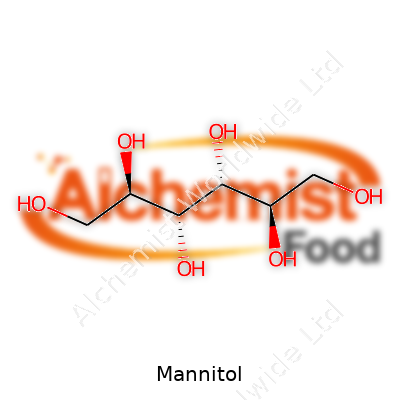
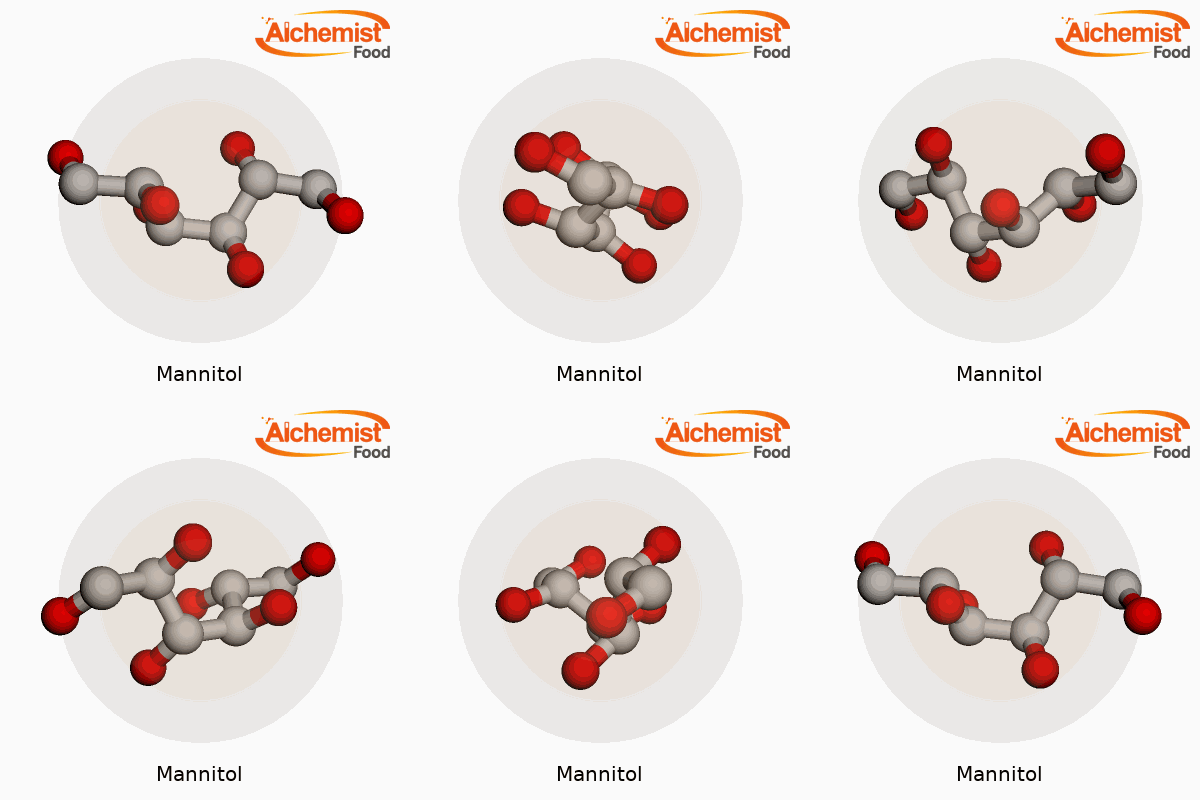
| Names | |
| Preferred IUPAC name | hexane-1,2,3,4,5,6-hexol |
| Other names |
Osmitrol Mannite D-Mannitol |
| Pronunciation | /ˈmæn.ɪ.tɒl/ |
| Preferred IUPAC name | hexane-1,2,3,4,5,6-hexol |
| Other names |
D-Mannitol Osmitrol Mannite D-Mannit |
| Pronunciation | /ˈmæn.ɪ.tɒl/ |
| Identifiers | |
| CAS Number | 69-65-8 |
| Beilstein Reference | 3580866 |
| ChEBI | CHEBI:16899 |
| ChEMBL | CHEMBL951 |
| ChemSpider | 5951 |
| DrugBank | DB00742 |
| ECHA InfoCard | 100.131.4 |
| EC Number | E421 |
| Gmelin Reference | 6136 |
| KEGG | C00392 |
| MeSH | D008345 |
| PubChem CID | 453 |
| RTECS number | OP2060000 |
| UNII | 3OWL53L36A |
| UN number | UN 2811 |
| CompTox Dashboard (EPA) | DTXSID5020182 |
| CAS Number | 69-65-8 |
| Beilstein Reference | 1840716 |
| ChEBI | CHEBI:16027 |
| ChEMBL | CHEMBL521 |
| ChemSpider | 5794 |
| DrugBank | DB00742 |
| ECHA InfoCard | 100.043.876 |
| EC Number | 1.1.1.67 |
| Gmelin Reference | 7877 |
| KEGG | C00392 |
| MeSH | D008345 |
| PubChem CID | 6251 |
| RTECS number | OP2060000 |
| UNII | V9P21XP4D4 |
| UN number | UN2811 |
| CompTox Dashboard (EPA) | DTXSID5020698 |
| Properties | |
| Chemical formula | C6H14O6 |
| Molar mass | 182.17 g/mol |
| Appearance | White crystalline powder or free-flowing crystals |
| Odor | Odorless |
| Density | 0.8 g/cm³ |
| Solubility in water | Moderately soluble |
| log P | -3.1 |
| Vapor pressure | <0.1 hPa (20 °C) |
| Acidity (pKa) | 14.80 |
| Basicity (pKb) | 1.86 |
| Magnetic susceptibility (χ) | -9.6e-6 |
| Refractive index (nD) | 1.333 |
| Viscosity | Viscous |
| Dipole moment | 4.5736 D |
| Chemical formula | C6H14O6 |
| Molar mass | 182.17 g/mol |
| Appearance | White crystalline powder |
| Odor | Odorless |
| Density | 0.8 g/cm³ |
| Solubility in water | Soluble in water |
| log P | -3.1 |
| Vapor pressure | Vapor pressure: < 0.1 hPa (20 °C) |
| Acidity (pKa) | 14.5 |
| Basicity (pKb) | 14.48 |
| Magnetic susceptibility (χ) | -8.4e-6 |
| Refractive index (nD) | 1.333 |
| Dipole moment | 6.5786 D |
| Thermochemistry | |
| Std molar entropy (S⦵298) | 309.5 J·K⁻¹·mol⁻¹ |
| Std enthalpy of formation (ΔfH⦵298) | -2171 kJ/mol |
| Std enthalpy of combustion (ΔcH⦵298) | -2766 kJ/mol |
| Std molar entropy (S⦵298) | 324.4 J·mol⁻¹·K⁻¹ |
| Std enthalpy of formation (ΔfH⦵298) | -2378.8 kJ/mol |
| Std enthalpy of combustion (ΔcH⦵298) | -2746.2 kJ/mol |
| Pharmacology | |
| ATC code | B05BC01 |
| ATC code | B05BC01 |
| Hazards | |
| GHS labelling | GHS labelling: Not a hazardous substance or mixture according to the Globally Harmonized System (GHS) |
| Pictograms | GHS07, GHS06 |
| Signal word | Warning |
| Hazard statements | H319: Causes serious eye irritation. |
| Precautionary statements | P264, P270, P301+P312, P330, P501 |
| NFPA 704 (fire diamond) | 1-0-0 |
| Flash point | > 300 °C |
| Autoignition temperature | 430 °C |
| Explosive limits | Not explosive |
| Lethal dose or concentration | LD50 oral rat 13500 mg/kg |
| LD50 (median dose) | 10 g/kg |
| PEL (Permissible) | 5 mg/m³ |
| REL (Recommended) | REL-TWA 10 mg/m³ |
| Main hazards | May be harmful if inhaled, swallowed, or absorbed through skin; may cause irritation to skin, eyes, and respiratory tract |
| GHS labelling | No GHS labelling. |
| Pictograms | GHS07, GHS08 |
| Signal word | Warning |
| Hazard statements | No hazard statement. |
| Precautionary statements | Keep container tightly closed. Store in a cool, dry place. Avoid contact with eyes, skin, and clothing. Wash thoroughly after handling. Use with adequate ventilation. |
| Flash point | > 165°C |
| Autoignition temperature | 430 °C (806 °F; 703 K) |
| Explosive limits | Upper 17%(V), Lower 2.8%(V) |
| Lethal dose or concentration | LD50 (oral, rat): 13,500 mg/kg |
| LD50 (median dose) | 13,500 mg/kg (rat, oral) |
| PEL (Permissible) | 5 mg/m³ |
| REL (Recommended) | 100 g/L |
| IDLH (Immediate danger) | Not listed. |
| Related compounds | |
| Related compounds |
Iditol Sorbitol Ribitol |
| Related compounds |
Sorbitol Isomalt Maltitol Xylitol Erythritol Lactitol Arabitol |



