Manganese Sulfate Monohydrate: An In-depth Commentary
Historical Development
Human curiosity for manganese runs deep. Miners pulled ores containing this element from earth centuries ago, but it took generations before folks figured out practical uses for manganese compounds. Manganese sulfate monohydrate, with its formula MnSO4·H2O, marked a turning point for agriculture and industry. Early chemists in the nineteenth century isolated and characterized the compound, which slowly caught the attention of fertilizer producers across Europe and North America. Crop yields needed a boost; this compound offered a direct answer. Over decades, improvements in ore purification and reaction methods led to increased availability, which in turn powered its adoption in feed supplements and industrial processes like battery manufacture. The march from lab curiosity to commercial backbone speaks to the value practical science brings to everyday life.
Product Overview
Every day, farms, feed mills, and factories turn to manganese sulfate monohydrate for consistent results. Its major role shines in the agricultural world. Here, farmers use it to correct manganese-deficient soils, keeping corn, soybean, and wheat growth on track. Feed producers mix it into animal rations, recognizing the need for trace minerals in healthy livestock. Battery and chemical manufacturers find purpose for it too, pressing it into service as a raw material for creating battery cathodes and other specialty chemicals. Practicality drives the market more than fancy marketing ever could. Reliable quality, easy storage, and a balanced cost-to-benefit ratio keep it anchored in the global supply chain year after year.
Physical & Chemical Properties
Anyone working with manganese sulfate monohydrate will spot its light pink crystals straight away. These chunky crystals pick up moisture easily and dissolve fast in water—a real advantage when quick mixing or solution preparation matters. Chemically, it provides about 32% manganese content by weight, sitting as a monohydrate, meaning each molecule ties up one water molecule with the manganese sulfate itself. The compound stands stable at normal temperatures, but with enough heat, it gives up its water of hydration and, at higher temperatures, even decomposes to other manganese oxides and releases sulfur oxides. Its molecular structure brings an ideal balance between stability for storage and reactivity for applications.
Technical Specifications & Labeling
Technical grade and feed grade manganese sulfate monohydrate each come with specific benchmarks. Purity levels hover above 98% for most industrial and agricultural products, not least because impurities can cause trouble for plants, animals, or downstream processes. Heavy metal limits—especially iron, cadmium, and lead—get strict attention thanks to regulations in North America, Europe, and Asia. Labels on export containers don't just detail net weight and batch codes; they flag safety status, recommended handling, and country of origin. For compliance, documentation travels with every order, including safety data sheets and often certificates of analysis. None of this happens by chance—the combination of traceability and safety forms a baseline expectation for buyers and regulators alike.
Preparation Method
Production starts from manganese-rich ores, like pyrolusite. Manufacturers grind the raw rock, then dissolve it using sulfuric acid. After vigorous mixing, the resulting solution undergoes filtration to strip out insoluble residues. Concentration by evaporation or crystallization brings out manganese sulfate monohydrate crystals. For feed-grade material, additional purification steps cut out unwanted metals—pressing a practical need since livestock absorb everything in their rations. Operators collect the crystalline product, dry it gently, and package it in moisture-resistant sacks or drums. Methods might evolve with technology, but the basics stick due to their simplicity and cost-effectiveness.
Chemical Reactions & Modifications
Manganese sulfate monohydrate doesn't just show up in one static form. Reacting it with alkalis, for instance, produces manganese dioxide—a substance batteries can't do without. Electrolytic processes crave pure manganese ions, stripping them out using soluble sulfate salts as a starting point. Chemical engineers often modify the product by fine-tuning particle size or blending with anticaking agents, tweaking it to flow better or mix into precise recipes. Each modification meets a practical challenge out on farms or factory floors, making the product work harder for the industries that pay for it.
Synonyms & Product Names
This material answers to many names in supply catalogs: “manganous sulfate monohydrate,” “manganese(II) sulfate monohydrate,” and “mangansulfat-1-hydrat” in German-speaking markets. Chemical shorthand like MnSO4·H2O keeps paperwork crisp. Distributors might throw in trade names, especially when pushing feed or fertilizer blends that tout unique purity or flow characteristics.
Safety & Operational Standards
Trust in manganese sulfate monohydrate reflects good handling and tight safety controls. Dust in the air presents an inhalation hazard, so workers wear masks and follow ventilation standards. Contact with skin or eyes calls for practical chemical gloves and splash goggles. Storage avoids high humidity, cutting the risk of clumping and loss of product quality. Regulatory rules, like those from the US Occupational Safety and Health Administration or the European Chemicals Agency, lay out exposure limits and protocols. Spill kits stay close in warehouses, and training refreshers ensure staff avoid sloppy practices. Small decisions stack up, protecting everyone in the supply chain from manufacturing to transport.
Application Area
The daily grind for manganese sulfate monohydrate stretches far beyond one industry. Plant nutrition takes center stage in many countries—soils with sandy makeup or high pH often block manganese uptake, hitting yields hard. Here, foliar sprays or soil amendments flip the script. Feed mills count on it for mixing into premixes, covering gaps in grazing diets or intensive livestock systems. The battery industry leans on it to make lithium-ion and alkaline batteries, drawing value from its role in chemical reactions needed for energy storage. Water treatment plants use its oxidizing potential to tackle iron and manganese in drinking water. Any arena needing controlled manganese supply, this mineral salt finds its place.
Research & Development
Scientists keep pushing boundaries with manganese sulfate monohydrate. Researchers look for cleaner ways to process manganese ores, aiming to reduce waste and cut energy demands. New catalysts for industrial syntheses grow from manganese salts. Battery technologists evaluate high-purity manganese materials, hoping to boost performance in electric vehicles or grid-scale storage. Agricultural researchers test micronutrient blends, measuring how slight tweaks in formula change crop health or resistance to environmental stress. Across laboratories worldwide, collaborative projects zero in on better extraction, novel applications, and safer, more sustainable uses.
Toxicity Research
Too much manganese leaves a mark on health. Toxicologists spend years tracking effects of overexposure, especially in children, livestock, and factory workers. High concentrations over time cause neurological symptoms that researchers link to manganism, a disease with tremors and muscle rigidity. In agriculture, excessive use leads to soil toxicity, stunting plant roots or blocking iron uptake. Studies often point to the narrow margin between deficiency and excess, reminding everyone from farmers to regulators that balance matters. Feeding trials, field tests, and workplace studies all push for a deeper grasp on risk factors. Regulations keep shifting as science uncovers new long-term findings on chronic toxicity and environmental buildup, urging smart stewardship.
Future Prospects
The road ahead for manganese sulfate monohydrate looks anything but boring. Lithium-ion battery demand seems set for explosive growth, all but guaranteeing higher purity requirements and stricter supply chains. Farmers worldwide face changing soil conditions, drought risk, and population growth, raising the stakes for input efficiency. Manufacturers pursue greener, lower-impact processes, searching for ways to turn lower-grade ores into value while minimizing pollution. Circular economy models tempt researchers to recycle spent batteries, closing material loops and slashing emissions. Each step forward challenges current assumptions—driving innovation in extraction, purification, application, and risk management. Manganese sulfate monohydrate will keep finding new relevance as technology, industry, and society evolve together.
What is Manganese Sulfate Monohydrate used for?
Connecting Science to Soil and Food
A lot of folks don't realize how much the food on their table depends on the health of the soil. In farming, manganese sulfate monohydrate often appears as a familiar name printed on sacks of micronutrient fertilizer. I grew up watching my grandfather spread it across fields, trying to correct pale young corn leaves signaling that something essential was missing. Manganese, an element right out of the periodic table, keeps plants healthy by helping them use sunlight and nutrients. Without enough of it, plants struggle to photosynthesize, fight off diseases, or even develop normally.
Most of the world’s soils actually contain manganese, but it doesn't always show up in a form that crops can use. Rain, repeated harvests, and certain soil conditions can lock manganese away or wash it deeper than roots travel. That’s where manganese sulfate monohydrate steps in: it dissolves easily in water, so it gets quickly to the root zone, feeding crops when they need it most. Corn, soybeans, legumes, and citrus draw a big benefit.
Role in Animal Nutrition
Farming isn't just about plants. There’s a close connection between soil, crops, and livestock. I remember walking into a feed mill and seeing bags with the same compound, manganese sulfate monohydrate, this time mixed into animal feed. Chickens, pigs, and cattle need this trace mineral for bone growth and fertility. Without it, livestock suffer weak joints or poor hatch rates. Science backs it up: studies show supplementing manganese improves egg shell thickness and bone strength in poultry.
Essential in Industry
Beyond farms, this compound keeps showing up in modern manufacturing. Battery makers rely on manganese sulfate monohydrate as a starting point for cathodes in lithium-ion batteries. I followed the rise of electric vehicles and realized this pinkish powder helped power many of the devices I take for granted. Experts see a sharp rise in demand as the world shifts to electric cars and renewable energy storage, so there’s real pressure on supply chains.
Environmental and Health Considerations
Using more manganese sulfate monohydrate does raise questions. Farmers concerned about runoff want to avoid too much of any mineral leaching into waterways. Overuse can affect aquatic life, and in people, chronic exposure in high doses has been linked with neurological problems. Regulators around the world set safe thresholds to prevent harm. On farms near my hometown, some growers switched to soil tests before adding any supplement so they could fine-tune the amount and avoid waste. Better training and outreach help reduce the margin for mistakes.
Practical Solutions and Future Directions
Learning from both science and daily work, precise dosing and regular soil testing make a big difference. Crop advisors now carry portable meters to test micronutrient levels directly in the field. Technology makes it a lot easier to check how much manganese each patch of land actually needs, and data recorded year over year helps spot trends before they turn into problems. In battery manufacturing, recycling used materials is starting to recover valuable manganese, stretching out supplies and reducing the pressure on mining.
Manganese sulfate monohydrate doesn’t always attract headlines, but its impact ripples through food, water, industry, and energy. Understanding its proper place in each system offers better yields, safer food, healthier animals, and new tools for technology, without risking harm to people or the environment.
What is the recommended dosage of Manganese Sulfate Monohydrate?
Why Manganese Matters
Manganese works quietly behind the scenes in the body, helping with bone growth, enzyme function, and the processing of nutrients. Without enough of this mineral, health starts to slip — fatigue creeps in, bones lose strength, and even wound healing slows down. Still, there’s such a thing as too much. In agriculture, I've seen how manganese shapes growth and resilience in crops, but pushing the dose can backfire, leaving soil and plants worse off than before. People underestimate its power, thinking it acts like a multivitamin where more helps faster. Real results come from respecting established limits.
Finding the Right Dosage for Humans
Manganese Sulfate Monohydrate can help address deficiencies. Most recommendations anchor around 1.8 to 2.3 milligrams of manganese per day for adults, as suggested by the U.S. National Institutes of Health (NIH). For kids, the numbers drop, averaging 1.2 to 1.9 milligrams per day based on age and gender. These aren’t high numbers, but the body rarely forgets excess. In my own experience and research, dietary sources — nuts, legumes, leafy greens — usually provide enough for most people. Still, supplements get prescribed for those with special needs, like absorption issues. Doctors usually avoid going above 11 milligrams per day, since the risk of side effects like neurotoxicity becomes real at that threshold.
Farming and Animal Nutrition
The agricultural sector gives manganese sulfate monohydrate a starring role, especially in fertilizer blends and animal feeds. I spent several seasons working with agronomists who recommend about 25 to 50 kilograms per hectare for crops with clear deficiency issues. Row crops like soybeans and wheat rarely thrive if soils dip below recommended levels, with stunted growth and yellowing leaves as the giveaway. For animals, livestock supplements generally target 20 to 40 milligrams of elemental manganese per kilogram of feed, matching guidelines from the National Research Council (NRC). Ruminants and poultry get the bulk of these feed supplements, since their diets sometimes lack this trace mineral.
Where the Risks Hide
Regulatory agencies like the EPA draw a line at 0.05 milligrams of manganese per liter of drinking water for safety. Water systems that exceed these levels put community health at risk — especially for infants, whose developing brains can’t process excess manganese well. Chronic overuse in food or supplements also leads to manganese build-up in the nervous system, with symptoms similar to Parkinson’s disease. I’ve spoken to health experts who warn that workers in industrial settings around manganese need regular blood monitoring. Liver function impacts how much manganese the body handles, so anyone with liver disease needs close supervision if taking any manganese product.
Solutions and Safe Practices
Sticking with established guidelines makes a difference. Before reaching for supplements or fertilizers, testing the soil or checking blood levels gives a clear picture. Local agricultural extensions or dieticians usually have the latest recommendations and can spot common mistakes. I’ve seen nutrient management plans keep both crops and people healthy when they rely on regular testing and review. There’s no substitute for good records and a willingness to adjust as conditions change. By prioritizing need over habit, it’s possible to reap manganese’s full benefits without spilling into harmful territory.
Is Manganese Sulfate Monohydrate safe for animal feed?
The Role of Minerals in Animal Nutrition
Manganese matters in animal nutrition. It helps bone development, enzyme function, and reproduction for both livestock and pets. Feed manufacturers often look for the right supplements to avoid deficiencies in herds and flocks. Manganese sulfate monohydrate turns out to be a popular choice. But before anyone can feel at ease about adding it to rations, people keep asking about its safety.
Looking at Research and Real Farms
Across dairy, poultry, and swine operations, manganese sulfate monohydrate appears regularly in feed premixes. Researchers have checked its effects for decades. The European Food Safety Authority (EFSA) and the US Food and Drug Administration (FDA) both list it as an approved source of manganese when supplied at the right dose. Both groups rely on years of trials where scientists monitored growth, fertility, and general health.
Having worked with feed formulas for backyard chickens, I noticed early on that birds lacking manganese don't lay properly, develop leg issues, or show slow growth. Adding manganese sulfate monohydrate sorted this out with no hint of toxicity, as long as you stick to nutritional guidelines. Most farm supply chains already follow strict systems to keep levels in check. Overshooting recommendations doesn’t make flocks healthier; it brings more problems, including nervous symptoms and poor appetite.
Potential Problems and Practical Solutions
Mineral toxicity rarely gets attention until something goes off the rails. Too much manganese can mess with the absorption of other minerals like iron and calcium. Cattle might end up anemic if mineral balance falls apart. That’s why responsible use demands clear, specific dose calculations. Feed producers often rely on lab testing for quality control, but on smaller farms, communication with nutritionists keeps things under control.
Worker safety deserves respect, too. Handling mineral powders poses dust risks. Protecting skin, eyes, and lungs is not just a box-ticking exercise. Using gloves and effective air filtration reduces the risk of accidental exposure. These steps stop manganese dust from becoming an issue for people mixing feed.
Consumer Confidence and Traceability
People want assurance that animals raised for food receive safe, well-balanced diets. Reports of mineral overdoses get shared online quickly, shaking trust. That puts the responsibility squarely on feed producers to keep good records and respond quickly if concerns show up. Modern feed production depends on traceable supply chains, certificates of analysis, and open communication. Consumers want proof that these steps are more than just paperwork.
International guidelines often recommend supplementing diets to deliver 20–60 milligrams of manganese per kilogram of feed, based on species and age. Exceeding that serves no good purpose. For young chicks, lambs, and piglets, sticking to these ranges supports growth without creating risk. Experience in the field says most trouble starts with homemade mixes where dosing slips off target. Honest conversations with nutritionists and veterinarians help small farms avoid mistakes.
Where Do We Go From Here?
Responsible use of manganese sulfate monohydrate in feed means paying attention to details. Feed safety is about good sourcing, steady lab checks, and practical safety habits. The science keeps evolving, but the basics remain steady: correct dosing and open communication. For anyone dedicated to animal health and safe food, that’s what matters most.
How should Manganese Sulfate Monohydrate be stored?
The Challenges in Storing Manganese Sulfate Monohydrate
Anyone who has handled manganese sulfate monohydrate knows the importance of doing things right. It looks like an ordinary, pale pink powder at first. Dig a bit deeper, and it quickly shows a sensitive side. Moisture grabs at it every chance, and dust clouds love to form if left unchecked. Windy storage or leaky ceilings take a toll fast. I remember once opening a bag that had drawn moisture over the week. Clumps everywhere, crust along the edges—the stuff just doesn’t forgive careless storage.
Why Moisture Ruins More Than Just Texture
Water turns this compound into a sticky mess and, over time, it can lead to serious degradation of quality. Keeping it bone-dry doesn’t just help with handling; that’s crucial for fertilizers, livestock feed, or industrial processes counting on consistency. The U.S. National Institutes of Health flags manganese sulfate as slightly hazardous in terms of dust inhalation and skin contact. For me, it always meant respecting the dust and never skimping on gloves or masks, especially indoors.
Any forgotten bag sitting under drippy conditions may even corrode its own packaging over long stretches. No one wants traces of cardboard or plastic stuck in outgoing batches. This isn’t just about loss of product. Sloppy storage invites fines and slows down everything from feed production to essential micronutrient mixing.
Practical Solutions That Actually Work
Dry storage comes first. Choose a space with walls that breathe but block moisture. Old-school concrete sheds usually do better than shiny metal buildings in humid regions, but adding simple dehumidifiers brings down water content even faster. Set pallets above ground. Folks who stack directly on the floor end up scraping up messes later. Something as simple as a weatherproof tarp can save hundreds of dollars’ worth from a single spill or roof leak. I always recommend using containers with tight-fitting lids; nothing fancy, plastic drums work in most cases if you keep them away from hot pipes or direct sun.
Keeping Safety Front and Center
Most slip-ups happen during bag breaking or sudden spills. Labeling helps, but clear process steps help more. Leaving scoops, shovels, and cleaning tools on hand at the storage site saves hassle. Don’t wait for inspectors to point out missing material safety sheets; post up hazard info where people work, not just in an office. Small, daily habits prevent bigger losses. Every pound swept up or kept dry means less dust breathed in, fewer accidents, and more trust among staff.
Looking at the Bigger Picture: Maintenance and Training
Proper training wins over fancy storage systems every time. People who understand how manganese sulfate reacts under pressure, sunlight, or water catch problems before they grow. Routine inspections—weekly, not just yearly—spot leaks, warping, or blocked air vents before a simple issue becomes a nightmare clean-up. If you run a larger operation, rotation matters. Store new shipments in a way that older stock goes out first—no waste, less risk of product going stale.
Moving Forward with Care and Responsibility
With micronutrients like manganese sulfate monohydrate, good storage habits protect workers, lower costs, and deliver reliability to every link in the supply chain. Money spent on prevention always beats losing valuable compound or risking someone’s health through dust or contamination. Everyone from small farmers to warehouse teams has a role in keeping this material safe, dry, and ready to support food production or industrial needs.
What is the purity or grade of Manganese Sulfate Monohydrate offered?
Looking Beyond the Label
When buyers start asking about “purity” or “grade” in manganese sulfate monohydrate, they’re zeroing in on reliability. In agriculture, animal nutrition, battery manufacturing, and specialty chemistry, the difference between average and high-purity supplies gets felt in yield, product quality, or equipment wear. From personal experience in crop production, even minor contamination in a soil amendment can build up in the ground over repeated application—the fallout is hard to miss: stunted plants, unpredictable reactions, unexpected costs. Years spent troubleshooting these issues made it clear that knowing the exact grade up front matters as much as knowing the price.
Purity: What Numbers Really Mean
High-purity manganese sulfate monohydrate—sometimes called “feed grade” or “battery grade”—usually falls above 98% manganese sulfate content, with iron, lead, arsenic, and other heavy metals dropping down to just fractions of a percent or parts per million. Industrial and technical grades often hover slightly lower—sometimes 95% or less, with less stringent controls on trace metal contamination. Purity isn’t just about how much manganese sulfate is present; equally important are the impurities that don’t make it into the final product.
I’ve seen some manufacturers offering chemical analyses right on their datasheets: not just the percent manganese sulfate, but also actual numbers for heavy metals, water content, and even particle size distribution. Battery manufacturers obsess over these details because even minor impurities can mess up the chemical reactions inside a cell. An engineer once explained how a little extra iron could throw off cathode stability, hurt charge cycles, and tank the battery’s lifetime. Feed producers get picky in a different direction—checking arsenic, cadmium, and lead since those end up as trace exposures in animals or, down the line, people. Regulations keep tightening. In Europe, feed additives undergo regular testing with strict limits on heavy metals. Producers ignore these at their own risk.
Why the Grade Matters
Purity has more than a technical value. Farmers who buy micronutrient fertilizers expect the label to mean what it says. I remember one season working with a cooperative after several fields showed uneven plant growth—soil tests pointed to manganese, but a month later, residues from cheaper fertilizer tied the issue to excess iron content and impurities causing soil lock-up. That’s money and trust lost. In battery manufacturing, a few ppm of unwanted metals can mean the entire lot heads to reprocessing, not assembly. Nobody likes calculated risk when the tolerance runs that tight.
Picking the Right Purity: Practical Considerations
Transparent sourcing goes a long way. Producers who provide third-party lab reports or disclose their refining processes set themselves apart. Buyers tend to stick with suppliers who track every batch and don’t cut corners. Modern supply chains let manufacturers trace raw materials back to source mines and refineries—this helps keep contaminants low. Vacuum crystallization, repeated recrystallization, and tight process controls pull 99%+ manganese sulfate monohydrate from ores, pushing impurities below regulatory thresholds. Producers who invest in this step typically publish their certifications, knowing customers want that documentation.
There’s no one-size-fits-all grade: animal nutrition and battery cells each demand a certain quality. Knowing exactly what impurities come in the bag lets users fit the product to their real-world needs. Engineering, farming, and lab work all get simpler when sellers speak plainly about their purity standards. Trust grows from answers that hold up under scrutiny—whether those answers come from a datasheet, a third-party certificate, or first-hand experience in the field.
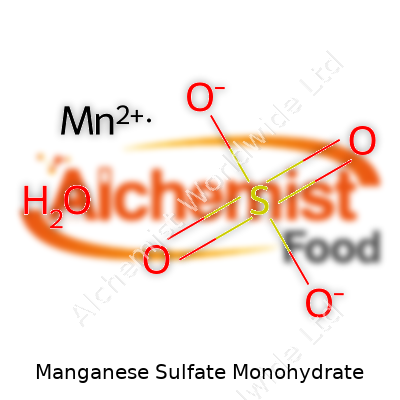
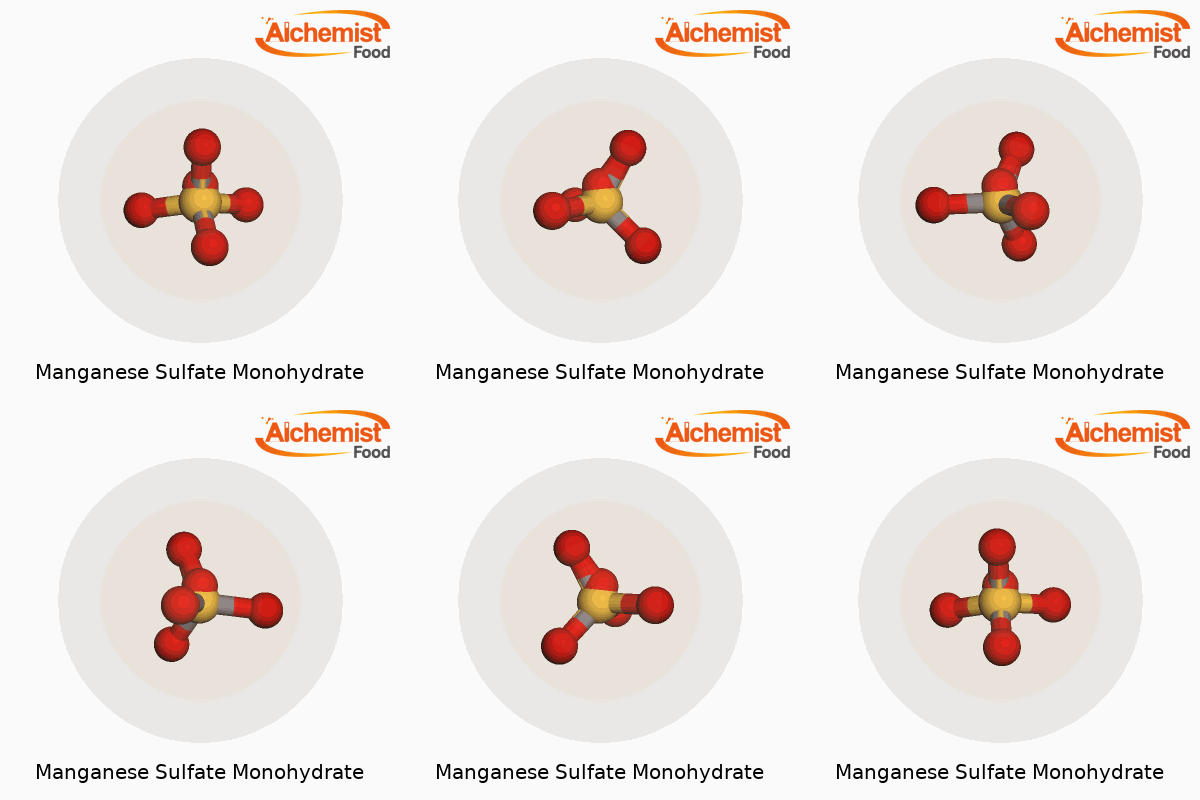
| Names | |
| Preferred IUPAC name | Manganese(II) sulfate monohydrate |
| Other names |
Manganese(II) sulfate monohydrate Manganese sulphate monohydrate Manganese monosulfate MnSO4·H2O |
| Pronunciation | /ˈmæŋ.ɡəˌniːz ˈsʌl.feɪt ˌmɒn.oʊˈhaɪ.dreɪt/ |
| Preferred IUPAC name | manganese(2+) sulfate monohydrate |
| Other names |
Manganese(II) sulfate monohydrate Manganous sulfate monohydrate Manganese sulphate monohydrate |
| Pronunciation | /ˈmæŋ.ɡəˌniːz ˈsʌl.feɪt ˌmɒn.oʊˈhaɪ.dreɪt/ |
| Identifiers | |
| CAS Number | 10034-96-5 |
| Beilstein Reference | 3589816 |
| ChEBI | CHEBI:75833 |
| ChEMBL | CHEMBL1201642 |
| ChemSpider | 23514 |
| DrugBank | DB14525 |
| ECHA InfoCard | 22aa7be6-b23f-4198-ad5e-dc964b1d7a67 |
| EC Number | 232-089-9 |
| Gmelin Reference | 13808 |
| KEGG | C01794 |
| MeSH | D008357 |
| PubChem CID | 24826 |
| RTECS number | OP0893500 |
| UNII | 7Y8P26B98F |
| UN number | UN3077 |
| CAS Number | 10034-96-5 |
| Beilstein Reference | 1369597 |
| ChEBI | CHEBI:131339 |
| ChEMBL | CHEMBL1201180 |
| ChemSpider | 14416 |
| DrugBank | DB14537 |
| ECHA InfoCard | 100.028.325 |
| EC Number | 232-089-9 |
| Gmelin Reference | 14200 |
| KEGG | C06738 |
| MeSH | D008357 |
| PubChem CID | 25138 |
| RTECS number | OP0893500 |
| UNII | KU6J19DJZ7 |
| UN number | UN3077 |
| Properties | |
| Chemical formula | MnSO4·H2O |
| Molar mass | 169.02 g/mol |
| Appearance | Pale pink powder or crystals |
| Odor | Odorless |
| Density | 2.95 g/cm³ |
| Solubility in water | Soluble in water |
| log P | -5.7 |
| Vapor pressure | Negligible |
| Acidity (pKa) | 7.0 |
| Basicity (pKb) | 6.2 |
| Magnetic susceptibility (χ) | '+10800 x 10⁻⁶ cm³/mol' |
| Dipole moment | 0 D |
| Chemical formula | MnSO4·H2O |
| Molar mass | 169.02 g/mol |
| Appearance | Pale pink crystalline powder |
| Odor | Odorless |
| Density | 2.95 g/cm³ |
| Solubility in water | Freely soluble in water |
| log P | -5.7 |
| Vapor pressure | Negligible |
| Magnetic susceptibility (χ) | +1800e-6 cm³/mol |
| Dipole moment | 0 Debye |
| Thermochemistry | |
| Std molar entropy (S⦵298) | 165.0 J·mol⁻¹·K⁻¹ |
| Std enthalpy of formation (ΔfH⦵298) | -1060.4 kJ/mol |
| Std enthalpy of combustion (ΔcH⦵298) | -1470 kJ/mol |
| Std molar entropy (S⦵298) | 144.0 J/(mol·K) |
| Std enthalpy of formation (ΔfH⦵298) | -1334.2 kJ/mol |
| Std enthalpy of combustion (ΔcH⦵298) | -1575 kJ/mol |
| Pharmacology | |
| ATC code | A12CC01 |
| ATC code | A12CC03 |
| Hazards | |
| Main hazards | Harmful if swallowed. Causes serious eye irritation. May cause respiratory irritation. |
| GHS labelling | GHS05, GHS07 |
| Pictograms | GHS07 |
| Signal word | Warning |
| Hazard statements | H302: Harmful if swallowed. |
| Precautionary statements | P264, P270, P273, P280, P301+P312, P302+P352, P305+P351+P338, P312, P330, P337+P313, P501 |
| NFPA 704 (fire diamond) | 1-1-0 |
| Lethal dose or concentration | LD50 Oral Rat: 2,190 mg/kg |
| LD50 (median dose) | 2,190 mg/kg (rat, oral) |
| NIOSH | MN 353 |
| PEL (Permissible) | 5 mg/m3 |
| REL (Recommended) | 0.2 mg/m³ |
| Main hazards | Harmful if swallowed. Causes serious eye irritation. May cause respiratory irritation. |
| GHS labelling | GHS07, GHS09 |
| Pictograms | GHS07 |
| Signal word | Warning |
| Hazard statements | H302: Harmful if swallowed. |
| Precautionary statements | P264, P270, P273, P280, P301+P312, P305+P351+P338, P308+P313, P501 |
| NFPA 704 (fire diamond) | 1-1-0 |
| Lethal dose or concentration | LD50 Oral Rat 2,190 mg/kg |
| LD50 (median dose) | LD50 (oral, rat): 2,190 mg/kg |
| NIOSH | RT8490000 |
| PEL (Permissible) | PEL: 5 mg/m³ |
| REL (Recommended) | 1 mg/m³ |
| IDLH (Immediate danger) | Not established |
| Related compounds | |
| Related compounds |
Manganese(II) sulfate Manganese sulfate tetrahydrate Manganese dioxide Manganese(II) chloride Manganese(II) nitrate |
| Related compounds |
Manganese(II) sulfate Manganese(II) chloride Manganese(II) nitrate Manganese(II) carbonate Manganese dioxide Iron(II) sulfate |



