Lauric Acid: A Closer Look into Its Past, Present, and Future
Historical Development
Long before chemists isolated lauric acid from coconut oil, people in coastal regions relied on coconut and palm kernel oil for cooking, soapmaking, and medicine. Lauric acid’s journey started with traditional uses, but picked up pace in the 19th century when industrial chemists separated it for its unique properties. The soap and cosmetics industries quickly noticed its benefits. Researchers unlocked more about its structure, finding a 12-carbon chain gave it distinct behavior among fatty acids. Lauric acid’s rise shows how discoveries in kitchens and small workshops can fuel advances across labs and factories. The continued popularity of coconut-based goods owes much to the rich legacy of those early findings.
Product Overview
Lauric acid stands as a saturated medium-chain fatty acid found in many vegetable fats, most abundantly in coconut oil and palm kernel oil. This molecule carries a clean-cut profile, separating quickly from water and teaming well with other fatty acids in food and industrial recipes. Commercially produced lauric acid comes as a white, powdery solid at room temperature and melts with a low, waxy feeling between your fingers. Industries that value high-purity, stable raw materials have adopted lauric acid for foods, soaps, detergents, and personal care products.
Physical & Chemical Properties
With the molecular formula C12H24O2, lauric acid measures in at a molecular weight of about 200.32 g/mol. Its melting point rests around 44°C (111°F), while the boiling point reaches 298°C (568°F) under reduced pressure. It remains insoluble in cold water, but dissolves easily in ethanol, ether, and other organic solvents, which makes blending straightforward during manufacturing. Lauric acid’s chain structure sets the foundation for its antimicrobial power, as it can penetrate lipid layers in bacterial membranes, leading to a range of health and technical uses. Its slight but noticeable fatty scent gives away its presence in many soaps and lotions.
Technical Specifications & Labeling
High-quality lauric acid often holds purity above 99%, low residual moisture, and lacks harmful contaminants. Food-grade and pharmaceutical labels demand close tracking from harvest to finished product, with certificates documenting every batch. Technical data sheets spell out melting point, saponification value, acid value, and color. Each parameter matters when quality is the difference between safe consumption and risky exposure in regulated spaces such as food processing and cosmetics factories. Global standards, including those from the Food Chemical Codex and ISO, set a clear bar for suppliers.
Preparation Method
Large-scale production of lauric acid usually starts with breaking down coconut or palm kernel oil through hydrolysis. This process splits fats into glycerol and their constituent fatty acids. Distillation comes next, separating lauric acid from its peers by boiling point. This approach pushes efficiency, but companies also keep an eye on sustainable extraction. By investing in green chemistry and renewable feedstocks, manufacturers aim to lower emissions and reduce dependency on fossil fuels in the acids market. Proper purification—such as repeated recrystallization—ensures a consistent end product for further transformation.
Chemical Reactions & Modifications
Lauric acid serves as a workhorse in labs and plants. Its carboxyl group reacts easily to form soaps when neutralized with bases, releasing glycerol and sodium or potassium salts in the process. Manufacturers make laurate esters, widely used as emulsifiers, by reacting lauric acid with alcohols. Hydrogenation, halogenation, and amidation can all reshape this molecule, opening up related compounds that find homes in plastics, lubricants, and even pharmaceuticals. In every step, tight control of temperature and choice of reagents ensures safety, cost savings, and precise outcome.
Synonyms & Product Names
Known also as dodecanoic acid, lauric acid turns up in ingredient lists under several names: dodecylcarboxylic acid, coconut acid, and n-dodecoic acid. In commerce, labels may cite “natural fatty acid 12:0” or refer to its coconut or palm kernel origin. These aliases reflect shifts over decades, as each industry picks what fits its language and product lore. Familiarity with these terms helps buyers and processors avoid confusion during import, export, and regulatory compliance.
Safety & Operational Standards
Handled in solid or molten form, lauric acid presents minimal danger under controlled conditions. Skin and eye contact might cause mild irritation, so gloves and safety goggles stay essential in labs and production settings. Dust levels and vapor must be kept low, especially during heating or mixing, since inhalation can irritate sensitive airways. Workplaces run exhaust fans, dust collection systems, and train staff in first aid for exposure. Food and pharmaceutical grade lauric acid requires facilities to follow GMP and HACCP. In my years working with ingredients, strict controls around storage—away from heat, open flames, and reactive chemicals—make all the difference in accident prevention and long-term chemical stability.
Application Area
Lauric acid features in household soaps, cosmetics, shampoos, and toothpaste, thanks to its cleaning strength and skin-friendly profile. Food manufacturers add it to baked goods, infant formulas, and dairy mimics for texture and shelf life. Its antimicrobial edge brings value to health supplements and food preservatives. Beyond consumer products, lauric acid plays its part in making bioplastics, industrial lubricants, and surfactants for agriculture. Researchers see promise in lauric acid for drug carriers and targeted therapy because of its ability to slip through cell membranes. Each use arises from the same chain of twelve carbons, proving versatility spans from cleaning up in the kitchen to cutting-edge solutions in medicine and biotech.
Research & Development
Intense study surrounds lauric acid, as people seek natural alternatives to synthetic additives and preservatives. Research teams clip lipid chains, tinker with combinations, and explore its role in metabolism. Trials examine how lauric acid fights pathogens, supports gut flora, and interacts with human cell membranes at the molecular level. Studies link lauric acid-rich diets with shifts in cholesterol and energy use. Companies developing plant-based, biodegradable plastics have turned to lauric acid as a starting block, creating packaging solutions that break down faster and leave less plastic waste. Behind every application, university labs and private firms push the boundaries, testing limits, and chasing cleaner, more sustainable chemistry.
Toxicity Research
Getting the facts right is crucial, since lauric acid enters the supply chain in food, toiletries, and supplements. Direct contact causes minor irritation, but ingestion at approved dosages shows low toxicity in both animals and humans. Safety data rely on decades of feeding studies, in-vitro trials, and workplace exposure records. Medical teams stick to guidelines that recognize high fat intake carries risks, particularly for people with underlying health conditions. Lauric acid, being a medium-chain triglyceride, breaks down faster than longer-chain fatty acids, suggesting lower risk for fat accumulation in the liver or arteries. Scientific positions keep evolving as researchers uncover more about pathways and effects on different populations.
Future Prospects
Growing demand for natural chemicals, palm oil alternatives, and antimicrobial agents suggests lauric acid will keep its importance on the world market. The shift to biodegradable materials, especially single-use plastics, pulls lauric acid into new conversations about circular economy solutions. Sustainable sourcing and improved processing stand in the spotlight, as industries face pressure to deliver greener goods at scale. Medical research into antimicrobial and antiviral applications could expand lauric acid’s reach even further. In my view, the future of lauric acid ties tightly to how industries listen to consumer demand for safer, plant-based, and eco-smart ingredients—all while holding true to rigorous safety and quality standards.
What are the health benefits of Lauric Acid?
What Makes Lauric Acid Stand Out?
Lauric acid pops up in many foods, but coconut oil and palm kernel oil pack the biggest punch. What grabs interest isn’t just its source—it's those promises about immunity, heart health, and even its spot on ingredient lists for “clean” eating. I started noticing the buzz about lauric acid after switching to coconut oil in cooking, hoping to dodge some of those less healthy fats most of us grew up using. But the question that sticks with me is: what exactly does this fatty acid do in our bodies?
Main Health Benefits Backed by Studies
Lauric acid gets named as a medium-chain triglyceride (MCT). Unlike the long-chain fats in meat or vegetable oils, our bodies absorb and break down MCTs much faster. Science points out that lauric acid, found at about 50% in coconut oil, behaves a little differently from other MCTs, but still digests quickly compared to animal fats.
A big advantage: lauric acid has powerful antimicrobial properties. Research published in journals like Antimicrobial Agents and Chemotherapy shows lauric acid fights bacteria like Staphylococcus aureus. Lauric acid gets converted in the body to monolaurin, which acts against viruses and fungi as well. Whenever sniffles work their way through my house, part of my routine shifts to adding coconut milk or a scoop of coconut oil to soups or smoothies—it’s small, but every boost counts.
Lauric acid also links to cholesterol balance. Studies like one in The American Journal of Clinical Nutrition show lauric acid can raise HDL, the "good" cholesterol. A better HDL/LDL ratio gives your arteries a break. The research isn’t perfect, and some experts debate whether the bump in total cholesterol outweighs the improved ratio. As someone who grew up seeing relatives treated for heart issues, I pay attention to those nuances and work toward including fats that score higher on the HDL front.
Lauric Acid and Weight Management
Diet culture loves anything that hints at faster metabolism or easier weight control. Because the body uses lauric acid quickly for energy, it’s less likely to get stored as body fat right away. In my own kitchen experiments, I’ve noticed that breakfasts with a spoonful of coconut oil or yogurt with shredded coconut tend to keep hunger at bay until lunch, which beats reaching for a pastry an hour later.
Potential Downsides and Questions
No single nutrient saves the day. Lauric acid gets attention for the positives, but it’s still a saturated fat. The American Heart Association suggests moderation with coconut-based products if you worry about heart disease. I always tell friends: swapping all fats for coconut oil won’t work magic, but using it in balance with olive oil, nuts, and fish helps cover the spectrum.
Everyday Ways to Get Lauric Acid
In my kitchen, the easiest way to get lauric acid without overdoing it involves simple swaps. Mix coconut oil into stir-fries instead of butter, or blend shredded unsweetened coconut into oatmeal. For folks looking to support immunity or tweak their cholesterol numbers, those small steps fit into an overall balanced plan.
Better Health Comes from the Full Picture
Lauric acid draws attention for a reason—science backs up some of the claims about immune support and cholesterol. But the benefits show up best when paired with a varied diet and smart choices. Small changes add up, and lauric acid-rich foods can boost meals without crowding out the foods that make a positive difference over time.
Is Lauric Acid safe for consumption?
Lauric Acid: More Than Just a Buzzword in Coconut Oil
The moment you pick up that jar of coconut oil or munch on a slice of chocolate, lauric acid finds its way into your diet. This fatty acid turns up naturally in coconut, palm kernel oil, and even mother’s milk. So it pops up in news stories, often with a health halo or a dose of skepticism. I’ve seen people pile coconut oil into smoothies or add it into baking, believing it to be almost medicinal.
Here’s what the science actually shows. Lauric acid stands out as a medium-chain fatty acid. Unlike longer-chain fats, the body digests and absorbs these quicker, sending them straight to the liver, where they can be used for energy. That’s part of the reason nutritionists and athletes sometimes turn to coconut oil; they say it can give you a metabolism bump and works well as a fuel for the body. Scientific journals support that the body processes lauric acid differently than other saturated fats.
Cholesterol: Not Just Numbers on a Chart
Plenty of folks worry about cholesterol. Lauric acid can raise both LDL (often called “bad” cholesterol) and HDL (“good” cholesterol). Research in the American Journal of Clinical Nutrition found that, gram for gram, lauric acid lifts total cholesterol more than some other fats, but the ratio of good-to-bad cholesterol also rises. What does this really mean? For most healthy adults, eating moderate coconut oil or foods containing lauric acid doesn’t spell danger. Context matters—doses, diet, exercise, and genetics all play their part.
Doctors I’ve talked to make it clear: isolated ingredients rarely tell the full story. Nearly every population-based study looks at whole diets, not single chemicals. In parts of the Philippines and Sri Lanka, diets rich in coconut don’t always line up with high heart disease rates. Patterns of activity, fiber intake, fruits, and veggies have big roles. So blaming or blessing lauric acid alone skips the bigger picture.
Lauric Acid in Everyday Foods—Should You Worry?
Supermarkets these days offer more ultra-processed choices than ever. Lauric acid gets added to packaged foods as a stabilizer or preservative. Most government bodies, including the FDA and European Food Safety Authority, stamp lauric acid as safe when part of the normal diet. Overdosing on any fat, though, could put your health on the rocks—weight gain, cholesterol swings, or inflammation.
It helps to bring the focus back to the shopping cart and kitchen table. People stay healthiest eating foods closer to the way they’re grown: nuts, seeds, fish, olive oil, whole grains. Lauric acid in coconut oil or chocolate isn’t a health hazard by itself but building meals around one fatty acid doesn’t set up balanced nutrition.
Practical Solutions: Choices That Stack Up
Cutting through marketing hype starts with knowledge. If you want coconut oil, treat it like any other fat—use it in moderation. Relying on variety protects you from overloading on any one fat. Cooking for my own family, I swap oils around, add nuts, and reach for avocados. Patients in clinics I’ve worked with thrive once they stop chasing miracle ingredients and focus on real food and portions.
Science always marches forward. Keep up with trusted sources: registered dietitians, peer-reviewed journals, guidelines from health authorities. Social media often runs on outrage and extremes, but health usually sits somewhere in the middle ground—moderate, balanced, and adapted to real life.
What are the primary sources of Lauric Acid?
Why Lauric Acid Matters in Daily Life
Lauric acid does not always get top billing, but most people touch it each day without realizing. It shows up in soaps and shampoos through the cleansing agents that lather so easily. Food shelves pack plenty of it thanks to coconut products and palm-based fats. Medical research has even unearthed some antibacterial effects and potential health benefits, sparking more interest in this fatty acid.
Digging Into Plant-Based Sources
If you look for lauric acid in nature, coconuts stand out as the prime source. Coconut oil runs roughly half lauric acid by weight. For people trying to swap out animal fats or seed oils, coconut oil offers both unique flavor and high smoke point for cooking, though some debate swirls around the role of saturated fats in diet.
Palm kernel oil holds much the same profile. Both coconut and palm kernel come from tropical trees, and both industries supply not just food-grade fats, but also the backbone for countless cleaning goods. Palm kernel oil brings its own baggage: rainforests clear for plantations, harming critical wildlife and risking futures of communities in Southeast Asia and Africa. That’s where eco-certification schemes like RSPO step in, though enforcement remains spotty. Choosing sustainably sourced oils becomes a personal responsibility for consumers hoping to push markets toward better practices.
Animal-Based Sources
Dairy fat carries some lauric acid too, although milk yields much less compared to those tropical oils. Butter contains small amounts. Goat’s milk and sheep’s milk generally provide more of it than cow’s milk. Cheese and cream add a minor boost for those who rely on animals over plants for fat. While animal products complement diverse diets, large-scale farming draws concern for greenhouse gases and land use.
Emerging and Synthetic Supplies
Not everything comes off the tree or from the milk can. Industrial chemistry has made it possible to synthesize lauric acid through controlled processes, mostly to meet pharmaceutical or specialty cleaning needs. Biotech startups are experimenting with fermenting microbes on plant sugars to output fatty acids, possibly reducing land demand. These solutions could one day open new ways to supply key materials while lowering harm to habitats.
Pushing for Sustainable and Informed Choices
Few buyers scan a soap label and think about the forests behind the palm oil or the farms behind the milk. Most want a product that works and a price that fits. Yet every bottle and every snack creates ripple effects stretching far beyond the shelf. Certifications, clearer labeling, and direct partnership with responsible producers give regular people a hand in shaping the industry. Learning more about where lauric acid comes from is one small but concrete step toward responsible consumption.
Looking Ahead
Research keeps highlighting the role of diet and personal care in both human health and planetary well-being. Industry players tweak sourcing methods, and scientists search out novel alternatives. Better transparency and smarter choices by everyday people can help close the gap between convenience and sustainability. The story of lauric acid, like many ingredients, reflects the tangled links between global agriculture, consumer demand, and the push for better practices.
How is Lauric Acid used in skincare products?
From Coconut Oil to Creams: Why Lauric Acid Matters
Lauric acid pops up a lot in skincare conversations, especially with big brands touting the benefits of coconut oil and palm kernel oil in their creams, serums, and cleansers. I first heard about it years ago, while battling acne as a teenager and later searching for non-irritating cleansers. Lauric acid isn’t just some hype ingredient. Researchers and dermatologists recognize it for its real ability to support healthy skin—especially thanks to its antimicrobial properties.
Lauric Acid Fights More Than One Skin Issue
Plenty of folks with acne-prone skin have tried product after product, only to end up with more irritation or dryness. Lauric acid carries strong antibacterial effects, especially against Propionibacterium acnes—the bacteria that triggers many pimples. A study published in the Journal of Investigative Dermatology found that lauric acid worked about as well as benzoyl peroxide in killing acne-causing bacteria but without the harsh side effects that dry or peel skin.
People who use soap bars and foaming face washes also get an extra benefit from lauric acid. It lathers easily, which helps lift away dirt, sebum, and pollutants that build up after a long day. Lauric acid’s molecular structure, a medium-chain saturated fatty acid, allows it to slip into the surface of the skin seamlessly—without leaving a thick, greasy residue. With frequent handwashing and mask-wearing over the past few years, gentle surfactants have become a top priority for many. Lauric acid-based cleansers check that box.
Nature’s Moisturizer with a Kick
Some people shy away from the idea of putting “acids” on their face. Lauric acid couldn’t be further from harsh ingredients like glycolic or salicylic acid. In fact, it’s a rich, soothing fatty acid. It helps reinforce the skin’s natural barrier, holding moisture in and blocking out environmental damage. Dryness and irritation are two of the biggest triggers for flaky patches and redness. Lauric acid works to prevent both, especially for people with sensitive or reactive skin.
Fact-Checked and Backed by Trusted Sources
Science backs up the role of medium-chain fatty acids in skin health. Dermatology journals, including Dermatitis and Clinical, Cosmetic and Investigational Dermatology, highlight how these ingredients help repair the skin barrier. Compared to other fatty acids, lauric acid displays a rare mix of antibacterial, antifungal, and moisturizing abilities. I’ve tried a few cleansers and moisturizers with lauric acid and, unlike synthetic fragrances or alcohols, they rarely sting or cause redness.
Improving Formulations for Everyone’s Skin
Access to quality skincare matters for everyone, not just those shopping at high-end boutiques. Many affordable bar soaps and lotions sold in grocery stores use lauric acid or its salts (sodium laurate) for a reason: reliable cleansing without overdrying. If a person deals with eczema or dermatitis, products like these become lifelines. Dermatologists recommend patch testing new products and looking for simple ingredient lists, often pointing to coconut oil–derived lauric acid as a safe choice. Products that blend lauric acid with soothing botanicals like aloe or oat work well for inflamed or allergy-prone skin.
Potential Solutions and Smarter Skincare Choices
As brands keep launching new formulas, shoppers need straightforward ingredient lists and guidance from real experts—not just marketing claims. Medical professionals call for better regulation of labeling, especially for people with allergies or underlying conditions. Lauric acid, thanks to its effectiveness and safety record, deserves a place in both drugstore and specialty skincare routines. Comparing clinical research, reading reviews from people with similar skin types, and seeking dermatologist advice lead to the best outcomes. Safe, science-driven choices make all the difference for healthy, resilient skin.
Does Lauric Acid have antimicrobial properties?
A Simple Fatty Acid with Serious Power
Lauric acid doesn’t need much to convince people who have worked in health and nutrition circles. It's a saturated fatty acid, making up a big part of coconut oil and palm kernel oil. For years, coconut oil lovers have praised this component, saying it goes beyond giving richness to baked goods or smoothness to skin creams. Science backs them up: lauric acid packs an antimicrobial punch, even though it comes from a source most folks just associate with cooking.
Bacteria and Viruses Don’t Stand a Chance
Researchers don’t need a lab full of test tubes to notice lauric acid’s effect. Some of the first studies came after people wondered why certain populations who ate more coconut oil seemed to get sick less often. Lab studies put lauric acid against a list of nasty bugs: Staphylococcus aureus, Escherichia coli, and even the challenging Helicobacter pylori. It breaks down bacterial membranes and leaves viruses scrambling, particularly lipid-coated viruses. This isn’t research buried in obscure journals, either. Well-respected scientific sources like the journal Antimicrobial Agents and Chemotherapy have shown strong inhibition of pathogens exposed to lauric acid.
Real-World Evidence in Everyday Products
Doctors and folks in the supplement world use lauric acid for its antimicrobial properties, sometimes without even calling it out by name. The most recognizable derivative, monolaurin, sits in many over-the-counter immune boosters. Some hospitals have even looked at coconut oil mixtures for treating certain skin infections, with encouraging results. People dealing with fungal issues—especially Candida—may have heard stories about fats helping curb growth. I’ve seen folks swap chemical-heavy creams for coconut oil, feeling relief from persistent irritation. While this doesn’t replace prescribed medicine, using lauric acid blends as an extra layer makes sense for many households.
Food Safety and Natural Preservation
Beyond supplements, food manufacturers care about lauric acid. Food spoilage and infections linked to poor hygiene cost time and money. Products made with coconut oil show longer shelf life, resisting certain molds and bacteria better than other oils. This isn't only about saving bread from going moldy. Meat, dairy, and even pediatric formula turn to lauric acid for help fighting microbial contamination. I still remember food companies looking for ways to extend shelf life without synthetic preservatives—many ended up testing natural fats like lauric acid after seeing mold growth slow down. It’s a quiet change but an important one, especially for families serious about avoiding additives.
Limits, Cautions, and Responsible Use
No compound solves every problem. Lauric acid’s effects vary depending on the type of pathogen, the concentration used, and the delivery method. Overusing any single approach—natural or synthetic—risks encouraging resistance or causing unpredicted reactions, especially for people with allergies. And not every viral or bacterial threat can be handled with coconut oil; medical supervision remains vital for real infections. Still, lauric acid brings something both simple and effective to tables and medicine cabinets. Using its power wisely—balancing tradition, research, and practical need—can help keep families healthier while reducing reliance on artificial chemicals.
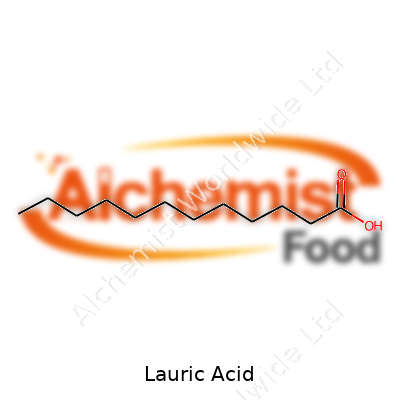
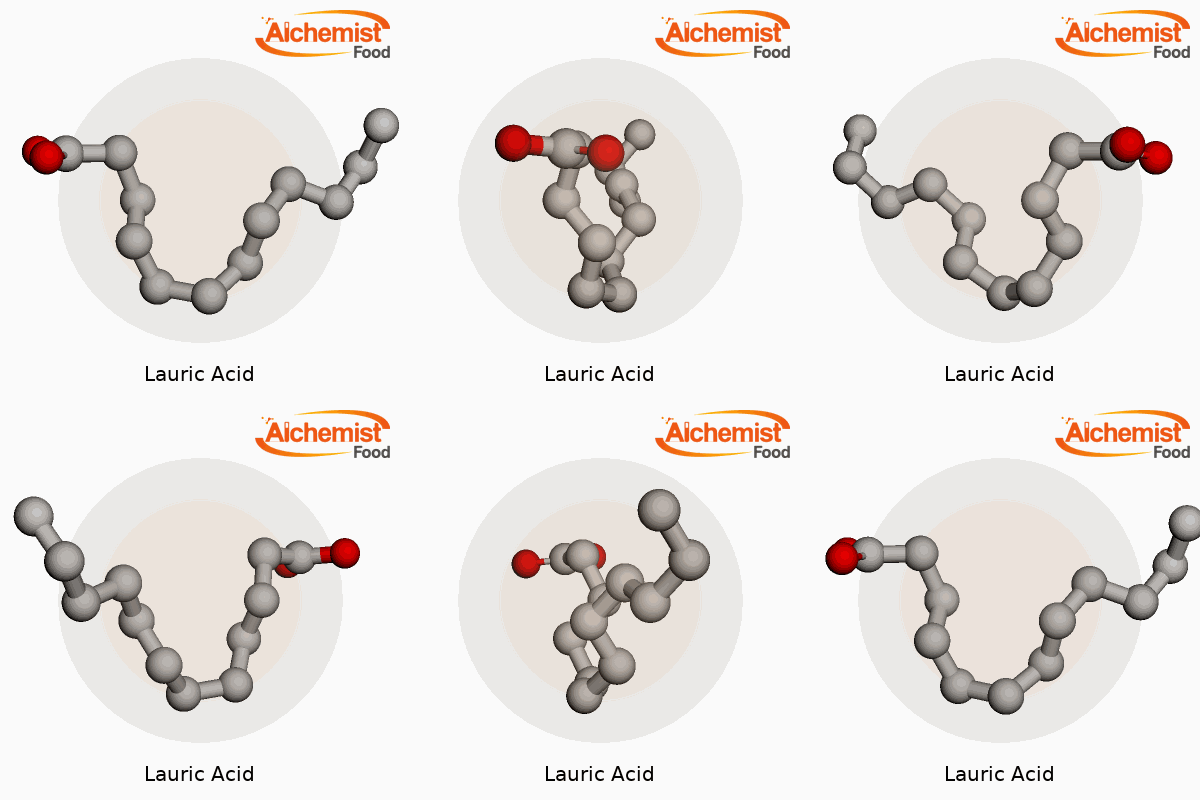
| Names | |
| Preferred IUPAC name | dodecanoic acid |
| Other names |
Dodecanoic acid Lauric fatty acid C12 fatty acid n-Dodecanoic acid Duodecylic acid |
| Pronunciation | /ˈlɔːrɪk ˈæsɪd/ |
| Preferred IUPAC name | dodecanoic acid |
| Other names |
Dodecanoic acid n-Dodecanoic acid Laurin Dodecic acid |
| Pronunciation | /ˈlɔːrɪk ˈæsɪd/ |
| Identifiers | |
| CAS Number | 143-07-7 |
| Beilstein Reference | 1900551 |
| ChEBI | CHEBI:28829 |
| ChEMBL | CHEMBL14115 |
| ChemSpider | 5037 |
| DrugBank | DB03028 |
| ECHA InfoCard | 03eeb75c-9f87-46f6-a2c2-3f2d7b5c58d2 |
| EC Number | 205-582-1 |
| Gmelin Reference | 1848 |
| KEGG | C00224 |
| MeSH | D007836 |
| PubChem CID | 3893 |
| RTECS number | OGT29787 string |
| UNII | 49UYG7MR9Y |
| UN number | UN No. 2055 |
| CAS Number | 143-07-7 |
| Beilstein Reference | 1209248 |
| ChEBI | CHEBI:28839 |
| ChEMBL | CHEMBL1426 |
| ChemSpider | 21105763 |
| DrugBank | DB03070 |
| ECHA InfoCard | 100.012.139 |
| EC Number | 205-582-1 |
| Gmelin Reference | 7145 |
| KEGG | C00212 |
| MeSH | D007825 |
| PubChem CID | 3893 |
| RTECS number | OGJ59744XJ |
| UNII | 9SO3070106 |
| UN number | UN 2055 |
| Properties | |
| Chemical formula | C12H24O2 |
| Molar mass | 200.32 g/mol |
| Appearance | White crystalline solid |
| Odor | Faint odor of lauric acid |
| Density | D0.88 g/cm3 |
| Solubility in water | 0.063 g/L (20 °C) |
| log P | 3.9 |
| Vapor pressure | 0.000065 hPa (20 °C) |
| Acidity (pKa) | ~5.3 |
| Basicity (pKb) | pKb ≈ 15 |
| Magnetic susceptibility (χ) | -50.0e-6 cm³/mol |
| Refractive index (nD) | 1.418 |
| Viscosity | 68.6 cP (at 100°C) |
| Dipole moment | 3.67 D |
| Chemical formula | C12H24O2 |
| Molar mass | 200.32 g/mol |
| Appearance | White crystalline solid |
| Odor | Faintly unpleasant |
| Density | Densities: 0.88 g/cm³ |
| Solubility in water | 0.063 g/L |
| log P | 4.6 |
| Vapor pressure | 0.03 mmHg (20°C) |
| Acidity (pKa) | pKa 5.3 |
| Basicity (pKb) | pKb ≈ 15 |
| Magnetic susceptibility (χ) | -49.0e-6 cm³/mol |
| Refractive index (nD) | 1.429 |
| Viscosity | 8.2 cP (40°C) |
| Dipole moment | 2.49 D |
| Thermochemistry | |
| Std molar entropy (S⦵298) | 266.0 J·mol⁻¹·K⁻¹ |
| Std enthalpy of formation (ΔfH⦵298) | -715.6 kJ/mol |
| Std enthalpy of combustion (ΔcH⦵298) | -8375.8 kJ/mol |
| Std molar entropy (S⦵298) | 375.5 J·mol⁻¹·K⁻¹ |
| Std enthalpy of formation (ΔfH⦵298) | -696.4 kJ/mol |
| Std enthalpy of combustion (ΔcH⦵298) | –8008.1 kJ/mol |
| Pharmacology | |
| ATC code | A05AX10 |
| ATC code | A05AD03 |
| Hazards | |
| GHS labelling | **GHS labelling of Lauric Acid:** "GHS07, Warning, H315, H319, P264, P280, P302+P352, P305+P351+P338 |
| Pictograms | GHS07, GHS08 |
| Signal word | Warning |
| Hazard statements | H315, H319, H335 |
| Precautionary statements | Wash thoroughly after handling. Wear protective gloves/eye protection/face protection. IF ON SKIN: Wash with plenty of water. If skin irritation occurs: Get medical advice/attention. Take off contaminated clothing and wash it before reuse. |
| NFPA 704 (fire diamond) | 2-1-0-W |
| Flash point | 220 °C (428 °F) |
| Autoignition temperature | > 360 °C (680 °F) |
| Lethal dose or concentration | LD50 (oral, rat): 19,300 mg/kg |
| LD50 (median dose) | LD50 (median dose) of Lauric Acid: "19 g/kg (rat, oral) |
| NIOSH | LNDR500000 |
| PEL (Permissible) | PEL: 5 mg/m³ |
| REL (Recommended) | 30 mg/kg bw |
| GHS labelling | GHS07, GHS08 |
| Pictograms | GHS07, GHS08 |
| Signal word | Warning |
| Hazard statements | H315, H319 |
| Precautionary statements | P280: Wear protective gloves/protective clothing/eye protection/face protection. |
| NFPA 704 (fire diamond) | 2-1-0 |
| Flash point | 220 °C |
| Autoignition temperature | 355°C |
| Lethal dose or concentration | LD50 (oral, rat): 19,800 mg/kg |
| LD50 (median dose) | LD50 (median dose) of Lauric Acid: " >5000 mg/kg (rat, oral) |
| NIOSH | LNMR000700 |
| PEL (Permissible) | PEL: 5 mg/m³ |
| REL (Recommended) | 12-20% |
| Related compounds | |
| Related compounds |
Caprylic acid Capric acid Myristic acid Palmitic acid |
| Related compounds |
Caprylic acid Capric acid Myristic acid Palmitic acid Stearic acid |



