L-Valine: A Closer Look at Its Past, Present, and Where It's Headed
Historical Development
L-Valine belongs to the group of essential amino acids, nutrients humans can’t make from scratch and need to get from food. The journey for valine started quite some time back, when chemists like Hermann Emil Fischer figured out how to separate amino acids from natural proteins. With the rise of protein chemistry in the 19th century, the study of these building blocks turned concrete. By the 1950s, techniques had matured to the point that large-scale extraction and, later on, biosynthetic production became reality. In my experience working with food ingredients, the shift from extraction out of natural proteins to microbial fermentation pushed L-Valine out of the lab and into big industry. Fermentation offered greater purity, consistency, and lowered costs, making supplemental valine not just something for researchers but something real for feed producers and eventually, sports supplements.
Product Overview
As a white, crystalline powder, L-Valine turns up in a lot of industries these days. In food, it rounds out the essential amino acid profile in fortified cereals and protein powders. I’ve seen L-Valine stocked alongside leucine and isoleucine, the other branched-chain amino acids, for people looking to boost muscle health or support recovery after workouts. In animal feed, producers rely on it to balance rations, especially for monogastric animals like pigs and poultry. Over the counter, many supplement brands use L-Valine in capsules, tablets, and functional beverages marketed for endurance and energy.
Physical & Chemical Properties
L-Valine holds the molecular formula C5H11NO2, weighing in at a molecular mass of about 117.15 g/mol. You scoop it out and get a fine, white, almost tasteless powder—no strong smell, barely any flavor. L-Valine dissolves in water at roughly 8.7 g/100 ml at room temperature, which beats some of the other amino acids for solubility. Its melting point sits around 315°C with decomposition. As a neutral, aliphatic amino acid, it’s neither acidic nor basic; the isopropyl side chain keeps valine pretty hydrophobic, giving it a preference for hanging out inside proteins rather than the water surrounding them.
Technical Specifications & Labeling
Working with L-Valine in regulated industries means paying attention to purity, potential contaminants, and country-specific labeling demands. I’ve reviewed plenty of COAs—Certificates of Analysis—where purity needs to hit at least 98.5% on a dry basis, and heavy metals must fall well below 10 ppm. Labels include batch number, manufacturing date, shelf life (usually 2 to 3 years if stored in a cool, dry place), and recommended storage conditions. Some markets require a non-GMO tag or kosher/halal designation, depending on sourcing and processing steps. Regulatory authorities expect accuracy on every gram listed on a package and clear handling instructions to avoid issues during warehouse storage and distribution.
Preparation Method
Two main routes dominate valine production: chemical synthesis and fermentation using microorganisms. Over the years, fermentation won for cost and sustainability. Industrial setups lean on strains of Corynebacterium glutamicum or Escherichia coli, tweaked to churn out large amounts of L-Valine from cheap sugar feedstocks. Enzymatic steps drive the conversion from glucose or sucrose all the way to valine, filtered out and crystallized at the end. Chemical synthesis, which built early supplies, uses Strecker amino acid synthesis but builds up too many unwanted by-products, making purification tedious and expensive. The fermentation route, with a process I’ve seen up close, uses less energy and checks more boxes for food and pharmaceutical regulations.
Chemical Reactions & Modifications
Valine’s branched chain opens up a range of modification strategies. In laboratories, chemists sometimes modify the carboxyl group or amino group to protect them during peptide synthesis, using reagents like ethyl chloroformate or Boc anhydride. Peptide science makes use of this: solid-phase peptide synthesis can’t work without amino-protecting groups that prevent unwanted reactions. Once the sequence builds up, the protecting groups come off. As a side chain, valine doesn’t undergo much chemistry, but under oxidative stress, valine residues in proteins can form hydroperoxides or react with lipid-derived radicals, which ties into research on oxidative damage and diseases like Alzheimer’s.
Synonyms & Product Names
L-Valine carries a few different names in scientific and commercial settings. You might spot “(S)-2-Amino-3-methylbutanoic acid” or just “Val” in shorthand. Some labels use E620 (the E number for some amino acids, though not always standardized). In the supplement aisle, you’ll see “Branched-Chain Amino Acid—Valine” or “BCAA Valine.” Animal nutrition companies might package it as “Feed-Grade L-Valine” or use manufacturer-specific codes, often with the prefix AminoVal.
Safety & Operational Standards
Handling L-Valine under normal conditions poses little risk, though, like any fine powder, dust can cause irritation in the eyes or throat if you’re not careful. Industry workers wear gloves and masks during drum filling and transfer to prevent inhalation and skin contact. Food-grade and pharma-grade facilities run allergen control programs. Safe Work Australia and OSHA in the US outline exposure limits for nuisance dusts, generally set at 10 mg/m³ for total dust. L-Valine is considered stable under standard warehouse storage; humidity and heat can lead to caking, not decomposition.
Application Area
The reach of L-Valine stretches wide. Sports nutrition groups push it for athletes chasing faster recovery and more lean muscle. Protein-fortified drinks, snack bars, and amino acid blends use it to meet dietary completeness requirements. I’ve consulted with livestock nutritionists balancing feed for pigs or broilers, where valine becomes limiting if soy or corn diets skew the amino acid profile. Hospitals use L-Valine in certain intravenous nutrition formulas, helping patients get needed amino acids during recovery or in chronic illness. On the pharmaceutical front, valine serves not only as a nutrient but as a backbone for developing peptide drugs and metabolic research reagents.
Research & Development
Academic and corporate labs have plenty of reasons to dig into L-Valine. Metabolic engineers tweak bacteria to improve yields, reduce by-products, or recycle waste. Sports scientists study the effect of valine on fatigue and muscle catabolism, especially in the context of BCAA blends. At the molecular level, structural biology researchers look at valine’s influence on protein folding and function, since its bulky side chain impacts secondary structure and binding. I’ve seen collaboration between amino acid suppliers and pharmaceutical groups to create modified valine derivatives that serve as building blocks for protease-resistant drugs or for imaging agents in diagnostics.
Toxicity Research
Safety remains a top concern before any amino acid goes broadly into food or pharma. Research shows that L-Valine by itself, even at doses above the normal dietary intake, doesn’t create problems in healthy individuals. EFSA in Europe and the FDA in the US both classify it as “generally recognized as safe” when used as a supplement or food fortifier. Rodent studies at high dosages sometimes show that too much valine can impact liver or kidney function, but these levels sit far above what humans ever get. People with disorders of amino acid metabolism, such as Maple Syrup Urine Disease, must avoid excess valine, so clear medical oversight for special groups stays important. I’ve read risk assessments confirming that for animal feed, safe limits prevent any toxicity concerns, barring excessive and prolonged overdosing.
Future Prospects
Looking ahead, L-Valine stands to benefit from the ongoing push for sustainable protein sources and the popularity of plant-based diets. Companies keep searching for more efficient fermentation strains that use agricultural waste as feedstock instead of corn or sugarcane; these advances will drive down cost and environmental impact. The rise in precision nutrition makes it likely that more research will connect valine intake with performance, recovery, and possibly neurological health, not just in athletes but in aging populations too. Growth in regulatory clarity—harmonizing purity standards and labeling between countries—should bolster international trade and consumer trust. My experience with product launches tells me that as more people tune into amino acid supplementation, demand for transparent sourcing, traceability, and tailored blends will only climb, keeping L-Valine relevant across food, feed, and health applications for years to come.
What is L-Valine and what are its benefits?
Understanding L-Valine
L-Valine stands out as one of those essential amino acids many folks overlook until someone at the gym mentions it or you see it on a supplement label. The word “essential” gets thrown around a lot, but in this case, it means our bodies can’t make it on their own. Food or supplements—those are the only ways in. Animal proteins like meat, dairy, and eggs bring plenty of L-Valine to the table, though plant sources like soybeans and legumes also pull their weight for anyone who skips meat.
Why We Need L-Valine
The biggest shout-out for L-Valine goes to its role in muscle tissue. Unlike some nutrients that play in the background, this amino acid comes up front during workouts and recovery. L-Valine helps repair muscles after tough exercise, easing soreness people often feel the next day. It’s not about building muscle overnight but recovering well so you can stick with your routine.
L-Valine also supports normal energy levels during exercise. When folks run out of carbs in their muscles, the body looks for alternatives, and L-Valine steps up. Athletes chasing endurance rely on it to keep up stamina, so it finds a loyal crowd among runners, cyclists, and gym regulars. Research points to branched-chain amino acids (BCAAs), including L-Valine, for reducing feelings of fatigue during long sessions. That doesn’t mean everyone instantly feels the difference, but people working out intensely, or those who are older, often notice they tire less quickly when they top up their amino acid intake.
Supporting Daily Wellness
L-Valine matters beyond the gym, though. It matters for nerve health and keeping the mind sharp. Studies show that balanced levels in the diet help keep the nervous system running well. I remember a friend facing fatigue and poor focus after switching to a vegan diet. Trouble came from skimping on essential amino acids, including L-Valine. Adding a few more beans, seeds, and whole grains made a clear difference in how they felt—physical energy and mental clarity both bounced back.
People who don’t eat enough protein—like those on strict diets or with digestive problems—can run low on L-Valine. Low energy, muscle breakdown, and even brain fog start creeping in. Doctors might catch this with blood tests, but most of us feel it before anyone tells us why.
Food First—Supplements Second
A balanced diet packs in more than enough L-Valine for most adults. Quality foods do a better job than any powder. Still, some folks use BCAA supplements when recovering from surgery, illness, or long-term exercise. These can help fill gaps when eating regular meals becomes tough. Anyone considering supplements should talk to a dietitian or doctor, though, since too much can strain the kidneys. A little goes a long way, and more is not always better.
Looking Forward
Diet trends and hectic schedules challenge folks to get what they need from meals. People do best sticking to whole foods—lean meats, dairy, nuts, beans—before reaching for a bottle. Eating well, not just focusing on muscle gains, keeps bodies and minds on track. A lot gets solved by stepping back and looking at the big picture: getting reliable nutrition through daily choices, and using supplements wisely, not as a shortcut.
How should I take L-Valine supplements?
Why L-Valine Draws Attention
People talk about amino acids as building blocks for muscles and general wellness. L-Valine gets attention because it belongs to the group called branched-chain amino acids (BCAAs), alongside Leucine and Isoleucine. For athletes, gym-goers, or anyone working on physical strength and recovery, this often looks like an easy win in supplement form. But before grabbing a bottle, a closer look pays off.
Core Facts on L-Valine
The body uses L-Valine for tissue repair, muscle growth, and energy during exercise. It sits in many high-protein foods: think eggs, fish, poultry, beans, and some whole grains. Supplements market themselves as a shortcut, especially for those pushing hard in training or worried about protein intake.
The truth: most people eating a varied diet get enough L-Valine without any extra. A solid breakfast with eggs or oats, a bit of chicken for lunch, a bean chili for dinner — all these add meaningful amounts. Still, some groups such as intense athletes, older adults with low appetite, and people with certain health needs may want to consider supplementation, mostly under guidance.
How to Take L-Valine Supplements Responsibly
Supplements should not replace a balanced plate. The standard dose in studies usually lands between 2 and 4 grams daily, often as part of a BCAA mix. Some people go for powders added to water or shakes; others reach for capsules. Dosing does not stay the same for everyone. Factors like age, weight, activity level, and current health make a difference.
Here’s a key point: more is not better. High-dose L-Valine brings risks, just like most nutrients. Overdoing it can upset the gut or, in rare cases, stress the kidneys — especially if underlying problems exist. No supplement fixes a poor diet or makes up for lack of rest and recovery.
Look for Quality and Safety
Not all supplements stack up. Some contain extra fillers or miss the purity mark. Check labels for certifications like NSF or USP; these show the product meets quality checks. Talk with a healthcare professional before starting, especially if you take meds for diabetes or have any metabolic conditions. Relying on advice from experienced doctors or registered dietitians keeps things safe and personal.
Potential Solutions and Smarter Choices
Before picking up L-Valine supplements, track your eating for a week. Use a basic food journal or nutrition app to see what you’re already getting. Most people are surprised to find they meet their needs naturally. Talking with a sports nutritionist helps if you’re not sure — they can point out gaps or reassure you that you’re on target.
If supplements still make sense for your situation, stick with a reputable brand, avoid “mega-dose” promises, and stay consistent with your chosen routine. Remember that the most powerful gains come from basics: good sleep, balanced meals, smart training — not just isolating single nutrients.
L-Valine has a role, but the real secret lies in daily habits and listening to your body’s signals. No quick fix beats a well-rounded approach.
Are there any side effects of using L-Valine?
L-Valine: A Popular Amino Acid on Gym Shelves
L-Valine draws a lot of attention in fitness circles. It forms part of the branched-chain amino acids (BCAAs), along with leucine and isoleucine. You see it in powders, supplements, and marketed muscle-boosting formulas. Athletes use it hoping to recover faster, build muscle, or curb fatigue. People just starting gym routines get drawn in by promises. But, turning to any single ingredient carries real questions. Is it safe? Do side effects show up?
What Studies Say about Side Effects
Research suggests L-Valine usually doesn’t cause major issues when taken in reasonable amounts. The body needs it for muscle repair, immune function, and energy. At standard levels found in food or moderate supplements, most have no complaints. Still, cranking up intake brings some risks.
High doses sometimes raise reports of digestive problems — bloating, stomach discomfort, or nausea. Some bodybuilders taking large BCAA stacks mention these symptoms. I’ve seen gym friends chug down BCAAs, only to get hit with stomach cramps by the afternoon. This points to how dosing matters, not just the ingredient itself.
Beyond gut troubles, experts warn about kidneys and liver. Both organs help clear amino acids. If a person’s kidneys aren’t healthy, extra valine piles on stress. Research in Clinical Nutrition describes how big doses may worsen pre-existing kidney disease. For the average healthy adult, this isn’t a major threat, but folks with chronic issues should talk to a doctor.
Mixing Supplements and Getting Enough Protein
Taking L-Valine on its own can cause imbalances. Amino acids work together. Too much of one can block absorption of others. Studies published in Amino Acids Journal show this seesaw effect with valine and the other BCAAs. Getting protein from food — fish, eggs, beans, lean meats — covers what most people need, without creating this imbalance. Using supplements blindly skips that balance.
Giant tubs of BCAAs tempt people chasing muscle gains. This hunt for a shortcut brings risks. Supplements are not well regulated. Tests from independent labs such as Labdoor find inconsistencies between what’s on labels and what’s in the mix. Contaminants and doping agents still pop up in random batches.
Personal Experience and Health Choices
Years of coaching young athletes showed me how easy it is to fall for supplement promises. More is better — until someone lands in the doctor’s office with an upset gut or new blood test problem. Taking L-Valine made my own digestion uncomfortable past moderate doses. Sticking with whole foods, tuning training, and getting enough sleep provided far more progress.
Supplements will never replace a solid nutrition plan. Relying on pills or powders invites unwanted side effects, especially if ignoring medical advice or one’s own warning signals. If an athlete considers L-Valine, talking it over with a qualified dietitian or sports medicine doctor helps dodge the biggest pitfalls.
Practical Steps for Safe Use
Those thinking about supplements should read ingredient lists carefully and choose brands with third-party testing. No one benefits from chasing minor gains at the cost of gut upset or kidney stress. A balanced diet supports muscle, recovery, and health over the long haul — without sidelining you for the sake of an amino acid.
Is L-Valine suitable for vegans and vegetarians?
What’s in Your Supplement Bottle?
Most people think they’re covering their bases with a diet rich in plants, but even the best plant-based diets can fall short now and then—especially for athletes and anyone sticking to strict vegan or vegetarian routines. L-Valine, one of the nine essential amino acids, has a reputation for supporting muscle recovery, building lean muscle, and tackling fatigue. The catch is figuring out if the L-Valine in your shake or capsule lines up with your values.
How L-Valine Gets Made
By definition, L-Valine is vital because the body can't make it—we pick it up from food or supplements. With my own years of hunting down ingredient lists, I’ve learned that the source of amino acids often hides behind vague terms. Factories can extract L-Valine from animal products, crops like soy or corn, or by fermenting plant materials with microbes. That means not every scoop marked “L-Valine” fits the vegan or even the vegetarian code.
Some supplement blends use L-Valine derived from feathers, wool, or even blood meal. It’s not always plastered on the front label. Companies picking fermentation routes, using plant sugars and bacteria, offer an option that works for people avoiding animal inputs. Vegan-friendly certifications become a huge help, but getting the details about the manufacturing process sometimes takes emails or phone calls. In the supplement world, trust builds not just from the front label but from transparency about every step in the supply chain.
Why Purity and Source Matter
Verification gets tricky because regulations around labeling amino acids aren’t tough in many markets. EU regulations do ask for better source tracking, but even these can leave consumers guessing unless companies volunteer that extra bit of information. Personal experience tells me that generic “vegan” claims aren’t enough. Anyone aiming to stay true to vegan or vegetarian ethics should look for third-party certifications and batch-specific information.
Some of the most respected vegan L-Valine options use microbial fermentation from plant carbohydrates. Aurora Nutrascience, NOW Foods, and MyVegan make plant-based amino acids by fermenting corn or beets. Their labels often show this, and lab reports confirm no animal by-products. Still, not every shop or online marketplace offers this level of assurance, so researching a brand’s claims goes a long way.
Do Vegans and Vegetarians Need L-Valine Supplements?
A diet rich in lentils, soy, quinoa, and nuts can supply decent levels of valine and other branched-chain amino acids. But athletes with high protein turnover or aging adults sometimes have extra requirements. Plant foods do contain all essential amino acids, just in smaller and sometimes less-absorbable amounts. Speaking as someone who’s felt the difference in energy after adjusting my protein sources, there’s real value in personalized nutrition.
Relying on clean-label supplements with verified plant origin feels safer and aligns with animal-free ethics. Educated choices lower the risk of unintentional animal consumption and help encourage more companies to offer cruelty-free options. Direct communication with brands, double-checking certifications, and reading lot-specific certificates of analysis push this market toward better transparency.
Better Solutions for Ethical Shoppers
Retailers and supplement makers hold the power to make things easier for everyone. Full disclosure about sources and processes makes a major difference. In 2024, more supplement companies have started highlighting non-animal fermentation methods and earning vegan certifications recognized by groups like the Vegan Society or NSF. These developments need loud support—shoppers rewarding honesty shift the whole industry forward.
L-Valine from plant fermentation aligns with vegan ideals, while animal-derived L-Valine undermines those values. The task now is to keep pushing for honesty in labeling and make sure that what’s on the outside truly reflects what’s inside. Real knowledge, backed by clear proof, shapes better habits and healthier ethical choices.
Can L-Valine help with muscle growth and recovery?
Understanding L-Valine’s Place in Fitness
L-Valine often catches the eye on the back of a protein shake container. It doesn’t get the fanfare of creatine or the sizzle of a new whey isolate, yet it’s one of those essential amino acids our bodies crave but can’t create. Gyms from New York to New Delhi fill up with folks grinding through squats and deadlifts, all chasing better muscle growth and speedier recovery. In this world, L-Valine plays a quiet but vital role.
How L-Valine Supports Muscles
People put their bodies through a lot at the gym—micro-tears in the muscle fibers, long sets, and the constant tension of trying to improve. L-Valine matters because it helps repair those tiny tears that lead to muscle growth. Unlike some amino acids, it’s metabolized directly in the muscles, not just the liver. For anyone stacking plates on a barbell, that’s big news. Valine teams up with leucine and isoleucine—the “BCAAs” (branched-chain amino acids)—to start protein synthesis, keep muscles from breaking down, and smooth out post-workout soreness.
Science Doesn’t Always Match Hype
A lot of supplement brands promise the moon and stars when talking about BCAAs including L-Valine. There’s truth to their pitch, but sometimes these companies bank on a myth: that taking extra individual BCAAs alone gives you a huge edge. Real-world studies show the body needs all nine essential amino acids for new muscle. Leucine often grabs headlines for kickstarting muscle-building, but without valine in the mix, results stall out. Research in journals like the Journal of the International Society of Sports Nutrition points out that getting enough total high-quality protein supports muscle growth and repair at every stage, not just megadoses of one or two amino acids.
Why L-Valine Still Matters
Hard training drains the body’s BCAA pool. Over time, without enough L-Valine, people notice fatigue creeping in faster and muscles feeling sorer. It can turn a strong workout week into a struggle. Natural sources like eggs, chicken, tuna, and soybeans give a steady supply of valine together with the other essentials, powering you through recovery and new muscle building. Vegans sometimes find valine trickier to get, and athletes on calorie-cutting diets or with high output may benefit from extra supplementation.
Common Pitfalls and Smart Solutions
People sometimes lean too heavily on BCAA supplements, hoping for shortcuts. A shake packed with valine won’t cover for a diet low in quality protein. Tracking regular eating habits paints a clearer picture. If someone’s always sore, tired, or feeling weak after workouts, talking to a nutritionist or registered dietitian offers a way ahead before spending on more powders. For everyday lifters, a balanced diet of lean meats, dairy, or plant proteins covers these bases. Hardcore competitors might dial in with extra BCAAs around tough workouts, but more isn’t always better—balance rules the day.
Looking Ahead
L-Valine won’t turn anyone into a superhero overnight, yet it deserves respect as a solid building block. Natural, protein-rich foods do the heavy lifting, with smart supplementation filling gaps when needed. Getting the basics right—a mix of complete proteins, steady training, and good rest—sets the pace. L-Valine’s impact grows when it’s part of the big picture, not a quick fix or miracle cure. People who keep the focus on the whole diet and strong routines find the recoveries get easier and the gains come more often.
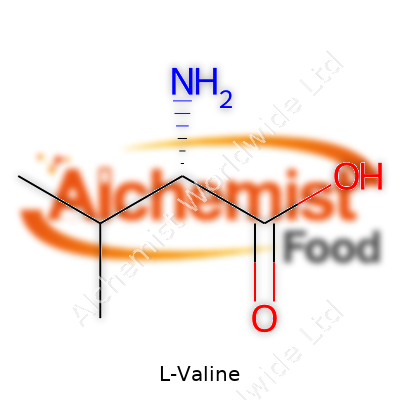
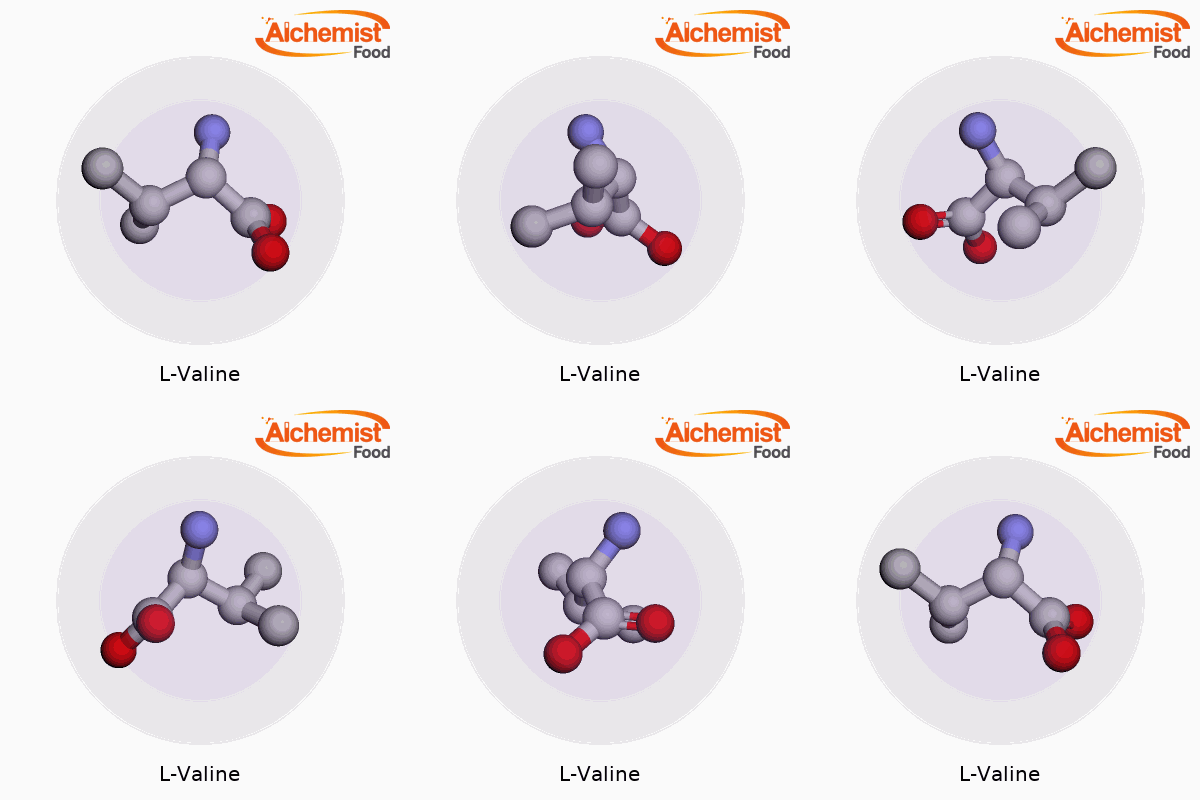
| Names | |
| Preferred IUPAC name | 2-amino-3-methylbutanoic acid |
| Other names |
Valine L-2-Aminoisovaleric acid L-α-Aminoisovaleric acid alpha-Aminoisovaleric acid L-Val |
| Pronunciation | /ˈɛlˈveɪliːn/ |
| Preferred IUPAC name | 2-amino-3-methylbutanoic acid |
| Other names |
Valine L-2-Aminoisovaleric acid L-α-Aminoisovaleric acid L-Val Val |
| Pronunciation | /ˈɛl ˈveɪliːn/ |
| Identifiers | |
| CAS Number | 72-18-4 |
| 3D model (JSmol) | 3D model (JSmol) string for L-Valine: ``` /ideal/021200022201000D90500401443 ``` |
| Beilstein Reference | 17151 |
| ChEBI | CHEBI:16414 |
| ChEMBL | CHEMBL745 |
| ChemSpider | 595 |
| DrugBank | DB00161 |
| ECHA InfoCard | 03abea23-792d-4b37-bdb4-eab2c9c31f60 |
| EC Number | 2.2.1.6 |
| Gmelin Reference | 3916 |
| KEGG | C00183 |
| MeSH | D010319 |
| PubChem CID | 6287 |
| RTECS number | YV0350000 |
| UNII | 6U8338US2K |
| UN number | UN3335 |
| CAS Number | 72-18-4 |
| 3D model (JSmol) | `/show.cgi?sid=42791&form=mol&model=ball&mol=L-Valine` |
| Beilstein Reference | 136171 |
| ChEBI | CHEBI:16414 |
| ChEMBL | CHEMBL1084 |
| ChemSpider | 5691 |
| DrugBank | DB00161 |
| ECHA InfoCard | 03e8a8a9-ff51-4a18-bb24-5ba7eb8b6d40 |
| EC Number | 2.3.1.23 |
| Gmelin Reference | 64072 |
| KEGG | C00183 |
| MeSH | D015220 |
| PubChem CID | 6287 |
| RTECS number | YV7870000 |
| UNII | 6U8STK557N |
| UN number | UN3335 |
| Properties | |
| Chemical formula | C5H11NO2 |
| Molar mass | 117.15 g/mol |
| Appearance | White crystalline powder |
| Odor | Odorless |
| Density | 1.23 g/cm³ |
| Solubility in water | 8.8 g/100 mL (at 25 °C) |
| log P | -2.09 |
| Vapor pressure | <0.01 mmHg (20°C) |
| Acidity (pKa) | 2.32 |
| Basicity (pKb) | 8.73 |
| Magnetic susceptibility (χ) | -8.6×10⁻⁶ cm³/mol |
| Refractive index (nD) | 1.497 |
| Dipole moment | 1.512 D |
| Chemical formula | C5H11NO2 |
| Molar mass | 117.15 g/mol |
| Appearance | White crystalline powder |
| Odor | Odorless |
| Density | Density: 0.68 g/cm³ |
| Solubility in water | Soluble in water |
| log P | -2.27 |
| Acidity (pKa) | 2.32 |
| Basicity (pKb) | 7.44 |
| Magnetic susceptibility (χ) | -9.4×10⁻⁶ cm³/mol |
| Refractive index (nD) | 1.527 |
| Dipole moment | 1.3636 D |
| Thermochemistry | |
| Std molar entropy (S⦵298) | 86.5 J·mol⁻¹·K⁻¹ |
| Std enthalpy of formation (ΔfH⦵298) | -528.7 kJ/mol |
| Std enthalpy of combustion (ΔcH⦵298) | -2323.5 kJ/mol |
| Std molar entropy (S⦵298) | 113.5 J·mol⁻¹·K⁻¹ |
| Std enthalpy of formation (ΔfH⦵298) | -528.18 kJ/mol |
| Std enthalpy of combustion (ΔcH⦵298) | –2196 kJ·mol⁻¹ |
| Pharmacology | |
| ATC code | A11AA03 |
| ATC code | A11AA03 |
| Hazards | |
| Main hazards | May cause respiratory irritation. |
| GHS labelling | GHS07, GHS08 |
| Pictograms | GHS07 |
| Signal word | Warning |
| Hazard statements | H319: Causes serious eye irritation. |
| Precautionary statements | P261, P305+P351+P338 |
| NFPA 704 (fire diamond) | 1-0-0 |
| Flash point | 100 °C |
| Autoignition temperature | Autoignition temperature: 406 °C |
| Lethal dose or concentration | LD50 Oral - Rat - > 10,000 mg/kg |
| LD50 (median dose) | LD50 (median dose): 12,700 mg/kg (rat, oral) |
| NIOSH | SN 9800000 |
| PEL (Permissible) | PEL: Not established |
| REL (Recommended) | 24 mg/kg bw |
| Main hazards | May cause respiratory irritation. |
| GHS labelling | GHS07, GHS08 |
| Pictograms | GHS02,GHS07 |
| Signal word | Warning |
| Hazard statements | H315: Causes skin irritation. H319: Causes serious eye irritation. H335: May cause respiratory irritation. |
| Precautionary statements | Wash hands thoroughly after handling. Do not eat, drink or smoke when using this product. If swallowed: Call a poison center/doctor if you feel unwell. Rinse mouth. |
| NFPA 704 (fire diamond) | 1-0-0 |
| Flash point | 105 °C |
| Autoignition temperature | 160°C |
| Lethal dose or concentration | LD50 (oral, rat): 12,000 mg/kg |
| LD50 (median dose) | LD50 (median dose): Oral, rat: 15,900 mg/kg |
| NIOSH | RT0350000 |
| PEL (Permissible) | 10 mg/m³ |
| REL (Recommended) | 24 mg/kg bw |
| IDLH (Immediate danger) | No IDLH established. |
| Related compounds | |
| Related compounds |
Isoleucine Leucine Valinol Norvaline |
| Related compounds |
DL-Valine D-Valine α-Ketoisovaleric acid Valinol Leucine Isoleucine |



