L-Tyrosine: Science, Safety, and Prospects
Historical Development
L-Tyrosine came onto the scientific radar early during the 19th century when German chemist Justus von Liebig’s laboratory team managed to isolate it from cheese. At the time, nutritional science barely existed and connections between diet and brain function felt like uncharted territory. Slowly, researchers mapped out the amino acid's metabolic routes—especially as more folks realized some diseases trace back to missing or malfunctioning building blocks in the diet. Over time, this interest led to a much deeper exploration of how L-Tyrosine fits in with dopamine, adrenaline, and thyroid hormones. These links showed up not just in specialist journals, but in scattered medical records and nutritional handbooks, making their way into pharmacy stockrooms and sports supplement shelves alike.
Product Overview
You can find L-Tyrosine as a white, sometimes crystalline powder, or pressed into tablets and capsules. It emerges straight out of fermentation tanks or chemical syntheses, with pharmaceutical houses monitoring purity to keep impurities down. Some products use it as a dietary supplement, others add it to pet foods, or keep it as a pharmaceutical intermediate. It shows up in pre-workout drinks, stacks for focus, or medical shakes, as industry continues to tap its biochemical versatility.
Physical & Chemical Properties
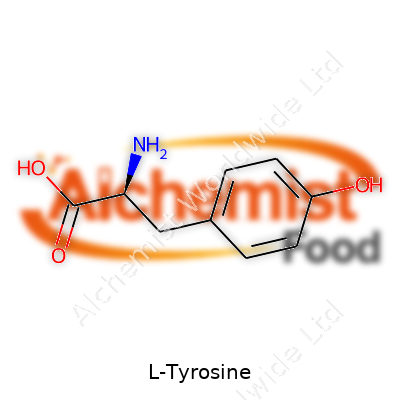
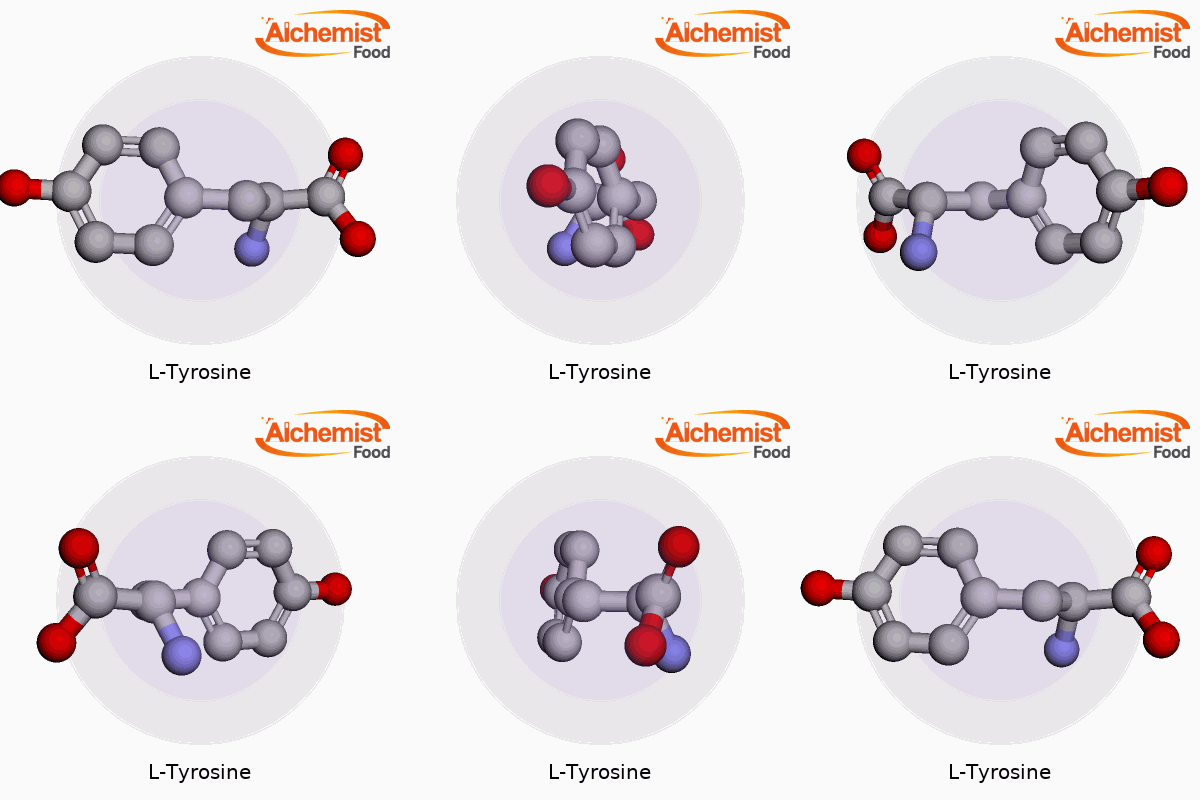
L-Tyrosine’s molecular formula is C9H11NO3, giving it the right balance for stability and reactivity in physiological conditions. It dissolves a bit in water but remains mostly stable, resisting heat up to around 344°C before breaking down. Chemically, its structure holds an amino group, a carboxylic acid, and a phenolic ring. These features give it more than just structure—they let it participate in reactions that lead to neurotransmitters or melanin. This molecular rigidity feeds into why it’s used both in food applications and stringent laboratory settings. As a solid, it doesn’t pick up moisture too easily, which means it keeps a long shelf life, as long as storage stays cool and dry.
Technical Specifications & Labeling
Regulations for L-Tyrosine differ based on country and industry. Pharmacopeias, such as the United States Pharmacopeia (USP), set bars for purity—usually over 98%. Commercial labels need to indicate the active content, any significant allergens, manufacturing batch, and an expiry date tied to the lot’s stability data. On supplement bottles, brands must call out L-Tyrosine by name and include usage recommendations and advisories, especially for people using antidepressants or thyroid medications. Facts dominate the packaging, for good reason: this product enters delicate biochemical pathways, so precision matters a lot.
Preparation Method
Microbial fermentation leads the charge for L-Tyrosine production today. Engineered strains of Escherichia coli or Corynebacterium glutamicum churn it out, fed on glucose and selected nutrients in steel tanks. Chemists keep a close watch, adjusting pH and temperature to maximize output. Chemical synthesis remains an option, but costs and environmental factors tip the scales toward fermentation, especially since the end product has to meet food and pharma-grade standards. After fermentation or synthesis, purification steps ensure no microbial leftovers or chemical by-products sneak through.
Chemical Reactions & Modifications
L-Tyrosine doesn’t just hang out as a passive nutrient. Enzymes convert it to L-DOPA, the precursor for dopamine and noradrenaline. Manufacturers also use it for making peptides—strings of amino acids that serve as drugs, food additives, or research tools. Chemists sometimes tweak the molecule, attaching other chemical groups to create new drugs or probes for biological research. These modifications help map disease processes or open new doors for therapy, turning L-Tyrosine into something even more valuable than its basic nutritional role.
Synonyms & Product Names
Besides “L-Tyrosine,” labels use names like 4-hydroxy-L-phenylalanine or Tirosina. Some products simply state “Tyrosine,” which can be confusing since the D-form exists but doesn’t work the same in the human body. Supplements may use trade names but the active constituent sticks to these root terms, so consumers can trace the source. It’s important to spot synonyms, especially for people tracking their intake or checking for allergens.
Safety & Operational Standards
Manufacturing lines follow protocols straight from ISO certifications and Good Manufacturing Practice (GMP) documentation. Workers handle the amino acid with gloves and lab coats in cleanrooms that get regular monitoring for microbial contamination. Auditors drop in to check that cleaning records line up and that cross-contamination remains at bay. Supplement marketers must list possible interactions for those with thyroid issues or who take certain psychiatric drugs. Training, regular air checks, and locked-down recipe controls all serve the same goal: preventing mix-ups and protecting both workers and consumers from accidental exposure to contaminants or allergens.
Application Area
L-Tyrosine earns its keep in more sectors than most people guess. In nutritional supplements, it shows up for folks interested in cognitive support during stress. Sports nutrition marketers add it for those seeking sharpness under pressure. Hospitals build it into medical foods for patients whose bodies can’t make enough of certain amino acids due to metabolic disorders. Research labs use it to study neural pathways or metabolic cycles. Pet food companies add small doses to support animal health, and large-scale fermentation facilities keep it as a feedstock for dopamine and pigment synthesis. Each field sets its own rules, but the underlying science connects the dots across these industries.
Research & Development
Investigators dig into L-Tyrosine for its roles in stress, cognition, and metabolic balance. Peer-reviewed journals across neuroscience and nutrition trace its effects on alertness and resilience when people face sleep deprivation, cold, or work stress. Personalized nutrition is booming, so companies partner with research groups to explore genetic and lifestyle factors that tweak the demand for L-Tyrosine. Big studies on inherited diseases show how missing enzymes leave some kids unable to break it down, sparking R&D into new therapies. On the technical side, fermentative yields keep rising, and green chemistry unlocks new paths for large-scale sustainable production.
Toxicity Research
Toxicologists probe how the body handles large or long-term doses. Most people tolerate supplemental L-Tyrosine well, but problems can crop up for those with overactive thyroids or those mixing it with MAO inhibitors or other drugs. Long-term animal studies track possible impacts on organs and reproductive health. Acute overdose leads to digestive upset, anxiety, or too-fast heartbeat. For inherited conditions like tyrosinemia, even small increases raise the risk of liver issues and nerve damage. Regulatory watchdogs comb through these studies and update guidelines or alert doctors when new risks come to light.
Future Prospects
L-Tyrosine lies at the crossroads of human nutrition, neuroscience, and sustainable bioprocessing. With mental health and cognitive longevity gaining more limelight, new supplement blends could get even sharper in formulation, guided by better diagnostics and precision nutrition. Bioengineers keep finding smarter yeast and bacterial strains to squeeze more yield from less resource. Meanwhile, synthetic biology hints that we could soon design whole new pathways, making L-Tyrosine into everything from bio-based dyes to rare peptide medicines at lower cost and with fewer synthetic chemicals. Over the next decade, demand from wellness, pharma, and industrial bioprocessing seems likely to push both research and safety standards even higher.
What are the benefits of taking L-Tyrosine?
Understanding L-Tyrosine’s Role in the Body
L-Tyrosine, an amino acid you get from food or supplements, plays a strong role in both brain function and physical resilience. I remember learning about it after a stretch of feeling wiped out during long workweeks—just a bit of research showed how it forms the backbone to some key neurotransmitters. Dopamine, norepinephrine, and epinephrine all come straight from tyrosine, directly affecting mood, focus, and even our “get up and go” when times get rough.
Sharper Focus Under Stress
Life throws curveballs. Sometimes you need to keep a clear mind, especially when things get busy or stressful. Research from the Journal of Psychiatry & Neuroscience points to tyrosine’s ability to boost cognitive performance when people are under significant stress or deprived of sleep. A double-blind study with military cadets showed improved working memory and vigilance after supplementing with tyrosine on tough days. In my own experience, taking a small dose during finals in college seemed to help with mental clarity—I could just focus for longer without drifting.
Much of this comes down to tyrosine supporting the body’s production of catecholamines. These are the chemical messengers that help you stay alert and reactive. If you’re low, your mental sharpness can take a hit. Regular routines can usually protect these brain chemicals, but stressful periods and lack of sleep or heavy work can create a deficit.
Natural Mood Regulation
Mood swings, grumpiness, or brain fog sometimes trace right back to poor neurotransmitter support. Because tyrosine acts as a precursor to dopamine, some studies suggest it gently supports a stable, balanced mood, especially during high-pressure situations. While it’s no magic bullet for depression, several small trials found it offered subtle benefits for people whose mood dipped during stressful periods—like students or first responders.
I’ve seen friends dealing with pressure at work say that adding tyrosine helps smooth the emotional highs and lows throughout the day. The science fits: during stress, tyrosine helps keep dopamine production going, warding off the burnt-out “flat” feeling that comes with chronic strain.
Physical Endurance and Training Benefits
Athletes and those pushing through tough workouts sometimes turn to tyrosine for help with performance. Studies in the European Journal of Applied Physiology showed that supplementing with tyrosine before exercise helped some subjects maintain focus and performance, especially in the heat or during repetitive sessions. The link comes down to catecholamine support—keeping the body’s stress response firing so you can push further without feeling fully gassed.
I’ve mixed tyrosine into pre-workout stacks on days where fatigue seems more mental than physical. The effect isn’t a jolt like caffeine. It’s more of a gentle boost—a little extra determination when the body wants to quit.
Practical Considerations and Safe Use
Supplements only work if they fit the context. Tyrosine shows the most benefit in stressful or demanding situations. There’s solid evidence for cognitive support during stress, though for daily use, a regular diet rich in protein may provide enough. If adding it as a supplement, doses between 500–2000 mg seem common, though it matters to check with a doctor before trying any regular routine—especially for anyone on thyroid medication or dealing with chronic conditions.
The biggest takeaway: tyrosine isn’t an instant fix, but in the right situation—late nights, busy weeks, or long training sessions—it can keep your focus and energy on track.
What is the recommended dosage for L-Tyrosine?
Understanding L-Tyrosine and Why Dosage Matters
L-Tyrosine sits on pharmacy shelves next to other supplements promising sharper focus or better mood. Plenty of folks wonder if this amino acid boosts energy during stressful days or tough workouts. The real question pops up quickly: how much should anyone take to get these benefits without risking harm?
Recommended Dosage: Cutting Through the Confusion
Doctors and registered dietitians usually look at studies before settling on safe advice. The usual range for L-Tyrosine lands around 500 to 2,000 milligrams a day. Some clinical research uses single servings up to 2,000 mg for stress or short-term mental performance, taken about an hour before challenging tasks. For daily use, lower doses help most people, especially when starting out.
Supplements might suggest three 500 mg capsules each day. Still, just because a bottle says it, doesn’t mean everyone should. I remember taking a 500 mg capsule before big presentations and feeling alert, but anything extra made me jittery. That was a reminder that more isn't always better.
I’ve learned to check with my own doctor before adding new supplements—especially if juggling other meds or managing health issues like thyroid problems or high blood pressure. Tyrosine interacts with thyroid hormone production and can affect certain medications, which makes personalized advice critical.
Who Should Consider L-Tyrosine?
People dealing with lots of stress, shift work, or demanding mental tasks often look for an edge. Soldiers, pilots, and students under pressure have all been featured in scientific studies exploring how tyrosine sharpens thinking in challenging conditions. The evidence suggests it can help sustain focus and alertness without the crash linked to coffee or sugary snacks.
On the flip side, folks with hyperthyroidism or who take MAO inhibitors for depression need to steer clear. Too much tyrosine can mess with thyroid hormone levels or interact dangerously with meds. That’s not just fine print—those risks call for real attention.
Quality and Safety Counts
The supplement industry stays loosely regulated in many places. Tyrosine products vary in strength and purity. I check for third-party testing stickers from groups like USP or NSF before buying. These logos mean an extra layer of care went into making sure what’s in the bottle matches the label. A little research up front keeps unwanted surprises away later.
Even if L-Tyrosine works for me or my friends, it may not suit everyone. Headaches, stomach upset, heart palpitations, or sleep problems turn up with higher doses or long-term use. That’s why I always start low and keep track of any changes—good or bad. Doctors or dietitians can help adjust the dose or recommend safer alternatives if something feels off.
Smart Paths Forward
Short-term boosts from L-Tyrosine appeal to students, workers, and athletes. Still, using it safely calls for real thought—paying attention to proper dosage, checking for quality seals, and looping in healthcare experts. Also, focusing on sleep, nutrition, and stress management helps build mental resilience for the long haul, so supplements stay just that: a small part of a bigger wellness plan.
Are there any side effects or risks associated with L-Tyrosine?
Understanding L-Tyrosine
L-Tyrosine shows up in a lot of supplement blends for focus, mood, or stress. It’s an amino acid that helps the body build proteins and keeps the brain chemicals dopamine, epinephrine, and norepinephrine running. People might turn to tyrosine when life drags them down or when sharp mental focus is the goal.
Possible Risks and Side Effects
For most healthy adults, taking modest amounts usually feels uneventful. Every supplement story leaves room for side effects, though. I’ve spoken to folks who felt shaky after their classes or jobs on days they’d tried a new supplement containing this amino acid. Some research supports their stories, since higher doses have triggered headaches, heart flutters, or jittery hands in some volunteers.
Those are not rare events in clinical studies either. According to the National Institutes of Health, people sometimes complain of nausea, stomach upset, or diarrhea. These aren’t dealbreakers for a lot of people, but they matter if you’re trying new pills before exams or work. It may not ruin your day, but no one wants a side of nausea with their focus boost.
People with certain health conditions find more severe risks lurking. Those with hyperthyroidism or Graves’ disease, for example, get an extra thyroid hormone kick from extra tyrosine, since it’s a building block. Anyone with thyroid issues or on certain medications (thyroid replacement, MAOI antidepressants, or even levodopa used for Parkinson’s) should talk to a doctor before swallowing a tyrosine capsule.
High blood pressure sometimes pops up as a side effect for people taking large servings of L-Tyrosine. Because the supplement influences norepinephrine and epinephrine, which raise heart rate and blood pressure, a spike isn’t just theoretical. People with heart conditions definitely need to be mindful here. I’ve heard stories of fit college athletes experimenting with tyrosine pre-workout, then sitting in the nurse’s office because of palpitations.
Interactions and Special Populations
Drug interactions give more reasons to pay attention. For those taking MAO inhibitors, there’s a very real chance mixing these with tyrosine raises blood pressure to dangerous levels, sometimes called a “hypertensive crisis.” This isn’t just theory—hospitals still see these cases and have published accounts.
Pregnant and breastfeeding people don’t get clear recommendations either. There’s not enough evidence about long-term effects on developing babies. Most doctors stay cautious and suggest avoiding the supplement, especially since the developing brain is so sensitive.
Ways to Stay Safe
Quality control matters. Lab tests sometimes find supplement bottles contain less or more L-Tyrosine than the label claims—sometimes laced with unlisted fillers. Checking for a third-party label from places like USP or NSF raises the confidence level. I've seen some friends feel tricked after reading independent test results online; sticking to regulated brands changes that.
Most side effects show up with large servings far beyond diet or casual supplement use. Sticking to doses found in reputable studies (usually 500–2000 mg per day for short periods) keeps most people comfortable. Anyone with a medical diagnosis, or folks on prescription drugs, really should ask their healthcare provider before starting.
L-Tyrosine can be a helpful tool, but the risks—while manageable—aren’t just for the fine print. A clear-eyed look and an honest chat with your doctor keep things on track.
Can L-Tyrosine help with stress or cognitive function?
What L-Tyrosine Actually Does
L-Tyrosine is a building block for several brain chemicals. Our bodies naturally turn it into dopamine, norepinephrine, and epinephrine—substances that help shape our mood and focus. Some folks grab a supplement hoping to shore up mental sharpness during tough times. I tried it myself during a week of non-stop deadlines, searching for any edge against stress and mental fog.
The Science Beyond the Hype
Scientists have taken a pretty close look at L-Tyrosine, especially in people facing stress, sleep deprivation, or mentally taxing work. In studies involving soldiers, pilots, and students, L-Tyrosine sometimes led to quicker reactions and fewer errors in mentally demanding situations. Researchers saw modest improvements in short-term memory and alertness. Still, these benefits usually show up in people already pushed to the limit—heavy sleep loss, pressure-packed moments, that sort of thing. For folks with everyday stress, the boost looks much smaller.
No supplement replaces enough sleep or healthy meals. Research reviews published in journals like the “Journal of Psychiatric Research” show the effects taper off once the stressful moment passes. L-Tyrosine doesn’t build long-term cognitive reserves or permanent stress resilience. Many users won’t feel any real difference in their daily grind, unless they’re seriously burned out.
Is It Safe?
L-Tyrosine usually causes only mild side effects. Some people notice headaches, jitters, or digestive issues. There’s not much risk for healthy adults using low or moderate doses—typically between 500 mg and 2,000 mg per day. People with thyroid disorders or those taking certain antidepressants face more risk and need to check with their doctors first.
I’ve learned firsthand that chasing brain boosters invites disappointment unless other habits line up. Supplements may help, but only in a limited way. There’s no shortcut around meals with enough protein, steady exercise, and regular sleep. The National Institutes of Health lists L-Tyrosine as “possibly safe” for temporary use—nothing more confident than that.
Where It Fits: Solutions and Caution
In my experience, people looking for quick relief grab at supplements like L-Tyrosine without pausing to consider why stress builds up in the first place. It’s worth asking: Have I cut back on sleep? Skipped breakfast? Scrolled social media late at night? Shifting a few habits—stepping outside for a walk, keeping a regular bedtime, or blocking off time for focused work—pays off more than any quick-fix pill.
Healthcare providers and nutritionists raise an important point: supplements work best when paired with evidence-backed strategies. If your brain is stuck in a fog or stress keeps spiking, talk to a professional who understands both medicine and lifestyle changes. L-Tyrosine is no silver bullet, but it could play a supporting role for someone facing unusual demands. Relying on one capsule alone won’t lift the mental weight of a life out of balance.
Is L-Tyrosine safe to take with other supplements or medications?
What L-Tyrosine Actually Does
L-Tyrosine attracts attention in the wellness aisle for good reason. It’s a building block for important brain chemicals like dopamine and norepinephrine. The body takes it from food—cheese, eggs, chicken—and turns it into these neurotransmitters, which handle stress response, focus, and even mood. Some people look for a boost by adding a tyrosine supplement to their routine, especially if life feels overwhelming or demanding on a mental level.
Combining Tyrosine with Other Supplements
In any pharmacy, shelves come stacked with a buffet of powders, pills, and promises. Many grab tyrosine alongside B vitamins, magnesium, or omega-3s, chasing sharper thinking or better resilience under pressure. Some even combine it with caffeine, hoping to double down on alertness.
Mixing different supplements doesn’t always pose dramatic risk, but synergy matters. Tyrosine interacts with the brain’s chemical network, so loading up on other substances that do the same—like St. John’s Wort, 5-HTP, or high-dose caffeine—can start to tug those neurotransmitter levels in unpredictable directions. Combining tyrosine with other amino acids like tryptophan could even blunt its own effects, as they may “compete” for absorption.
Some supplement companies market multi-ingredient blends as a one-stop mental upgrade, but the reality isn’t so simple. The Food and Drug Administration in the U.S. doesn’t check every bottle for safety or accurate label claims before it lands in your hand. Reports have flagged supplements laced with unlabeled stimulants or contaminants, and tyrosine sometimes sneaks into formulas for workout energy or nootropics.
Mixing Tyrosine with Medications: Real Risks
Adding prescription meds to this equation raises the stakes. Certain drugs do not get along with extra tyrosine. Antidepressants known as MAO inhibitors (like phenelzine or tranylcypromine) top this list. Pairing these with tyrosine can cause blood pressure to spike to dangerous levels, a medical emergency. Even common drugs such as thyroid medications or levodopa for Parkinson’s disease can trip over extra tyrosine, since levels in the brain and body may go out of sync.
Tyrosine changes how the body makes and breaks down specific neurotransmitters. So, mixing it casually with medication for blood pressure or mood could wreak havoc. During appointments, few folks mention supplements, yet interactions rank among the main causes of preventable drug side effects. For example, someone taking stimulants like Adderall for ADHD might feel more jittery with tyrosine on board.
How to Stay Safe
Common sense says two things. First, always tell a doctor or pharmacist about every supplement, not just prescriptions. Don’t wait for a side effect to show up. Research shows people often trust “natural” products to be automatically safe, but that trust sometimes leads to trouble.
Second, start with the lowest possible dose of any new supplement. Give the body several days to react before piling on other products. If sleep, mood, blood pressure, or focus go sideways, track everything and let a healthcare provider weigh in.
Moving Toward Better Guidance
The supplement world doesn’t offer the same guardrails as prescription medication. This gap calls for better consumer education and transparency from manufacturers. Doctors, nutritionists, and pharmacists can help people sleep easier by taking supplement questions seriously. Anyone looking for brain-boosting shortcuts ought to consider not just the potential benefits, but the hidden pitfalls in reaching beyond food for help.
What are the benefits of taking L-Tyrosine?
Understanding L-Tyrosine
L-Tyrosine is an amino acid that plays a big part in how the brain works. I grew up with a parent who struggled with chronic stress. When I started reading up on ways to support brain health, supplements like L-Tyrosine kept showing up. It’s an ingredient the body uses to make important chemicals—namely dopamine, norepinephrine, and adrenaline. These chemicals help regulate mood, memory, and how people respond to stress.
Stress and Cognitive Function
Stress never seems far away; it’s as much a part of life as grocery shopping and traffic jams. Research from the U.S. Army and peer-reviewed journals points out that L-Tyrosine can help keep mental performance sharp when people deal with situations where stress feels overwhelming. During times like all-nighters, tight deadlines, or even emotional upsets, L-Tyrosine supplements seem to support memory and focus. A 2015 review in Nutrients described measurable cognitive benefits during stress, highlighting that L-Tyrosine acts like a buffer, keeping thinking clear when the brain is pushed to the edge.
Mental Alertness
Anyone who’s worked long shifts or lived through exam week knows the fog that creeps in as energy fades. I felt it myself in college, struggling to remember what I studied at two in the morning. Some studies suggest L-Tyrosine can help with alertness in these settings, especially when sleep deprivation kicks in. Researchers believe the extra raw material helps the brain keep producing neurotransmitters that usually dip during exhaustion. This may mean stronger focus and less sluggishness when people can’t get proper rest.
Mood Regulation and Motivation
Dopamine, often called the “feel-good” neurotransmitter, gets its start with L-Tyrosine. I’ve noticed friends using L-Tyrosine report steadier moods, which science backs up in cases where dopamine production dips—like depression or Parkinson’s disease. Some clinical work shows it could lift mood and motivation, although the effects vary from person to person and shouldn’t replace medical treatment for mood disorders.
Supporting Thyroid Function
L-Tyrosine also feeds the thyroid, which makes hormones that control metabolism and energy. With more and more people checking their thyroid health thanks to fatigue, it’s worth knowing this amino acid is a starting block for making major thyroid hormones. People with low thyroid function sometimes see benefits, though doctors caution that self-medicating is risky without medical oversight. Bloodwork and professional advice matter.
Safety and Real-World Use
No supplement comes risk-free. Too much L-Tyrosine can cause headaches, rapid heartbeat, or anxiety. Those who take thyroid drugs, antidepressants, or have certain health conditions need guidance from a doctor. Whole foods like dairy, fish, and eggs already provide L-Tyrosine, so many folks get enough from daily meals.
Supplements aren’t magic bullets. For most, sleeping well, managing stress, and eating a balanced diet do the heavy lifting. L-Tyrosine fills a special role for certain situations, like soldiers, students, or anyone facing short bursts of intense pressure. Real results come from smart habits and working with health professionals.
Is L-Tyrosine safe to use and are there any side effects?
Understanding L-Tyrosine
L-Tyrosine shows up in online forums and supplement shops promising everything from sharper thinking to better moods. This amino acid forms part of the natural protein puzzle in your body. You pick it up from eating chicken, cheese, fish, eggs, and even peanuts. Your body uses it to make brain chemicals like dopamine, adrenaline, and norepinephrine. These messengers help with memory, response to stress, and even how alert you feel through the day.
Is It Safe to Take?
Supplements often get thrown into gym bags and daily routines without much thought. Tyrosine is one of those products people grab, especially folks juggling a lot of stress or tricky work schedules. The FDA labels tyrosine as “generally recognized as safe” for most adults when it’s used in normal food amounts. Some folks use higher supplement doses, sometimes up to 150 mg per kilogram of body weight, usually without big problems popping up.
Not everyone’s in the same boat though. If you take thyroid medication, check with your doctor. Tyrosine acts as a building block for thyroid hormones, so bumping it up without a plan could mess with your thyroid levels. People handling conditions like hyperthyroidism or Graves’ disease need to use extra caution.
Not All Supplements Are Perfect
The real world brings more questions than answers at times. Tyrosine gets marketed as a natural “stress shield,” but no magic pill wipes away daily pressure. Most trustworthy research shows that people who already eat balanced diets probably don’t land many benefits from extra tyrosine. Some athletes and soldiers facing long, exhausting tasks found a small improvement in mental focus, but those gains show up mainly during hard-core stress and sleep deprivation.
Dietitians usually remind clients to stick with whole foods first. Loading up on chicken, fish, or tofu gets you plenty of tyrosine, along with vitamins and minerals supplements skip.
Keeping an Eye on Side Effects
Most folks don’t run into big trouble with tyrosine. Some report headaches, nausea, fatigue, heartburn, or joint pain, especially when taking high doses. I’ve talked to gym regulars who say they felt jittery or had an upset stomach after a scoop of powdered tyrosine. If you’re sensitive to other stimulants like caffeine, tread lightly.
Mixing tyrosine with some antidepressants, such as MAO inhibitors, can trigger dangerous spikes in blood pressure. More than one hospital visit happened because someone thought “natural” meant “risk-free.”
Moving Forward With Caution
Using any supplement, including tyrosine, really comes down to knowing your own body and history. Healthcare professionals, including registered dietitians and pharmacists, help sort through the noise. Look for third-party tested products, since supplement quality varies a lot from one brand to another.
Ask yourself what you’re really hoping to solve by taking tyrosine. If the goal is to overcome poor sleep, chronic stress, or focus issues, try building healthy habits first. Supplements work best as backup players, not superstars. Nature already put plenty of tyrosine in foods most of us eat every week.
What is the recommended dosage for L-Tyrosine?
Understanding L-Tyrosine’s Role
L-Tyrosine crops up in supplement shops and wellness blogs with the promise of focus and resilience under stress. It comes from protein-rich foods like chicken, cheese, and peanuts. In the body, it takes part in making dopamine, adrenaline, and a few other key chemicals. That’s probably why so many people take it for mental clarity or an energy lift, whether before a tough exam or during a stressful week.
The Dosage Question
The moment people ask about L-Tyrosine, they almost always follow up with, “How much should I take?” Plenty of supplement bottles list 500 mg per serving, sometimes up to 2,000 mg. Studies with real people usually fall somewhere in that range, though the exact number varies with age, weight, and—most of all—the reason for taking it. For cognitive boost during stress, research often uses a single dose of 100 to 150 mg per kilogram of body weight. That’s over 7,000 mg for a 70-kg adult, much more than typical supplements offer.
I have seen gym friends try 1,000 mg before training. A colleague took the same before an exam. The reported effects ranged from sharper focus to, sometimes, an unsettled stomach. Some felt nothing at all. Everybody’s body processes amino acids differently, and dosage needs shift if you’re healthy, on medication, or have a thyroid issue. Few people talk to a doctor first, but they should—especially if they take other stimulants or medications for blood pressure or thyroid.
Fact-Checking the Hype
Claims about L-Tyrosine run wild online, so it helps to pull back to the data. Trials with soldiers under extreme stress showed improved memory and attention, but the effects seemed to depend on stress level and the dose used was much higher (up to 2 grams at once). In everyday life, people using it for mild fatigue or “brain fog” may not see those benefits. Supplements aren’t magic; food sources often provide enough for most healthy people. The National Institutes of Health doesn’t even list a daily requirement for L-Tyrosine because it isn’t classified as an essential amino acid—your body usually makes enough from phenylalanine in the diet.
Risks and Practical Limits
The safety question always creeps in with higher doses. Reports of nausea, headache, and jitteriness go up once people reach gram-sized doses in a sitting. In my experience, small amounts (500–1,000 mg) rarely trigger side effects in healthy adults, but I’ve seen folks with thyroid issues have real problems—more so if they pair it with stimulant-heavy pre-workouts. Medications like levodopa for Parkinson’s can also interact with L-Tyrosine. My advice: Check with a healthcare provider, especially for large or ongoing doses, and watch for side effects if you ever adjust your intake.
Smart Use and Realistic Goals
L-Tyrosine has real potential in certain stress-crazed moments, but it’s not a long-term fix for sleep loss or burnout. A hearty breakfast with protein covers most people’s daily needs. For those drawn to supplements, staying within the 500–2,000 mg range per day, split into doses, appears safe for a few days at a time.
Doctors and registered dietitians know the risks and can shape advice that fits your health status. Much gets made of compounds like L-Tyrosine, but all roads circle back to a balanced diet, enough rest, and honest conversations with healthcare pros. That steady approach makes more difference than any supplement ever will.
Can L-Tyrosine be taken with other supplements or medications?
Looking at L-Tyrosine and Its Role
L-Tyrosine, an amino acid, shows up in protein-rich foods like chicken, cheese, and fish. People interested in brain health or work under lots of stress often add it to their lineup of supplements. The body uses it to make dopamine, norepinephrine, and thyroid hormones, so it plays a crucial role in keeping energy, focus, and mood in balance.
Why People Add L-Tyrosine to Their Routine
After trying L-Tyrosine for busy work weeks or tough gym sessions, many report sharper attention and less fatigue. The research backs some of this up. For example, studies published by the U.S. National Library of Medicine indicate L-Tyrosine may help boost alertness in stressful conditions. Athletes use it to support mental stamina, and students try it hoping to keep their minds sharp during exams.
What Happens When Blending Supplements?
The interest in stacking supplements keeps rising. You see it everywhere—people streamlining multivitamins, adding nootropics, or experimenting with pre-workout formulas. L-Tyrosine often finds a spot in these mixes. But tossing everything together without pause can spell trouble.
A study from the Journal of the International Society of Sports Nutrition suggests that combining amino acids doesn’t usually stir up dramatic side effects. Still, some blends complicate things. For example, mixing L-Tyrosine with thyroid hormones, certain antidepressants, or stimulants can set off a chain reaction in brain chemistry. Monoamine oxidase inhibitors (MAOIs), a type of antidepressant, work on the same pathways. Combining these with L-Tyrosine risks high blood pressure or even more serious issues. Personal experience echoes this. I once took an energy booster with both L-Tyrosine and caffeine and noticed heart palpitations and headaches—two risks overlooked by many until they run into them.
Potential Problems and Gaps in Knowledge
Doctors rarely mention L-Tyrosine in regular checkups. A lot of supplement advice comes from gym trainers, online forums, or quick social media tips. That’s where myths spread and confusion grows. People assume all “natural” supplements play nice together. Reality proves messier. Safety and dosing change for people with high blood pressure, thyroid disorders, or those taking psychiatric medication. Researchers in the European Journal of Clinical Nutrition point out that high doses of L-Tyrosine even on its own could spark headaches or nausea.
Families might stock up on daily vitamins and sneaky energy blends without knowing how these interact. A 2019 survey showed only about 33% of supplement users talk about it with their primary care provider. That leaves a big information gap, especially for those dealing with complex health conditions.
Better Solutions for Smart Supplement Use
Building that bridge between consumer curiosity and solid medical information matters. Community pharmacies and healthcare teams need to nudge the conversation forward. A quick chat at a pharmacy counter can clear the air. Digital tools—like mobile apps that cross-check supplement and medication lists—offer extra safety nets. The best safeguard comes from simple, informed conversations with healthcare providers.
Starting any new supplement always deserves a pause—even more so for people juggling other supplements or prescriptions. It helps to track everything, from energy levels to mood and side effects. Experience shapes good decisions, but knowledge handed down from nutrition experts and physicians adds the strongest layer of safety.
How long does it take to feel the effects of L-Tyrosine?
What Happens After You Take L-Tyrosine
Anyone looking for an edge in focus or mood has probably stumbled across L-Tyrosine. It’s an amino acid that gets a lot of attention for its potential to support alertness, especially when stress or fatigue creeps in. The big question swirling around is how fast you might feel anything after swallowing a capsule or mixing it into a smoothie.
No Magic Bullet, Just Chemistry
The body uses L-Tyrosine as a building block to make dopamine, norepinephrine, and epinephrine. These chemicals help manage alertness, motivation, and mood. Once you get L-Tyrosine through your digestive system, it must reach your brain and enter the right pathways before you notice anything different. This chemical dance takes time, and it depends on individual metabolism, dosage, and whether you've eaten anything recently.
Research shows it can take anywhere from 30 minutes to two hours for people to notice an effect—sometimes sooner if they’re already under stress or sleep deprived. There’s no big light switch moment, either. Most people describe feeling a gentle lift in mental sharpness, rather than a jolt. If you walk into something expecting the same buzz as caffeine, it might feel underwhelming.
What’s Happening Behind the Scenes?
Scientists have looked at L-Tyrosine’s effect in situations like high-pressure work or sleep deprivation. Some participants performed better on memory and attention tests after taking a few grams of L-Tyrosine. That said, the effect isn’t identical for everyone. If your body isn’t low on tyrosine, supplementing might not trigger much change. People with heavy stress, athletes, or shift workers—those seem to be the groups that get the most from it.
Limits and Sensible Use
Quality matters more than hype. Anyone trying L-Tyrosine for the first time should choose a reputable brand—look for products with independent testing or ones recommended by qualified health practitioners. Be cautious with stacking it alongside stimulants or medications, especially if treating any medical condition.
Dosing changes the timeline, too. Smaller doses (like under 500 mg) tend to go unnoticed, while larger doses (1,000–2,000 mg) may feel more obvious for some. Eating a protein-heavy meal can slow down absorption, so timing your supplement between meals might make effects show up a little faster.
Practical Solutions for Real Life
Instead of expecting transformation overnight, think of L-Tyrosine as a subtle helper. Get plenty of sleep, manage caffeine, and focus on consistent nutrition. Only using L-Tyrosine during moments of true brain fog or stress gives you a clear sense of whether it’s working, instead of masking chronic exhaustion with another pill. If you track how you feel, you’ll know if it makes a real difference, or if your body just doesn’t need the extra boost.
Consulting a knowledgeable healthcare provider before starting any supplement makes sense, especially if you already take medication or deal with thyroid or heart concerns. Reliable advice, a little patience, and a willingness to listen to your body mean you’ll get a better sense of whether those effects are real, or just wishful thinking.
| Names | |
| Preferred IUPAC name | (2S)-2-amino-3-(4-hydroxyphenyl)propanoic acid |
| Other names |
Tyrosine p-Tyrosine 4-Hydroxyphenylalanine (S)-2-Amino-3-(4-hydroxyphenyl)propanoic acid L-4-Hydroxyphenylalanine Levotyrosine |
| Pronunciation | /ˌɛl ˈtaɪ.rə.siːn/ |
| Preferred IUPAC name | (2S)-2-amino-3-(4-hydroxyphenyl)propanoic acid |
| Other names |
4-hydroxyphenylalanine Tyrosine |
| Pronunciation | /ˌel taɪˈroʊsiːn/ |
| Preferred IUPAC name | (2S)-2-amino-3-(4-hydroxyphenyl)propanoic acid |
| Other names |
4-Hydroxyphenylalanine L-Tyr |
| Pronunciation | /ˌel taɪˈroʊsiːn/ |
| Identifiers | |
| CAS Number | 60-18-4 |
| 3D model (JSmol) | N[C@@H](Cc1ccc(O)cc1)C(=O)O |
| Beilstein Reference | 392442 |
| ChEBI | CHEBI:58315 |
| ChEMBL | CHEMBL925 |
| ChemSpider | 9641 |
| DrugBank | DB00135 |
| EC Number | 200-460-4 |
| KEGG | C00082 |
| MeSH | Tyrosine |
| PubChem CID | 6057 |
| RTECS number | YP2660000 |
| UNII | 42HK56048U |
| CAS Number | 60-18-4 |
| Beilstein Reference | 1720826 |
| ChEBI | CHEBI:6057 |
| ChEMBL | CHEMBL6057 |
| ChemSpider | 5651 |
| DrugBank | DB00149 |
| ECHA InfoCard | 100.007.877 |
| EC Number | 3.1.1.25 |
| Gmelin Reference | 10746 |
| KEGG | C00082 |
| MeSH | D013999 |
| PubChem CID | 6057 |
| RTECS number | YO8400000 |
| UNII | Y1NKV496J6 |
| UN number | UN2811 |
| CompTox Dashboard (EPA) | DTXSID7020172 |
| CAS Number | 60-18-4 |
| Beilstein Reference | 136890 |
| ChEBI | CHEBI:6057 |
| ChEMBL | CHEMBL448 |
| ChemSpider | 5812 |
| DrugBank | DB00149 |
| ECHA InfoCard | ECHA InfoCard: 100.003.492 |
| EC Number | 1.14.16.2 |
| Gmelin Reference | 169873 |
| KEGG | C00082 |
| MeSH | D012535 |
| PubChem CID | 6057 |
| RTECS number | YO8400000 |
| UNII | Y1DXR8335U |
| UN number | UNN3335 |
| CompTox Dashboard (EPA) | DMDTDQGPXJZUDX-UHFFFAOYSA-N |
| Properties | |
| Chemical formula | C9H11NO3 |
| Molar mass | 181.19 g/mol |
| Appearance | White crystalline powder |
| Odor | Odorless |
| Density | 1.456 g/cm³ |
| Solubility in water | 0.45 mg/mL |
| log P | -2.26 |
| Vapor pressure | Negligible |
| Acidity (pKa) | 2.20, 9.11, 10.07 |
| Basicity (pKb) | 4.89 |
| Magnetic susceptibility (χ) | -91.14e-6 cm^3/mol |
| Refractive index (nD) | 1.66 |
| Dipole moment | 3.68 D |
| Chemical formula | C9H11NO3 |
| Molar mass | 181.19 g/mol |
| Appearance | White to off-white crystalline powder |
| Odor | Odorless |
| Density | 1.2 g/cm³ |
| Solubility in water | 0.45 g/L (25 °C) |
| log P | 1.02 |
| Vapor pressure | Negligible |
| Acidity (pKa) | pKa1 = 2.20, pKa2 = 9.11, pKa3 = 10.07 |
| Basicity (pKb) | 8.72 |
| Magnetic susceptibility (χ) | -9.7e-7 |
| Refractive index (nD) | 1.695 |
| Dipole moment | 1.41 D |
| Chemical formula | C9H11NO3 |
| Molar mass | 181.19 g/mol |
| Appearance | White to off-white crystalline powder |
| Odor | Odorless |
| Density | 1.1 g/cm³ |
| Solubility in water | Slightly soluble |
| log P | 0.49 |
| Acidity (pKa) | Acidity (pKa) of L-Tyrosine: "2.20 (carboxyl), 9.11 (amino), 10.07 (phenol) |
| Basicity (pKb) | 8.72 |
| Magnetic susceptibility (χ) | -82.0E-6 cm³/mol |
| Refractive index (nD) | 1.695 |
| Dipole moment | 2.1594 D |
| Thermochemistry | |
| Std molar entropy (S⦵298) | 214.0 J mol^-1 K^-1 |
| Std enthalpy of formation (ΔfH⦵298) | -685.4 kJ/mol |
| Std enthalpy of combustion (ΔcH⦵298) | -4436.9 kJ/mol |
| Std molar entropy (S⦵298) | 'S⦵298 = 110.7 J·mol⁻¹·K⁻¹' |
| Std enthalpy of formation (ΔfH⦵298) | -489.3 kJ/mol |
| Std enthalpy of combustion (ΔcH⦵298) | -3225 kJ/mol |
| Std molar entropy (S⦵298) | 69.0 J·mol⁻¹·K⁻¹ |
| Std enthalpy of formation (ΔfH⦵298) | -554.6 kJ/mol |
| Std enthalpy of combustion (ΔcH⦵298) | -3027.4 kJ/mol |
| Pharmacology | |
| ATC code | A16AA12 |
| ATC code | A11JJ |
| ATC code | A11JB |
| Hazards | |
| Main hazards | Causes skin irritation. Causes serious eye irritation. May cause respiratory irritation. |
| Pictograms | GHS07 |
| Signal word | Warning |
| Hazard statements | No hazard statements. |
| Precautionary statements | P261; P264; P271; P280; P302+P352; P304+P340; P305+P351+P338; P312; P332+P313; P337+P313; P362; P403+P233; P405; P501 |
| NFPA 704 (fire diamond) | 1-1-0 |
| Flash point | 199.4 °C |
| Autoignition temperature | 400°C |
| Lethal dose or concentration | LD50 (oral, rat): >5000 mg/kg |
| LD50 (median dose) | 5000 mg/kg |
| NIOSH | YP2660000 |
| PEL (Permissible) | No PEL established. |
| Main hazards | May cause respiratory irritation. |
| GHS labelling | GHS07 |
| Pictograms | ⚠️ |
| Signal word | Warning |
| Hazard statements | Hazard statements: No known significant effects or critical hazards. |
| Precautionary statements | Food supplements should not be used as a substitute for a varied diet. Do not exceed the recommended daily dose. Keep out of reach of children. |
| NFPA 704 (fire diamond) | 1-1-0 |
| Flash point | 158°C |
| Autoignition temperature | 410 °C |
| Lethal dose or concentration | LD50 (oral, rat): 12,000 mg/kg |
| LD50 (median dose) | LD50 (median dose): 5000 mg/kg (oral, rat) |
| PEL (Permissible) | 5000 mg/kg |
| REL (Recommended) | 500 mg per day |
| Main hazards | May cause eye, skin, and respiratory tract irritation. |
| GHS labelling | GHS07, Warning |
| Pictograms | GHS07 |
| Signal word | Warning |
| Precautionary statements | Consult your healthcare professional prior to use if you have or suspect a medical condition, are taking prescription drugs, or are pregnant or lactating. Keep out of reach of children. |
| NFPA 704 (fire diamond) | 1-0-0 |
| Flash point | 11 °C |
| Autoignition temperature | 410 °C (770 °F; 683 K) |
| Lethal dose or concentration | LD50 (oral, rat): 7730 mg/kg |
| LD50 (median dose) | LD50 (median dose): 5000 mg/kg (oral, rat) |
| PEL (Permissible) | Not Established |
| REL (Recommended) | 500 mg |
| Related compounds | |
| Related compounds |
D-Tyrosine DL-Tyrosine N-Acetyl-L-tyrosine L-Tyrosine methyl ester L-Tyrosine ethyl ester L-DOPA Tyramine L-Phenylalanine p-Hydroxyphenylpyruvic acid |
| Related compounds |
Phenylalanine L-DOPA Dopamine Norepinephrine Epinephrine |
| Related compounds |
Phenylalanine L-DOPA Tyramine Catecholamines Melanin Thyroxine Epinephrine Norepinephrine |



