L-Proline: More Than Just an Amino Acid
Historical Development
L-Proline first popped up in the scientific world in the early 1900s, back when chemists were still wrestling with figuring out individual amino acids. Originally isolated from casein, folks at the time recognized it wasn’t quite like its siblings. It stands out because of its cyclic structure, and that characteristic put it under the magnifying glass for decades. In the early years, researchers struggled to separate it effectively from other amino acids. But by the 1930s, thanks to advances in chromatography, scientists managed to get purer samples, kicking off studies into how this odd, ring-shaped amino acid influences protein structure. Today, it’s hard to find a biochemistry textbook that doesn’t spotlight L-Proline for its pivotal role in collagen and protein folding. The industrial story of L-Proline took root once fermentation and synthetic processes made large-scale production possible. Agricultural science and nutrition science grabbed the molecule for animal feed and human supplements, sending it into the mainstream where it retains a quiet but critical presence.
Product Overview
L-Proline gets used in all sorts of places. It appears in lab reagents, dietary supplements, animal feeds, and cosmetics. Food and pharma companies value it for its capacity to influence protein stability, flavor formation, and as a chiral building block. You might spot L-Proline on labels aimed at joint and skin support, since its connection to collagen hits right at the core of tissue repair. Manufacturers offer it in powder, tablets, and solution forms, so it adapts well across sectors. Chemical suppliers focus on purity, and some batches reach pharmaceutical quality—conforming to USP, FCC, or other internationally recognized benchmarks. Anyone who has dealt with customization knows that companies pay attention to particle size, flow properties, and handling, since different manufacturers have different processing set-ups.
Physical & Chemical Properties
L-Proline shows up as a white crystalline solid that refuses to stay neutral. Odorless and free-flowing, it dissolves smoothly in water, which matters for folks working with aqueous solutions. On the technical side, its melting point slides somewhere above 220°C, and its molecular structure brings in a unique five-membered pyrrolidine ring. That ring restricts flexibility—profoundly affecting the shapes of proteins that contain it. Its molecular formula, C5H9NO2, and a molecular weight right around 115.13 g/mol, let researchers and developers keep dosing accurate. In its crystalline form, it's stable if stored in cool, dry conditions, but it does soak up atmospheric moisture if left open. It mixes well with strong acids and bases and retains optical activity; the L-isomer is what life tunes into.
Technical Specifications & Labeling
Producers print specifications front and center on their certificates of analysis. Buyers expect tight limits for purity (at least 98.5% on a dry basis), water content, heavy metal residues, and microbial count. Some industrial suppliers go beyond, listing particle size distributions, bulk density, and solubility ranges—allowing buyers in different countries and industries to comply with regulators. On labels, you’ll see CAS number 147-85-3, and for food or pharma, plenty of manufacturers print compliance with standards like USP-NF, FCC, or EP. Allergen declarations, GMO status, and manufacturing origin often get listed so importers can sail through customs. Shipping cartons usually feature batch numbers, expiration dates, and advice on how to store it for long-term stability.
Preparation Method
The story of making L-Proline divides down two big roads: fermentation and synthesis. The biotech approach harnesses bacteria—Corynebacterium or Escherichia coli modified to overproduce L-Proline—then engineers tweak nutritional feeds and pathways to crank out as much as possible. This process wastes less and lines up with demand for non-animal and non-synthetic ingredients in food and supplements. Chemical synthesis still plays a part, especially in pharma, where strict traceability reigns. Here, companies push through a cyclization of glutamic acid, often using an acid catalyst, followed by resolution to isolate the L-form. No matter the route, the last miles include purification steps—crystallization, filtration, drying—that keep unwanted byproducts away from the final product.
Chemical Reactions & Modifications
L-Proline stands out in peptide chemistry. That ring structure brings a kink in the peptide chain, creating turns and loops essential for biological function. Chemists exploit this by protecting the amine group, activating the carboxylic acid, or modifying the side chain to yield derivatives with unique properties. Enzymes—especially prolyl hydroxylase—turn L-Proline into hydroxyproline, a major component of collagen. In pharmaceutical chemistry, researchers use L-Proline as a chiral catalyst, which speeds up reactions in asymmetric syntheses. Its cyclic form resists racemization better than many linear amino acids, offering more consistency batch to batch. All these routes highlight L-Proline’s role as both a critical building block and a springboard for novel bioactive molecules.
Synonyms & Product Names
Over the years, L-Proline built a small collection of nicknames in chemical catalogs and regulatory codebooks. It goes by (S)-Pyrrolidine-2-carboxylic acid, Proline, L(-)-Proline, and Ropron. In supplements, companies sometimes brand it simply as Proline or L-Proline, since consumers rarely wrestle with chemical structure. In amino acid blends, it might show up under E number E641 (as a flavor enhancer) or as an identified component in collagen hydrolysate mixes. Scientific papers keep the spelling rigid for clarity, but marketing teams like shorter, friendlier versions for everyday buyers.
Safety & Operational Standards
On the safety front, L-Proline doesn’t trigger alarms under normal use. Natural sources like gelatin and protein-rich foods deliver solid doses every day. Still, chemical manufacturers publish strong material safety data sheets, cautioning workers to wear protective gear when handling pure powder or aerosols. Inhalation can irritate airways, so dust control systems matter on production lines. If handled in food or pharmaceutical plants, GMP practices and HACCP controls keep cross-contamination away. Facilities screen for allergens and pathogens, logging batch records to meet recall or regulatory audits. The European Food Safety Authority (EFSA) and US Food and Drug Administration (FDA) both consider L-Proline safe for consumption, though they expect manufacturers to back up purity and quality claims with evidence. In some plant equipment, regular sanitizing and filter checks guard against biofilm and off-batch risks.
Application Area
Applications branch out fast. Collagen supplements lean on L-Proline for connective tissue support, driving health and beauty products. In animal feed, farmers add it to boost growth and tissue repair for livestock facing high demand or stress. Clinical nutrition formulas for wound healing or recovery pull in L-Proline for its tissue-building benefits. Peptide synthesis labs use it as a stable, predictable starter, and pharmaceutical companies use it to chaperone proteins or modify drug properties. Food technologists take advantage for flavor enhancement, especially in processed meats and broths. Researchers investigating neurodegenerative diseases use it as a model for structure studies, since that special ring structure exerts unique influences on protein folds. Even folks making biodegradable polymers or specialty surfactants sometimes reach for L-Proline derivatives.
Research & Development
L-Proline still gives researchers plenty to chase. Pharmaceutical designers tap it for prodrug strategies or as a chiral auxiliary in asymmetric synthesis. Synthesizing modified proline residues helps shed light on diseases like osteogenesis imperfecta and scleroderma, where collagen misfolding sets trouble in motion. Biochemists studying catalysis draw inspiration from nature, since enzymes with proline-rich sites frequently excel at subtle, selective chemistry. In agricultural biotechnology, developers test modified microbes to churn out more L-Proline from renewable resources, driving costs down and cutting waste. All these angles collectively raise the bar for efficiency, environmental footprint, and biomedical impact, with L-Proline at the crossroad between chemistry and biology.
Toxicity Research
Toxicologists have dug deep, and acute toxicity data show that L-Proline remains low-risk in mammals at doses seen in typical foods, supplements, and feeds. At higher concentrations or over long exposure, some animal studies tracked kidney stress, so regulatory agencies set intake recommendations based on studied limits. Allergic reactions stay rare because the human body already makes and uses L-Proline every day, slotting it into regular protein metabolism. Long-term toxicology records reflect no evidence for genotoxicity or carcinogenicity. That said, food and pharma regulators monitor every batch for trace contaminants that could sneak in during manufacturing—metals, solvents, and microbial residues remain the main concerns for consumer and worker safety.
Future Prospects
L-Proline’s trajectory looks set to climb. Industry’s appetite grows for bio-based, traceable ingredients, and microbial fermentation keeps improving yields. The supplement and sports nutrition sectors seek out “clean label” amino acids, so biotechnologists will keep refining strains for higher output and lower cost. Advances in peptide therapeutics will spur more demand for pure L-Proline as a building block, and bioengineered tissue scaffolds teaching stem cells to form bone or cartilage keep L-Proline in the recipe. Environmental scientists see potential in biodegradable polymers built from amino acids, with L-Proline’s physical properties shaping the outcome. With global populations aging, businesses invested in wound healing and orthopedic care keep one eye on how L-Proline can strengthen recovery nutrition and drug delivery. Every day, new research points to tweaks, modifications, and untapped fields—so the story of L-Proline continues, linking food, health, material science, and chemistry in ways both familiar and continually surprising.
What is L-Proline used for?
The Role of L-Proline in Real Life
L-Proline doesn’t end up on the cover of science magazines, but its impact threads through many aspects of health and industry. At its core, L-Proline is an amino acid. Your body uses it to help build proteins, and it lands a starring role in the formation of collagen. Collagen keeps skin tight, joints moving, and tissues resilient. Without enough proline, cuts heal slower and skin loses its firmness. I remember a time after a cycling injury where my physical therapist explained how amino acids accelerate muscle and tissue repair. L-Proline came up in the conversation. That small reminder made me look closer at what we eat and why balanced nutrition matters for healing.
L-Proline in Nutrition and Health
Most folks get enough proline through food. Good sources include eggs, dairy, beef, chicken, and even some legumes. Yet, athletes, folks healing from surgery, and older adults sometimes use L-Proline supplements to speed up tissue repair or ease stiff joints. There’s some research showing that supplementing proline encourages the body to lay down fresh collagen. Even skin creams now advertise L-Proline to help smooth out wrinkles, though results vary widely and many dermatologists suggest real changes depend more on diet and lifestyle than on miracle potions.
Industrial and Biotech Uses
L-Proline shows up in chemical labs and biomanufacturing too. It acts as a “chaperone” in certain chemical reactions, nudging molecules into the right shapes. Some newer, greener manufacturing methods use L-Proline in making drugs, especially antibiotics and antiviral agents. I once attended a biotech conference where a researcher described tweaking L-Proline concentrations to boost production of a lifesaving medication. That moment drove home how small molecules steer big breakthroughs in the background.
Food Science and Animal Nutrition
Some food companies add L-Proline when formulating protein shakes or workout bars aimed at active lifestyles. There’s a growing market for “precision nutrition” in farm animals too, since proline helps young chicks grow stronger and helps pigs recover after birth. Years ago, visiting a family farm taught me the delicate balance in animal diets. Every nutrient has a job. Shortage of any single amino acid can cause a ripple effect, leading to weak bones or poor immune response. L-Proline may sound like an afterthought, but its absence quickly brings problems.
Challenges and Looking Forward
Despite all these uses, sourcing proline poses real hurdles. Most industrial L-Proline comes from fermenting sugars with bacteria—a trick that reduces pollution compared to older methods. Still, as the world pushes for greener processes, researchers are searching for cheaper and cleaner ways to make amino acids on a big scale. There’s always room for more independent research, especially around supplement claims. Many promises marketed to consumers lack robust proof, and reliable advice only comes from evidence-backed studies and health professionals.
Building Awareness Matters
L-Proline might never earn superstar status, yet understanding its role in our bodies, industry, and farms shows how interconnected our health and environment remain. With a little more curiosity and investment in science, we can keep turning overlooked nutrients into well-rounded solutions for healthier lives and more sustainable production.
Is L-Proline safe to take as a supplement?
Understanding L-Proline
L-Proline has caught attention as an amino acid, especially among fitness circles. You can get L-Proline from everyday foods like eggs, dairy, and meat, so most people actually get it from their meals. You’ll spot L-Proline supplements on health shop shelves promising benefits for skin, connective tissue, and joints. People sometimes take it hoping to boost collagen, speed up post-exercise recovery, or support healthy skin. But before pulling out your wallet for a bottle, let’s talk safety and whether it adds real value.
L-Proline and the Body
Your body makes its own L-Proline. For the average healthy adult, a balanced diet covers what you need. Extra supplementation becomes a question for those with specific health needs or under advice from a doctor or dietitian. Research points out that L-Proline helps build collagen and supports tissue repair, but deficiency rarely shows up unless a person faces major food shortages or has a rare genetic issue that affects amino acid processing.
Is Supplementation Safe?
Clinical research doesn’t report widespread side effects for L-Proline at typical doses. Most supplements contain between 500 mg and 2,000 mg per serving, and these amounts don’t tend to trigger problems for adults in good health. At high doses—above what people usually get from supplements—there’s a hint at risks for kidney strain, especially for people who already deal with kidney issues. If existing conditions affect kidney or liver function, even moderate increases in amino acids like L-Proline might cause stress for those organs.
The U.S. Food and Drug Administration sees L-Proline as Generally Recognized as Safe (GRAS) when eaten as part of foods. Supplements, on the other hand, dodge the same strict approval that drugs must pass. That means standards shift between brands. Choosing reputable manufacturers and looking for third-party testing matter a lot if someone wants to use L-Proline outside of regular food intake.
Real Risks and Benefits
Some claims you see online about L-Proline supplements include faster healing after injury, younger-looking skin, or stronger joints. Most peer-reviewed studies backing those claims focus on animals or cell cultures, not living people. In my own experience digging through research and talking with nutrition experts, consistent health gains in average adults seem rare without pre-existing issues. A collagen-boosting diet does more for most people than popping extra supplement pills.
Anyone facing connective tissue disease, trauma recovery, or looking to build body mass may see more reason for interest—only if their healthcare team spots a true gap. One family friend, an athlete after surgery, talked about supplements, but—after nutritional assessment—the recommendation pointed back to a full diet rather than a capsule. For everyday wellness, a plate with enough protein, fruits, veggies, whole grains, and healthy fats keeps amino acids in balance.
What to Watch For
Supplements bring out plenty of hope for shortcuts, and everyone wants to feel better fast. The big safety risks arise when people self-prescribe in high amounts or skip medical guidance for underlying issues. L-Proline, like many other amino acids, isn’t a cure-all and doesn’t replace proper care. People with chronic illness or taking medication should talk to doctors or pharmacists before adding any new supplement. Allergies, hidden additives, or unknown drug interactions are always possible.
Better investments often come from solid sleep, hydration, physical activity, and meals rich in natural protein sources. Food delivers much more than any single supplement ever could, including the nutrients that work together to keep your body running smooth.
What are the benefits of L-Proline?
More Than a Building Block
L-Proline has a way of showing up in more places than people might expect. It’s not just something you find on an ingredient label; it works deep inside the body. I learned about proline the hard way, years ago, after struggling with slow-healing joints. Everything clicked after digging into the science: collagen owes a lot to L-Proline. That’s the tough stuff that keeps our skin in one piece, our joints cushioned, and our bones from snapping like twigs. The body’s collagen mixture uses proline to keep things strong and flexible, which matters for anyone who wants to get out of a chair without pain or stay active into old age.
Wound Healing and Skin Strength
Anyone who's ever had a nasty scrape or surgery knows healing can drag on if something’s missing in the diet. Collagen’s repair job falls apart without enough L-Proline. Studies back this up: research in Clinical Biochemistry connects higher proline levels to better wound healing and faster recovery. Dermatologists have seen skin hold moisture better and bounce back faster from the daily grind when their patients get enough L-Proline. It matters for anyone fighting off wrinkles or worried about the next cut or bruise that takes its time to go away.
Joint Health: Feeling the Difference
Years spent pounding the pavement as a runner taught me joint pain can creep in out of nowhere. Supplements and diet changes felt like a shot in the dark until learning proline was a missing piece. Cartilage, which guards joints, depends on a steady supply of this amino acid. Without it, everyday wear eats away at cartilage faster than the body can fix it. The Journal of Orthopaedic Research shows proline makes up about 10% of cartilage’s amino acid content. Add in some regular walks and basic stretching, and many folks notice joints loosen up and morning stiffness fades away. People in recovery from joint injuries often report better movement with increased proline—though talking to a healthcare professional first never hurts.
Helping the Heart Out
For years, scientists haven’t ignored proline's impact beyond bones and skin. Heart health circles keep an eye on it because proline helps form the walls of blood vessels. Stronger vessels mean fewer leaks and ruptures, helping reduce risk for heart troubles down the line. It works alongside vitamin C, too—another friend to blood vessels. Without proline, those vessel walls get weak, and inflammation sets in faster. Research from Atherosclerosis points out that L-Proline aids not just in repair but also in keeping vessel flexibility, which keeps blood flowing steady and smooth.
Everyday Food Sources Make a Difference
Eating enough L-Proline isn’t complicated. People get plenty by reaching for eggs, dairy, meat, and certain rich cheeses. Gelatin is another hidden gem—think homemade bone broth simmered for hours—that old-fashioned wisdom lines up with modern science. For those who turn away from animal products, soy and legumes fill in the gaps, but not quite at the same level. Pairing these foods with vitamin C-rich veggies helps the body turn proline into even more useful forms. Since I started paying more attention, basic skin scrapes have healed up faster and soreness from weekend hikes fades quicker.
Pushing for Better Health Practices
Getting enough L-Proline gets overlooked compared to flashier nutrients, but experience and evidence both say it deserves a spot in the diet. Healthcare professionals aware of these links see better outcomes in wound recovery, joint comfort, and strong hearts. Anyone feeling slowed down by stiff knees, sore skin, or sluggish healing might be missing this simple piece of nutrition. Checking in with a registered dietitian or a doctor helps map out the right approach, especially for those on vegan or limited diets. Even small habit shifts can make a real difference in how bodies recover, move, and handle stress in everyday life.
Are there any side effects of L-Proline?
Understanding L-Proline’s Role in the Body
L-Proline shows up in plenty of health conversations as a non-essential amino acid, meaning your body can make it on its own. You get it from foods like dairy, eggs, and meat. L-Proline has a key job building collagen, the stuff that gives strength and stretch to skin, ligaments, and blood vessels. Most folks get enough from their regular meals, but some turn to supplements hoping to shore up skin or joint health, or to speed healing after an injury.
Common Side Effects: What to Look Out For
The good news—if you stick to regular dietary intake, L-Proline rarely causes trouble. Side effects mostly turn up with supplement use, especially if doses run high. People can feel digestive problems such as stomach cramps, nausea, or diarrhea. I’ve spoken with athletes who tried supplements for joint pain and ended up with more time in the bathroom instead of the gym.
Science has a limited track record documenting side effects because studies on L-Proline supplements in people stay small. A 2014 toxicology review in "Regulatory Toxicology and Pharmacology" did not flag serious problems at regular dietary levels. Still, much of what we know comes from animal studies or individual reports. I always tell friends: Just because something is “natural” doesn’t mean it won’t hit back in the wrong dose.
L-Proline and Existing Health Conditions
For most adults, proline from foods won’t tip the balance. People living with kidney or liver troubles should take extra care, though. The body relies on these organs to process amino acids. Too much extra proline, especially from supplements, could strain kidneys, similar to loading up on extra protein. I remember talking with a retired nurse who started a high-amino supplement and wound up with higher-than-usual kidney markers—her doctor told her to stop right away.
Some research hints at a stronger link between high proline and mental health concerns. A study out of Spain raised the question whether high blood proline levels correspond with certain psychiatric symptoms in young people. More research still needs to back that up, but it’s worth watching.
Less-Discussed Risks
L-Proline supplements can interact with other things you take. If you use any prescription drug that affects kidney function, careful monitoring makes a difference. Pregnant or breastfeeding women should avoid experimental supplements unless a doctor gives the green light. Companies that sell supplements rarely need to prove safety before putting bottles on the shelf—so it’s smart to treat new pills with some caution.
Getting Proline Safely
For nearly everyone, a regular diet does the trick. Cheese, beef, chicken, fish, and eggs deliver what most folks require. If you’re curious about a supplement, talk with a healthcare provider who stays current on the science. No one should have to guess on the safety of something that could affect their brain, gut, or kidneys.
What Can Help Lower Risks?
Dose matters. Stick with food sources. If a supplement sounds promising, look for third-party testing and a clear ingredient list. Watch for any new stomach or mood changes, and share them with a provider right away. Most problems stay mild, but attention to side effects can keep small problems from turning big. Trusting in balance over hype often keeps us out of trouble.
How much L-Proline should I take daily?
Understanding L-Proline and Why It Matters
L-Proline isn’t one of those trendy supplements popping up on every shelf, but it quietly supports some key functions in the body. This amino acid plays an important role in making collagen, which holds together everything from skin to cartilage. Some people look to proline for joint health, wound healing, or even skin elasticity, believing extra amounts can help repair and strengthen tissue. Researchers have studied it for these reasons, and nutritionists pay attention because a balanced amino acid profile is linked to overall health.
Getting the Facts Straight on Dosage
Without clear labeling on most supplements and food products, finding the right amount feels tricky. The body typically produces enough proline if protein needs are met through varied meals—think eggs, dairy, fish, and chicken. Scientists haven’t identified a specific daily requirement for healthy adults; it falls under the “non-essential” group since we synthesize it ourselves. Some research points out that those healing from injuries, managing arthritis, or fasting might see benefits with increased intake, but numbers rarely exceed 500-1000 mg per day through supplements.
Take collagen peptides, a common supplement: they carry proline along with glycine, arginine, and other building blocks. A serving contains a few hundred milligrams—no megadoses required. Studies on joint pain or skin usually use collagen, not isolated proline, because of the way amino acids work together. That interconnectedness matters. Too much of one can throw off the body’s balance. Excess can tax the kidneys or crowd out other important aminos.
What’s Too Much? Checking for Safety
Some believe if a little is good, more promises better results. My own experience with supplements has taught me to be skeptical about chasing numbers. No solid evidence says stacking grams of proline boosts results. The U.S. Food and Drug Administration doesn’t set an upper limit, but that’s not a green light for high doses. Side effects are rare at low doses but can surface with heavy-handed supplementation: digestive upset, excessive thirst, and—rarely—electrolyte issues.
People with kidney problems or certain metabolic conditions should stay cautious. I spoke with a sports dietitian who recommends getting as much as you can from food, then only using supplements for a clear, short-term purpose. Bloodwork or nutritionist guidance isn’t just for athletes—anyone considering amino acid supplements can benefit from checking real needs versus hype.
Better Practices for Real Benefits
Most folks with a diverse, protein-rich diet hit their amino acid goals without thinking about it. For those curious about proline, a better approach starts with honest questions: Am I missing out on protein? Am I healing from surgery or working through joint issues? If yes, working closely with a doctor or registered dietitian helps keep things safe. Supplement companies aren't always regulated closely, making it important to choose brands that share test results and ingredient sourcing.
In my journey, adding variety to meals—more lean meat, beans, or even bone broth—proves more reliable than chasing individual amino acids. Nature packages everything in smart proportions. Proline works best as part of the bigger nutritional picture, not as a lone hero.
The Bottom Line
For most healthy adults, focusing on food and meeting protein goals covers the bases. Supplements play a role for some, but keeping L-proline in check—usually under a gram daily unless directed otherwise—prevents unwanted side effects. The best health strategies look at the whole plate, not just a single nutrient.
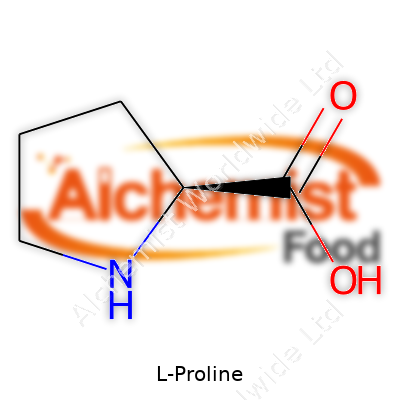
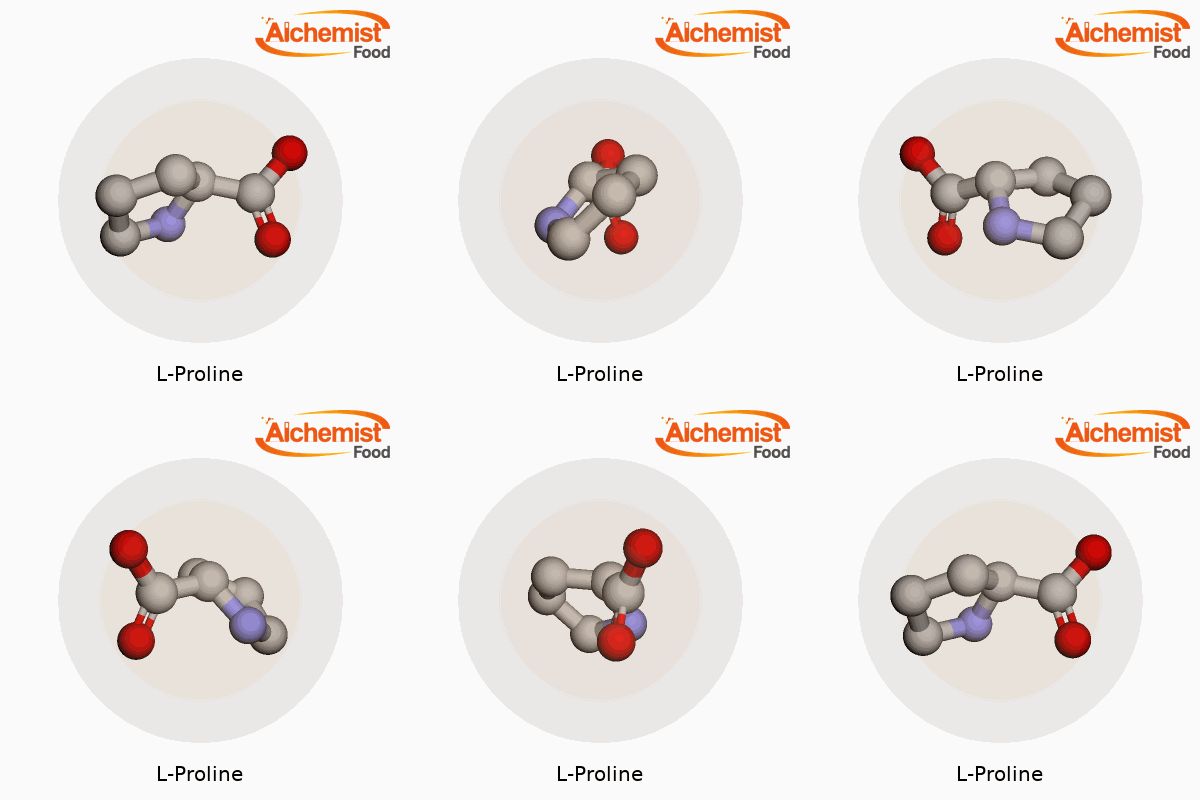
| Names | |
| Preferred IUPAC name | (pyrrolidine-2-carboxylic acid) |
| Other names |
H-Pro-OH Pyrrolidine-2-carboxylic acid L(-)-Proline L-Pro Prolin Pro |
| Pronunciation | /ˈproʊˌliːn/ |
| Preferred IUPAC name | (pyrrolidine-2-carboxylic acid) |
| Other names |
H-Pro-OH Proline L(-)-Proline Pyrrolidine-2-carboxylic acid (S)-Proline |
| Pronunciation | /ˈɛlˈproʊliːn/ |
| Identifiers | |
| CAS Number | 147-85-3 |
| 3D model (JSmol) | `4.3.1.1/pdb/pro.pdb` |
| Beilstein Reference | 1718730 |
| ChEBI | CHEBI:26689 |
| ChEMBL | CHEMBL1082 |
| ChemSpider | 599 |
| DrugBank | DB00172 |
| ECHA InfoCard | ECHA InfoCard: 100.008.519 |
| EC Number | 2.7.1.16 |
| Gmelin Reference | 6358 |
| KEGG | C00148 |
| MeSH | D010937 |
| PubChem CID | 614 |
| RTECS number | SY9100000 |
| UNII | 9H2P47VD5D |
| UN number | UN2811 |
| CAS Number | 147-85-3 |
| Beilstein Reference | 1718739 |
| ChEBI | CHEBI:26271 |
| ChEMBL | CHEMBL746 |
| ChemSpider | 593 |
| DrugBank | DB00172 |
| ECHA InfoCard | 100.007.811 |
| EC Number | 2.3.1.35 |
| Gmelin Reference | 6074 |
| KEGG | C00148 |
| MeSH | D011379 |
| PubChem CID | 614 |
| RTECS number | SY5200000 |
| UNII | 9H199W8O67 |
| UN number | UN2811 |
| CompTox Dashboard (EPA) | DTXSID8020085 |
| Properties | |
| Chemical formula | C5H9NO2 |
| Molar mass | 115.13 g/mol |
| Appearance | White crystalline powder |
| Odor | Odorless |
| Density | 1.35 g/cm³ |
| Solubility in water | Soluble in water |
| log P | -2.54 |
| Acidity (pKa) | 10.6 |
| Basicity (pKb) | 10.64 |
| Magnetic susceptibility (χ) | -9.59×10⁻⁶ cm³/mol |
| Refractive index (nD) | 1.480 |
| Dipole moment | 11.02 D |
| Chemical formula | C5H9NO2 |
| Molar mass | 115.13 g/mol |
| Appearance | white crystals or crystalline powder |
| Odor | Odorless |
| Density | 1.35 g/cm³ |
| Solubility in water | 208 g/L (20 °C) |
| log P | -2.54 |
| Vapor pressure | 0.01 hPa (20°C) |
| Acidity (pKa) | 2.0 (Carboxyl), 10.6 (Amino) |
| Basicity (pKb) | 10.70 |
| Magnetic susceptibility (χ) | -66.5×10⁻⁶ cm³/mol |
| Refractive index (nD) | 1.451 |
| Viscosity | 1.246 cP (25°C) |
| Dipole moment | 10.80 D |
| Thermochemistry | |
| Std molar entropy (S⦵298) | 65.7 J·mol⁻¹·K⁻¹ |
| Std enthalpy of formation (ΔfH⦵298) | -528.6 kJ/mol |
| Std enthalpy of combustion (ΔcH⦵298) | -2204.9 kJ mol⁻¹ |
| Std molar entropy (S⦵298) | 57.9 J·mol⁻¹·K⁻¹ |
| Std enthalpy of formation (ΔfH⦵298) | -541.5 kJ/mol |
| Std enthalpy of combustion (ΔcH⦵298) | -2205 kJ mol⁻¹ |
| Pharmacology | |
| ATC code | A11AA24 |
| ATC code | A12CC06 |
| Hazards | |
| Main hazards | May cause eye, skin, and respiratory tract irritation. |
| GHS labelling | GHS07, GHS08 |
| Pictograms | GHS07 |
| Signal word | Warning |
| Hazard statements | No hazard statements. |
| Precautionary statements | P261; P305+P351+P338; P337+P313 |
| NFPA 704 (fire diamond) | 1-0-0 |
| Flash point | > 200 °F (93 °C) |
| Autoignition temperature | 455 °C |
| Lethal dose or concentration | LD50 Oral Rat 4750 mg/kg |
| LD50 (median dose) | LD50 (median dose): Oral, rat: 8000 mg/kg |
| NIOSH | NMAM 8316 |
| PEL (Permissible) | Not established |
| REL (Recommended) | 800 mg |
| IDLH (Immediate danger) | No IDLH established. |
| Main hazards | Not hazardous. |
| GHS labelling | GHS07, GHS08 |
| Pictograms | GHS07 |
| Signal word | Warning |
| Hazard statements | Not a hazardous substance or mixture according to the Globally Harmonized System (GHS). |
| NFPA 704 (fire diamond) | 1-0-0 |
| Autoignition temperature | 220 °C |
| Lethal dose or concentration | LD50 Oral Rat 8000 mg/kg |
| LD50 (median dose) | LD50 (median dose): Mouse oral 9910 mg/kg |
| NIOSH | NMAM 8319 |
| PEL (Permissible) | 10 mg/m3 |
| REL (Recommended) | 2000 mg |
| IDLH (Immediate danger) | Not listed |
| Related compounds | |
| Related compounds |
L-Pipecolic acid Hydroxyproline Proline methyl ester Prolinol |
| Related compounds |
Hydroxyproline Pipecolic acid L-Prolinamide L-Proline methyl ester D-Proline L-Pyroglutamic acid |



