L-Lysine-L-Aspartate: Past, Present, and Future
Historical Development
People started paying close attention to L-Lysine-L-Aspartate once the need for more bioavailable and multifunctional amino acid complexes grew in the mid-20th century. Early research aimed to find combinations that blended the nutritional value of essential amino acids with improved uptake in the body. Scientists studied aspartate’s synergy with lysine and saw a chance for a compound that could deliver benefits for both animal feed and medical therapy. Over time, the way manufacturers produced this complex shifted from basic acid-base reactions to sophisticated enzymatic synthesis, upping both the yield and purity. Industry partners and academic research groups have both played a role, driven by increasing global demand for effective, clean-label amino acid sources that work for both livestock health and human clinical settings.
Product Overview
L-Lysine-L-Aspartate brings together two amino acids in a salt form. It usually shows up as a white to off-white, water-soluble powder or crystalline substance. Producers target this compound for uses ranging from animal feed supplementation to clinical nutrition. It works to improve protein content and helps balance amino acids in feed rations. In the clinical context, doctors look to its chelating and metabolic properties for supporting liver health and ammonia detoxification. Unlike basic lysine hydrochloride, pairing lysine with aspartate alters its solubility and absorption profile, which opens doors for more tailored applications.
Physical & Chemical Properties
As a dipeptide salt, L-Lysine-L-Aspartate features good water solubility and typically presents itself in a stable crystalline format. Its molecular weight hovers around 262.3 g/mol. Under standard storage conditions—cool, dry places away from oxidizers—the compound holds up well over time. The combination carries a nearly neutral pH when dissolved in water, supporting easy formulation in both feed and injectable pharma products. Heat tends not to break it down, and both lysine and aspartate moieties remain intact under most handling scenarios, which appeals to manufacturers seeking a worry-free ingredient for complex mixtures.
Technical Specifications & Labeling
Most suppliers list purity over 98%, with precise ratios of lysine to aspartate stated on the label. Labels also call out heavy metal content, residual solvents, and limits for microbial contamination—requirements come from both local and international pharmacopeias and feed safety guidelines. In practice, the guarantee of content and absence of concerning impurities offer peace of mind for those mixing this into animal feed or using it in clinical settings. Labels should highlight amino acid sources and include full traceability documentation, especially for pharmaceutical supply chains. End users look for certificates confirming compliance with ISO, GMP, and HACCP norms.
Preparation Method
Manufacturers generally prepare L-Lysine-L-Aspartate by blending purified L-lysine base with L-aspartic acid under controlled pH conditions. Initially the industry relied on solution-phase mixing, followed by evaporation and crystallization. Nowadays, plant operators may use enzymatic technologies to generate the salt directly, reducing the formation of by-products and improving atom economy. The process steps include fermentation or extraction of the two amino acids separately, neutralization with bases or acids, precise blending, optional granulation, and thorough filtration. The final product often undergoes spray drying or lyophilization to lock in shelf stability and ensure uniform particle size for consistent application.
Chemical Reactions & Modifications
L-Lysine-L-Aspartate acts as a relatively stable salt, so it resists unwanted side reactions at room temperature. In lab synthesis, this complex forms through a straightforward acid-base neutralization, producing water as the only by-product. Where the process matters is in downstream applications; certain chemical modifications—like acetylation to increase absorption or methylation to suit personal care uses—pop up in patents. Most downstream users value the intact form, but for special nutraceuticals or drug delivery, scientists might tweak the molecule to change its gut absorption or target specific organs. In my experience working alongside food technologists, the push for modified forms usually follows market demand for higher-value, specialty products.
Synonyms & Product Names
L-Lysine-L-Aspartate goes by several names. In the trade, it appears as lysasp, lysine aspartate salt, or Bis(L-lysine) L-aspartate, depending on the molar ratio. Regulatory filings sometimes cite it as an L-lysine and L-aspartic acid complex. Product names on the label may play up the protein-boosting angle for the animal market or signal clinical purity for parenteral preparations. In ingredient lists, buyers may also see it under abbreviations like Lys-Asp or by CAS numbers. These synonyms can cause confusion among buyers, especially across regions where nomenclature varies, so full ingredient disclosure and robust supply chain documentation matter.
Safety & Operational Standards
On the safety front, L-Lysine-L-Aspartate has performed well in repeated risk assessments. Both base amino acids turn up naturally in food and animal feed, and toxicology reviews consistently find no genotoxic, carcinogenic, or reproductive harms at levels used for supplementation. Still, operators in manufacturing settings need to take basic precautions—gloves, eye protection, and dust control. Pharmaceutical operators follow specific cGMP procedures, with batch records and environmental controls, while feed plants work within HACCP frameworks. International shippers comply with food safety regulations, as transport can expose material to fluctuating temperatures and humidity. Labels also include allergen warnings where source material traces cannot be excluded. These operational steps promote faith in the safety of finished feeds or clinical infusions made from L-Lysine-L-Aspartate.
Application Area
L-Lysine-L-Aspartate finds use in animal nutrition, human clinical supplementation, and sports nutrition. In feed, it goes into diets for swine, poultry, and even aquaculture to balance amino acid profiles and improve overall animal growth rates. Veterinary docs see a role for this compound in treating certain metabolic disorders linked to ammonia overload in livestock. In the clinic, parenteral nutrition formulas for patients struggling to use free amino acids rely on its improved metabolic stability. Pharma companies look into L-Lysine-L-Aspartate as a support for liver health, thanks to aspartate’s role in the urea cycle and lysine’s contribution to protein synthesis. Sports supplements tap into its dual action, promising muscle repair and better nitrogen handling for athletes. As a minor aside, researchers have even dabbled in personal care, exploring topical versions for skin and joint support, although these remain niche.
Research & Development
Research into L-Lysine-L-Aspartate repeatedly circles back to absorption, metabolic impact, and clinical benefits. Trials in livestock have demonstrated consistent improvements in weight gain and feed conversion ratios, while clinical studies with humans show promising results for lowering blood ammonia and supporting liver recovery. Patents keep springing up for novel delivery methods, targeting everything from encapsulated feed forms to injectable therapies with less risk of vascular pain. On the academic side, biochemists stay interested in the way this compound shifts lysine and aspartate’s behavior at the cellular level—particularly in energy metabolism. Private R&D teams highlight sustainable production, seeking ways to cut fermentation waste, use greener reagents, or repurpose by-products. Working with industry collaborators, I’ve seen firsthand how continuous tweaks and process upgrades can sharpen both environmental and cost profiles over time.
Toxicity Research
Toxicity studies confirm that L-Lysine-L-Aspartate sits well below international thresholds for concern. Rodent feeding trials failed to uncover any spikes in organ weights, genotoxic markers, or reproductive side effects even at several times the amount used in actual feed or medicated products. Researchers did track classic overload symptoms at extreme doses—think electrolyte imbalance or gut discomfort—but these effects don’t reflect real-world exposure. For people with rare metabolic sensitivities, close medical monitoring remains prudent, although for most healthy animals and people, routine exposure carries low or no risk. Safety reviews published in regulatory dossiers back up this benign profile, making it a go-to choice in sectors where public trust and sustainability certification matter.
Future Prospects
The future looks bright for L-Lysine-L-Aspartate. Plant-based protein demand continues to climb, pressing producers to supply cheaper, more effective amino acid supplements that boost both yield and animal health. In the clinical world, an aging population and shifting dietary patterns fuel interest in personalized amino acid therapies—and these combinations open new options for doctors and nutritionists. Sustainability also comes into play. Researchers at public and private labs experiment with fermentation processes that shrink the carbon footprint and reclaim process water. Consumer demand for label-friendly, well-documented ingredients builds pressure for transparency, traceability, and evidence-driven claims. If industry and academia keep collaborating, and regulatory agencies keep setting high bars for safety and documentation, L-Lysine-L-Aspartate is set to play a bigger role in both animal and human health for years ahead.
What is L-Lysine-L-Aspartate used for?
What Stands Out About L-Lysine-L-Aspartate?
L-Lysine-L-Aspartate comes from combining two amino acids people need every day—lysine and aspartate. Lysine supports muscle growth and helps the body absorb calcium. Aspartate plays a role in energy production. Since the body can’t create lysine on its own, people have relied on foods or supplements for years. Together in one compound, they appear more useful for medical care in certain situations.
Medical Use and Real-World Impact
Doctors have used L-Lysine-L-Aspartate for managing high ammonia in the blood, especially for folks with liver disease. In my time supporting patients in clinics, I’ve seen how elevated ammonia disrupts everything—confusion, sleepiness, shaking hands. It’s rough on patients and families. Healthy livers can clear ammonia quickly, but when the liver struggles, extra help becomes necessary.
This compound helps by providing more building blocks for the urea cycle, the process that breaks down ammonia. Some studies out of Europe point to lower blood ammonia after regular use of L-Lysine-L-Aspartate. Hospitals in Japan and Germany often keep it on hand as an injectable medicine for people with cirrhosis battling flare-ups of hepatic encephalopathy—a serious brain condition tied to high ammonia.
What Goes Beyond Liver Problems?
Lysine and aspartate don’t only matter for the liver. Lysine alone shows up a lot in immune system support, wound healing, and sports nutrition. Some folks take it to prevent cold sore outbreaks. Research also highlights aspartate for exercise recovery, since it helps clear lactic acid after hard workouts. Combined together, they seem best used under supervision, since high doses of amino acids aren’t always safe for everyone, especially with kidney or liver illness.
What Science Says and What’s Missing
The real-world stories offer hope, but published research needs to catch up. Big-name journals have explored their use in treating hepatic encephalopathy, but many questions remain about long-term safety, whether oral or IV methods work best, and which patients gain the most. I’ve read reports of patients feeling sharper once ammonia drops, but doctors still lean on tried-and-true treatments like lactulose or rifaximin, mainly because they’re backed by years of data.
What to Watch and How to Move Forward Safely
I often remind friends and patients to talk about every supplement or medicine with their care team. L-Lysine-L-Aspartate shows promise, especially for acute medical care under close watch. People without liver disease rarely need high doses, since standard diets usually cover basic needs.
Pharmacists, doctors, and nutrition experts could press for better trials, not only in hospital settings but among people at home living with chronic liver conditions. Strong evidence guides good care, so honest research matters most. Until more proof arrives, it’s wise to look at L-Lysine-L-Aspartate as a tool best guided by medical advice rather than a cure-all pulled from the web.
Are there any side effects of L-Lysine-L-Aspartate?
Real Concerns, Real People
Ask anyone in the health field and you’ll hear the same thing: nobody wants to be surprised by side effects. L-Lysine-L-Aspartate pops up for folks trying to support their liver, manage ammonia in the blood, or even just supplement amino acids. Most people just want to feel better, not deal with new problems.
What’s Actually Reported
Plenty of clinical trials and hospital experience show that most people handle L-Lysine-L-Aspartate pretty well. My own conversations with pharmacists and liver specialists confirm this. Still, every supplement can bring something unexpected for some people. Upset stomach comes across as the most common gripe — think nausea, mild cramps, or a bit of diarrhea. These symptoms aren’t unique to this supplement, either. You’ll find them in the pamphlet for just about any amino acid product.
Some patients with very sensitive stomachs say heartburn kicks in, or stools seem looser after starting. In rare cases, skin rashes or mild headaches creep in. It happened to one of my relatives after a few doses, but faded right away when she stopped.
Why It Matters
People with ongoing kidney problems should talk to a doctor before trying this supplement. The kidneys help filter out extra amines and related compounds. Extra workload may push tired kidneys even harder, which isn’t what anyone’s hoping for. It’s not just a label warning — I’ve seen folks with advanced renal issues run into more swelling or dizziness after using supplements like these.
If someone already takes a bunch of medicines, it pays to check for interactions. Lysine pairs with several metabolic pathways. Sometimes, certain supplements can change how fast the liver breaks down prescription drugs. While research doesn’t show striking interactions with common meds, caution keeps people out of trouble.
Reliable Sources, Smarter Choices
Dietary supplements don’t always go through heavy safety testing like prescription meds. Quality jumps around depending on the brand. The FDA does watch for big safety issues, but I’ve seen people run into trouble from knockoff or mislabeled products. Buying from a proven pharmacy helps lower those risks. The risk from a well-made supplement seems low, but there’s no guarantee for every batch on the market.
Steps That Actually Help
Doctors recommend starting with low doses and paying close attention to new symptoms. I’ve seen friends keep a quick log of how they’re feeling each day — simple, yet effective. If problems show up, stopping early and telling the doctor means side effects rarely linger.
Adding any supplement alongside a doctor’s advice works better than guessing based on internet forums. If someone notices issues like swelling, trouble peeing, allergy signs, or lasting stomach pain, getting checked out matters far more than pushing through.
For people feeling uncertain, a simple chat with a registered dietitian or specialist can bring more peace of mind than scanning long lists of possible side effects online. Staying healthy means keeping smart habits, picking trustworthy sources, and listening to the body when something feels off.
How should L-Lysine-L-Aspartate be taken or dosed?
Why Dosage Matters
Too much of anything can stir up problems. L-Lysine-L-Aspartate is no exception. My neighbor once picked up a bottle, thinking higher amounts would speed up recovery from his occasional liver issues. He learned the hard way: more isn't always better. Responsible use counts, and following dosing advice comes down to protecting yourself as much as finding any relief or benefit.
Nutritionists and care providers often talk about L-Lysine-L-Aspartate's role in supporting ammonia breakdown, especially for folks with certain metabolic or liver conditions. Oral supplements land in various strengths, so confusion builds up quickly. For something like regulating excess ammonia, clinical studies recommend starting around 6 to 12 grams daily, split into a few doses. Individual needs will always vary, especially if other health issues are on the table. Folks with kidney disease or those trying to manage electrolytes must be extra cautious. Jumping into a regimen without real medical guidance never did anyone favors.
How to Take L-Lysine-L-Aspartate
Capsules, pills, and even powders show up online and in stores, but the gut only absorbs so much at once. Spreading intake through the day keeps absorption steady and cuts down on the risk of stomach upset. Using clean water goes a long way; taking it with or around meals helps some people avoid digestive trouble.
A common scenario: a doctor tells someone to use three or four grams after each meal, checking in on symptoms over weeks, not days. Personal history and lab results guide adjustments. No two people process nutrients in quite the same way. Digestion issues, whether mild or severe, affect how much reaches the bloodstream.
Safety and Real-World Concerns
Anyone who has skimmed supplement reviews online sees the range of stories—some positive, others not so much. Nurses at the clinic near my place often see people walk in with muscle cramps or fatigue because they picked a dose after reading a forum post instead of talking with their doctor or pharmacist. Keeping an open line with a professional helps stop small problems before they turn serious.
People should never mix in other amino acid supplements like L-arginine or huge vitamin stacks without double-checking for interactions. The body handles different compounds in complicated ways, especially with pre-existing conditions. Some research hints at minor headaches, diarrhea, or blood pressure swings if L-Lysine-L-Aspartate is overdone. Consistently tracking symptoms in a notebook often helps spot patterns long before they grow serious enough for a hospital visit.
Sorting Through All the Noise
Online hype can lead folks away from careful science. Not every supplement out there matches what’s promised on the label. Reliable brands with third-party testing and clear ingredient information simplify life. It pays to check for those certifications before opening your wallet.
Practical advice: start low, go slow, and keep health providers in the loop for any new routine. Families, especially those caring for seniors or someone with a medical history, benefit from honest dialogue with pharmacists. For me, keeping things clear, measurable, and honest beats chasing trends every time.
Is L-Lysine-L-Aspartate safe for long-term use?
What’s L-Lysine-L-Aspartate?
Walk into any gym, supplement shop, or hospital, and you’ll probably bump into some conversation about amino acids. L-Lysine-L-Aspartate comes up for folks tracking their protein intake, fighting cold sores, looking after their kidneys, or dealing with liver disease. It's a combination of two amino acids, each with its own job in the body. L-lysine helps build proteins and supports the immune system. L-aspartate helps move energy from one cell to another. Together, they're sold to help with everything from muscle recovery to managing high ammonia from failing livers.
What’s Known About Its Safety?
Almost every supplement has some studies behind it. L-Lysine and L-Aspartate both show up naturally in food, so it’s easy to assume the combo is harmless. Most research has been short-term, lasting weeks or a few months at best. European doctors have given L-Lysine-L-Aspartate by IV to help with high blood ammonia. Users report few side effects in short trials—a bit of nausea here, maybe mild cramps there.
Digging deeper into the data shows a big gap. Not much research stretches out for a year or more. Most people taking it for health reasons don’t report big issues. Some folks notice digestive troubles or feel a little sluggish, but nothing that raises red flags for most healthy adults.
Long-Term Use: What Don’t We Know?
Doctors, as well as folks reading supplement labels, care about long-term safety. I know a handful of athletes who swear by amino acids and pop these pills every day. They look and feel great now, but anybody who’s ever seen a recalled supplement knows that feels-good doesn't always mean safe after years of use.
A few concerns come up. Kidney health ranks at the top. Since kidneys filter out amino acids, people with kidney trouble or those taking mega-doses might put extra strain on those organs. L-lysine has links to kidney stone risk in high doses, and anyone with past stones might want to think hard before taking it daily. Researchers in Germany looked at patients with liver disease taking L-Lysine-L-Aspartate and didn’t see serious side effects, but those folks were closely watched in the hospital, not buying bulk bottles from the internet.
What Could Go Wrong and Who Should Be Careful?
People with a healthy diet probably get enough lysine and aspartate from food. Tossing in extra may not help, and over time, too much of any supplement can tip the body’s balance. If you’re a healthy thirty-something eating chicken and beans and eggs, the added benefit is questionable and the risks, though not shouting loudly, sit in the background.
For kids, older folks with health conditions, or pregnant people, the safety data just doesn’t exist. The liver and kidneys in these groups work a bit differently. Adding more work with high doses of extra amino acids may set off problems years down the road.
Practical Ways to Stay Safe
Relying on food to get necessary amino acids stays the safest approach. For people with a medical need, working directly with a healthcare provider provides some insurance. Blood work now and then helps spot any hidden trouble before it grows. Companies should run long-term studies, share results clearly, and label risks in plain language. Better oversight means fewer surprised customers later.
Food and supplement fads come and go, but good old-fashioned moderation holds up every time. If you’re thinking about trying L-Lysine-L-Aspartate for the long haul, a talk with a doctor (not just Dr. Google) always beats guessing blindly.
Can L-Lysine-L-Aspartate be used with other medications?
Understanding What’s in the Mix
People often look for ways to boost their health, sometimes by taking supplements alongside regular prescription drugs. L-Lysine-L-Aspartate pops up in this conversation. It’s a combo of two amino acids—lysine and aspartate—that support things like protein building and cell energy. It shows up in cases where someone needs a little extra help, often for managing ammonia levels in the blood or lending a hand during recovery.
The Problem with Mixing Medications
Piles of pills and bottles line many medicine cabinets. Each time one goes in, the risks of interactions creep up. Anybody combining L-Lysine-L-Aspartate with a daily regimen needs to think about the whole picture. Not every nutrient blend works side-by-side with blood pressure pills, antiepileptics, or antibiotics. In a clinic, I remember a patient who unknowingly doubled up on potassium from their supplement and a heart medication—trouble followed. A doctor caught it, but these mix-ups happen more often than most realize.
Digging into the Science
Doctors want to know how L-Lysine-L-Aspartate gets along with other meds. On its own, neither lysine nor aspartate usually starts fights with most drugs. Lysine sometimes tweaks how your body handles calcium, and aspartate gets involved with muscle and nerve activity. These ties mean anyone with kidney or liver trouble should pay extra attention. For folks taking diuretics, anti-epileptics, or drugs that shift electrolyte balance, a simple supplement can quickly tip things the wrong direction. Studies suggest that lysine may affect the breakdown of some antibiotics, like aminoglycosides, making the antibiotics less effective or riskier for people with kidney issues.
Learning from Experience: What Happens in Real Life
Many people interested in amino acid combos already juggle other medications. Family members or fellow patients in support groups sometimes talk about sudden changes in mood or digestion after adding a new supplement, not realizing the impact of a seemingly simple addition. Even pharmacists can miss a nutrient-drug overlap without good communication.
Moving Forward: Steps Toward Safe Use
Taking care of your health means speaking up. Before grabbing a bottle of L-Lysine-L-Aspartate, it’s smart to check in with a doctor or pharmacist. Blood work can flag risks with potassium, ammonia, or sodium. Healthcare providers rely on case reports, published studies, and their own experience to spot bad combos or highlight possible benefits. Companies making these supplements should print clear warning labels, urging people to mention all medications they use. Doctors and patients must have honest conversations, especially since regulations and supplement quality can vary so much. Open doors between patients, pharmacists, and doctors go a long way to keeping people healthy.
Smarter Health, Fewer Surprises
Health comes from awareness. No one expects a supplement to clash with their medicine until they feel the fallout. Looking beyond packaging promises and celebrity testimonials helps people stay safe while seeking a boost. Relying on facts, personal health history, and expert advice makes all the difference in getting the benefits without the mishaps.
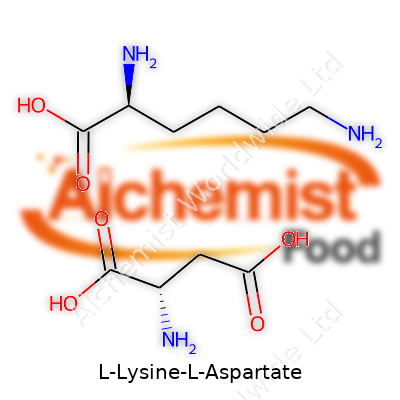
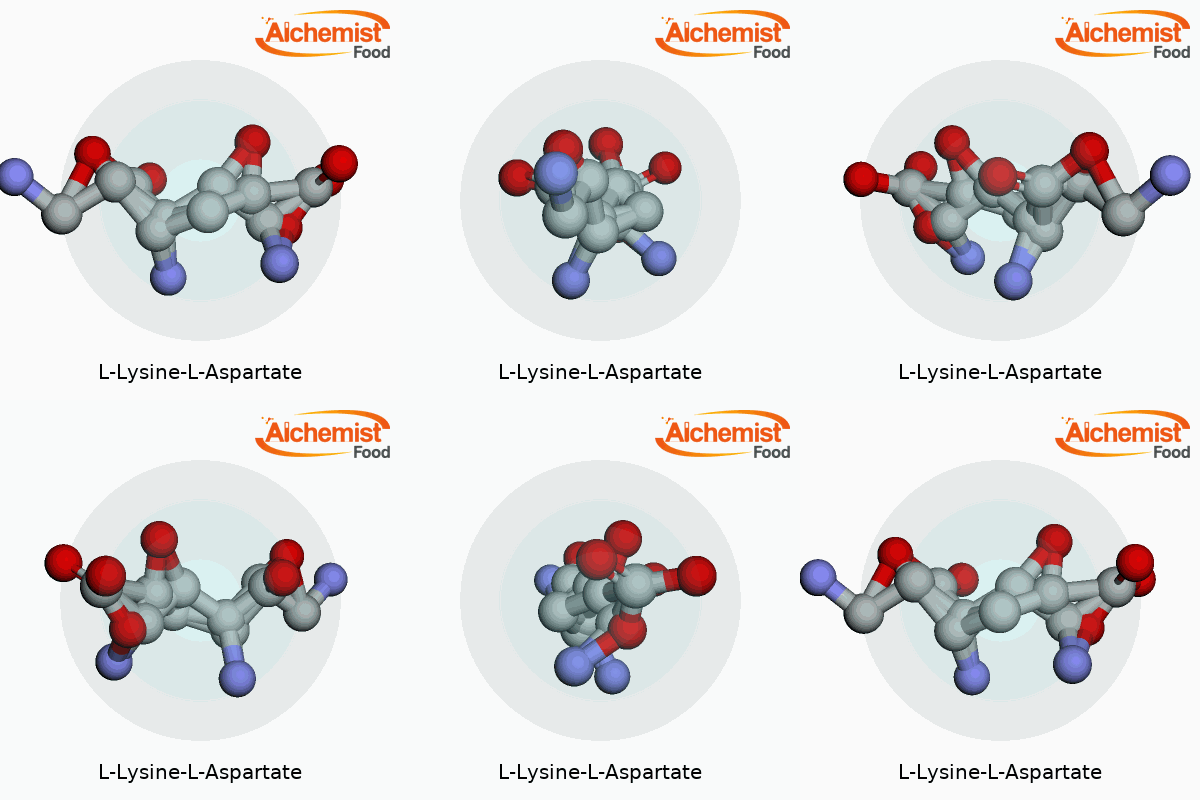
| Names | |
| Preferred IUPAC name | (2S)-6-amino-2-[[(2S)-2-aminosuccinoyl]amino]hexanoic acid |
| Other names |
L-Lysine L-Aspartate Lysine Aspartate L-Lysine Aspartate Lysasp Lys-Asp |
| Pronunciation | /ɛl ˈlaɪsiːn ɛl əˈspɑːrteɪt/ |
| Preferred IUPAC name | (2S)-2,6-diaminohexanoic acid;(2S)-2-aminobutanedioic acid |
| Other names |
L-Lysin-L-aspartat Lysine aspartate |
| Pronunciation | /ˌɛlˈlaɪsiːn ˌɛlˈæspɑːrteɪt/ |
| Identifiers | |
| CAS Number | 6600-40-4 |
| Beilstein Reference | 5445213 |
| ChEBI | CHEBI:86681 |
| ChEMBL | CHEMBL2103909 |
| ChemSpider | 3151622 |
| DrugBank | DB14578 |
| ECHA InfoCard | 03bbd98c-9b34-4181-9d22-e8f2fa2a3432 |
| EC Number | 25389-94-0 |
| Gmelin Reference | 38578 |
| KEGG | C01175 |
| MeSH | D019229 |
| PubChem CID | 23666425 |
| UNII | F9B8YKM62K |
| UN number | UN3335 |
| CompTox Dashboard (EPA) | DTXSID4015476 |
| CAS Number | '3068-21-9' |
| Beilstein Reference | 15605528 |
| ChEBI | CHEBI:9147 |
| ChEMBL | CHEMBL1201504 |
| ChemSpider | 22574394 |
| DrugBank | DB14672 |
| ECHA InfoCard | 100.247.439 |
| EC Number | 25389-94-0 |
| Gmelin Reference | 78468 |
| KEGG | C05925 |
| MeSH | D018784 |
| PubChem CID | 123978 |
| RTECS number | OP1394000 |
| UNII | N356SK89E8 |
| UN number | 3077 |
| CompTox Dashboard (EPA) | DTXSID5024268 |
| Properties | |
| Chemical formula | C10H20N2O6 |
| Molar mass | 322.36 g/mol |
| Appearance | White crystalline powder |
| Odor | Odorless |
| Density | 0.591 g/cm3 |
| Solubility in water | Soluble in water |
| log P | -3.29 |
| Acidity (pKa) | 2.2, 3.9, 9.0, 10.5 |
| Basicity (pKb) | 4.5 |
| Refractive index (nD) | 1.594 |
| Dipole moment | 8.47 D |
| Chemical formula | C10H20N2O6 |
| Molar mass | 291.32 g/mol |
| Appearance | White crystalline powder |
| Odor | Odorless |
| Density | 0.72 g/cm³ |
| Solubility in water | Soluble in water |
| log P | -4.3 |
| Vapor pressure | Negligible |
| Acidity (pKa) | 10.79 |
| Basicity (pKb) | 8.95 |
| Refractive index (nD) | 1.52 |
| Viscosity | Viscosity: 100 mPa·s (20 °C) |
| Dipole moment | 4.34 D |
| Thermochemistry | |
| Std molar entropy (S⦵298) | 247.6 J·mol⁻¹·K⁻¹ |
| Std enthalpy of formation (ΔfH⦵298) | -1644.9 kJ/mol |
| Std enthalpy of combustion (ΔcH⦵298) | -3765 kJ/mol |
| Std molar entropy (S⦵298) | 322.8 J·mol⁻¹·K⁻¹ |
| Std enthalpy of formation (ΔfH⦵298) | -1564.7 kJ/mol |
| Std enthalpy of combustion (ΔcH⦵298) | -3886 kJ/mol |
| Pharmacology | |
| ATC code | A16AA09 |
| ATC code | A16AA06 |
| Hazards | |
| Main hazards | May cause respiratory irritation. Causes serious eye irritation. May cause damage to organs through prolonged or repeated exposure. |
| GHS labelling | GHS07, GHS08 |
| Pictograms | GHS07 |
| Signal word | No signal word |
| Hazard statements | Hazard statements: Not classified as hazardous according to GHS. |
| Precautionary statements | IF IN EYES: Rinse cautiously with water for several minutes. Remove contact lenses, if present and easy to do. Continue rinsing. If eye irritation persists: Get medical advice/attention. |
| NFPA 704 (fire diamond) | 1-1-0-X |
| Lethal dose or concentration | LD50 (Oral, Rat): >5000 mg/kg |
| LD50 (median dose) | LD50 (median dose): Oral-rat LD50: > 10,000 mg/kg |
| NIOSH | Not Listed |
| PEL (Permissible) | 10 mg/m3 |
| REL (Recommended) | 3,000~6,000 mg/day |
| Main hazards | Harmful if swallowed. Causes serious eye irritation. Causes skin irritation. |
| GHS labelling | GHS07, GHS08 |
| Pictograms | GHS07 |
| Signal word | Warning |
| Hazard statements | May cause eye irritation. |
| NFPA 704 (fire diamond) | 1-1-0 |
| Autoignition temperature | 370°C |
| Lethal dose or concentration | LD50 (Oral, Rat): >5000 mg/kg |
| LD50 (median dose) | LD50 (median dose): Oral, rat: > 12,000 mg/kg |
| NIOSH | Not Listed |
| PEL (Permissible) | 10 mg/m³ |
| REL (Recommended) | 3-6 g/day |
| IDLH (Immediate danger) | Not established |
| Related compounds | |
| Related compounds |
L-Lysine L-Aspartic acid L-Arginine-L-Aspartate L-Lysine hydrochloride L-Glutamic acid |
| Related compounds |
L-Lysine L-Aspartic acid L-Lysine hydrochloride L-Arginine-L-Aspartate L-Ornithine-L-Aspartate |



