L-Lysine: From Discovery to Future Prospects
Historical Development
L-Lysine stands out in the story of nutritional science, making its mark after its discovery in 1889 by the German scientist Dreschel, who isolated it from casein. Back then, curiosity about the nutritional building blocks that make up proteins drove many scientists. Once researchers figured out that lysine, found in legumes, meat, and dairy, couldn’t be made by humans, food manufacturers and nutritionists paid close attention. The mid-20th century saw the invention of large-scale fermentation, mainly because synthetic methods couldn’t keep up with demand. Over time, it shifted from a rare laboratory find to a crucial product for both human health and animal feed.
Product Overview
L-Lysine is a straight-chain, essential amino acid. Food products that lack this compound struggle to support optimal growth, especially for children and livestock. The supplement sits in the heart of animal nutrition, often as L-Lysine hydrochloride or sulfate, either as crystalline powder or granules. In my work supporting local feed operations, producers often turn to lysine when regular grains fall short, since corn and wheat contain little of it. Lysine supplements fill those gaps, helping pigs and poultry grow faster and healthier.
Physical & Chemical Properties
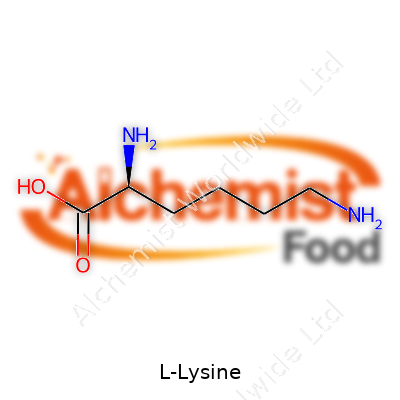
L-Lysine, in its pure form, appears as a white, odorless crystalline powder. Water draws it in, making it highly soluble while it barely budges in alcohol or ether. With a melting point near 215°C (with decomposition), it starts to brown and break down under intense heat, so storage in cool, dry places keeps it potent. The molecule carries two amino groups and one carboxyl group, which means it acts both as a base and an acid, adapting easily in biological processes. Chemically, its structure (C6H14N2O2) features a single amino group on the end of a six-carbon chain, allowing for varied interactions within proteins.
Technical Specifications & Labeling
Commercial L-Lysine products, often sold as L-Lysine HCl, boast purity levels above 98.5% on a dry basis. Manufacturers need to document moisture (usually below 1%) and absence of hazardous heavy metals—standards driven more by export laws than by local governments. Labels on bags and bottles must reveal net content, country of origin, and additive types. Reviewing labels from several global suppliers, it’s clear that requirements keep evolving as end-users demand traceability, strict allergen controls, and proof of contamination checks. Packaging teams often face stricter scrutiny than the folks making the product.
Preparation Method
For decades, fermentation using Corynebacterium glutamicum or Escherichia coli has powered the global lysine business. Sugars from corn or sugarcane fuel these bacteria inside massive reactors, generating a broth rich in L-Lysine. Careful pH control, oxygen flow, and clean operating conditions push the yield as high as possible. Once fermentation wraps up, teams use centrifuges, filtration, and crystallization—sometimes with the help of solvents—to separate and purify the product. Before fermentation, chemical synthesis held sway, but it created more waste and cost far more to scale up. Today’s biotech set-up lowers costs, raises purity, and reduces environmental harm.
Chemical Reactions & Modifications
L-Lysine’s reactive amino groups regularly take part in Maillard reactions, shaping food color and flavor during baking or roasting. Its chemical flexibility lets it serve as a starting point for more complex molecules in drug and supplement research. Enzyme-catalyzed transformations convert it to other useful compounds like pipecolic acid or hydroxylysine. As an additive, its hydrochloride and sulfate salts bring stability and easy handling, while chemical modification (via esterification or amidation) helps it fit specialized uses in pharma and polymer industries.
Synonyms & Product Names
Industry and regulatory agencies list L-Lysine under several names: 2,6-diaminohexanoic acid, Lys, or L-2,6-diaminohexanoic acid. Common commercial products appear as L-Lysine Monohydrochloride, Lysine Sulfate, or simply “L-Lysine” in livestock catalogs. Food additive codes (like E640) flag it in ingredient lists. Sometimes, technical literature swaps “lysine base” for the free amino acid variant, though most sources refer to the more stable hydrochloride salt.
Safety & Operational Standards
Workplaces handling L-Lysine follow strict guidelines set by agencies like OSHA, FDA, and the European Food Safety Authority. Staff dealing with large batches avoid breathing in dust and wear gloves, goggles, and masks. Dust from the powder stings eyes and lungs, especially after hours in a feed mill. On the food and supplement side, purity and contamination checks occur during and after production. Quality managers keep detailed logs, checking for bacteria, molds, and metals that spoil entire shipments. Wastewater from fermentation plants goes through pre-treatment, minimizing nitrogen loading in local rivers or lakes. For animal feed, certificates of analysis declare product safety, since contaminated amino acids can devastate livestock health.
Application Area
Feed producers snap up most of the world’s L-Lysine. Swine and poultry diets benefit the most, since regular grains leave animals short and slow-growing. In my own discussions with veterinarians and farmers, the difference after supplementing is easy to spot in weight gain, feed conversion, and animal wellbeing. Human nutrition corners its share of the market, especially for vegetarians and people with limited protein access. Pharmaceutical firms use L-Lysine in chewable tablets and lozenges aimed at controlling herpes simplex virus outbreaks. Food manufacturers tap it to boost the listed protein content of baked goods, cereals, and sports snacks. Chemical and biotech industries use lysine as a building block in peptide synthesis or as a chiral agent in drug research.
Research & Development
Current research focuses on raising fermentation yields, lowering costs, and designing strains that produce fewer unwanted byproducts. Gene editing lets scientists shape Corynebacterium and E. coli into more efficient factories, boosting lysine titers while using less sugar and energy. In labs, lysine-based polymers show promise for drug delivery. Research teams also look at how lysine may impact anxiety, bone health, and immune function in people. Diagnostic labs and nutritionists chase ways to measure body lysine status accurately, since deficiency or overconsumption can influence growth, metabolism, and disease risk over time.
Toxicity Research
Researchers have looked for safety issues in animals and humans even at high doses. Studies in rats, pigs, and chickens report few side effects unless exposure runs at ten times recommended levels for weeks. Large human trials show that most people can take up to 3-5 grams a day without trouble, though some report stomach upset at high doses. Long-term studies rule out cancer and mutation risk, provided production follows GMP and end-users avoid contaminated or spoiled product. Chronic overdosing, though rare, can set off imbalances in other amino acids, so dieticians urge moderation.
Future Prospects
Future demand for L-Lysine ties closely to the world’s appetite for meat and protein-rich foods. As farm incomes rise in South America, Africa, and Asia, animal feed mills call for more amino acid supplements. Plant-based food makers and sports nutrition companies experiment with lysine-enriched products for vegetarian and vegan diets. Synthetic biologists search for new fermentation pathways that use less energy and waste fewer resources, driven by tougher regulations and climate concerns. Researchers also test lysine’s use in biodegradable plastics, new antibiotics, and targeted supplements for health conditions that affect small children, athletes, and pregnant women. Based on my years watching the ingredient supply chain, companies and consumers keep pushing for safer, more efficient, and more versatile forms of L-Lysine, and research continues to answer that call.
What is L-Lysine used for?
Essential for Daily Health
L-Lysine belongs in the spotlight for a simple reason: the body can't make it on its own. This amino acid comes directly from what we eat—meat, fish, eggs, dairy, and some legumes. Without enough lysine, people start to feel its absence through slow growth in kids, poor concentration, and irritability. From my own experience working with sports enthusiasts and older adults, energy levels often improve when lysine intake meets daily needs. Studies from the World Health Organization back this up, linking lysine with proper growth, muscle repair, and better fat absorption. Skeptics sometimes call it just another supplement, but without it, the body struggles to use other nutrients properly.
Powerhouse for Muscle and Recovery
Lysine plays a central role in producing carnitine—a nutrient that turns fatty acids into fuel. For those who work out regularly, a lysine shortage turns intense sessions into periods of longer recovery and nagging soreness. Research in the Journal of the International Society of Sports Nutrition highlights quicker muscle healing and less fatigue when diets have enough lysine. Outside the gym, people healing from injuries or surgery also get big benefits. Doctors often recommend lysine-rich foods for wound healing, and it isn’t just tradition; science backs the positive effects, especially for collagen production.
Guarding Against Cold Sores
Ask anyone who's battled recurring cold sores—lysine's the word that comes up time and again. The herpes simplex virus lays low in the body, then flares up with stress or illness. Lysine blocks the virus by competing with arginine, an amino acid the virus likes. Multiple double-blind trials, such as those published by the Cleveland Clinic, show shorter outbreak times and milder symptoms for those supplementing with lysine. People relying on creams and gels often switch over after a good talk with a doctor, discovering that internal support sometimes beats topical creams.
Preventing Deficiency Globally
Not everyone around the world eats meals loaded with meat and dairy. In regions with rice as a staple, lysine deficiency climbs, leading to stunted growth in children and poor concentration in adults. Relief programs often add lysine to grains or encourage growing legumes, like lentils and beans, to make up the shortfall. This isn’t just a developing world issue; some vegans or vegetarians here at home need to pay extra attention, balancing their meals with lysine-rich plant foods like quinoa and tofu. Nutritionists regularly flag this in workshops and check-ups.
Better Approach to Supplementation
No single food or pill holds all the answers, and L-lysine is a great example. Getting enough through food always works better than popping supplements. Too much from high doses can upset the stomach or stress the kidneys, especially for those with pre-existing health problems. Instead, focusing on variety—fish, beans, cheese, eggs—covers the bases for most people. Thoughtful planning and medical advice, not self-prescribing mega-doses, keep things safe. It’s a reminder that nutrition still works best with balance and common sense.
Are there any side effects of taking L-Lysine?
Understanding the Potential Side Effects
L-Lysine often shows up on vitamin shop shelves, internet wellness blogs, and the ingredient lists of cold sore creams. Many people chew these tablets to ease herpes simplex symptoms or just to top off their daily protein intake. The story gets spread that it's safe for everyone. In my years spent talking to pharmacists and people managing chronic conditions, it’s clear that every substance, even those labeled “natural,” can come with its own set of problems if you ignore how your body reacts.
L-Lysine forms one of the essential amino acids, which means the body wants it but can't make it alone. Protein-rich foods like eggs, chicken, beans, and fish bring lots of it to the table. Some think adding more through supplements ramps up muscle growth or helps the immune system work smarter. There’s some research to back this: small studies show it may help manage anxiety and cold sores, though nobody can call these claims set in stone. Most research looks at short-term use, which leaves questions about what decades of daily L-Lysine may do to a body.
What Side Effects Show Up?
In my experience, most people tolerate normal doses of L-Lysine pretty well. A healthy adult taking the recommended amount rarely sees a clinic because of it. If side effects creep in, they usually take the form of stomach cramps, nausea, or mild diarrhea. The kind of discomfort most folks get from eating a heavy, greasy meal. These aren’t life-changing, but nobody wants their supplement habit to send them running to the bathroom.
More rarely, higher doses could leave the kidneys with extra work to do. For those living with kidney disease, taking L-Lysine regularly might add risk they don’t need. Reports mention high blood calcium in a few people, enough to trigger heart rhythm shifts or muscle twitches. These remain exceptions, not the rule, but highlight how important it is for people with existing medical issues to ask a doctor before diving into a big supplement routine.
Mixing with Other Drugs and Conditions
Many forget how supplements can clash with prescription drugs. Someone with osteoporosis, for instance, who uses calcium supplements and decides to pile on L-Lysine, could see their blood calcium climb too high. That kind of thing sometimes gets ignored, especially by folks already managing several medications. Although L-Lysine doesn’t pull the same headlines as St. John’s Wort or grapefruit juice, the potential for quiet interactions still matters. People with allergies or asthma sometimes notice weird reactions, but this remains rare.
Finding Balance: Practical Tips
It makes sense to treat L-Lysine the same way someone treats any substance that enters their body—food, drink, drug, or supplement. Reading labels sounds simple but actually helps if you want to avoid hidden ingredients or unexpected doses. Total up the L-Lysine from both food and supplements instead of guessing. Speak to a healthcare professional if you’re taking medication for blood pressure, osteoporosis, kidney issues, or if you’re pregnant or breastfeeding. That doesn’t mean L-Lysine should scare folks, but nobody benefits from overconfidence in something just because it comes from a health food aisle.
How much L-Lysine should I take daily?
Why L-Lysine Matters
Amino acids like L-Lysine don’t always get the attention they deserve. Our bodies rely on this essential building block, but modern diets can get out of balance. L-Lysine supports the immune system, helps absorb calcium, and plays a part in building protein. Without an adequate daily supply, issues like fatigue, brain fog, or even slower recovery from workouts can show up.
How Much L-Lysine Works for Most People
Based on experience working with clients who care about nutrition, the sweet spot for daily intake tends to be about 1,000 to 3,000 milligrams for healthy adults. The World Health Organization recommends close to 30 mg per kilogram of body weight, which lines up with the numbers above. If you eat a typical Western diet rich in animal proteins, you probably hit these levels without much trouble. Vegans, vegetarians, and folks living on a lot of processed grains may not get enough, since foods like wheat and corn carry lower amounts.
L-Lysine in Food
A balanced plate goes a long way. Chicken, beef, fish, cottage cheese, eggs, and yogurt stand out as rich sources. Lentils, beans, and quinoa help, though grains often miss the mark. Anyone relying on plant-based sources needs to make sure meals aren’t missing L-Lysine, since a consistent shortfall can show up in brittle nails, thinning hair, or frequent cold sores.
Supplements: Helpful or Overkill?
Many shelves bulge with pills and powders, touting higher and higher doses. In the sports nutrition community or among people recovering from injury, it’s common to see L-Lysine supplements in daily routines. For active folks or those dealing with chronic viral infections like herpes simplex, extra intake—up to about 3,000 mg—may help keep flare-ups in check.
Still, more isn’t always better. Research and reports show that mega doses, especially above 6,000 mg per day for long periods, risk stomach discomfort or kidney strain. No one benefits from washing money down the drain chasing amounts beyond what the body will actually use.
Quality Advice Makes a Difference
No supplement replaces a diet built on whole foods. L-Lysine needs balance with other amino acids and nutrients for best impact. If a doctor flags low protein, persistent cold sores, or other related health issues, testing and a clear intake plan help tailor the right dose. Self-experimentation works for some, but a registered dietitian or skilled nutritionist can catch gaps or trouble spots overlooked in busy routines.
Practical Steps for Everyday Health
Start with food: lean meats, fish, eggs, and dairy products cover the basics. If avoiding animal products, keep beans, lentils, and quinoa in rotation. Track food with apps or keep a journal over a week to spot trends. If cold sores or muscle pain keep creeping up, test a 1,000 mg supplement and watch for changes, staying within the recommended range.
Getting enough L-Lysine comes down to steady habits. A varied plate still beats a long list of pill bottles. With smart choices and mindful eating, most people hit the mark without even realizing it, leaving supplements for periods when food alone just can't keep up.
Can L-Lysine help with cold sores?
Experience in Facing Cold Sores
Spotting a tingle at the edge of your lip signals the start of another cold sore cycle, bringing pain and social discomfort. For years, I tried nearly everything from over-the-counter creams to home remedies. The background noise about dietary supplements caught my attention, especially stories about L-Lysine’s supposed benefits. Cold sores come from the herpes simplex virus. Once it enters the body, it never really goes away. Stress, sun, and illness often give it the green light. Anyone who deals with these blisters wants real solutions quick.
How L-Lysine Entered the Conversation
L-Lysine is an amino acid, easy to find in foods like eggs, cheese, fish, and beans. Back in college, one of my friends swore by it, saying her outbreaks became less frequent after starting supplements. Curiosity led me to some digging. L-Lysine can influence arginine, another amino acid the herpes virus uses to multiply. The thought is that more lysine crowds out arginine, making the virus less likely to flare up.
What the Research Shows
Not all supplements live up to their hype, but a handful of clinical studies created some buzz for L-Lysine. A double-blind trial published in Dermatologica (1987) tracked outbreak frequency and healing in people taking L-Lysine. Those who took 1,000 mg daily reported fewer and less severe cold sores. Still, the scientific community doesn’t offer unanimous support. Some studies, like one published in the Journal of Antimicrobial Chemotherapy (1994), saw no clear difference between those taking lysine and those taking a placebo.
The quality of research varies. Dosage, duration, and participant health profiles matter, and not every study checks all the boxes. L-Lysine on its own doesn’t cure cold sores, but some evidence suggests it may shorten healing time or reduce outbreaks for certain people. The NIH points out that L-Lysine tends to be safe at typical doses, though megadoses can cause stomach pain and diarrhea.
Making Sense of the Debate
It’s easy to see why people gravitate toward a supplement that promises relief from cold sores, especially since prescription treatments like acyclovir bring their own side effects and often require planning ahead. If you already get enough lysine from food, a pill might not do much. The placebo effect plays a role too; belief in a remedy often lifts mood or takes the edge off symptoms even if the science trails behind.
Weighing Solutions
Doctors and pharmacists keep L-Lysine stocked because the demand is there. For most healthy adults, a small dose from time to time seems safe, especially if it comes from diet. Anyone with liver or kidney issues, or people on certain medications, should check with a doctor first. The strongest defense against cold sores blends managing stress, adequate rest, sun protection, and antiviral creams. If you want to test L-Lysine, go in with realistic hopes and healthy skepticism.
Real progress in cold sore treatment will probably come from new antivirals or a vaccine. For now, L-Lysine might give partial relief, mostly for a subset of people. Looking after the basics—sleep, diet, self-care—usually wins out over chasing a magic pill.
Is L-Lysine safe to take with other medications?
L-Lysine’s Place in Everyday Health
L-Lysine gets a lot of attention as an amino acid supplement for immune support and cold sore prevention. It shows up in health stores, gym bags, and even on the shelves of regular pharmacies. People ask if it can play well with other medicines, or if it risks causing trouble inside the body.
Where L-Lysine Steps In, and Possible Drug Interactions
L-Lysine comes from diet, but supplements pack bigger doses than you’ll find in meals. Lysine blockers or boosters rarely show up in major headlines on drug interactions. Researchers have tracked its use with common treatments, and the evidence hasn’t flagged lots of big problems. The U.S. National Institutes of Health says limited studies suggest lysine doesn’t clash with most medications. Yet, “limited” really means the jury’s still out on the rare cases that slip through.
The kidney processes extra lysine. That’s why doctors sometimes mention it to people with kidney conditions who also take medicine that stresses these organs, including certain antibiotics, or diuretics. There’s also some evidence lysine could raise calcium absorption, so people on calcium supplements or osteoporosis meds should tell their doctor or pharmacist if they add lysine into the mix.
Real People, Real Experiences
I’ve seen folks take L-Lysine for years, mixing it with prescriptions like blood pressure pills, mood stabilizers, and cholesterol drugs, without clear signs of trouble. That doesn’t mean everyone should treat it as harmless. Even if a supplement looks safe for one person, it could spark a problem for another, especially with prescriptions that demand careful dosing. One neighbor tried lysine for canker sores and felt fine, but her husband, taking kidney medication, got different advice from his doctor: skip it. Stories like these remind me that even safe-seeming supplements don’t always mix with complex health needs.
Digging into Safety Evidence
The Food and Drug Administration doesn’t inspect dietary supplements the same way as prescription drugs. That means the purity and dosage can vary brand to brand. Reading the bottle’s label isn’t always enough. Trusted sources like Mayo Clinic and MedlinePlus warn about paying attention to possible side effects, such as stomach cramps or nausea, and keeping an eye out for rare allergic reactions.
Some doctors point to a possible interaction between lysine and aminoglycoside antibiotics, such as gentamicin, used in hospitals but rare at home. The combination could raise the risk of kidney problems. Lysine’s effect on calcium could also have an impact in people with osteoporosis or kidney stones, especially if other medications shift mineral balances.
How to Avoid Trouble When Mixing Supplements and Meds
No online article can replace a chat with a health professional who reviews your specific medications, history, and health goals. I’ve reminded family and friends, don’t just start a new supplement because it sounds safe or natural. Check with your doctor or pharmacist, especially if your medication list runs longer than your grocery list. Letting your healthcare provider know what you’re taking, even vitamins and probiotics, can prevent bad surprises.
Choosing reputable brands matters too. Look for products certified by independent labs — it won’t guarantee perfection, but it cuts the odds of contamination or false labeling. Safer choices often cost a bit more, but they’re worth it for peace of mind.
Open Communication Is Key
Supplements like L-Lysine can help some people, but safety isn’t the same for everyone. Open, honest conversations with a healthcare provider make room for better, safer decisions. Full disclosure about everything in your health routine gives you the best shot at staying healthy — and out of trouble.
| Names | |
| Preferred IUPAC name | (2S)-2,6-diaminohexanoic acid |
| Other names |
2,6-diaminohexanoic acid H-Lys-OH L-2,6-diaminohexanoic acid L-lysyl Lysine |
| Pronunciation | /ˌɛlˈlaɪsiːn/ |
| Preferred IUPAC name | (2S)-2,6-diaminohexanoic acid |
| Other names |
2,6-diaminohexanoic acid H-Lys-OH L-2,6-diaminohexanoic acid Lys L-α,ε-diaminocaproic acid |
| Pronunciation | /ˌelˈlaɪ.siːn/ |
| Identifiers | |
| CAS Number | 56-87-1 |
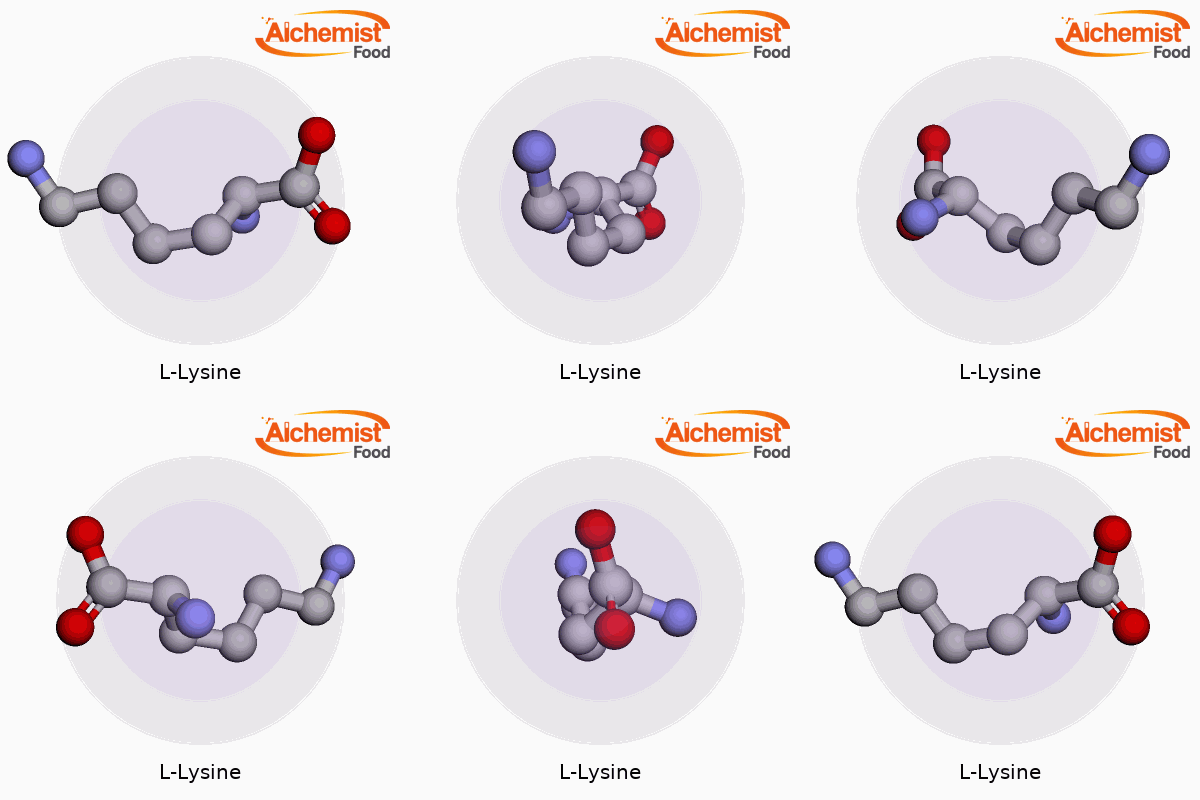
| 3D model (JSmol) | `/usr/share/jmol-14.6.4/jsmol/j2s/sym/lys.cif` |
| Beilstein Reference | 2741984 |
| ChEBI | CHEBI:25094 |
| ChEMBL | CHEMBL630 |
| ChemSpider | 84583 |
| DrugBank | DB00114 |
| ECHA InfoCard | DTXSID7020325 |
| EC Number | 3.5.3.6 |
| Gmelin Reference | 17538 |
| KEGG | C00047 |
| MeSH | D008232 |
| PubChem CID | 5962 |
| RTECS number | OJ5975000 |
| UNII | JH93127924 |
| UN number | UN3077 |
| CAS Number | 56-87-1 |
| Beilstein Reference | 3569551 |
| ChEBI | CHEBI:25094 |
| ChEMBL | CHEMBL630 |
| ChemSpider | 5465 |
| DrugBank | DB00114 |
| ECHA InfoCard | 03e4d8d8-1c0e-4aae-811e-cc315edae94e |
| EC Number | 2.6.1.39 |
| Gmelin Reference | 2938 |
| KEGG | C00047 |
| MeSH | D008232 |
| PubChem CID | 5962 |
| RTECS number | OJ0530000 |
| UNII | J2Z13C1MYA |
| UN number | UN3077 |
| Properties | |
| Chemical formula | C6H14N2O2 |
| Molar mass | 146.19 g/mol |
| Appearance | White crystalline powder |
| Odor | Odorless |
| Density | 0.86 g/cm³ |
| Solubility in water | Soluble in water |
| log P | -3.0 |
| Acidity (pKa) | pKa1 = 2.18, pKa2 = 8.95, pKa3 = 10.53 |
| Basicity (pKb) | 1.14 |
| Magnetic susceptibility (χ) | -9.9 × 10⁻⁶ |
| Refractive index (nD) | 1.728 |
| Viscosity | 30,000 - 60,000 cP |
| Dipole moment | 12.9952 D |
| Chemical formula | C6H14N2O2 |
| Molar mass | 146.19 g/mol |
| Appearance | White crystalline powder |
| Odor | Odorless |
| Density | 0.98 g/cm³ |
| Solubility in water | Freely soluble in water |
| log P | -3.0 |
| Acidity (pKa) | pKa1 = 2.18, pKa2 = 8.95, pKa3 = 10.53 |
| Basicity (pKb) | 1.21 |
| Magnetic susceptibility (χ) | -5.1×10⁻⁹ |
| Refractive index (nD) | 1.521 |
| Dipole moment | 1.1 D |
| Thermochemistry | |
| Std molar entropy (S⦵298) | 147.7 J·mol⁻¹·K⁻¹ |
| Std enthalpy of formation (ΔfH⦵298) | -1337.7 kJ/mol |
| Std enthalpy of combustion (ΔcH⦵298) | -3907.8 kJ/mol |
| Std molar entropy (S⦵298) | 170.6 J·mol⁻¹·K⁻¹ |
| Std enthalpy of formation (ΔfH⦵298) | -1327.2 kJ/mol |
| Std enthalpy of combustion (ΔcH⦵298) | -3913 kJ/mol |
| Pharmacology | |
| ATC code | A11AA03 |
| ATC code | A16AA21 |
| Hazards | |
| Main hazards | May cause eye, skin, and respiratory tract irritation. |
| GHS labelling | GHS07, Warning, H319 |
| Pictograms | GHS07 |
| Signal word | Warning |
| Hazard statements | Hazard statements: "May cause respiratory irritation. |
| Precautionary statements | P264, P270, P301+P312, P330, P501 |
| Autoignition temperature | 300 °C |
| Lethal dose or concentration | LD₅₀ oral rat 5,000 mg/kg |
| LD50 (median dose) | LD50 (median dose): Oral-rat LD50: 9410 mg/kg |
| PEL (Permissible) | PEL: Not established |
| REL (Recommended) | 3000 mg |
| Main hazards | May cause respiratory irritation. Causes serious eye irritation. May cause skin irritation. |
| GHS labelling | GHS07, GHS08 |
| Pictograms | GHS07 |
| Signal word | Warning |
| Hazard statements | No hazard statements. |
| Precautionary statements | IF IN EYES: Rinse cautiously with water for several minutes. Remove contact lenses, if present and easy to do. Continue rinsing. |
| NFPA 704 (fire diamond) | 1-1-0 |
| Autoignition temperature | 400°C |
| Lethal dose or concentration | LD50 (oral, rat): 5000 mg/kg |
| LD50 (median dose) | 5.0 g/kg (rat, oral) |
| NIOSH | Not Listed |
| PEL (Permissible) | 10 mg/m³ |
| REL (Recommended) | 2-3 g/hari |
| Related compounds | |
| Related compounds |
Cadaverine L-Arginine L-Ornithine L-Glutamic acid L-Glutamine L-Histidine L-Aspartic acid Pipecolic acid |
| Related compounds |
L-Lysine hydrochloride Lysine acetate Lysine monohydrate DL-Lysine L-Lysine sulfate L-Lysine dihydrate |



