L-Histidine: Deep Dive into a Vital Amino Acid
Historical Development
L-Histidine’s journey in the scientific community goes back over a century. In the late 1800s, German chemist Albrecht Kossel managed to isolate this amino acid from proteins, giving scientists a fresh perspective on the building blocks of life. Back then, isolation involved painstaking work—fractionation, crystallization, and dedication that stretched for weeks. Scientists quickly realized that histidine played a key role in protein structure and enzyme activity. In the decades that followed, researchers improved separation techniques, including chromatography and electrophoresis, allowing more widespread study. Interest spiked during the world wars as nutrition and growth in children captured international attention. L-Histidine earned status as a “semi-essential” nutrient, critical in periods of rapid growth and healing. The development of synthetic methods in the latter half of the twentieth century helped factories supply food, pharmaceutical, and research sectors with reliable quantities. Stepwise advances in analytical chemistry and biotechnology kept histidine steadily in the spotlight, linking this compound to enzyme catalysis, metal ion binding, and numerous medical applications.
Product Overview
L-Histidine exists naturally in almost every living thing, and the commercial product mirrors this—all thanks to careful purification and synthesis. It appears as a white, crystalline powder, often delivered in sealed containers to shield it from moisture and light. Food-grade and pharmaceutical-grade histidine come with high purity levels, frequently listed at 99% or more. You’ll see it in nutrition supplements, infusion solutions for hospitals, microbial culture media, and specialty animal feeds. Scientists rely on it for cell culture and protein studies, and drug manufacturers turn to it for buffer formulations and as an active ingredient. The product needs to stay dry and properly labeled due to its reactive imidazole ring, which can absorb water from air. Labels always list source, concentration, lot number, and standardized storage guidelines—these details keep quality high through every step of the supply chain.
Physical & Chemical Properties
L-Histidine carries the classic traits of amino acids, but the imidazole side-chain gives it unique appeal. At room temperature, the pure compound forms colorless, odorless crystals that dissolve readily in water. The melting point stands near 287°C with decomposition. Histidine’s zwitterionic nature—bearing both a positive amine and a negative carboxylate group—signals its value in biological pH buffering. Its side-chain imidazole group offers weak basicity, with a pKa around 6, allowing it to both accept and donate protons under physiological conditions. This flexibility opens pathways for catalysis in enzymes and pH control in living cells. Unlike some other amino acids, L-Histidine dissolves better in acidic and neutral solutions than highly alkaline ones, and the powder can take up ambient moisture, so airtight storage plays a big role in maintaining quality.
Technical Specifications & Labeling
Every shipment of L-Histidine typically comes with a technical data sheet. Most companies guarantee minimum purity of 98.5%, with clear thresholds for moisture, heavy metals (often below 10 ppm), and microbial contamination. The label or accompanying specification document notes the enantiomeric form (L vs D), as only the L-form integrates into living systems. Labels must also state country of origin, compliance with pharmacopeias or food codices, batch number, recommended use, expiration date, and safety instructions. Consistent and unequivocal traceability protects users against contamination and misidentification, which could lead to ineffective results or health risks in medical and food contexts. Compliance with standards set by organizations like the US Pharmacopeia (USP), European Pharmacopeia (EP), and Food Chemicals Codex (FCC) is carefully documented, supporting regulatory audits and end-user transparency.
Preparation Method
For a long time, production depended on hydrolyzing natural proteins extracted from animal or plant sources, but the low yield and high cost sent researchers on a hunt for better methods. The breakthrough came with fermentation using modified strains of bacteria such as Corynebacterium glutamicum and Escherichia coli. Manufacturers feed these microbes with cheap sugars, ammonium salts, and trace nutrients, then coax them into making L-Histidine with precision. Downstream purification involves centrifugation, activated carbon filtration, ion exchange chromatography, and recrystallization. Some labs synthesize the compound using protected organic intermediates and stepwise chemical conversion, then remove protecting groups and purify via repeated crystallization. Each method pushes for maximum yield, minimum by-products, and a clean profile. Recent biotechnological upgrades let producers fine-tune microbial strains to generate more product, lower waste, and shrink overall costs—a win for food security and research budgets alike.
Chemical Reactions & Modifications
The imidazole group unlocks histidine’s starring role in many organic reactions. In protein chemistry, chemical modification of histidine residues enables the study of enzyme active sites and signal pathways. Histidine forms stable complexes with transition metals like copper and zinc, anchoring cofactors in vital proteins. Derivatization at the amine or carboxyl end allows the creation of protected forms, like histidine methyl ester or N-acetylhistidine, which see use in organic synthesis and peptide assembly. Histidine’s reactive groups participate in cross-linking, phosphorylation, and even targeted radiolabeling, giving scientists diagnostic and therapeutic handles. In industry, the manipulation of histidine opens routes to peptide-based drugs and biocatalysts. Its sensitivity to oxidizing agents and acidic conditions requires care in chemical modification steps, often favoring mild, aqueous reactions and constant monitoring for unwanted side-products.
Synonyms & Product Names
Across formulas and patents, L-Histidine pops up under a few aliases. The IUPAC name 2-amino-3-(1H-imidazol-4-yl)propanoic acid rarely appears on a market label, but you might stumble across it in technical dossiers. Other common names include “His,” “L-His,” and “L-(+)-histidine.” In the supplement and pharmaceutical markets, clear labeling as “L-Histidine Monohydrochloride” or “L-Histidine Base” sets products apart, indicating the salt form or free acid. Some suppliers add batch-specific identifiers or code numbers for internal tracking, but global nomenclature centers on clarity in the chemical name and purity, especially for broad export markets and regulatory review.
Safety & Operational Standards
Anyone handling histidine in bulk or in labs knows safety comes first. In manufacturing plants, dust control and ventilation minimize the risk of accidental inhalation or skin contact, as the pure powder can dry skin and irritate mucous membranes. Plant operators receive training in safe weighing and transfer, controlling spills with antistatic measures and routine cleaning. Transport for pharmaceuticals follows Good Manufacturing Practice (GMP) and Good Distribution Practice (GDP) rules, using tamper-evident packaging and secure, temperature-controlled vehicles. Food and supplement companies stick to Hazard Analysis and Critical Control Point (HACCP) systems, watching for cross-contamination with allergens. Material Safety Data Sheets (MSDS) guide users on dosing, storage, spill control, and emergency medical treatment, with rules shaped by national regulatory agencies like the FDA and EPA in the US or the EMA in Europe.
Application Area
L-Histidine powers more than just research: it supports immunotherapy, metabolic regulation, and industrial-scale biotechnology. Hospitals depend on histidine-enriched IV solutions for infants and patients struggling with trauma or malnutrition. Athletes and wellness enthusiasts snap up histidine supplements to improve recovery and reduce fatigue, though efficacy claims spark debate. Histidine shows value in fermentation media for growing yeast, bacteria, and mammalian cells—essential for vaccine and therapeutic protein production. Researchers use it to mimic physiological buffer systems, unravel enzyme mechanisms, and design synthetic catalysts. Food manufacturers blend histidine into specialty nutrition products, including baby formula and medical food for patients with unique metabolic needs. As industries chase greener chemistry, L-Histidine turns up as a potential eco-friendly chelator in detergents and wastewater treatment.
Research & Development
The future of histidine sits at the intersection of genetics, nutrition, and synthetic biology. Precision fermentation now lets companies engineer microbes that deliver better yields, higher purity, and unique derivatives. Medical scientists investigate the role of histidine supplementation in treating chronic kidney disease, inflammatory disorders, and neurological conditions. Breakthroughs in peptide drug design keep histidine in focus for targeted therapy and drug delivery systems. Collaborations between industry and university labs deepen understanding of metabolic pathways, helping to minimize unwanted by-products and fine-tune biosynthesis. Some teams aim for “cell-free” production systems, using purified enzymes to build histidine outside living cells, potentially slashing time and cost. As interest in clean label and non-GMO products grows, innovation likely shifts toward greener raw materials and milder process conditions. Each advance trickles downstream, shaping new applications and raising quality standards in finished products.
Toxicity Research
Most toxicity studies on L-Histidine show a wide safety margin for both humans and animals under normal use. Excessive intake—well beyond nutritional needs—can trigger mild reactions: headache, sweating, and sometimes lost appetite. Pharmaceutical-grade preparations must avoid contamination with heavy metals or solvent residues, as these pose greater health risks than histidine itself. In rare cases, ultra-high doses given to animals push metabolic pathways to their limit, causing renal stress or altered neurological function. Strict tolerances for contaminants, defined in international regulations, keep business and healthcare users confident in product safety. Ongoing studies focus on vulnerable groups—pregnant individuals, infants, and those with metabolic disorders—where tailored intake makes a real difference.
Future Prospects
As labs push boundaries in synthetic biology, L-Histidine finds itself at the heart of cleaner, more sustainable manufacturing. Modified microorganisms now convert low-value agricultural byproducts into high-purity histidine, supporting both food security and circular economies. Genetic tools get sharper every year, so new versions of histidine could offer specialized functions in drug delivery, catalysis, or medical nutrition. Pharmaceutical firms keep an eye on histidine’s buffering power for next-generation biopharmaceuticals, as gentle pH control protects fragile proteins and antibodies. Engineered histidine analogues might boost imaging techniques or serve as triggers in “smart” therapeutic molecules. As awareness around nutrition grows, supplement makers look for better formulations with improved bioavailability. Regulatory agencies, for their part, stay vigilant, updating guidelines as new uses and benefits emerge. This ongoing cycle of research, innovation, and practical application shows no signs of slowing, keeping histidine firmly in the toolkit across science, industry, and medicine.
What are the main benefits of taking L-Histidine supplements?
What L-Histidine Does in the Body
L-Histidine often gets overlooked when folks talk about essential amino acids. Still, this little compound plays several big roles. L-Histidine forms the backbone of protein structures. Without it, the body struggles to make red and white blood cells, leading to more issues with immune defense and oxygen transport. Growth and recovery from daily wear and tear can slow down if there’s not enough histidine around.
Support for Joints and Tissue
Anyone dealing with joint stiffness or slow healing should care about their histidine status. L-Histidine supports production of carnosine, which helps buffer acids in muscle during physical activity. That means more comfortable movement and less soreness after a long day. There’s solid scientific backing for histidine contributing to the maintenance of connective tissue. A shortage might lead to nagging joint aches or longer healing times after a minor injury.
Boosting Immune Response
The body fights off sickness using white blood cells, and histidine is necessary for their production. If someone regularly catches colds or struggles with immune health, stepping up histidine intake could help. Research points to histidine playing a role in the formation of histamine too. Histamine helps open up blood vessels, allowing more immune cells to reach the site of injury or infection. That’s a big deal when the body tries to fight germs or recover from cuts or bruises.
Cognitive Health and Brain Function
Anyone who forgets names or loses focus mid-task understands the need for better brain support. L-Histidine contributes to neurotransmitter production, particularly histamine in the brain. That’s not just about allergies—brain histamine helps regulate alertness and wakefulness. Studies suggest it may also play a part in memory and learning ability. Supporting the brain’s chemical environment could pay off with clearer thinking and less mental fatigue.
Addressing Deficiency and Dietary Gaps
Some diets make it hard to get enough histidine. Vegetarian or vegan eaters or folks recovering from illness may not reach the daily intake just from food. For those in these camps, adding an L-Histidine supplement can fill dietary gaps. Symptoms like fatigue, poor appetite, or lingering skin issues could point to a mild shortage. Blood tests can clarify a true deficiency, and a healthcare provider can provide safe dosing advice.
Potential Solutions and Safer Use
Supplements aren’t magic bullets, so combining L-Histidine with a balanced diet works best. Make sure to check with a trusted doctor before starting a new supplement, especially if there are pre-existing conditions or ongoing medications. For athletes, careful monitoring helps avoid taking more than necessary, as extremely high levels could upset mineral balances. If relying on plant-based diets or managing chronic health problems, tracking amino acid intake makes a difference.
The Bigger Picture
More people turn to supplements looking for a little help with energy, immunity, or recovery. L-Histidine has real value in these areas. Checking the facts, sticking to recommended amounts, and working with professionals supports safe, effective use. In the end, it’s about helping the body function at its best without overcomplicating things.
Is L-Histidine safe to use and are there any side effects?
Understanding What L-Histidine Does
L-Histidine works as one of the essential amino acids, a building block for many different proteins in the body. You find it in chicken, fish, eggs, dairy, beans, and nuts. My own health journey taught me that keeping meals balanced with these foods supports things like tissue repair and immune function, especially when training hard or dealing with allergies. Doctors explain that L-Histidine helps make histamine in the body, which becomes important for immunity, digestion, and even sleep cycles.
Safety: What Science Says
Many people take L-Histidine from food and stay healthy. Supplements turn up in health stores, often with promises for joint support or athletic recovery. Most research points out that getting this amino acid through food looks safe for nearly everyone. Some clinical trials use L-Histidine supplements at moderate doses for specific medical needs. Doses up to around four grams per day—taken for a few weeks—showed almost no problems in adults, based on studies published in peer-reviewed nutrition journals.
That said, not everyone should jump at higher amounts. A couple of groups—children, pregnant women, and people with rare metabolic conditions called histidinemia—should skip high doses unless their doctor gives a clear green light. Anyone with kidney trouble also needs medical advice before adding extra amino acids, since the body might struggle to clear them.
Looking Out for Side Effects
Eating normal amounts of protein-rich foods almost never causes trouble. Trying higher-dose supplements can tip the balance, though. A handful of people reported nausea, fatigue, headaches, or a little brain fog. Some research hints that huge doses might bring down copper levels in the body, which matters for nerves and making red blood cells. Anyone with allergies or asthma should keep in mind that L-Histidine affects histamine—a main player in allergy reactions—so it could, at least in theory, affect symptoms.
Drug interactions stay rare, but anyone who takes medications that affect histamine (like certain allergy meds) or who deals with mood disorders should ask a healthcare provider before mixing in L-Histidine. Personal experience taught me not to add new supplements before checking for medication conflicts. You wouldn’t want to disrupt your current health plan without knowing the risks.
Why L-Histidine Use Matters
People chase supplements for faster recovery, better workouts, or to try fixing ongoing fatigue. L-Histidine comes up for those wrestling with rheumatoid arthritis or suffering from metabolic stress. Yet, piling on more than needed won’t boost health for most people with a solid diet. Too much of any single amino acid—especially outside of normal meal patterns—can throw off the body’s natural balance.
Focusing on real foods covers needs for nearly every active adult or child, according to the USDA. Tracking nutrient intake—using food diaries or apps—helped me realize I didn’t need to rely on pills to reach daily targets. If you’re curious, healthcare professionals can order blood tests for amino acids and spot any unusual gaps.
The Smarter Way Forward
Not all nutrition fads turn out useful or harmless. L-Histidine stands out more as a tool for those with clear medical reasons, or rare deficits, rather than as a catch-all supplement. It pays to ask hard questions: What am I hoping to fix? Does my personal health situation call for it? Experts with real-world clinical experience recommend getting a health check before turning to high-dose single amino acid products. My own efforts to chase the perfect supplement faded as I saw how basic meal quality and regular checkups could achieve steady health results.
How should I take L-Histidine and what is the recommended dosage?
Why L-Histidine Matters for Everyday Health
People chasing better health often look toward supplements, especially amino acids like L-histidine. This amino acid steps up for the skin’s barrier, supports nerve signals, and helps the body produce histamine, a chemical involved in digestion, immune response, and sleep cycles. Vegans, vegetarians, athletes, and folks with injuries might pay more attention to it, considering animal products bring in most of the histidine for omnivores.
Suggested Dosages and Common Practice
Typical adult diets already give most people enough L-histidine—average intakes run between 700-1,200 mg per day through regular food. That comes from meats, dairy, beans, nuts, seeds, and soy. The World Health Organization names 8-12 mg per kilogram of body weight per day as a safe intake zone. Someone weighing 70 kg would want about 560 mg to 840 mg daily.
In supplement form, doses tend to range from 500 mg up to 2,000 mg per day, often split into two or three smaller parts. Supplement makers target specific problems, like skin irritation or joint pain, but scientists still debate most benefits for healthy adults. There’s not a gold standard—studies for immune support and metabolic help often use doses between 1,000 mg and 4,000 mg for adults. Long-term safety data stays limited for high doses.
Best Ways to Take L-Histidine
Taking this amino acid on an empty stomach helps quick absorption since other amino acids from food might compete for the same transport routes in the gut. A glass of water works as a simple delivery method, skipping juices or caffeinated drinks that could cause mild digestive upset. If supplements bring nausea or cramps, eating a snack with the dose sometimes helps.
People with allergies, kidney issues, or autoimmune conditions need to consult a doctor before picking up a bottle. Too much histidine from supplements in rare cases can tip the balance and cause headaches, fatigue, or mood swings, especially in people prone to mental health issues. Kids and pregnant women should never self-dose amino acids—medical guidance matters here.
Food Sources Still Offer the Full Package
Supplements can’t copy the balance you find in whole foods. Roasted peanuts, soybeans, eggs, turkey, tuna, and lentils pack histidine into regular meals and bring along the fiber, minerals, and other nutrients missing in isolated capsules or powders. If a doctor flags a real deficiency or you’ve been through digestive trouble limiting protein absorption, supplements fill in the gaps. Athletes running up protein needs sometimes use amino acid supplements, but medical supervision still ranks as smart practice.
The Case for Caution and Smart Choices
In my own health routine, I take cues from lab results and real symptoms, not just marketing claims. Supplements sometimes help, but a colorful, protein-rich diet does the job for most. Medical advice, especially for those using other meds or managing chronic illness, trumps impulse supplement buys every time. As more research comes in, recommended doses could shift. Staying updated through trusted sources—registered dietitians or doctors with clinical nutrition experience—beats guesswork and online trends.
Can L-Histidine interact with other medications or supplements?
L-Histidine at a Glance
L-histidine often shows up in health stores as a supplement, with claims ranging from supporting joint health to helping with inflammation. It’s an essential amino acid, so the body counts on getting it from food or supplement sources. Anyone considering adding it to their routine wants to know how it plays with other medications and supplements.
How L-Histidine Works Inside the Body
L-histidine turns into histamine through enzymatic reactions, and histamine impacts immune system responses, digestion, and even brain function. It plays a role in making hemoglobin, the molecule that carries oxygen in the blood. Because it’s involved in so many processes, changes in its levels can change how other substances work in the body, including medications.
Interactions Worth Knowing
I’ve talked to pharmacists and seen first-hand how easily overlooked some supplement-drug interactions become. L-histidine doesn’t live in a bubble; it interacts with enzymes responsible for breaking down medications. For example, some drugs rely on certain enzymes to be metabolized. Raising histidine levels can sometimes affect these enzymes or boost histamine, shifting how a drug behaves.
People taking medicine for allergies, especially antihistamines, want to watch for any crossover. Because histidine turns into histamine, it might blunt the effect of allergy meds. There’s also evidence that high doses of amino acids might compete with other amino acids for absorption in the gut, including those found in popular multivitamins or protein supplements. This type of competition might sound like a science classroom problem, but it really plays out in clinics: someone piles on supplements thinking more brings more benefit, but ends up getting less from each.
Blood Thinners and Immune-Modifying Meds
Warfarin and other anticoagulants always live in the spotlight for potential food and supplement interactions. Since histamine has a role in inflammation and vascular changes, shifts due to histidine could show up in lab test results. Patients on immune suppressants, like those after a transplant or on steroids, should also tread carefully. The immune-boosting properties of histidine might make these drugs less predictable.
The Supplement Stack: Stacking Isn’t Always Smart
Walk down the vitamin aisle and it’s easy to get lost in a maze of choices. Most people don’t report what over-the-counter supplements they take to their regular doctor—and doctors don’t always ask. This leaves a blind spot that can lead to health problems. L-histidine illustrates this challenge well. If someone takes supplements along with prescription drugs—antidepressants, anticonvulsants, or medications like methotrexate for arthritis—the interplay can produce real, not theoretical, side effects.
Vitamin C, zinc, and copper supplements often get mixed into the same regimen, especially for those looking to boost immunity. There’s research suggesting too much zinc can throw off copper absorption. Histidine ties in because it helps move metals around in the body. Too much histidine, or layering it with high-dose zinc or copper, stacks the deck for imbalances.
Practical Steps for Smarter Supplement Use
Doctors and pharmacists want patients to list everything, not just “real” drugs. If that feels awkward, think of it this way: your provider isn’t looking to lecture, but to keep you out of trouble. If you’re adding L-histidine, share the full list. Keep an eye out for anything new: dizziness, digestive shifts, mood swings, or odd symptoms after adding something to your routine.
The supplement industry keeps growing, but the science sometimes lags behind marketing. Proven safety comes from transparency and teamwork between you and your provider. Reading labels at the drugstore doesn’t give the full picture—a short conversation with a healthcare professional offers protection that can’t be replaced by internet searches or well-meaning advice from store clerks.
What conditions or symptoms may L-Histidine help treat or manage?
Understanding L-Histidine’s Role in the Body
L-histidine sits on the list of essential amino acids, a group you have to get from your diet because your body can’t make them on its own. It’s a building block for proteins, sure, but its role goes deeper. This amino acid helps produce histamine—the same chemical that leads to allergy symptoms but also helps regulate sleep, appetite, and immune response. Having enough L-histidine supports everyday functions most of us take for granted, like tissue repair and healthy nerve signaling.
Where L-Histidine Steps In: Selected Health Conditions
Histamine stands out as a major player in allergic responses. For folks dealing with allergies, L-histidine helps provide material the body needs when making new histamine. Some studies show that supplementing with L-histidine helps manage allergy symptoms in a roundabout way by balancing how much histamine the body produces and how quickly it breaks down. So people with poor wound healing or immune system trouble sometimes look at L-histidine as a part of their overall plan.
Another group that turns to L-histidine includes people living with rheumatoid arthritis. Some researchers theorize that people with long-term inflammatory conditions run low on this amino acid. A study in the medical journal 'Rheumatology International' reported that patients with rheumatoid arthritis had lower L-histidine levels than healthy controls. By supplying more of this amino acid, patients sometimes see improvements in energy and experience fewer flare-ups—though big, controlled studies remain limited.
Doctors who treat metabolic disorders, such as uremia in kidney disease, sometimes discuss histidine. Uremic patients on dialysis often show depleted levels because of protein loss and chronic inflammation. These patients may regain some hemoglobin and immune function with L-histidine supplementation. Again, most of the evidence comes from targeted case studies and small clinical trials.
Managing Anemia, Fatigue, and Cognitive Function
Some athletes and vegans pay extra attention to L-histidine because a lack of it can lead to anemia. Since it forms part of hemoglobin—the molecule that carries oxygen in the blood—getting enough through food or supplements promotes healthy red blood cell production. I’ve seen that people who run long distances or eat little meat occasionally feel more tired and notice brain fog when their amino acid intake drops. L-histidine, along with iron and vitamin B12, gives them a better shot at steady energy during the day.
Researchers look at L-histidine’s effect on brain health, too. Some animal studies link it to nerve cell protection and memory retention. Early studies explore whether the amino acid influences neurotransmitters that handle mood and cognitive speed. The results look promising, but current recommendations for brain function stay conservative while scientists gather more evidence.
Sourcing L-Histidine: Practical Solutions
Most people get enough L-histidine by eating a mixed diet with fish, meat, eggs, and certain plant sources like soybeans and lentils. Individuals who skip animal products or have specific medical needs benefit from paying closer attention to their intake. Doctors sometimes suggest supplements in capsule or powder form, tailored to each person’s condition and unique health goals.
As with any nutrient, overdoing supplementation brings risks. Too much L-histidine, in rare cases, can upset the balance of other amino acids or contribute to elevated histamine, setting off allergic or digestive troubles. Balancing intake through varied foods, checking with a healthcare professional, and monitoring for unwanted effects always makes sense.
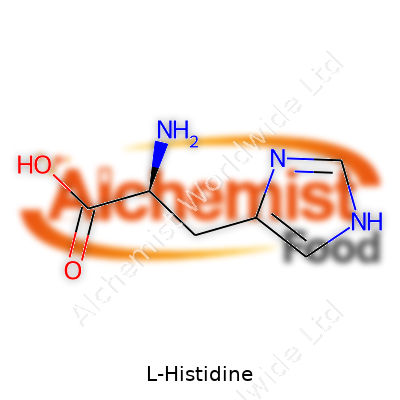
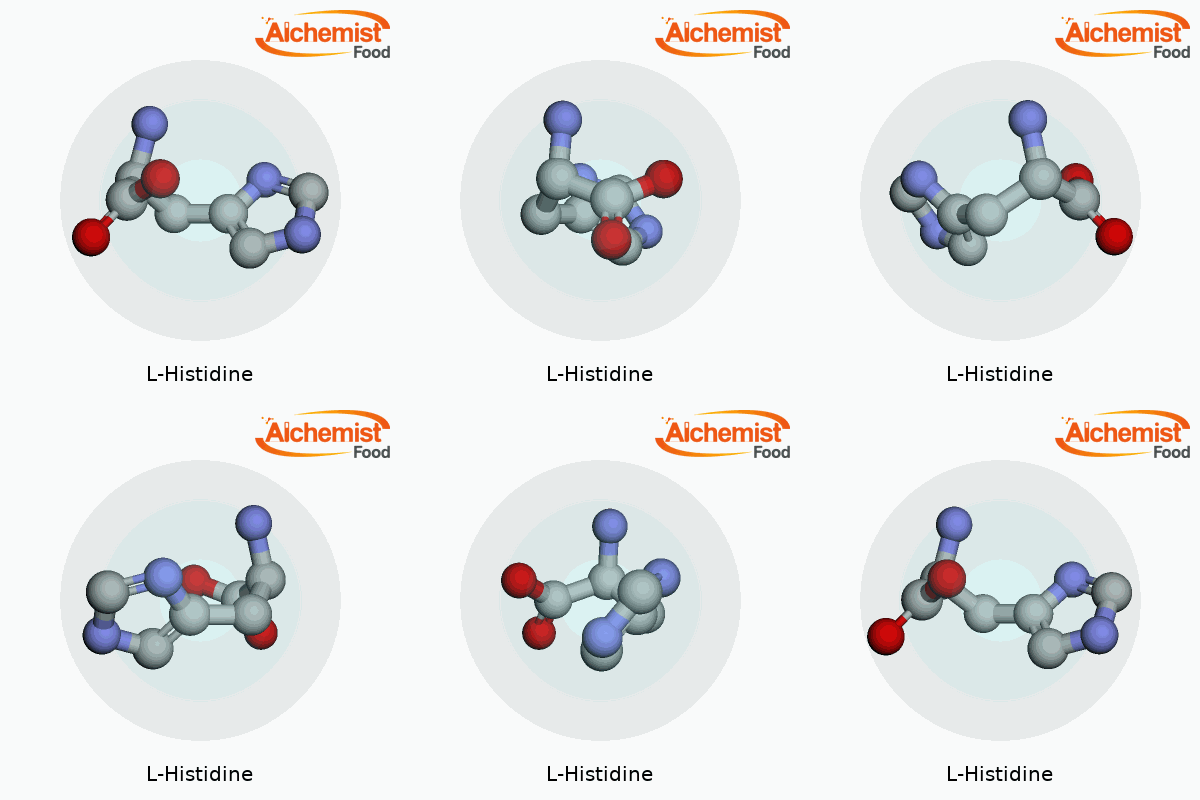
| Names | |
| Preferred IUPAC name | (2S)-2-amino-3-(1H-imidazol-4-yl)propanoic acid |
| Other names |
His 2-Amino-3-(1H-imidazol-4-yl)propanoic acid |
| Pronunciation | /ɛl hɪˈstɪdiːn/ |
| Preferred IUPAC name | (2S)-2-amino-3-(1H-imidazol-4-yl)propanoic acid |
| Other names |
His HIS L-2-Amino-3-(1H-imidazol-4-yl)propanoic acid |
| Pronunciation | /ɛl hɪˈstɪdiːn/ |
| Identifiers | |
| CAS Number | 71-00-1 |
| Beilstein Reference | 1720803 |
| ChEBI | CHEBI:6311 |
| ChEMBL | CHEMBL1256 |
| ChemSpider | 1574 |
| DrugBank | DB00117 |
| ECHA InfoCard | 100.039.461 |
| EC Number | 3.5.4.8 |
| Gmelin Reference | 5885 |
| KEGG | C00135 |
| MeSH | D006631 |
| PubChem CID | 6274 |
| RTECS number | MW6460000 |
| UNII | JGS214O7IX |
| UN number | Not regulated |
| CAS Number | 71-00-1 |
| Beilstein Reference | 3589577 |
| ChEBI | CHEBI:6279 |
| ChEMBL | CHEMBL902 |
| ChemSpider | 5467 |
| DrugBank | DB00117 |
| ECHA InfoCard | 100.043.680 |
| EC Number | 3.5.4.8 |
| Gmelin Reference | 68184 |
| KEGG | C00135 |
| MeSH | D006631 |
| PubChem CID | 6274 |
| RTECS number | MW7870000 |
| UNII | J223BP11C9 |
| UN number | UN3335 |
| CompTox Dashboard (EPA) | DTXSID4020011 |
| Properties | |
| Chemical formula | C6H9N3O2 |
| Molar mass | 155.16 g/mol |
| Appearance | White crystalline powder |
| Odor | Odorless |
| Density | 0.76 g/cm³ |
| Solubility in water | 41.3 g/L (20 °C) |
| log P | -3.32 |
| Acidity (pKa) | 6.0 |
| Basicity (pKb) | 6.04 |
| Magnetic susceptibility (χ) | −65.0·10⁻⁶ cm³/mol |
| Dipole moment | 3.28 D |
| Chemical formula | C6H9N3O2 |
| Molar mass | 155.16 g/mol |
| Appearance | White crystalline powder |
| Odor | Odorless |
| Density | 0.43 g/cm³ |
| Solubility in water | 35 g/L (20 °C) |
| log P | -3.32 |
| Vapor pressure | Negligible |
| Acidity (pKa) | 6.0 |
| Basicity (pKb) | 6.04 |
| Magnetic susceptibility (χ) | -47.0×10⁻⁶ cm³/mol |
| Dipole moment | 3.63 D |
| Thermochemistry | |
| Std molar entropy (S⦵298) | 151.0 J⋅mol⁻¹⋅K⁻¹ |
| Std enthalpy of formation (ΔfH⦵298) | -134.8 kJ/mol |
| Std enthalpy of combustion (ΔcH⦵298) | -1748.1 kJ/mol |
| Std molar entropy (S⦵298) | 203.5 J·K⁻¹·mol⁻¹ |
| Std enthalpy of formation (ΔfH⦵298) | -293.51 kJ/mol |
| Std enthalpy of combustion (ΔcH⦵298) | -1339.0 kJ/mol |
| Pharmacology | |
| ATC code | A16AA06 |
| ATC code | A16AA06 |
| Hazards | |
| Main hazards | Irritating to eyes, respiratory system, and skin. |
| GHS labelling | GHS07 |
| Pictograms | GHS07 |
| Signal word | Warning |
| Hazard statements | Hazard statements: Harmful if swallowed. Causes serious eye irritation. |
| Precautionary statements | IF IN EYES: Rinse cautiously with water for several minutes. Remove contact lenses, if present and easy to do. Continue rinsing. If eye irritation persists: Get medical advice/attention. |
| NFPA 704 (fire diamond) | 1-0-0 |
| Flash point | > 224.6 °C |
| Autoignition temperature | 412 °C |
| Lethal dose or concentration | LD50 Oral Rat 12.8 g/kg |
| LD50 (median dose) | LD50 (median dose): 12 g/kg (oral, rat) |
| NIOSH | SN2980000 |
| PEL (Permissible) | Not established |
| REL (Recommended) | 4.1 – 8.5 mg/kg bw |
| IDLH (Immediate danger) | Not listed / Not established |
| Main hazards | May cause respiratory irritation. |
| GHS labelling | GHS07 |
| Pictograms | GHS07 |
| Signal word | Warning |
| Hazard statements | H319: Causes serious eye irritation. |
| Precautionary statements | Precautionary statements: P261, P305+P351+P338, P337+P313 |
| NFPA 704 (fire diamond) | 1-0-0-W |
| Autoignition temperature | 630 °C |
| Lethal dose or concentration | LD50 oral rat 12,000 mg/kg |
| LD50 (median dose) | LD50 (median dose): Mouse intravenous 330 mg/kg |
| NIOSH | NT8050000 |
| PEL (Permissible) | 15 mg/m3 |
| REL (Recommended) | 750 mg |
| Related compounds | |
| Related compounds |
Histamine Carnosine Anserine Urocanic acid 3-Methylhistidine |
| Related compounds |
Histidinol Histamine Urocanic acid Imidazole |



