Isobutyramide: A Deep Dive into Its History and Modern Value
Historical Development
Long before chemical databases filled up with thousands of specialty compounds, isobutyramide drew interest as scientists expanded their toolkit of amides. Early documentation, reaching back more than a century, tagged isobutyramide as a modest offshoot of isobutyric acid. Researchers with limited resources worked painstakingly to isolate this small molecule and probe its stability. Chemists soon realized it could do far more than serve as a basic intermediate. Over the decades, improvements in purification, characterization, and scale-up moved isobutyramide beyond the laboratory bench and into production sites, where new uses steadily emerged.
Product Overview
Isobutyramide doesn’t steal the spotlight in chemical catalogs, yet it provides crucial building blocks for pharmaceuticals, agrochemicals, and fine chemical processes. The compound’s skeletal structure centers around a four-carbon backbone, capped with an amide functional group. This simple substitution, where a methyl group bulges out from the main chain, shifts its reactivity profile in distinct ways compared to butyramide or the parent acid. Researchers favor isobutyramide for both its straightforward synthetic profile and the versatility it lends to downstream chemical transformations. At a glance, it does not look impressive on a shelf, but its reliable nature makes it a chemist’s friend for developing more complex compounds.
Physical & Chemical Properties
Pure isobutyramide appears as a white crystalline substance. It typically melts around 120 to 124 degrees Celsius, giving it stability for storage at ambient conditions. It dissolves freely in water and alcohols, which makes handling in a lab straightforward and enables rapid mixing. Its amide group shows the expected resonance, granting it polar character, yet the isobutyl tail brings modest hydrophobicity into the mix. In practice, this balance of polar and non-polar properties helps chemists manipulate solubility without unwanted surprises. Compared to stronger bases and acids, isobutyramide sits in a relatively neutral range, which boosts its compatibility across a wide set of organic reactions.
Technical Specifications & Labeling
Regulators and suppliers in the chemical trade place a premium on clear technical documentation for pure and technical-grade isobutyramide. Common technical grades exceed 98% purity, with impurities like isobutyric acid or related amides flagged for anyone running sensitive syntheses. Labels need to specify molecular weight (87.12 g/mol), CAS number (96-85-5), and typical identification numbers like EC or UN numbers if shipped in bulk. Shelf life, batch traceability, and recommended storage conditions—such as cool, dry locations away from oxidizers—form the backbone of reliable product handling information. People in quality control appreciate seeing straightforward COA documentation, spelling out residual solvent levels and heavy metals, which can have big effects in pharmaceutical workflows.
Preparation Method
Most synthesis routes for isobutyramide employ isobutyric acid or its chloride as a starting point. Reaction with ammonia or ammonium salts furnishes the amide cleanly, cutting down on need for elaborate purification, though stirred-batch reactors require precise temperature management to keep exothermic steps under control. Routine runs at chemical plants use straightforward aqueous or alcoholic solvents, followed by filtration and recrystallization. Some labs prefer coupling agents or direct dehydration methods to convert related precursors with higher efficiency, especially at scales where process waste becomes a factor. Over time, green chemistry approaches have squeezed out some of the harsher reagents, replacing them with catalysts that trim down reaction times and side-product formation.
Chemical Reactions & Modifications
Isobutyramide attracts attention both as a substrate and a reagent. Its amide bond resists hydrolysis under mild conditions, yet submits under strong acid or base, making it a handy protecting group or intermediate for more ambitious syntheses. Substituting groups on the nitrogen atom or tweaking the carbon skeleton produces a family of analogs, some with altered pharmacological effects and others with improved physical traits. Chemists sometimes employ isobutyramide in condensation reactions or dehydrogenations, using its moderate reactivity as a stepping stone for more specialized compounds, such as certain chiral synthons or bioactive fragments. Acid chlorides react vigorously with isobutyramide, signaling opportunity for polyamide construction or even crosslinked resin formulations.
Synonyms & Product Names
Isobutyramide goes by a handful of names that crop up in catalogs, including 2-methylpropanamide, 2-methylpropionamide, or as simply the amide of isobutyric acid. Some suppliers use trade codes tied to their batch and cataloging systems, which helps buyers verify sourcing and lot-specific inquiries. In regulatory contexts, precision matters, so databases stick with recognized chemical names or registry numbers to keep things unambiguous during audits or compliance checks.
Safety & Operational Standards
People handling isobutyramide in labs or factories depend on solid, factual safety data. The compound, while not acutely toxic at low concentrations, can still irritate eyes, skins, and mucous membranes, especially in dust or vapor form. Material Safety Data Sheets line out recommended PPE: gloves, goggles, and in ventilated settings, dust masks, since inhalation of fine crystalline particles could cause mild respiratory discomfort. Storage needs to steer clear of oxidizers, strong acids, and bases. Spills clean up with routine absorbents, though good hygiene and awareness go much further than fancy gear. Emergency protocols at major facilities train personnel to respond to unintended exposure as one would for benign yet potentially irritating chemicals: rinse, isolate, and report.
Application Area
Isobutyramide doesn’t dominate any single industry, but it shows up at important crossroads in pharmaceutical research, crop science, and organic synthesis. Drug developers use its backbone as a launching pad for producing new molecules with subtle differences that change how a drug interacts with its target. In agrochemicals, isobutyramide derivatives may alter how active ingredients move through plant tissues or soils. Industrial chemists appreciate its adaptability in resin systems, specialty coatings, or materials that need custom thermal or solubility behavior. Sometimes small details in a precursor can determine performance in the final product—this is where isobutyramide carves out its real value.
Research & Development
Academic groups and private innovation labs keep returning to amides like isobutyramide, searching for ways to wring out new functionality and green up processing steps. Current R&D circles press hard for solventless or aqueous-phase syntheses, targeting environmental benchmarks that put less strain on workers and waste streams. Computational chemistry models the reactivity patterns, guiding teams toward altered analogs with improved biological or material properties. Automation in synthesis and analysis speeds up the search for derivatives, often turning to isobutyramide as a test-bed because it’s straightforward and forgiving.
Toxicity Research
Toxicological studies slot isobutyramide into the broader category of low-molecular-weight amides. So far, published data shows it presents moderate irritation in animal models at large doses, but lacks evidence of major chronic harm, cancer risk, or reproductive toxicity at ordinary exposure levels. Regulatory authorities in the US, EU, and Asia cross-check new industrial uses to keep workplace exposures below established thresholds, audited by air sampling and surface wipe tests where powders get airborne. More systematic studies would help fill knowledge gaps, especially long-term effects at low-doses for sensitive or cumulative exposure—something on which consumer and worker safety both rest.
Future Prospects
New discoveries in green chemistry and sustainable materials can boost isobutyramide’s importance down the road. As the chemical industry shifts toward smaller environmental footprints, scalable processes based around benign reagents like isobutyramide can cut down hazardous waste and throttle back on fossil-sourced feedstocks. Researchers already hunt for amide analogs that improve water solubility, control drug release, or enhance biodegradability, building on simple templates like isobutyramide. Opportunities remain wide open for tweaking the molecule for custom catalysis, specialty additives, or as a proving ground for next-generation pharmaceuticals that deliver better efficacy with fewer side effects. The next breakthroughs may well start with compounds like isobutyramide, not just for what it achieves on its own, but for how small modifications can ripple outward into medicine, material science, and safer chemical manufacturing.
What is Isobutyramide used for?
Everyday Chemistry, Unexpected Uses
Most folks don’t think much about niche chemicals until they see a label or run into an industry that relies on them. Isobutyramide deserves a closer look, even if its name feels like something from a pharmaceutical textbook. This chemical crops up quietly in several corners of daily life, which might surprise people who’d never heard of it outside a lab.
A Role in Making Medicines
Isobutyramide tends to show up in pharmaceutical circles because it’s clever at helping form complex molecules. Drug discovery teams often need small, stable compounds that encourage particular reactions, so companies look at isobutyramide as a handy intermediate. It’s not usually what you swallow in a pill, but it helps form molecules that end up in your medicine cabinet. Without reliable intermediates, medical research crawls instead of sprints. That delay matters when we’re talking about potentially life-saving drugs.
Helping Industries Structure Flavors and Scents
A lot of artificial scents and flavors start their lives in test tubes. Isobutyramide works as a building block for those complex compounds. For example, a chemist working on a new vanilla scent or a nutty aroma needs foundational chemicals to tune subtle notes. This compound plays a small but vital part in that story. Food scientists and perfumers draw from a palette of chemicals to replicate flavors and fragrances that don’t always come cheap or easy from nature.
Polymer Science and Beyond
Non-food, non-pharma industries tap into isobutyramide too. Engineers in polymer research try countless recipes before releasing products like specialty plastics or advanced adhesives. Sometimes, little tweaks to a material’s backbone make all the difference between “good enough” and “bestseller.” Isobutyramide steps into this role, giving researchers flexibility and control.
Safety and Environmental Responsibility
Even as labs and factories use chemicals like isobutyramide to make life easier or more enjoyable, conversations about toxicity and environmental impact crop up. Handling any compound calls for a level head and good training. Still, isobutyramide’s track record looks much tamer compared to some of the heavier chemicals. Most guidelines recommend gloves and goggles in the workplace—practices common across the chemical world. Responsible disposal and a close eye on emissions keep it from becoming a bigger problem for communities or workers.
The Push for Alternatives and Safer Practices
Some people argue that specialty chemicals need to push toward safer, even greener, alternatives, especially as industries grow and regulations tighten. I’ve seen chemists experiment with more sustainable raw materials or look for ways to make reactions proceed at lower energies. Academic studies over the last few years also suggest new methods that trim waste and reduce environmental risks. Sometimes, that means companies take a hit on cost in exchange for safer workplaces and communities, but that’s just part of responsible progress.
Students and professionals curious about chemistry often bypass the “bit players” like isobutyramide, chasing after flashier names. Still, these unsung compounds shape daily life, offering reliable performance and encouraging new discoveries. The real value shines through in industries ranging from medicine to materials science. If more people understood the network of chemistry behind finished products, there’d be more appreciation for keeping research both innovative and safe.
What is the chemical formula of Isobutyramide?
Getting to Know Isobutyramide
Isobutyramide grabs attention for its structure as well as for the practical uses it has in chemical labs and research settings. At its core, isobutyramide sports a simple enough chemical formula: C4H9NO. That’s four carbons, nine hydrogens, one nitrogen, and one oxygen. Even those who haven’t spent countless hours bent over a chemistry book can appreciate how each little tweak to a molecule’s design ends up changing its properties in a big way.
Anatomy of a Molecule: What Makes Up Isobutyramide?
Chemical formulas pack a surprising amount of info. For isobutyramide, each atom counts. The carbon backbone—three of them in a row, one sticking off to the side—sets this molecule apart from the more streamlined version you’d find in butyramide. Swap a few carbon atoms around, and suddenly the chemical might begin to smell different, dissolve better in water, or react in new ways with other compounds. In this case, the “iso” in isobutyramide signals a branched structure, not just a straight chain. That branch can mean a new set of melting points or solubilities, and chemists have to take these changes seriously.
Role in Chemical Research and Industry
Laboratories value isobutyramide as a stepping stone in making bigger, more complex molecules. The amide group (that’s the –CONH2 part of the formula) draws a lot of attention in pharmaceutical studies or for folks designing new specialty chemicals. Amides show up across a range of medicines, as well as in materials you might not think twice about—things like nylon or certain plastics. Anyone working in synthetic chemistry needs to get a good handle on simple amides like isobutyramide before tackling the really fancy ones.
Colleagues in the academic world use isobutyramide as an example to teach students about how small changes can alter molecular characteristics. Teachers often say, “one atom makes all the difference,” and molecules like this prove it. Kids pouring bright liquids into beakers at the school science fair may not know it, but every chemical synthesized depends on facts like these. Understanding molecular structure lays the groundwork for safe new drugs or greener chemicals in agriculture.
Safety and Responsibility in Handling Chemicals
Every chemical comes with its puzzles and problems. Isobutyramide isn’t much different. Reading chemical safety sheets keeps folks from making mistakes: gloves, goggles, and lab coats provide protection, even for a seemingly simple amide. Making a point of double-checking labels and formulas shields lab workers from dangerous mix-ups. Google’s E-E-A-T principles remind us to lean on expertise—sticking to peer-reviewed sources, seasoned chemists’ advice, and firsthand lab experience.
Accuracy matters for trust and safety. Errors in reporting a formula, mixing up carbon atoms, or assuming two isomers act the same puts researchers and industries at risk. Responsible chemists check their facts, use reliable material data, and always leave a paper trail for anyone who comes after them.
Building Smarter Chemical Solutions
As new challenges pop up in pharmaceuticals, agriculture, and manufacturing, knowing how to break down a formula like C4H9NO becomes more than a back-of-the-textbook exercise. Chemistry labs thrive on small discoveries—someone noticing that branched isomers handle stress better or break down faster in the environment. That’s the real-world impact of getting the formula right on every single bottle and chart in the lab. Smart solutions start by digging deep into the basics and staying sharp about the details.
Is Isobutyramide safe to handle?
What Isobutyramide Means To People Who Work With Chemicals
The story of isobutyramide starts and ends like many other lab chemicals: folks see a fancy word, maybe a chemical formula, and wonder if skin or lungs can handle it without trouble. This compound, with its tidy white crystals, quietly sits in many chemical labs and finds use in research and small-scale organic work. I've seen it pop up from time to time in storage cabinets, squeezed between other synthesis intermediaries. There’s a recipe for calm and another for carelessness if you don’t know what you’re dealing with.
Learning From The Data Sheets, Not Ignoring Them
Manufacturers and safety regulatory bodies like OSHA and ECHA don’t just dream up safety sheets for fun. Their job is to document what happens in the real world, not just what looks good on paper. For isobutyramide, the numbers and facts matter. Acute toxicity, skin irritation, inhalation risk—each hazard category earns a box on the data sheet for a reason. You won’t find it sporting a skull-and-crossbones sticker, but you won't see it on any list of harmless kitchen spices, either.
The Material Safety Data Sheet doesn’t just ask for eye protection and gloves out of habit. Studies show that contact with skin or eyes leads to irritation. Inhalation might cause respiratory discomfort or headaches. Even though severe poisonings aren’t famous for this compound, repeated or careless exposure can build up trouble over time. In my experience, students sometimes blow off the basics, thinking ‘not that dangerous’ means ‘fine to touch’—until they spend the rest of the day with red skin or a sore throat.
Taking Lab Safety Further Than Just Gloves
Safety doesn’t mean panic. It means paying attention and using barriers like gloves and goggles that keep the stuff off your skin and out of your system. Good ventilation helps keep the air free from any drifting particles or vapors. Storing isobutyramide away from sources of ignition or incompatible chemicals keeps surprises from happening, especially in cluttered labs.
Every chemical has its story of “that time someone didn’t pay attention.” Years ago, a spill in our lab reminded everyone how important simple personal protective equipment can be. A graduate student forgot gloves, noticed only after tingling in her finger. The cleanup, paperwork, and teaching session that followed made everyone slow down and double-check.
Learning From Research And Real-World Reports
Published research and occupational exposure experiences both underscore the value of habits. Chronic exposure hazards aren’t dramatic but bring real effects—long-term skin sensitization or respiratory symptoms can show up if you make shortcuts routine. Peer-reviewed data confirms that isobutyramide isn’t the nastiest thing in the room but isn’t safe to treat like salt, either.
National safety authorities update chemical hazards with real-world data as accidents or new studies surface. This means anyone who works with isobutyramide or supervises young researchers should check for the latest updates and keep emergency contacts and equipment handy. Fact-driven habits beat guessing games in any chemical workspace.
Smart Solutions And Personal Responsibility
Education makes the biggest difference. Lab managers who run clear safety training keep both newcomers and experienced staff out of trouble. A culture of double-checking storage, labeling, and ventilation setups goes far beyond posting warning signs. Digital records or updated inventory tools help spot potential problems before they reach hands-on work.
The bottom line from my own years among beakers and bottles: treat isobutyramide with basic respect, just like any laboratory chemical. Use gloves, goggles, good ventilation, and clear communication about hazards. Skip those steps, and sooner or later, something will go wrong. Handle it right, and isobutyramide stays in its place—useful, not dangerous.
How should Isobutyramide be stored?
What Makes Isobutyramide Worth a Second Look?
Isobutyramide—often found in chemical labs and research settings—looks innocent at first glance. In reality, poor storage can turn that promise into a headache, or worse, a health hazard. That’s not a scare tactic; that’s the voice of someone who’s seen a forgotten capped bottle crack because the environment didn’t suit it. Simple choices, like where to put a container, make a world of difference not only for your safety but for anyone sharing the workspace.
Why Get Serious About Storage?
This isn’t a chemical that loves attention, but isobutyramide does require respect. It can irritate skin or eyes and, in the wrong spot, vapors may build up. Storing this substance carelessly risks unwanted chemical reactions. I’ve talked to folks who didn’t label their bottles or set them alongside acids—a move that invites disaster. It only takes one lapse for a routine afternoon to spiral into trouble you don’t want.
Simple Steps That Protect Workers and Products
Stashing isobutyramide out of direct light prevents breakdown. I’ve found that even strong overhead lamps can warm up storage shelves, so keeping containers away from light keeps them stable and protects those working nearby. Temperature matters: chemical stability decreases as things heat up. Standard room temperature feels right—usually between 20°C and 25°C. Anything hotter, and you risk vapor formation or worse, pressure inside bottles.
Humidity brings its own set of concerns. Moisture creeping in through poor seals or cracked caps can degrade the chemical or lead to container rust, especially in labs relying on budget glass and metal. I once saw a junior researcher shrug off a drippy ceiling, only to spend hours cleaning up after a ruined batch. Use dry, low-humidity rooms. If possible, invest in desiccants for your cabinets.
Container Choices Speak Volumes
Not all bottles work the same. Glass gives peace of mind, resisting most reactions, but it cracks if mishandled. Sealed, high-quality plastic keeps out air and moisture. Labels should face front and bear clear writing, so nobody mistakes it for something else. A little tape and a thick marker go a long way. Never use food containers—they confuse even the best, and I’ve seen old jars create real risks.
Personal experience tells me: always use screw-top or tightly sealed lids. Screw threads fail less, and new caps save hassle compared to worn-out ones. This is not the place to pinch pennies.
Location, Accessibility, and Community Responsibility
Shelve isobutyramide away from acids, bases, and anything flammable. Even a single shelving accident can send incompatible chemicals tumbling together. Store at chest height or below to avoid drops and spills. Don’t block access with clutter or “just for now” choices—a momentary shortcut can haunt everyone in the lab.
Community values matter. I’ve seen small acts—updating inventory logs or replacing torn hazard labels—build trust and reduce risks. Encourage everyone to alert others if problems emerge. Quick notifications prevent lasting harm.
Maintaining Vigilance Every Day
I check storage every few months. A quick look finds bulging bottles, leaks, or missing labels before things escalate. It’s not just about compliance with guidelines; you protect people’s health and save money on wasted product. If there's ever uncertainty, reference the SDS (Safety Data Sheet) or ask a supervisor who’s spent years learning these details. Small investments pay off, both in safety and peace of mind.
What are the physical properties of Isobutyramide?
The Look and Feel of Isobutyramide
Isobutyramide shows up in labs as a white, solid powder. You can scoop it out pretty easily, without it sticking to your gloves or making a mess. Unlike many chemicals that gum together or develop a waxy coat, isobutyramide keeps a loose, dry texture even after sitting around for a while. Its lack of strong smell makes handling it a bit more pleasant, especially compared to many similar amides that release powerful, biting odors.
Melting Point and Stability
One property that stands out is its melting point. Isobutyramide melts at about 112 to 114 degrees Celsius. This range keeps the compound solid at room temperature but still easy enough to melt in basic laboratory equipment. Anyone familiar with working in synthetic chemistry gets the value of a compound you can melt without needing special gear. This also tells a lot about its stability under normal storage conditions. It doesn’t puddle or form lumps, even in warmer climates, giving it a practical advantage over compounds with lower melting points.
Solubility Matters
Put isobutyramide into water and you’ll see it can dissolve—though not as quickly as sugar. Its solubility sits in a moderate range, meaning you don’t need huge amounts of solvent to get it into solution. This trait makes it easier to use in research where concentration and dilution need to happen quickly. In organic solvents, like ethanol and chloroform, isobutyramide dissolves even faster. These choices open the door to a range of chemical reactions or purification steps that are much tougher with more stubborn solids.
Density and Molecular Weight
The density of isobutyramide lands at around 1.02 grams per cubic centimeter. That puts it close to water, so it settles nicely in a test tube or flask without floating or sinking unpredictably. Its molar mass, which comes in at 87.11 grams per mole, aligns closely with other small amides. Working with chemicals in the same size range feels comfortable if you already know your way around simple organic synthesis.
Physical Safety and Storage
Isobutyramide keeps well in a dry, cool spot, away from strong acids or bases. No need for airtight containers. That cuts down time spent watching for spoilage or accidents—something every busy researcher values. There’s peace of mind, too, because it doesn’t give off dangerous fumes under standard conditions, making regular gloves and goggles enough PPE for most jobs involving this compound. If you’ve ever had a spill of volatile amides, you’ll know it’s nice not to worry so much here.
Why These Properties Matter
Anyone who’s handled chemicals across different labs knows that the finer points—like a comfortable melting range, easy solubility, and manageable texture—make a world of difference. These traits mean less time fighting with powders or solvents and more focus on the work that actually matters. For commercial makers, these features also mean longer shelf life and lower storage costs. On the research side, they break down barriers for students and experts alike, encouraging safe and straightforward use.
Looking for Improvements
Chemists always keep an eye on safety and usability. For isobutyramide, work could involve boosting its water solubility or producing larger crystals for specific industrial needs. New methods might surface to streamline recycling and reusing it after reactions, trimming waste. As chemists work with isobutyramide, data-sharing will sharpen best practices, making labs safer and more efficient for everyone down the line.
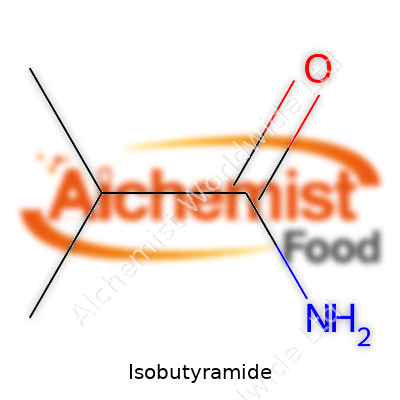
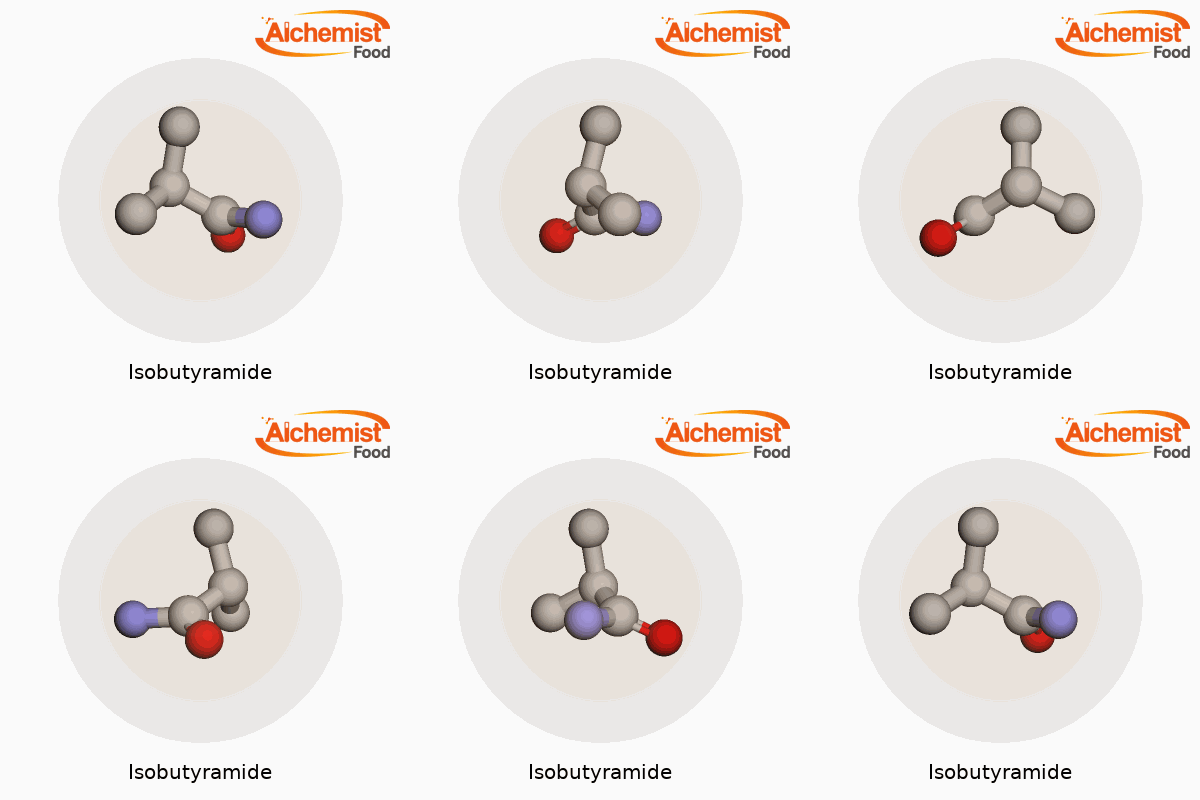
| Names | |
| Preferred IUPAC name | 2-Methylpropanamide |
| Other names |
2-Methylpropanamide Isobutyric acid amide |
| Pronunciation | /ˌaɪ.səˈbjuː.tɪ.rə.maɪd/ |
| Preferred IUPAC name | 2-Methylpropanamide |
| Other names |
2-Methylpropanamide Isobutanamide |
| Pronunciation | /ˌaɪsəˈbjuːtɪrəˌmaɪd/ |
| Identifiers | |
| CAS Number | 563-83-9 |
| 3D model (JSmol) | `Isobutyramide|JSmol|3D|C(C(C)C)C(N)=O` |
| Beilstein Reference | 392158 |
| ChEBI | CHEBI:44861 |
| ChEMBL | CHEMBL16675 |
| ChemSpider | 15329 |
| DrugBank | DB08836 |
| ECHA InfoCard | 03b4a9ba-6a39-42ff-945d-988852a5da44 |
| EC Number | 210-812-2 |
| Gmelin Reference | 46067 |
| KEGG | C21010 |
| MeSH | D007693 |
| PubChem CID | 7871 |
| RTECS number | MU5950000 |
| UNII | 50A9P4T86R |
| UN number | UN2811 |
| CompTox Dashboard (EPA) | DTXSID4042715 |
| CAS Number | 563-83-3 |
| 3D model (JSmol) | `Isobutyramide|c1ccc2c(c1)CC(=O)N2` |
| Beilstein Reference | 0711444 |
| ChEBI | CHEBI:34985 |
| ChEMBL | CHEMBL161383 |
| ChemSpider | 80392 |
| DrugBank | DB04268 |
| ECHA InfoCard | ECHA InfoCard: 100.007.276 |
| EC Number | 203-464-4 |
| Gmelin Reference | Gmelin 8326 |
| KEGG | C02573 |
| MeSH | D013229 |
| PubChem CID | 7847 |
| RTECS number | NJ3150000 |
| UNII | 39LRR75S22 |
| UN number | UN2811 |
| CompTox Dashboard (EPA) | DTXSID3047325 |
| Properties | |
| Chemical formula | C4H9NO |
| Molar mass | 87.12 g/mol |
| Appearance | White to off-white crystalline solid |
| Odor | weak, unpleasant |
| Density | 0.927 g/cm3 |
| Solubility in water | Soluble |
| log P | 0.01 |
| Vapor pressure | 0.37 mmHg (at 25°C) |
| Acidity (pKa) | 15.2 |
| Basicity (pKb) | 0.98 |
| Magnetic susceptibility (χ) | -7.31·10⁻⁶ |
| Refractive index (nD) | 1.428 |
| Viscosity | 11.6 mPa·s (20°C) |
| Dipole moment | 3.89 D |
| Chemical formula | C4H9NO |
| Molar mass | 87.1204 g/mol |
| Appearance | White crystalline solid |
| Odor | Odorless |
| Density | 0.927 g/cm3 |
| Solubility in water | Soluble |
| log P | 0.07 |
| Vapor pressure | 0.41 mmHg (at 25 °C) |
| Acidity (pKa) | 13.9 |
| Basicity (pKb) | 0.99 |
| Magnetic susceptibility (χ) | -54.7e-6 cm³/mol |
| Refractive index (nD) | 1.422 |
| Viscosity | 2.14 mPa·s (at 20 °C) |
| Dipole moment | 3.56 D |
| Thermochemistry | |
| Std molar entropy (S⦵298) | 224.8 J·mol⁻¹·K⁻¹ |
| Std enthalpy of formation (ΔfH⦵298) | -195.2 kJ/mol |
| Std enthalpy of combustion (ΔcH⦵298) | -1704.9 kJ/mol |
| Std molar entropy (S⦵298) | 222.7 J·mol⁻¹·K⁻¹ |
| Std enthalpy of formation (ΔfH⦵298) | -203.9 kJ/mol |
| Std enthalpy of combustion (ΔcH⦵298) | -2012 kJ/mol |
| Pharmacology | |
| ATC code | N02BG09 |
| ATC code | N02BG07 |
| Hazards | |
| Main hazards | Harmful if swallowed, causes skin and eye irritation. |
| GHS labelling | GHS02, GHS07 |
| Pictograms | GHS07 |
| Signal word | Warning |
| Hazard statements | H302: Harmful if swallowed. H315: Causes skin irritation. H319: Causes serious eye irritation. H335: May cause respiratory irritation. |
| Precautionary statements | Precautionary statements: P261, P280, P305+P351+P338, P337+P313 |
| NFPA 704 (fire diamond) | 1-1-0 |
| Flash point | 97°C |
| Autoignition temperature | 424°C |
| Explosive limits | No explosive limits found. |
| Lethal dose or concentration | LD50 oral rat 3730 mg/kg |
| LD50 (median dose) | LD50 (median dose): 570 mg/kg (rat, oral) |
| NIOSH | VJ8925000 |
| REL (Recommended) | 1 mg/m³ |
| IDLH (Immediate danger) | Unknown |
| Main hazards | Harmful if swallowed, causes serious eye irritation, causes skin irritation |
| GHS labelling | GHS07, Warning |
| Pictograms | GHS07 |
| Signal word | Warning |
| Hazard statements | H302: Harmful if swallowed. |
| Precautionary statements | P264, P280, P302+P352, P305+P351+P338, P332+P313, P337+P313 |
| NFPA 704 (fire diamond) | 1-1-0 |
| Flash point | 90°C |
| Autoignition temperature | > 406°C |
| Explosive limits | Explosive limits: 2.8–12.0% |
| Lethal dose or concentration | LD50 Rat oral 2460 mg/kg |
| LD50 (median dose) | LD50 (median dose) of isobutyramide: "2700 mg/kg (rat, oral) |
| NIOSH | NM1225000 |
| REL (Recommended) | 5 mg/m³ |
| IDLH (Immediate danger) | Unknown |
| Related compounds | |
| Related compounds |
Butyramide Isobutyryl chloride Isobutyric acid N,N-Dimethylisobutyramide |
| Related compounds |
Butyramide n-Butyl isobutyramide Isobutyric acid N,N-Dimethylisobutyramide |



