Glycerol Monostearate: Facts, Progress, and What Comes Next
Historical Development
Glycerol monostearate has roots that stretch back to early twentieth-century laboratories. Chemists explored fats and oils, breaking them down into components to understand how food textures and shelf lives could be changed. I remember learning about early soap-making; people noticed that certain mixtures felt creamier or lasted longer under heat. Researchers in Europe and North America pushed these studies further, looking for alternatives to animal-based emulsifiers. World War shortages encouraged the food industry to look for more stable ways to preserve bread, chocolate, and dairy, leading to commercialization in the 1930s and 40s. The compound opened doors for processed and packaged foods we now take for granted. By the 1970s, its worldwide use grew as industrial baking and margarine production expanded. Its history reflects big moments in food technology and shifts in what people expect from safe, longer-lasting groceries.
Product Overview
Glycerol monostearate, sometimes called GMS, comes from combining glycerol with stearic acid—a fatty acid found in animal fats and vegetable oils. Most people never see it in raw form, though they’ve eaten it in cakes, chips, and even icing. Manufacturers value GMS both for what it does—stabilizing oils and preventing separation—and for what it doesn’t do, which is bring odd flavors. It shows up as a white, waxy powder or flake, dissolving partly in warm water and completely in most oils. It has a mild, fatty taste and no odor, which lets bakers and candy makers work freely, tweaking recipes for softness and shelf life. The ingredient’s International Numbering System code is E471 in food applications. It goes by more names than most realize, whether labeled as monostearin, glyceryl stearate, or mono- and diglycerides, depending on the specific product blend and context.
Physical & Chemical Properties
GMS stands out for its amphiphilic structure, which just means it has parts that love water and parts that cling to oils. That split personality lets it sit at the oil-water interface, suspending tiny droplets and stopping them joining back up. The chemical formula is C21H42O4, with a molecular weight around 358 grams per mole. It melts between 58 and 65 degrees Celsius, and resists breaking down in normal storage. Those qualities make it a steady workhorse under bakery ovens or pan-frying conditions. The flakes blend easily and don’t clump in standard packaging. GMS does not attract much water from air, so it resists caking—something every baker appreciates.
Technical Specifications & Labeling
Industries check each batch of GMS for minimum monoester content, acid value, and iodine value, among other things. Food-grade versions contain at least 90% pure monostearate, with low free fatty acid content. Labeling calls for clear ingredient lists, since different countries vary in what they demand. In North America, look for "mono- and diglycerides" or "glycerol monostearate" on ingredient decks. The European Union uses E471, with a requirement that manufacturers specify animal or plant origin when relevant. Purity standards make a big impact on performance. For instance, pharma and cosmetics fields need extra low impurities, because traces of other fatty acids or free glycerol can affect the stability of creams or capsules. Color, odor, and melting point testing keep manufacturers honest and supplies flowing predictably.
Preparation Method
Most commercial GMS comes from a glycerolysis reaction: fats like palm or soybean oil react with glycerol under heat, using an alkaline catalyst to nudge the process. That method favors monoglycerides over di- or triglycerides, which cuts waste and keeps costs down. Watching an industrial batch cook up smells a little like soap making, but yields a far softer, finer product. Engineers separate the resulting mix, often by distillation, to snag a solid fraction rich in monostearate, followed by powdering and sifting. Some producers use animal fats for specialty products—mostly in niche applications—while the bulk comes from plant sources, since those options often cost less and avoid dietary restrictions.
Chemical Reactions & Modifications
In labs and factories, GMS can be modified to suit all sorts of technical demands. Acetylated or ethoxylated versions sport extra groups that alter their melting point or solubility, serving pharmaceutical or personal care uses. People in the field have tried blending GMS with different fatty acids to adjust foaming or thickening power, for tasks like whipped toppings or cake shortening. High-pressure hydrogenation gives a firmer, whiter end product, popular in pharma and cosmetics. GMS resists many common acids and alkalis, but does break down at strong extremes—something chemists keep in mind for stability testing and long-term storage. For tough industrial settings, special blends help prevent caking or hardening over months of warehouse time.
Synonyms & Product Names
Depending on where you shop and what you need, glycerol monostearate appears under many labels. Food-grade products might list mono- and diglycerides, monoacylglycerols, glyceryl stearate, or monostearin. Cosmetic manufacturers reference glyceryl monostearate SE (self-emulsifying) or NF (National Formulary). Specialty catalogs name variants by degree of purity or additional chemical tweaks. Even inside the same plant, technical staff refer to the same batch by application-specific nicknames, to avoid confusion with similar compounds like sorbitan monostearate. All these aliases point to one central chemistry—glycerol and stearic acid, joined to create a dual-natured molecule.
Safety & Operational Standards
Across food, pharma, and cosmetic industries, safety draws a bright line. Food safety authorities like the US FDA and European Food Safety Authority (EFSA) approve GMS for broad use with limits on daily intake. Studies reviewed for approval turned up little risk, and huge amounts haven’t shown toxic effects in animals or people. In the factory, workers wear standard gear—dust masks, eye protection, gloves—to handle bulk powders and avoid breathing in particles, or slipping on slick residues. Manufacturers follow current Good Manufacturing Practices (GMPs) to limit contamination. Strict testing for allergens, heavy metals, and residual processing chemicals forms the backbone of legally required safety checks. Bio-based sourcing pushes suppliers to keep track of their raw oils, tracking each batch for country of origin, genetic modification status, and storage details, since claims of "pure" or "organic" depend on those records.
Application Area
You spot GMS most often in foods: bakery goods, whipped toppings, margarine, ice cream, and chocolates. It helps bread keep its texture without going stale and stops fats from leaking out of pastries during storage. In industrial food plants, GMS runs through mixing tanks and onto conveyor belts, transforming basic wheat and oil into long-lasting, moist products for supermarket shelves. Chocolate factories use it for bloom control—a fancy way of saying it stops fat crystals from making bars look grey or greasy. Ice cream blends churn smoother with a little GMS, since the molecule keeps air bubbles held tight, delivering softer texture through temperature swings. Beyond food, cosmetic firms depend on it to thicken lotions or creams and bind water and oil together without harsh chemicals. In pharmaceuticals, capsules and tablets use it as a release agent or stabilizer. Detergents, plastics, and even some concrete mixes draw on GMS’s unique blend of toughness and flexibility, smoothing out the finished product or keeping dust controlled.
Research & Development
Researchers expand GMS’s uses all the time. Food scientists hunt for ways to reduce trans fats and artificial additives, and GMS keeps coming up as a clean-label, plant-based solution. Teams tinker with fatty acid ratios to stretch shelf lives even longer, or fine-tune texture in gluten-free and vegan foods. At ingredient trade shows, start-ups show off new GMS blends that promise better foaming or stability in plant-based milks. Analytical chemists spend months perfecting tests to spot even tiny impurities, since those can cause trouble in high-purity pharma and biotech industries. Engineers explore different catalysts or recycling approaches, especially as consumers push for greener production with lower energy and less waste. In cosmetics, research looks for ways to combine GMS with plant-based actives, reducing reliance on petroleum or animal products.
Toxicity Research
Long-term safety remains under the microscope. Decades of feeding studies in lab animals found no cancer, abnormal development, or fertility issues at realistic doses. Reviews by the Joint FAO/WHO Expert Committee on Food Additives turn up no genotoxic or carcinogenic risks. Some groups raised questions about potential allergenicity or gut microbiota effects, since dietary fats shape health in complex ways. Emotional debates around food additives, fueled by concern for ultra-processed diets, keep pushing researchers to re-test and broaden their investigation, especially for sensitive groups or long-term cumulative exposure. So far, scientific consensus points to low risk—even at levels far above daily human intake. Regulatory agencies peg acceptable daily intakes at generous limits, noting a wide safety margin. Still, public concern about “chemical-sounding” ingredients often gets ahead of the evidence, encouraging even stricter record-keeping and transparent sourcing industry-wide.
Future Prospects
Society keeps moving toward packaged and plant-based foods, sustainable cosmetic ingredients, and cleaner drug production—all areas where GMS stands to grow. Researchers test it as a carrier for microencapsulation, trapping probiotics or flavor droplets for targeted delivery. Efforts to improve sustainability focus on switching completely to renewable oils and reducing processing energy, an answer to both environmental and political pressures. I see food technologists pushing for specialty blends that tweak mouthfeel or beat out synthetic additives, helping manufacturers create “cleaner label” finished goods. Green chemists aim to pull GMS from by-products and waste oils, a potential win for circular economies. Scientists keep chasing minor tweaks, whether blending rare fatty acids for niche desserts or engineering slow-release drug capsules for better therapy. All these trends suggest the journey isn’t close to finished, and the chemistry of glycerol monostearate keeps offering new surprises in labs, kitchens, and even on construction sites.
What is Glycerol Monostearate used for?
Unpacking a Familiar Ingredient
Most folks never pay much attention to food labels. Flipping over a loaf of bread or a box of cereal, scanning past the scientific-sounding names, it’s easy to zone out. Glycerol monostearate pops up on a lot of these lists. It doesn’t sound like dinner, but you’ve probably eaten it more often than you think. My neighbor, who bakes at home, asked me why this ingredient shows up everywhere. Turns out, it does a lot of heavy lifting in the background.
Helping Foods Hold Together
Glycerol monostearate keeps fat and water from drifting apart. Without it, margarine would split, whipped cream would weep, and your favorite cake could go stale before you’ve finished it. Manufacturers throw it in bread dough, where it keeps loaves soft and lets them last longer on the shelf. The same trick helps ice cream stay creamy—lowering the chance you’ll find icy chunks instead of smooth scoops in your next pint.
Bakers at home and in commercial kitchens chase that fine line between moist, springy bread and a crumbly mess. It’s near impossible for big companies to move truckloads of baked goods without something that holds up to travel. Glycerol monostearate steps in, helping bread handle the journey from bakery to breakfast table.
Food Factories Use More Than One Trick
Processed foods often face tough environments—freezing, storing, thawing, and shipping. Glycerol monostearate acts like a sort of insurance policy. My uncle ran a diner for years and once pointed out that store-bought whipped toppings keep their shape much longer than homemade; this additive is usually the secret. In candies, it stops chocolate from looking dull and gray with age. In cream fillings, it keeps fat droplets dispersed, so you don’t bite into a greasy center.
Beyond the Kitchen
Outside of food, this ingredient pulls weight in supplements, cosmetics, and even pharmaceuticals. Capsule coatings need something that stops moisture from getting in or out. Lotions and creams spread smoother thanks to glycerol monostearate, avoiding the greasy feel many of us try to avoid. Its safety record looks solid according to regulatory bodies like the FDA and EFSA, approved as a food additive when used the right way.
Thinking About Health and Transparency
Most people care about the ingredients in their food, especially with so many allergies and sensitivities. Companies owe it to consumers to tell the truth about what’s inside their products. The rise of clean-label movements shows folks don’t want to eat mystery chemicals. Some bakery chains now experiment with recipes that skip additives, betting that customers will pay extra for familiar ingredients. Parents, especially, read labels closely, weighing the risks of processed foods.
Folks who want to steer clear of these ingredients often bake from scratch or shop at specialty groceries. They know taste and freshness often win out over long shelf life. Those wanting processed foods with fewer additives push companies to get creative, whether by switching up packaging or rediscovering old-fashioned methods.
Trust and Good Decisions
For me, trusting a food comes down to understanding what’s inside. Glycerol monostearate isn’t a villain, but it is a shortcut. If I spot it in a bread meant to last for weeks on a store shelf, I know that loaf has probably traded old-school freshness for modern convenience. A little knowledge helps when you’re making choices in the grocery aisle—especially with ingredients most folks have never heard of but eat almost every day.
Is Glycerol Monostearate safe for consumption?
Understanding Glycerol Monostearate
Glycerol monostearate, often called GMS, shows up in all sorts of foods. Baked goods, whipped creams, ice cream, chewing gum—all these products use it to keep texture smooth, prevent staling, and improve mixability. GMS comes from combining glycerol (a natural compound found in fats) with stearic acid, which usually comes from vegetable oils or animal fats. Because most of us eat processed foods occasionally, many people have probably swallowed a bit of GMS without thinking twice.
What Research Says About Eating GMS
Over the years, scientists have run studies checking if GMS hurts the body in any way. Long-term trials in rats and mice failed to show cancer or birth defects, even at high doses—far more than you’d get from a typical diet. The US Food and Drug Administration (FDA) classifies GMS as “generally recognized as safe” (GRAS). In Europe, the code E471 covers GMS and similar fats; the European Food Safety Authority also considers it safe for regular consumption.
Digestive enzymes in the human gut can break down GMS into its pieces: glycerol and stearic acid. The body handles both without trouble, just like with other common fats. No buildup stays in the system, and allergies to GMS rarely get reported.
Concerns and Transparency for Consumers
I know plenty of people who read ingredient labels and want to avoid “chemical-sounding” additives. That instinct makes sense. Additives, even with decades of safety data, always deserve some skepticism. Some worry that a long ingredient list means more chances for health problems later.
Large doses of GMS could cause a laxative effect, but that only matters if someone consumes it in bulk. Foods use such small amounts that an average eater wouldn’t experience bloating or discomfort.
Some GMS in the grocery store can come from either plant or animal sources. Vegetarians and vegans have raised concerns about labeling. Laws in some places now require companies to state where additives come from, letting shoppers make informed choices.
Manufacturing and Food Technology
Food producers like working with GMS because it helps bread keep a soft crumb and prevents ice cream from forming icy chunks. My own attempts to make homemade ice cream often ended in disaster without emulsifiers like GMS to help. Yet, the cleanest ingredient list doesn’t always make for the best shelf life or texture. Without additives, many foods would spoil sooner and cost more at the grocery store.
Health experts often say that the bigger concern lies not in GMS itself but in overreliance on processed foods overall. Most folks benefit from meals cooked from scratch, with recognizable ingredients, where additives don’t play much of a role.
Solutions for Clearer Choices
For those who want to steer clear of GMS, seeking out foods labeled “additive-free” helps. Fresh fruits, vegetables, and homemade dishes offer an easy route to skip nearly every emulsifier. If dietary restrictions matter, scouting for plant-based or certified vegan products keeps things simple, too.
More transparency in food labels makes a difference. Calls for stricter rules have pushed companies to list source ingredients and potential allergens. As someone who checks ingredient lists regularly, I know it pays off to spend an extra minute reading fine print, especially for those sensitive to certain additives.
GMS probably ranks low on the list of food worries for most people. The science backs up its safety in the small amounts added to recipes. Attention still belongs on keeping diets varied, focusing on whole foods, and staying aware of what goes into our meals.
What are the benefits of using Glycerol Monostearate in food products?
A Closer Look at What’s Really in Your Snacks
I always check the label before tossing something in the grocery cart. One name that pops up a lot in baked goods, ice cream, and even chocolate is Glycerol Monostearate, or GMS for short. Folks often wonder why food makers use it so much—it’s not a household ingredient like flour or sugar, but it plays a big role in what you eat and how those foods behave.
Standing Between Oil and Water
GMS works as an emulsifier. I’ve tried blending oil and water for salad dressing at home, and anyone who’s done it knows they just separate again. In cakes, sauces, or creamy desserts, nobody wants a pool of oil floating to the top. Add GMS, and those oil droplets stay put, making everything smooth and stable. That’s not just for show—smooth texture keeps the taste consistent in every bite. According to the Food and Drug Administration, mixing agents like GMS help prevent spoilage and weird textures, cutting down waste and the chances of food getting tossed out before its time.
Keeping Bread Soft on the Shelf
Bread getting hard a day after you buy it used to be the norm. GMS helps keep it soft and fresh. Having worked at a bakery during college, I saw firsthand how some loaves held up better with GMS: the crumb stayed moist, and the crust stayed nice even after sitting out a few days—all without chemical aftertastes. Food scientists back this up, saying GMS slows down staling, which works out well for both bakeries and home kitchens. Less food wasted, more sandwiches made.
Worry Less About Ice Cream Turning to Ice
Homemade ice cream from my childhood always formed icy bits after sitting in the freezer. Commercial ice cream turns out creamier because GMS stops large ice crystals from forming. Every spoonful tastes rich and smooth, without the crunch of ice ruining things. A paper published in the Journal of Food Science points out that emulsifiers, including GMS, let air get whipped into ice cream better during churning, which leads to that fluffy, velvety texture that makes you want another scoop.
A Stable Chocolate Bar, Even on a Hot Day
Few things disappoint like a melted, greasy chocolate bar. Chocolate made with GMS melts evenly in your mouth instead of in the wrapper. GMS helps cocoa butter bind well with other ingredients, which means less risk of that dull, grey “bloom” forming when chocolate sits on store shelves. Big chocolate makers use this kind of ingredient to handle shipping and storage in different climates, so the treat you unwrap feels the same every time.
Checking for Safety
Safety worries come up every time food additives enter the conversation. GMS has a long track record. Groups like the Joint FAO/WHO Expert Committee on Food Additives studied it for decades and set safe limits for use. The FDA lists it as “Generally Recognized as Safe.” Still, anyone with allergies or sensitivities should always read up, since some GMS comes from soy or palm oil sources. People can call food companies or check labels more closely if they want to know exactly where ingredients come from.
Moving Toward Better Solutions
Knowledge matters just as much as taste. So does keeping food costs down and shelf life up at the store. GMS gives food makers a reliable way to keep products fresher and tasting better. Some brands now look into natural and non-GMO sources, aiming for labels consumers trust. Anyone can ask for more information from brands or seek out foods with fewer additives, but for many, GMS just quietly keeps a lot of foods familiar and enjoyable, without drawing too much attention to itself.
Is Glycerol Monostearate vegan or derived from animals?
Understanding Glycerol Monostearate
Food labels often feel like a puzzle, especially for folks who care about the source of ingredients. Glycerol monostearate, often shortened as GMS, has started popping up in all kinds of foods: from bread and ice cream to nut butters and energy bars. At first glance, the ingredient hardly stands out—just a technical-sounding substance tucked inside a long ingredient list. Yet for vegans and people following strict dietary practices, the origins of GMS matter a great deal. I remember spotting it in a new plant-based cheese and pausing to consider if the product really lived up to its vegan badge.
How Food Makers Create GMS
Glycerol monostearate forms when manufacturers combine glycerol and stearic acid. Most glycerol these days comes from vegetable oils, especially when producers target plant-based or vegan consumers. Stearic acid, though, gets a bit trickier. It can show up in both animal fats and plant oils—think beef tallow on one hand and shea butter or coconut oil on the other. The reality: GMS doesn’t automatically count as vegan just because the end result looks the same on a chemical level.
Why the Source Matters
Seeking out details about GMS often leads people into a guessing game. Brands usually don’t spell out exactly where their GMS starts. For people who avoid animal products, this gray area creates a constant challenge. My own search through store-bought bread brands involved reading more than ten labels and firing off awkward emails to customer service representatives. Most could not confirm, either out of vagueness or lack of knowledge about their supply chain. This lack of transparency chips away at trust and slows down people trying to shop with their values in mind.
The Labeling Challenge
Regulatory bodies in Europe and North America have not forced companies to specify GMS’s origins. Unless a brand specifically highlights “100% plant-based” or “vegan” sourcing, shoppers have to make guesses or reach out for proof. Even looking for vegan certification only helps in some cases—it’s not a foolproof sign unless third-party auditors check the supply chain meticulously. Food systems often source ingredients globally, from a web of suppliers, making it hard to pin down roots with confidence. Not every food company invests in this kind of specialized tracing, especially for lower-cost packaged foods.
What People Can Do
Anyone worried about animal derivatives in GMS can take a few steps. Reaching for brands that label their products as “vegan” or “suitable for vegans” usually gives strong assurance, especially on certified items. Contacting food manufacturers might sound tedious, but it sometimes leads to answers or pushes brands to take ingredient transparency seriously. Watching the plant-based food movement grow also brings hope: as demand goes up, manufacturers turn to vegetable-sourced emulsifiers more often. It’s not perfect yet, but vocal consumers slowly drive improvement. Less confusion helps everyone, whether following veganism for ethical, religious, or health reasons.
Move Towards Clarity
Pushing for clearer ingredient sourcing gets results. People, whether industry insiders, consumers, or advocates, can ask regulators and brands to specify animal- or plant-based sources in product documentation. Open conversations tend to get more traction than silent complaints. My own journey to understand mysterious ingredients like GMS involves persistence—emailing, asking at local food co-ops, and joining online groups where others share what they find. As plant-driven diet preferences spread, hopefully, GMS and similar hidden ingredients turn from question marks into clear, trustworthy inclusions on grocery shelves.
Can Glycerol Monostearate cause any side effects?
Why People Care About Glycerol Monostearate
Walk into any grocery store and it’s easy to spot foods that list glycerol monostearate on their labels. Bakers add it to bread to keep things soft. Ice cream shops use it for a smoother scoop. Even some sports supplements call on it for texture. Over the years, folks have gotten curious about what it does once it enters the body and whether it brings any unwanted baggage.
Understanding the Basics
Glycerol monostearate comes from a mix of glycerol (think thick, clear syrup) and stearic acid, a fatty acid found in many animal and plant fats. The FDA calls it “generally recognized as safe” (GRAS) for use in food, which usually calms people’s nerves. Still, there’s a difference between using something in moderation and chowing down on it every day, in large amounts.
Known Side Effects
Let’s get into the nitty-gritty: not many headlines scream about dangers tied to glycerol monostearate. Most people handle it just fine. That said, certain folks may become bloated or feel a stomachache after eating processed foods chock full of additives, including this one. Big doses sometimes trigger mild digestive issues—loose stool, gas, and stomach rumbling. These effects don’t hit everyone, but those with sensitive guts or food intolerances might pick up on them fast.
Allergic reactions sit low on the list of worries. So far, research hasn’t flagged glycerol monostearate as a top offender. People with a long list of food allergies still pour over every label, since food processing can mean contact with all kinds of hidden traces: milk, soy, or even gluten, depending on where and how the additive gets made.
Real-World Experience: More Than a Theory
Cooking at home often means skipping out on food additives altogether. Back in the day, my grandmother’s kitchen didn’t even stock things with names like this—bread went stale quickly, but at least you knew what was in it. Now, processed foods dominate the kitchen shelf because they keep longer and save time. It’s rare to hear friends or family blame symptoms directly on glycerol monostearate, but some notice a difference in digestion when eating fewer packaged foods.
Research teams have looked at animal studies, hoping to spot anything worrying. So far, long-term problems haven’t turned up, though these studies don’t always translate perfectly to humans. Most food safety watchdogs around the globe, including the World Health Organization, see no serious risk from eating typical food amounts. Overdoing, though, could always lead to stomach gripes, as it can with many fatty ingredients.
Learning from the Facts
Nobody wants to play chemist in their own kitchen. Ingredients with long names get a bad rap, even when they’re safe in small amounts. Every family handles processed foods differently. Some cook from scratch, others work long hours and need fast meals. Understanding side effects—mainly digestive complaints—helps folks choose foods that leave them feeling good, not uncomfortable.
Sticking to whole foods, reading labels, and listening to the body keep many issues at bay. Most people don’t need to fear glycerol monostearate, but keeping processed stuff in its place helps. Focusing on variety, not just convenience, leaves less room for these food additives to pile up, and that’s where peace of mind usually starts.
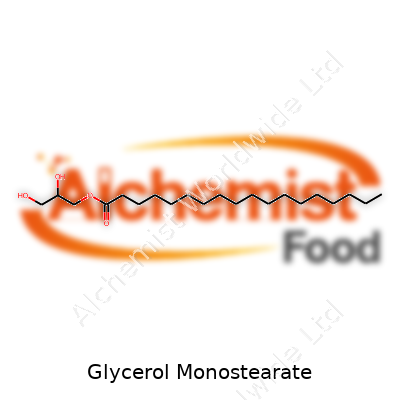
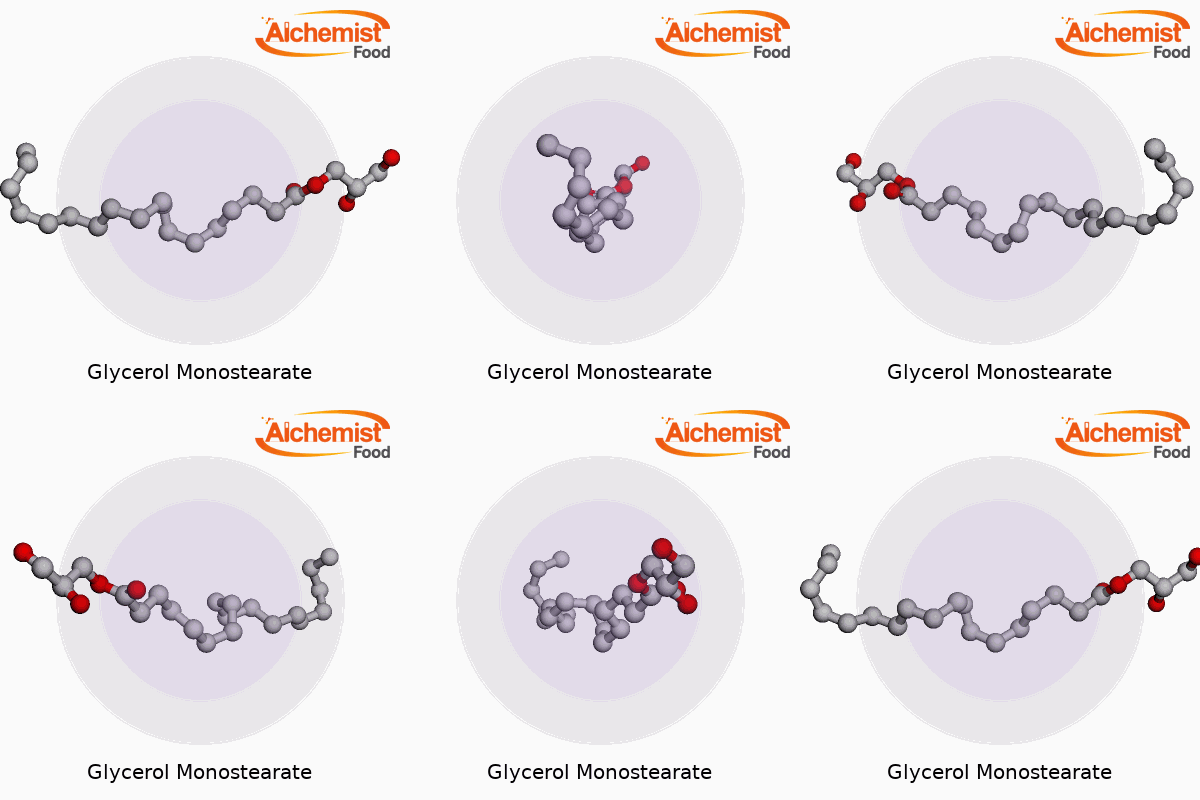
| Names | |
| Preferred IUPAC name | 2,3-dihydroxypropyl octadecanoate |
| Other names |
Glyceryl Monostearate Monostearin Glycerol Stearate 1-Monostearoyl-rac-glycerol E471 |
| Pronunciation | /ˈɡlɪsərəʊl ˌmɒnəˈstɪəreɪt/ |
| Preferred IUPAC name | 2,3-dihydroxypropyl octadecanoate |
| Other names |
GMS Glyceryl Monostearate Monostearin Stearic Acid, monoester with glycerol |
| Pronunciation | /ˈɡlɪs.ə.rɒl ˌmɒn.oʊˈstɪə.reɪt/ |
| Identifiers | |
| CAS Number | 31566-31-1 |
| Beilstein Reference | 1720813 |
| ChEBI | CHEBI:53699 |
| ChEMBL | CHEMBL1207298 |
| ChemSpider | 53677 |
| DrugBank | DB14160 |
| ECHA InfoCard | 100.029.736 |
| EC Number | EC 204-664-4 |
| Gmelin Reference | 8485 |
| KEGG | C20450 |
| MeSH | G03.492.585 |
| PubChem CID | 24699 |
| RTECS number | MA8050000 |
| UNII | YG60P2XFDW |
| UN number | UN number: "UN3257 |
| CompTox Dashboard (EPA) | DTXSID2020717 |
| CAS Number | 31566-31-1 |
| Beilstein Reference | 1720999 |
| ChEBI | CHEBI:53652 |
| ChEMBL | CHEMBL1203138 |
| ChemSpider | 14165 |
| DrugBank | DB11003 |
| ECHA InfoCard | 100.029.250 |
| EC Number | EC 204-664-4 |
| Gmelin Reference | 82101 |
| KEGG | C02737 |
| MeSH | Glycerol Monostearate MeSH: D005982 |
| PubChem CID | 24699 |
| RTECS number | MA0866000 |
| UNII | 230OU9XXE4 |
| UN number | UN NUMBER: "UN3257 |
| CompTox Dashboard (EPA) | DTXSID2037837 |
| Properties | |
| Chemical formula | C21H42O4 |
| Molar mass | 358.56 g/mol |
| Appearance | White or off-white powder or flakes |
| Odor | Odorless |
| Density | 0.97 g/cm³ |
| Solubility in water | insoluble |
| log P | 3.6 |
| Vapor pressure | <1 mm Hg (25°C) |
| Acidity (pKa) | 15.5 |
| Basicity (pKb) | 7.4 |
| Magnetic susceptibility (χ) | NA |
| Refractive index (nD) | 1.462 |
| Viscosity | Viscous liquid |
| Dipole moment | 2.67 D |
| Chemical formula | C21H42O4 |
| Molar mass | 358.56 g/mol |
| Appearance | White or off-white odorless, flaky, powdery solid |
| Odor | Odorless |
| Density | 0.97 g/cm³ |
| Solubility in water | Insoluble in water |
| log P | -5.11 |
| Vapor pressure | <0.1 mmHg (20°C) |
| Acidity (pKa) | 14.5 |
| Basicity (pKb) | 9.6 |
| Magnetic susceptibility (χ) | -8.9×10⁻⁶ |
| Refractive index (nD) | 1.462 |
| Viscosity | Viscous liquid |
| Dipole moment | 1.6 D |
| Thermochemistry | |
| Std molar entropy (S⦵298) | 709.2 J·mol⁻¹·K⁻¹ |
| Std enthalpy of formation (ΔfH⦵298) | -1200.9 kJ/mol |
| Std enthalpy of combustion (ΔcH⦵298) | -17837 kJ/mol |
| Std molar entropy (S⦵298) | 509.7 J·mol⁻¹·K⁻¹ |
| Std enthalpy of formation (ΔfH⦵298) | -1200 kJ/mol |
| Std enthalpy of combustion (ΔcH⦵298) | -8551 kJ/mol |
| Pharmacology | |
| ATC code | A06AG04 |
| ATC code | A06AG04 |
| Hazards | |
| Main hazards | May cause eye irritation. May cause skin irritation. May cause respiratory tract irritation. |
| GHS labelling | GHS labelling: "Not a hazardous substance or mixture according to the Globally Harmonized System (GHS) |
| Signal word | Not classified |
| Hazard statements | Not a hazardous substance or mixture according to Regulation (EC) No. 1272/2008 (CLP/GHS) |
| Precautionary statements | Wash hands thoroughly after handling. If skin irritation occurs: Get medical advice/attention. |
| NFPA 704 (fire diamond) | 1-1-0 |
| Flash point | >198°C (388°F) |
| Autoignition temperature | 430°C |
| Lethal dose or concentration | LD₅₀ (Rat, oral): 42 g/kg |
| LD50 (median dose) | > 2,090 mg/kg (rat, oral) |
| NIOSH | Not Listed |
| PEL (Permissible) | Not established |
| REL (Recommended) | E471 |
| Main hazards | Causes serious eye irritation. |
| GHS labelling | GHS labelling: "Not a hazardous substance or mixture according to the Globally Harmonized System (GHS) |
| Pictograms | GHS07 |
| Signal word | No signal word |
| Hazard statements | Not a hazardous substance or mixture according to the Globally Harmonized System (GHS). |
| Precautionary statements | Keep container tightly closed. Store in a cool, dry place. Avoid breathing dust. Wear suitable protective clothing, gloves, and eye/face protection. Wash thoroughly after handling. In case of inadequate ventilation wear respiratory protection. |
| NFPA 704 (fire diamond) | 1-1-0 |
| Flash point | > 198 °C |
| Autoignition temperature | > 363 °C |
| Lethal dose or concentration | LD50 (oral, rat): > 12,800 mg/kg |
| LD50 (median dose) | LD50 (median dose): 12,800 mg/kg (rat, oral) |
| NIOSH | RX8400000 |
| PEL (Permissible) | 15 mg/m³ |
| REL (Recommended) | 10 mg/kg bw |
| Related compounds | |
| Related compounds |
Stearic acid Glycerol Monoacylglycerol Glyceryl distearate Glyceryl tristearate Monoglyceride Diglyceride |
| Related compounds |
Glycerol monolaurate Glycerol monooleate Glycerol monopalmitate Stearic acid Glycerol Mono- and diglycerides of fatty acids |



