Glutaraldehyde: A Deep Dive Into Its Past, Present, and Future
Historical Development
Glutaraldehyde started shaping modern industry and medicine during the 1960s as a cold sterilant and fixative. Researchers were hunting for something better than formaldehyde, something to kill microbes and preserve biological tissues without the noxious fumes and high toxicity. The push for safer workplaces and better lab procedures led to experiments with dialdehydes. Chemists soon found that a five-carbon dialdehyde—glutaraldehyde—struck a balance between effectiveness and manageable handling risks. Hospitals, labs, and manufacturing plants soon began using it, and its reputation grew. The timeline shows that new regulations and disinfectant standards kept elevating its profile through the late twentieth century, a sign that necessity and innovation have always gone hand in hand.
Product Overview
Glutaraldehyde usually comes as a clear, pungent liquid. In the industrial sense, it stands out for its dual role as a disinfectant and a cross-linking agent. Pick up a bottle in the hospital supply room, and you’ll see it labeled as a high-level sterilant for tools and heat-sensitive medical equipment. Glutaraldehyde runs the show in water treatment plants, leather tanning, X-ray film processing, and even as a tissue fixative in pathology labs. The manufacturing sector values it for resin production, protein stabilization, and as a go-to chemical for specialty coatings. Behind many everyday products, there’s a quiet line that runs back to this colorless liquid, showing just how woven it is into the fabric of our lives.
Physical & Chemical Properties
Glutaraldehyde features a sharp smell—almost sweet and pungent at once. Its formula, C5H8O2, tells us it’s a simple five-carbon molecule with two terminal aldehyde groups. In practical terms, it dissolves easily in water and alcohol, making mixing or diluting it simple with basic lab equipment. Its boiling point sits at just under 190°C, but it tends to break down before boiling, so vapor exposure matters most at room or moderate temperatures. If left open, it grabs oxygen and polymerizes, making storage conditions matter as much as chemical composition. The slightly oily feel tends to linger on surfaces, which helps with its action as a fixative for biological tissues but makes cleanup a real chore.
Technical Specifications & Labeling
Companies producing glutaraldehyde stick to a range of concentrations, often selling it as 2%, 25%, or 50% aqueous solutions. Each drum, container, or bottle carries clear hazard warnings because even minor mishandling can mean skin burns or respiratory trouble. Labels list the concentration, hazard symbols for toxicity and corrosivity, and guidance on safe ventilation. Regulatory bodies such as OSHA, EPA, and the EU’s REACH have set standards for packaging and product purity, pressing distributors to include batch numbers, expiry dates, and first-aid advice right on the container. Reliable suppliers test every batch for purity (looking for content over 99% for the pure stuff or 25–50% for stabilized solutions), and documents often mention stabilizers added to keep the product from degrading in transit or storage.
Preparation Method
Industrial glutaraldehyde production usually starts with butadiene, which gets converted into pentanediol and then oxidized to yield the dialdehyde. Air or silver-based catalysts often drive the final oxidation step, letting manufacturers crank out high-purity product at scale. The procedure involves tight controls on temperature and pressure, not just for yield but to head off any dangerous side reactions. Smaller batches, for research or special applications, get made from glutaric acid via direct oxidation or from pentanal using a mix of oxidizing agents. Every method comes with trade-offs between cost, scale, and environmental burden, and industry players keep tweaking catalysts and process flows to make cleaner, faster, and more efficient plants.
Chemical Reactions & Modifications
At its core, glutaraldehyde is a bifunctional molecule, meaning its two aldehyde groups anchor countless reactions. Biochemists use its reactivity to cross-link proteins by joining lysine residues, forming stable and rigid networks—a boon for tissue preservation, biomaterials research, and enzyme immobilization. Industrial users modify glutaraldehyde to create polymeric resins, lubricants, and biocide blends. The aldehyde groups also hook up with amines and hydrazides, which not only fixes biological samples but allows clever chemists to tag or stabilize molecules for analytical work. Over the years, research labs have spun off dozens of derivatives—modifying side chains, quenching functional groups, or creating blends with other antimicrobials—hoping to refine its action or tone down its toxicity.
Synonyms & Product Names
Chemists have always been fond of alternate names for their favorite chemicals. Glutaraldehyde shares its seat with synonyms like glutaral, pentanedial, and 1,5-pentanedial. Product names like Cidex, Glutarex, Metricide, and Sonacide pop up commonly in hospital supply catalogs and industrial brochures. Each name might carry minor differences in stabilizers, dye additives, or concentration, but all tend to point back to the same active ingredient. These aliases, while useful, also mean workers need to check the fine print before using a new brand or formulation so that they don’t stumble into incompatible mixes or handling mistakes.
Safety & Operational Standards
People working with glutaraldehyde face a real set of hazards if they treat the stuff casually. Skin contact causes irritation or burns fast, and inhaling vapors leaves the throat raw—sometimes with allergic reactions on repeated exposure. Facility managers must set up fume hoods, gloves, face shields, and dedicated wash stations to keep their teams out of trouble. In hospitals, staff cycles through ventilated soaking rooms and follows clear spill protocols. OSHA ranks glutaraldehyde as a chemical to monitor closely, meaning routine air sampling and exposure logs. Emergency measures include plenty of fresh air and medical care, and disposal requires neutralization before pouring anything down the drain. Over the years, unions and regulatory agencies have kept pushing for substitution with safer alternatives, and training sessions keep crews updated on procedures as standards evolve.
Application Area
Glutaraldehyde built a reputation as a hospital-grade disinfectant, scrubbing bacteria, viruses, and spores from endoscopes and other medical gadgets that can’t take the heat of an autoclave. Dental offices trust it for cold sterilization of tools, while veterinary clinics use it for surgical equipment. In the world of research, glutaraldehyde acts as a fixative, freezing cells or tissues in time for detailed electron microscopy studies. Water treatment plants feed it into systems to keep algae and bacteria at bay. Leather tanners depend on its cross-linking strength for softer, more durable hides. Oil & gas companies pump it down wells to combat sulfide-producing bugs. The chemical also finds a niche in paper production, manufacturing biocides for paints, and controlling odors in animal housing facilities. Each use case leans on its broad-spectrum antimicrobial power and ability to build long-lasting bonds in organic material.
Research & Development
Laboratory teams keep searching for ways to sharpen glutaraldehyde’s performance or reduce its health footprint. Current R&D trends focus on developing new formulations that lower toxic vapor release or combine it with surfactants to promote deeper tissue penetration with less irritation. Universities have run pilot projects using microencapsulation, hoping for time-released disinfectant effects. In enzyme technology, immobilizing biocatalysts with glutaraldehyde opens doors to greener processing and better product yields. Scientists also experiment with glutaraldehyde blends for specific pathogens, targeting tough bugs while sparing healthy tissues. Environmental health research aims to design more biodegradable alternatives or additives that tame glutaraldehyde’s environmental impact once it runs to wastewater streams.
Toxicity Research
The question of glutaraldehyde’s safety trails every drum and bottle. Early studies raised concerns about potential carcinogenicity and chronic respiratory effects with long-term, low-level exposure, especially for workers in healthcare and manufacturing. Studies in lab animals and exposed workers have seen increased reports of asthma, skin sensitization, and even rare immune reactions. Regulatory agencies classify it as both a skin and respiratory sensitizer, pressing for strict workplace monitoring and personal protective gear. Ongoing research looks into dose-response thresholds, mechanisms of toxicity, and options for medical intervention after accidental exposure. Public health watchdogs remain concerned about residual glutaraldehyde in treated materials and workplace air quality. These worries have boosted the search for substitute chemicals or engineering controls that get the job done while minimizing health risks.
Future Prospects
Demand for glutaraldehyde isn’t going away soon, given its unique chemistry, but shifts in technology and regulation shape its future. Medical device sterilization still leans heavily on it, especially in places where advanced UV or ozone systems are out of reach. Research continues toward creating next-generation biocides and fixatives with lower toxicity or improved environmental footprints. The push for automated, enclosed disinfection units in hospitals comes partly as a response to exposure risks, hinting at broader changes ahead in both product form and workplace safety. Biotechnology companies look to chemically modified glutaraldehyde as a tool for building new biomaterials or for specialty coatings in implants and sensors. Meanwhile, sustainability goals drive companies to improve wastewater treatment and find greener ways to neutralize waste. The story of glutaraldehyde stretches across industry, medicine, and research, proof that even a simple molecule can shape a wide world—if people keep blending innovation with vigilance.
What is glutaraldehyde used for?
What People Use Glutaraldehyde For
Glutaraldehyde rarely shows up in daily conversations, but spend any time in health care, farming, or water treatment and you’ll cross paths with this chemical sooner or later. Hospitals lean on it for “cold sterilization” of surgical equipment. I’ve stood in clinics where trays soaked in this stuff get instruments ready to touch living tissue again. Unlike high heat, glutaraldehyde steps in for items that won’t take boiling without wrecking them. Without it, many clinics would struggle to keep infection risks under control.
Farms and Factories Rely on More Than Just Soap and Water
Animal growers, especially in poultry operations, lean hard on glutaraldehyde to keep diseases down. Walk into a chicken barn and the air sometimes stings—biosecurity is deadly serious. Footbaths at the door or sprayers on the walls use diluted glutaraldehyde to kill off bacteria and viruses. One outbreak can set a farm back years, so skipping disinfectants could mean closing the barn for good.
Industrial plants also have big reasons to reach for glutaraldehyde. Slimy biofilms coat equipment in pulp mills, cooling towers, and oil refineries. These microbial mats don’t just look nasty—they corrode pipes, wreck sensors, and drive up repair costs. Glutaraldehyde slices through biofilms where chlorine can't, so factories use it to keep systems running clean. It lands in water treatment tanks to clear dangerous bugs before anyone turns on the tap, too. The Centers for Disease Control and Prevention ranks it high among chemicals that fight waterborne pathogens like Legionella.
Glutaraldehyde’s Darker Side
The same thing that makes glutaraldehyde great for killing germs gives it a sharp set of teeth. Breathing its fumes can set off asthma attacks—and people working around it know the nagging cough or itchy eyes that follow sloppy handling. Over time, low-level exposure raises health concerns like skin rashes and lung issues. The US Occupational Safety and Health Administration walks a fine line, balancing the need to disinfect against newer evidence showing health risks for workers. You can’t deny the sharp smells that linger in old hospital basements. Turning a blind eye to chemical safety will pile up health problems for staff.
What Do We Do With This?
Most people want hospitals free of dangerous germs, water that’s safe to drink, and healthy food. Glutaraldehyde plays a quiet role in each of these. Still, workers handling this chemical deserve clear, simple rules to cut their risks. Switching to well-ventilated rooms and giving staff thicker gloves or sealed goggles is a start. Some healthcare units have moved toward safer alternatives, but not every job has a ready substitute. For now, cutting airborne exposure and strict training in mixing and disposal marks the difference between safe use and a trip to the ER.
Simple changes—sealing storage containers, giving clear job-site warnings, and keeping exposure records—help anyone around glutaraldehyde stay healthy. It’s far from trendy, but straight talk about strong chemicals keeps the folks who use them from paying for society’s clean surfaces and safe food with their health.
Is glutaraldehyde safe to use?
Understanding Where Glutaraldehyde Shows Up
Glutaraldehyde turns up in quite a few spots—hospitals, dental clinics, veterinary offices, even in water treatment. It kills germs on medical equipment, helps in some industrial processes, keeps pipelines free from bacteria. The job seems straightforward until the reality of working with it for hours each day sinks in.
How It Affects People in the Real World
Years in healthcare showed me that a cleaning task could change the way you breathe or feel for the whole day. Glutaraldehyde has a sharp, nose-stinging smell even in small quantities, and just being around it can make eyes water or skin itch. One ER nurse I worked with started coughing every afternoon—she later found that her daily shift passed by the sterilization room where this chemical was always present.
There’s good science backing up these experiences. According to the Centers for Disease Control and Prevention (CDC), even brief exposure can irritate the nose, eyes, lungs, and skin. In some people, especially those using it for years, asthma-like symptoms or contact dermatitis show up. Somewhere along the way, people started comparing it to formaldehyde—and there’s some truth there in terms of irritation, if not cancer risk.
Why Glutaraldehyde Hits Certain Workers Harder
Most folks who worry about glutaraldehyde aren’t lab scientists or hospital administrators. It’s nurses, dental techs, janitorial staff—people whose hands touch the solution, or whose faces drift near the open trays every day. Some hospitals invested in vented rooms for chemical cleaning, but in older clinics with drafty windows, fumes sneak out. Disposable gloves and goggles sometimes help, but skin rash and headaches still show up.
Many state health departments flagged glutaraldehyde as a serious workplace hazard long ago. According to the Occupational Safety and Health Administration (OSHA), safe indoor exposure sits at a very low value—0.2 parts per million over an eight-hour shift. Plenty of workplaces skip regular air checks, especially in tight-budget settings. This makes the staff more vulnerable to problems.
The Trouble with Replacing It
After seeing colleagues with breathing trouble, I started asking why everyone still depended on the stuff. The main reason: price. Alternatives such as hydrogen peroxide or ortho-phthalaldehyde (OPA) cost more. Some are harder to use or need newer cleaning systems. In rural clinics or busy urban centers, keeping glutaraldehyde around—despite its risks—sometimes feels like the only option.
Still, it’s not impossible to switch. Some chains already moved to less-volatile disinfectants or brought in enclosed washers. Practical training helps too; simply teaching staff to mix solutions inside a hood and use double gloves cuts down on accidents. Only when management listens to staff complaints and commits to regular checks do things actually change.
What Actually Makes People Safer
Real safety comes down to health education, open ventilation, decent gear, and a willingness to phase out glutaraldehyde wherever possible. A “little bit won’t hurt” mentality just doesn’t make sense anymore. Regulatory groups give clear exposure limits for a reason. Every case of occupational asthma or chronic rash proves this isn’t just about chemical properties—it’s about protecting people who make clinics, factories, and labs run.
How should glutaraldehyde be stored?
Understanding the Real Risks of Glutaraldehyde
Glutaraldehyde sits on the shelf in many labs and hospitals, promising strong disinfecting power. Anyone who has worked with this chemical knows it's no ordinary cleaning agent. Just cracking open a bottle can send a sharp, pungent smell through the room. That’s not a sign of strength, but a warning. This is a substance that sends people to the eyewash station in a hurry if something goes wrong. So, storing glutaraldehyde safely at work or at home isn’t just a best practice—it's a matter of health.
Keeping Health Workers Safe Starts with Storage
It doesn’t take long working in healthcare to see what poor storage of chemicals can mean. I remember a colleague who got a minor splash simply because a cap wasn’t tightened. She spent days off work. That incident could have easily been avoided by rethinking how chemicals like glutaraldehyde are kept.
A secure, well-ventilated space changes everything. Rooms used for chemical storage shouldn’t double as storage for snacks, break room items, or personal belongings. Ventilation carries huge weight. Fumes can hang in the air, leading to headaches, respiratory issues, or even asthma among workers. Since glutaraldehyde produces vapors at room temperature, a ventilated cabinet or fume hood makes a big impact. I've seen labs that underestimate this and end up with irritated eyes or lost workdays.
Temperature and Container Choices Matter
Many believe chemicals do fine as long as lids are on tight. That’s not how glutaraldehyde works. Direct sunlight and heat break down its structure, sometimes releasing more fumes or making the liquid less predictable. I’ve seen fresh stock lose potency within a few weeks just because someone left it in a hot storage closet. Storing away from sunlight, at a steady, cool temperature, and always in tightly sealed, original containers keeps the risk in check.
Labeling and Segregation
I once lost sleep over a near-mix-up involving glutaraldehyde and a similar-looking bottle of saline. Labels matter more than people realize. Every bottle should carry clear, waterproof labels with names, hazard warnings, and dilution information. Keeping it all together on a designated shelf or tray—separated from acids and other incompatible chemicals—means fewer dangerous mistakes.
Emergency Readiness Can’t Be Optional
It’s easy to brush off eye wash stations or spill kits as overkill—until something happens. Just one small leak from a weakened container can smell up a whole room and force an evacuation. Keeping spill kits, gloves, goggles, and clean-up materials nearby clamps down on panic when an accident occurs.
The Occupational Safety and Health Administration (OSHA) states clearly that all hazardous materials require both physical and administrative controls. Glutaraldehyde ranks among those chemicals that agencies keep a close eye on, due to the lasting effects of even minimal exposure.
Better Storage Means Fewer Accidents
Telling stories about chemical mishaps doesn’t win friends, but every worker should hear the lessons. Respect glutaraldehyde, store it in the right spot, and push for safety, even when rushing to wrap up for the day. It's easy to skip steps; it's also easy to regret it later.
An ounce of prevention, like a good storage plan, beats a scramble to call emergency responders or a trip to the ER. Glutaraldehyde has earned its reputation as a disinfectant, but anyone handling it needs to treat it with care and insist on safe storage every single time.
What are the side effects or hazards of glutaraldehyde?
Everyday Encounters With Glutaraldehyde
Some jobs carry risks that don’t always make the headlines. Using glutaraldehyde in medical and laboratory work is one of those hidden hazards. Hospitals rely on this chemical to disinfect surgical instruments and keep patient rooms safe. It does the job well, but each time staff pour or handle glutaraldehyde, they take on a bit of danger. I spent time as a lab technician, so memories of that harsh, almost pungent smell flooding the prep room still stick with me. Gown, gloves, and a face shield offered some comfort, but the stinging in my eyes told me those layers weren’t enough.
Short-Term Effects on Health
Glutaraldehyde’s fumes cause pretty fast irritation. If you breathe it in, your nose or throat might start to burn and it can spark off coughing fits or asthma-like wheezing. Eyes water and turn red; skin turns itchy or blisters up if a splash lands the wrong way. Even a quick touch on an unprotected finger leaves old-timers shaking their heads, as the sting usually stays for hours.
Those aren’t rare stories, either. The Centers for Disease Control and Prevention notes that people working around glutaraldehyde see these reactions, especially if air handling lags behind. In dental offices, clinics, and endoscopy labs, headaches, dizziness, and even breathing problems pop up more often than folks admit to their bosses.
Long-Term Hazards
Prolonged exposure isn’t just about skin rashes. Workers exposed over months might gain a sensitivity that never truly disappears, leaving them forever wary of anything with a strong chemical odor. Some develop occupational asthma. Once asthma sets in, returning to work around glutaraldehyde often means another wheezing, breathless day.
There’s also evidence of effects on the immune system. Repeated contact increases the risk of allergic reactions and some studies show that chronic exposure can lead to changes in lung function. This isn’t just a problem for older workers; even younger, seemingly healthy folks end up at the doctor’s office after a season of heavy use.
Glutaraldehyde and the Environment
It isn’t fair to only talk about people. Labs and clinics that pour old solutions down the drain could end up harming water systems. Glutaraldehyde doesn’t break apart easily in water and can disrupt the delicate balance for fish and other aquatic life. Municipal wastewater plants struggle to remove it completely, which means traces sometimes flow straight into rivers.
Keeping Workplaces Safer
Real change needs more than a glove and a fume hood. The Occupational Safety and Health Administration recommends better ventilation, changing over to sealed automated cleaning machines, and less manual pouring and mixing. Training plays a role too, since every new worker should know not just how to handle it, but what signs might warn them to step back and take care of themselves.
Hospitals switching to less hazardous disinfectants make a difference. Hydrogen peroxide and peracetic acid both offer alternatives, even if they bring their own set of precautions. Until safer chemicals become the standard, workers can speak up for regular monitoring and insist on real-time air checks in their spaces instead of waiting weeks for a report.
Conclusion: Awareness Makes the Difference
Day to day, glutaraldehyde does save lives by stopping infections. That’s never in question. But for the folks who spend their days handling it, sharing stories and watching out for each other matters. An open conversation about risks leads to action—better equipment, fairer rules, and less chance for anyone to walk away with invisible scars.
How do you properly dispose of glutaraldehyde?
A Dangerous Cleaner with Lasting Effects
Glutaraldehyde shows up in hospitals, dental offices, and research labs as a powerful disinfectant. It does its job by killing germs that could cause infection or contaminate tools. Once its work finishes, leftover solution can linger as a problem. This chemical deals damage if it finds its way into waterways or soil, poisoning aquatic life and leaving toxic traces. Most people haven’t seen what this looks like up close, but anyone who’s worked in a clinic or lab remembers the strong odor and the paint-stripping power this stuff brings.
Glutaraldehyde Belongs Nowhere Near Drains
The worst mistake someone can make is pouring glutaraldehyde down the sink or into a regular trash can. It irritates eyes, skin, and the respiratory system, and many countries count it as hazardous waste. Public water treatment systems can’t clear it away effectively. Once loose in the wild, coastal fish die, and the chemical risks staying around for a long time. In my own classroom days, bottles with warning labels would pile up. The facilities manager drilled it into us: don’t dump it. Not even a little.
Safe Collection and Storage
Small spills and leftover solutions need storage in sturdy, leak-proof containers—labeled clear as day with warning signs. Emergency showers and gloves stand ready, because even a splash causes chemical burns or trouble breathing. Waste containers have to stay sealed, kept away from food, kids, or pets. My old university stored them in a locked metal cabinet, away from the main halls. Security and custodians kept a close eye on those cabinets, doing regular checks to spot leaks or corrosion before things got out of hand.
Using Neutralizing Agents
Some places opt to neutralize glutaraldehyde with chemicals such as glycine or ammonium bicarbonate. These react with the toxic agent, reducing its harmful properties. Staff need training to manage mixing, to avoid dangerous fumes or further exposure. In my lab, the process involved written protocols, so mistakes didn’t happen. Anyone who took shortcuts earned a lecture—safety mattered more than speed.
Certified Waste Disposal Services
Licensed hazardous waste contractors collect and dispose of glutaraldehyde for most clinics and labs. These services arrive with special manifests, pick up labeled containers, and process chemicals following strict regulations. The paperwork isn’t just for bureaucracy—track records show the waste goes where it should. Once I saw a commercial waste truck haul away bins, every order and label checked twice. This kind of oversight shows respect for neighbors, water quality, and public health.
Potential Improvements
Not every workplace keeps up with disposal best practices. Shortages of training, time, and funds create temptation to cut corners. Solutions start with education: clear signage, quick safety talks, tested protocols, and regular audits catch errors before they become disasters. Government grants or tax breaks might help smaller clinics afford disposal contractors. Chemical suppliers can provide phone support or flyers on new neutralizers, making safer products more available. Technology companies working on “green” disinfectants could help phase out glutaraldehyde altogether, but labs and clinics need clear, simple transitions before that happens.
Closing Thought
By handling glutaraldehyde with care—never treating it as ordinary waste—we protect waterways, wildlife, and each other. The old lesson holds true: handle with respect, and everyone stays safer for it.
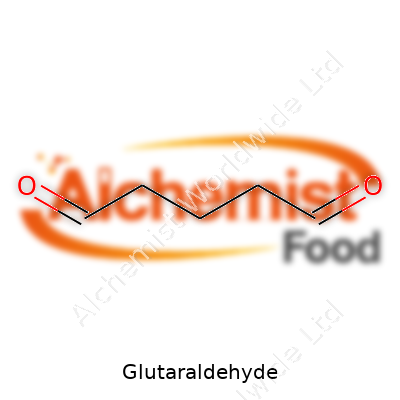
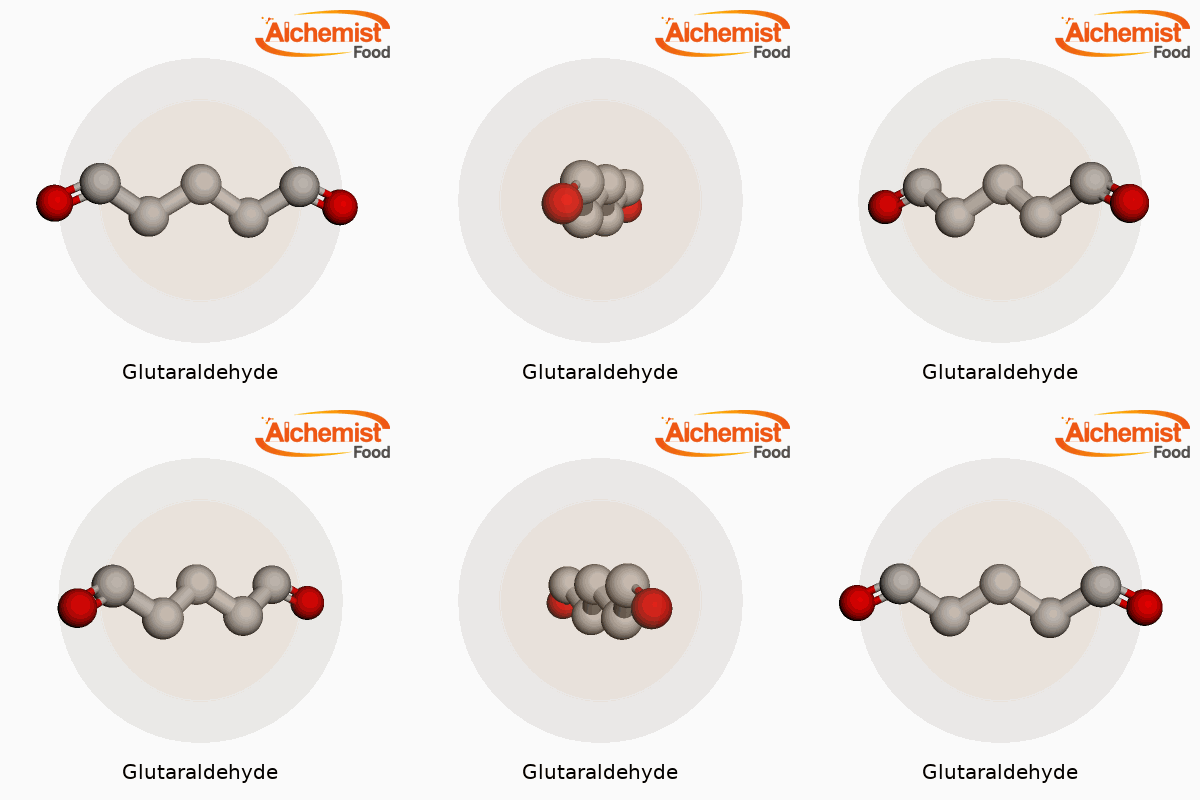
| Names | |
| Preferred IUPAC name | pentane-1,5-dial |
| Other names |
CID 3485 Glutaral Glutaral solution 1,5-Pentanedial Glutardialdehyde Pentane-1,5-dial |
| Pronunciation | /ɡlʊˌtɑːrˈældɪhaɪd/ |
| Preferred IUPAC name | pentane-1,5-dial |
| Other names |
Cidex Glutaral Glutaric Dialdehyde Pentane-1,5-dial |
| Pronunciation | /ˌɡluː.təˈræl.dɪ.haɪd/ |
| Identifiers | |
| CAS Number | 111-30-8 |
| 3D model (JSmol) | `glutaraldehyde.mol` |
| Beilstein Reference | 635068 |
| ChEBI | CHEBI:17718 |
| ChEMBL | CHEMBL1370 |
| ChemSpider | 8701 |
| DrugBank | DB00830 |
| ECHA InfoCard | 03ef5b7c-406e-4157-b82a-bd0852282b52 |
| EC Number | 203-856-5 |
| Gmelin Reference | 8217 |
| KEGG | C06323 |
| MeSH | D005947 |
| PubChem CID | 3485 |
| RTECS number | MA2450000 |
| UNII | V460D1MW1Z |
| UN number | UN2810 |
| CompTox Dashboard (EPA) | `DTXSID7025138` |
| CAS Number | 111-30-8 |
| 3D model (JSmol) | glutaraldehyde|3DModel|JSmol|C(C=O)CCC=O |
| Beilstein Reference | 1362469 |
| ChEBI | CHEBI:17751 |
| ChEMBL | CHEMBL1377 |
| ChemSpider | 7121 |
| DrugBank | DB00830 |
| ECHA InfoCard | 100.002.360 |
| EC Number | 203-856-5 |
| Gmelin Reference | 8477 |
| KEGG | C02376 |
| MeSH | D005947 |
| PubChem CID | 3485 |
| RTECS number | MA2450000 |
| UNII | EY140F2XCS |
| UN number | UN3265 |
| Properties | |
| Chemical formula | C5H8O2 |
| Molar mass | 100.12 g/mol |
| Appearance | Colorless or pale yellow liquid |
| Odor | Pungent |
| Density | 1.06 g/cm³ |
| Solubility in water | Miscible |
| log P | -0.332 |
| Vapor pressure | 2 mmHg (20°C) |
| Acidity (pKa) | pKa ≈ 13 |
| Basicity (pKb) | pKb ≈ 6.7 |
| Magnetic susceptibility (χ) | -28 × 10⁻⁶ cm³/mol |
| Refractive index (nD) | 1.424 |
| Viscosity | 1 mPa·s (at 20°C) |
| Dipole moment | 2.64 D |
| Chemical formula | C5H8O2 |
| Molar mass | 100.12 g/mol |
| Appearance | Colorless to pale yellow liquid |
| Odor | Pungent |
| Density | 1.06 g/cm³ |
| Solubility in water | Miscible |
| log P | -0.36 |
| Vapor pressure | 2 mmHg (20°C) |
| Acidity (pKa) | 7.5 |
| Basicity (pKb) | 8.2 |
| Magnetic susceptibility (χ) | -64.0×10⁻⁶ cm³/mol |
| Refractive index (nD) | 1.424 |
| Viscosity | 2.04 cP at 25°C |
| Dipole moment | 2.95 D |
| Thermochemistry | |
| Std molar entropy (S⦵298) | 218.8 J⋅mol⁻¹⋅K⁻¹ |
| Std enthalpy of formation (ΔfH⦵298) | -582.0 kJ/mol |
| Std enthalpy of combustion (ΔcH⦵298) | -2481 kJ/mol |
| Std molar entropy (S⦵298) | 151.0 J·mol⁻¹·K⁻¹ |
| Std enthalpy of formation (ΔfH⦵298) | -613.7 kJ/mol |
| Std enthalpy of combustion (ΔcH⦵298) | -2442.7 kJ/mol |
| Pharmacology | |
| ATC code | D08AX06 |
| ATC code | D08AX05 |
| Hazards | |
| Main hazards | Toxic if inhaled, causes severe skin burns and eye damage, may cause respiratory irritation, harmful if swallowed, sensitizer. |
| GHS labelling | GHS02, GHS05, GHS06, GHS08 |
| Pictograms | GHS05,GHS06 |
| Signal word | Danger |
| Hazard statements | H301+H331, H314, H317, H334, H410 |
| Precautionary statements | P210, P260, P261, P280, P301+P330+P331, P303+P361+P353, P304+P340, P305+P351+P338, P308+P311, P312, P333+P313, P337+P313, P362+P364, P403+P233, P501 |
| NFPA 704 (fire diamond) | 3-2-0 |
| Autoignition temperature | 150°C |
| Explosive limits | Explosive limits: 2.1–31% |
| Lethal dose or concentration | LD50 oral rat: 134 mg/kg |
| LD50 (median dose) | LD50 (median dose): 134 mg/kg (oral, rat) |
| NIOSH | DH7010000 |
| PEL (Permissible) | 0.2 ppm |
| REL (Recommended) | 0.1% |
| IDLH (Immediate danger) | 80 ppm |
| Main hazards | Toxic if inhaled, causes severe skin burns and eye damage, may cause allergic skin reactions, harmful to aquatic life. |
| GHS labelling | GHS02, GHS05, GHS06, GHS08 |
| Pictograms | GHS05,GHS06 |
| Signal word | Danger |
| Hazard statements | H301 + H311 + H331, H314, H317, H410 |
| Precautionary statements | P261, P264, P273, P280, P301+P330+P331, P303+P361+P353, P304+P340, P305+P351+P338, P311, P333+P313, P337+P313, P362+P364, P391, P403+P233, P501 |
| Flash point | 64 °C |
| Autoignition temperature | 150°C (302°F) |
| Explosive limits | Explosive limits: 2.5–31% |
| Lethal dose or concentration | LD50 (oral, rat): 134 mg/kg |
| LD50 (median dose) | 800 mg/kg (rat, oral) |
| NIOSH | GL7075000 |
| PEL (Permissible) | 0.2 ppm |
| REL (Recommended) | REL (Recommended): 0.2 ppm (0.8 mg/m3) TWA |
| IDLH (Immediate danger) | 80 ppm |
| Related compounds | |
| Related compounds |
Pentane-1,5-diol Glutaric acid 1,5-Pentanediol Succinic dialdehyde |
| Related compounds |
Succinic acid 1,5-Pentanediol Glutaric acid Pentane-1,5-diamine Malondialdehyde Adipaldehyde |



