Formic Acid: A Down-to-Earth Look at Its Past, Science, Safety, and Future
Historical Development
People first noticed formic acid in red ants. The pungent stuff got its name from the Latin for ant, “formica.” Farmers and naturalists knew about it even before scientists teased out its structure. Early producers aimed to isolate formic acid from bugs but realized pretty quick that this approach didn’t scale. The 1800s saw chemists figuring out how to make it from a whole mess of starting materials, including hydrolysis of methyl formate or distillation from oxalic acid and glycerol. Industrialization hit its stride once synthetic methods took off around the 20th century, letting companies churn out formic acid for tanning, preservatives, and textile applications. The story mirrors many chemical staples—start with something natural, move to chemical engineering, and before long, the whole world uses it for a host of jobs.
Product Overview
Formic acid often comes in clear, colorless liquid bottles. Folks working in agriculture, rubber, and textiles see it as a go-to preservative or cleaning agent. Out in the world, you’d spot it listed as E236 on food-grade samples. It boasts a strong, sour smell that stings, marking any spill or draft with its presence. Anyone who’s handled it in the lab won’t forget the sharp tang. It dissolves easily in water and alcohol, which makes mixing and spreading it straightforward in both small and large-scale tasks. Manufacturers set purity grades depending on where it lands in the industry: animal feed or high-purity streams for electronics and pharmaceuticals.
Physical & Chemical Properties
Chemically speaking, formic acid’s simple structure—HCOOH—sets it apart as the most basic carboxylic acid you’ll meet. It weighs in at just over 46 grams per mole and boils near 100°C. In the open air, it picks up water, showing off its hygroscopic character. It sticks to glass and plastic in some conditions and won’t play nice with steel or aluminum unless passivated. The acid attacks organic matter and metals alike, which matters a lot for folks designing equipment. Push the concentration above 85% and it turns into a fuming liquid, biting into air and skin much faster. Unlike acetic acid, formic acid carries more punch in terms of acidity and this comes through in both lab and industrial settings.
Technical Specifications & Labeling
Formic acid labels come packed with essential info due to tight regulation. Batches list concentration, purity, trace contaminants, manufacturing date, and recommended handling conditions. Chemical suppliers include hazard pictograms and GHS/CLP hazard codes—usually “Corrosive” (GHS05) and sometimes “Harmful” (GHS07). Manufacturers highlight the water content since diluted acid affects downstream applications. Technical sheets break down every last chemical and physical characteristic, sometimes right down to the allowable parts per million of iron or heavy metals. Full traceability is now non-negotiable for food and feed applications, and buyers demand real-time access to safety data sheets (SDS) before taking a single drum onsite.
Preparation Method
Most production volumes today come from the reaction between methanol and carbon monoxide, using a base like sodium methoxide to push the reaction toward methyl formate, followed by hydrolysis to formic acid. People used to distill it from natural sources, but now almost everything comes from petrochemical feedstocks. Process engineers have worked out more environmentally friendly variants, including direct CO2 reduction or biomass conversion, but these remain rare outside pilot plants. Some companies also recycle byproducts from acetic acid production or formaldehyde oxidation. It’s cheap and scalable, but careful monitoring remains key to avoid corrosion and unwanted byproducts, especially as impurities can damage downstream equipment or final products.
Chemical Reactions & Modifications
Formic acid steps into all sorts of chemical reactions—dehydration, reduction, esterification, and as a source of hydrogen. It reacts harmfully with strong oxidizing agents and bases, releasing carbon monoxide in dangerous amounts. In synthetic chemistry, folks use it to reduce nitro groups or as a convenient hydrogen donor in catalytic processes. It converts to formate salts when neutralized with suitable bases, which end up as preservatives or de-icing agents. Chemists tweak formic acid to make esters for perfumes and solvents. In labs, it acts as both reducing agent and straightforward acidifying agent, always with an eye on controlling reaction rates and safety risks. Stainless steel or Teflon gear tends to last through these reactions, since formic acid goes after most common metals pretty aggressively.
Synonyms & Product Names
People in different industries might call formic acid “methanoic acid,” “E236,” or simply “ant acid.” Road gritting sticks and agricultural formulations often list “formiate” derivatives instead. In Europe, the E-number codes crop up on ingredient lists for feed preservatives. Researchers still use the IUPAC term “methanoic acid” in papers or regulatory filings. Commercial brands and suppliers label product lines by purity, additive content, or application area—think “Feed Grade Formic Acid” or “Electronic Purity Methanoic Acid”—making it essential to check technical sheets before use. Synonym use sometimes leads to confusion at the point of purchase or regulatory submission, putting extra heat on suppliers to clarify every last trade and chemical name.
Safety & Operational Standards
Anyone working with formic acid learns respect fast. It burns skin and eyes in seconds, so gloves, goggles, and chemical-resistant aprons become standard. Fume hoods and face shields protect from splashes and vapor inhalation during weighing, mixing, or transfer. Factories lay out strict protocols on industrial ventilation, spill control, and emergency eye-wash stations. The acid’s reactivity with metals means keeping fire-fighting gear at hand, since runaway CO can spark explosions in tight spaces. Drums and bottles require certified chemical labeling, so no one mistakes concentrated acid for less harmful solvents. At the regulatory end, OSHA and EU-REACH set exposure limits—8-hour shifts see a strict ceiling of 5 ppm in the air and medical monitoring for regular handlers. Disposal rules forbid dumping into drains; waste streams get neutralized or collected for special incineration, with trace reporting expected for volumes above a few kilograms.
Application Area
Farmers and livestock operators add formic acid to feed and silage to keep bacteria, mold, and unwanted fermentation in check. In leather tanning, it helps adjust pH during pickling and keeps the process even when hide quality varies. Textile plants use it to neutralize excess alkali after dyeing and create brighter shades without salt buildup. Rubber producers add it to help coagulate latex. Petroleum engineers and mining outfits deploy it as a de-scaling or cleaning acid for pipes and heat exchangers. In the food industry, its preservative power fits snugly into cheese and canned veggie lines, always in regulated doses. Chemical labs tap it for separation, pH control, and as a reagent in everything from peptide chemistry to nanomaterials work. Even allergen testing sometimes leans on formic acid’s lysis properties to crack open tough natural shells.
Research & Development
Investments in greener synthesis routes keep rolling. CO2-based feedstock projects show some promise, squeezing new value from atmospheric carbon and industrial waste gases. Researchers have gotten creative with catalytic hydrogen production, using formic acid to generate hydrogen on demand for fuel cells and portable devices. Pharma chemists experiment with formic acid as a solvent or active reactant in specialty drugs, chasing cleaner reactions with fewer toxic materials. Process engineers try out alternative solvents for extraction or blending, always mindful of worker and product safety. Ongoing data collection tracks every facet, from residual impurities to emission control, making formic acid a focal point in discussions around industrial sustainability and “green chemistry.”
Toxicity Research
Formic acid poses a risk at every point of contact. Inhalation leads to respiratory swelling and chemical pneumonia at just a few ppm higher than recommended. Chronic low-level exposure can inflame eyes, skin, and lungs, worsening asthma and dermatitis. Swallowing concentrated product puts kidneys and nervous systems in harm’s way, sometimes leading to permanent organ damage. Animal models and cell cultures help pinpoint “safe” exposure zones, but workers still get routine exams and personal dosimetry. Industry groups push for more transparent toxicity data, especially for folks in farming and tanning where protections vary. Recent studies examine metabolites and breakdown products in mammals, always linking animal findings to actual worker exposure. Safer handling practices remain a top concern, with industry pushing continuous monitoring and ever-tighter personal protection standards.
Future Prospects
The race to decarbonize chemical industries has revived interest in formic acid, especially as a hydrogen carrier and synthetic fuel precursor. Pilot plants now test circular production schemes based on captured CO or renewable biomass. Biotechnologists tinker with fermentative routes and custom microbial strains, all chasing lower-impact forms of production. The push for fully recyclable products extends to coatings, adhesives, and pharmaceutical synthesis, placing formic acid at a decision point for both “old-world” industries and up-and-coming tech. Governments incentivize moves away from fossil-based feedstocks, giving smaller companies a chance to leapfrog into green chemical markets. Farmers keep asking for milder, less corrosive preservatives, demanding new solutions that start with safer, more sustainable acids like formic acid. Future markets look less about the volume and more about purity, reliability, traceability, and environmental footprint. Researchers and producers feel the heat to innovate, balancing pure chemistry with community safety, corporate responsibility, and a healthier planet.
What are the common uses of formic acid?
On the Farm: Helping Farmers Keep Silage Fresh
Farming brings out some tough problems, and spoilage ranks high among them. Formic acid helps farmers keep animal feed, especially silage, from going bad. If you’ve ever driven past a field and smelled sour grass, that’s often spoiled silage. Farmers use formic acid to prevent the growth of unwanted bacteria and molds. This simple step keeps the feed usable for much longer, which cuts down on waste. Fewer spoiled bales in the field mean healthier cows and sheep. Livestock farmers notice better feed conversion, which can improve the quality of the milk and meat they bring to market.
Skins and Hides: A Key Tool in Leather Production
Tanning hides isn’t a friendly task. It comes with tough odors and harsh conditions. Formic acid shows its value early in the leather process by helping to prepare raw hides. Workers apply formic acid to adjust the pH, which helps open up the hide’s structure so it soaks up other tanning agents. That preparation step can make or break the final product. If a leather jacket lasts for years or keeps its shape through rainstorms, formic acid helped lay a good foundation.
In the Lab: A Workhorse for Chemical Synthesis
Labs all over the world rely on formic acid for making other chemicals. Take pharmaceuticals, for example. Some medicines start their journey with a formic acid reaction, providing a building block that aids in forming useful compounds. It isn't a headline-grabber, but it quietly gets involved in the process that brings crucial medicines to the pharmacy shelf.
Everyday Cleaners and Disinfectants
Formic acid has found its way into products for cleaning homes and workplaces. You might not realize it, but that streak-free glass cleaner or industrial disinfectant can contain small amounts. Its ability to dissolve limescale and kill bacteria makes it useful for cleaning surfaces in kitchens, dairies, and food processing plants. Food safety matters to everyone, and strong cleaning agents keep outbreaks and health scares at bay.
Beekeepers’ Battle Against Tiny Enemies
Formic acid matters to anyone who cares about bees. Varroa mites devastate hives and wipe out colonies. Beekeepers use special strips or treatments containing formic acid to tackle these mites and give their hives a fighting chance. By protecting bee colonies, they support both honey production and the much bigger job of crop pollination. Healthy bees mean better fruit, almonds, and a stronger food chain for everyone.
Supporting a Greener World
Cleaning up exhaust from power plants and vehicles isn’t just the job of futuristic gadgets. Formic acid helps scrub away nitrogen oxides in emissions control systems. As one of many strategies to reduce the impact of fossil fuels, it fits into global efforts to keep air breathable in growing cities. Cleaner air supports fewer respiratory illnesses and a better quality of life, especially for children and the elderly.
Balancing Innovation and Safety
Formic acid offers useful and practical solutions for many industries, but safety always matters. Mishandling it can burn skin and damage lungs. Workers get the right training and factories use careful containment for a reason. In using it safely, industry leaders protect not just their employees but also the community and environment.
Is formic acid dangerous to handle?
What is Formic Acid?
Formic acid, the same substance that gives ant bites their sting, shows up in a surprising number of places. It's used inside cleaning products, leather tanning, preserving animal feed, and even in some textile work. On the farm, folks sometimes rely on it to conserve silage, so it's not just a substance locked away in labs. Its presence runs deep through many industries, making questions about its safety more than just theory.
Recognizing the Hazards
Formic acid burns. Touching it leaves the skin raw and irritated. Breathing its fumes stings the nose and lungs. A splash in the eyes causes real pain and can damage vision. That sting from an ant bite—multiply it across a larger patch of skin or feel it deep in the lungs, and you start to understand the risk. The acid corrodes metals and eats through protective coatings if left to pool. Once while working in university labs, I watched a student accidently spill a tiny bit. Despite working fast, it left a red mark for days. Facts back up these everyday stories: even concentrations as low as 10% can irritate skin, and at higher concentrations, burns or blisters become likely within minutes.
Why Worried Handling Matters
Not every workplace has a fume hood or the latest gloves. Folks mixing cleaning products or managing feed sometimes work quickly, lulled by routine. Long-term, repeated exposure increases the chance of chronic skin conditions, and a single bad splash could cause months of discomfort or even long-term damage. The CDC has documented real cases: industrial workers exposed without proper protection reported skin issues, eye injuries, and even respiratory distress. Home use also brings risks, especially if people transfer substances into unlabeled containers. Small mistakes can have outsized impacts.
Managing the Risk
Good news: harm isn't a foregone conclusion. Goggles and nitrile gloves make a huge difference, blocking splashes and spills. Good ventilation—cracking a window or using a fume hood—removes much of the airborne sting. It pays to keep a copy of the safety data sheet on hand. Training sessions should happen before anyone picks up a jug of formic acid, not after they rush to a sink, skin burning. At home, it’s better to reach for safer alternatives unless formic acid’s properties are truly needed.
Looking at Safer Choices
Industries evolve and so do their safety practices. Some workplaces move toward less hazardous acids or closed containment systems. Chemistry teachers, for example, often swap for weaker acids in class demonstrations. Farmers may use pre-treated feeds that never touch pure acid. On a personal note, I’ve always respected the power of chemicals—being in a rush never ends well. Employers who invest in safety gear save money and pain later. If formic acid remains the best tool for the job, careful handling and regular reviews make accidents less likely. It’s about using science and common sense together.
What is the chemical formula of formic acid?
A Small Molecule with a Big Impact
Formic acid, known by its formula HCOOH, caught my attention back in high school chemistry lab. Beyond the textbook, it leaves a lasting impression with just a whiff—sharp, almost biting, like a bee’s warning. That's fitting because ants and bees both use it in defense. You might spot this molecule in its pure form, clear and with a strong odor, but its influence shows up everywhere, from animal stings to industrial processes.
Why HCOOH Matters in Everyday Life
This formula represents a blend of hydrogen, carbon, and oxygen. That sounds simple, but it packs a punch. Walk through a wooded area and you’ll brush against plants synthesizing trace amounts of formic acid. Some folks know the burn from an ant or bee sting all too well—nature's reminder that even small molecules can demand respect. The agricultural world taps into this natural preservative quality, mixing formic acid into animal feed and silage, slowing spoilage before microorganisms can do their work.
Industrially, chemists don't just appreciate its efficiency—they rely on it. Tanning leather, dyeing textiles, producing rubber, all lean on formic acid as a key ingredient. Textile and rubber plants crank through tons of this stuff every year. Car exhaust labs use it to measure catalytic converter efficiency. Thanks to an efficient chemical structure, it deals with excess hydrogen and carbon dioxide, fitting easily into production streams. Formic acid’s formula lets it act both as an acid and an aldehyde, making it a handy building block for more complicated reactions.
Safety and Sustainability: Knowing the Risks
Simple as HCOOH may appear, it holds risks. Undiluted, it burns skin and eyes much faster than common acids. During my years working near industrial sites, I came face to face with colleagues learning the hard way about chemical safety. Glove up, mask on—rules get drilled in early. Safety takes center stage because accidents turn dangerous fast.
Despite the dangers, formic acid supports efforts toward greener chemistry. Techs and researchers experiment with using it for hydrogen storage and transport, since it decomposes into hydrogen and carbon dioxide in the lab. Given global interest in cleaner energy, a molecule this simple could serve as a bridge, fueling new innovations.
Building on Expertise: Trust in Practical Experience
Good information comes from solid experience. Chemists follow strict guidelines from organizations like the American Chemical Society. Decades of use reveal both the possibilities and the pitfalls. Farmers trust it to safeguard crops and feed. Industry pushes for even higher purity, targeting better outcomes with less waste.
Formic acid also makes an appearance in cleaning products and household supplies, although manufacturers dilute it heavily. Used cautiously and with respect, its benefits extend from rural fields to city science parks.
Looking Forward: Solutions for Widespread Use
Access to safe handling information makes all the difference. Better labeling, clear warnings, and routine training keep users informed. Industry groups have started to advocate for digital tracking, so workers know exactly where and when concentrated formic acid gets used. Introducing neutralizing stations and spill kits in labs reflects real lessons learned on the shop floor.
Formic acid’s formula stays simple, but its part in the bigger picture keeps growing. Science and everyday workers continue to find new ways to put HCOOH to work, always with an eye on its risks and rewards.
How should formic acid be stored safely?
The Risks Lurking Under the Cap
I remember the nervous feeling I got the first time I handled formic acid in a high school lab. The label glaring back at me, those hazard symbols impossible to ignore. Many folks don’t realize just how reactive this substance can get, even though it pops up in everything from cleaning solutions to animal feed. Strong enough to burn the skin, volatile enough to fill a room with noxious fumes, formic acid’s no joke. NIOSH tells us inhaling vapors can lead to some hard-to-ignore symptoms—burning in your nose, coughing, even trouble breathing. In more serious cases, it can do lasting damage. Spills and leaks won’t just hurt workers, they can wreck equipment and property, too.
Getting the Container Right
The material you store formic acid in can make or break your safety efforts. You can't just pour it into an old soda bottle or grab whatever’s handy. Polyethylene or stainless steel containers stand up well to its corrosive bite. I’ve seen cheaper plastics leak in a matter of days—formic acid’s not forgiving when it comes into contact with weak points. Tightly sealed lids keep vapors from sneaking out, which lowers the risk for both workers and the gear nearby. Flimsy seals or loose caps turn even a moderate risk into an emergency over time. In places where formic acid sticks around for a while, larger drums or tankers need regular checks for corrosion and leaks. OSHA’s chemical hygiene rules aren’t just paperwork—it only takes a single ignored guideline to create a serious hazard.
Where You Stash It Matters
I visited a facility last year that sat its chemical stock in a dim, stuffy corner. That kind of setup does more harm than good, since heat speeds up vapor release. Formic acid fits best in a cool, well-ventilated area—not crammed alongside incompatible chemicals like oxidizers or strong bases. One spark or splash and things could go downhill fast. Shelving helps, keeps drums off the floor and away from stray puddles or moisture that could wear down a container faster. Signage is another big thing. Unmarked containers leave people guessing, and that gamble never pays off around hazardous stuff. Even in small workshops, I’ve seen simple warning labels prevent near-misses.
Think Gear and Training, Not Just Rules
No storage plan works unless people know what they’re working with. Workers stocking and handling formic acid deserve more than a rushed talk or a binder full of dusty guidelines. Hands-on demonstrations, eye-wash stations close by, and reliable gloves and goggles make a difference. I still remember how careful you get after seeing splashes eat through work pants during a rushed transfer. Facilities with chemical-resistant aprons, splash-proof face shields, and solid protocols cut down the risk of those mistakes. The CDC points out that proper PPE and clear emergency procedures can turn a close call into a handled situation instead of a headline.
Look Ahead: Keeping Hazards at Bay
Even with every precaution, stuff happens. Emergency spill kits, air monitoring systems, and clear exit routes make it easier to bounce back if something goes sideways. Regular inspections, tight record-keeping, and quick repairs cut down the odds of small issues growing teeth. I've walked through warehouses with sensors that catch a rising vapor level before anyone notices the smell. Upgrading from outdated containers, staying current with EPA and local fire marshal guidance, and investing in staff training costs less than cleaning up after a catastrophe. Keeping formic acid safe is no side job—it’s a cornerstone of running a responsible operation.
What industries commonly use formic acid?
Livestock Farming Gets a Boost
My first brush with formic acid came years ago while working with a local dairy operation. Farmers welcomed formic acid for one main reason: it preserves silage. In simple terms, silage is the fermented feed that helps livestock through the winter. Formic acid makes this process faster and keeps the mold away. The result? Cows get high-quality feed, and farmers lose less to spoilage. The meat and dairy industry benefits with healthier animals and more reliable yields.
This application doesn’t just end with cows. Poultry and pig farmers also use formic acid to control bacteria in feeding systems. Wide adoption stems from real benefits—lower feed costs, improved animal health, and less environmental mess from spoiled food.
Textile Processing and Leather Tanning
Anyone who’s spent time in textile towns knows how much water and chemicals spin through the system. Textile dyers and leather tanneries add formic acid for its ability to help fix color in fabrics, and to adjust pH in leather processing. This small molecule shapes the way your blue jeans and leather boots look and feel.
Traditional tanning methods can dump a lot of pollutants into rivers. By shifting to safer acids like formic acid, tanneries meet stricter rules and ease their environmental footprint. Workers also face less exposure to harsh chemicals, so the change brings direct health benefits.
Chemistry in Action: Industrial Manufacturing
People often forget that giant factories lean on formic acid in day-to-day production. Chemical companies use it to make rubber, for instance. Formic acid comes in handy during rubber coagulation—a crucial step for items like tires, hoses, and even sneakers.
The paper industry gets in on the action, too. Bleaching wood pulp with formic acid replaces more toxic agents, lowering the risk to workers and the environment while keeping paper strong and bright.
Beehives and Natural Pest Control
Formic acid pulls double duty for beekeepers. One of the hardest challenges in keeping honeybees comes from varroa mites—tiny parasites that threaten hives around the world. With formic acid, beekeepers have a natural way to knock down mite populations without harming bees.
Organic farming advocates point to this method as a step forward in sustainable pest management. Healthier bees mean more pollination, translating to more crops and stronger food security.
Road Treatment and De-Icing
Road engineers found a practical use for formic acid salts in ice melt products. In cold climates, cities spread formiate-based de-icers to keep roads passable. They limit corrosion on metal parts of vehicles and infrastructure compared to conventional salt. This makes a big difference in city maintenance budgets and helps reduce safety risks.
Paths Forward and Challenges
The rising demand for greener solutions puts formic acid in the spotlight. Researchers and companies keep looking for cleaner ways to make it, aiming to cut fossil fuel dependency. Some labs now turn captured carbon dioxide into formic acid, using renewable energy. This could clear a path to industrial processes that actually fight pollution rather than cause it.
What brings formic acid’s role into focus? It’s more than a specialty chemical—it links farming, industry, and sustainability goals. If future producers steer toward renewables and safe handling, it stands to shape safer jobs, cleaner food, and a lighter touch on the Earth.
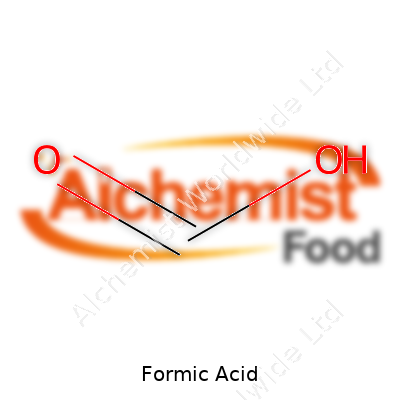
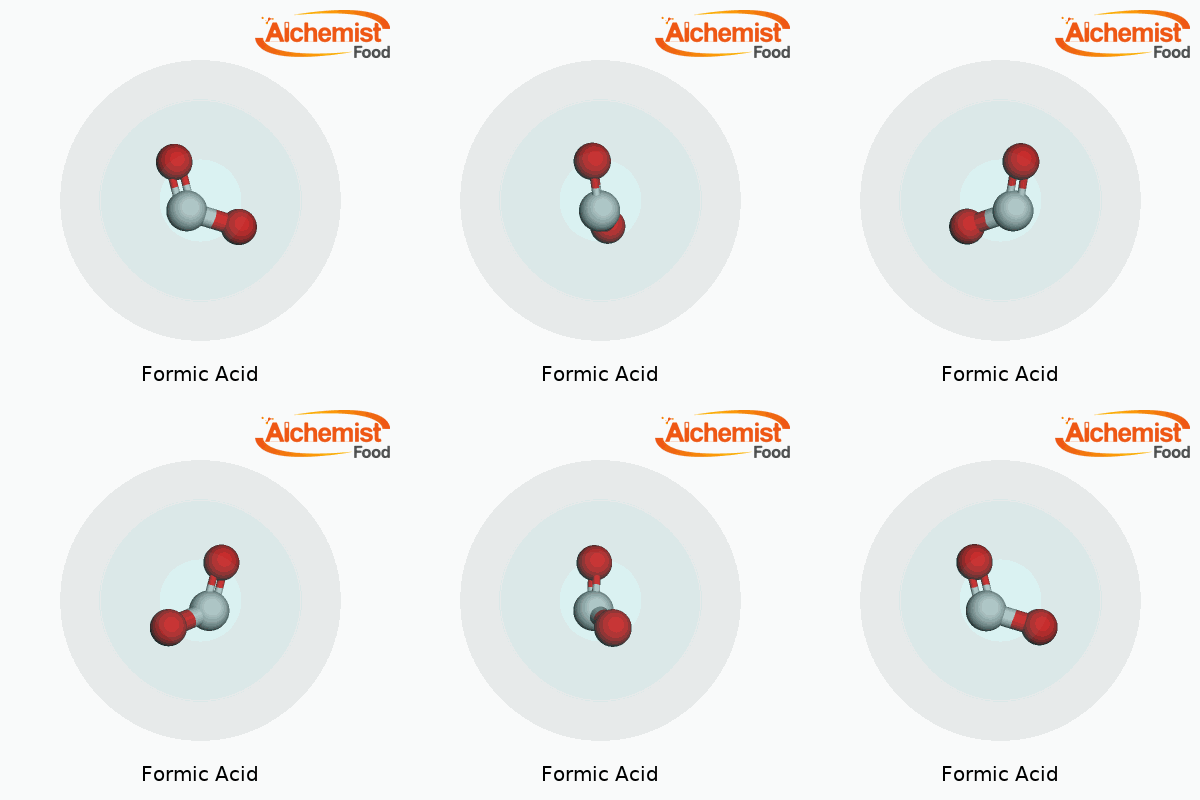
| Names | |
| Preferred IUPAC name | Methanoic acid |
| Other names |
Methanoic acid Hydrogen carboxylic acid Aminic acid Formylic acid Oxomethanol |
| Pronunciation | /ˈfɔːrmɪk ˈæsɪd/ |
| Preferred IUPAC name | Methanoic acid |
| Other names |
Methanoic acid Hydrogen carboxylic acid Aminic acid Formylic acid |
| Pronunciation | /ˈfɔːrmɪk ˈæsɪd/ |
| Identifiers | |
| CAS Number | 64-18-6 |
| Beilstein Reference | Beilstein Reference: 1718734 |
| ChEBI | CHEBI:28470 |
| ChEMBL | CHEMBL504 |
| ChemSpider | 692 |
| DrugBank | DB01942 |
| ECHA InfoCard | HTS string: "ECHA InfoCard: 100.000.750 |
| EC Number | 200-579-1 |
| Gmelin Reference | **Gmelin Reference:** 604 |
| KEGG | C00047 |
| MeSH | D005546 |
| PubChem CID | 284 |
| RTECS number | LR0350000 |
| UNII | 9Q6Q66QF3L |
| UN number | UN1779 |
| CAS Number | 64-18-6 |
| Beilstein Reference | Beilstein Reference: 1209222 |
| ChEBI | CHEBI:28472 |
| ChEMBL | CHEMBL504 |
| ChemSpider | 534 |
| DrugBank | DB01942 |
| ECHA InfoCard | 03e914b9-bc31-467e-a5d6-13d3a0f6ad4c |
| EC Number | 200-579-1 |
| Gmelin Reference | Gmelin Reference: 604 |
| KEGG | C00047 |
| MeSH | D006996 |
| PubChem CID | 284 |
| RTECS number | LR0350000 |
| UNII | 9G82FCO3FS |
| UN number | UN1779 |
| Properties | |
| Chemical formula | HCOOH |
| Molar mass | 46.03 g/mol |
| Appearance | Colorless liquid with a pungent, penetrating odor. |
| Odor | Pungent, penetrating odor |
| Density | 1.22 g/cm³ |
| Solubility in water | Miscible |
| log P | -0.54 |
| Vapor pressure | 43 mmHg (20°C) |
| Acidity (pKa) | 3.75 |
| Basicity (pKb) | 10.32 |
| Magnetic susceptibility (χ) | −20.5×10⁻⁶ cm³/mol |
| Refractive index (nD) | 1.370 |
| Viscosity | 1.57 mPa·s (at 25°C) |
| Dipole moment | 1.41 D |
| Chemical formula | HCOOH |
| Molar mass | 46.03 g/mol |
| Appearance | Colorless, fuming liquid with a pungent, penetrating odor. |
| Odor | Pungent, penetrating |
| Density | 1.220 g/cm³ |
| Solubility in water | Miscible |
| log P | -0.54 |
| Vapor pressure | 57.3 mmHg (20 °C) |
| Acidity (pKa) | 3.75 |
| Basicity (pKb) | 10.33 |
| Magnetic susceptibility (χ) | χ = -20.2 × 10⁻⁶ cm³/mol |
| Refractive index (nD) | 1.372 |
| Viscosity | 1.57 mPa·s (at 25°C) |
| Dipole moment | 1.41 D |
| Thermochemistry | |
| Std molar entropy (S⦵298) | 130.6 J/(mol·K) |
| Std enthalpy of formation (ΔfH⦵298) | −425.0 kJ·mol⁻¹ |
| Std enthalpy of combustion (ΔcH⦵298) | −254.0 kJ/mol |
| Std molar entropy (S⦵298) | 130.6 J·mol⁻¹·K⁻¹ |
| Std enthalpy of formation (ΔfH⦵298) | -425.0 kJ/mol |
| Std enthalpy of combustion (ΔcH⦵298) | -254.0 kJ/mol |
| Pharmacology | |
| ATC code | J01XX01 |
| ATC code | J01XX01 |
| Hazards | |
| GHS labelling | GHS02, GHS05, GHS07 |
| Pictograms | GHS05,GHS06 |
| Signal word | Danger |
| Hazard statements | H226, H314, H331 |
| Precautionary statements | P261, P280, P301+P330+P331, P303+P361+P353, P305+P351+P338, P310 |
| NFPA 704 (fire diamond) | 3-2-2 |
| Flash point | ~69°C |
| Autoignition temperature | 368 °C |
| Explosive limits | 3.7–33% |
| Lethal dose or concentration | LD50 oral rat 730 mg/kg |
| LD50 (median dose) | LD50 (median dose): 730 mg/kg (oral, rat) |
| NIOSH | UN1779 |
| PEL (Permissible) | 5 ppm |
| REL (Recommended) | 30 mg/m³ |
| IDLH (Immediate danger) | 30 ppm |
| GHS labelling | GHS02, GHS05, GHS07 |
| Pictograms | GHS05,GHS06 |
| Signal word | Danger |
| Hazard statements | H226, H314, H331 |
| Precautionary statements | P261, P280, P301+P330+P331, P303+P361+P353, P304+P340, P305+P351+P338, P312, P363 |
| NFPA 704 (fire diamond) | 2-2-2-Acidos |
| Flash point | 69°C (156°F) |
| Autoignition temperature | 601 °C (1114 °F; 874 K) |
| Explosive limits | 3% to 18% |
| Lethal dose or concentration | LD50 oral rat 730 mg/kg |
| LD50 (median dose) | LD50 (median dose): 730 mg/kg (oral, rat) |
| NIOSH | FF6300000 |
| PEL (Permissible) | 5 ppm |
| REL (Recommended) | 30 mg/m³ |
| IDLH (Immediate danger) | 30 ppm |
| Related compounds | |
| Related compounds |
Acetic acid Oxalic acid Formate Formaldehyde Methanol |
| Related compounds |
Methanol Carbon monoxide Acetic acid Oxalic acid Formate esters Formamide Sodium formate Hydrogen cyanide |



