Ferrous Succinate: A Down-to-Earth Look at Its Past, Present, and Future
Historical Development
People have wrestled with iron deficiencies for a lot longer than most realize. Scurvy, anemia, and related problems drove early healers to experiment with any iron salt on hand. Early attempts at iron supplementation often left folks with stomachaches or worse, setting the stage for more tolerable forms. Through round after round of research, chemists found succinic acid combined with iron offered a milder solution for the gut. By the late 20th century, ferrous succinate emerged as a more forgiving option for doctors looking to help patients build blood without the side effects of harsher iron compounds. Success here didn't happen overnight, but rather through trial, error, and the stubborn nature of medicine to keep pushing through setbacks.
Product Overview
Ferrous succinate contains iron, paired with succinic acid derived from natural sources and controlled reaction processes. This compound lands solidly in the supplement market, targeting those with iron-deficiency anemia. Manufacturers deliver it as a fine powder or quickly dissolving tablet, and supplement labels center on iron content per dose rather than fancy marketing. Clinics and pharmacies keep it on shelves right next to ferrous sulfate, but doctors often reach for ferrous succinate due to patient feedback about gentler digestion. Its use stretches out to certain hospital settings, pediatric clinics, and even sports medicine—any situation where iron uptake can't be left to chance or uncomfortable options.
Physical & Chemical Properties
Ferrous succinate takes the form of a gray-green powder, sometimes leaning into pale yellow if moisture creeps in. No smells announce its arrival. Water will break it down a bit, though it prefers acidic environments, mimicking the human stomach. Its iron content shows up around 30% by weight, and basic chemical math tells us that this aligns well with recommended daily doses in most populations. In terms of stability, it can handle a sealed bottle on a pharmacy shelf for well over a year, provided there’s no dampness or heavy light. Heat won’t push it to react much unless things get extreme.
Technical Specifications & Labeling
Products in the supplement aisle need clear, no-nonsense labels. Ferrous succinate packaging spells out elemental iron by milligrams. Labels also explain origin—sometimes noting pharmaceutical grade—and may mention excipients like starches or binders. Reputable brands mail out from GMP-compliant facilities, including batch numbers and expiration dates for traceability. Tablets normally come scored for ease of splitting, and most bottles include specific storage advice to avoid moisture, which could oxidize the iron and reduce bioavailability. Parents and caretakers watch for childproof caps, since iron overdose presents a serious risk in young kids.
Preparation Method
Getting ferrous succinate from raw elements to the shelf takes more than a simple mix-and-match. Starting materials include succinic acid—often from organic fermentation—and iron salts such as ferrous sulfate. Chemists run these through an aqueous reaction with careful pH control around 4 to 5, prompting ferrous ions to combine with succinate anions. Heavy filtration steps remove unreacted iron and unwanted ions. Vacuum drying preserves integrity without oxidation. Some manufacturers will granulate the powder for better swallowing, tossing calcium stearate or microcrystalline cellulose into the mix. The end result: a product that offers reliable release in the stomach, minimizing taste and odor challenges for the user.
Chemical Reactions & Modifications
Succinic acid binds tightly with ferrous ions in slightly acidic water, yielding a salt that holds steady in air unless exposed to high humidity. Acidic pH increases solubility, so producers favor a low pH window to keep the salt together. Chemists can substitute one of the basic raw materials—like using ferrous fumarate as a starting source—or add minor stabilizers to tweak solubility for specific patient profiles. In rare cases, researchers cap iron with a thin layer of dextrin to slow down oyster or metallic aftertastes in chewable forms. That level of innovation remains out of reach for most over-the-counter products, but clinical research labs keep experimenting with modifications.
Synonyms & Product Names
Ferrous succinate sometimes turns up under its old school chemical name, iron(II) succinate. Less formal product listings just say “iron succinate” or use international codes like E579 on ingredient registers in foods or supplements. In hospital procurement systems, it earns taglines like “succinate-based iron supplement.” Globally, translations shift but suppliers keep the focus on the dual elements of iron and succinic acid. Sometimes a local brand will add a spin—pairing it with vitamin C under creative marketing names—but the backbone always stays the same.
Safety & Operational Standards
Pharmaceutical companies and supplement-makers cannot cut corners with iron products. Good manufacturing practices and ISO rules dominate every step of mixing, drying, and bottling. Tablets must pass tests for weight, hardness, and dissolution; any batch that fails, hits the discard pile. Routine checks for heavy metal contaminants—lead, arsenic, mercury—help avoid long-term health complaints. In most countries, regulatory agencies force supplement-makers to cap iron per serving, and put out clear warnings about accidental overdose. Production facilities use sealed tanks and air scrubbing systems, since airborne iron powder brings inhalation risks for workers. Annual inspections, surprise audits, and robust paperwork all tie back to minimizing harm to families using these products.
Application Area
Doctors turn to ferrous succinate most in situations where patients can’t handle the cramping and nausea that come with harsher iron salts. Pregnant folks, children, and those with stomach ulcers often land in this group. Nutritionists use the compound for iron-deficiency anemia, especially cases tied to chronic fatigue, heavy blood loss, or dietary gaps. It's found in chewable tablets, drops for kids, and even certain fortified foods in regions where anemia rates run high. Trim the chemical jargon, and its main job stays the same: make sure more iron gets to blood cells in the safest, least irritating way possible.
Research & Development
University labs and hospital research teams keep exploring the subtle upsides of ferrous succinate. Compared head to head with other common supplements, this form shows promising results on the absorption side, while reducing tummy troubles. Moving into the realm of nanoparticles, some scientists now test ultra-small versions of ferrous succinate for greater uptake in challenging patients with inflammatory gut conditions. Researchers also explore how it plays with other key nutrients like vitamin D or folic acid, measuring not just the blood results but also patient-reported outcomes like tiredness or mood. Funding from public health agencies pushes ongoing monitoring of real-world results through anemia screening programs. A growing body of data now supports its inclusion in United Nations and WHO iron treatment protocols for at-risk populations worldwide.
Toxicity Research
Every iron compound brings a risk of overdose, and ferrous succinate doesn’t dodge this reality. Emergency rooms see cases every year from accidental kid exposures, reminding everyone how a bottle left open at home can turn dangerous. Toxicity research anchors itself in the dose: low levels are safe, while high doses can flood the system, cranking up free radicals and causing swelling in liver or gut. Rodent studies and human trials both track safe thresholds, and published literature records symptoms to watch—nausea, vomiting, shock. On the flip side, controlled medical use doesn’t show unique risks when compared with other iron supplements at similar doses. Doctors take extra care with folks who have a history of hemolytic anemia, impaired kidney function, or rare genetic iron storage diseases, since even gentle forms stack up in the body if filters aren’t running smoothly.
Future Prospects
Biotechnology keeps pushing the frontier for simple supplements like ferrous succinate. Some startups blend it with natural absorption boosters—think plant-based extracts or probiotics—to help the body grab even more iron per dose. Drug-delivery researchers hope to build slow-release capsules that let people skip daily dosing in favor of once or twice a week, reducing missed pills and miserable side effects. As regulatory differences shrink between regions, global health planners eye bulk production and distribution, hoping to reach malnourished areas where iron-deficiency still stunts childhood growth. Public health campaigns lean on newer clinical findings to update nutritional guidelines. If next-generation manufacturing drives down cost without sacrificing purity, ferrous succinate could find its way into staple foods, not just medicine cabinets. The story of iron supplementation hasn’t closed its book yet, and this compound continues to write new chapters in patient comfort and global wellness.
What is Ferrous Succinate used for?
Understanding Iron's Role in Health
My first real lesson about nutrition came in college, face-to-face with a professor holding up a bottle of iron supplements. He explained how our bodies use iron for daily life, not just as a building block for red blood cells, but as a key ingredient in energy creation. People don’t always think about it, but without enough iron, it’s tough for the blood to carry oxygen, and then nothing really works the way it should.
How Ferrous Succinate Steps In
Ferrous succinate supplies a type of iron that the body absorbs with a little less struggle compared to older salts. Hospitals and clinics often pick it for patients who can’t get all the iron they need from food. Iron in this form helps people fight back against tiredness and shortness of breath when their blood test says “anemia.” Patients with ongoing conditions like kidney disease or heavy periods end up needing a boost, and that’s where the supplement makes a real difference.
Doctors don’t take chances with iron. They check ferritin or hemoglobin levels before starting anyone on pills. Too much extra iron isn’t healthy — it can load up organs if the cause of anemia isn’t sorted out. Ferrous succinate meets a demand in the middle: it delivers iron steadily, but with fewer ups and downs in stomach complaints compared to some harsher formulations. Families caring for older relatives often notice grandpa or grandma seems brighter once the right supplement hits home.
Common Settings for Ferrous Succinate Use
I’ve seen ferrous succinate show up in more than just hospitals. Pregnancy clinics prescribe it, since pregnancy naturally asks for more iron. Pediatricians keep an eye on young kids, especially picky eaters who live on pasta and bread. Many times, if a child’s energy drops and blood work confirms it, ferrous succinate gives the necessary lift. It feels much safer for parents when a supplement has a long record and is trusted by professionals.
Side effects can cloud the picture. Traditional iron pills often bring stomach aches or constipation. Ferrous succinate seems kinder on the gut for a good chunk of people. That keeps folks on the supplement longer, which matters, since rebuilding iron stores takes patience — weeks, not days. Nutritionists advise taking it with fruit juice, since vitamin C helps absorb the metal, while milk or coffee do the opposite.
Paying Attention to Quality and Access
It’s easy to order all sorts of supplements online nowadays, but not every product delivers what it claims. Quality and authenticity really count with medical supplements. The FDA enforces strict rules, but patients and clinicians still run into knockoffs. Pharmacies with solid credentials, or a trusted doctor’s prescription, provide the peace of mind you can’t always get from just browsing the web.
Looking Toward Solutions
People often overlook diet as an answer to low iron. Lentils, leafy greens, beef, and eggs each play a part, and no supplement replaces a good home-cooked meal. Public health campaigns help, teaching families about iron boosters and ways to keep the kitchen healthy. Schools sometimes screen for anemia, which helps flag issues before they become overwhelming. The way forward seems clear: catch deficiencies early, choose quality supplements if needed, and make sure advice comes from people who live and breathe good care.
How should Ferrous Succinate be taken?
Understanding the Importance of Iron Supplementation
Low iron can leave you feeling tired or even breathless with routine activity. Ferrous succinate gets used as a supplement to address iron deficiency, a problem that often crops up in people with certain diets, menstruation, or underlying health conditions. My own family saw how low iron can sneak up on you—a teenager needing energy for school suddenly struggling to focus, until a blood test pointed the way. Supplements like ferrous succinate give you a practical path back to feeling like yourself.
Taking Ferrous Succinate the Right Way
Swallow ferrous succinate with a full glass of water. Some people find it easier on an empty stomach, since food can lower the amount of iron your body takes up. That said, stomach upset can crop up. If that happens, eating a scrap of bread or a little fruit with the tablet helps settle things for most people.
Nothing beats regular timing. Pick a part of your day you’ll remember, like right after waking up or before dinner. Consistency helps raise your iron stores over time. Missing doses slows that process down.
Food and Medicine Interactions
Certain foods block iron from being absorbed as well. Calcium-heavy products like milk, antacids, or even cheese should be spaced a couple of hours apart from iron pills. Coffee and strong tea also make iron harder to absorb. Vitamin C, by contrast, helps iron enter your system. A glass of orange juice alongside your supplement often boosts the benefit.
Monitoring and Adjusting Intake
Bloodwork tells the real story—iron tablets work slower than some expect. I remember checking in with the doctor after a couple of months to see numbers creeping up, not shooting through the roof. It pays to set realistic expectations. Too much iron builds up in the body and gets toxic, so keep supplements close to the dose your doctor recommends.
Possible Side Effects
Constipation or darker stools often show up as part of the iron supplement package. Staying hydrated, eating fiber, and moving each day all help. If nausea or pain grows strong enough to mess with daily living, don’t tough it out—reach out for advice. Switching to a different iron version or breaking the dose up twice a day sometimes helps.
Quality and Trust in Supplements
Pharmacies sometimes offer a cheaper store brand next to the prescription version. For supplements like these, you want to know what goes in. Good manufacturing standards matter—look for brands with third-party testing. Ask questions. Reputable companies answer, and your health is worth that homework.
Tackling the Root Causes of Iron Loss
Iron supplements patch over a shortage, but they don’t solve the root cause. Heavy bleeding, gut troubles, or dietary gaps may need deeper fixes. Once your energy picks up, ask your care provider to help you pin down why it happened in the first place so you’re not stuck on iron pills forever.
Final Thoughts
Iron tablets like ferrous succinate can rebuild strength when low levels drain your spark. Taking your supplement with the right foods, at the right time, while checking in with your doctor, leads to the best results. Staying in tune with your body and asking for guidance helps you get the most out of any iron therapy.
What are the potential side effects of Ferrous Succinate?
Common Experiences with Ferrous Succinate
Ferrous succinate, often used to treat iron deficiency, doesn’t glide into a routine unnoticed. Many folks start off hoping for quick relief from fatigue, only to find their digestive tract has other plans. Nausea seems to pop up for a lot of people—almost like a stubborn companion that refuses to leave right after breakfast. There’s a reason for this: iron supplements can irritate the stomach lining, especially if swallowed without much food. Some remember meals just to dodge that queasy feeling.
Bowel habits also take a hit. Constipation comes with the territory and holds a lot of people back from staying consistent with their medicine. I’ve heard plenty complain that what’s supposed to help their energy ends up making bathroom trips a dreaded ordeal. Others swing the opposite way, dealing with diarrhea. It’s pretty clear that everyone’s gut responds differently, but not many breeze through without noticing a slowdown or a sprint to the restroom.
Visible and Less Obvious Effects
Beyond the classic stomach woes, ferrous succinate leaves tracks elsewhere. Some people notice their stool turn darker, almost black. It’s a harmless color change for most, but an unexpected dark stool can scare anyone who hasn’t been warned. This happens because unabsorbed iron gets excreted and likes to leave a mark. The difference from more serious conditions lies in whether you feel pain, see red blood, or find yourself unusually weak. Doctors call this a normal side effect, but patients often need that reassurance.
Metallic taste also shows up, changing the way food and drinks taste for weeks. Friends mention their morning orange juice starts tasting like it’s mixed with pennies. For some, that alone makes it tough to stick with treatment. Headaches and mild dizziness can happen, especially for those new to iron supplements. Keeping hydrated and taking pills after food rather than before helps many keep these feelings at bay.
Allergic Reactions and Risks
Serious allergic reactions to ferrous succinate don’t show up often, but they deserve real attention. Signs like hives, swelling of the face, or trouble breathing tell you to seek help. Skin rash or itching may also strike, though most folks will only feel mild skin irritation if anything. Even rare, these outcomes remind doctors to ask about allergies before starting a supplement.
People with certain medical issues, like a history of ulcers or inflammatory bowel disease, often need to tread especially carefully. Extra iron can risk more severe gut irritation or worsen underlying problems. The risk creeps higher for anyone taking multiple supplements or medications that affect the digestive system.
Reducing the Risks
Doctors often recommend starting with a lower dose and using food to buffer the stomach. Vitamin C helps with absorption, so pairing iron with orange juice might make a difference—both for better uptake and for avoiding the sour stomach. Dividing the daily dose into two smaller ones also brings down stomach problems. For those dealing with constipation, more fiber and fluids help, along with regular walking.
Always good to keep open communication with a healthcare provider. Reporting symptoms, switching to a different iron salt, or considering a slow-release version sometimes solves the problem without giving up on the treatment. For those with long-term use, lab checks make sure iron levels don’t shoot too high, since overload brings its own risks.
Is Ferrous Succinate safe during pregnancy?
Iron Deficiency During Pregnancy
Iron sits at the center of a healthy pregnancy. Most people know that iron keeps your blood healthy, but pregnancy demands more. Blood volume expands, the baby’s growing organs borrow nutrients, and iron storage dips. It doesn’t take a medical textbook to show what happens—fatigue, dizziness, and in some cases, more serious risks like preterm birth or low birth weight. The numbers back it up: up to half of pregnant women develop iron deficiency, especially after the first trimester. Iron supplements have become one of the most common doctor recommendations for expecting mothers.
What Is Ferrous Succinate?
Not all iron pills look the same. Ferrous succinate is a type of iron supplement. You’ll find it on pharmacy shelves among other iron salts like ferrous sulfate, ferrous fumarate, and ferrous gluconate. The difference comes down to how well your gut absorbs them and how your body feels afterward. Some formulas trigger stomach issues or lingering metallic tastes more than others.
Safety Profile: What Doctors and Research Show
Obstetricians and registered dietitians who track iron supplementation point to a simple fact: ferrous succinate works as a source of iron. Several studies confirm that this compound helps boost iron levels for adults, including those carrying a child. The medical community has used it in prenatal care for years. The U.S. Food and Drug Administration and health authorities in other countries classify it as safe when used as directed.
Even so, some women report familiar complaints during supplement use. Black stools, mild stomach pain, constipation, and nausea can pop up with any iron pill, ferrous succinate included. From experience, many doctors suggest taking the pill with food to keep side effects manageable, though this might slow down absorption. In my clinic, patients often find that it bothers them less if taken later in the day or with vitamin C to enhance absorption.
Who Should Take Ferrous Succinate?
Pregnant people with blood tests showing low iron or low hemoglobin will likely hear about iron supplements from their doctor. Not everyone needs the same dose or type. Bioavailability differs slightly between supplements, and some patients tolerate certain forms better. I once worked with a patient who tried three different iron pills before settling on ferrous succinate—her stomach thanked her, and her labs improved.
Dieticians suggest eating more iron-rich foods, too: lean meats, beans, lentils, dark leafy greens, and fortified cereal. But food alone struggles to fill the gap if hemoglobin or iron levels have dropped far. Supplements fill that gap, making recovery quicker and health risks less likely.
Considerations and Precautions
Overloading on iron can backfire. Too much iron, especially from supplements, creates risks ranging from digestive problems to more serious toxicity. Before starting any iron pill, including ferrous succinate, a healthcare provider should run bloodwork and set the right dose. Every pregnancy runs its unique course, and what fits for one person might fail for another. People with a history of certain blood disorders should use extra caution.
Comfort and safety grow out of personal conversations. For many expectant mothers, a check-in with the OB-GYN, a quick lab test to track iron stores, and honest feedback about side effects or concerns can fine-tune the plan.
Practical Solutions
Trusted information and clear guidance lower the odds of confusion or discomfort. Health professionals can review options and ensure the supplement fits the patient’s body and routine. Anyone with ongoing nausea or trouble absorbing iron through the gut can try liquid forms, split doses, or diet-based strategies. Small shifts can turn a tough experience into something manageable. Pregnant women shouldn’t have to deal with iron deficiency alone.
Can Ferrous Succinate be taken with other medications?
Understanding Ferrous Succinate
Ferrous succinate is a type of iron supplement doctors often suggest for people running low on iron. Iron sits high on the list of essential minerals—the body relies on it to build hemoglobin, which keeps every cell supplied with oxygen. Folks who have trouble absorbing enough iron from food, or lose blood because of heavy periods or chronic illness, sometimes lean on supplements. If you ever faced nodding off at your desk for no good reason, or felt winded just walking up the stairs, a doctor may have checked your iron levels.
The Problem with Mixing Medicines
Pharmacy counters stay busy because so many of us juggle more than one prescription. The mix can get tricky. Ferrous succinate can bump into problems when paired with other drugs. Some combos slow down how much iron the body absorbs. For instance, popular heartburn fighters like omeprazole or ranitidine reduce stomach acid. Less acid means iron struggles to break free from its pill form and actually be useful. Also, calcium supplements and antacids might block iron from getting through the gut wall. I've heard from plenty of folks who thought doubling up on their morning vitamins made them healthier, only to learn too much mixing watered down the benefits.
Certain antibiotics hit snags with iron, too. Supplements like ferrous succinate can hook up with antibiotics like tetracyclines or fluoroquinolones in your stomach, forming clumps the body can't break apart. This means both the antibiotic and the iron do a poor job, putting infections and tiredness on the back burner for longer than anyone wants. Leaf through any patient leaflet, and drug interactions pop up like red warning flags. Still, when rushing through a morning routine, it’s easy to forget the timing advice, especially if you need an empty stomach for better absorption.
Trouble Spots for Chronic Illness
People handling long-term illness often stack meds. Diabetes, thyroid issues, and autoimmune problems usually mean pill organizers stuffed each day. Some thyroid drugs like levothyroxine and medicines for Parkinson's disease can struggle in the presence of iron, weakening their punch. This happened to someone in my own circle, who started iron after a checkup, only to find her thyroid symptoms ramped up weeks later. Her doctor spotted the problem after a quick medication review. Not every pharmacy visit includes this extra layer of attention, and the tiredness or brain fog can sneak up slowly, making the source hard to pinpoint.
Practical Ways to Avoid Trouble
Sorting out these mixing issues takes some real-world strategies. Doctors usually suggest spacing iron supplements and other medicines by a couple of hours—keeping them from fighting for space. If you take morning thyroid pills, leave a window before swallowing iron. Drink a glass of orange juice with iron for a vitamin C boost, as this gives absorption a nudge. Double-check directions for antibiotics, as some recommend strict timing schedules. Pharmacists often have quick reference charts or advice for tricky combinations.
Bring every bottle—prescription or over-the-counter—to regular checkups. Honest lists help doctors catch conflicts early. Push past any hesitation and ask about interactions up front. If new symptoms appear, consider whether the latest medicine mix might play a part, and flag changes quickly for review.
Mixing ferrous succinate with other drugs can get complicated, but building habits around timing, food choices, and honest chat with healthcare teams gives your body the best shot at getting what it needs from each pill.
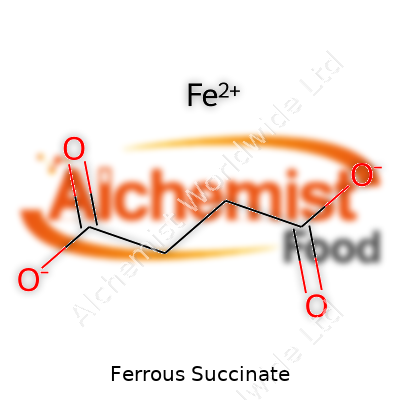
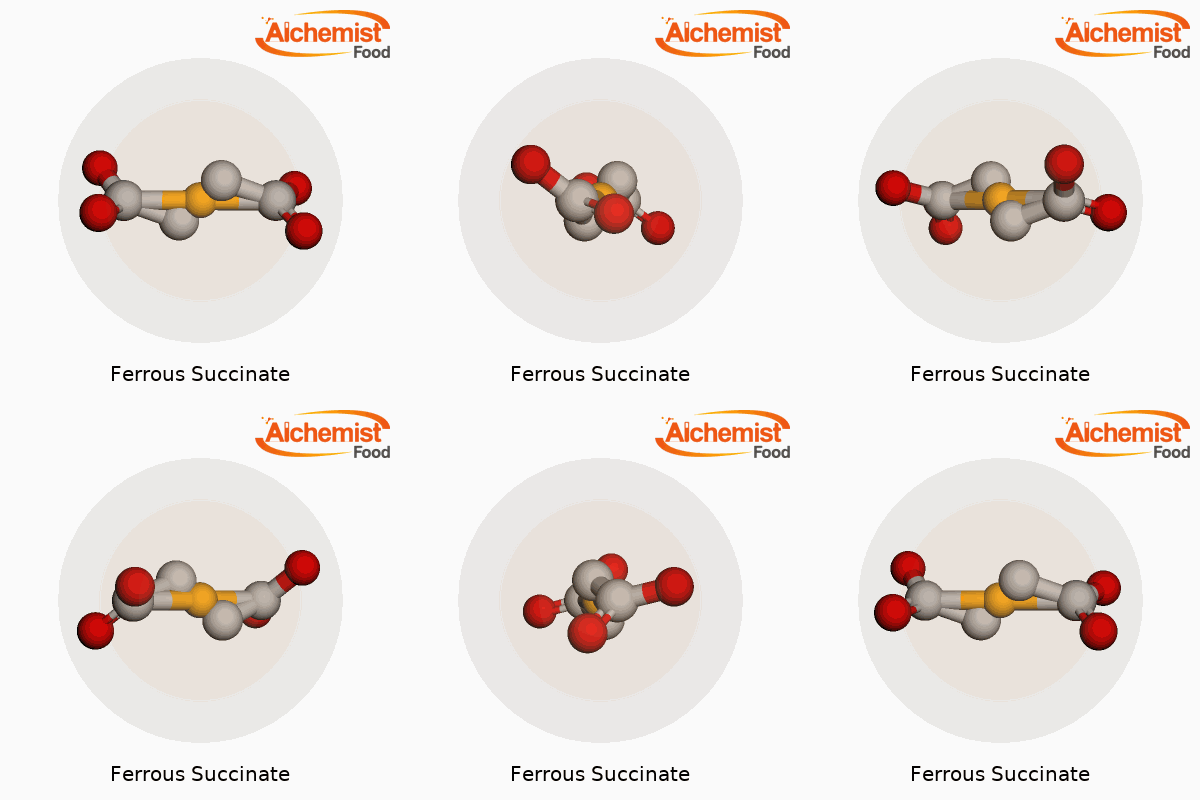
| Names | |
| Preferred IUPAC name | iron(II) butanedioate |
| Other names |
Iron(II) succinate Ferrosuccinate Succinic acid iron(2+) salt |
| Pronunciation | /ˈfɛr.əs səksɪ.neɪt/ |
| Preferred IUPAC name | iron(2+) butanedioate |
| Other names |
Iron succinate Succinate de fer Eisenbernsteinsäure Succinic acid, iron(2+) salt Ferrosuccinate |
| Pronunciation | /ˈfɛr.əs səksˈɪn.eɪt/ |
| Identifiers | |
| CAS Number | 23383-11-1 |
| Beilstein Reference | Beilstein Reference: 4154227 |
| ChEBI | CHEBI:37399 |
| ChEMBL | CHEMBL2105977 |
| ChemSpider | 20018189 |
| DrugBank | DB14661 |
| ECHA InfoCard | 07d7fd4a-9aaa-47e6-a017-159f3b20340e |
| EC Number | 233-180-7 |
| Gmelin Reference | 80092 |
| KEGG | C14786 |
| MeSH | D018706 |
| PubChem CID | 2723856 |
| RTECS number | WS8225000 |
| UNII | G3Q0H534R8 |
| UN number | UN2811 |
| CAS Number | [1332-96-1] |
| Beilstein Reference | 3521377 |
| ChEBI | CHEBI:75831 |
| ChEMBL | CHEMBL2105963 |
| ChemSpider | 16016 |
| DrugBank | DB13798 |
| ECHA InfoCard | ECHA InfoCard: 100.011.667 |
| EC Number | 231-187-6 |
| Gmelin Reference | 83716 |
| KEGG | C14727 |
| MeSH | D019375 |
| PubChem CID | 158144 |
| RTECS number | WS0175000 |
| UNII | 8BBP72879S |
| UN number | UN2811 |
| Properties | |
| Chemical formula | C4H4FeO4 |
| Molar mass | 284.080 g/mol |
| Appearance | Dark red powder |
| Odor | Odorless |
| Density | Density: 0.8 g/cm³ |
| Solubility in water | Slightly soluble |
| log P | -2.6 |
| Vapor pressure | Negligible |
| Acidity (pKa) | 4.21 |
| Basicity (pKb) | 8.40 |
| Magnetic susceptibility (χ) | Magnetic susceptibility (χ) of Ferrous Succinate: +1320 × 10⁻⁶ cm³/mol |
| Dipole moment | 4.47 D |
| Chemical formula | C4H4FeO4 |
| Molar mass | 325.11 g/mol |
| Appearance | Dark red powder |
| Odor | Odorless |
| Density | 1.57 g/cm3 |
| Solubility in water | Slightly soluble in water |
| log P | -2.37 |
| Vapor pressure | Negligible |
| Acidity (pKa) | 4.2 |
| Basicity (pKb) | 7.7 |
| Viscosity | Viscous liquid |
| Dipole moment | 0 D |
| Thermochemistry | |
| Std enthalpy of formation (ΔfH⦵298) | -1637.7 kJ/mol |
| Std molar entropy (S⦵298) | 336.2 J·mol⁻¹·K⁻¹ |
| Pharmacology | |
| ATC code | B03AA07 |
| ATC code | B03AA07 |
| Hazards | |
| Main hazards | Harmful if swallowed, causes serious eye irritation, may cause respiratory irritation. |
| GHS labelling | GHS02, GHS07 |
| Pictograms | GHS07 |
| Signal word | Warning |
| Hazard statements | H302: Harmful if swallowed. |
| Precautionary statements | IF SWALLOWED: Call a POISON CENTER or doctor/physician if you feel unwell. Store locked up. Dispose of contents/container in accordance with local/regional/national/international regulations. |
| NFPA 704 (fire diamond) | 1-1-0 |
| Lethal dose or concentration | LD50 oral rat 400 mg/kg |
| LD50 (median dose) | LD50 (median dose) of Ferrous Succinate: 1,200 mg/kg (rat, oral) |
| NIOSH | SY8570000 |
| PEL (Permissible) | PEL (Permissible) for Ferrous Succinate: Not established |
| REL (Recommended) | 30–60 mg daily |
| IDLH (Immediate danger) | Not Listed |
| Main hazards | Harmful if swallowed, causes skin and eye irritation, may cause respiratory irritation. |
| GHS labelling | GHS02, GHS07 |
| Pictograms | GHS07 |
| Signal word | Warning |
| Hazard statements | H302: Harmful if swallowed. |
| Precautionary statements | Precautionary statements: P264, P270, P301+P312, P330, P501 |
| Lethal dose or concentration | LD50 (oral, rat): 800 mg/kg |
| LD50 (median dose) | LD50 (median dose) of Ferrous Succinate is "520 mg/kg (rat, oral) |
| NIOSH | NIG7300000 |
| PEL (Permissible) | 15 mg/kg |
| REL (Recommended) | 30 mg |
| IDLH (Immediate danger) | Not established |
| Related compounds | |
| Related compounds |
Ferrous fumarate Ferrous gluconate Ferrous sulfate |
| Related compounds |
Ferrous fumarate Ferrous gluconate Ferrous sulfate |



