Ethyl Vanillin: Change, Challenge, and the Future of a Powerful Flavor
History Behind Ethyl Vanillin
Long before chocolate bars and ice cream cones became staples in pantries and freezers, scientists searched for ways to turn simple chemicals into memorable tastes. In the late 19th and early 20th centuries, researchers began drawing on coal tar and plant extracts to make synthetic flavors. Ethyl vanillin popped up as one of the offshoots from a curiosity about vanillin, the signature molecule that gives natural vanilla beans their rich aroma. While vanillin had anchored itself in the flavor industry, ethyl vanillin offered something stronger—a punchier aroma, longer shelf-life, and better heat stability. When World Wars made access to real vanilla scarce, the synthetic version became critical for bakers and confectioners everywhere. This compound didn’t just fill the gap; it pushed creative boundaries. Bakeries started seeing possibilities they couldn’t reach with natural vanilla alone.
What Ethyl Vanillin Really Is
Ethyl vanillin stands out because it packs almost three times the flavor strength of traditional vanillin. It tastes like vanilla, only richer—like moving from a standard chocolate bar to an artisan dark chocolate slab. White to faintly yellowish in crystal or powder form, it dissolves well in alcohol and slightly less so in water. If you walked into a lab or factory, you’d pick up spicy and creamy notes straight from the air around the blending tanks. The subtlety in its aroma convinced chocolate companies and pastry chefs alike that a little goes a long way.
Physical and Chemical Properties
Ethyl vanillin carries the molecular formula C9H10O3. Its melting point sits around 76–78°C. Whether it’s pressed into chocolate or stirred into a syrup, the powder flows easily and packs neatly. The solubility in ethanol allows beverage makers to blend it smoothly into liqueurs and flavored spirits, while the limited solubility in water shapes how much can be used in sodas or syrups. Many industrial techs rely on its stability—unlike some natural flavors, it resists oxidation and can handle the high temperatures of baking ovens.
Technical Specifications and Labeling
Producers who sell food-grade ethyl vanillin must follow global standards—purity typically goes above 99%. Good suppliers note the material’s CAS number (121-32-4), batch number, shelf-life, and recommended storage instructions right on the drum or sack. The label includes allergen information and compliance statements for organizations like the US FDA or the European Food Safety Authority. Truthful labeling reassures both manufacturers and consumers that quality checks aren’t skipped. It’s easy to overlook these details, but anyone who’s run a kitchen knows how one batch of off-spec flavor can throw off everything from filling taste to regulatory inspections.
How Ethyl Vanillin Comes to Life
Chemists make ethyl vanillin by reacting guaiacol or catechol with glyoxylic acid. In short, they knit together aromatic precursors before refining them through a condensation reaction, then ethylate the result. The whole process involves careful temperature controls and repeated purification steps. This isn’t the kind of chemistry that happens in someone’s garage—it takes industrial reactors, smart process engineering, and strict controls to prevent contamination. Some facilities use renewable biomass sources to answer growing calls for sustainability—a move that, if scaled right, could cut reliance on fossil raw materials in the future.
Chemical Reactions and Modifications
Beyond the basics, some food technologists tweak ethyl vanillin’s molecular structure to tailor the sensory experience or work better with specific food matrices. Certain derivatives show up in niche markets—perfume and specialty flavorings, for example. Adding or tweaking functional groups on the molecule can shift its perceived taste or volatility. These small changes sometimes make a difference for the odd pastry or beverage that just doesn’t handle classic ethyl vanillin the right way. There’s an entire branch of research aimed at figuring out which combinations unlock new, signature flavor profiles without toxic byproducts or controversial reagents.
Other Names and Industry Terms
Ethyl vanillin goes by several names, including 3-ethoxy-4-hydroxybenzaldehyde and Bourbonal. Chemists sometimes call it “ethylated vanillin,” but in bakery circles, people stick to the simple term. Product names may reference vanilla or French vanilla notes, but smart buyers look for the chemical name to avoid confusion. Food scientists know the difference between “vanilla flavor” (which could be anything) and “ethyl vanillin” (which guarantees a defined, measurable impact on flavor).
Keeping Things Safe and Standard
Every company that deals in ethyl vanillin faces rigorous scrutiny. The compound must meet food safety standards like the JECFA guidelines or those set by the FDA, EFSA, and China’s GB standards. Plants running ethyl vanillin reactors put safety first, given that making and handling fine powders carries dust and inhalation risks. Workers need proper masks, clean facilities, and regular safety drills. In the supply chain, traceability helps identify batches quickly if complaints arise. Countries impose maximum dosage limits in finished foods—too much can overwhelm the consumer or create the rare case of sensitivity or allergic response.
Where Ethyl Vanillin Shows Up
Chocolate and cocoa-based sweets almost always include ethyl vanillin on their ingredient lists. Its strength means manufacturers use less than with regular vanillin, which helps keep costs down. Beyond chocolates, it lifts the flavor in baked goods, ice cream, and flavored instant powders. Some perfumers reach for it to recreate the coziness of vanilla in candles, soaps, and creams, while pharmaceutical companies use it to mask harsh-tasting active ingredients in syrups and tablets. The compound even makes an appearance in specialty tobacco blends, lending smoothness to otherwise harsh or bitter notes.
Research and New Approaches
R&D teams challenge themselves to find cleaner and greener processes for ethyl vanillin every year. Enzyme-driven synthesis offers an emerging alternative to traditional chemical routes. Some universities study natural plant side-streams as raw material, aiming to reduce petrochemical dependence. Sensory analysis groups test flavor release in new food textures, especially as consumers demand more plant-based or allergen-free products that need help in the taste department. Lab-scale studies measure how ethyl vanillin interacts with sugar substitutes, fats, and protein isolates, seeking better solutions for “better-for-you” snacks and desserts.
What We Know about Toxicity
Toxicology reports suggest that ethyl vanillin, when used at levels found in foods, doesn’t accumulate or cause chronic health problems. Animal studies and human consumption data form the backbone for setting acceptable daily intake (ADI) guidelines, typically in the milligram per kilogram range. Regulatory authorities flagged very high doses as an irritant or as having potential mild effects on kidney function in some rodent studies, but regular food use falls well below these levels. Still, responsible manufacturers track scientific literature and update their internal guidance any time a new health or safety risk appears.
Prospects for the Future
Demand for bold, recognizable flavors drives the future for ethyl vanillin. While plant-based and clean-label trends shape the conversations in R&D labs, flavor enhancement remains a tricky business. There’s ongoing work to build circular supply chains, slash the carbon footprint of synthesis, and cut the cost per kilogram using green chemistry. Some startups hunt for microbial strains that can make ethyl vanillin directly from sugars or plant waste. As food technology moves toward personal nutrition and specialty diets, ingredients like ethyl vanillin could bridge sensory gaps in low-sugar and high-protein snacks, delivering familiar pleasures to ever-changing palates.
What is Ethyl Vanillin used for?
Inside the Pantry and Lab: Ethyl Vanillin’s Everyday Uses
Open a package of chocolate chip cookies or take a sniff near an ice cream shop and there’s a good chance ethyl vanillin plays a part in that sweet smell. Ethyl vanillin gets used mainly for boosting and rounding out flavors, especially vanilla, thanks to its strong, creamy punch. It gives more impact than the simple vanilla extract in most kitchen cupboards. Candy, baked goods, instant desserts, and soft drinks often carry its signature warmth because it delivers that intense vanilla sensation that people expect, especially when natural vanilla can’t keep up with global demand.
Big food companies rely on ethyl vanillin to standardize taste and cut costs. Natural vanilla beans take months to grow and cure, and weather fluctuations hike prices. Synthesized from ingredients like guaiacol, ethyl vanillin sidesteps those headaches. Food scientists figured out that it carries three times the flavor strength of regular vanillin, so a little bit stretches a long way. At the same time, the flavor holds up under heat and processing, making it perfect for industrial ovens and big batch drinks.
Beyond Sweets: Surprising Corners of Daily Life
It’s not all frosting and fudge. Perfume makers grab ethyl vanillin for earthy, sweet base notes. Cheap perfumes and even some luxury blends add it as a fixative, letting lighter floral or citrus top notes shine longer. As someone who worked in a friend’s candle store, I can confirm ethyl vanillin lands in wax to crank up the “fresh baked cookie” or “vanilla bean” effect that lures people in off the sidewalk.
The pharmacy shelf has seen its share, too. Many medicines—especially powders and syrups—taste bitter or odd, which leads to people skipping doses or giving up altogether. Mixing in ethyl vanillin turns harsh flavors into something less punishing without interfering with active ingredients. For parents and patients, that simple tweak makes taking medicine just a bit easier.
Food Safety and Environmental Concerns
Plenty of people worry about synthetic additives, and not without reason. The FDA and European Food Safety Authority have signed off on ethyl vanillin within set limits. Studies over the years found it safe at the amounts used in food, but there’s a growing movement for label clarity. Shoppers want to know exactly what’s inside packaged goods. As someone who reads ingredients before buying snacks for my kids, I look for clear, honest labeling—even familiar names can mask a bunch of chemicals. A gentle nudge for food makers: keep labels readable and don’t hide behind flavor codes.
What’s Next: Sustainable Solutions and Consumer Trust
Vanilla beans face extinction pressures from overfarming, and synthetics already carry much of the load. But sustainable practices and transparency win trust. Consumers lean into brands promising eco-friendly sourcing and minimal additive use. I see value in supporting research for greener raw materials that don’t rely on petrochemical routes. Imagine if more companies used bio-based fermentation or upcycled agricultural waste. That shift could ease pressure on vanilla farmers and cut fossil fuel use at the same time.
Ethyl vanillin gives us strong, reliable flavor, but as people get savvier, companies can’t treat it just as a stand-in for real vanilla. There’s more riding on trust, sustainability, and open conversation than ever before.
Is Ethyl Vanillin safe to consume?
What Ethyl Vanillin Brings to the Table
The scent of vanilla in your kitchen almost always gets traced back to one ingredient, especially in those store-bought cookies and candies. Ethyl vanillin isn’t just a word for the ingredient list. It packs a bigger punch than regular vanillin—the stuff found in real vanilla beans—so manufacturers keep coming back for its sweet, creamy boost. That extra strength comes from swapping a single hydrogen atom for an ethoxy group through a chemical process dating back to the early 1900s. At the grocery store, ethyl vanillin works as an affordable way to mimic vanilla, chocolate, and other cozy flavors.
Is There a Risk Hiding Behind That Sweetness?
Food safety never takes a backseat when choosing what ends up on kids’ plates. So, let’s talk real numbers and facts. The FDA has blessed ethyl vanillin as “Generally Recognized As Safe” (GRAS), meaning they dug through studies, ran it through animal trials, and didn’t find anything alarming at everyday amounts. The flavor world’s other big regulator, the European Food Safety Authority, didn’t sound alarms either, as long as consumption stays modest.
Now, nobody lines up at the soda fountain to knock back pure ethyl vanillin, and for good reason. Swallowing heaps of artificial flavors can leave anyone with tummy aches or headaches. High doses in rats have sparked mild concerns—liver and kidney irritation mainly—but those test animals ate more of it than most folks would see in a dozen lifetimes of desserts. For anyone eating regular, balanced meals, those toxic scenarios just don’t match real life.
Separating Facts from Fear
Real world exposure usually falls far below levels shown to cause any harm. The average diet brings in trace amounts, mostly from processed sweets and flavored drink mixes. Older studies set exposure limits at about 5 milligrams per kilogram of body weight each day. If something had gone sideways on a large scale, health agencies would have flagged it decades ago. Pediatricians and toxicologists agree—short-term or accidental overindulgence doesn’t equal an emergency room trip.
Some people do worry about any kind of artificial additive. It’s a concern built on growing up surrounded by food safety scares, but in this case, decades of tests have not linked ethyl vanillin to cancer, developmental issues, or allergic reactions for most people. The body breaks it down pretty efficiently, eliminating it without much fuss in the liver and kidneys, similar to how it handles many other plant-based substances.
How to Make Food Choices That Actually Matter
Anyone browsing ingredient lists and wanting to cut back on artificial flavoring has more choices than ever. Bakeries long ago figured out how to blend real vanilla with plant-based flavors for a richer taste. Labels call out the real stuff apart from “artificial vanilla flavor” or “vanillin.” Shoppers can buy pure vanilla extract, and some even try making their own at home from vanilla beans, alcohol, and a bit of time.
For those who need to watch every additive—children with rare metabolic issues, or people with specific allergies—it’s always smart to read carefully and ask questions. The internet opens up a world of consumer research, and good communication with healthcare teams helps keep families feeling safe.
Most people can enjoy foods with ethyl vanillin in moderation. It sweetens treats and brings old-fashioned flavors to new recipes, all the while passing strict checks by both scientists and government agencies. Balance, variety, and mindful eating still matter more than one flavor molecule hiding in your dessert.
How is Ethyl Vanillin different from regular vanillin?
The Two Molecules on Your Taste Buds
Most bakers reach for vanilla as a go-to flavor. Dig a little further and a surprising twist appears: not all “vanilla” flavorings share the same building blocks. The labels read vanillin or ethyl vanillin. Both bring sweetness and warmth to recipes, but they don’t taste the same.
Vanillin: Rooted in Tradition
Straight from the bean, vanillin is the main flavor compound giving vanilla its identity. Commercially, it’s often made from lignin in paper pulp or synthesized from guaiacol because real vanilla production can never keep up with the world’s appetite for that comforting flavor. Real vanilla extract contains hundreds of aromatic molecules besides vanillin, but vanillin is what catches the nose and tongue. A whiff out of the spice cupboard, and you know what’s baking. It’s an old friend to cookies and cakes.
Ethyl Vanillin: Punching Above Its Weight
Ethyl vanillin adds an extra carbon to vanillin’s skeleton, making this molecule taste richer and stronger—almost three times as potent. I watched pastry chefs use it for fudge and chocolate where vanilla’s roundness sometimes gets lost. The ethyl group pushes the flavor forward and lingers longer. This makes products flavored with ethyl vanillin taste more indulgent, sometimes even over-the-top. Ethyl vanillin doesn't occur naturally in vanilla beans. Chemists make it mostly from catechol, another plant-based phenol, through a process that makes it highly pure and reliable for flavor work.
Why Choose One Over the Other?
Baking at home, I tend to grab vanilla extract for custard and ice cream because nothing quite replaces that gentle blend. But mass producers juggling sugar, cocoa, and dairy—especially at big scale—reach for ethyl vanillin. It holds up longer during storage. The chemistry protects it against the bitterness and burn-off you get from heating and mixing, and the clean, punchy sweetness stands out where subtlety gets drowned in a mix of ingredients. Chocolate bars, hard candies, and some scented products use ethyl vanillin because it gives an unmistakable aroma even in tiny amounts.
Consumer Impact: Taste and Labeling
Ethyl vanillin lets food makers dial up the flavor without breaking the bank on rare vanilla beans. For consumers, the taste is familiar but sharper. I’ve noticed some people—especially purists who grew up on scratch vanilla—find ethyl vanillin a bit “fake” or chemical-like. Many can’t spot the difference blindfolded, but in simple recipes, the stronger, more persistent note feels different from the mellow sweetness of traditional vanilla. Labels sometimes list both as “artificial flavor.” This has fueled confusion and sparked calls for clearer ingredient labeling to help people make a real choice about what they’re eating.
Challenges and Paths Forward
Global demand for vanilla flavor far outweighs what Madagascar’s beans can supply, pushing production of both vanillin and ethyl vanillin from synthetic sources. Climate challenges and crop diseases create repeated price spikes. The food industry says synthetic vanillin and ethyl vanillin keep prices down and flavors consistent. Still, people deserve to know what’s in their food. More transparent labeling could bridge the gap—letting folks know if their favorite snack uses laboratory-made flavor or something closer to the pod. Keeping flavor options clear respects both tradition and progress, and lets everyone find the taste that fits their palate and values.
What are the main applications of Ethyl Vanillin in food products?
Why Ethyl Vanillin Gets Picked for Food Production
If you’ve tasted a chocolate bar or bakery treat and felt that classic, sweet comfort only vanilla brings, chances are you’ve run into ethyl vanillin. This flavoring ingredient stands out for the punch it packs—roughly three times the strength of plain vanilla. Food manufacturers don’t turn to it only for intensity. Ethyl vanillin solves a range of flavor challenges and opens the door to creativity you can actually taste.
Chocolate and Confectionery: The Classic Match
Chocolate makers rely on ethyl vanillin to create rich, dependable flavor in bars, coatings, and fillings. Real vanilla can fluctuate wildly in price and isn’t always dependable in quality. Ethyl vanillin steps in to keep chocolate recipes steady, which matters for big brands and small-batch makers alike. It’s not just about taste—it’s about making sure each batch grabs shoppers with that same distinct aroma, time after time.
Confectioners often turn to ethyl vanillin to strengthen sweet notes in candies without making them overpowering or cloying. Even a tiny amount can create that satisfaction you recognize in fudge, hard candies, and even chewing gum.
Bakery Goods Get a Reliable Boost
Bakers face their own struggles with ingredient costs, flavor loss from heat, and changing customer preferences. Ethyl vanillin has built a loyal following for the way it covers up odd aftertastes from artificial sweeteners or shelf-life enhancers in bakery-style cookies and cakes. This flavoring ingredient helps stretch recipes further, cutting down on the batch-to-batch swings you might run into with real vanilla beans.
Supermarket brownies, muffins, and cake mixes carry that familiar vanilla backdrop because ethyl vanillin offers a reliable, recognizable aroma at a fraction of the price. The switch won’t fool seasoned bakers, but for most people, that warm “home-baked” flavor comes across clear.
Dairy, Drinks, and Ready-to-Eat Surprises
Ice cream and flavored milks benefit from the strength of ethyl vanillin since milk and cream can dampen down other flavors. A little goes a long way in keeping a vanilla profile from disappearing under creamy, sugary bases. Beverage makers have found ethyl vanillin especially helpful for plant-based drinks, which can taste flat or even a bit earthy without the right additions.
Cereal coatings, nutritional shakes, and protein bars also tap into the reliability of ethyl vanillin. These products deal with a barrage of functional ingredients that may bring bitterness or off-notes. One pinch of this compound, and breakfast turns into dessert.
Taste Engineering and Consumer Trust
There’s a constant push in the food world to strike a balance—make something taste amazing every time, but don’t break the bank or play fast and loose with safety. Ethyl vanillin carries solid safety credentials, having been extensively studied and regulated by authorities in Europe, the US, and around the globe.
Even as demand for pure ingredients rises, the scale and practical benefits of ethyl vanillin give it staying power. Its careful use means food companies meet consumer cravings and regulatory standards without compromises on flavor or consistency. That blend of economy, potency, and taste explains why ethyl vanillin keeps showing up on ingredient lists, from mass-market treats to niche snacks.
Is Ethyl Vanillin natural or synthetic?
The Truth Behind the Label
Most people have crossed paths with ethyl vanillin through a box of cookies or a bottle of chocolate syrup. It smells sweet and familiar, similar to what you’d expect from real vanilla. That resemblance sparks confusion: is ethyl vanillin natural? The answer is no. Ethyl vanillin is a synthetic flavor compound, and the story behind it cuts through some common misunderstandings about what “natural” really means on food labels.
How Ethyl Vanillin Gets Made
Vanilla beans take months to grow and cure, and most of the world’s supply comes from a handful of countries like Madagascar. The process limits how much pure vanilla gets produced. Ethyl vanillin, on the other hand, gets manufactured in a lab. Chemists use raw materials from petroleum or wood pulp like guaiacol. They tweak its structure to create a molecule that’s very close to vanillin—the component that smells and tastes like vanilla—except this one has an extra ethyl group.
This slight chemical change makes ethyl vanillin pack even more punch than vanillin, up to three times stronger. Food companies saw an obvious advantage here: a cost-effective product that needs less per recipe to do the same job—or better—in baked goods, ice cream, and snacks.
Natural Versus Synthetic: Why It Matters to Shoppers
“Natural flavors” sound safe and simple. Growing up, I always thought anything labeled “natural” meant it came straight from the source, untouched by science. The reality felt more complicated. Most vanilla flavor in processed foods never came near a vanilla orchid. Ethyl vanillin, for example, can’t come from vanilla plants at all, which rules it out as “natural” in most food standards, including FDA rules in the United States.
This distinction holds value to consumers who want transparency. Some look for pure, plant-based foods. Others worry about sensitive reactions to certain additives. There’s data to show that synthetic flavorings, including ethyl vanillin, rarely cause allergic reactions. The main concerns tend to revolve around the industrial origin, ethical sourcing, or simply the desire for simplicity in food labels.
What’s at Stake for Food Makers
The demand for real vanilla keeps growing, while the supply chain gets squeezed by weather and politics. The price of vanilla beans swings wildly, making natural vanillin expensive and rare. Ethyl vanillin provides a steady solution to keep chocolate, cookies, and candy tasting consistent and affordable. Yet, it comes with trade-offs.
Marketing matters. Food companies have a responsibility to list flavor additives like ethyl vanillin clearly. Otherwise, shoppers lose the power to decide what they put on their plates. That’s where better labeling laws and industry standards can step in. Some brands choose to list whether their flavors are “natural” or “artificial” with straightforward, easy-to-read ingredient statements. Others use QR codes and online databases so anyone can trace the source of every ingredient.
Finding Balance
Many people don’t think twice about what’s behind the vanilla flavor in candy or cookies. For those who do, information is power. Knowing that ethyl vanillin only exists because of science, not orchards, can help shoppers choose products that line up with their own health concerns, environmental values, or just their flavor preferences. Good science, clear facts, and honest labeling help everyone make smarter decisions at the grocery store.
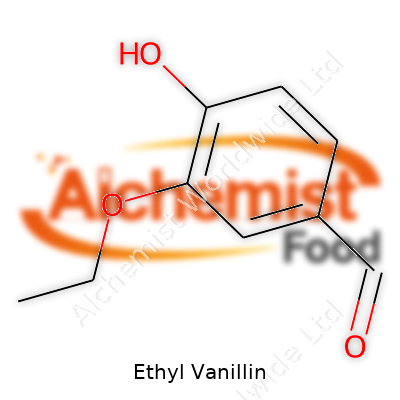
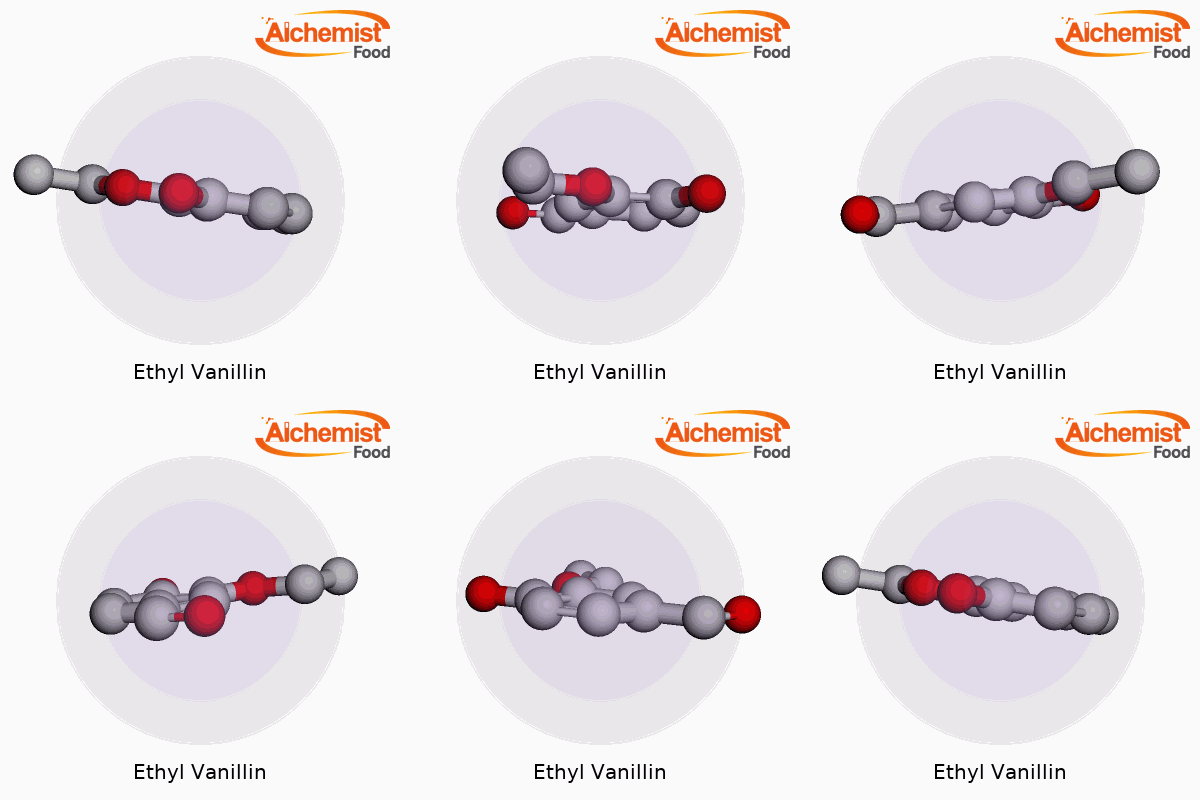
| Names | |
| Preferred IUPAC name | 3-ethoxy-4-hydroxybenzaldehyde |
| Other names |
3-Ethoxy-4-hydroxybenzaldehyde Benzaldehyde, 3-ethoxy-4-hydroxy- Ethylprotocatechuic aldehyde |
| Pronunciation | /ˌiːθɪl væˈnɪlɪn/ |
| Preferred IUPAC name | 3-ethoxy-4-hydroxybenzaldehyde |
| Other names |
Vanillin, ethyl 3-Ethoxy-4-hydroxybenzaldehyde Ethylprotocatechuic aldehyde Benzaldehyde, 3-ethoxy-4-hydroxy- p-Ethoxyvanillin |
| Pronunciation | /ˈiːθɪl væˈnɪlɪn/ |
| Identifiers | |
| CAS Number | 121-32-4 |
| Beilstein Reference | Beilstein 1341678 |
| ChEBI | CHEBI:42244 |
| ChEMBL | CHEMBL14230 |
| ChemSpider | 6919 |
| DrugBank | DB11363 |
| ECHA InfoCard | 100.007.676 |
| EC Number | 203-300-1 |
| Gmelin Reference | Gmelin Reference: **634136** |
| KEGG | C14218 |
| MeSH | D014730 |
| PubChem CID | 8467 |
| RTECS number | GF3050000 |
| UNII | F9K2A4TS2T |
| UN number | UN number: "UN2811 |
| CAS Number | 121-32-4 |
| Beilstein Reference | 1724605 |
| ChEBI | CHEBI:42253 |
| ChEMBL | CHEMBL156907 |
| ChemSpider | 6197 |
| DrugBank | DB09441 |
| ECHA InfoCard | 100.003.590 |
| EC Number | 208-309-4 |
| Gmelin Reference | 5982 |
| KEGG | C06508 |
| MeSH | D014726 |
| PubChem CID | 8467 |
| RTECS number | GF0440000 |
| UNII | RJ8W38IN8O |
| UN number | UN1987 |
| Properties | |
| Chemical formula | C9H10O3 |
| Molar mass | 166.176 g/mol |
| Appearance | White to light yellow crystalline powder |
| Odor | Vanilla-like |
| Density | 1.183 g/cm3 |
| Solubility in water | Soluble in water (1 g/L at 25 °C) |
| log P | 1.37 |
| Vapor pressure | 0.0013 mmHg (25°C) |
| Acidity (pKa) | 7.57 |
| Basicity (pKb) | 10.68 |
| Magnetic susceptibility (χ) | -62.0×10⁻⁶ cm³/mol |
| Refractive index (nD) | 1.553 |
| Viscosity | 3.88 mPa·s (at 25 °C) |
| Dipole moment | 2.96 D |
| Chemical formula | C9H10O3 |
| Molar mass | 166.176 g/mol |
| Appearance | White to light yellow crystalline powder |
| Odor | Vanilla, sweet, creamy |
| Density | 1.185 g/cm³ |
| Solubility in water | Slightly soluble |
| log P | 1.49 |
| Vapor pressure | 0.000133 hPa (25°C) |
| Acidity (pKa) | 7.40 |
| Basicity (pKb) | 12.34 |
| Magnetic susceptibility (χ) | -73.8e-6 cm³/mol |
| Refractive index (nD) | 1.571 |
| Viscosity | 1.227 cP (25°C) |
| Dipole moment | 2.93 D |
| Thermochemistry | |
| Std molar entropy (S⦵298) | 329.8 J·mol⁻¹·K⁻¹ |
| Std enthalpy of formation (ΔfH⦵298) | -504.2 kJ/mol |
| Std enthalpy of combustion (ΔcH⦵298) | -2978 kJ/mol |
| Std molar entropy (S⦵298) | 329.7 J·mol⁻¹·K⁻¹ |
| Std enthalpy of formation (ΔfH⦵298) | –426.2 kJ/mol |
| Std enthalpy of combustion (ΔcH⦵298) | -3678 kJ/mol |
| Pharmacology | |
| ATC code | A01AD11 |
| ATC code | A03AB12 |
| Hazards | |
| Main hazards | Harmful if swallowed. Causes skin and eye irritation. May cause an allergic skin reaction. |
| GHS labelling | GHS02, GHS07 |
| Pictograms | GHS07,GHS09 |
| Signal word | Warning |
| Hazard statements | H302: Harmful if swallowed. |
| Precautionary statements | P261, P264, P270, P272, P273, P280, P302+P352, P305+P351+P338, P321, P333+P313, P337+P313, P362+P364, P501 |
| NFPA 704 (fire diamond) | 1-1-0 |
| Flash point | 147°C |
| Autoignition temperature | 485°C |
| Lethal dose or concentration | LD50 (oral, rat): 2,990 mg/kg |
| LD50 (median dose) | LD50 (median dose): 1590 mg/kg (oral, rat) |
| NIOSH | EX3850000 |
| PEL (Permissible) | 10 mg/m³ |
| REL (Recommended) | 5 mg/kg |
| IDLH (Immediate danger) | Unknown |
| Main hazards | Harmful if swallowed, causes serious eye irritation, may cause respiratory irritation. |
| GHS labelling | GHS07, GHS09 |
| Pictograms | GHS07,GHS09 |
| Signal word | Warning |
| Hazard statements | H315, H319, H335 |
| Precautionary statements | Precautionary statements for Ethyl Vanillin: P261, P264, P270, P272, P273, P280, P301+P312, P302+P352, P304+P340, P305+P351+P338, P312, P321, P330, P333+P313, P337+P313, P362+P364, P403+P233, P405, P501 |
| NFPA 704 (fire diamond) | 1-1-0 |
| Flash point | 147 °C (297 °F) |
| Autoignition temperature | 515°C |
| Lethal dose or concentration | LD50 oral rat 1590 mg/kg |
| LD50 (median dose) | LD50 (median dose): 1590 mg/kg (oral, rat) |
| NIOSH | KV3325000 |
| PEL (Permissible) | 10 mg/m³ |
| REL (Recommended) | 10 mg/m³ |
| IDLH (Immediate danger) | Not established |
| Related compounds | |
| Related compounds |
Vanillin Isovanillin Methyl vanillin Ethyl methylphenylglycidate |
| Related compounds |
Vanillin Isovanillin Methyl vanillin Propyl vanillin |



