Ethyl Oleate: A Deep Dive into History, Science, and Future Impact
Historical Development
Ethyl oleate roots itself in the late 19th century search for ways to modify fats and oils for industrial and pharmaceutical use. Chemists figured out that reacting oleic acid, which comes from animal fats or vegetable oils, with ethanol produces this interesting ester. Early on, the focus lay on thickening agents and carriers that didn’t gum up machinery or medicines. I remember reading about the push in the 1930s to find reliable injection carriers, where most oils triggered severe reactions. Ethyl oleate handled biological materials without causing much irritation, which means it soon began showing up in injectable medicines and analytical labs. Over the decades, it picked up roles in cosmetics, flavors, even racing fuels because it makes for a smooth, non-crystallizing base. No surprise, the product has stayed in demand for more than a century.
Product Overview
People value ethyl oleate for its clear, light-yellow appearance, and a mild, almost fatty scent. This liquid ester blends easily into other oils and organic materials. It usually gets packed in dark glass bottles or HDPE containers, since light and heat can mess up its chemical profile. While the cosmetic and pharmaceutical markets drive up demand, you’ll spot the same compound as a sweetheart in lab research and food processing. Ethyl oleate stands apart for its near odorless, tasteless, and nearly inert nature at room temperature. It never thickens in the fridge or turns grainy with time—a big plus for any ingredient expected to go straight into injectables or food flavorings.
Physical & Chemical Properties
At room temperature, ethyl oleate takes shape as a light-yellow, oily liquid. Chemically, it’s an ester built from oleic acid (a C18 unsaturated fatty acid) and ethanol. Its molecular formula clocks in at C20H38O2, and the molecular weight tips over 310 g/mol. Boiling point lands somewhere around 216°C at reduced pressure, which means it’s fairly stable under routine lab or industrial settings. Water solubility stays close to zero, because the long hydrocarbon tail resists breakdown in polar solvents. By contrast, you’ll see it dissolve quickly in many organic solvents, such as ether, chloroform, or alcohols. Specific gravity hangs just under one, meaning it won’t float on water or disappear in a chemical mix. Viscosity stays low even in cold temperatures, which has led to its adoption as a medicinal—especially as a carrier for hormone or anesthetic injections.
Technical Specifications & Labeling
Manufacturers usually guarantee a purity over 98%, trying to remove free fatty acids and ethanol residues. On chemical drum labels, you’ll spot batch codes and dates of manufacture, plus analytical reports that check for moisture (below 0.2%), acid value (kept low for pharma applications), and peroxide content (since oxidation ruins quality). Pharmaceutical-grade ethyl oleate must meet or exceed pharmacopoeia standards, such as those set out by USP or EP—limits on impurities and toxicology figures get strictly enforced. Producers provide safety data sheets (SDS) covering fire risk, potential for eye or skin irritation, and emergency handling. Regulatory requirements insist on transparent tracking, so every drum or bottle tells a clear story from refinery to research bench.
Preparation Method
Industries typically make ethyl oleate through direct esterification. This process starts with pure oleic acid, gained from plant oils through saponification and fractionation, reacting with ethanol. Adding a strong acid catalyst—often sulfuric acid—speeds things up. The reaction churns out ethyl oleate and water. Removing the water drives the reaction to favor more ester formation. At scale, separation happens through washing and vacuum distillation. Ethanol and water get pulled off under reduced pressure, while the final product gets carefully cleaned to strip possible leftover acids, alcohols, or catalyst residues. Small labs sometimes run this reaction with glassware, heating gently and skimming the result off the top. Yet bigger traders need steam jacketed vessels with careful monitoring of every step to keep the product up to grade.
Chemical Reactions & Modifications
Ethyl oleate brings a certain chemical stubbornness because of its long hydrocarbon chain and only a single reactive site—the double bond from oleic acid. That bond, though, is wide open to hydrogenation, which turns it into ethyl stearate. You also find chemists using oxidative cleavage to chop the molecule, creating shorter aldehydes or acids for food and fragrance work. I’ve seen research labs exploring modifications that stick polar groups or functional moieties on the molecule, aiming to make better surfactants or lubricants. Just as with other esters, ethyl oleate gets broken back down into ethanol and oleic acid under strong alkaline hydrolysis, a tidy cycle of fat chemistry running in many food and soap plants.
Synonyms & Product Names
People know ethyl oleate by plenty of names in different circles. In the lab, you’ll hear “oleic acid ethyl ester” tossed around. Chemical catalogs typically use names like “ethyloleate” or “cis-9-octadecenoic acid ethyl ester.” On the European market, “Ethylis oleas” can show up, especially in older pharmacopeias. Common trade names sometimes highlight source or purity, but they refer to the same core structure. Language changes little about utility: it’s a straightforward, time-tested ester.
Safety & Operational Standards
Working with ethyl oleate usually brings little danger—unless you get careless with storage or application. Regulatory bodies, such as the FDA and EMA, give clear guidance about maximum impurity allowances and demand rigorous batch testing, especially for medicines. Flammability ranks as mittling, since it only lights at higher temps, but open flames should always be kept away in production plants. Eye or skin contact may cause mild irritation; gloves and goggles are standard gear. Spills usually get handled with absorbent pads and solvents. Fire departments perform regular drills in bigger warehouses, mostly to prepare for worst-case chemical pile-ups. Ventilation matters most in workplaces where the ester vapor can build up, protecting both staff and finished products. As someone who’s handled the material, a little common sense and following the SDS prevent almost every mishap.
Application Area
Ethyl oleate has found a home across several sectors. Pharmacies and clinics use it in testosterone, progesterone, and other injectable steroid suspensions for its capacity to thin active drugs and prevent clogs. In food and flavor businesses, it blends aromas and flavors without overpowering subtle ingredients. Paint factories depend on it as a non-hardening plasticizer and carrier for oil-based pigments. Cosmetic makers choose ethyl oleate for its gliding texture, improving lotions, balms, and hair conditioners. Some research labs use it as a solubilizer for analytical samples, while the racing industry occasionally adds it to fuels for smooth engine performance. Its broad compatibility makes it a real utility player—frequently stepping in where other oils gum up or add unwanted flavor and scent.
Research & Development
Research keeps peeling back new layers for this molecule. Drug formulation scientists look for carriers that don’t trigger immune responses, and ethyl oleate’s long track record makes it a familiar friend. Biotech labs run ongoing trials to check solubility with newer drug molecules. Cosmetic chemists have been investigating ways to tweak ethyl oleate’s structure to add skin-healing functions or deeper moisturization. Environmental researchers keep an eye on its break-down path, hoping to certify it as a “green” process additive that doesn’t survive long or bioaccumulate. Investment in synthetic biology may give manufacturers options for custom-producing ethyl oleate directly from yeast or bacteria, boosting purity and cutting costs. One can see that established and emerging fields both feed off a century’s worth of successes combined with new data from ongoing trials.
Toxicity Research
Toxicologists have spent years checking how ethyl oleate interacts with cells, tissues, and entire organisms. Rodent studies repeatedly show a high tolerance—doses many times higher than typical medical exposures produce only mild effects, mostly digestive in nature. Human reports note a slight chance for allergic responses, but those reactions tend to link with impurities, not the pure compound itself. Inhalation studies rarely find respiratory danger because of low volatility, and skin patch testing delivers minimal irritation. Regulators still insist on constant surveillance, given that chronic use in drug carriers can build up metabolites scientists might not have fully mapped out. Wastewater research teams monitor breakdown rates and look for byproducts that could linger in the environment. Most big-hitting studies so far underscore how ethyl oleate compares favorably to other esters; even so, new biocompatibility data always attracts a careful eye.
Future Prospects
The future for ethyl oleate looks promising, with both heavy industry and green chemistry pulling it in new directions. As drug delivery tech grows more sophisticated, demand for biocompatible carriers like ethyl oleate increases, especially for long-acting injectables in hormone therapy and cancer care. Bio-based chemical engineering could make production cheaper and less wasteful, breaking reliance on petrochemicals. Food engineers keep exploring ethyl oleate’s potential in flavor encapsulation and shelf-life extension. Improving sustainability has become a common theme in recent journals, with researchers chasing ways to upcycle waste fatty acids into high-purity ethyl oleate. Environmental scrutiny gets tighter every year, and that motivates new processes for elimination, recovery, or breakdown after use. Looking ahead, this unassuming ester stands ready to adapt, do good in health and industry, and lead by example as both an old veteran and modern problem-solver in chemical technology.
What is Ethyl Oleate used for?
From My Bench to the Real World
Some chemicals end up everywhere once you start paying attention. Ethyl oleate falls squarely into this camp, showing up in pharmaceuticals, food, and even as a lubricant. My first run-in with ethyl oleate happened while working on a topical cream project. At first, I saw it as nothing more than one of those unpronounceable names in a mile-long ingredients list. The deeper I dug, the more I realized the material sticks around in so many products, quietly doing the heavy lifting.
A Pharmacy Staple That Keeps Formulas Smooth
In the pharmaceutical world, ethyl oleate acts as a carrier for fat-soluble drugs. Steroid injections often won’t go anywhere unless mixed with the right solvent, and ethyl oleate proves easy on the tissue while delivering drugs cleanly. Not all solvents break down as smoothly in the human body, but our bodies recognize oleic acid as a familiar fat acid, since it’s found in foods like olive oil. That means your system clears it out with less fuss. The FDA keeps close tabs on its use, but currently recognizes ethyl oleate as generally safe, which clears a big regulatory hurdle and builds confidence for medical teams and patients alike.
Food Additive with Hidden Impact
You’re probably eating small amounts of ethyl oleate without realizing. Food companies use it as a flavoring agent and sometimes to thin out food coloring or fragrances in processed products. Healthy debate surrounds the use of food additives, but ethyl oleate’s chemical thumbprint looks less worrying to toxicologists compared with countless synthetics clogging up ingredient lists in packaged snacks. That peace of mind ripples out to better choices for folks wary about what goes into their bodies.
Behind the Counter in Cosmetic Products
In skincare, fast-absorbing oils create the silky glide we all want in lotions and serums. Ethyl oleate helps carry vitamins and active ingredients deep into the skin without leaving the greasy residue you get from some heavier oils. Some high-end makeup lines push it up front on their labels for its ability to help blend pigments and deliver moisture where you want it. For me, the best lotions I’ve used balanced hydration with quick absorption, and ethyl oleate often played a key role on that front.
Industrial Side—Lubricant and Beyond
Outside the health and beauty aisle, you’ll find ethyl oleate in machine shops and garages. It slips into use as an industrial lubricant and plasticizer, keeping certain moving parts running smoothly where heavy machinery can’t tolerate sticky or tar-heavy lubes. Biodegradability pushes it ahead of petroleum-based options, making it less of a headache for folks trying to run cleaner, greener operations with fewer long-term environmental risks.
Looking at the Future—Issues and New Directions
One challenge deserves attention. Sourcing and purity can become muddy. Most producers rely on plant oils, but pesticide residues and impurities sometimes trail along. The path forward means asking for better documentation from suppliers and pushing labs to step up screening, especially as demand grows. At the same time, more research into biodegradability, allergenic risk, and long-term accumulation would help put minds at ease for both everyday users and those working in companies that handle it in bulk.
Ethyl oleate’s role cuts across a spread of industries, yet flies under the radar for most folks. Learning about it made me see ingredient lists and product safety in a whole new light. Simple, familiar chemistry often packs the most power when it comes to building safer, smarter products.
Is Ethyl Oleate safe for human use?
What is Ethyl Oleate?
Ethyl oleate pops up in more places than people often realize. The compound, made from oleic acid and ethanol, slips into some injectable medications and cosmetics. Some athletes and bodybuilders talk about it in forums, saying it's used to help deliver oil-based drugs more smoothly and with less pain. The cosmetic world shows it off as a skin softener in creams and lotions.
Regulatory Eyes on Ethyl Oleate
Groups like the FDA and EMA don’t officially greenlight ethyl oleate for every injection out there—especially not in compounded products made outside big pharmaceutical labs. Researchers have explored its toxicity, and reputable suppliers often tout high-purity levels, but the grade really matters. Pharmaceutical-grade ethyl oleate must meet strict safety and purity standards. Lower grades made for industrial use or fragrances bring different risks.
Research and Real-World Reports
Years ago, studies in animals suggested ethyl oleate broke down fast and didn’t hang around in tissues for long. That’s not a free pass. A few flagged local tissue damage if the injection went wrong. Some patients, in rare cases, described mild flu-like feelings or skin bumps at the site of use—but nothing widespread. Real safety takes a long look at how a product interacts across thousands of people, so these smaller clues only go so far.
The story changes a bit in underground labs. Without strict quality controls, there’s no way to guarantee sterility or purity. Bacterial contamination came up in a handful of case reports, leading to abscesses and even hospitalizations. Medical professionals warn against sourcing drugs outside legal channels, no matter how smooth the injection feels.
Why People Still Use It
Doctors sometimes use ethyl oleate in anaesthetic preparations or vitamins because it thins thick oils. Fewer injection lumps and less pain matter to patients—especially folks receiving repeated injections for chronic issues. In cosmetics, ethyl oleate gives creams a softer texture and enhances absorption, which helps keep skin supple.
Safety Calls for Judgment
For personal health, reading the label and knowing the source always come up as crucial steps. Pharmaceutical products sourced from licensed pharmacies stick to tested guidelines. Anything bought off the street or online from questionable sources leaves people open to serious problems. The purity of ethyl oleate, sterility in manufacturing, and the absence of risky byproducts create a sharp line between safe and unsafe.
Open Questions and Responsible Choices
No one-size-fits-all answer exists here. Many health authorities and organizations note ethyl oleate’s record in specific, approved products, but urge folks to steer clear of compounded or unregulated options meant for injection. Consumers leaning into skincare or wellness fads can protect themselves by seeking out reputable products, checking for regulatory approval, and consulting licensed professionals. Doctors, pharmacists, and even cosmetic formulators keep tabs on current research and official safety warnings—so their guidance carries weight.
The story of ethyl oleate’s safety comes down to quality, context, and source. Skipping shortcuts, asking questions, and reading the fine print can keep risks in check and let people get the benefits without regret.
What are the storage conditions for Ethyl Oleate?
Storing Ethyl Oleate: More Than Just a Cool Cupboard
Ethyl oleate has built a reputation for its wide use in pharmaceuticals, food science, and research. Folks handling this liquid know it for being clear, oily, and stable under typical lab and industrial conditions. Even though it isn’t known to break down the moment it hits the shelf, smart storage keeps it safe, usable, and uncontaminated.
Keep Out Heat, Light, and Moisture
My first laboratory gig showed me how even the best chemicals go bad if left on a sunlit bench. Ethyl oleate fares better than most, but direct sunlight or heat speeds up chemical changes. Placing it in an amber glass bottle, tucked away in a cabinet, does wonders. These bottles block ultraviolet rays, protect the liquid, and avoid unnecessary degradation.
Room temperature gives ethyl oleate the longest shelf life. Refrigerators are not crucial for most applications, though some researchers squeeze out a few extra months in the fridge. I learned early on that freezing brings more headaches—cloudiness, viscosity changes, or even precipitation. If it thickens, it can cause dosing headaches in labs or product hiccups in manufacturing. Consistency matters, so stable, moderate temperatures rule.
Sealed Tight, Clean Always
Every time a bottle opens, air and moisture sneak in. Water can react with ethyl oleate, forming small amounts of free fatty acids that spoil purity. If you’ve worked with any kind of oil, you know oxidation dulls performance. Once, a colleague left a cap loose, and that batch of ethyl oleate had to be tossed due to rancid smells and a color shift. Better to secure the cap tightly, check for cracks in seals, and wipe down bottles before putting them back on the shelf.
Pick Compatible Containers
Standard glass bottles, especially amber or brown, offer the safest bet. Stainless steel works for larger quantities, but plastics like HDPE and polypropylene hold up too. Just steer away from reactive plastics or metals that leach unwanted chemicals into the product. For anyone preparing injectables, always check that any container matches pharmaceutical standards.
Keep Away from Combustibles and Strong Chemicals
Safety officers don’t just harp on fire codes for fun. Even though ethyl oleate isn’t as volatile as solvents like acetone, it can still catch fire. I once watched a rookie tuck it next to cleaning solvents and a Bunsen burner. Not worth the risk. Store it far from heat sources, oxidizers, acids, and strong bases. If spills happen, clean them promptly and ventilate the space.
Label Clearly and Track Inventory
Permanent markers and clear labels are your friend. Date every container on receipt and after first opening. This habit saved a research project of mine when a supplier sent a bad batch that was easy to trace. Rotating stock, using up the oldest bottle first, and keeping inventory logs also keep waste low and quality high. Small steps build trust for regulators and clients alike.
Focus on Training and Documentation
New hires and even seasoned team members benefit from regular reminders on storage basics. Written protocols, safety sheets handy, and routine inspections catch mistakes before they grow. In my experience, open discussion—and quick correction of sloppy habits—makes a lab run like a well-oiled (pun intended) machine.
Safe and effective storage of ethyl oleate ties into quality, safety, and the bottom line. Even if it seems sturdy, treating it with respect avoids headaches and keeps everything running smoothly.
Is Ethyl Oleate suitable as a solvent for injectable medications?
Why Solvents Matter for Injectables
Anyone who has sat in a hospital or pharmacy understands the critical nature of safe, reliable injections. The solvent matters just as much as the drug itself. If a substance causes reactions or complications, patients pay the price. Ethyl oleate often appears in the ingredient lists for injectable steroids, vitamins, and hormones, drawing both interest and skepticism among clinicians and patients.
What Makes Ethyl Oleate Appealing
Many manufacturers reach for ethyl oleate because it dissolves oily active ingredients that refuse to mix with water. Its liquid state at room temperature and its “oil-like” feel allow doctors and pharmacists to draw up less viscous, more easily injectable preparations. Users have noted reduced pain after injection compared to other oils like sesame or cottonseed. The body naturally produces and metabolizes ethyl oleate through fatty acid breakdown, which reduces the risk of harmful buildup. This quality gives peace of mind to those worried about lingering residues in their tissues.
Risks Behind the Hype
No one wants a headline linking their drug to complications. In my experience and from what I’ve seen in the literature, not every patient tolerates ethyl oleate the same way. Rare reports have described local irritation and sterile abscess formation around injection sites. Some users complain of muscle soreness and swelling lasting longer than expected. A paper in the Journal of Pharmaceutical Sciences pointed to the potential for minor inflammatory responses, though widespread, serious reactions remain uncommon. At the same time, concerns arise around impurities in some batches of ethyl oleate. Poor-quality solvents can bring biological debris or chemical byproducts, which add unnecessary risk when administered by injection.
Regulatory and Manufacturing Standards
The U.S. Pharmacopeia (USP) and similar authorities in other countries set purity rules for substances used in injectables. Top-tier pharmaceutical firms use ethyl oleate meeting USP or Ph. Eur. standards, passing rigorous tests for contaminants, stability, and sterility. Problems tend to pop up in products made in facilities cutting corners on quality control. Here, transparency from suppliers and regulators has real impact. Anyone responsible for preparing injectable drugs—pharmacists, compounding specialists, or pharmaceutical firms—should confirm that any ethyl oleate source matches published standards. Without that, doubt creeps in about patient safety.
Alternatives and Strategies for Safe Use
Sesame oil, castor oil, and MCT oil each have longstanding use as injectable solvents, though each brings their own profile for allergic reactions or viscosity. Some drugs allow for aqueous solutions or micronized suspensions instead. Where ethyl oleate offers unique solubility, its use still calls for case-by-case judgement. A solid track record comes only from evidence and clinical observation. What seems safe in a lab can look different in a busy hospital. I’ve watched doctors weigh the pain of a thick injection against the slight buzz of online rumors about side effects. Robust reporting of adverse events helps clarify real vs. imagined problems, allowing the medical community to spot rare reactions and improve protocols with time.
Conclusion
Ethyl oleate brings practical benefits but doesn’t escape scrutiny. Real-world safety depends on both the purity of the solvent and smart prescribing. Working closely with trusted suppliers, sticking to standards, and listening to patient stories make up the best path. In the realm of injectables, decisions ripple outward, touching countless lives. Balancing innovation and caution remains the daily work for anyone choosing the right solvent for a shot.
What is the shelf life of Ethyl Oleate?
Ethyl Oleate and Its Real-World Importance
Ethyl oleate shows up in several industries, from pharmaceuticals to food processing and personal care. You find this oil-like ester being used as a solvent, an excipient, and a carrier for some medicines and flavors. Without proper handling or knowledge of its shelf life, the impact on product safety and effectiveness can be significant. Working in a compounding pharmacy for two years, I saw first-hand how even small missteps in storage could affect not just the product on the shelf, but also the trust people place in us to deliver quality and safety.
Shelf Life: What Science Tells Us
Most manufacturers list a shelf life of about two years for ethyl oleate when kept sealed in its original container, away from heat, light, and air. This isn’t simply a guess. Studies show ethyl oleate begins to degrade when exposed to oxygen or high temperatures, breaking down into byproducts that can alter odor, taste, or pharmaceutical behavior. Poor storage can cut the shelf life in half, risking the production of peroxides or even free fatty acids—both can compromise your finished product. I remember a shipment stored near a sunny warehouse window during a heatwave. Several containers had a detectable rancid smell before their expiration date, which meant we had to toss them. Costly lesson, but it hammered home the need for vigilance.
Why Shelf Life Matters for Safety and Efficacy
Ethyl oleate that has started to degrade turns less clear and may even become cloudy. People using it as an injectable carrier should take shelf life even more seriously, since one contaminated batch can mean a risk for infection or inflammation. In pharmaceutical and food settings, expired ethyl oleate could alter dosing or create off-flavors. It’s not just about user experience—it’s about real safety risks. The FDA also keeps its eyes on storage standards for such excipients and raw materials, demanding proof they’ve been kept under suitable conditions through their life cycle. In the past, I’ve seen audits hinge on whether vendors properly label and rotate ethyl oleate inventory. Lapsed handling meant entire lots needed recall, costing both time and reputation.
Strategies That Work in the Field
Protecting the shelf life doesn’t take advanced equipment. Dark glass containers slow down light-driven reactions. Keeping ethyl oleate under nitrogen or argon displaces oxygen, which dramatically slows oxidation. Shops that rotate their stock regularly—oldest first, newest tucked behind—see far less waste. Temperature tracking also deserves attention. In our lab, I found digital temperature loggers an excellent and affordable step to monitor storage. Even a few degrees extra can mean the difference between full potency and early spoilage.
Looking Beyond Expiration Dates
Manufacturers print those two-year expiry dates for ideal storage only, but real-world conditions can shorten that window. Using ethyl oleate safely and effectively means remembering that shelf life depends on vigilant handling, regular checks for off-odor or cloudiness, and proper documentation. People working in the field benefit from partnering with reputable suppliers and holding themselves accountable to strict storage standards. That’s what builds long-term customer trust—something more important than any single batch.
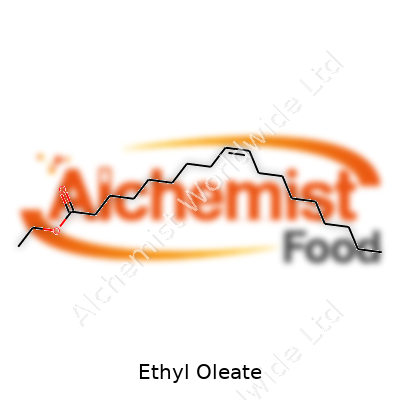
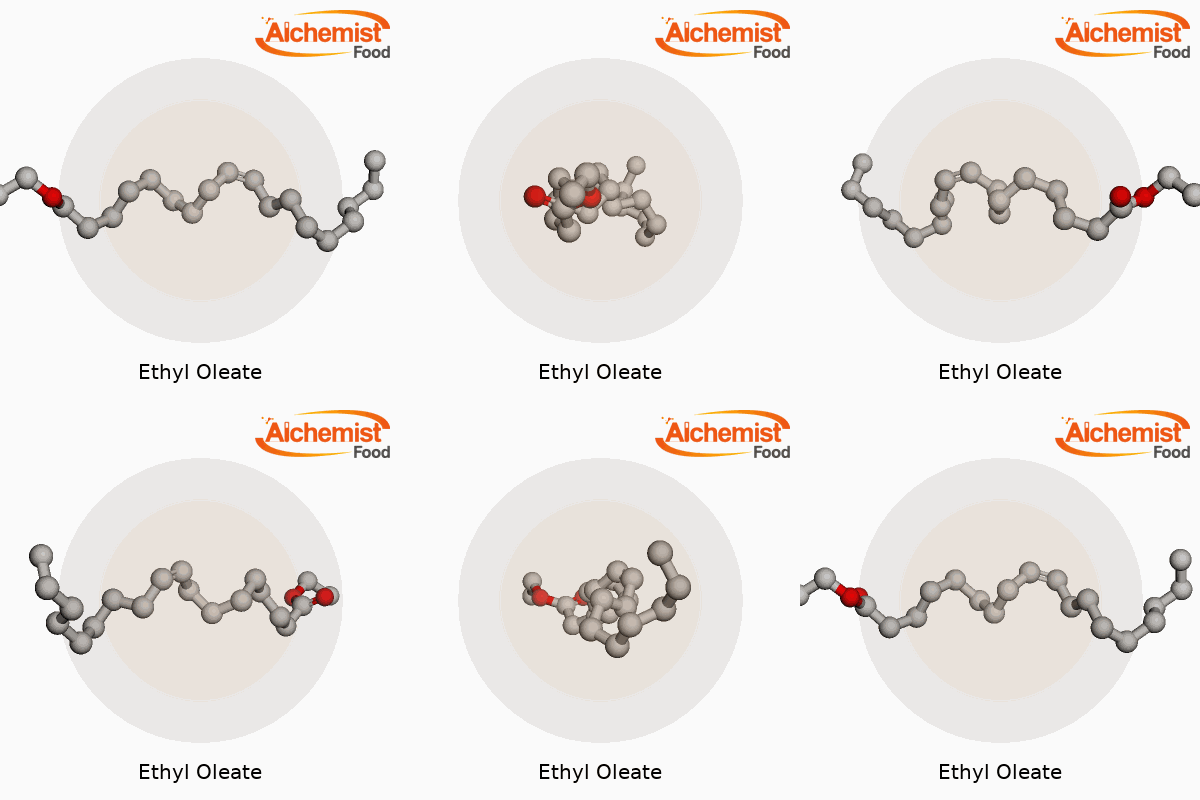
| Names | |
| Preferred IUPAC name | Ethyl (Z)-octadec-9-enoate |
| Other names |
Ethyl 9-octadecenoate Oleic acid ethyl ester Ethyl (Z)-octadec-9-enoate 9-Octadecenoic acid (Z)-, ethyl ester |
| Pronunciation | /ˈiːθɪl əˈleɪeɪt/ |
| Preferred IUPAC name | Ethyl (Z)-octadec-9-enoate |
| Other names |
Oleic acid ethyl ester Ethyl cis-9-octadecenoate 9-Octadecenoic acid (Z)-, ethyl ester Ethyl (Z)-octadec-9-enoate EO cis-Oleic acid ethyl ester |
| Pronunciation | /ˈiːθɪl oʊˈleɪeɪt/ |
| Identifiers | |
| CAS Number | 111-62-6 |
| Beilstein Reference | 1361009 |
| ChEBI | CHEBI:44562 |
| ChEMBL | CHEMBL140773 |
| ChemSpider | 5347 |
| DrugBank | DB03193 |
| ECHA InfoCard | 03e7c3f2-4282-47c9-bce7-d7e3b828b457 |
| EC Number | 203-898-1 |
| Gmelin Reference | 831591 |
| KEGG | C14747 |
| MeSH | D017370 |
| PubChem CID | 5362952 |
| RTECS number | RGG6ZP56QE |
| UNII | 34466M64V9 |
| UN number | UN 3272 |
| CAS Number | 111-62-6 |
| Beilstein Reference | 1722051 |
| ChEBI | CHEBI:52809 |
| ChEMBL | CHEMBL142661 |
| ChemSpider | 5281 |
| DrugBank | DB11096 |
| ECHA InfoCard | 03f526d1-3a48-4637-ab71-aadb4468e276 |
| EC Number | Ethyl Oleate: 203-898-4 |
| Gmelin Reference | Gmelin Reference: 184645 |
| KEGG | C08262 |
| MeSH | D017335 |
| PubChem CID | 5364000 |
| RTECS number | RGG6ZQOR0D |
| UNII | 344S277WDX |
| UN number | UN1262 |
| CompTox Dashboard (EPA) | DTXSID2020187 |
| Properties | |
| Chemical formula | C20H38O2 |
| Molar mass | 310.52 g/mol |
| Appearance | Clear, colorless to pale yellow liquid |
| Odor | mild, fatty |
| Density | 0.87 g/mL at 25 °C (lit.) |
| Solubility in water | Insoluble in water |
| log P | 7.6 |
| Vapor pressure | 0.01 mmHg (20°C) |
| Acidity (pKa) | pKa ≈ 19.7 |
| Basicity (pKb) | 11.99 |
| Magnetic susceptibility (χ) | -7.72e-6 |
| Refractive index (nD) | 1.451 |
| Viscosity | 35.1 mPa·s (25 °C) |
| Dipole moment | 4.1412 D |
| Chemical formula | C20H38O2 |
| Molar mass | 309.51 g/mol |
| Appearance | Clear, colorless to light yellow liquid |
| Odor | Mild, fatty-odor |
| Density | 0.87 g/mL at 25 °C (lit.) |
| Solubility in water | Insoluble |
| log P | 4.64 |
| Vapor pressure | 0.01 mmHg (20°C) |
| Acidity (pKa) | pKa ≈ 23 |
| Basicity (pKb) | 18.23 |
| Magnetic susceptibility (χ) | -7.9e-6 |
| Refractive index (nD) | 1.451 |
| Viscosity | 35.1 mPa·s (20 °C) |
| Dipole moment | 3.07 D |
| Thermochemistry | |
| Std molar entropy (S⦵298) | 663.4 J·mol⁻¹·K⁻¹ |
| Std enthalpy of formation (ΔfH⦵298) | -571.96 kJ/mol |
| Std enthalpy of combustion (ΔcH⦵298) | -8257.7 kJ/mol |
| Std molar entropy (S⦵298) | 510.0 J·mol⁻¹·K⁻¹ |
| Std enthalpy of formation (ΔfH⦵298) | -463.1 kJ/mol |
| Std enthalpy of combustion (ΔcH⦵298) | –8254.7 kJ/mol |
| Pharmacology | |
| ATC code | A16AX – Other alimentary tract and metabolism products |
| ATC code | A16AX10 |
| Hazards | |
| GHS labelling | GHS02, GHS07 |
| Pictograms | GHS02,GHS07 |
| Signal word | Warning |
| Hazard statements | H319: Causes serious eye irritation. |
| Precautionary statements | P210, P233, P240, P241, P242, P243, P280, P370+P378 |
| Flash point | Approx. 182°C |
| Autoignition temperature | 335 °C |
| Lethal dose or concentration | LD50 (Rat, oral): >50 mL/kg |
| LD50 (median dose) | LD50 (median dose), oral, rat: 74,000 mg/kg |
| NIOSH | NIOSH: RG0450000 |
| PEL (Permissible) | PEL: Not established |
| REL (Recommended) | 5 mg/m³ |
| GHS labelling | **GHS labelling of Ethyl Oleate:** "GHS07; Signal word: Warning; Hazard statements: H315, H319; Pictogram: exclamation mark |
| Pictograms | GHS02,GHS07 |
| Signal word | Warning |
| Hazard statements | H227, H315, H319 |
| Precautionary statements | P210, P233, P240, P241, P242, P243, P280, P303+P361+P353, P370+P378 |
| Flash point | Flash point: 150°C |
| Autoignition temperature | 435 °C |
| Lethal dose or concentration | LD50 (oral, rat): >20,000 mg/kg |
| LD50 (median dose) | LD50 (median dose): Rat oral >43 g/kg |
| NIOSH | RN3677 |
| PEL (Permissible) | PEL: Not established |
| REL (Recommended) | 5 mg/m³ |
| Related compounds | |
| Related compounds |
Oleic acid Methyl oleate Glyceryl oleate Sodium oleate Potassium oleate |
| Related compounds |
Methyl Oleate Oleic Acid Sodium Oleate Potassium Oleate Glyceryl Oleate Isopropyl Oleate Sorbitan Oleate Propylene Glycol Oleate |



