Erucic Acid: Tracing a Chemical from Tradition to Tomorrow
Historical Development
Long before chemists started isolating molecules for specific end-uses, plants like rapeseed and mustard already churned out erucic acid in abundance. In regions with deep roots in oilseed crops—think Eastern Europe, parts of Canada, India, and China—erucic acid naturally made its way from pressed oils into meals, lamp oils, and early forms of industrial lubricants. As the industrial revolution gained steam, researchers noticed the unique slipperiness of oils high in this 22-carbon monounsaturated fatty acid, a discovery that pushed erucic acid into the spotlight for machine oil and transmission lubricants. By the 20th century, rapeseed’s high erucic content became a double-edged sword. On one side, the fatty acid gave important chemical feedstock options. On the other, scientists flagged its potential links to heart lesions when consumed in large amounts. Breeding programs in the 1970s responded with “double low” (low erucic acid, low glucosinolate) canola variants that reshaped the global fats and oils trade.
Product Overview
Today, erucic acid stands as a tall-chain monounsaturated fatty acid best known among lipid chemists by its technical name: cis-13-docosenoic acid. Extracted mainly from non-food grade oils or engineered crops, it appears as a white to pale yellow crystalline solid or dense oil. Manufacturers operate in a narrow lane, balancing the needs of polymer syntheses, lubricant bases, and plasticizer production. With growing interest in plant-based chemistry, erucic acid escapes the shadow of its controversial past as an edible oil by shining in specialty chemicals, cosmetics, and industrial coatings. Fermentation and selective bioengineering now nudge erucic levels higher for those looking to move away from fossil-based feedstocks.
Physical & Chemical Properties
Erucic acid carries a hefty molecular weight of 338.57 g/mol, thanks to its chain of 22 carbon atoms topped by a single cis double bond at the 13 position. It shows up as a colorless or faintly yellow solid at room temperature but turns oily as heat rises, with a melting point around 33-34°C. It dissolves well in organic solvents but chooses to stay out of water. The long carbon tail allows the molecule to create thick, smooth films—ideal for slip agents and industrial lubricants. Unlike shorter fatty acids, erucic acid resists quick oxidation, so it can handle mechanical stress or high temperatures that would split lesser molecules.
Technical Specifications & Labeling
Erucic acid sold for industrial or research use typically comes with labels stating its purity (often above 90% or 98% for pharma or research grade), source crop (rapeseed, mustard, Crambe abyssinica), and residual moisture content. Technical specifications demand clarity on parameters such as iodine value, acid value, saponification number, and heavy metal content. Since health authorities keep a close watch on residues in food products, erucic acid for dietary exposure gets flagged, sometimes with maximum allowable limits. Packaging tends toward inert materials—HDPE drums or amber glass—to avoid light or oxygen degradation. Reliable suppliers always share batch-specific certificates of analysis to build confidence with labs and factories.
Preparation Method
Obtaining erucic acid means starting with oil-rich seeds and pressing or solvent-extracting the crude oil. Fancy as that might sound, the real grunt work comes after: breaking fats apart (hydrolysis), separating fatty acids, and purifying erucic with vacuum distillation or crystallization. In labs, saponification—reacting the oil with a base like KOH—releases free fatty acids, which can then be acidified, washed, and dried. Industrial plants scale this to thousands of tons, with each step tuned to squeeze out every last gram of erucic while minimizing unwanted byproducts. Chromatography, crystallization under very controlled cooling, and even newer biotechnological methods push the envelope, aiming for higher yields and greener footprints.
Chemical Reactions & Modifications
Erucic acid enters the chemical dance floor with its double bond ready to react. It can undergo hydrogenation, which snaps the double bond shut and produces behenic acid, a valuable saturated fatty acid for waxes and lubricants. Through epoxidation, chemists can add reactive epoxide rings, key building blocks for plasticizers and stabilizers. Other routes open the door to amides, esters, or even dicarboxylic acids (like brassylic acid, used for high-performance nylon), often by cleaving the molecule through ozonolysis or other oxidative processes. Each modification lets downstream businesses fine-tune products for plastics, coatings, or biolubricants.
Synonyms & Product Names
Outside the lab, erucic acid picks up plenty of aliases: docosenic acid, cis-13-docosenoic acid, and sometimes “C22:1 fatty acid.” Some catalogs call it brassidic acid when referring to the trans isomer. In industrial blends, you might spot names referencing its plant origin—crambe oil fatty acid, rapeseed distillate—making it easy to locate in product databases. Anybody reading technical data sheets must keep an eye out for these synonyms to avoid confusion, especially since raw materials often list botanical or chemical variants.
Safety & Operational Standards
Handling large volumes of erucic acid in factories or laboratories calls for respect and solid protocols. Workers learn quickly to avoid direct skin contact or eye exposure, since undiluted erucic acid can irritate mucous membranes. Gloves and goggles count as standard, with splash-proof lab coats not far behind. Good ventilation and chemical fume hoods stop airborne mists from collecting where they shouldn’t. In the unlikely event of a fire, responders need to know that fatty acid fires call for foam or dry powder, not water. Many regulatory bodies, including OSHA and ECHA, flag erucic acid and its industrial blends with relevant hazard statements. Factories usually have spill kits and neutralizing agents on hand, since spills on concrete or metal surfaces can turn slick and hazardous.
Application Area
Uses for erucic acid crowd into everywhere from the core of the plastics industry to boutique cosmetics and emerging biolubricants. Polyamides made from erucic acid derivatives set tough yet flexible standards for automotive parts, electronic insulation, and sports equipment. It gets credit for making plasticizers less brittle and more flexible in PVC, especially when phthalate-free options gain regulatory favor. Cosmetics teams like this fatty acid because it softens creams and smooths out moisturizers without leaving a greasy feeling. The lubricants industry depends on erucic’s molecular shape to keep gears spinning smoothly, sometimes replacing synthetic oils in applications seeking plant-based options. Even food packaging benefits from erucic-based additives, though strict legal limits protect consumers from high-dose exposure.
Research & Development
Researchers watch erucic acid not just for the next breakthrough in plant oil engineering but also for green chemistry advances. Biotechnologists labor over new oilseeds and metabolic routes that increase erucic yields or lower impurities. Polymer scientists tinker with erucic-based plasticizers, looking for ways to banish residual phthalates and deliver safe, bio-based packaging that breaks down naturally. Lifelong work continues in finding new reactions—like selective oxidation, metathesis, and enzyme-driven modifications—that craft erucic into smarter, safer, and more diverse chemical products. Academic journals document plenty of discoveries on microbial biotransformation of erucic acid, chasing the promise of non-toxic specialty chemicals for the next generation of manufacturing.
Toxicity Research
Testing erucic acid’s safety commands no small effort from toxicologists, especially in the context of edible oils. Decades ago, animal studies showed that diets packed with erucic acid could cause heart lesions in lab rats and pigs. Even as human relevance remains a subject of debate, most countries now take a “better safe than sorry” approach, capping maximum erucic acid content in cooking oils and baby food. The limits look quite low—just 2% of fatty acids in Europe, for instance—motivating food oil corporations to shun high-erucic sources for anything destined for human consumption. As analytical detection technologies grow sharper, researchers stay vigilant to catch any excessive exposure in processed foods, animal feed, and occupational settings.
Future Prospects
Looking ahead, erucic acid finds itself in a promising but demanding spot. Industrial sectors face mounting pressure to swap petrochemicals for green sourcing, pushing erucic-rich feedstocks into a new growth phase. Continuing research may unlock new designer crops or fermentation technologies capable of churning out high-purity erucic acid without the environmental costs of conventional agriculture. Challenges still linger—not least regulatory caution and public perception, particularly in food. But as plasticizer bans, carbon-reduction targets, and biodegradable packaging mandates sweep across the globe, erucic acid stands ready to fill crucial niches in tomorrow’s chemical economy, provided producers and regulators keep up the pace in quality control, crop innovation, and consumer engagement.
What is erucic acid used for?
What Erucic Acid Actually Does
Erucic acid pops up in more things than people expect. Found mostly in the oil of rapeseed plants, this fatty acid gets a lot of attention because it stretches far beyond the farming field. Go into a factory where synthetic rubber gets made, or walk through a canning warehouse, and erucic acid probably plays a role somewhere. It acts as a building block for slip agents in plastics, lubrication for machinery, or as an additive for preserving an item’s texture and shelf life in processed foods. Developers lean on its waxy characteristics when they make nylon, cosmetics, and even biodiesel fuel. With its 22-carbon chain, it brings flexibility and heat resistance to the table, which can make it valuable where others fall short.
Food and Nutrition: The Controversy
This fatty acid draws concern in the food world. Years ago, people linked high levels of erucic acid in oils—especially from traditional rapeseed—to heart problems in lab animals. In the 1970s, food scientists bred new varieties of rapeseed and created what’s now called canola oil, holding only tiny traces of erucic acid. This change didn’t just help keep shelves stocked with a safer cooking oil. It shifted food engineering approaches everywhere. Still, some imported oils and specialty products bring erucic acid along for the ride. Checking food labels matters, especially for anyone with existing health problems.
Real-World Risks
The World Health Organization recommends keeping erucic acid low in the human diet, below two percent of our total fat intake. Even with modern agriculture, erucic acid can slip into foods through imported goods or foods containing mustard seed and certain fish. No one likes surprise exposures, especially those with metabolic or heart conditions. Food scientists keep running new toxicity studies, balancing usefulness against long-term health. Many governments have introduced legal limits for erucic acid content in edible oils, which helps keep consumers safe. At the same time, gaps in supply chain oversight can allow higher-risk oils into markets where labeling laws aren’t strong. Industry watchdogs keep pushing for transparent testing and clear language on imports.
Industry Needs and Sustainable Choices
Factories won’t ditch erucic acid overnight. Its chemical structure makes it valuable for specific tasks. Rubber producers, for example, use it to boost elasticity. Nylon and plastic resin manufacturers get a raw material that helps control consistency in the final product. Even green energy developers, focused on renewable fuels, experiment with rapeseed oil’s erucic acid to build better biodiesel blends. Still, these uses can raise sustainability and worker safety flags. Knowing the source of industrial erucic acid matters just as much as tracking its food path, especially with global shipping networks bringing material from fields across the world.
Building Trust Through Better Oversight
Institutions stay trusted through transparency and real action. That means not only following science, but bringing in independent testers, making sure labeling laws reflect the newest research, and showing real willingness to adapt as the facts change. The food and chemical sectors need clearer regulations on import standards, third-party monitoring of erucic acid levels, and honest answers to consumer questions. Public health improves when industry and regulators work together. That doesn’t just lower the risks—it gives people confidence in both what they eat and what industry creates.
Moving Forward With Erucic Acid
As demand grows for plant-based oils and recycled materials, the issues around erucic acid remind us: details matter. Companies and shoppers both shoulder responsibility. Industry professionals rely on current science to keep formulations safe, and families can take a minute in the grocery aisle to check ingredient lists on imported goods. Open communication, solid oversight, and ongoing testing can keep the benefits of erucic acid available without risking public well-being.
Is erucic acid safe for consumption?
A Fatty Acid Wrapped in Questions
Many people have never heard of erucic acid. It comes in the oil of rapeseed, mustard, and a few other plants. For decades, folks in North America and Europe worried about this compound because it turned up in high levels in older types of rapeseed oil. Most of that concern started with animal studies in the 1970s. Rats and pigs fed wild rapeseed oil developed heart lesions. Suddenly, erucic acid sounded like something to avoid.
From Lab Rats to Humans: The Science Still Debated
Regulators sprang into action. Food standards got reshaped, especially in Europe, where authorities enforced limits to keep erucic acid in oils and infant foods under 2% of the total fatty acids. Canada rewrote its agricultural script with new, low-erucic rapeseed. That’s where canola oil came from. The United States Food and Drug Administration followed, and by the 1980s, almost all oilseed rape came from low-erucic lines.
Still, some confusion floats around. Sure, animal tests raise flags, but humans are not giant rodents. Most studies in people have not found clear signs that trace levels of erucic acid in approved oils make anyone sick. Over the years, Canada and the EU have done spot checks on people’s actual diets. The numbers almost always land far below anything considered risky.
Do the Risks Still Matter Today?
Anyone cooking with canola or standard supermarket mustard oil in North America or Europe gets very little erucic acid. I read food labels for a living and those oils just don’t pose a real risk. It’s not the 1970s anymore. Regulatory agencies demand regular testing and traceability for oil seeds. Producers test both seeds and pressed oils by batch. Most of what reaches shelves never strays past strict legal limits.
In regions like South Asia, some home-pressed mustard oils keep higher erucic levels because traditional varieties persist, and enforcement lags. The World Health Organization and India’s Food Safety authorities say adults can tolerate more erucic acid than children, but pregnant women and babies still stand out as higher-risk groups. That’s mostly because their growing tissues might handle fatty acids differently.
Real Solutions, Not Scares
Better farming, stricter testing, and public health education work. Farmers in Canada and the U.S. plant only low-erucic seeds. In India and Bangladesh, government-run health programs warn mothers against feeding mustard oil to infants. These efforts keep everyone safer without causing panic at the grocery store.
If people stick with commercial oils that meet health regulations, the worries tied to erucic acid won’t surface at the dinner table. Shoppers have a right to clear labels and tested foods; trusted producers need to keep sharing those results publicly. For cooks and eaters who value old-school flavors from homegrown mustard oil, awareness builds the bridge. Some might wish the rules loosened, but the science—at least for young children—backs countries that keep levels in check.
In short, if your bottle of oil lists canola or says it’s safe for human consumption under current standards, you’re making a balanced choice. For anyone uncertain, look up the producer and find out how often they test for erucic acid. That’s the surest way to make small but real decisions with your health in mind.
What are the health effects of erucic acid?
Erucic Acid in Food: Where It Comes From
Erucic acid shows up mostly in oils from certain seeds, especially rapeseed and mustard. The old varieties of rapeseed oil, used a few generations back, had high erucic acid. Newer canola oil comes from breeding out most of that acid. Most folks don't even realize how closely oil on the shelf ties to this story, but food science keeps a watchful eye on it.
Concerns Over the Years
Back in the 1970s, scientists started asking if erucic acid put people at risk for heart trouble. Some animal studies—especially with rats—turned up heart muscle changes after high doses for weeks. Researchers called this “myocardial lipidosis,” which means fat builds up in heart cells. Rats aren’t little people, but the findings pushed regulators to act cautiously.
The Canadian government, the European Food Safety Authority (EFSA), and the US Food and Drug Administration all capped how much erucic acid can legally end up in cooking oils—usually to about 2% of total fatty acids. This keeps typical daily intake far lower than the doses that caused trouble in research animals. Today, canola oil has only tiny traces thanks to breeding and selection.
Human Health: What We Actually See
Direct links between erucic acid and heart disease in humans stay murky. Large studies don’t show a clear pattern, probably because most diets today include only small amounts. Still, scientists worry about heavy use over a lifetime. Kids need extra caution; their bodies deal with fats differently than adults. EFSA’s review from 2016 flagged infants who get bottle-fed formula from sources like mustard oil as most at risk, which led some countries to crack down.
For adults eating mixed diets, erucic acid concern centers more on “what if” than “right now.” That’s how most fat safety research goes—sometimes you act on warning signals before problems show up in clinics.
Real-World Exposure
With modern oils, hitting risky levels through standard meals takes effort. Most supermarket bottles now come from low-erucic varieties—look for “canola” in North America or “double zero rapeseed” in Europe. Homemade blends or imported specialty oils might still bring higher content. Some communities using mustard oil or traditional pressed rapeseed need better information and access to safer oils. It isn’t only about regulation; public education shapes real-life risks.
What Can Help
Modern breeding keeps erucic acid low, but oversight needs regular checking. Regulators often test oils at the border and in factories. Food companies should label oils clearly, especially if they come from regions where higher erucic acid slips through. Nutritionists can help families pick safer cooking oils, especially where traditional habits run deep.
Science keeps exploring—newer research looks at long-term effects on blood vessels and metabolism, not just the heart. Keeping tabs on this research helps health agencies update advice. Trust builds when researchers and the public can talk plainly about risk and benefit, without hiding behind jargon.
Keeping Perspective
Cooking oils make up only a small part of nutrition for most people, but every ingredient we use and every farming choice made upstream can ripple outward. Erucic acid serves as a lesson: food policy, plant science, and personal habit all tie together, shaping what winds up on the dinner plate.
Which foods contain erucic acid?
What Is Erucic Acid?
Erucic acid shows up in a few conversations about food safety, cooking oils, and even agricultural rules. Most people recognize it from stories about rapeseed oil or the old days before canola oil took over grocery store shelves. Its chemical name sounds intimidating, but the roots are farmland simple—it's a monounsaturated omega-9 fatty acid. You find erucic acid in certain seeds and oils, and the concerns go back to animal studies from decades ago. People get nervous about high levels in food, especially for babies and young kids, but it takes sizeable consumption to raise any real worry. Telling the full story means talking about food choices that show up every week in kitchens and restaurants.
Common Foods with Erucic Acid
Rapeseed once formed the backbone of cheap cooking oil before plant breeders created modern canola. Older "industrial" rapeseed varieties packed a heavy punch of erucic acid—sometimes up to 50% of the oil. Today’s canola comes from carefully selected plants that naturally produce much lower levels, less than 2%. Still, erucic acid crops up in foods from certain seed oils. Mustard seed oil, popular in some parts of India, Bangladesh, and Nepal, contains a much higher concentration. Some bottles reach 40% or more. Leafy vegetables from the cabbage family—bok choy, kale, turnip greens, collard greens—have traces, but nowhere near the worries posed by old rapeseed oil or mustard oil. Even meals with Brussels sprouts or broccoli won’t cause intake to go above safe levels.
Why It Attracts Scrutiny
The main reason oil safety crops up at all lies in the way our bodies use erucic acid. Rodent studies in the 1970s found that huge doses can build up fat deposits in the heart. Results in humans remain less clear, but food regulators worldwide responded out of caution. Standards for food oils in the U.S., Europe, and other regions limit erucic acid in edible oils to 2% or sometimes a bit higher. Parents in regions where mustard oil is a kitchen staple often hear advice not to use it for young children, to avoid risk during crucial development stages. Some countries restrict sales of mustard oil labeled “for external use only”—though this usually gets ignored in practice.
Making Sense of Labels
Looking for erucic acid on a label rarely helps. Most products won’t list it outright, unless the oil comes from a plant at risk of crossing the legal threshold (like mustard or traditional rapeseed). If a bottle just says “canola oil,” the low-erucic acid standard already covers it. In places where mustard oil remains common, smart shopping means checking for safe sourcing and verified quality—sometimes choosing imported brands that relay testing or certification information. Government health agencies and the World Health Organization haven’t flagged the trace amounts in most table vegetables as a problem. In my own shopping, I give canola oil a green light, but for mustard oil, I always look for a reputable supplier and use it in small quantities.
Paths Toward Safer Choices
Plant breeding played a big part in the shift away from erucic acid for most people. Choosing oils with standards enforced by food safety agencies reduces risk. Growing awareness helps, too. For cooks who rely heavily on mustard oil, mixing it with other oils can keep intake reasonable. Anyone looking out for child nutrition—especially parents in immigrant families—will do well to stick with varieties of oil that meet modern food safety standards.
How is erucic acid produced?
The Roots of Erucic Acid
Growing up in a rural area, many of us remember fields of rapeseed turning bright yellow each spring. Most people know these crops for canola oil, but tucked away within that glossy seed lies erucic acid. This long-chain fatty acid, found mainly in seeds like rapeseed and mustard, quietly weaves its way through many industries, from lubricants to plastics, even playing a role in certain food products.
From Field to Factory
Farmers kick things off by planting rapeseed varieties with a higher erucic acid yield, not the low-erucic versions favored for edible oil. These crops thrive in well-drained soils, and the timing of planting can make or break the final concentration of erucic acid in the seeds. Once harvested, seeds get cleaned and dried, ready for the next step—oil extraction.
This usually means crushing the seed to separate the oil from the solids. In my own experience, nothing is ever wasted on a farm. The solid meal left after oil removal often feeds livestock, while the oil heads off to the next phase. Larger operations favor mechanical pressing and sometimes follow it up with solvents like hexane to squeeze out every last drop. This stage gives us crude oil, where erucic acid sits alongside plenty of other compounds.
Pushing Toward Purity
Getting erucic acid out of this thick golden liquid takes some chemical know-how. The most common strategy uses saponification, where a strong base gets thrown in with the oil. This action splits the fat molecules into glycerol and fatty acids. Out pops a jumble, so workers use special mixtures to separate out erucic acid because of its long chain length—longer than most other fatty acids in the mix.
Fractional distillation shines here. Picture a giant column heated just enough to let erucic acid boil off while others stay behind. I remember taking school trips to local plants—those tall distillation columns always looked like industrial cathedrals, their job silent but essential. Skilled technicians keep a close eye on the process, dialing in the right temperature and pressure so that the acid comes out with the purity needed for industrial applications.
Safety, Expertise, and Environmental Impact
Producing erucic acid relies on working safely, from handling heavy machinery at the press to monitoring chemical reactions. Solvents like hexane bring risks to both workers and the environment. Good companies stress sealed systems and proper ventilation to protect everyone involved and keep emissions down. In places with tighter regulations, you see investment in recycling solvents and proper waste handling.
The conversation around erucic acid also crosses into food safety. Certain food oils must keep their erucic acid content very low, especially in products for infants and young children. In my household, checking food labels goes hand-in-hand with reading the news—parents want reassurances that industry is actually following these rules. High erucic acid content in edible oils can pose health risks, so governments demand regular testing and clear reporting.
Looking Ahead
As demand shifts, seed breeders search for crops that meet both industrial and food-grade needs. Public and private sectors put time into research for cleaner, safer, and more efficient extraction. Advances in green chemistry spark hope for producing erucic acid with fewer harsh chemicals and less waste. Until then, this long-chain acid continues to flow through many products, powered by expertise, vigilance, and plenty of behind-the-scenes hard work.
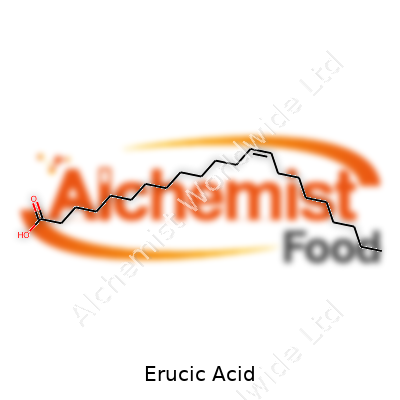
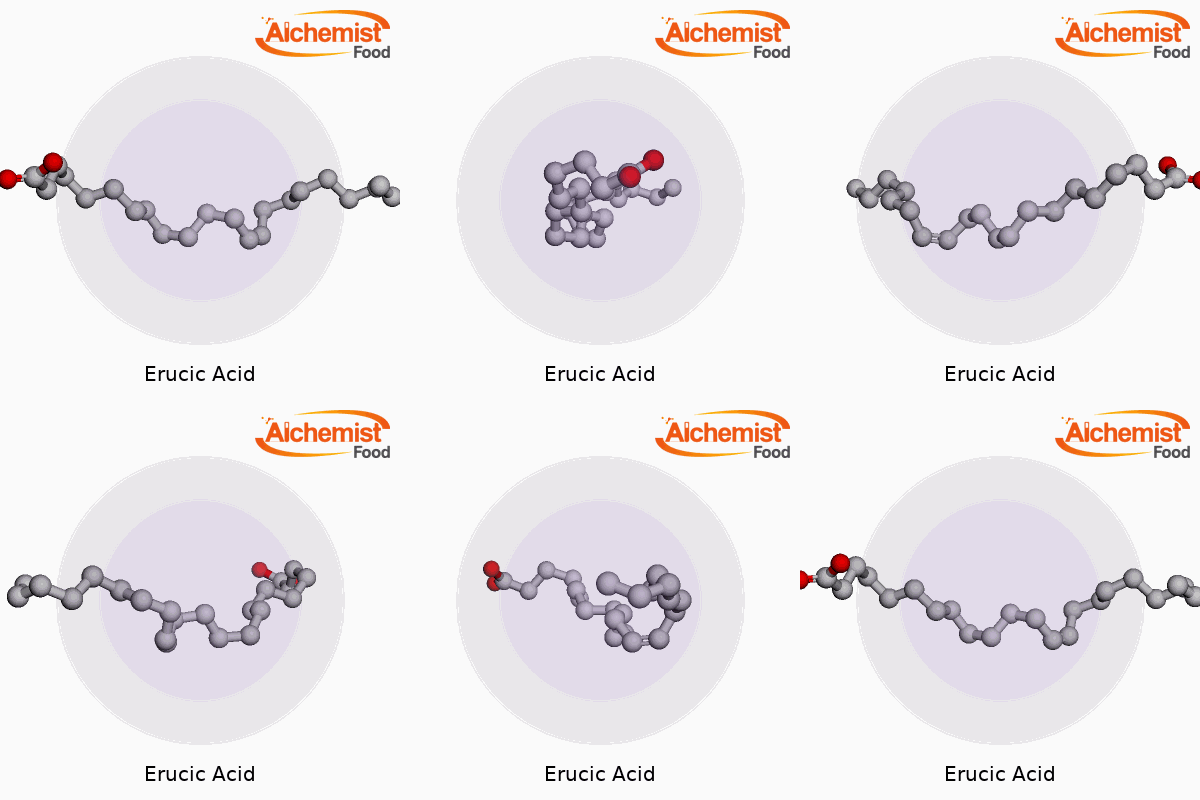
| Names | |
| Preferred IUPAC name | (docos-13-enoic acid) |
| Other names |
C22:1 cis-13-Docosenoic acid cis-Δ13-Docosenoic acid 13-Docosenoic acid docosenic acid brassidic acid cis-docos-13-enoic acid |
| Pronunciation | /ɪˈruːsɪk ˌæsɪd/ |
| Preferred IUPAC name | (Z)-docos-13-enoic acid |
| Other names |
cis-13-Docosenoic acid 13-Docosenoic acid cis-Δ13-Docosenoic acid docos-13-enoic acid C22:1 (n-9) Brassidic acid |
| Pronunciation | /ɪˈruːsɪk ˈæsɪd/ |
| Identifiers | |
| CAS Number | 112-86-7 |
| Beilstein Reference | 1722796 |
| ChEBI | CHEBI:30853 |
| ChEMBL | CHEMBL28360 |
| ChemSpider | 54714 |
| DrugBank | DB04029 |
| ECHA InfoCard | ECHA InfoCard string for Erucic Acid: **"03b0db1a-fdd6-4d99-8088-cdec2b983d23"** |
| EC Number | 204-011-3 |
| Gmelin Reference | Gmelin Reference: 17709 |
| KEGG | C08285 |
| MeSH | D001473 |
| PubChem CID | 4468 |
| RTECS number | YL0350000 |
| UNII | 7JQ8AP6RMR |
| UN number | UN number: "2904 |
| CAS Number | 112-86-7 |
| Beilstein Reference | Beilstein Reference: 1721051 |
| ChEBI | CHEBI:32399 |
| ChEMBL | CHEMBL1425 |
| ChemSpider | 8333 |
| DrugBank | DB04028 |
| ECHA InfoCard | 03d4e48e-d0d4-4bb0-ae87-9a5c2e924577 |
| EC Number | 204-011-3 |
| Gmelin Reference | 78620 |
| KEGG | C08285 |
| MeSH | D004892 |
| PubChem CID | 445639 |
| RTECS number | MJ5075000 |
| UNII | Y8GPB4MYR7 |
| UN number | UN3265 |
| Properties | |
| Chemical formula | C22H42O2 |
| Molar mass | 338.57 g/mol |
| Appearance | Pale yellow liquid |
| Odor | mild, waxy odor |
| Density | 0.866 g/cm³ |
| Solubility in water | Insoluble |
| log P | 3.8 |
| Vapor pressure | 1 mm Hg (170°C) |
| Acidity (pKa) | c14.0 |
| Basicity (pKb) | pKb: 15.74 |
| Refractive index (nD) | 1.441 |
| Viscosity | Viscous liquid |
| Dipole moment | 1.3745 D |
| Chemical formula | C22H42O2 |
| Molar mass | 340.57 g/mol |
| Appearance | Erucic Acid is a pale yellow to light brown oily liquid. |
| Odor | Rancid odor |
| Density | 0.856 g/cm³ |
| Solubility in water | Insoluble |
| log P | 3.8 |
| Vapor pressure | 0.0000116 mmHg (25°C) |
| Acidity (pKa) | 4.75 |
| Basicity (pKb) | pKb: 15.88 |
| Magnetic susceptibility (χ) | -82.0×10⁻⁶ cm³/mol |
| Refractive index (nD) | 1.4440 |
| Viscosity | Viscous liquid |
| Dipole moment | 1.53 D |
| Thermochemistry | |
| Std molar entropy (S⦵298) | S⦵298 = 560.5 J·mol⁻¹·K⁻¹ |
| Std enthalpy of formation (ΔfH⦵298) | -364.7 kJ/mol |
| Std enthalpy of combustion (ΔcH⦵298) | -1633.8 kJ/mol |
| Std molar entropy (S⦵298) | 571.7 J/mol·K |
| Std enthalpy of formation (ΔfH⦵298) | -332.8 kJ/mol |
| Std enthalpy of combustion (ΔcH⦵298) | -15100 kJ/mol |
| Pharmacology | |
| ATC code | A05CC03 |
| ATC code | A11CC01 |
| Hazards | |
| Main hazards | Harmful if swallowed. Causes skin irritation. Causes serious eye irritation. May cause respiratory irritation. |
| GHS labelling | GHS02, GHS07 |
| Pictograms | GHS07,GHS08 |
| Signal word | Warning |
| Hazard statements | Hazard statements: "H315: Causes skin irritation. H319: Causes serious eye irritation. |
| Precautionary statements | P264, P270, P301+P312, P330, P501 |
| Flash point | Flash point: 220 °C |
| Autoignition temperature | 335 °C |
| Lethal dose or concentration | LD50 oral rat 7,100 mg/kg |
| LD50 (median dose) | LD50 (median dose) of Erucic Acid: "Erucic acid LD50 (rat, oral): 10,000 mg/kg |
| NIOSH | YU0350000 |
| PEL (Permissible) | 5 mg/kg |
| REL (Recommended) | Not more than 2% (as per FSSAI regulations for edible oils) |
| Main hazards | Harmful if swallowed. Causes skin irritation. Causes serious eye irritation. Suspected of damaging fertility or the unborn child. |
| GHS labelling | GHS07, GHS08 |
| Pictograms | GHS07, GHS08 |
| Signal word | Warning |
| Hazard statements | H315, H319 |
| Precautionary statements | P210, P233, P280, P301+P312, P305+P351+P338, P370+P378 |
| Flash point | 285°C |
| Autoignition temperature | 430°C |
| Lethal dose or concentration | LD₅₀ (oral, rat): 10,000 mg/kg |
| LD50 (median dose) | LD50 (median dose): 7,150 mg/kg (oral, rat) |
| NIOSH | B017 |
| PEL (Permissible) | 5 mg/kg |
| REL (Recommended) | 7% |
| Related compounds | |
| Related compounds |
Elaidic acid Oleic acid Petroselinic acid Nervonic acid |
| Related compounds |
Oleic acid Petroselinic acid Elaidic acid Brassidic acid Behenic acid Lignoceric acid |



