Dodecanedioic Acid: A Deep Dive into Its Path and Promise
Historical Development
Tracing the roots of dodecanedioic acid, its journey began quietly within the laboratories exploring the chemistry of long-chain carboxylic acids in the mid-20th century. Researchers noticed the odd magic of combining a careful 12-carbon backbone with two carboxylic acid groups. Practical curiosity drove early work in Germany and the United States, where synthetic and biological processes started shaping the substance's commercial identity. By the 1970s, demand from the plastics industry stoked global production, linking dodecanedioic acid to the rise of advanced polyamides. Today’s manufacturers stand on decades of accumulated knowledge and process refinement, responding to demands for performance and sustainability from both the market and regulators.
Product Overview
Dodecanedioic acid, often called DDDA, carries the chemical formula C12H22O4. It appears as a white crystalline solid at room temperature, exuding little odor with a waxy texture. The substance pulls its weight most in high-performance polyamide production—Ny12 and other specialty nylons depend on DDDA for toughness and flexibility. It finds smaller, though important, uses in powder coatings, adhesives, and even lubricant intermediates, where stable molecular structure makes all the difference when temperature or pressure surge. Companies sometimes extend its use into corrosion inhibitors and automotive coolants, valuing DDDA’s resilience in hostile chemical environments.
Physical & Chemical Properties
Moving to its physical nature, dodecanedioic acid stands out for purity—quality grades often reach above 99%. It melts at about 128°C and boils near 300°C under standard pressure. The long aliphatic chain explains low solubility in water, yet DDDA dissolves in ethanol, acetone, and certain glycols, widening its application scope. Chemically, both carboxyl groups react characteristically, providing two anchor points for further transformation. Thermal stability remains strong up to decomposition limits, and the substance resists most weak acids or bases, making it a reliable base material in polymer synthesis.
Technical Specifications & Labeling
Industry standards push for consistent quality in dodecanedioic acid shipments. Top suppliers usually guarantee acid values between 345-350 mg KOH/g, minimal moisture content under 0.3%, and color measured by Hazen not exceeding 30. Detailed labeling on packaging points to lot number, country of origin, gross and net weight, and the key warnings on skin and eye irritation. Companies adhere to globally harmonized system (GHS) labels, using pictograms and classification codes for workplace safety. Technical data sheets reflect purity, particle size, and storage recommendations, tightened by international transport rules governing chemicals.
Preparation Method
Synthetic production focuses on robust oxidation of dodecane or cyclododecane. The most common pathway relies on the air oxidation of cyclododecanone, followed by successive steps involving nitric acid. Some processes start by oxidizing cyclododecane to the corresponding dicarboxylic acid, filtered and washed to remove traces of unreacted feedstock or by-products. Biological methods, like fermentation using specialized Candida strains, have gained traction as industries look for greener alternatives. These bioconversions yield high selectivity at modest energy input, cutting down emissions and hazardous waste generation.
Chemical Reactions & Modifications
DDDA’s flexible carboxyl groups serve as reactive centers for forming amides, esters, and anhydrides. Polycondensation with hexamethylenediamine spins out nylon 12, delivering lightweight but tough engineering plastics. Under esterification conditions, dodecanedioic acid bonds with glycols or alcohols to generate softening agents for resins and lubricants. These reactions require temperature control and precise stoichiometry, as impurities can act as chain stoppers in polymers or cloud the transparency of finished films. Scientists keep exploring catalytic hydrogenation and more selective oxidations to improve efficiency and minimize side reactions.
Synonyms & Product Names
Dodecanedioic acid appears under many identities depending on region and supplier. Chemists often use DDDA as an abbreviation. International trade features names like 1,12-Dodecanedioic acid, Decamethylene dicarboxylic acid, or simply C12 diacid. Some manufacturers brand proprietary high-purity grades with trademarked names, targeting specific customers in the fibers and plasticizer markets. Customs documents sometimes use UN numbers and other regulatory codes, so familiarity with all names speeds shipping and compliance.
Safety & Operational Standards
Handling DDDA in plant or lab settings means respecting its irritant risk. Workers wear protective gloves, safety glasses, and dust masks, following clear protocols for spill or skin contact. Local exhaust ventilation addresses airborne dust, since fine crystalline particles can enter airways on sweeping or transfer. Facilities store DDDA in cool, dry areas with ventilation to prevent dust buildup and accidental slips. Regulatory agencies—OSHA in the United States, REACH in Europe—require safety data sheets and regular training to reinforce hazard communication. Shipping containers must resist puncture and moisture, with clear hazard symbols visible at all stages of transport.
Application Area
Industries cherish DDDA for its ability to bolster polymers. Automotive designers turn to nylon 12 made from dodecanedioic acid for fuel lines, air brake tubing, and cable sheathing—wet resistance and chemical stability count a lot where mechanical stress and corrosive fumes meet. Paint and coating formulators use DDDA as a building block for powder coatings, balancing hardness with the right amount of flexibility in the cured finish. The lubricants industry values DDDA’s smooth glide in ester-based products, which thermal breakdown or oxidation do not easily compromise. Other creative fields dabble in DDDA’s ester derivatives for cosmetics and plasticizers, stretching the compound’s reach far from its industrial birth.
Research & Development
Scientists keep experimenting with greener routes to dodecanedioic acid. Bio-based fermentation marches forward, leveraging genetically tweaked yeast and bacteria to convert plant sugars into DDDA, trimming the industry’s carbon footprint. New catalysts and engineered enzymes show promise for higher yields and energy savings, lowering dependency on hazardous oxidizers. Research teams push into advanced composites, using DDDA-derived polymers to tackle 3D printing, textiles with built-in antimicrobial traits, and new medical devices. Journals and conferences buzz with debates over optimal process conditions and the best routes to lowering environmental impact while maintaining cost-effectiveness.
Toxicity Research
Toxicologists investigate every angle when new uses for DDDA emerge. Acute studies in animals record relatively mild irritation with high doses, yet repeated exposure to dust or vapor can spark lasting inflammation in lungs or mucous membranes. Chronic exposure data in humans remain sparse, so regulators urge caution, particularly in consumer-facing applications. Ongoing research focuses on metabolic fate and potential for bioaccumulation, with agencies calling for transparency from manufacturers and updated hazard assessments as new science emerges. Taking lessons from similar aliphatic dicarboxylic acids, public health officials usually err on the side of stricter control for occupational settings, all while global guidelines evolve.
Future Prospects
Looking ahead, dodecanedioic acid stands at the front lines of sustainable materials. The push for decarbonization in chemicals puts pressure on conventional petrochemical routes, nudging the industry to fully embrace bio-based synthesis. As manufacturers scale up fermentation, cost competition is likely to intensify, especially as Asian and European producers enter the fray. Product designers may lean on DDDA’s unique properties to tailor polymers for electric vehicles, next-generation wind turbine blades, and lighter, stronger sports equipment. Research could eventually connect DDDA synthesis with circular economy principles, recycling worn-down polymers into fresh chemical feedstock and closing environmental loops that once seemed out of reach.
What is dodecanedioic acid used for?
Diving Into Dodecanedioic Acid
Dodecanedioic acid might sound like something from a high school chemistry test, but it means a lot to folks in industries you see every day. It’s a dicarboxylic acid, sticking two carboxyl groups on a twelve-carbon chain. That setup gives it some real value in making products people use — products that help out in everything from car parts to sports shoes.
Molding Plastics That Last
One of the big spots where this acid pops up is in the making of high-performance nylons. Nylon 612, for example, uses dodecanedioic acid as a key ingredient. This isn’t just science jargon—nylon 612 steps up to the plate when standard nylons crack under pressure. You’ll see it in fuel lines, electric cable covers, and even toothbrush bristles. Car makers pick it because it resists chemicals and stands strong in extreme temperatures. People don’t ask much about fuel lines or zip ties until one snaps or melts, but trust that this acid keeps those parts tough and flexible at the same time.
Personal Experience: Tech Meets Textiles
Back in college, I worked in a summer factory job that made fibers for carpets and clothing. One shift, I watched as the foreman explained how strong and soft nylon materials come from chemical tweaks. Dodecanedioic acid was one of the names tossed around. Nobody wanted a scratchy sweater and nobody wanted a carpet to wear out in a year. This acid let manufacturers make fibers with a smoother touch and better resilience, so socks last through more washes and carpets can take heavy traffic. Quality matters for families—nobody likes replacing worn gear every season.
Not Just for Factories: Environmental Benefits
Dodecanedioic acid helps in more than just plastics and textiles. Lately, innovators have been finding greener ways to make it, sometimes out of renewable sources like plant oils. The more we get from plants, the less we need petrochemicals. That shift can cut greenhouse gas emissions, keep waterways cleaner, and make supply chains less risky when oil prices jump around. Several major producers use fermentation methods, which are less energy-hungry than traditional chemical routes. It's not the ultimate solution to all pollution, but it gives industry a realistic starting point for cutting their climate impact.
Car Care and Cleaning Products
Another regular use: dodecanedioic acid makes appearances in coatings, adhesives, and powder coatings. These coatings protect cars from rust, scratches, and weather damage. The acid brings flexibility to protective films, so they last through winter cold and summer heat. And adhesives that stick in the rain or on rough surfaces often rely on nylon polymers built from acids like this. For cleaning, certain detergents and surfactants borrow dodecanedioic acid to get the grime off without wrecking surfaces or adding too many harsh chemicals into the mix.
Looking Forward: Steady Access Matters
Dodecanedioic acid is an unsung hero in manufacturing, helping build reliable products across the board. Increasing the share of greener sources makes material safety and long-term viability less of a worry. Machines and products last longer, people trust what’s on the shelves, and companies keep meeting the next set of regulations and customer needs.
So, from reducing car repairs to softening the clothes on your back, this unassuming acid does a surprising amount of heavy lifting in everyday life. With continued investment in sustainable production, it stands to help both industry and the environment for years to come.
Is dodecanedioic acid safe to handle?
Understanding Dodecanedioic Acid
Dodecanedioic acid steps into a lot of polymer production lines. Many industries count on its stability for goods like resins, coatings, and engineered plastics. The substance comes as a white, powdery solid. Safe handling isn’t just about lab coats and goggles—it's about knowing what you’re working with. I once watched a rookie chemist learn the hard way that powders can drift and cause skin irritation or set off someone’s allergies as they handle them without care.
What We Know About Toxicity and Exposure
Research shows dodecanedioic acid doesn’t act like some notorious industrial chemicals. It's not classed as highly toxic, nor does it go up in flames as quickly as solvents or alcohols. The American Chemical Society lists it as irritating to eyes, skin, and the respiratory tract. Swallowing or inhaling dust can upset anyone’s stomach or breathing. My own run-in came during a rushed experiment, where even a small cloud made my throat itch for hours. OSHA directions call for handling it with gloves, eye protection, and an N95 mask if working around airborne powder.
Industrial Hygiene and Smart Practices
Treat every unfamiliar solid with the same respect as any lab chemical. The body’s first shield is always smart prevention. Proper gloves go on, even for short contact. Safety glasses aren’t just for splashy liquids, since powders carry risks once they go airborne. Standard advice in the industry keeps reminder signs posted around bulk storage. Most companies train new hires to keep containers shut and to pour slowly to keep the dust down.
Ventilation sweeps away stray particles before anyone breathes them in. I’ve worked in shops where simple fans along the ceiling made a world of difference. Showers and eye-wash stations sit near most chemical workspaces, and running water has saved plenty of workers from lingering burns or rashes. If powder gets on skin, wash with water and mild soap. If the eyes get exposed, it’s straight to the eyewash station—no debate.
Long-Term Health and Environmental Concerns
Long-haul exposure profiles for dodecanedioic acid aren’t alarming, but any repeat skin contact and breathing of the dust makes skin dryness and lung discomfort more likely. No data point links this acid to cancer, nor does it build up in the body like lead or some sneaky organics. On the environmental side, it doesn’t poison waterways but may disrupt fish eggs if factories dump it without proper cleanup. Most places insist on catching dust with filters and scrubbing washed-out water.
Improving Safety
Routine checks and training make the biggest difference. Encourage crews to call out poor storage or missing safety gear. Substituting scoopers for hand-pouring powder stops accidents before they start. Last year, a facility near my city replaced open bags with sealed drums and saw complaints of skin rash drop off. Labeling and a culture of transparency means anyone who feels a burn or cough says it loud—no shame, just quick action.
Dodecanedioic acid doesn’t haunt the headlines like some chemicals, and used with care, it fits into safe operations. Responsibility, equipment, and a little vigilance keep people out of the doctor’s office and on the job.
What are the storage conditions for dodecanedioic acid?
Understanding Dodecanedioic Acid and Daily Risks
Dodecanedioic acid doesn’t pop up in daily conversations, but it’s present in plenty of industries. Manufacturers use it for making nylon, coatings, adhesives, and resins that go into common materials found in homes, cars, and electronics. The safety of the people working with this compound depends heavily on how it gets handled and stored. That’s something I learned during a safety audit at a chemical plant, where a single change in storage strategy reduced both spill potential and chemical waste.
Practical Storage Approach
Anyone storing chemicals like dodecanedioic acid, whether at an industrial site or a school lab, faces a few key challenges – moisture, temperature, and cross-contamination. Keeping control over these helps prevent clumping, decomposition, or exposure risks. The material comes as a white crystalline powder, pretty stable at room temperature, but it reacts strongly with bases and oxidizers. Getting those two near each other has led to more than one close call, as reported by the Centers for Disease Control and Prevention (CDC).
Direct Lessons from Industry Practice
Facilities that do this right keep the material in tightly sealed containers built from glass, polypropylene, or high-density polyethylene. Metal tends to corrode or catalyze reactions, which nobody wants. Dryness comes up a lot; putting it in a dry, ventilated storeroom stops the powder from clumping, caking, and absorbing water from humid air. The National Fire Protection Association doesn’t list dodecanedioic acid as especially flammable, but stacking it near oxidizers or open heat sources ignores generations of chemical safety wisdom. I learned the hard way after condensation inside a poor-quality drum led to some ruined stock and a frustrating morning spent with disposal paperwork.
Health and Environmental Safety
Spills create real hazards. Inhalation can cause respiratory irritation or worsen preexisting conditions like asthma—which hits home for anyone with family working in the sector. Even small leaks increase the risk for skin reactions among workers. That points straight to the value in secondary containment. Using a tray or lined shelf can contain accidental leaks before they cause larger problems. OSHA’s guidance pushes for labeled storage and ready access to safety data sheets; it’s surprising how often accidents come down to a well-meaning coworker grabbing the wrong drum in a rush.
Potential Solutions to Common Storage Issues
It helps to treat chemical storage like food safety. Keep incompatible items apart, rotate old stock forward, watch expiration dates, and keep the space clean. Using temperature or humidity monitors doesn’t need to cost a fortune; basic models are easy to install and help spot issues before trouble starts. Training remains essential. Staff who know what to do and why they’re doing it make safer choices, and they flag problems long before outside regulators ever show up.
Why Getting Storage Right Matters
Dodecanedioic acid may seem low-risk, but cutting corners catches up fast. History gives us enough industrial accidents, big and small, to see the value in getting the basics right. Factory managers, lab technicians, and anyone moving chemicals around can make a difference by maintaining dry, well-ventilated storage away from incompatible compounds. That effort keeps product quality up, reduces workplace injuries, and shows real respect for colleagues—and for the communities living nearby.
What is the chemical formula of dodecanedioic acid?
Simple Structure, Significant Uses
Dodecanedioic acid, sometimes called DDDA, offers an example of how a plain molecular structure manages to drive huge change far outside the chemistry lab. The formula is C12H22O4. It means there are twelve carbons in a straight line, with hydrogen and oxygen atoms wrapping up both sides. This neat chain packs quite a punch in the worlds of manufacturing, medicine, and sustainability.
How the Formula Shapes Its Value
The formula C12H22O4 means two carboxylic acid groups cap a string of twelve carbons. Hydrocarbon backbones like this create tough and flexible molecules. That’s why this acid shows up as a favorite for making specialty nylon plastics. If you check product labels for nylon 6,12 or nylon 12,12, they start with dodecanedioic acid. Regular shoppers don’t notice the chemical, but designers and engineers care because these polymers fight off moisture, stretch under pressure, and last longer than older plastics.
In my chemistry courses, formulas like these felt abstract until seeing how the properties flow from the basic structure. With evenly spaced acid groups, dodecanedioic acid acts as a bridge—linking together other chemicals to form long, repeating chains. The size matters: shorter chains won’t flex and resist water quite the same way. Longer ones tend to get unwieldy. C12H22O4 hits a sweet spot for strength and workability.
Health and Environmental Stakes
Beyond the factory, this acid finds its way into the medical world. Certain rare metabolic disorders block the body’s ability to use glucose for energy. Supplementing with dodecanedioic acid lets patients sidestep those broken pathways because the molecule provides slow-release energy and doesn’t spike blood sugar the same way. That same steady-hand feature—owed to those carbon chains—shows promise in long-duration nutrition supplements.
Environmental concerns come up as well. Many people question the future of traditional plastics, including those based on DDDA. Petrochemicals leave a heavy footprint. Recently, companies and researchers have started to turn to renewable sources, fermenting plant sugars with yeast or bacteria to create the same molecule, C12H22O4. Those bio-based versions cut waste and use up less fossil fuel, lowering the environmental impact for industries that count on strong and flexible polymers.
Moving Toward Smarter Solutions
Broader adoption of bio-based production still hits some snags—higher costs, supply chain reliability, and questions about how well bio-based acids match the quality of those made with oil or gas. Partnerships between chemical firms, farms, and universities help fill the gap, running pilot projects that ramp up volumes and drive down costs. The push for better recycling techniques or chemicals that break down faster in the environment adds more layers for industry to solve.
Fact-Rich Choices for Industry and Consumers
Dodecanedioic acid, with its simple formula C12H22O4, shows the value of understanding chemical details. Every link in its chain shapes how we travel, eat, and build the things we use daily. Supporting research into renewable production means cutting pollution at the source. Knowing where products come from, and how basic chemistry ties into everyday life, lets both industry professionals and everyday folks make smarter, healthier choices.
What industries commonly use dodecanedioic acid?
Polymers as the Backbone
Dodecanedioic acid, better known in labs as DDDA, keeps the gears turning in the world of engineered plastics. My first real experience with this stuff happened in a polymer manufacturing plant outside Houston. I watched workers handle tall bags of white powder as if they were gold dust. Most of it ends up in nylon 6,12— a tough family of polymers that shows up quietly in fuel lines, cable coatings, and all those hinges that never seem to break. The secret is the acid’s long molecular chain, which gives products a big boost in flexibility and strength. Ask any mechanical engineer and they’ll tell you: using the right type of nylon can make the difference between a car that makes it through summer, and one that leaks before Christmas. That’s the sort of behind-the-scenes quality DDDA delivers.
Performance in Automotive and Electrical
Walk into any auto repair shop, you’ll find dozens of parts made from materials built around dodecanedioic acid. Take fuel hoses or quick connectors; they need resilience against gasoline and high heat. Failures in those parts cause leaks and potential safety risks. A study out of the University of Michigan found that fuel lines built from nylon 6,12 resist ethanol-induced swelling much better than cheaper plastics— all due to DDDA in the recipe.
The acid also lands in electrical insulation. In crowded wiring harnesses of modern vehicles or machines, material breakdown could spark fires. Here, DDDA helps plastics stand up to abrasion and heat, giving another layer of safety for factory workers and consumers alike.
Coatings and Adhesives Rely on Toughness
Industrial coatings have a tough job in oil and gas, or marine environments. Corrosion eats away at equipment and pipelines unless there’s a durable barrier protecting the metal. Dodecanedioic acid goes into powder coatings and specialty paints. It doesn’t just toughen the coating; it adds water resistance, so salt or chemicals don’t creep in. Even small upgrades here save companies millions in repairs. I’ve seen tank farms in the Gulf Coast go years longer without repainting—all because the plants switched to DDDA-based coatings.
Adhesive producers also use DDDA to improve flexibility. The bonds made with it handle heat cycling and vibration, so they don’t crumble under stress. Packaging, electronics, even aerospace rely on adhesives that won’t fail if things get rough.
Pharma and Cosmetics See Value in Purity
Tooling around a cosmetics R&D lab in New Jersey, you’d find a few bottles of DDDA on the shelves. High purity acids like this turn up in creams as building blocks for specialty emollients. Dodecanedioic acid derivatives smooth out skin formulas and help stabilize active ingredients. The pharmaceutical world also taps into this chemical, especially for controlled-release drugs, where timing matters as much as the medicine itself.
Keeping a Clean Supply Chain
One major concern: some methods for making dodecanedioic acid come with sustainability hurdles. Petroleum-based starting materials carry a heavy carbon footprint. Several chemical firms have taken steps to improve this, turning to biotechnology and renewable sources to make the same ingredient. Companies including Cathay Biotech started using fermentation analogs, slashing emissions and making life easier for buyers trying to meet green procurement rules.
Every industry using DDDA shares the same challenge: balance performance, safety, and environmental responsibility. Pushing for cleaner production and supporting research into better recycling will keep dodecanedioic acid in play for years. No magic bullet, but a mix of creative engineering and regulatory pressure often does the trick.
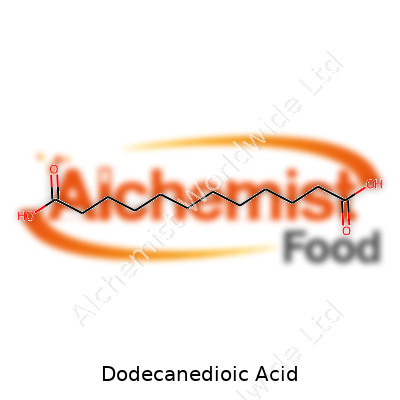
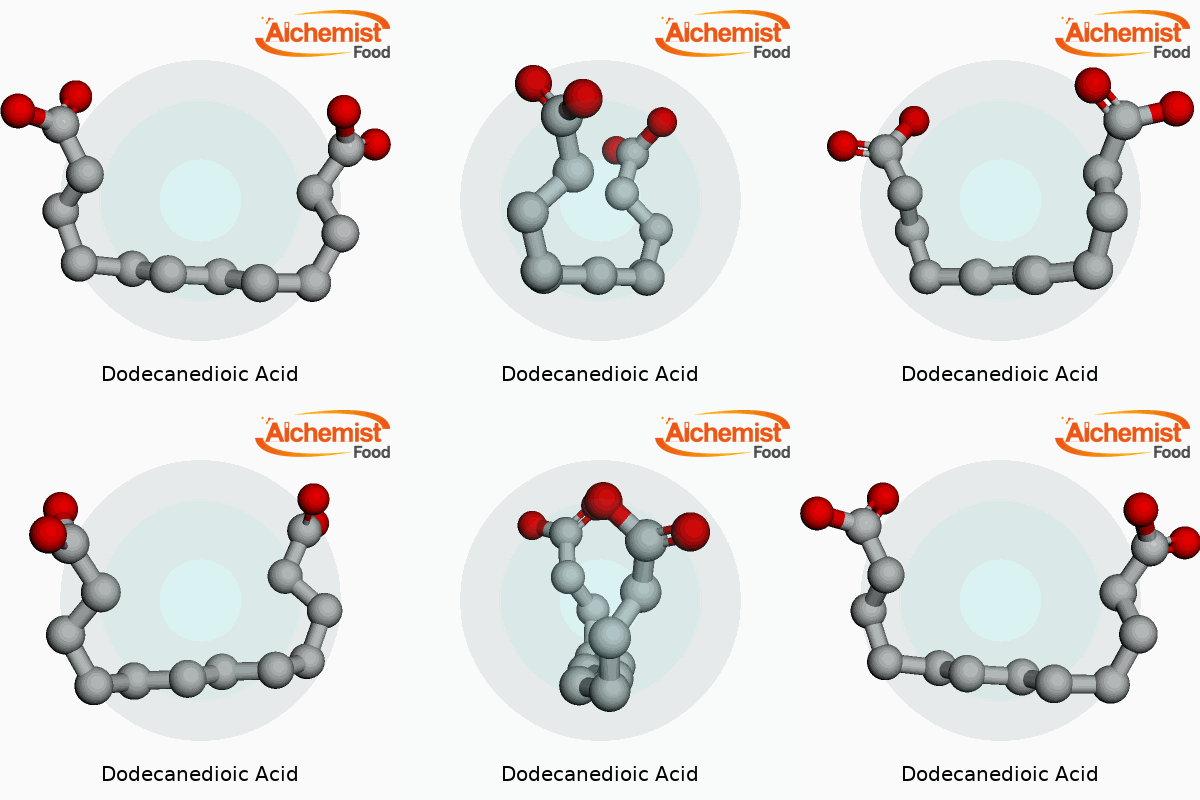
| Names | |
| Preferred IUPAC name | decanedioic acid |
| Other names |
Dodecanedicarboxylic acid 1,12-Dodecanedioic acid DDDA Duodecanoic acid |
| Pronunciation | /ˌdoʊˌdɛkəˌniːdiˈoʊɪk ˈæsɪd/ |
| Preferred IUPAC name | Dodecanedioic acid |
| Other names |
1,12-Dodecanedicarboxylic acid Dodecanedionic acid Dodecanedioate DCDA |
| Pronunciation | /ˌdoʊˌdɛkəˌniːdiˈoʊɪk ˈæsɪd/ |
| Identifiers | |
| CAS Number | 693-23-2 |
| Beilstein Reference | 1207177 |
| ChEBI | CHEBI:30805 |
| ChEMBL | CHEMBL1408 |
| ChemSpider | 64261 |
| DrugBank | DB03626 |
| ECHA InfoCard | ECHA InfoCard: 100.003.547 |
| EC Number | EC 206-540-6 |
| Gmelin Reference | 85432 |
| KEGG | C08248 |
| MeSH | D000071239 |
| PubChem CID | 8750 |
| RTECS number | MO3850000 |
| UNII | 0OXP3U45X7 |
| UN number | UN2327 |
| CAS Number | 693-23-2 |
| 3D model (JSmol) | `3d:D12C(O)CCCCCCCCC(O)C12` |
| Beilstein Reference | 1207174 |
| ChEBI | CHEBI:30743 |
| ChEMBL | CHEMBL16412 |
| ChemSpider | 8769 |
| DrugBank | DB03766 |
| ECHA InfoCard | ECHA InfoCard: 100.003.730 |
| EC Number | EC 203-937-5 |
| Gmelin Reference | 92752 |
| KEGG | C08261 |
| MeSH | D000071243 |
| PubChem CID | 8212 |
| RTECS number | JQ0525000 |
| UNII | 11S7MQ7D9S |
| UN number | UN2269 |
| CompTox Dashboard (EPA) | DTXSID7020183 |
| Properties | |
| Chemical formula | C12H22O4 |
| Molar mass | 230.34 g/mol |
| Appearance | White crystalline powder |
| Odor | Odorless |
| Density | 1.12 g/cm³ |
| Solubility in water | Insoluble |
| log P | 2.57 |
| Vapor pressure | 0.000011 mmHg (25°C) |
| Acidity (pKa) | 4.93 |
| Basicity (pKb) | 5.11 |
| Magnetic susceptibility (χ) | -8.72·10⁻⁶ cm³/mol |
| Refractive index (nD) | 1.457 |
| Viscosity | 500 mPa·s (at 75 °C) |
| Dipole moment | 2.173 D |
| Chemical formula | C12H22O4 |
| Molar mass | 230.36 g/mol |
| Appearance | White crystalline powder |
| Odor | Odorless |
| Density | 1.15 g/cm3 |
| Solubility in water | slightly soluble |
| log P | 2.98 |
| Vapor pressure | 0.0000145 mmHg (25°C) |
| Acidity (pKa) | 4.93 |
| Basicity (pKb) | 10.75 |
| Magnetic susceptibility (χ) | -6.29·10⁻⁶ cm³/mol |
| Refractive index (nD) | 1.457 |
| Viscosity | 23 mPa·s (at 150 °C) |
| Dipole moment | 5.93 D |
| Thermochemistry | |
| Std molar entropy (S⦵298) | 510.2 J·mol⁻¹·K⁻¹ |
| Std enthalpy of formation (ΔfH⦵298) | -1616.6 kJ/mol |
| Std enthalpy of combustion (ΔcH⦵298) | -6595 kJ/mol |
| Std molar entropy (S⦵298) | 451.7 J·mol⁻¹·K⁻¹ |
| Std enthalpy of formation (ΔfH⦵298) | -1484.7 kJ/mol |
| Std enthalpy of combustion (ΔcH⦵298) | -6842.8 kJ/mol |
| Pharmacology | |
| ATC code | A16AX14 |
| ATC code | A16AX13 |
| Hazards | |
| Main hazards | Eye irritation, skin irritation, respiratory irritation |
| GHS labelling | GHS07, GHS08 |
| Pictograms | GHS05,GHS07 |
| Signal word | Warning |
| Hazard statements | H315: Causes skin irritation. H319: Causes serious eye irritation. |
| Precautionary statements | Precautionary statements: P261, P264, P271, P272, P280, P302+P352, P305+P351+P338, P362+P364, P501 |
| NFPA 704 (fire diamond) | 1-1-0 |
| Flash point | 210 °C |
| Autoignition temperature | 335 °C |
| Lethal dose or concentration | LD50 Oral Rat 4900 mg/kg |
| LD50 (median dose) | > 12,800 mg/kg (Rat, oral) |
| NIOSH | SO7600000 |
| PEL (Permissible) | Not established |
| REL (Recommended) | 500 mg/m³ |
| IDLH (Immediate danger) | No IDLH established |
| Main hazards | May cause eye, skin, and respiratory irritation. |
| GHS labelling | GHS07 |
| Pictograms | GHS05,GHS07 |
| Signal word | Warning |
| Hazard statements | H319: Causes serious eye irritation. |
| Precautionary statements | P260, P264, P270, P301+P312, P330, P501 |
| NFPA 704 (fire diamond) | 1-1-0 |
| Flash point | 221 °C |
| Autoignition temperature | 425 °C (797 °F; 698 K) |
| Lethal dose or concentration | LD50 Oral Rat 4900 mg/kg |
| LD50 (median dose) | LD50 (median dose): Oral rat LD50 > 2000 mg/kg |
| NIOSH | RN8756 |
| PEL (Permissible) | Not established |
| REL (Recommended) | 0.05~45% |
| Related compounds | |
| Related compounds |
Suberic acid Sebacic acid Azelaic acid Brassylic acid Undecanedioic acid |
| Related compounds |
Sebacic acid Suberic acid Azelaic acid Adipic acid Undecanedioic acid Tridecanedioic acid Hexadecanedioic acid |



