D-Biotin: An In-Depth Look at Its Development, Properties, and Future
Historical Development
Biotin started turning heads in nutritional science around the early 20th century, thanks to its link with a rare nutritional disorder known as “egg white injury.” Researchers at the time noticed that animals subsisting on raw egg whites alone would develop symptoms ranging from hair loss to skin lesions. The culprit ended up being a protein in egg whites called avidin, which binds to biotin in the digestive tract and prevents absorption. Once scientists isolated biotin, originally dubbed “vitamin H,” they traced numerous metabolic processes back to it. The groundwork these pioneers laid opened the floodgates for a deeper understanding of what we now call D-Biotin, realizing its backbone role in carboxylation reactions and human metabolism. Over decades, production methods evolved too, moving from extraction from animal tissues to modern biotechnological synthesis, offering consistent purity and scalability.
Product Overview
D-Biotin, also known as vitamin B7, shows up as a water-soluble member of the B-complex family, serving as a coenzyme for carboxylase enzymes. These enzymes drive key steps in fatty acid synthesis, gluconeogenesis, and amino acid breakdown. The supplement industry relies on D-Biotin’s popularity to bridge dietary gaps, given that everyday food sources like eggs, nuts, and liver don’t always supply enough, especially after heavy cooking or food processing. Pharmaceutical companies also value its high stability and bioavailability, making it a staple not just in multivitamin blends but in skin and hair formulations that address a broad market interested in beauty and wellness trends.
Physical & Chemical Properties
On the bench, D-Biotin presents itself as a white, crystalline, odorless powder; its structure blends a ureido ring fused with a tetrahydrothiophene ring, all capped by a valeric acid substituent. That bicyclic core forms the foundation for its remarkable stability across a range of pH levels, though intense heat or extended UV exposure can chip away at its integrity. Its solubility profile tells a clear picture: readily soluble in hot water and ethanol, but just barely so in cold water. That’s a consideration worth noting both for industrial applications and for anyone mixing their own supplements at home.
Technical Specifications & Labeling
Manufacturers standardize D-Biotin content above 98% purity, screening for common contaminants like heavy metals and microbial loads. The supplement market demands precise dosage ranges, often measured in micrograms, with labels bearing not just the chemical form but information documenting the source process and allergen status. GMP (Good Manufacturing Practice) certificates sit alongside regulatory IDs like CAS 58-85-5, charting a clear assurance path from lab to shelf. The US Pharmacopeia and European Pharmacopoeia outline detailed requirements, ensuring a customer picking up a bottle of D-Biotin supplements can trust its content as advertised.
Preparation Method
Biotin used to come straight from animal tissues, but the scene changed dramatically with the rise of microbial fermentation. Today, the go-to procedure uses strains like Bacillus subtilis or E. coli that scientists engineer to overexpress the biotin biosynthetic pathway. After fermentation, the biotin-rich broth runs through filtration, extraction, and purification stages. Advanced column chromatography and crystallization tease out top-grade D-Biotin, leaving behind microbial proteins and debris. Chemical synthesis routes also exist but have taken a backseat because they churn out more waste and tend to require harsh reagents that complicate purification, especially when tight food-grade requirements govern the end product.
Chemical Reactions & Modifications
D-Biotin stands up to a variety of chemical manipulations. The valeric acid side chain can form esters or amides, and this feature comes in handy for researchers tagging proteins or sequencing DNA. Biotin’s strong affinity for avidin and streptavidin allows scientists to use it as a molecular handle; fluorescent labeling, magnetic separation, and enzyme-linked reactions all depend on this specific binding. Structural analogues sometimes show up in research, but naturally occurring D-Biotin, with its S configuration, matches human metabolic requirements best—something worth remembering for product developers who want functional ingredients rather than just structural mimics.
Synonyms & Product Names
Walk into a pharmacy or health food store, and labels use more than one name for D-Biotin: vitamin B7, vitamin H, coenzyme R, and even “hair growth vitamin.” Research publications stick to “biotin” by default, but the D- prefix points to the stereochemistry, distinguishing it from the less bioactive L-form. Bulk ingredient catalogs list it under its IUPAC name—((3aS,4S,6aR)-2-Oxohexahydro-1H-thieno[3,4-d]imidazole-4-valeric acid)—but consumer-facing packaging rightfully dials the complexity back to everyday terms.
Safety & Operational Standards
D-Biotin ranks among the safest water-soluble vitamins in routine use. Excess intake doesn’t build up in tissues; instead, kidneys flush out unneeded amounts. Authorities like the US Food and Drug Administration and the European Food Safety Authority set upper intake limits conservatively, but real-world toxicity cases remain vanishingly rare. That doesn’t mean manufacturers cut corners. Production happens in sealed, temperature-controlled facilities, with air filtration and personal protective gear minimizing microbial or cross-product contamination. Regular batch testing and traceable quality-control records stand as hard requirements, not options, in the industry.
Application Area
Health supplements lead the pack for D-Biotin use; demand tracks the public’s sustained interest in metabolic health, skin glow, and thicker hair. Dermatologists lean on biotin for conditions like brittle nails, though the scientific literature finds its best effects only in cases of clinical deficiency. Food industry players fortify breakfast cereals, snacks, and beverages, betting on consumers interested in keeping vitamin intake up without a fistful of pills. Biochemical labs use D-Biotin’s binding trick for protein tagging, while medical diagnostics lean on it in assays such as ELISAs. Some animal nutrition blends even feature biotin, recognizing its importance in the diets of horses, cattle, and poultry—creatures prone to hoof and feather issues without it.
Research & Development
R&D teams keep digging for new angles on D-Biotin, whether in the search for improved fermentation strains, better delivery systems, or enhanced bioavailability. Nanotechnology has entered the picture, with encapsulated biotin powders showing promise for targeted release and reduced degradation during processing. Genomics and personalized nutrition trends have researchers wondering if certain populations need different biotin intake or could use tailored formulations. Some projects look at the downstream roles of biotin in gene regulation, hinting at a future where supplements might not only fix deficiencies but modulate epigenetic states linked to chronic disease risk.
Toxicity Research
Toxicity research on D-Biotin keeps coming back to much the same story: natural metabolism takes care of excess well, and the body rarely experiences harm even at high supplemental doses. Large-scale clinical trials set daily doses much higher than average multivitamin levels, yet track no serious adverse events. Still, a blip on the radar came in 2017 when the FDA issued a safety alert. Turns out, mega-dosing with biotin can temporarily skew results of certain thyroid, hormone, and cardiac lab tests, since many diagnostics use the biotin-streptavidin interaction. That’s a teachable moment about unintended consequences and another good reason why consumers should talk through supplement routines with healthcare providers.
Future Prospects
Looking forward, D-Biotin production stands to benefit from greener biotech, cutting both cost and carbon footprint versus traditional approaches. As more epidemiological data rolls in, public health guidelines could see updates on optimal intake for better metabolic outcomes and maybe even cognitive support. The intersection with precision medicine looks ready for growth, especially in designing supplements that match genetic backgrounds and individualized nutrient gaps. On the technical front, researchers want to expand biotin’s toolkit as a bioconjugation anchor. If the supplement industry keeps up its recent momentum, D-Biotin will likely hold its spot close to the center of both nutrition science and daily health regimens.
What is D-Biotin used for?
A Key Player in Nutrition
D-Biotin shows up a lot in conversations about vitamins. Also called vitamin B7, people often reach for it in supplement aisles, and it plays a real role in nutrition. Every cell in the human body deals with metabolism in one way or another. D-Biotin helps convert food into energy, which sounds simple but matters every day when you try to keep up with work, family, and everything else. I remember scanning multivitamin labels, noticing biotin in nearly all of them. There’s a reason for that—it keeps things running in the background.
Hair, Skin, and Nail Health
Many folks know biotin from the beauty business. The claims about fuller hair, stronger nails, and glowing skin seem endless. While research sometimes falls short of miracle results, science does connect biotin deficiency with brittle nails and thinning hair. If you cook at home and eat a range of foods, real deficiency rarely happens, but it’s possible. People on restrictive diets, pregnant women, and those dealing with certain health conditions face a higher risk. Doctors may suggest a biotin supplement in those cases.
Supporting the Nervous System
The nervous system can't get far without the right nutrients. D-Biotin takes on a role here too, supporting the health of nerves. Without enough, you might see symptoms such as tingling or numbness in your hands and feet. Some rare metabolic disorders even need special biotin therapy because a person can’t process nutrients the usual way. After seeing several patients with inherited metabolic issues, I've learned how these “extra” vitamins become life-changing medicine, not just something from the supplement shelf.
Biotin in Diet and Everyday Life
People trying to “hack” their diets ask if they need more biotin. Most balanced meals deliver all you need. Foods like eggs (cooked thoroughly), nuts, seeds, and certain veggies work well. Overdoing supplements doesn’t improve results, and studies show high doses can mess with lab results, especially ones that measure thyroid and heart hormones. Labs and clinics across the country warn people about this every year. If a doctor didn’t suggest it, most healthy adults don’t need to chase extra.
Tackling Misinformation and Encouraging Good Habits
Health companies market biotin aggressively, especially online. It’s tempting to think a single vitamin fixes every problem, but health depends on more than one pill. Transparent labeling and education help people understand where biotin fits—a good diet leads to better results than trendy supplements. For those with real deficiencies, biotin works. For everyone else, looking at a whole picture of nutrition makes the real difference.
Looking Forward: What Helps Most?
Trustworthy advice comes from sources backed by evidence—healthcare providers, peer-reviewed studies, and clear science. For those wondering about biotin, honest talk from dietitians or doctors provides a better path than late-night ads. If new data comes out, public health organizations must update the conversation. In my experience, getting information from credible experts keeps things simple and helps more people live healthy lives. That goes for biotin and every other supplement out there.
What are the benefits of taking D-Biotin?
Real Benefits Rooted in Science
Anyone who’s roamed the vitamin aisle or scrolled through wellness blogs has probably run across D-Biotin, often just called biotin or vitamin B7. For years, people have linked biotin to healthier hair, skin, and nails. These claims pop up in almost every beauty routine post, but there’s actual research digging into whether these benefits hold up or not.
Biotin isn’t just about looking good for social media photos. Cells rely on it to process the food we eat—carbs, fats, and proteins all need biotin during metabolism. Without enough of it, the body can show warning signs: thinning hair, skin rashes, and brittle nails. Researchers have found that even a slight shortfall can trigger these issues, which makes a case for keeping biotin in the diet.
Beyond Beauty: Real Health Impacts
Plenty of people focus on hair health, but doctors also look at biotin’s role in keeping nerves and muscles running smoothly. Nerve cells depend on the right nutrients to send signals, and people sometimes report tingling or numbness in their arms and legs if they come up short on biotin. Pregnant women face higher risks for deficiency because growing babies need plenty of it too. Poor intake in pregnancy links to birth defects in rare cases, so healthcare providers often talk about biotin in prenatal visits.
Some genetic conditions, like biotinidase deficiency, lead to trouble processing biotin. In these cases, serious symptoms pop up if treatment doesn’t start quickly. Here, biotin supplements keep people healthy, proving that this vitamin isn’t only about aesthetics. Regular food sources—like eggs, nuts, whole grains, and fish—usually fill the gap for most people, but supplements take the lead where absorption issues exist.
Claims and Skepticism: Separating Hype from Evidence
Online ads love to suggest that anyone can grow back a full head of hair with enough biotin. In practice, most people with regular diets already get what they need. Researchers at Harvard Health and the Mayo Clinic have both pointed out that extra biotin rarely changes hair for folks without a clear deficiency. If hair loss or brittle nails become a sudden problem, doctors will always suggest ruling out other causes—low iron, stress, or thyroid troubles come higher up the list.
The supplement market often pushes “more is better” thinking, but bodies clear extra biotin out when there’s too much. Some big doses have even interfered with lab tests and skewed medical results, tricking people into thinking there’s a problem with thyroid function or heart health when there isn’t. The U.S. Food and Drug Administration has warned about possible confusion with bloodwork. This points to the need for caution and real conversations with health care professionals before starting heavy supplementation.
Supporting Biotin Levels in Everyday Life
Folks wanting to shore up their own biotin intake don’t necessarily need the most expensive pills. Eating eggs (cook them—raw eggs can block absorption), nuts, seeds, and leafy greens keeps things steady for nearly everyone. People following restrictive diets, those with digestive disorders, or pregnant women might talk to their doctors about targeted supplements.
Paying attention to the basics—nutrition, balance, regular checkups—matters more than chasing every new beauty trend. If symptoms like hair loss, muscle cramps, or tingling nerves hit out of nowhere, a visit to a healthcare provider helps sort things out, starting with diet rather than hoping a single pill will fix everything.
Are there any side effects of D-Biotin?
Understanding D-Biotin
D-Biotin, better known as vitamin B7, shows up in loads of hair growth pills and energy drinks lining the shelves at grocery stores. This water-soluble vitamin pops up in eggs, fish, seeds, and some veggies. Many folks think of it as a go-to nutrient for skin, hair, and nail health. Given its popularity, questions have started swirling about whether anyone should worry about side effects, especially with supplements offered in high doses.
What Science Tells Us About Safety
Biotin forms part of dozens of enzyme reactions in the human body, helping break down fats, protein, and carbs for energy. The National Institutes of Health lists biotin as generally well-tolerated, even at high supplemental doses. For healthy adults, the recommended daily allowance is pretty low—around 30 micrograms. Many supplements, though, pack hundreds or even thousands of micrograms, and this is where side effects sometimes enter the conversation.
Studies haven't flagged serious toxic effects in healthy people taking more biotin than they’d get from food alone. Still, just because researchers have not spotted something doesn't rule out every risk. Rarely, some folks report mild stomach upset, skin rashes, or digestive issues after taking biotin. Personally, I experimented with a hair supplement a few years ago—within weeks, my skin broke out in a mild rash, and my doctor pointed straight to the new pill. Stopping the supplement cleared things up.
Mixing Biotin With Lab Tests
The bigger concern isn’t so much physical harm as it is biotin’s effect on medical lab tests. High doses of biotin sometimes cause test results to come back skewed. The FDA has warned that biotin may interfere with tests for hormones, thyroid, vitamin D, and even some heart attacks markers. There have been reports of missed diagnoses and confusion in the ER all because someone was on massive daily doses of biotin.
My own experience doesn’t cover scary mix-ups like this, but pharmacists have told me about patients getting false thyroid results. Many doctors now ask about supplement use before ordering bloodwork. This step matters. Skipping the supplement a few days before tests can prevent these headaches.
Who Might Want To Be Cautious?
Pregnant women, anyone with existing allergies, and people battling immune system issues ought to talk to a doctor before adding high-dose biotin. Kids and the elderly may also react differently. Since most healthy eaters have no trouble meeting daily biotin targets, heavy supplementation rarely makes sense unless recommended by a healthcare provider.
Smarter Supplement Choices
Choosing a balanced approach keeps risks low. Before reaching for a mega dose, folks should check if a regular diet already covers their needs. If someone notices itching, rash, or digestive upset after starting biotin, stopping the supplement and touching base with a doctor solves the puzzle most times. Pharmacy teams—my own included—stand ready to review supplement lists, especially for people juggling multiple prescriptions or chronic illnesses.
The mix of heavy marketing and limited oversight in the supplement industry means consumers need to watch out for misleading claims. Biotin fills a specific role in the body, but “more” doesn’t always mean “better.” Good health usually starts with what’s on the plate, not what’s in a pill.
How should D-Biotin be taken or dosed?
Understanding Why People Turn to D-Biotin
Every health aisle in big box stores and local pharmacies seems to feature bottles promising glowing skin, strong nails, and shiny hair. D-Biotin ends up on a lot of these labels. Also called vitamin B7, it turns up in nutrition blogs, fitness regimens, and dermatologists’ recommendations, and sometimes gets passed around online as a cure-all for almost anything weak or brittle.
I'm no stranger to the hype; a few years back, my split nails and thinning hair pulled me toward that promising little bottle. That’s when I started looking for hard facts on dosing, and why taking D-Biotin just “because it’s good for you” isn’t usually enough information.
How Much D-Biotin Do Adults Need?
The thing is, most healthy adults don’t actually run short of biotin. You’ll find it in eggs, fish, nuts, seeds, and leafy greens. Institutes like the National Institutes of Health say adults over 19 need around 30 micrograms of biotin per day for regular functions. Pregnant folks usually get a recommendation closer to 35 micrograms daily help support fetal development. Those numbers tend to match what nutritious diets naturally provide.
Supplements often pack in doses far higher than this, with some gummy vitamins and pills reaching up to 10,000 micrograms. That doesn’t mean bigger is better: the body only absorbs what it needs, flushing out the rest through urine. Mega-dosing doesn’t magically speed up nail or hair growth. While high-dose biotin doesn’t often cause harm, it can mess with lab results, especially certain thyroid and heart tests. Lab errors can lead to incorrect treatment decisions, as documented by the U.S. Food and Drug Administration and several peer-reviewed journals.
How to Take D-Biotin Correctly
I learned pretty quickly that popping biotin pills without a clear purpose doesn’t help as much as solving the root problem behind brittle nails or hair loss. If a nutritionist or doctor suspects a deficiency—maybe due to intestinal issues, pregnancy, or alcoholism—they might suggest a supplement. Otherwise, food usually meets day-to-day needs. The reality: unless you show classic deficiency symptoms (scaly rashes, thinning hair, exhaustion), extra biotin offers little extra benefit for most people.
If you’re advised to supplement, consistency matters. Taking biotin at the same time daily builds a routine. Because it’s water-soluble, the vitamin can come on an empty stomach or with meals, though many folks take it with breakfast to prevent an upset stomach. Doses go by doctor’s recommendation, but rarely more than 30-100 micrograms daily unless a clear medical reason calls for more.
Building Healthy Habits Beyond Supplements
Our skin, hair, and nerves all rely on a blend of nutrients—biotin acts as a helper, not a sole star. People who eat a mix of veggies, proteins, whole grains, and healthy fats usually tick all their biotin boxes. If I’m pressed for time and eating a grab-and-go lunch, I remember that balanced meals do a lot more heavy lifting than isolated vitamins.
Before picking up supplements, checking with my doctor keeps me on the right path. Labs and medical advice should guide the choice, not clever marketing or influencer promises. It’s better to play it safe around testing days—always mention any supplements to healthcare teams so they can interpret results correctly.
Quick Tips for Taking D-Biotin Safely
- Stick to daily recommendations unless a doctor suggests otherwise.
- Use food sources first—whole eggs, nuts, salmon, and vegetables fill most needs.
- Stay aware of possible interference with lab tests.
- Keep communication open with healthcare providers about all supplements.
Is D-Biotin safe for daily use?
Understanding D-Biotin's Appeal
D-Biotin, often just called biotin, drives a lot of curiosity, especially among folks interested in hair growth and stronger nails. It’s a part of the B vitamin family, known as B7, and helps the body turn food into energy. You see D-Biotin at drugstores, supermarkets, and online shops, usually advertised with promises of beauty and vitality. Whether you’re following wellness trends or trying to fix brittle nails, you’ll almost certainly run into biotin supplements.
What Science Says about Safety
For healthy people, taking small doses of D-Biotin hasn’t led to scary headlines. Biotin is water-soluble, so the body gets rid of what it doesn’t use. Most popular supplements offer way more than the “adequate intake,” which sits at about 30 micrograms per day for adults. Walk down any supplement aisle and you’ll see products boasting 5,000 or even 10,000 micrograms per dose. That’s a huge leap over what the body normally gets from food like eggs, nuts, and leafy greens.
No strong evidence links moderate daily use of D-Biotin to harm. Major health organizations, including the National Institutes of Health, note that biotin toxicity is basically unheard of. People with rare inherited disorders who take massive doses might run into some issues, but that’s not the typical shopper’s experience.
Possible Risks and the Bigger Health Picture
Too much D-Biotin causes some concern—not because it’s poisonous but because it can mess with lab tests. The FDA flagged high-dose biotin after reports of blood test glitches. Biotin can throw off results for things like thyroid hormones and markers of heart damage, which could put diagnosis or care at risk.
With D-Biotin being so easy to get, few people talk to their doctor before adding big supplements. Some jump on D-Biotin right after seeing online influencers or glossy ads, without checking if their diet already brings them plenty. The buzz creates the belief that more always equals better—but more isn’t always what the body needs.
Moving Forward: Smarter Supplement Choices
Getting enough D-Biotin from regular meals isn’t hard. Most people eating a balanced diet touch all the vitamin bases without supplements. Energy, healthier hair, and strong nails sound fantastic, but there’s value in real food and common sense, too. Policies that make sure supplements don’t give false hope or quietly change test results matter just as much as exciting marketing. Health professionals and the supplement industry have a responsibility to keep folks informed and safe.
Anyone considering high doses should talk honestly with a physician, especially before medical tests or if there’s a history of health conditions. Taking care with supplements means reading the label, staying skeptical of “miracle” claims, and remembering that health wins don’t come from shortcuts alone. Looking after our bodies, understanding how nutrients work, and spending a little time on research all go a long way when it comes to vitamins like D-Biotin.
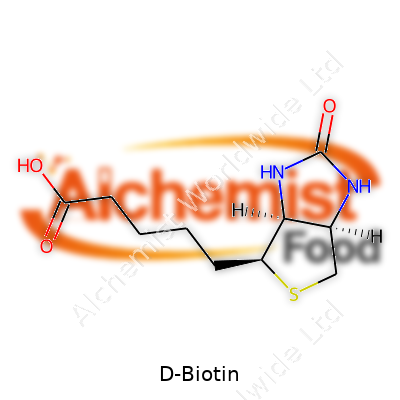
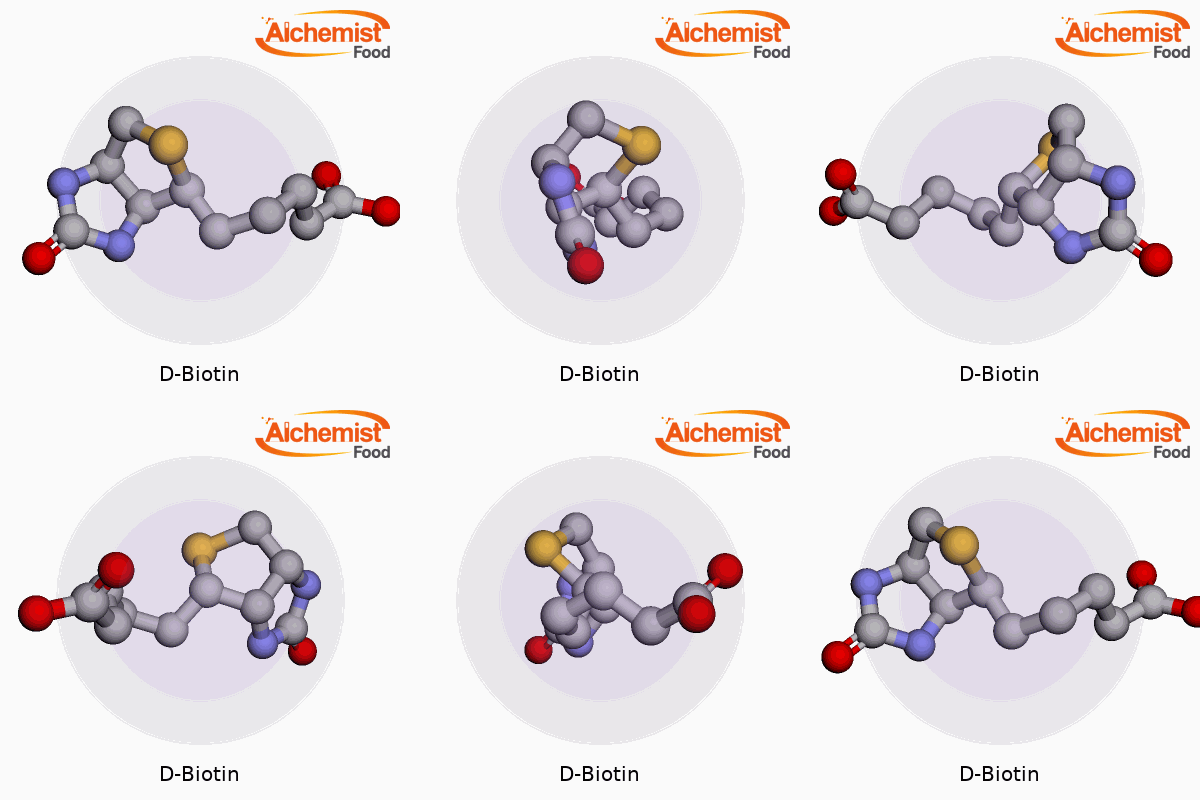
| Names | |
| Preferred IUPAC name | (3aS,4S,6aR,7aS,11aS,11bR)-7a,8,9,10,11,11a-hexahydro-4H-2H,6H-1λ⁶-thia-3,6a,7a,11b-tetraazacyclopenta[f]indene-4,4-dione |
| Other names |
Biotin Vitamin B7 Vitamin H Coenzyme R d-(+)-Biotin |
| Pronunciation | /ˈdiːˈbaɪ.ə.tɪn/ |
| Preferred IUPAC name | (3aS,4S,6aR,7aS,7bS)-2-oxohexahydrothieno[3,4-d]imidazole-4-valeric acid |
| Other names |
Biotin Vitamin B7 Vitamin H Coenzyme R |
| Pronunciation | /ˌdiːˈbaɪ.ə.tɪn/ |
| Identifiers | |
| CAS Number | 58-85-5 |
| 3D model (JSmol) | `4HR28Q404R` |
| Beilstein Reference | 172385 |
| ChEBI | CHEBI:15956 |
| ChEMBL | CHEMBL414 |
| ChemSpider | 6087 |
| DrugBank | DB00121 |
| ECHA InfoCard | 100.043.386 |
| EC Number | EC 3.5.1.12 |
| Gmelin Reference | 82298 |
| KEGG | C00120 |
| MeSH | D02B01 |
| PubChem CID | 171548 |
| RTECS number | V7523000 |
| UNII | 3QJQ0SC39G |
| UN number | UN2811 |
| CAS Number | 58-85-5 |
| Beilstein Reference | 3592509 |
| ChEBI | CHEBI:15956 |
| ChEMBL | CHEMBL: CHEMBL418 |
| ChemSpider | 21105912 |
| DrugBank | DB00121 |
| ECHA InfoCard | 03b7738f-c6b8-406e-b3e8-7c4217b0140d |
| EC Number | EC 200-399-3 |
| Gmelin Reference | 8986 |
| KEGG | C00119 |
| MeSH | D-Biotin[MeSH] |
| PubChem CID | 171548 |
| RTECS number | FI8779000 |
| UNII | 6SO6U10H04 |
| UN number | UN2811 |
| Properties | |
| Chemical formula | C10H16N2O3S |
| Molar mass | 244.31 g/mol |
| Appearance | White crystalline powder |
| Odor | Odorless |
| Density | 1.3 g/cm³ |
| Solubility in water | Soluble in water (22 mg/L at 25 °C) |
| log P | -0.77 |
| Acidity (pKa) | 4.5 |
| Basicity (pKb) | 11.5 |
| Refractive index (nD) | 1.525 |
| Viscosity | Viscous liquid |
| Dipole moment | 4.93 D |
| Chemical formula | C10H16N2O3S |
| Molar mass | 244.31 g/mol |
| Appearance | White crystalline powder |
| Odor | Odorless |
| Density | 0.987 g/cm3 |
| Solubility in water | Soluble in water (22 mg/L at 25 °C) |
| log P | -0.11 |
| Acidity (pKa) | 4.5 |
| Basicity (pKb) | 11.5 |
| Refractive index (nD) | Refractive index (nD) of D-Biotin: "1.670 |
| Viscosity | Viscous oil |
| Dipole moment | 8.6882 D |
| Thermochemistry | |
| Std molar entropy (S⦵298) | 322.5 J·mol⁻¹·K⁻¹ |
| Std enthalpy of formation (ΔfH⦵298) | -602.1 kJ/mol |
| Std enthalpy of combustion (ΔcH⦵298) | -2854 kJ·mol⁻¹ |
| Std molar entropy (S⦵298) | 203.1 J·mol⁻¹·K⁻¹ |
| Std enthalpy of formation (ΔfH⦵298) | −741.3 kJ/mol |
| Std enthalpy of combustion (ΔcH⦵298) | -2859 kJ/mol |
| Pharmacology | |
| ATC code | A11HA05 |
| ATC code | A11HA05 |
| Hazards | |
| Main hazards | May cause eye, skin, and respiratory tract irritation |
| GHS labelling | Not a hazardous substance or mixture. |
| Pictograms | Eye irritation, Health hazard, Hazardous to the environment |
| Signal word | Warning |
| Hazard statements | No hazard statements. |
| Precautionary statements | IF IN EYES: Rinse cautiously with water for several minutes. Remove contact lenses, if present and easy to do. Continue rinsing. If eye irritation persists: Get medical advice/attention. |
| Autoignition temperature | 410 °C |
| Lethal dose or concentration | LD50 Rat >10,000 mg/kg |
| LD50 (median dose) | LD50 (median dose): >10 g/kg (rat, oral) |
| NIOSH | NO |
| PEL (Permissible) | 5000 mcg |
| REL (Recommended) | 5 µg |
| IDLH (Immediate danger) | Not established |
| Main hazards | No significant hazard. |
| GHS labelling | GHS07, GHS08 |
| Signal word | No signal word |
| Hazard statements | Not a hazardous substance or mixture according to the Globally Harmonized System (GHS) |
| Precautionary statements | IF IN EYES: Rinse cautiously with water for several minutes. Remove contact lenses, if present and easy to do. Continue rinsing. If skin irritation or rash occurs: Get medical advice/attention. If eye irritation persists: Get medical advice/attention. |
| NFPA 704 (fire diamond) | 1-0-0-N |
| Autoignition temperature | 410 °C |
| LD50 (median dose) | Oral, mouse: > 10,000 mg/kg |
| NIOSH | AD0385000 |
| PEL (Permissible) | 10 mg/m3 |
| REL (Recommended) | 300 µg |
| Related compounds | |
| Related compounds |
Biotin sulfone Desthiobiotin Oxybiotin N-Biotinyl-L-cysteine Biocytin |
| Related compounds |
Biotin sulfone Desthiobiotin Dethiobiotin Oxybiotin |



