Creatine Monohydrate: Unpacking a Modern Staple in Sports Nutrition and Beyond
Historical Development
Creatine didn’t show up in gyms yesterday. It traces back to 1832, when Michel Eugène Chevreul, a French chemist, pulled it from meat extracts and gave it a name rooted in the Greek word for flesh, “kreas.” Fast-forward about a century and scientists had mapped its presence in human muscles, but it really took off in the early ‘90s. Olympic athletes hit the supplements and word spread, not just among bodybuilders but through nearly every locker room around the globe. That surge led to decades of clinical interest, setting creatine apart from the snake oils of the supplement industry. Even folks outside the fitness world—from researchers studying muscular dystrophy to neurologists—have studied its possibilities in the lab and the clinic.
Product Overview
Creatine monohydrate isn’t some mystery powder. Typically, it looks like a fine, white, nearly tasteless powder that blends pretty easily into water or juice. Athletes might eyeball a teaspoon, but standardized scoops usually hold about five grams. Companies list it under several brand names, but all the attention boils down to its solid science and decades of safe use. People sometimes get confused by “micronized” forms or fancy labels, but these all trace back to the same basic chemical structure.
Physical & Chemical Properties
Take a close look—creatine monohydrate is stable at room temperature and absorbs water when left out. It dissolves much better in warm water than cold, clumping up if humidity seeps in. Chemically, its molecular formula is C4H9N3O2·H2O, giving it a molar mass around 149.15 g/mol including its water molecule. It’s pretty neutral on the pH scale. A lot of folks overlook that it starts breaking down into creatinine once mixed with acidic solutions or left for hours in water, so it’s best consumed soon after mixing.
Technical Specifications & Labeling
Most reputable products offer 99-100% pure creatine monohydrate with no fillers, artificial flavors, or colorants. Good brands put batch numbers and certificates of analysis right on their tubs, listing ingredients clearly. Third-party testing by organizations like NSF or Informed-Sport gives confidence that the powder won’t bring along any banned substances or unwanted surprises. Labels should mention the intended dosage, allergen risks, the country of manufacture, and sometimes, solubility advice—for instance, “mix in warm water for best results.”
Preparation Method
On an industrial scale, companies usually synthesize creatine monohydrate by reacting sarcosine, a derivative of glycine, with cyanamide under alkaline conditions, then cooling and crystallizing out the product. After filtration, washing, and drying, you get the recognizable white powder. Quality control teams run checks for heavy metals and microbial contamination at several steps, since even trace impurities can set off alarms for pro athletes or health-conscious buyers. Some newer producers claim “micronization,” where they mill the crystals into even finer powder to improve solubility, but the main chemistry stays the same.
Chemical Reactions & Modifications
Creatine itself isn’t particularly reactive, but mix it with water and heat or acidity for long enough, and it will slowly degrade to creatinine. Some supplement brands offer salts or esters—like creatine citrate or creatine ethyl ester—hoping to boost absorption or reduce bloating, yet research keeps circling back: plain monohydrate works well for nearly everybody. Unadulterated forms minimize the risk of strange side effects or unknown chemical interactions.
Synonyms & Product Names
Walk down any supplement aisle and “creatine monohydrate” dominates, but you’ll also notice it listed as methylguanidoacetic acid monohydrate or simply “creatine.” Major makers stamp their tubs with names like Creapure, Micronized Creatine, or Pure Creatine. In pharmacy or clinical settings, people might read “N-amidinosarcosine hydrate,” but almost nobody outside chemistry circles reaches for that jargon.
Safety & Operational Standards
Years of rigorous testing have shown creatine monohydrate’s safety in healthy adults when used responsibly. The International Society of Sports Nutrition published position stands, pointing to few adverse incidents in studies running up to five years. As with any supplement, manufacturing plants stick to Good Manufacturing Practices (GMP) to prevent contamination and cross-contact. Athletes need batch-traceable products since even tiny contaminants can lead to career-ending bans. Those with pre-existing kidney problems should check with a doctor. Despite online rumors, medical groups agree—creatine alone hasn’t been shown to cause dehydration, cramps, or kidney dysfunction in healthy people.
Application Area
Bodybuilders and sprinters aren’t the only fans. Creatine monohydrate appears in physical therapy clinics, pediatric neurology, and even geriatrics. The most buzz comes from improved muscle strength, explosiveness, and power output. Athletes sometimes “load” up to 20 grams daily for a week, then drop to 3-5 grams. Researchers keep testing creatine in neurological disorders, post-surgical recovery, and even depression. There’s evidence it helps elderly adults hold onto lean muscle, fighting the frailty and falls that come with aging.
Research & Development
Hundreds of peer-reviewed studies tackle creatine every year, making it one of the best-researched sports supplements around. Universities keep exploring new angles: Could it slow ALS progression? What about concussion recovery? Researchers are also tweaking delivery—timed-release formulas, drinks, or gels—to help people integrate creatine into daily routines. Genetic studies hint at responders and non-responders, which could shape future advice for individual dosing.
Toxicity Research
Toxicologists have pushed dosing far above recommended levels without spotting organ damage in healthy adults. Kids with certain metabolic diseases sometimes take high doses under medical supervision for years, and safety data holds up. That said, anything in excess can cause trouble—mega-dosing won’t bring extra strength and might lead to digestive upset or water retention. The most careful studies watch for liver, kidney, and cardiovascular markers, and so far, those results look reassuring for mainstream dosing.
Future Prospects
Creatine research isn’t winding down. Companies and labs push for better absorption, easier mixing, and new clinical applications. Military organizations test it for soldier fatigue resistance, while dementia research inches forward on potential brain-protective properties. It earns attention for both physical and cognitive health, and that reputation puts it far past “fad” status. Expect more studies testing it for recovery, aging, metabolic conditions, and stacked with other beneficial nutrients. Creatine monohydrate stands out as a supplement shaped equally by basic chemistry and decades of human evidence, ready for new chapters as science catches up with the questions of tomorrow.
What is creatine monohydrate and how does it work?
Understanding Creatine Monohydrate
Creatine monohydrate gets talked about a lot in fitness circles, but it means something real to people who spend time with weights or want to push their performance. Creatine is a natural compound. Muscles store it, and the body uses it to recycle energy during hard activity. Foods like beef and seafood provide some creatine, but most folks looking to get more don’t want to down steak all day—so supplements fill the gap.
How Creatine Works in the Body
Muscles run on adenosine triphosphate, or ATP. Hard effort burns through ATP quickly. Creatine helps recycle ATP, so muscles get more fuel during bursts of effort, like weightlifting, sprinting, or any stop-and-go sport. A decade ago, I started weight training, and I noticed real changes once I started taking creatine. I could finish an extra rep or add a little more weight. It wasn’t magic—just more fuel in the tank when it counted.
Scientific Backing and Everyday Experience
Research from reputable institutions—University of Queensland, Baylor University, and others—has stacked up. Hundreds of studies show that creatine supplementation increases strength, helps muscle recovery, and boosts muscle growth when paired with resistance training. The International Society of Sports Nutrition ranked creatine as one of the most researched and safest supplements out there.
Many people I know worry about side effects. Stories float around about bloating, dehydration, or kidney trouble. Proper use—taking 3-5 grams daily and drinking water—keeps things safe for most healthy adults. Kidneys filter creatine without stress as long as no underlying condition lingers. More folks need to hear that. Problems usually start with huge doses, not standard use. I’ve been taking creatine for years without any issues—just regular checkups to keep an eye on everything.
The Bigger Picture Behind Supplementation
Supplements often get painted as shortcuts, but creatine works best with real food and steady training. There isn’t a substitute for hard work, sleep, and eating whole foods. People new to it sometimes want fast changes. In reality, progress happens over months. That goes for creatine too—you take it daily, not just before a workout.
No supplement does it all. Nutrition sometimes gets neglected when people over-focus on pills and powders. I remind people to fix their breakfasts and dinners before leaking money into a supplement store. Creatine fills a role, but it can’t build a diet or recover tired muscles alone.
Possible Solutions to Misinformation
Too much hype and not enough education fill gyms and social media. Gyms could post science-backed information where people see it. Doctors and trainers talking in real words—explaining who should use creatine and who should pass—would help clear the air. Regular blood tests matter for anyone with kidney issues. Cheap powders with unknown additives pop up online, so buyers need to know about third-party testing through groups like NSF or Informed-Sport. Taking a minute to read labels and dig up reviews pays off.
Nearly anyone interested in better physical performance gets tempted by supplements at some point. Creatine stands out as reliable, well-tested, and effective if used by healthy people who also care about their bigger routine. Better education and honest conversation would help people get the real benefits and avoid the noise.
Is creatine monohydrate safe to use?
The Real Story Behind Creatine
Walk into any gym and you’ll find a tub of creatine stashed away in someone’s locker. People talk about it like it’s a magic powder for muscles, or a shortcut to super strength. Skeptics see it as risky business, maybe even dangerous. The reality sits somewhere in between the myths and marketing. To get at the truth of creatine monohydrate, it pays to look at both real-world experience and what researchers say.
What Creatine Actually Does
Anyone who’s picked up a heavy weight or ran a sprint has felt the limits of their own muscle power. Creatine comes straight into play here. It basically helps recycle energy inside muscles, so you can push harder for a few more reps or sprint a split-second longer. Your body makes creatine on its own—mostly in the liver, then drops it off at the muscles. Red meat and fish also supply decent amounts, but most folks trying to get that muscle edge look to supplements.
Personal Experience with the Supplement
The first time I tried creatine, nothing earth-shattering happened. Maybe a bit more water weight, maybe my regular lifts got a little easier. After a while, though, it became clear that it wasn’t about feeling “jacked” overnight. The real benefit showed up in those moments where workouts felt just manageable enough to squeeze out one or two more reps before muscle failure. With a little more weight on the bar, I could track steady progress. All of this made sense, as studies show that creatine’s main effect is on short, explosive movements—it’ll never do the work for you.
Breaking Down the Safety Concerns
Worries about creatine causing kidney damage or dehydration have bounced around locker rooms for years. Multiple large studies tackle these fears head-on. Healthy adults, taking the usual five-gram daily dose, don’t show any signs of kidney or liver stress. Doctors only see problems in folks who already have chronic kidney issues. Long-term trials—even over five years—haven’t turned up any links to muscle cramps, heatstroke, or serious side effects.
Dehydration came up because creatine pulls water into muscle cells. It might mean an extra pound or two on the scale and maybe finding yourself thirstier at the gym. The fix is simple: drink as you would during heavy exercise anyway and keep an eye on your body. Staying hydrated helps most of us whether we use supplements or not.
What the Experts and Science Say
Creatine sits at the top of the list for well-studied sports supplements. Organizations like the International Society of Sports Nutrition, the Mayo Clinic, and many sports medicine groups all say the same thing: creatine is safe for healthy adults in recommended doses. The main risk comes from buying off-brand, contaminated powders, or using it without understanding your own health status.
Smart Practices for Creatine Use
Anyone thinking about creatine should check two things: Know your own health, and read the label. Rely on supplements from big, respected brands with third-party testing. A doctor or sports nutritionist can run basic bloodwork for peace of mind before you jump in. If you’re a young athlete, a parent, or you have a medical condition, professional guidance becomes even more important.
Final Thoughts
Creatine monohydrate isn’t a quick fix or a miracle—but it’s far from dangerous when used with common sense. For most healthy adults, the decades of good research and thousands of real-world cases make it one of the most reliable options on the supplement shelf.
How should I take creatine monohydrate for best results?
What Creatine Does for the Body
Creatine monohydrate always sparks a strong reaction at the gym. Walk through any weight room and you’ll see someone tossing a scoop in their shaker before heading to the squat rack. The reason is pretty simple—creatine can help people get stronger and recover faster. Muscles store creatine and use it as a quick fuel source, especially during intense efforts. The extra edge in strength or endurance can make a difference, from squeezing out one more deadlift to recovering faster between sprints.
Dosage That Actually Works
People tend to overcomplicate things, especially when it comes to supplements. With creatine, you don’t need fancy timing or cycling plans. Research from groups like the International Society of Sports Nutrition shows that 3 to 5 grams per day delivers results without putting excess strain on the kidneys in healthy adults. Some athletes start with a “loading phase”—about 20 grams a day, split into four servings for the first week—but many skip this step and still notice gains within a few weeks.
I stuck with a steady 5 grams after workouts, and it felt simple to build the habit. I never worried about missing a window or cycling off. Mixed in water or a shake, it disappears easily, so you don’t taste much of anything.
Mixing Creatine Doesn’t Have to Be Complicated
People often get worked up about mixing creatine. I’ve heard long debates about whether you need to dissolve it in hot water or take it with sugar for an “insulin spike.” I found that it blends well in room temperature liquids, and there hasn’t been strong evidence that timing or combining it with certain foods makes a dramatic difference. Consistency matters more. I took it with breakfast, lunch, and even right after training—results were the same.
Why Everyday Hydration Matters
If you’ve ever added creatine to your routine, you probably noticed thirst creeping up. Muscles draw extra water as they store creatine, so drinking more throughout the day helps you avoid cramps or dehydration. I always left a water bottle at my desk, and headaches became less common. Sports medicine clinics regularly remind clients to keep up their fluid intake whenever they use creatine.
Safety and Myths
Worries about kidney issues, bloating, or “water weight” often get thrown around. Studies covering decades haven’t shown kidney damage from typical doses in healthy people. I found that occasional bloating faded as my body adjusted. The benefits in strength and muscle fullness felt like a solid trade-off. Folks with a history of kidney disease should talk to their doctor before starting, but most gym-goers have no problem.
Possible Solutions for Common Missteps
Some people drop creatine after a week, frustrated by water retention or no big changes on the scale. Building muscle takes months, not days. The best results come from pairing creatine with regular training and eating enough protein and carbs. Brands sometimes market “micronized” or “buffered” creatine as easier on the stomach, but for most, classic monohydrate does the job at a fraction of the price.
Store your powder in a dry spot—it clumps up with too much humidity. Measure out a teaspoon instead of guessing, and track your daily routine like any part of training. Anyone can add creatine into their day, but success follows commitment and patience, not a flashy supplement schedule.
Are there any side effects of creatine monohydrate?
Let’s Talk About Muscle, Water, and the Real Concerns
Creatine monohydrate earns its reputation as a staple in the gym-goer's supplement routine. Used to boost muscle strength and speed up recovery, this powder shows up everywhere from high school football weight rooms to the home office for those chasing a healthier lifestyle. The real question is whether people face side effects when using it day-to-day.
The Water Retention Story
Most folks notice muscles looking puffier once they start creatine. This happens because creatine draws water into muscle cells. That’s a science-backed fact. The water stays in the muscles, not scattered throughout the body, which means you may see a few extra pounds on the scale. Some people feel muscle tightness or mild bloating. Anyone with a history of kidney issues should talk to a health professional before starting anything, but healthy kidneys have not shown trouble handling this boost of creatine.
Digestion Gets Tricky for Some
Stomach cramps, gas, and diarrhea crop up for some new users, especially in the early days or when taking large scoops at once. Splitting the serving into several doses during the day makes a difference. Mixing the powder in plenty of water also helps. I remember trying a loading phase and spending quality time questioning my choices—less is often more. Quality matters too: pure creatine monohydrate (with no weird fillers) tends to cause less stomach trouble.
Kidneys and the Honest Science
One of the oldest myths out there says taking creatine will wreck the kidneys. Healthy adults taking the recommended amount—usually around five grams daily—have not shown any lasting kidney damage in well-run studies. The search for problems has gone on for decades, and the evidence remains the same: for people without pre-existing kidney disease, normal doses look safe. Still, anyone with a personal or family history of kidney disease should check with their doctor. Doctors sometimes see higher creatinine levels on lab results, but that’s a measurement byproduct, not proof of declining kidney function.
Muscle Cramps and Dehydration: Fact or Fiction?
Stories of football players cramping in the summer or cyclists hitting a wall after using creatine come up every year. Research keeps showing no link between creatine and higher rates of cramping or dehydration. Most people on creatine find performance improves, recovery is faster, and cramps happen less often—not more.
Long-Term Use and Other Risks
Plenty of people wonder what happens after taking creatine for years. Most long-term studies (up to five years) show no new health risks for healthy athletes. Rare allergic reactions can pop up, like anything we eat or drink. Buying your supplement from a trusted brand matters—inexpensive powders sometimes carry hidden contaminants or fake ingredients.
Smarter Use, Fewer Problems
Taking the right dose, buying pure creatine, and talking to a doctor if you have a health issue: these steps cover most of the bases. People forget how important hydration becomes while training hard and adding muscle—extra water supports energy and digestion, whether you take creatine or not.
Real Takeaways
Creatine remains one of the best-researched supplements. The worry about major side effects gets smaller the more research we see. Minor stomach problems or water retention do come up, but most folks handle these with small adjustments to routine or diet. Real health problems stay rare for healthy adults using a quality product at the right dose.
Can creatine monohydrate help build muscle and improve performance?
What Creatine Monohydrate Actually Does
Creatine monohydrate gets more attention than almost any supplement out there. People at every gym talk about it, but it’s not magic and it’s not just hype. Creatine is a molecule the body uses for quick energy, especially in short bursts. You find it naturally in meat and fish, which means even people who don’t exercise eat small amounts every day. For folks aiming to add muscle or push out extra reps, taking extra creatine lets their muscles store more of the stuff — and that can make a difference in how hard you can work.
Muscle Growth and Strength Gains
I’ve seen plenty of people, myself included, benefit from adding creatine to a lifting routine. Over weeks, adding creatine to a regular workout leads to more weight on the bar and a little muscle “fullness.” Some studies back this up, showing that people who supplement tend to see greater increases in muscle mass compared to those who don’t. This isn’t just about water retention. Creatine ramps up energy in your muscle cells, and more energy means lifting a little heavier or squeezing out a few more reps — the sort of effort that signals your muscles to grow.
Performance Improvements Beyond the Gym
A scoop of creatine won’t turn someone into an Olympic sprinter, but it can shave time off a sprint or help athletes explode off the starting line. I remember training for a recreational flag football league; play after play, creatine made my short bursts quicker and my muscles less tired at the end. Sprinters, hockey players, and soccer athletes have all used it to push harder during quick, explosive movements. The research lines up here too. Athletes who take creatine see better performance in short, intense efforts compared to those who skip it.
Safety and Side Effects
Plenty of myths surround creatine: hair loss, kidney damage, cramping. Thousands of studies show these aren’t issues for healthy adults who use the supplement as recommended. Dozens of sports dietitians, including several I’ve worked with personally, recommend it even for younger athletes under guidance. The most common side effect? A bit of weight gain, usually from the muscles holding onto more water. That’s not a bad trade-off for people chasing better performance or muscle gains.
My Take on Who Should Use Creatine
Anyone aiming to build muscle, get stronger, or perform better in sports rooted in power and quick movement could see results from creatine. Vegetarians and vegans often get the biggest bump since they don’t eat meat or fish, which means their muscles start with lower creatine levels. Always pick a reputable brand that lists only "creatine monohydrate" on the ingredient label. Fancy blends don’t add real benefits.
Moving Forward with Creatine the Right Way
Adding creatine works best alongside good food, solid sleep, and consistent training. Loading or not loading (the classic “20 grams a day for a week” approach) doesn’t really matter as long as you keep doses in the range of three to five grams daily. Staying hydrated helps you feel better and reduces muscle cramps. Talking to a healthcare professional or sports dietitian always makes sense, especially if you have any health conditions.
Path to Progress
People want quick fixes, but muscle takes work and patience. Creatine isn’t a shortcut, just a solid addition for those ready to train hard. Plenty of scientific evidence and real-world experience back its use, and within a plan built on effort, it helps people squeeze a bit more progress out of each day in the gym or on the field.
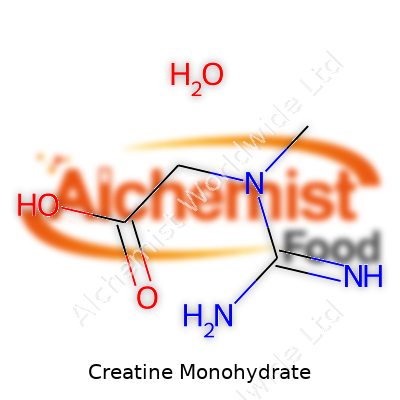
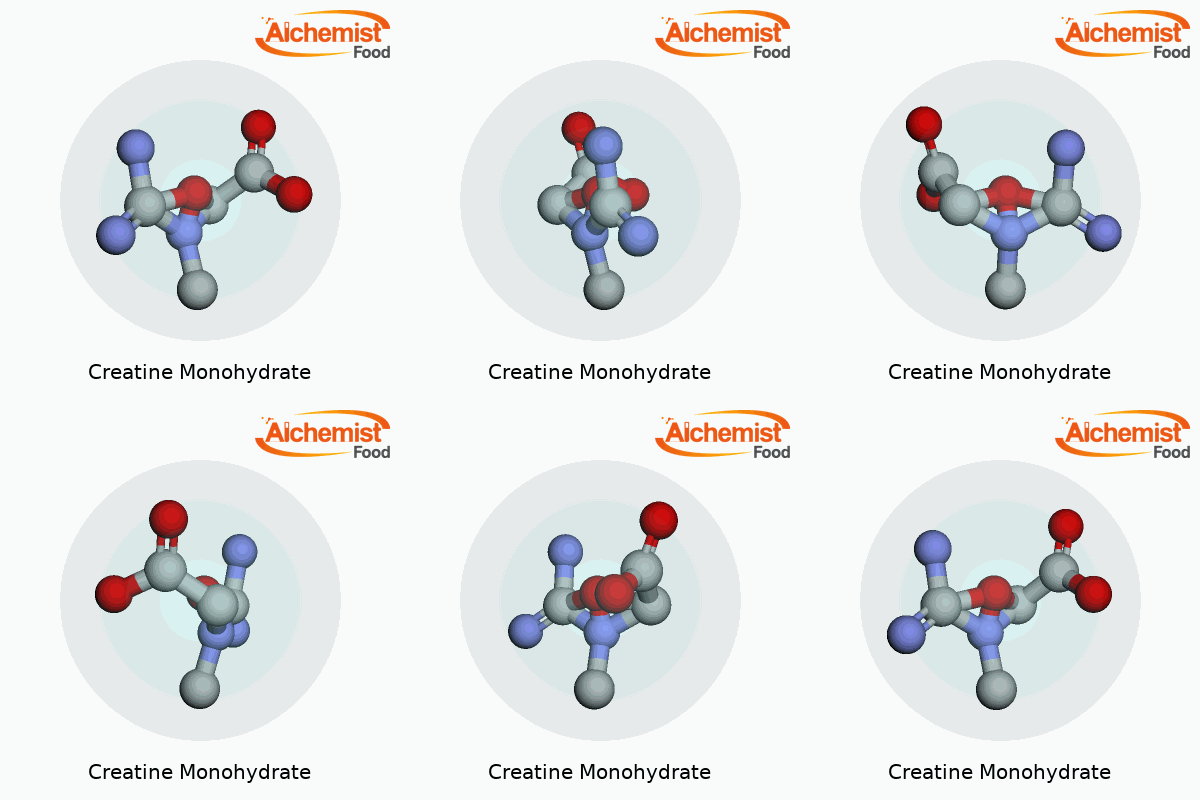
| Names | |
| Preferred IUPAC name | 2-(Carbamimidamido)acetic acid monohydrate |
| Other names |
Creatine Methylguanidoacetic Acid Creatine Monohydrate Powder |
| Pronunciation | /ˈkriː.əˌtiːn ˌmɒn.oʊˈhaɪ.dreɪt/ |
| Preferred IUPAC name | 2-(Carbamimidamido)acetic acid monohydrate |
| Other names |
Creatine Creatine Monohydrate Powder Methylguanidoacetic Acid N-(Aminoiminomethyl)-N-methylglycine Phosphocreatine Precursor Creatine Monohydrate Supplement |
| Pronunciation | /ˈkriːəˌtiːn ˌmɒn.oʊˈhaɪ.dɹeɪt/ |
| Identifiers | |
| CAS Number | 6020-87-7 |
| Beilstein Reference | 4090723 |
| ChEBI | CHEBI:87651 |
| ChEMBL | CHEMBL1566 |
| ChemSpider | 5778 |
| DrugBank | DB00127 |
| ECHA InfoCard | 03b5b1a9-02a4-400c-a6c7-3c5e8accc79d |
| EC Number | EC 201-741-1 |
| Gmelin Reference | 63563 |
| KEGG | C00300 |
| MeSH | D03.633.400.300.275 |
| PubChem CID | 586 |
| RTECS number | MM8050000 |
| UNII | 6ZSF4P37ZO |
| UN number | Not regulated |
| CAS Number | 6020-87-7 |
| Beilstein Reference | 1713883 |
| ChEBI | CHEBI:5782 |
| ChEMBL | CHEMBL1231420 |
| ChemSpider | 5736 |
| DrugBank | DB00118 |
| ECHA InfoCard | 05ab231546cc-40c9-aad0-224c6fae07a0 |
| EC Number | 200-306-6 |
| Gmelin Reference | 31921 |
| KEGG | C00300 |
| MeSH | D.C.I. Creatine Monohydrate |
| PubChem CID | 586 |
| RTECS number | FF8050000 |
| UNII | M7P27195AG |
| UN number | Not regulated |
| Properties | |
| Chemical formula | C4H9N3O2·H2O |
| Molar mass | 149.15 g/mol |
| Appearance | White, odorless, crystalline powder |
| Odor | Odorless |
| Density | 0.9 g/cm³ |
| Solubility in water | Slightly soluble |
| log P | -1.73 |
| Vapor pressure | Negligible |
| Acidity (pKa) | 12.46 |
| Basicity (pKb) | 8.37 |
| Magnetic susceptibility (χ) | Diamagnetic |
| Refractive index (nD) | 1.333 |
| Dipole moment | 5.46 D |
| Chemical formula | C4H9N3O2·H2O |
| Molar mass | 149.15 g/mol |
| Appearance | White, crystalline powder |
| Odor | Odorless |
| Density | 0.88 g/cm³ |
| Solubility in water | 14 g/L (20 °C) |
| log P | -1.8 |
| Vapor pressure | Negligible |
| Acidity (pKa) | pKa = 3.5 |
| Basicity (pKb) | 6.67 |
| Magnetic susceptibility (χ) | Diamagnetic |
| Refractive index (nD) | 1.520 |
| Dipole moment | 5.46 D |
| Thermochemistry | |
| Std molar entropy (S⦵298) | 247.3 J·mol⁻¹·K⁻¹ |
| Std enthalpy of formation (ΔfH⦵298) | −577.8 kJ/mol |
| Std enthalpy of combustion (ΔcH⦵298) | −3910 kJ/mol |
| Std molar entropy (S⦵298) | 218.7 J·mol⁻¹·K⁻¹ |
| Std enthalpy of formation (ΔfH⦵298) | -693.2 kJ/mol |
| Std enthalpy of combustion (ΔcH⦵298) | -3609 kJ/mol |
| Pharmacology | |
| ATC code | A16AA06 |
| ATC code | A16AA04 |
| Hazards | |
| Main hazards | May cause respiratory irritation; may cause eye, skin, and gastrointestinal irritation |
| GHS labelling | Not classified as a hazardous substance or mixture according to the Globally Harmonized System (GHS). |
| Pictograms | Muscle, Energy, Dumbbell, Running, Weighing Scale, Leaf |
| Signal word | No signal word |
| Hazard statements | Not a hazardous substance or mixture according to the Globally Harmonized System (GHS). |
| Precautionary statements | Keep out of reach of children. Do not use if pregnant or nursing. Consult a physician before use if you have a medical condition or are taking any medications. Store in a cool, dry place. Do not exceed recommended dosage. |
| Lethal dose or concentration | LD50 (oral, rat): 8068 mg/kg |
| LD50 (median dose) | 9400 mg/kg (rat, oral) |
| NIOSH | Not Listed |
| PEL (Permissible) | 10 mg/m³ |
| REL (Recommended) | 3–5 g/day |
| Main hazards | May cause respiratory irritation, may cause eye irritation, may cause skin irritation |
| GHS labelling | GHS: Not classified as hazardous according to GHS. |
| Pictograms | vegan, gluten-free, sugar-free, non-GMO, lactose-free |
| Hazard statements | No hazard statements. |
| Precautionary statements | Keep out of reach of children. Store in a cool, dry place. Do not use if pregnant or nursing. Consult a healthcare professional before use if you have any medical conditions or are taking any medications. Do not exceed recommended dose. |
| Autoignition temperature | 430°C (806°F) |
| Lethal dose or concentration | LD50 (oral, rat): >5,000 mg/kg |
| LD50 (median dose) | 9400 mg/kg |
| NIOSH | MW4000000 |
| PEL (Permissible) | 10 mg/m3 |
| REL (Recommended) | 3–5 g/d |
| Related compounds | |
| Related compounds |
Creatine Creatine ethyl ester Creatine phosphate Creatine citrate Creatine malate |
| Related compounds |
Creatine Phosphocreatine Creatinine |



