Copper Sulfate: A Closer Look
Historical Development
Copper sulfate travels back thousands of years, showing up in stories from ancient Greece and Rome. Alchemists ground blue crystals they called “blue vitriol” or “blue stone.” From preserving wood, adding blue pigment to glass, or helping wine ferment, this chemical tied together medicine, agriculture, and industry. Factories in the nineteenth century scaled up production as folks learned to use copper sulfate for controlling fungal blight on crops and fixing textile dyes. Farmers dusted Bordeaux mixture, a blend of copper sulfate and lime, over European vineyards to fight downy mildew. Generations of scientists, tinkering in labs with boiling sulphuric acid and copper scraps, turned this once-curious mineral into a vital industrial commodity.
Product Overview
People recognize copper sulfate by its striking blue crystals – sometimes coarse, sometimes fine powder. It steps easily into dozens of roles: fungicide, algaecide, root killer, even an ingredient in copper plating. Demand pops up in agriculture, chemistry labs, home plumbing aisles, and educational kits for kids. Water treatment facilities rely on it to stamp out algae blooms, and electroplating shops reach for it by the barrel. Manufacturers put a premium on high purity and consistent crystal size. From tiny test tubes in science class to 50-kilogram sacks on farms, packaging varies with the job at hand.
Physical & Chemical Properties
Copper sulfate’s most familiar form, the pentahydrate, has a dazzling blue color and dissolves well in water. It melts at 110°C, shedding water to become a white powder with a completely different look. In air, blue crystals lose water and fade, which hints at why storage matters. Chemically, copper ions crave electrons, making copper sulfate a strong oxidizer; acids and bases both tweak its makeup. Tucked inside each crystal lies a lattice of copper, sulfur, oxygen, and water, locked together tightly. Its density, solubility, and bright color shape the way industries measure, ship, and use this compound.
Technical Specifications & Labeling
Industrial and laboratory settings demand more than just “blue crystals” on the bag. Labels spell out the minimum copper content (often above 25%), the percentage of water, and impurity caps for things like iron, lead, or arsenic. International standards such as ISO 9001 or certification marks show buyers that they’re working with reliable material. Country of origin, storage conditions, and batch numbers also make the cut. Sensible labeling reduces guesswork and helps limit dangerous mishaps in workplaces and warehouses.
Preparation Method
Production starts simple – toss copper metal or ore into sulfuric acid, heat it, and blue copper sulfate crystals grow as water evaporates. Engineers now prefer closed-loop processes, not open-air kettles, to catch all the vapors and byproducts. Some methods use copper scrap from electrical wires, others rely on mining wastes. Filtration and recrystallization steps purify the final product. Each batch needs careful control of temperature and timing; even a small slip can warp the color, shape, or concentration of the crystals.
Chemical Reactions & Modifications
Copper sulfate has a reputation for versatility. In the lab, chemists mix it with sodium hydroxide and get a deep blue precipitate, then use that to spot proteins in food. Zinc added to a copper sulfate solution produces soft copper metal, opening doors for electroplating. Heating copper sulfate removes water step by step, changing its color and structure, and sometimes this reaction helps diagnose dehydration or overheating in materials. Industry tweaks copper sulfate with ammonia or citrate to form complex chemicals used in printing, textile dyeing, or even organic synthesis. Every reaction opens a new door for value-added applications.
Synonyms & Product Names
Copper(II) sulfate, cupric sulfate, blue vitriol, cupric sulfate-5-water, chalcanthite – different trades and textbooks toss around these names. Product names sometimes highlight grade or purity, such as “copper sulfate technical grade” or “reagent grade copper sulfate.” To a vineyard consultant, it’s still just Bordeaux mixture’s core ingredient, but a chemist in a plating shop calls it by its full formula: CuSO4·5H2O. These names crisscross cultures and markets, making clarity in safety sheets and order forms essential.
Safety & Operational Standards
Handling copper sulfate can turn risky if workers skip basics. Its crystals irritate skin, eyes, and lungs; it tastes metallic and can bring on nausea and vomiting in moderate doses. Grab the bag without gloves and blue stains could linger for days. The Environmental Protection Agency classifies copper compounds as hazardous to aquatic life, so spill control plans need teeth. Workplaces turn to OSHA guidance for eye protection, gloves, and emergency showers. Safety data sheets need updating as regulations evolve. In crowded storage rooms, locked, labeled cabinets go a long way toward keeping workers and kids clear of danger.
Application Area
Fungal crop diseases spark most of the world’s demand for copper sulfate. Sprayers dust it across grapevines, tomatoes, citrus, and wheat, shielding plants from blights and mildews. Public pools and lakes tap copper sulfate to kill algae, although backlash over aquatic toxicity has trimmed some uses. Plumbing pros pour it into pipes, rooting out tree invasions. Electronics shops build copper circuits on printed boards using electroplating baths loaded with copper sulfate. In mining, this chemical grabs hold of minerals in flotation tanks. Animal feed once benefited too, though the rise of organic standards nudges some farmers away from copper-based supplements. Hobbyists and educators whip up blue chemical gardens to spark kids’ curiosity. From a single compound, entire industries spin out work, profits, and learning.
Research & Development
Research teams keep exploring copper sulfate to outpace regulations and solve old problems. Lately, nanotechnology labs engineer microcrystals for more efficient fungicides, seeking lower doses and sharper targeting. Water scientists work on time-release tablets to fight algae where copper bans cut usage. Analytical chemists test copper sulfate as a probe in diagnostic kits and blood-sugar meters, especially in places with scarce resources. Recycling processes improve efficiency, converting e-waste back into high-grade copper sulfate. Green chemistry labs seek plant-based alternatives but still learn from copper sulfate's legacy as a model oxidizer and catalyst. University teams publish case studies on exposure risks, aiming to guide safer application in developing countries.
Toxicity Research
Decades of animal studies warn how easily copper sulfate tips from useful to toxic. High doses damage fish gills, liver, and kidney function in livestock, and can sicken pets or kids who taste the bright blue powder. Chronic exposure has links to nerve and liver disorders, fueling tighter restrictions in agriculture and water treatment. Regulatory agencies track the minimum effective concentrations closely, pushing for “as low as possible” in waterways. Ongoing research chases better ways to neutralize copper contamination with natural sorbents or filtration media. Doctors keep tabs on copper-sulfate poisoning symptoms, reminding anyone using the chemical that personal protective gear isn’t optional.
Future Prospects
Copper sulfate holds on to its vital role, but its future pivots on two factors: sustainability and safety. Green chemistry may trim demand where plant-based pesticides gain traction, yet many crops still rely on copper for disease control. Tech companies turn to copper sulfate for next-generation batteries and electronics, making purity more valuable than ever. Water-management scientists design slow-release and targeted treatments to limit aquatic harm. Bioengineering startups adapt copper sulfate’s chemistry for new catalytic reactions in cleaner production lines. Rules will keep tightening, yet smart innovation draws on copper sulfate’s centuries-old lessons to keep industries and farmers humming.
What is copper sulfate used for?
Mold On The Driveway, Algae In The Pool
Anyone who has faced a patch of green slime climbing up garden walls hears the name copper sulfate sooner or later. My dad once mixed up a blue solution to spray our walkway after a rainstorm gave mold a fresh grip. Copper sulfate takes on that job across towns and farms—breaking down moss, mildew, and algae before they take over. The average homeowner doesn’t think about what’s behind a clean patio, but copper’s antimicrobial nature works quietly in the background, making all the difference.
Keeping Crops Healthy
Walking through vineyards in California, you see vineyard workers spraying for downy mildew. Those sprayers often hold copper sulfate. Farmers rely on it because it blocks out blight and fungal diseases that otherwise strip away a season’s profit. A National Agricultural Statistics Service report showed that almost 15% of crop-protection treatments for grapes involved copper or copper blends in 2022. Fungal spores vanish, but copper doesn’t just evaporate—it builds up in the soil. I’ve seen growers pay close attention to application schedules, talking about copper toxicity just as much as its benefits. Overuse stunts young plants and poses environmental risk. Farmers now rotate with other fungicides or limit use, responding to research from land-grant universities.
Tools In The Lab And Industry
Schools and colleges use copper sulfate crystals in chemistry lessons to show how salts react in water. I remember the first time the powder turned clear liquid into deep blue—color as a sign of real chemistry happening. Teaching with it carries lessons in safety, too. Industry circles see the blue powder in industrial plating, etching printed circuit boards, and even in adhesives. Copper ions help shape finished metals, forming a surface layer or removing impurities before final assembly. Manufacturers value copper sulfate’s ability to dissolve in water, its reliability across pH ranges, and the thorough metal coverage it provides.
Medicine And Water Treatment
Copper sulfate doesn’t just fix farms or keep patios clean. In parts of the world where clean drinking water stays out of reach, health officials turn to copper sulfate as a quick way to disinfect drinking water stocks. Small doses in reservoirs cut down on dangerous waterborne microbes, making untreated water less risky. People have studied its effects in animal ponds and rural communities for decades. Even so, I’ve learned that improper dosing can harm fish, so precision and science win out over guesswork every time. In medicine, copper compounds have been researched for their effects on fungus and as part of trace mineral supplements, though strictly monitored by doctors.
Environmental Considerations And Safer Choices
Using copper sulfate brings responsibilities. I spoke to two local pool contractors who now recommend alternatives as standard, warning about how runoff affects nearby waterways and aquatic life. The Environmental Protection Agency lists safe limits for copper residue, following reports of chronic toxicity harming amphibians and freshwater plants. Gardeners choose buffered or chelated copper blends or lower-toxicity solutions for moss. Online guides preach moderation, always underlining personal protection—gloves, eyewear, proper storage—because copper sulfate can irritate skin and eyes.
Moving Forward With Careful Use
Copper sulfate helps people keep homes clean, protect food, and maintain safe water when managed with care. I see a move toward better training in its use, powered by stronger state-level rules and public campaigns that prioritize safety. Farmers, pool owners, and homeowners check labels more closely than before. Each season brings new studies that shape regulations, giving folks on the ground better information than we had twenty years back. Copper will stay in the toolkit, but the approach changes as we learn.
Is copper sulfate safe for humans and pets?
Copper Sulfate Finds Its Way Into Many Homes
Blue crystals and powder show up in garden sheds and on farms across the country. Folks use copper sulfate to kill algae in ponds, keep roots from invading pipes, and even as a pesticide in the backyard. On paper, it looks like a useful tool. But that doesn’t mean it’s without risk, especially for curious kids and wandering pets.
The Chemistry Behind the Warnings
Copper sulfate gives off a vibrant blue color that catches the eye. Schools sometimes use it for science experiments, and gardeners sprinkle it on soil to boost copper levels. Copper serves as a vital trace mineral for plants, animals, and people — but only in tiny amounts. Too much turns useful into toxic. Managing the dose and the way you apply it matters.
What the Research Says About Safety
Getting a little copper in the diet through water or food rarely causes trouble. The story changes if someone eats copper sulfate crystals, touches large amounts without gloves, or breathes the dust. Symptoms show up as stomach pain, vomiting, and a burning sensation in the mouth. Large doses may hurt the liver and kidneys, sometimes even putting lives at risk.
Children find bright blue crystals tempting, much like candy. Pets sniff, lick, or chew anything new in their world, especially if left at ground level. The American Association of Poison Control Centers gets calls every year about children and dogs exposed to copper sulfate. Birds and fish suffer even faster harm, which gives you an idea of its strength.
Pond Treatments and Environmental Fallout
A lot of people pour copper sulfate into ponds or fountains to tackle algae. It works because algae and some aquatic creatures can’t handle sudden changes in copper. Dead fish and frogs sometimes show up when users forget how much can poison the water.
Applying large amounts to gardens without testing the soil invites copper to build up year after year. This impacts earthworms and good insects, which help the garden thrive. So, it pays to test the soil and only add what’s missing. After years working with farmers, I’ve watched whole gardens struggle because of unseen copper overload.
Better Choices for Homes With Kids and Pets
Labeling keeps things safer, but it isn’t foolproof. Lock up garden chemicals on a high shelf or in a locked shed. Don’t leave open bags or containers anywhere a child or pet could get to them. Mix and spread only when you know what you’re doing and have gloves on your hands.
Natural pest and algae solutions keep growing, cutting the need for harsh chemicals. Try barley straw pads in the pond, or opt for organic gardening practices when possible. I’ve had better luck with careful weeding, natural compost, and crop rotation than with the blue crystals. Less chemical load also means less worry about safety slip-ups.
Good Sense Makes the Difference
Copper sits between help and harm depending on the care used. Sometimes older generations pass down solutions that worked decades ago, long before pets outnumbered people in some neighborhoods. Today, easy access to products, active pets, and little kids make it worth choosing caution. Read instructions, use gloves, store securely, and consider alternatives that offer some peace of mind for everyone at home.
How do you apply copper sulfate for algae control?
Why Algae Control Matters for Everyday People
Algae has a way of taking over ponds, lakes, and backyard water features. It blocks sunlight, steals oxygen from fish, and turns clear water into something that looks and smells bad. Most people want their water clean for fishing, swimming, or just to enjoy sitting near it. Letting algae run wild wastes time and can cost serious money if bigger problems show up later—like dead fish or ruined pumps.
How Copper Sulfate Works Against Algae
Out at a family lake, I saw grass carp munch at the edges but miss the floating mats across the surface. Copper sulfate steps in where natural fixes like raking, fish, or aeration fall short. It hits microscopic algae in a way physical effort never reaches. The blue crystals, once dissolved, break down cell walls and stop algae from growing. If you've ever watched pond water clear up within days of a proper dose, you know it’s not magic; it's good chemistry.
Practical Tips for Using Copper Sulfate
It’s tempting to dump a whole bag from the dock and walk away. That can hurt fish, shrimp, frogs—anything living in the water. I learned quick after one neighbor’s koi pond ended up with floaters. Start with the right measurement. The sweet spot is usually around two pounds per acre-foot of water. This depends on water depth, type of algae, and temperature.
Waiting for a calm day, scoop the copper sulfate and dissolve it in a clean bucket with pond water. Walk the shoreline or boat out, spreading the solution evenly. Spot applications work on problem patches, but ignore the urge to carpet-bomb the whole waterbody. Algae in runoff-prone spots needs repeat attention during the season, not a one-and-done approach. Clear water brings out hidden growth where sunlight starts hitting the bottom, so it’s a seasonal job, not a one-time fix.
Health and Safety Impacts
People sometimes gloss over what copper can do to a pond’s ecosystem. Too much copper builds up in mud, harming bottom-feeders and water bugs. Some types of algae react poorly and release toxins, making things worse than before. Always skip copper treatments for drinking water sources or livestock ponds. Kids, pets, and farm animals all stay safer with smart algae control, not chemical overkill.
Smarter Solutions for a Greener Future
Through the years, I saw neighbors try copper sulfate, then move on to cattail planting, floating islands, or solar aerators. Each pond brings its own battle. Water tests, basic aeration, and keeping fertilizer out of ditches can shrink algae problems before they start. Copper’s best use is for out-of-control blooms, not everyday maintenance. After a successful treat-and-wait cycle, supporting the ecosystem with native plants and regular monitoring can keep ponds healthy for the long haul. Good algae control takes patience, observation, and small actions repeated over each season—not just a bag of copper crystals tossed every spring.
Trust and Best Practices
Opting for copper sulfate needs a dose of common sense and local experience. Talking with extension agents or reading land-grant research, I picked up practical guidance you can't find on the back of a package. Following real-world advice, not just marketing hype, saves headaches and keeps water good for fish, families, and whatever else calls the pond home.
What are the storage instructions for copper sulfate?
Why Storage Matters for Copper Sulfate
If you’ve ever come across copper sulfate in a lab, agriculture supply shop, or hardware store, you’ll spot its sharp blue crystals. This chemical can kill algae and fungi, fix copper deficiencies in soil, and cleanse pools. With so many uses, it shows up in garages, university storerooms, and even home gardens. But copper sulfate’s benefits don’t outweigh its risks unless folks treat it with proper care. Some people underestimate chemicals like this, thinking a lid on a jar is enough. One spill or contaminated batch can show just how wrong that idea is.
Protecting People and the Product
Stashing copper sulfate on a shelf in the open comes with problems. Anyone with kids or pets knows curious hands and paws find their way to the oddest places. Even adults reach for containers, not realizing the powder inside can cause skin or eye irritation—worse if swallowed. For years, teachers have told students the importance of locking up hazardous chemicals, including classics like copper sulfate. A leak or open bag in a warm, damp spot turns the vibrant blue crystals soggy and useless. Keeping it in a sealed, labeled container keeps the fumes and dust tucked away. Labels matter, especially in cluttered sheds or chemical cabinets, where mix-ups can lead to dangerous accidents.
Dry, Cool, and Away from Food
Temperatures in most garages or greenhouses can swing wildly through the seasons. Exposure to dampness or heat shortens copper sulfate’s shelf life, wrecks the product, and makes disposal tricky. Damp copper sulfate cakes up, loses its effectiveness, and even reacts with metals or other stored chemicals. A dry, well-ventilated spot away from direct sun and high humidity keeps everything intact. Storing it high and out of reach of kids and animals prevents accidents before they happen.
Using old pickle jars or sketchy plastic bags for storage might seem thrifty, but exposure to air and moisture causes breakdown and contamination. Heavy-duty plastic or glass containers with tight lids work much better. Chemical storage cabinets, the kind with a lock, get the job done for folks working with larger amounts or running small businesses. Grocery or food storage areas are a terrible place for copper sulfate—cross contamination isn’t just a theoretical risk; thousands of poisoning cases through the years prove it can happen.
Mitigating Risks for the Long Haul
Long term, keeping track of inventory stops forgotten containers from sitting for years. Regularly checking the storage area limits the chances of leaks, spills, or expired chemicals building up. Clear instructions and safety data sheets help anyone—workers, students, or even hobby gardeners—know how to handle accidental exposure. Investing in some basics—sturdy gloves for handling, goggles for the odd refill—pays for itself if something ever goes wrong.
Public health officials and environmental experts press for better chemical handling because cleanup costs and health emergencies add up faster than most realize. Anyone who stores copper sulfate in bulk should stay connected with local disposal guidelines and safety regulations. That prevents landfill contamination and keeps water supplies safe for years down the line.
What is the shelf life of copper sulfate?
Seeing Copper Sulfate on the Shelf
Copper sulfate has a reputation for being tough. It’s a blue crystal people know from chemistry class, but it pops up in real life more than you’d think. Sitting in farm sheds and school cupboards, this salt helps keep algae out of ponds, fights fungus on crops, and even pops up in craft projects. For something so common, its shelf life isn’t something most folks think about—until the bag gets crusty or the jar forms clumps that won’t break loose. That’s when real questions come up: has it gone bad, or will it still do its job?
What Affects Copper Sulfate’s Lifespan?
A lot can go wrong with simple chemicals once they leave the factory. I remember a tub of copper sulfate in my own garage. I’d forgotten about it, and years later I found the crystals stuck together like rock candy, with water drops running down the inside. Moisture changes things. In a humid spot, copper sulfate draws in water from the air—almost as if it’s thirsty. Before long, it turns from dry crystals into a gooey mess, eventually breaking down into a slushy solution that refuses to cooperate in measuring or mixing.
Heat and sunlight work as silent enemies, too. In direct sun, the color fades and the structure loses strength. If left near chemicals like ammonia or anything that gives off strong fumes, the crystals might react and change. In my experience, jars with cracked lids don’t protect the contents well enough. Dust and spills make a mess. Copper sulfate is at its best in its original, sealed bag, far from garden hoses and chemical cupboards crowded with fertilizers and bleach.
Is There an Expiry Date?
Unlike milk or medicine, you won’t see a date stamped on most copper sulfate containers. The big manufacturers know it won’t spoil like food, so they skip putting clear expiry dates. Scientists say that, in dry and sealed conditions, copper sulfate can almost last forever. Still, real storage spaces are rarely perfect. If a container is open and humidity is high, the shelf life can drop to just a few years. In a dry, cool closet with everything sealed tight, it could stay useful for a decade or more. If it clumps or crusts, it’s time to check if it dissolves fully in water and stays blue—if not, it’s lost some punch.
Keeping It Fresh: Good Habits Matter
Folks who make copper sulfate last don’t work magic. They store it off the ground, away from windows, and never scoop it with wet hands or leave it open. Any sign of leaks or soft packaging means a swap is in order. I once had to throw out a bag because mold set in after a roof leak. Nobody needs fungus growing in their fungicide.
Choosing Disposal Over Risk
If a batch of copper sulfate seems off, especially if it went gray or refuses to dissolve, it’s safer to get rid of it properly. Local guidelines for hazardous waste cover copper salts, since pouring them down the drain can contaminate water. Using trusted disposal sites is better than chancing it on the plants or in homemade weed killer.
Factoring Safety and Value
Manufacturers and agricultural guides suggest buying smaller amounts if you use copper sulfate only now and then. Large tubs might seem cheaper, but a ruined batch is money down the drain. Keeping track of purchase dates, like marking the bag with a sharpie, goes a long way. Long-lasting chemicals are valuable, but only if every scoop works as expected. Even a classroom project deserves the same care farmers give a bag meant for acres of crops. Looking out for moisture, heat, and safe containers isn’t just for peace of mind—it saves time, money, and maybe even the results of your effort down the road.
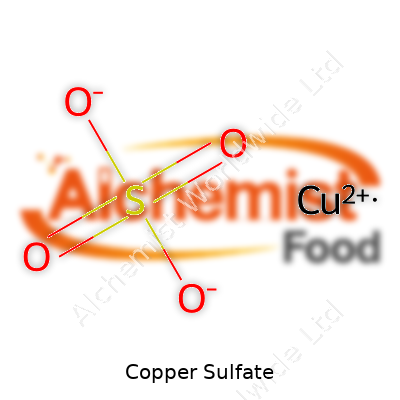
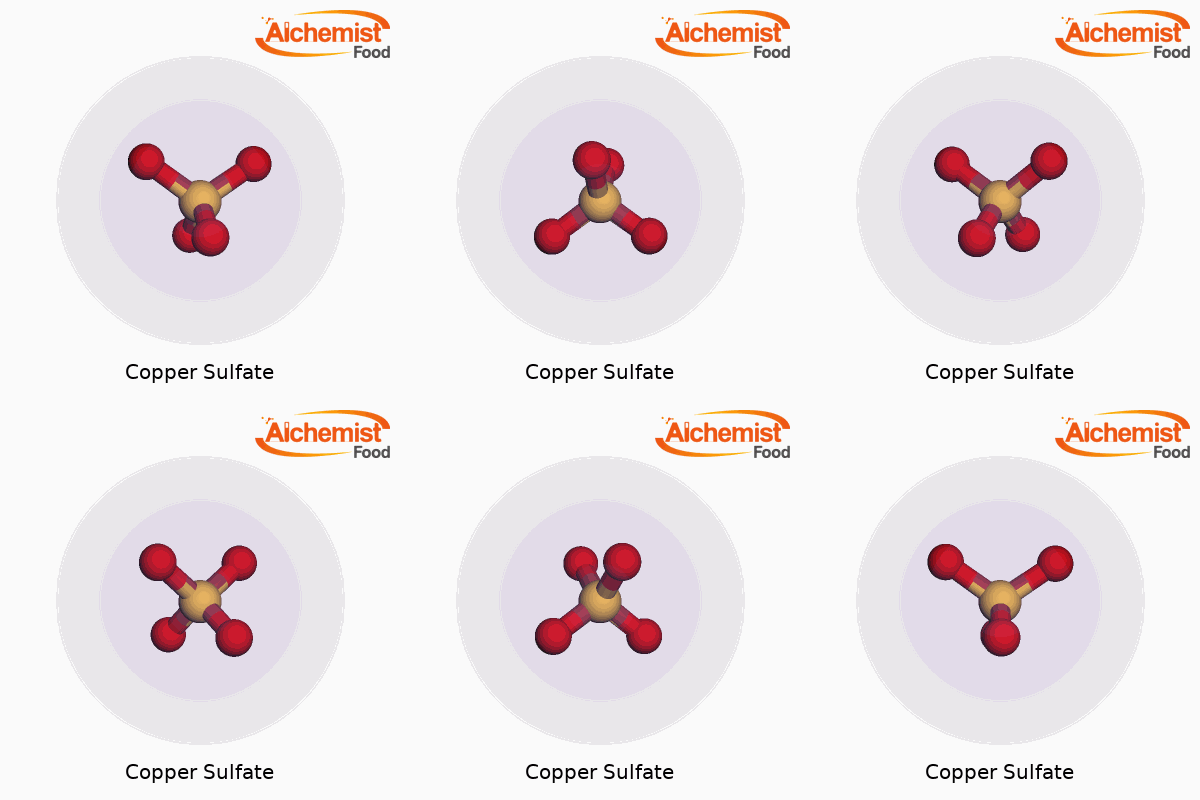
| Names | |
| Preferred IUPAC name | Copper(II) sulfate |
| Other names |
Blue vitriol Bluestone Cupric sulfate Roman vitriol Copper(II) sulfate |
| Pronunciation | /ˈkɒp.ə ˈsʌl.feɪt/ |
| Preferred IUPAC name | Copper(II) sulfate |
| Other names |
Blue vitriol Cupric sulfate Bluestone Roman vitriol Blue stone |
| Pronunciation | /ˈkɒp.ər ˈsʌl.feɪt/ |
| Identifiers | |
| CAS Number | 7758-98-7 |
| Beilstein Reference | 3589780 |
| ChEBI | CHEBI:31440 |
| ChEMBL | CHEMBL38365 |
| ChemSpider | 21510 |
| DrugBank | DB01318 |
| ECHA InfoCard | 03c94a2a-bfc5-4b31-b7a2-0bb9fc4b7d85 |
| EC Number | 231-847-6 |
| Gmelin Reference | 1528 |
| KEGG | C00380 |
| MeSH | D003637 |
| PubChem CID | 24462 |
| RTECS number | GL8900000 |
| UNII | 45L36502HI |
| UN number | UN3077 |
| CAS Number | 7758-98-7 |
| Beilstein Reference | 3539142 |
| ChEBI | CHEBI:31440 |
| ChEMBL | CHEMBL1351 |
| ChemSpider | 21360876 |
| DrugBank | DB03606 |
| ECHA InfoCard | 100.028.260 |
| EC Number | 231-847-6 |
| Gmelin Reference | 811 |
| KEGG | C00212 |
| MeSH | D003670 |
| PubChem CID | 24462 |
| RTECS number | GL8900000 |
| UNII | L0G26O6Y4G |
| UN number | UN3077 |
| Properties | |
| Chemical formula | CuSO4 |
| Molar mass | 159.61 g/mol |
| Appearance | Blue crystalline solid |
| Odor | Odorless |
| Density | 2.284 g/cm³ |
| Solubility in water | 320 g/L (20 °C) |
| log P | -2.3 |
| Vapor pressure | Negligible |
| Acidity (pKa) | ~2.0 |
| Basicity (pKb) | 6.37 |
| Magnetic susceptibility (χ) | +53.6·10⁻⁶ cm³/mol |
| Refractive index (nD) | 1.514 |
| Dipole moment | 4.12 D |
| Chemical formula | CuSO4 |
| Molar mass | 159.609 g/mol |
| Appearance | Blue crystalline solid |
| Odor | Odorless |
| Density | 2.284 g/cm³ |
| Solubility in water | 320 g/L (20 °C) |
| log P | 1.3 |
| Vapor pressure | Negligible |
| Acidity (pKa) | ~2.0 |
| Basicity (pKb) | 6.37 |
| Magnetic susceptibility (χ) | +53.1·10⁻⁶ cm³/mol |
| Refractive index (nD) | 1.514 |
| Dipole moment | 1.53 D |
| Thermochemistry | |
| Std molar entropy (S⦵298) | 119.5 J·mol⁻¹·K⁻¹ |
| Std enthalpy of formation (ΔfH⦵298) | -769.9 kJ/mol |
| Std enthalpy of combustion (ΔcH⦵298) | No value. |
| Std molar entropy (S⦵298) | 110.4 J·mol⁻¹·K⁻¹ |
| Std enthalpy of formation (ΔfH⦵298) | -771 kJ/mol |
| Std enthalpy of combustion (ΔcH⦵298) | No data |
| Pharmacology | |
| ATC code | A12CB02 |
| ATC code | A06AD01 |
| Hazards | |
| Main hazards | Toxic if swallowed, causes skin and eye irritation, harmful to aquatic life with long lasting effects |
| GHS labelling | GHS07, GHS09 |
| Pictograms | GHS05,GHS07,GHS09 |
| Signal word | Danger |
| Hazard statements | H302, H315, H319, H410 |
| Precautionary statements | P264, P270, P273, P280, P301+P312, P302+P352, P305+P351+P338, P330, P337+P313, P391, P501 |
| NFPA 704 (fire diamond) | 2-2-3-OX |
| Lethal dose or concentration | Oral rat LD50 = 300 mg/kg |
| LD50 (median dose) | LD50 (median dose): 300 mg/kg (oral, rat) |
| NIOSH | GN6190000 |
| PEL (Permissible) | PEL: 1 mg/m³ |
| REL (Recommended) | 0.1% |
| IDLH (Immediate danger) | 100 mg/m3 |
| Main hazards | Toxic if swallowed, harmful if inhaled, causes skin and eye irritation, dangerous to aquatic life. |
| GHS labelling | GHS05, GHS07, GHS09 |
| Pictograms | GHS05,GHS07,GHS09 |
| Signal word | Danger |
| Hazard statements | H302, H315, H319, H410 |
| Precautionary statements | P264, P270, P273, P280, P301+P312, P302+P352, P305+P351+P338, P330, P337+P313, P501 |
| NFPA 704 (fire diamond) | 2-2-2 Acid |
| Lethal dose or concentration | LD50 (oral, rat): 300 mg/kg |
| LD50 (median dose) | 300 mg/kg |
| NIOSH | T6000 |
| PEL (Permissible) | PEL (Permissible Exposure Limit) for Copper Sulfate: **1 mg/m³ (as Copper, dusts and mists)** |
| REL (Recommended) | 4 kg/acre |
| IDLH (Immediate danger) | CuSO4: 100 mg/m3 |
| Related compounds | |
| Related compounds |
Copper(II) chloride Copper(II) nitrate Copper(II) carbonate Copper(II) oxide Copper(I) sulfate |
| Related compounds |
Copper(II) nitrate Copper(II) chloride Copper(II) carbonate Copper(II) oxide Copper(I) sulfate Iron(II) sulfate |



