Cis-11-Eicosenoic Acid Methyl Ester: A Closer Look at Development, Properties, and Possibilities
Historical Development
Cis-11-Eicosenoic Acid Methyl Ester didn’t just appear by chance in laboratories; its story follows the rise of industrial biochemistry and a growing curiosity about essential fatty acids from both plants and animal sources. For generations, chemists working in natural product extraction noticed a variety of long-chain monoenoic acids while analyzing fats and oils. In the 1950s and 1960s, improved gas chromatography and mass spectrometry revealed more details about minor components in waxy seed oils, including the eicosenoic acids. Early analytical challenges included separating isomers and refining methylation techniques for more precise identification. Researchers studying jojoba oil and rape seed oil found significant quantities of eicosenoic acid derivatives, cementing its place in fatty acid profiling. The methyl ester form became more prominent in industrial and research use once the focus shifted toward more refined and pure chemical feedstocks for specialty applications.
Product Overview
Cis-11-Eicosenoic Acid Methyl Ester carries the legacy of a class of unsaturated fatty acid methyl esters with a twenty-carbon backbone and a single double bond resting at the eleventh carbon. Its role goes beyond serving as a mere analytical standard. Whether it’s being used in lipid research or refining processes, this compound provides a model for characterizing fatty acid methyl esters. Laboratories use its predictable chemical properties to calibrate instruments, while certain industrial players value it in surfactant synthesis, lubricants, and bio-based plastics. Unlike saturated analogs, its unsaturation opens a few more doors for chemical modification and reaction.
Physical & Chemical Properties
Physical and chemical properties often define a substance’s utility. With a molecular formula of C21H40O2 and a molar mass around 324.54 g/mol, Cis-11-Eicosenoic Acid Methyl Ester presents as a colorless to pale yellow liquid at room temperature. Its boiling point hovers just above 200°C at reduced pressure, and it exhibits a relatively low melting point compared with the fully saturated methyl esters. The mono-unsaturated bond imparts a subtler viscosity and reactivity, important for blending, saponification, and polymerization. In the lab, this specific configuration often shows clear peaks under infrared spectroscopy for the methyl ester group and the cis-olefin. Its solubility leans heavily toward most organic solvents, while water shuns it completely.
Technical Specifications & Labeling
Every batch of this ester comes with a certificate of analysis detailing its purity, which usually exceeds 98%, and outlining residual solvent content, water content, and any minor impurities. Reliable labeling includes the precise CAS number and the standardized IUPAC name, sometimes backed with retention time data if destined for analytical calibration. Importantly, suppliers need to include storage instructions because unsaturated methyl esters tend to oxidize if left open to air near heat or sunlight. This becomes especially critical for larger-scale buyers in chemical manufacturing, who require ongoing batch uniformity and chemical traceability.
Preparation Method
Scientists in academic or industrial settings prepare this ester primarily through transesterification. They use high-purity cis-11-eicosenoic acid—usually derived from hydrolysis of natural seed oils like jojoba or meadowfoam—before reacting it with methanol in the presence of an acid or base catalyst. Methanolysis in the presence of sulfuric acid has been the classic laboratory approach, but continuous flow base-catalyzed processes raise yields on an industrial scale. After the reaction, technicians remove excess methanol by distillation, then purify the product using column chromatography or distillation under reduced pressure. Vigilance toward oxygen exclusion stands out as important here, since unwanted side reactions from air exposure produce oxidative byproducts that can taint the product or gum up future chemical processes.
Chemical Reactions & Modifications
Chemists regularly tinker with this methyl ester. They often hydrogenate the double bond to produce its saturated counterpart, methyl eicosanoate, for comparison in property testing or as a way to block unwanted reactivity. The double bond allows for controlled epoxidation, which finds use in making reactive plasticizers or synthetic lubricants. Some research groups target the ester group for hydrolysis, freeing the acid form for further functionalization. Its unique geometry compared to trans- or omega-branched isomers also affects how enzymes in biocatalysis “see” the compound, giving rise to studies on substrate selectivity for engineered lipases or oxidases.
Synonyms & Product Names
Anyone searching for this chemical may encounter a collection of names: methyl cis-11-eicosenoate, methyl gondoate, or even the shorter “C20:1 methyl ester” moniker in fatty acid chemistry circles. Suppliers in Europe frequently use the systematic nomenclature, while North American companies favor the more informal names, sometimes stripping the “cis” and assuming natural configuration. In the world of commodity oils, “gondoic acid methyl ester” also makes an appearance, hinting at the legacy of its isolation from rape and jojoba oils.
Safety & Operational Standards
Safety standards for handling this compound reflect general guidance for fatty acid esters, with a few extra precautions tied to its unsaturation. Direct contact with skin rarely causes more than mild discomfort, but inhalation of heated vapors can irritate respiratory passages. Workers need well-ventilated areas during large-scale processing. Reports indicate its flash point sits high enough for routine laboratory bench work, but bulk storage still calls for anti-static control and away-from-sources-of-ignition policies. Personal experience in synthetic labs pointed out that, while most esters don’t send up red flags for acute toxicity, sloppiness with glassware handling or open flames near volatile solvent residues should never become the norm. Companies follow strict GHS labeling, and most transport documents classify it as non-hazardous, yet disciplined housekeeping keeps both product quality and safety levels high.
Application Area
Cis-11-Eicosenoic Acid Methyl Ester finds a home in several fields. Analytical chemists lean on it as a standard for GC analysis of seed oils and fatty acid mixtures. In the lubricants arena, its long chain and single unsaturated bond deliver improved cold flow and oxidative resistance compared to shorter esters, enhancing the stability and performance of niche gear oils and specialty greases. Polymer research sometimes values this molecule for tuning the flexibility and biodegradability of bio-based plastics. Personal care manufacturers use the parent fatty acid or its esters in high-end skincare formulas aimed at mimicking natural skin lipids. R&D teams in surfactants and detergents markets keep an eye out for compounds like this for tailoring mildness and foam profiles. I’ve watched smaller labs experiment with its double bond in advanced synthetic schemes—sometimes as an intermediate to pheromone analogs, sometimes as a scaffold for agrochemical development.
Research & Development
R&D into this compound doesn’t stall at analytical standards. The field now ventures into biocatalytic routes that lower the environmental footprint of its synthesis, replacing harsh acid conditions with engineered enzymes in gentle, water-based media. Researchers probe its role in new lipid-based nanocarriers for drug delivery, seeking advantages in stability and biocompatibility linked to the cis-geometry. Studies in bio-lubricants look at blending strategies, testing oxidative stability and film strength of esters from renewable sources. Universities ramp up efforts to compare the metabolic trends and bioactivity of its acid form with other very long chain monounsaturates, assessing nutritional implications or impacts in metabolic disorders.
Toxicity Research
Toxicity of methyl cis-11-eicosenoate generally lines up with other long-chain methyl esters. Most animal studies point to low acute toxicity; the compound doesn’t bioaccumulate in tissues nor does it show evidence for mutagenicity under typical test conditions. Some occupational safety reports stress the dangers of workplace slips from spilled esters more than acute health events. Allergic reactions are not commonly reported, but routine patch testing in cosmetic applications continues all the same because trace contaminants sometimes tag along from incomplete purification. Researchers still monitor breakdown products for any unexpected toxicity, since the long-chain monoenes, when heavily oxidized, can sometimes form off-flavor aldehydes or peroxides that may irritate eyes and skin.
Future Prospects
Looking ahead, the future for Cis-11-Eicosenoic Acid Methyl Ester rests in both greener process development and wider product innovation. Renewable oils promise cheaper, cleaner starting points, while enzymatic catalysis may trim energy requirements and cut out hazardous reagents. Industries aiming for circularity seek ways to upcycle bio-based methyl esters into functional polymers, surfactants, or performance fluids. Regulatory scrutiny over petrochemical inputs nudges formulators to try more plant-derived compounds, and C20 monoenes catch attention for their balance of lubricity, oxidative stability, and mildness for consumer products. The next wave of research could fuse metabolic engineering—using designer microbes—directly with downstream chemical modification, streamlining everything from field to finished molecule in fewer steps and with less waste. As someone who worked alongside oil chemists and process engineers, it’s clear the demand for specialty esters with unique geometries and purity levels continues to climb, pushing both synthetic approaches and product design toward smarter, cleaner, and more versatile chemistry.
What is Cis-11-Eicosenoic Acid Methyl Ester used for?
Everyday Connections in a Complex World
A lot of folks have never heard of cis-11-eicosenoic acid methyl ester, but touch its influence through products they use daily. This compound steps out of the laboratory and into a string of industries most people rarely think twice about.
The Fatty Acid Methyl Esters Story
Long chain fatty acid methyl esters, like cis-11-eicosenoic, normally come from natural oils such as jojoba or rapeseed. I spent a few years around mid-sized production plants churning out specialty oils for cosmetics and lubricants. The behind-the-scenes chatter rarely touches consumer ears, but this methyl ester shapes product texture and function in quiet but crucial ways.
In the cosmetics world, brands turn to this ester for its silky slip. It spreads evenly, giving lotions and creams that familiar smooth glide. Beauty companies want ingredients with a safety record and a plant-based source—cis-11-eicosenoic acid methyl ester ticks off both. It usually arrives after purification and analysis, signaled by a technical certificate showing purity levels well above 95%. This matters for people worried about contamination, allergens, or unexpected reactions.
Biodegradability and Environmental Impact
One important piece for people who care about the planet: this compound breaks down naturally in the environment. Traditional petroleum-derived lubricants often end up polluting streams or soil. Fatty methyl esters, especially those from sustainable plant sources, leave a much lighter mark. My own experience in evaluating industrial waste flows has shown these bio-based chemicals present fewer headaches at compliance reviews. Regulatory staff breathe a little easier when supply chains lean on renewables.
Applications in Industry and Research
Beyond personal care, cis-11-eicosenoic acid methyl ester finds work in lubricant blends that reduce engine wear and lower emissions. Certain metalworking and hydraulic oils shift toward plant-derived esters for their biodegradability and lubricating quality. My old mechanic friend once swapped out standard fluids in favor of these bio-based blends to avoid groundwater contamination on his rural property. He said his machinery lasted just as long, sometimes longer.
Researchers value this methyl ester as a standard in analytical chemistry. Labs use it to check methods for analyzing fatty acids—important work if you’ve ever wondered what's in your foods or medicines. Without trustworthy reference materials, quality control would be a shot in the dark.
Health and Safety
Safety counts, especially for products touching skin or passing into food chains. Testing, certification, and adherence to current regulations matter here. Companies keep a clear paper trail, and up-to-date health assessments back most long-chain fatty acid methyl esters. Reviews from regulatory bodies, such as the European Chemicals Agency and the US Environmental Protection Agency, help companies and consumers alike judge ingredient safety.
Opportunities and Challenges
Wider use of cis-11-eicosenoic acid methyl ester comes with questions about sourcing. Sustainable supply means monitoring crop impacts and protecting biodiversity. The trick comes in supporting farmers and processors who prioritize land stewardship and fair labor. Transparent supply chains, third-party audits, and clear labeling help everyone along the chain feel more confident.
Cis-11-eicosenoic acid methyl ester is proof that chemistry quietly supports safer, more sustainable choices. By looking closely at where ingredients come from—and where they end up—everyone can play a part in building smarter, greener industries.
What is the purity level of Cis-11-Eicosenoic Acid Methyl Ester?
The Role of Purity in Laboratory and Industrial Work
Purity grabs a lot of attention for molecules in both the research lab and commercial synthesis. Cis-11-Eicosenoic Acid Methyl Ester, a fatty acid methyl ester, doesn’t get to skip rigorous scrutiny. Researchers handling this compound know the purity must hit a high mark—often checked by gas chromatography or liquid chromatography with high sensitivity. Purity typically reaches above 98%, according to major chemical suppliers and recent analytical certifications. Anything less, especially in sensitive applications, can throw results out of whack or gum up reactions.
Behind the Number: What Drives Purity Standards?
Fatty acid methyl esters get used as reference materials for GC standards, lipid profiling, and metabolic research. Sloppy purity, even by small fractions, introduces noise into data folks depend on to make health or food science recommendations. In my experience in an academic chemistry lab, you can’t cut corners. Just a trace of an oxidized fatty acid or leftover solvent jumps out on the readout, muddying progress and burning up both time and resources. Labs rely on certificates of analysis, sometimes even double-check samples with their own GC/MS if the purchase controls critical downstream work.
Purity’s Ripple Down the Supply Chain
Industries banking on cis-11-eicosenoic acid methyl ester in cosmetic ingredients, surface chemistry, or advanced materials production rarely settle for less than 98%. If they did, batches could end up off-spec—color problems in lotions, unpredictable behavior in surfactant blends, or even product recalls. There’s a chain reaction: high purity in raw material builds trust across the manufacturing process and keeps regulatory hassles in check. Several global standards for fatty acid methyl esters—like those from ASTM and ISO—reflect this expectation. They're not arbitrary. Consistency saves millions over years by reducing failed production runs.
Digging Into Common Impurities
Folks who make or analyze this compound often see impurities like trans isomers, short-chain methyl esters, water, and residues from solvents used during synthesis. Not all suppliers maintain the same level of vigilance, so it pays to demand up-to-date analysis sheets and transparent sourcing. Rollouts of new production methods sometimes claim greater than 99% purity, but those numbers require regular revalidation.
What’s Needed to Stay on Track?
As someone who has spent hours troubleshooting unexplained chromatogram peaks, it becomes clear—routine checks for breakdown products, sterol contaminants, and even trace metals found in glassware make or break reliable purity. Automation tools now spot troublemakers at parts-per-million concentrations, yet skilled chemists still play a role, especially when certifying high-stakes lots for clinical or nutritional applications.
Steps Toward Even Tighter Control
Tighter controls come from combining strong supplier quality policies, in-house batched testing, and honest communication with manufacturers. Sharing feedback about real-world results (both good and bad) helps improve sourcing for everyone. Some groups team up with regional certification bodies or academic labs willing to act as independent third parties for purity claims. As demand for this ester grows, these networked approaches reduce risk and boost reliability in diverse applications.
How should Cis-11-Eicosenoic Acid Methyl Ester be stored?
Understanding This Unique Compound
Cis-11-Eicosenoic Acid Methyl Ester doesn’t show up in every lab or industry, but for researchers and manufacturers who handle it, good storage choices make a world of difference. This methyl ester finds uses from biochemistry studies to industrial processes, with a chemical nature that asks for sensible, practical care. Left in the wrong place, it degrades faster, loses consistency, and can even turn into a safety concern. Proper storage helps keep budgets in check, projects on track, and results predictable.
The Real Risks of Sloppy Storage
In my own lab work, I’ve watched reagents lose their integrity from a few avoidable mistakes: sunlight creeping in where it doesn’t belong, caps forgotten after a long day, or temperature swings that encourage unwanted reactions. Cis-11-Eicosenoic Acid Methyl Ester, like many fatty acid derivatives, reacts poorly to heat, air, and light. Exposure shortens its lifespan, sometimes creating unpleasant odors or leaving behind residue. If just one batch goes bad, that means wasted money, lost time, and questionable results.
Supporting Best Storage Practices With Science
Chemical suppliers and regulatory bodies recommend storing many esters, especially those with unsaturated bonds, in cool, dark places. Cis-11-Eicosenoic Acid Methyl Ester should sit tightly sealed, away from heat sources—including sunlight and radiators—and kept in containers made from glass or chemically resistant plastics. Refrigeration at about 2–8°C (more familiar as the standard fridge range) slows down oxidation, keeping the product closer to its original state for months at a time. For longer-term storage, placing the container in a freezer protects it even more, provided it doesn’t freeze and crack its bottle.
Chemists often toss a small packet of desiccant in the storage box, reducing the extra moisture that encourages hydrolysis or promotes the growth of unwanted by-products. I remember one batch stored near a busy sink; humidity warped the wax seal of the cap, and we lost everything inside. That sticky mess taught a lesson money couldn’t replace: don’t underestimate where you leave your bottle.
How to Spot Trouble Fast
No chemical stays perfect forever, but checking the product before use saves bigger headaches. A yellowed or cloudy appearance, a sharp odor, or any sign of separation means it’s past its prime. Review the safety data sheet for extra pointers—manufacturers regularly update guidelines as science finds new hazards or better storage ideas.
Simple Changes That Pay Off
Every staff member who touches Cis-11-Eicosenoic Acid Methyl Ester should get a quick refresher on handling and storage. Use clear labels with storage dates, and rotate inventory so older stocks go to the front. Regular inspections cost less than a ruined batch.
Sharpening up on storage isn’t glamorous, but it protects people, budgets, and results. If something gets unclear—ask a colleague or the supplier. Secure places, cool temperatures, and respect for chemical stability let the compound show its best performance every time.
Is Cis-11-Eicosenoic Acid Methyl Ester available in different quantities?
Understanding What Drives the Demand
Nobody in research, manufacturing, or specialty chemicals likes running out of a chemical halfway through a project. From my own lab days, even a simple change in packaging size could stall everything. Cis-11-Eicosenoic acid methyl ester, a fatty acid methyl ester found in biological studies and niche industries, sometimes pops up on order lists—never the star but rarely missing when precision matters. Folks working with lipids, surfactants, or novel bio-based products often want exact quantities, not just whatever's on the shelf.
Availability and Sizing are About Access, Not Just Bulk
Chemical suppliers do more than ship big barrels. Most companies now listen to labs, startups, and institutions needing anything from a few grams for analytics work to bulk for pilot runs. Walk through any catalog—Sigma, TCI, or Alfa—there’s a drop-down for size selection: 25 mg vials, 1 g containers, 25 or 100 g bottles, liters for more intensive use. No single format fits each project. And from experience, buying too much creates storage problems or wastes budget, so tuning the offer to real-life use makes sense for everyone.
Quality Counts in Every Quantity
It’s easy to assume small packs lack attention to detail, but high-purity fatty acid methyl esters show up in competent research settings, no matter the jar size. Reliable providers keep batch consistency tight, whether it's ten grams or a kilo. That kind of backing keeps projects credible. Labs that invest in traceable origins and certificates test batches regardless of quantity, and the best suppliers welcome those questions, not avoid them. These are the situations where small errors wreck results and force rework nobody budgets for.
Shipping, Handling, and Environmental Pressures
Ordering chemistry in 2024 feels a bit like grocery shopping: you want a reasonable price, the right amount, and no headaches about waste or disposal. Many labs moved toward just-in-time procurement because storage has costs, especially for regulated compounds. Some companies ask for tailor-made pack sizes to avoid waste or limit unused stocks. Chemical safety and environmental conscience matter more now—smaller packages can cut hazardous waste costs when managed thoughtfully. These details save money and avoid regulatory fines, so they’re more than just convenience.
Market Trends and How Buyers Influence Supply
Today’s suppliers track purchasing patterns. Steady interest in custom pack sizes for cis-11-eicosenoic acid methyl ester and similar compounds pushed distributors to offer more choices. Some even accept requests for oddball sizes, adding flexibility labs often need. Institutions collaborating across borders—like in EU-funded projects—select smaller sizes to dodge shipping limits or customs delays. The lesson: pushing for variety delivers better service, opening up new science, and can actually lower long-term costs by cutting wasteful oversupply.
Improving How We Shop for Chemicals
This story is about more than convenience. Responsive chemical distribution boosts research quality, safety, cost management, and team morale. Reliable availability in diverse amounts, from milligrams to liters, keeps experiments moving, lets small startups compete, and supports innovation that depends on tight control over both process and price. For anyone who’s ever been stuck waiting for the right bottle to arrive, this is more than a supply-chain detail—it’s a core part of scientific progress.
What are the main safety precautions when handling Cis-11-Eicosenoic Acid Methyl Ester?
Understanding Real Risks
Anyone who’s spent time in a chemistry lab knows accidents can often happen before you realize it. Cis-11-Eicosenoic Acid Methyl Ester isn’t usually described as "highly hazardous," but that doesn’t make it harmless. As a methyl ester, it can cause skin irritation, eye discomfort, and mild respiratory reactions if handled without a little care. I remember colleagues skipping gloves during routine sample prep, only to regret it after a few itchy rashes and a trip to the wash station. Small exposures add up.
Everyday Protection Practices
Good gloves make a world of difference. Nitrile or neoprene keeps esters like this off your skin. I always double check my gloves are intact—those tiny pinholes you can’t see have a habit of showing up at the worst time. Contamination spreads quick. Even a drip near the keyboard or door handle can turn up as dermatitis later.
Splash goggles do more than keep you out of the ER—they let you go home at the end of your shift without a red eye. I never step near the benchtop without something shielding my face. A few drops on your hands wash off. Anything on your eyes lingers and messes with your day in a way you’ll remember next time.
Ventilation: Don’t Rely on Luck
Esters may not seem volatile at first sniff, but don’t trust your nose. Fume hoods aren’t decoration—they clear away stray vapors. I never use a chemical like this out in the open, especially if I plan to warm it or handle a large batch. Years in the lab taught me that even low-toxicity substances can irritate your airways if you let them linger. Allergies build up over time, leaving you sneezing for weeks.
Labeling and Storage Habits
It only takes one hurried moment to mix up samples or splash a reagent on yourself. I always label bottles with the name, concentration, and the date I opened it. Storing chemicals like Cis-11-Eicosenoic Acid Methyl Ester in a cool, dry chemical cabinet, away from strong oxidizers and acids, avoids unexpected reactions. I’ve heard enough stories about fires and ruined samples from poorly stored organics—no reason to be another cautionary tale.
Dealing with Spills and Accidents
Even careful hands spill sometimes. Small spills clean up best with absorbent pads and a mild solvent, followed by soapy water. Direct skin contact calls for rinsing with plenty of water. If you breathe in fumes or get it in your eyes, don’t argue with the clock—head for fresh air or the eyewash station fast. Reporting accidents to your supervisor isn’t about blame; it keeps everyone in the loop and system improvements in motion. We all forget best practices in the rush; honest reports help everyone stay safer.
Building Smarter Safety Culture
People often think formal training covers it all, but real safety comes from habits. I’ve learned the hard way that sticking to basic steps—gloves, goggles, fume hoods—keeps you working for years instead of sitting out on medical leave. Encouraging labmates to point out risky shortcuts keeps everyone honest. New chemists learn from those of us who’ve dodged close calls. Respect for chemicals like Cis-11-Eicosenoic Acid Methyl Ester isn’t about fear. It’s about trusting that experience, not just data sheets or protocols, helps everyone make it home in one piece.
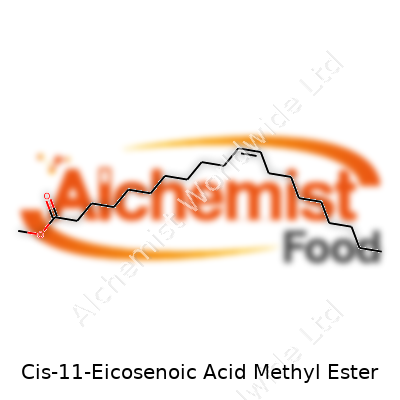
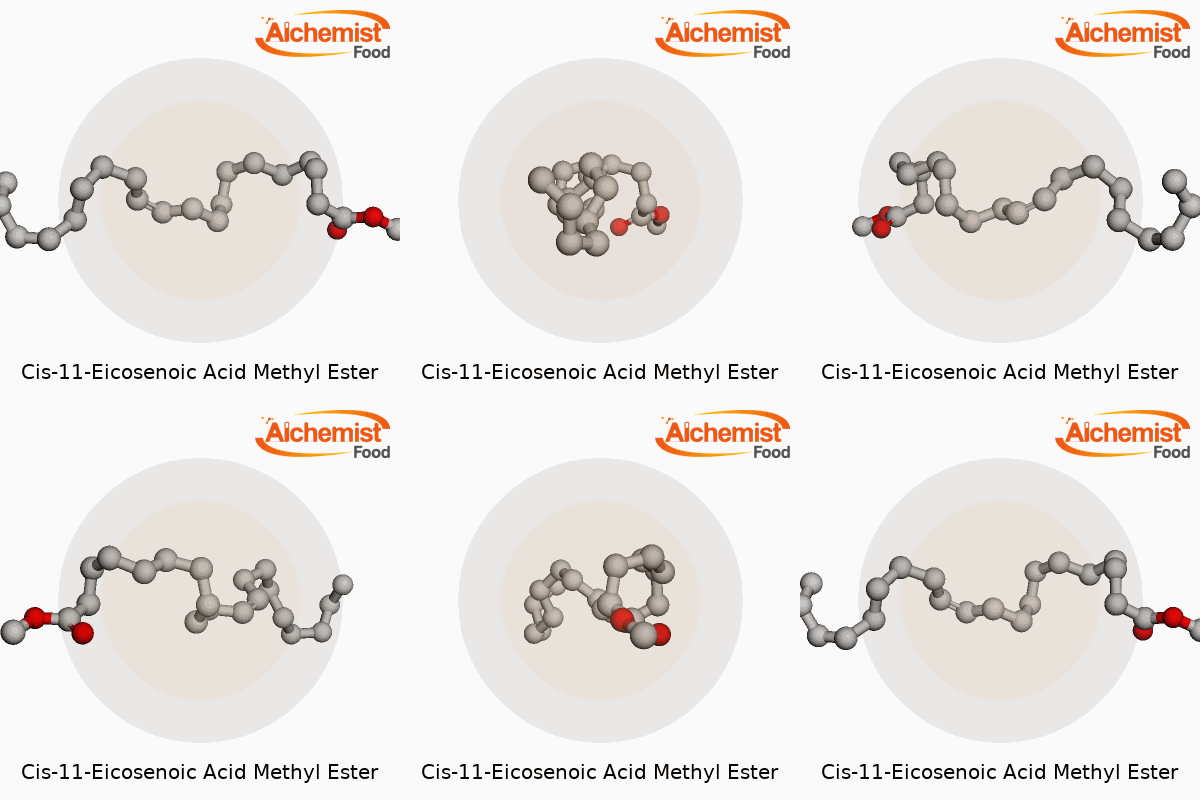
| Names | |
| Preferred IUPAC name | Methyl (11Z)-icos-11-enoate |
| Other names |
Methyl cis-11-eicosenoate Methyl cis-vaccenate Methyl 11-eicosenoate Methyl heneicos-11-enoate |
| Pronunciation | /ˈsɪs ɪˌaɪ.kəˈsiː.noʊ.ɪk ˈæsɪd ˈmiːθəl ˈɛstər/ |
| Preferred IUPAC name | Methyl (11Z)-icos-11-enoate |
| Other names |
Methyl cis-11-eicosenoate Methyl gondoate Methyl gondoic acid Methyl (11Z)-11-eicosenoate |
| Pronunciation | /ˈsɪs ɪˈiːkəˌsiːnoʊɪk ˈæsɪd ˈmiːθəl ˈɛstər/ |
| Identifiers | |
| CAS Number | 28199-50-6 |
| Beilstein Reference | 1612281 |
| ChEBI | CHEBI:53537 |
| ChEMBL | CHEMBL3619067 |
| ChemSpider | 24832477 |
| DrugBank | DB03797 |
| ECHA InfoCard | 100.236.783 |
| EC Number | 262-136-5 |
| Gmelin Reference | 1654964 |
| KEGG | C16340 |
| MeSH | D003354 |
| PubChem CID | 10219453 |
| RTECS number | MD0459600 |
| UNII | 92OG6L647D |
| UN number | Not regulated |
| CompTox Dashboard (EPA) | CCTIS-0093107 |
| CAS Number | [2390-10-3] |
| Beilstein Reference | 1392947 |
| ChEBI | CHEBI:52686 |
| ChEMBL | CHEMBL1502553 |
| ChemSpider | 18706597 |
| DrugBank | DB03255 |
| ECHA InfoCard | 12a65249-a141-46a9-8552-3bac9c0f3c45 |
| EC Number | 298-45-1 |
| Gmelin Reference | 1007748 |
| KEGG | C16533 |
| MeSH | D020947 |
| PubChem CID | 5282996 |
| RTECS number | GU1310000 |
| UNII | Q392Y9IF8V |
| UN number | Not regulated |
| CompTox Dashboard (EPA) | LFC4LJ6A204Y2E-H |
| Properties | |
| Chemical formula | C21H40O2 |
| Molar mass | 324.56 g/mol |
| Appearance | Colorless to pale yellow liquid |
| Density | 0.86 g/mL at 25 °C (lit.) |
| Solubility in water | Insoluble in water |
| log P | 4.88 |
| Vapor pressure | 1.12E-05 mmHg at 25°C |
| Acidity (pKa) | pKa ≈ 4.8 |
| Magnetic susceptibility (χ) | -72.84×10⁻⁶ cm³/mol |
| Refractive index (nD) | 1.4400 |
| Viscosity | 4.7 cP (40°C) |
| Dipole moment | 4.7310 D |
| Chemical formula | C21H40O2 |
| Molar mass | 324.55 g/mol |
| Appearance | Clear colorless to light yellow liquid |
| Odor | Odorless |
| Density | 0.86 g/cm3 |
| Solubility in water | Insoluble in water |
| log P | 7.46 |
| Vapor pressure | 0.0000127 mmHg at 25°C |
| Acidity (pKa) | pKa ≈ 4.8 |
| Magnetic susceptibility (χ) | -94.6×10⁻⁶ cm³/mol |
| Refractive index (nD) | 1.450 |
| Viscosity | 4.870 mPa·s (40°C) |
| Dipole moment | 3.52 D |
| Thermochemistry | |
| Std molar entropy (S⦵298) | 719.6 J·K⁻¹·mol⁻¹ |
| Std enthalpy of formation (ΔfH⦵298) | -237.5 kJ/mol |
| Std enthalpy of combustion (ΔcH⦵298) | -1278.5 kJ/mol |
| Std molar entropy (S⦵298) | 683.4 J/mol·K |
| Std enthalpy of formation (ΔfH⦵298) | -674.6 kJ/mol |
| Std enthalpy of combustion (ΔcH⦵298) | -12969.5 kJ/mol |
| Hazards | |
| Main hazards | Causes skin irritation. Causes serious eye irritation. |
| GHS labelling | GHS07 |
| Pictograms | Health Hazard |
| Signal word | Warning |
| Hazard statements | No Hazard Statements. |
| Precautionary statements | Precautionary statements: P261, P264, P271, P272, P273, P280, P302+P352, P305+P351+P338, P362+P364, P403+P233, P501 |
| NFPA 704 (fire diamond) | 1-1-0 |
| Flash point | > 230 °C |
| Autoignition temperature | 425 °C |
| LD50 (median dose) | LD50: >5000 mg/kg (rat, oral) |
| PEL (Permissible) | Not Established |
| REL (Recommended) | 25mg/100mg/250mg/500mg/1g |
| GHS labelling | GHS labelling of Cis-11-Eicosenoic Acid Methyl Ester: "GHS07: Exclamation Mark |
| Pictograms | InChI=1S/C21H40O2/c1-3-5-7-9-11-13-15-17-19-20-21(23-2)18-16-14-12-10-8-6-4/h3-4,7-8,11-12,15-16H,5-6,9-10,13-14,17-20H2,1-2H3/b4-3- |
| Signal word | Warning |
| Hazard statements | No known hazard statements. |
| Precautionary statements | Precautionary statements: P261, P264, P271, P272, P273, P280, P302+P352, P305+P351+P338, P362+P364, P501 |
| Flash point | > 180°C |
| LD50 (median dose) | LD50: >5000 mg/kg (Oral, Rat) |
| PEL (Permissible) | Not established |
| REL (Recommended) | 10 mg/ml |
| IDLH (Immediate danger) | Unknown |
| Related compounds | |
| Related compounds |
Oleic acid methyl ester Erucic acid methyl ester Petroselinic acid methyl ester Elaidic acid methyl ester Cis-11-Eicosenoic acid |
| Related compounds |
Cis-11-Eicosenoic acid Methyl oleate Methyl erucate Methyl arachidate Methyl linoleate |



