Chromium Propionate: A Down-to-Earth Review
Historical Development
Chromium once drew attention mostly from metalworkers and electroplaters, but the story changed as research in the late 1900s dug up hints that biologically active chromium compounds could improve health, especially in animals. By the 1980s, animal nutritionists started looking closer at chromium propionate because it paired the essential trace mineral with propionate—an organic acid already trusted in animal feeds. The thinking was simple: tie chromium to something safe and familiar. Around 1996, United States regulatory bodies cleared chromium propionate as a feed ingredient, which sparked broader studies and led to widespread commercial adoption, especially among cattle operations hoping for stronger feed efficiency and health.
Product Overview
Chromium propionate usually hits the market as a white to pale gray powder, recognized for its use in livestock feed. Feed mills welcome it for a specific purpose: bridging the chromium gap in rations, especially under stress conditions like transport or heat. Commercial products often standardize content, listing chromium as a percentage so feed formulators can hit recommended levels. Brands differ by purity and guarantees, but their goal stays the same—give livestock enough chromium to optimize glucose use and boost overall health. Most commercial products keep things straightforward by sticking with minimal excipients and focusing on reliability.
Physical & Chemical Properties
Chromium propionate blends chromium with short-chain fatty acids, forming a salt that dissolves easily and handles well in typical feed-mixing equipment. Its molecular structure looks much like propionic acid in cattle preservatives, ensuring quick recognition by those who’ve handled volatile fatty acids in the barn or lab. The powder resists clumping and stands up to humidity if kept in sealed drums. This ease of handling shows up in everyday feed formulation, where consistent distribution trumps fancier chemistry. On the lab bench, you spot it by its melting point and ability to dissolve in water without leaving a gritty mess.
Technical Specifications & Labeling
Manufacturers slap clear labels on chromium propionate, usually showing chromium concentration by weight—often in the 0.04% to 0.80% range, depending on dilution. Common additives include carriers like silicates or cornstarch for better flow. Labels must shout out any non-organic carriers and clear dosing instructions, in keeping with U.S. Food and Drug Administration (FDA) and European Food Safety Authority (EFSA) guidelines for feed additives. Storage instructions stress cool, dry, and sealed—the stuff keeps best out of sunlight and away from moisture, much like any stable trace mineral supplement.
Preparation Method
Producers make chromium propionate in a straightforward reaction between a chromium salt—like chromium chloride or sulfate—and propionic acid in water. The reaction goes quickly at moderate temperatures, with sodium hydroxide or similar bases added to reach the desired pH and drive salt formation. Afterwards, manufacturers filter and dry the product by spraying or vacuuming off moisture. This low-tech production avoids risky solvents and fits inside typical industrial feed additive plants, making it cheaper and safer for long-term supply contracts.
Chemical Reactions & Modifications
The chemistry behind chromium propionate stays pretty tame compared to big pharma—no wild rearrangements or rare metals. The chromium swaps ligands, bonding with propionate ions thanks to their strong carboxylate hooks. Once it settles into its propionate form, the molecule resists breaking apart in feed but releases chromium ion in the acidic environment of the stomach. Sometimes research groups tweak reaction conditions to control particle size or purity, aiming to fine-tune absorption, but industrial batches rarely stray from the classic method.
Synonyms & Product Names
You might see chromium propionate called by several names—chromium(III) propionate, chromium tripropionate, or even more formal IUPAC labels in scientific articles. In the feed aisle, most bags just say “chromium propionate” with a percentage and brand name. The product sometimes shows a feed registration code or GRAS (Generally Recognized As Safe) status. Synonyms shouldn’t trip up the practiced buyer, but less scrupulous sellers sometimes bundle it under vague “organic chromium” claims, so always look for that propionate tag for assurance.
Safety & Operational Standards
Handling chromium propionate brings fewer headaches than some trace mineral supplements. Its dust profile stays low, and well-sealed packaging reduces exposure risks. Workers rarely see irritation unless they already carry chromium allergies. Governments set strict limits on inclusion rates—often one milligram of chromium per kilogram of complete feed—based on decades of toxicity trials. Plants stick to Good Manufacturing Practices (GMP), monitoring for cross-contamination, shelf-life, and traceability. Most operations work with standard personal protective equipment (PPE): gloves, dust masks, and eye protection. Local and state agencies periodically check compliance, giving end users confidence in feed safety and quality.
Application Area
Livestock production forms the backbone of chromium propionate demand. Feedlots, dairy barns, and poultry houses reach for it under stress conditions—heat waves, heavy lactation, or transportation. Researchers and producers give it credit for more stable blood glucose, higher milk yield, and improved immune response, especially in dairy cows and finishing cattle. Swine herds sometimes see greater lean gain and feed conversion. Nutritionists consider inclusion only where chromium is likely to fall short, sticking close to evidence instead of wild claims. Human food products don’t use chromium propionate, as it hasn’t cleared dietary supplement hurdles. Pet food makers occasionally test it for senior animals.
Research & Development
Chromium research runs deep, stretching from basic animal trials into molecular biochemistry labs. US land-grant colleges and European universities test chromium propionate against old salts and newer chelates, measuring blood markers, weight gain, and immune status. Meta-analyses from groups like the Federation of Animal Science Societies (FASS) show moderate, repeatable improvements in cattle and swine under stress, but benefits wane in less challenging environments. Researchers keep an eye on chromium’s role in insulin signaling, hoping fresh work will fine-tune supplementation during critical production moments. On-farm field trials sometimes reveal bumpy results, a reminder that animal nutrition doesn’t respond as cleanly in messy production environments. Still, the market and grant money seem to favor continued development.
Toxicity Research
Long-term studies and acute exposure trials consistently show chromium propionate as safe at recommended inclusion levels. Researchers track tissue chromium deposits and excretion, always watching for telltale signs of kidney or liver stress. Rats and mice dosed at hundreds of times higher than commercial feed rates rarely develop tumors or organ damage. The most common side effects pop up at extreme overfeeding—a scenario unlikely with precise mineral supplementation. Some early toxicology flagged environmental concerns, but chromium(III)—the form in chromium propionate—remains less bioavailable to plants and less toxic than chromium(VI), the notorious carcinogen from industrial waste. Human food safety agencies keep tabs on cumulative exposure, but ordinary feed use poses little risk.
Future Prospects
Chromium propionate’s future ties closely to trends in animal welfare, productivity, and regulatory shifts. Feed companies push for more data linking chromium to disease resistance and environmental sustainability—think of reducing antibiotic use by shoring up natural defenses. New feed technology, like microencapsulation or targeted-release granules, might stretch benefits further by matching chromium release with gut absorption peaks. Some see a path to human nutrition, though regulatory hurdles and consumer skepticism cloud that horizon. As import-export rules grow tighter worldwide, only products with years of solid safety and efficacy data will keep shelf space. Smart team-ups between industry and public researchers can help fill research gaps and fend off regulatory whiplash. Livestock feed will likely remain the mainstay, but savvy companies prepare for technical shifts and evolving consumer demands.
What is Chromium Propionate used for?
Understanding the Purpose in Animal Nutrition
Most people outside the world of animal nutrition probably have never crossed paths with chromium propionate. The truth is, for folks who raise livestock—and for those paying attention to what ends up on the meat counter—it matters more than you'd think.
Chromium propionate works as a nutritional supplement in feed for cattle, swine, and poultry. This compound provides a source of chromium, which plays a role in helping animals get more energy out of the feed they’re given. The FDA approved chromium propionate for use in cattle back in 2009 after careful safety reviews. That’s no small thing, considering the close watch kept over anything that lands in the food supply chain.
Why Chromium? Connecting Diet and Production
Livestock producers turn to feed supplements for the same reason athletes use sports nutrition: they want the best performance possible. Animals have a biological need for very small amounts of chromium. In practice, most diets don’t deliver enough for optimal results, particularly when animals face stress—think abrupt temperature swings, transportation, or increased milk production for dairy cows.
Adding chromium propionate ensures these animals can better regulate blood sugar and use insulin. By doing so, cattle and other meat-producing animals convert feed to muscle more efficiently. A study in the Journal of Dairy Science showed dairy cows produced more milk and handled stress better with chromium supplementation. Reduced stress means fewer health problems, which matters for producers and for anyone concerned with animal welfare.
The Consumer Angle—Why This Should Matter to Everyone
Folks often don’t realize how much nutrition and animal welfare are tied together. When animals make better use of their feed thanks to chromium propionate, producers can use less total feed. This reduces the environmental impact of producing meat and dairy. With feed costs making up the biggest expense on most farms, small changes like this can help keep food prices from climbing even further at the grocery store.
On top of that, healthier animals mean fewer antibiotics. By keeping animals less stressed and more robust, chrome propionate may help push back against the cycle of overusing antibiotics in agriculture. For those worried about antibiotic resistance, this isn’t just a farm issue—it’s public health.
Concerns and Responsible Use
Of course, adding anything new to animal feed deserves scrutiny. While the FDA signs off, ongoing research tracks any signs of chromium buildup in the environment or food products. So far, the main studies haven’t flagged health risks for people eating meat, eggs, or milk from animals receiving chromium propionate.
Producers need to pay attention to dosage guidelines and monitor their results. Oversupplying minerals proves wasteful and can strain budgets, so best practices lean on careful measurements and data from actual farm results. It’s not about a silver bullet, but small adjustments making a big difference.
Looking Forward
Moving forward, increased transparency and more research on nutrition will keep folks from all sides informed. Both producers and the public benefit when animal feed science steps forward, meeting both economic and ethical standards. Chromium propionate is one small cog in a much larger food system—one that needs trust, facts, and open conversation to keep up with the realities facing agriculture today.
Is Chromium Propionate safe for livestock consumption?
Why Chromium Matters for Animals
Every livestock farmer wants healthy animals. Health usually begins in the feed. Producers want gains, solid milk production, and animals that handle stress. Chromium got attention in agricultural circles because it’s involved with how the body uses insulin and deals with stress. More specifically, chromium propionate is the form that the FDA gave the green light to use in cattle feed.
What the Research Shows
Old beliefs about chromium only being a trace element have shifted. More nutritionists point to how diets do not always supply enough for animals under big energy and stress loads, especially during calving, weaning, or shipping. Most research focuses on dairy and beef cattle. Scientists often give a thumbs-up for safety with approved levels. Studies conducted at places like Kansas State and the University of Florida show that supplementing diets with chromium propionate improves glucose metabolism and even sometimes the immune response. Doses tested in these trials stick close to the 0.5 mg elemental chromium per kilogram diet dry matter limit allowed by the FDA. At these dosages, animals show no increase in health problems, no worries about tissue residues, and no difference in how meat or milk tastes or looks.
Producer reports, echoed in peer-reviewed papers, find that cattle don’t shy away from feed when chromium propionate is included, and neither performance nor health suffers at ordinary doses. This isn’t one of those “questionable summertime additives.” Instead, it’s been up for review again and again, and safety data passes muster by both US and European regulators.
Concerns About Overdose
Of course, there’s a line with any feed additive where enough turns to too much. While approved use keeps animals well within the zone of safety, extremely high doses of inorganic chromium can disrupt organ function in other animal species. Chromium propionate carries less risk in this regard, but manufacturers and nutritionists monitor feeding rates all the same—the main risk is from blending errors, not from using the ingredient as directed.
With any supplement, there’s a tendency to chase results by dialing up amounts beyond what’s been tested. Most researchers stress that high-level safety remains unproven and sticking to federally approved inclusion rates protects both animals and the food chain. Residue studies haven’t flagged real issues, which matters for both export certification and consumer confidence.
What Producers Can Do
If you’re a rancher or dairy operator, it makes sense to ask your nutritionist or feed supplier for data. Stick to established inclusion rates. Get your chromium propionate from a trusted source that can back up its claims about quality. Don’t look past withdrawal periods or checkoff records if you market livestock globally, since regulations sometimes vary.
For farms pushing for stronger herd health or better feed efficiency, chromium propionate ranks as a well-studied and generally safe bet. For anyone concerned, the best step always involves working with a knowledgeable nutritionist, reading independent research, and monitoring animal response.
What is the recommended dosage of Chromium Propionate?
What Chromium Propionate Brings to the Table
Chromium propionate comes up regularly during discussions about cattle health and performance. In my time on midwestern beef farms, feed trials often circled back to the right dosing levels for better weight gain or improved feed efficiency. One thing clear from research and on-the-ground experience: even though it isn't a vitamin or mineral in the headlines every day, chromium plays an important role in carbohydrate and fat metabolism in ruminants.
Recommended Dosage in Practice
Looking at FDA guidelines and university extension data, the recommended level for growing beef cattle usually lands around 0.5 milligrams of supplemental chromium per kilogram of complete feed on a dry matter basis. In terms of chromium propionate specifically, that works out to about 200 micrograms of elemental chromium per animal per day for most adult cows, or about 500 mg of chromium propionate per head per day, since the compound itself contains only a fraction of pure chromium.
Some operations feeding growing calves or finishing cattle on high-energy diets stick to this level, but I’ve seen higher doses in controlled research settings—upto 0.5 mg/kg BW—but producers rarely go beyond 0.2 mg/kg BW, if only because more doesn’t seem to bring added benefit and costs go up. Published studies led by the University of Nebraska and Kansas State confirm this range covers both performance gains and animal safety.
Why Stick to Guidelines?
Stories float around about producers doubling up, hoping for faster gains. Experts at land-grant universities have issued reminders that ramping up supplementation above the suggested level brings risks of toxicity, and evidence hasn’t shown bigger gains with bigger doses. Chromium doesn't store well in the body and, in high doses, can start to interfere with rumen fermentation and general metabolism.
Coming back to the boots-on-the-ground experience: cattle stressed under heat or transport might get a bump, but only under the oversight of a nutritionist. Going beyond established recommendations can backfire, and worst case, affect meat quality and animal health. Watching outcome data from steers supplemented at label rates often shows steady, small improvements in average daily gain, but not miracle turnarounds.
Is It the Same for All Cattle?
Dairy herds sometimes lean on chromium propionate when milk yields slip or when cows face freshening stress, but recommended doses stay largely in line with those for beef cattle. The main difference comes from adjusting for body weight, diet type, and lactation stage. Nutritionists often recommend reviewing intake and balancing chromium with the rest of a herd's trace minerals, since other factors like zinc and copper in the total mix can influence absorption.
Practical Solutions for Producers
Those managing feed need to work with updated published research—teams at land-grant colleges have published plenty. Reviewing exact product labels and working with a livestock nutritionist make a real difference, since regulatory limits move as new science emerges. Only sourcing chromium propionate from reputable suppliers helps ensure accuracy and safety.
Safe supplementation happens by weighing feed, tracking dry matter intake, and staying informed about changing herd conditions. At the farm scale, most positive results show up where nutritionists balance out the full ration instead of chasing magic-bullet solutions.
Science and Results
Research still explores how micronutrients like chromium propionate affect animal health, with ongoing work at universities leading the charge. Following regulatory guidance and maintaining regular veterinary oversight safeguard herd health without opening the door to unintended side effects.
Getting the dose right isn’t about pushing for the maximum. Sometimes, it just means sticking with what works, following science, and asking for expert help.
Are there any side effects of using Chromium Propionate in animal feed?
The Science and the Experience
Chromium propionate shows up on the list of feed additives for cattle and poultry more often lately. Some nutritionists point to studies linking it with better weight gain, milk production, and glucose metabolism, largely because chromium helps insulin do its job. That can be a big deal on a farm where feed costs and animal health steer the bottom line.
But quality feed isn’t just about boosting productivity. Long-term animal health matters just as much. I’ve seen ranchers and veterinarians wrestle with something new that looks promising but want straight talk about risk as well as reward.
Looking at Side Effects and Safety Questions
A lot of research since the late 1990s tracks side effects in cattle and poultry fed chromium propionate. The FDA approved it in 2009 for beef cattle, with later approvals for dairy cattle. Those decisions relied on studies where animals didn’t show toxic effects at recommended doses. Feed containing chromium propionate hasn’t produced the kind of residue in tissue that would end up in meat or milk. That’s key, considering consumer trust rides partly on what lands on the dinner plate.
Still, not every concern gets solved in a trial or two. Some researchers question the long-term impact of trace mineral supplements in general. Trace minerals work in very small doses, so more isn’t always better. Chromium propionate has a low margin of safety if someone accidentally adds too much to a ration. The FDA sets clear limits: more than 0.50 mg of chromium per kilogram of total diet isn’t allowed. Overshooting that can upset mineral balance and may show up in animal stress rather than outright illness. If you’ve ever had cattle “go off feed” or seen dairy cows slow to recover from calving stress, you know subtle imbalances can play out in hidden ways—not just headline-grabbing incidents of toxicity.
Why This Matters on Real Farms
Feeding decisions aren’t made in a lab. Like a lot of producers, I’ve watched the push for higher yields and efficiency fuel interest in feed additives. Some neighbors swear by the performance bump after adopting chromium propionate. Still, regulation only covers so much. What happens if a feed mill mixes batches wrong or farm hands miscalculate supplements? Repeat mistakes and minor overdoses can go unnoticed until animals start losing appetite, dropping weight, or seem restless. Not all issues will show up right away.
There’s also the question of what happens in ecosystems long-term. Excreted minerals, even in small quantities, can build up. Soil and water contamination is a concern—especially near concentrated feeding operations. Chromium itself, depending on its chemical form, can be harmless or dangerous. Chromium propionate is one of the safer types, but it takes careful management and honest communication across the supply chain to stop mistakes.
Practical Solutions
Solutions start with feed mixing protocols that everyone on the farm understands and follows. Never assume a supplement is “just a vitamin.” Use certified premixes from trusted sources. Watch for signs of stress, poor feed conversion, or shift in milk output after changes in mineral programs. Vet input is more valuable than ever, not just for treating illness but for catching early signs of imbalance. Regular feed analysis, batch checks, and water quality testing catch problems before they spread. Farm-level records supply the trail needed to trace back issues.
Daily work on the farm keeps showing that animal nutrition isn’t a guessing game. New feed additives, even ones that show safe records in trials, should always be introduced with care. If chromium propionate helps boost health or production, great. Just don’t lose sight of the small risks that grow if vigilance slips.
How does Chromium Propionate improve animal performance?
Why Chromium Matters on the Farm
Healthy livestock show in the numbers. Feed to weight gain, reproductive success, and resilience during stress all come down to how well those animals use what they eat. Trace minerals often get overlooked in feed discussions, yet missing out on one can throw off the whole system. Chromium sits near the top of that list because it directly connects with how animals manage sugar and energy. You can see its impact daily—cows handle hot summers better and pigs put on muscle with less feed.
Science at the Feeder: What Chromium Propionate Does
Chromium propionate stands out because it feeds directly into an animal’s insulin system. Insulin’s the hormone that gets nutrients across cell walls and drives growth. Animals facing heat, overcrowding, or poor feed quality often end up insulin-resistant. Energy and sugar pool in the blood instead of rebuilding tissue or powering growth. Chromium bridges that gap. Dairy herds on well-formulated diets with chromium propionate produce more milk, partly because those cows break down less fat for energy and keep their blood sugar balanced. Research from USDA and land-grant universities shows that beef cattle see a 2–4% bump in daily gain with chromium. In broilers and swine, you’ll spot similar numbers, particularly if those animals face daily stress.
The Real-World Challenge: Stress and Productivity
Walking through a commercial barn or pasture, you can see stressors everywhere: moving to new pens, summer heat, high densities, and changes in feed. All those hit the animal’s system and slow down growth. Stress hormones block insulin and lock away energy. Chromium propionate helps break that lock, letting insulin work as intended. This means improved feed conversion and more eggs, milk, or meat despite tough conditions. Actual farm trials echo this—the months I’ve spent with nutritionists and veterinarians boil down to this: healthy animals bounce back quicker and waste less.
Food Safety and People: Keeping Meat and Milk Clean
Consumers want food that’s safe and traceable. Chromium propionate wins points there. Federal regulations only allow forms of chromium proven safe, so livestock receive tiny but effective amounts. Milk and meat from supplemented animals end up containing barely more chromium than the baseline, usually well below any food safety risk. This comes from years of residue monitoring by groups like the FDA and EFSA.
Looking Ahead: Smarter Nutrition
Just pouring in more feed isn’t smart or sustainable. As feed costs climb, every ounce of extra gain counts. Penciling out the budget, producers watch anything that stretches their dollar without extra waste or risk. Chromium propionate fits the bill because you only need a few milligrams per head to see a return. Tech improvements in feed processing have made it simple to mix and stable during long-term storage. To avoid mistakes, nutritionists suggest close monitoring and keeping all feed records clean.
Room for Growth
As more farms switch to precision nutrition, chromium propionate becomes an easy addition. It doesn’t take much space in the feed bin, yet the returns stretch across the barn—from the young stock all the way to market-weight animals. My experience tells me livestock thrive best when their nutrition matches daily hurdles. Paying attention to trace minerals makes that possible.
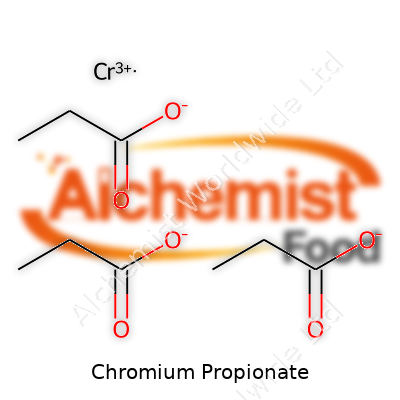
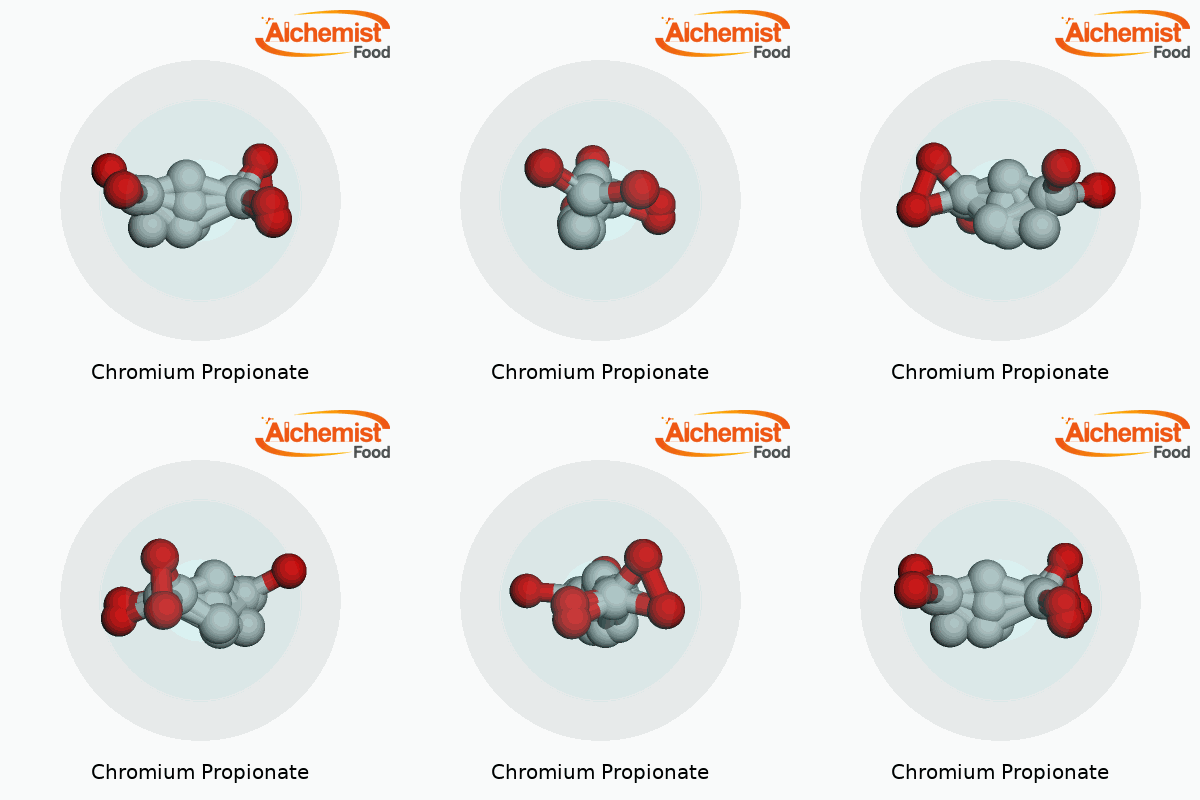
| Names | |
| Preferred IUPAC name | chromium(3+) propionate |
| Other names |
Chromium(III) propionate Chromium tripropionate |
| Pronunciation | /ˈkroʊ.mi.əm proʊˈpaɪ.ə.neɪt/ |
| Preferred IUPAC name | chromium(3+) propanoate |
| Other names |
Chromium(III) propionate Chromium propanoate |
| Pronunciation | /ˈkroʊmiəm proʊˈpaɪəneɪt/ |
| Identifiers | |
| CAS Number | 207996-45-6 |
| Beilstein Reference | 3599363 |
| ChEBI | CHEBI:86456 |
| ChEMBL | CHEMBL1626615 |
| ChemSpider | 62992 |
| DrugBank | DB11155 |
| ECHA InfoCard | ECHA InfoCard: 100002014742 |
| EC Number | 3b603 |
| Gmelin Reference | 71477 |
| KEGG | C18643 |
| MeSH | D000601 |
| PubChem CID | 166873 |
| RTECS number | GF8590000 |
| UNII | 6M6PQ3UK6F |
| UN number | UN3077 |
| CompTox Dashboard (EPA) | DTXSID5020085 |
| CAS Number | 207996-46-9 |
| Beilstein Reference | 1366693 |
| ChEBI | CHEBI:88059 |
| ChEMBL | CHEMBL1201558 |
| ChemSpider | 187462 |
| DrugBank | DB11155 |
| ECHA InfoCard | 100.200.702 |
| EC Number | 3b603 |
| Gmelin Reference | Gmelin Reference: 177076 |
| KEGG | C18636 |
| MeSH | D000602 |
| PubChem CID | 163119 |
| RTECS number | GG0950000 |
| UNII | 5Z6XXX69PW |
| UN number | UN3077 |
| CompTox Dashboard (EPA) | DTXSID7037603 |
| Properties | |
| Chemical formula | Cr(C2H5COO)3 |
| Molar mass | 263.18 g/mol |
| Appearance | Blue-violet powder |
| Odor | Odorless |
| Density | 2.19 g/cm3 |
| Solubility in water | Soluble in water |
| log P | -0.83 |
| Vapor pressure | Negligible |
| Basicity (pKb) | 12.38 |
| Magnetic susceptibility (χ) | +2370.0e-6 cm³/mol |
| Refractive index (nD) | 1.53 |
| Dipole moment | 2.95 D |
| Chemical formula | Cr(C2H5COO)3 |
| Molar mass | 209.15 g/mol |
| Appearance | Blue-violet powder |
| Odor | Odorless |
| Density | 2.0 g/cm³ |
| Solubility in water | Slightly soluble in water |
| log P | -3.79 |
| Vapor pressure | Negligible |
| Basicity (pKb) | 6.72 |
| Magnetic susceptibility (χ) | +1720.0e-6 cm³/mol |
| Refractive index (nD) | 1.529 |
| Dipole moment | 2.06 D |
| Thermochemistry | |
| Std molar entropy (S⦵298) | 202 J·mol⁻¹·K⁻¹ |
| Std molar entropy (S⦵298) | 253.6 J·mol⁻¹·K⁻¹ |
| Std enthalpy of formation (ΔfH⦵298) | ΔfH⦵298 of Chromium Propionate = -1155 kJ/mol |
| Pharmacology | |
| ATC code | A12CC05 |
| ATC code | A16AA15 |
| Hazards | |
| Main hazards | May cause eye, skin, and respiratory tract irritation. |
| GHS labelling | GHS07, Warning, H315, H319, H335, P261, P264, P271, P280, P302+P352, P305+P351+P338, P312, P332+P313, P337+P313, P362+P364 |
| Pictograms | GHS07 |
| Signal word | Warning |
| Hazard statements | H302: Harmful if swallowed. |
| Precautionary statements | P264, P270, P273, P301+P312, P330, P501 |
| NFPA 704 (fire diamond) | 2-1-0 |
| Flash point | > 58 °C |
| Lethal dose or concentration | LD50 (oral, rat): >5,000 mg/kg |
| LD50 (median dose) | 4950 mg/kg |
| NIOSH | NTP |
| PEL (Permissible) | 1 mg Cr/m³ |
| REL (Recommended) | 0.4 mg/kg |
| Main hazards | May cause eye, skin, and respiratory irritation. |
| GHS labelling | GHS07, GHS08 |
| Pictograms | GHS05,GHS07 |
| Signal word | Warning |
| Hazard statements | H317: May cause an allergic skin reaction. |
| Precautionary statements | P261, P264, P270, P271, P272, P280, P301+P312, P302+P352, P304+P340, P305+P351+P338, P308+P313, P312, P321, P330, P332+P313, P333+P313, P337+P313, P362+P364, P403+P233, P405, P501 |
| Flash point | > 100 °C |
| Lethal dose or concentration | LD50 Oral Rat: 2000 mg/kg |
| LD50 (median dose) | LD50 (median dose): Oral-rat LD50: 5050 mg/kg |
| PEL (Permissible) | 1 mg Cr/m³ |
| REL (Recommended) | 0.40 mg/kg |
| IDLH (Immediate danger) | IDLH: Not listed |
| Related compounds | |
| Related compounds |
Chromium(III) acetate Chromium(III) chloride Chromium(III) oxide Chromium picolinate Chromium nicotinate Chromium(III) sulfate Chromium(III) citrate |
| Related compounds |
Potassium propionate Sodium propionate Calcium propionate |



