Chromium Methionine: Exploring Its Past, Present, and Future
Historical Development
Research into trace mineral supplementation took off in the late 20th century as nutritionists and animal scientists looked for ways to push performance and health in livestock. Chromium’s value in metabolic processes caught attention, but its poor absorption rate from inorganic sources limited impact. That changed when scientists began chelating chromium with organic molecules. Methionine, an essential amino acid, changed the game by forming a stable bond with chromium. Through the 1980s and early 1990s, laboratories worked on processes that could join chromium ions with methionine in a way that held up in the digestive tract. This didn’t just stem from academic curiosity—it came from boots-on-the-ground demand. Producers pushed for improved feed conversion, leaner carcasses, and resilience under stress. By bringing an organic chromium source to the table, the industry got something with both science and practicality behind it.
Product Overview
Chromium methionine belongs to a family of chelated trace minerals, where chromium hooks to methionine to improve its bioavailability. This combination improves the odds that the chromium makes it past the stomach’s acidic environment and actually enters the bloodstream. The product shows up as a fine powder, usually green-grey to light tan. Suppliers tend to standardize chromium content, making the product easier for nutritionists to formulate diets around. Both the animal feed and human supplement markets use chromium methionine blends, targeting different doses based on absorption and goal.
Physical & Chemical Properties
Looking at the physical side, chromium methionine usually presents as a free-flowing powder. It holds up under standard room temperatures, avoiding clumping under dry storage. Its unique bonding gives it greater solubility in water compared to inorganic chromium salts. Chemically, the methionine acts as a ligand, wrapping around chromium ions to form a chelate stable in a range of pH conditions seen in animal guts or mixing tanks. Each molecule contains one atom of trivalent chromium, improving cellular uptake mechanisms. From a manufacturing angle, this property sets the chelate apart from other feed additives.
Technical Specifications & Labeling
Manufacturers specify the chromium content by percentage, often between 0.1% and 0.4%, depending on purity and chelation method. Labels typically display “Chromium as chromium methionine complex,” along with guaranteed analysis for chromium and carrier substances. The inclusion rate for livestock sits in the range of 0.2 to 0.5 mg per kilogram of diet, though human supplement levels land much lower. Packaging must meet international standards, such as those outlined by the Association of American Feed Control Officials (AAFCO) or EFSA in Europe. Consistency drives purchaser decisions; labs use atomic absorption spectroscopy or ICP-MS to verify chromium levels before product release.
Preparation Method
Creating chromium methionine chelate starts with a purified chromium salt, typically chromium chloride or chromium sulfate. This salt mixes with L-methionine under controlled temperature and pH. The mixture reacts, letting methionine’s sulfur and amine groups bind with chromium’s empty orbitals. Using water as a solvent, technicians adjust conditions to maximize binding. Reaction time and thorough mixing ensure full chelation. The resulting solution gets filtered, dried, and pulverized into an even powder for storage and shipment. Once the batch finishes, chemists run a series of checks to confirm chelation and rule out free chromium or unreacted methionine.
Chemical Reactions & Modifications
The core reaction fuses trivalent chromium with methionine. Chromium’s three positive charges go up against the donor groups in methionine, mostly the amino and carboxyl groups. When conditions line up, these groups create a ring-like structure around chromium. Formulators sometimes alter the ratio of metal to ligand to tweak solubility or stability, especially if the application requires longer shelf-life or exposure to non-ideal mixing conditions. Alternate chelating agents or minor changes in reaction temperature introduce further tweaks, but methionine consistently delivers the right mix of stability and absorption.
Synonyms & Product Names
You’ll spot chromium methionine in literature and on labels as chromium(III)-methionine, chromium methionine chelate, Cr-Met, or chromium-methionine complex. Some proprietary blends tack on branded names, often referencing bioavailability or absorption, but at core the chemistry doesn’t shift much from the standard trivalent chelate. Feed companies may market “chelated chromium” or “organic chromium” without always being clear about the methionine source, so reading the full label remains wise.
Safety & Operational Standards
Every stage from synthesis to storage needs attention to detail. Manufacturers should follow guidelines from GMP and ISO for trace mineral additives. Employees deal with chromium compounds using personal protective equipment, ventilation, dust control, and routine health checks. Product traceability now holds greater weight, especially with mounting interest in animal-origin food safety. Third-party audits and residue testing support compliance with end-market requirements. Any spill or improper disposal brings environmental and regulatory headaches, so batch records and clear protocols keep things running safely.
Application Area
Livestock operations use chromium methionine in feed rations to improve growth rates, reproductive performance, and resilience under heat or disease challenge. Chromium plays a role in insulin function, so adding it to feed can support better glucose metabolism, especially in stressed animals. Swine, dairy cattle, broilers, and breeders all end up as target species. Human supplements market chromium methionine for blood glucose support and metabolic health, though evidence can vary. Some aquaculture farms add it to boost fish health and improve feed efficiency, particularly under high stocking densities.
Research & Development
Academic and commercial labs keep investing time and resources into understanding how organic chromium impacts animal performance. Controlled feeding studies measure weight gain, feed conversion, carcass quality, and stress hormone levels. Trials show that chromium methionine outperforms many inorganic sources, with improved tissue uptake and reduced excretion. Researchers now push deeper into cellular pathways, hoping to uncover how chromium influences gene expression or enzyme activity. Beyond animals, scientists examine the role of chromium in human metabolic disorders, tracking markers like fasting blood glucose and HbA1c. The push for sustainable and efficient animal production keeps this area buzzing with fresh ideas.
Toxicity Research
Safety sits near the top of the agenda. Animal studies flag potential hazards only at dosages far above what practical feeding strategies deliver. Most trials point toward a broad margin of safety for trivalent chromium, the form in chromium methionine. Chronic overexposure doesn’t line up with organ or tissue changes until reaching levels hundreds of times higher than those used on-farm. Regulatory bodies carve out upper limits based on both animal and potential human exposures. Ongoing surveillance and residue testing add reassurance for both producers and consumers.
Future Prospects
Chromium methionine’s strong footing in feed markets looks set to hold, especially as the drive for efficient, lower-impact protein ramps up. Pressure from both regulators and retail buyers for traceability will likely push adoption of new tracking and reporting systems in supply chains. Research continues chasing even tighter chelation and synergy with other nutrients. Human health markets offer room for growth, but demand clear, robust clinical data for widespread acceptance. Looking ahead, expect technology-driven refinements—smarter mixing, targeted delivery, and next-generation chelates that fine-tune mineral supply down to the cellular level. In a world hungry for both performance and transparency, chromium methionine stands out as an ingredient with a solid backstory and room for innovation.
What is Chromium Methionine used for?
Digging into the Basics
Chromium methionine isn’t a headline-grabber, but it deserves attention in agriculture, especially where animal health and production are central concerns. The combination of the essential trace mineral chromium and the amino acid methionine leads to a supplement found in feed for livestock and sometimes pets. Many overlook trace minerals in the feed industry, focusing on protein or energy. But missing micronutrients can undo the best feeding plans or leave animals performing below their genetic potential.
What Chromium Methionine Does for Animals
Adding this compound to diets supports the metabolism of carbohydrates, fats, and proteins. It helps animals respond better to insulin, making feed conversion more efficient. Cattle and poultry producers in particular use chromium methionine to improve growth rates, reproductive performance, and stress resistance. Farms often notice stronger immunity in herds or flocks on diets that include it.
In hotter months, animals show stress through a drop in feed intake or reproductive setbacks. Feed suppliers often recommend chromium methionine because research has shown that it can help buffer those stressors. Dairy cows start milking sooner after giving birth, and pigs in finishing barns gain more efficiently, as university studies in the U.S. and Europe demonstrate. In my own family’s small cattle operation, supplements with chromium methionine led to steadier gains during stressful transition periods when calves moved from pasture to pens.
The Science and Regulation Side
Years of research back the benefits of chromium in animal diets, but absorption defines the game. Chromium on its own does not get absorbed well in the gut. Once it’s combined with methionine, the body handles it better, so less of the mineral is wasted. Regulatory agencies in the U.S., Canada, and Europe have approved certain forms for animal feeds after safety evaluations.
One review published in the Journal of Dairy Science found that cows given chromium methionine showed improved milk yield and conception rates under stress. Another study in the Journal of Animal Science noted heavier pigs at market weight. Not every study finds a dramatic effect, but the overall trend points toward more resilient, healthier animals. That means more profit and less loss for producers in a tough global market.
Challenges and Pathways Forward
Adopting new nutrition strategies takes more than proven science. Farmers face pressure from feed costs, shifting market demands, and skepticism about additives. Some producers recall older feed myths—like thinking trace minerals have little impact, or that feeding more is always better. Education plays a role, and so does the reputation of suppliers. Being transparent about sourcing, testing, and benefits makes the difference. Feed companies that provide simple, clear information backed by data win trust.
One solution: assess mineral status in herds and flocks before adding supplements. Nutritionists working alongside producers can tailor diets, using blood or tissue tests to avoid both deficiencies and excesses. Smarter, data-driven nutrition brings out real benefits from modern feed ingredients like chromium methionine, delivering results farmers can see in the barn or pasture.
How does Chromium Methionine differ from other chromium supplements?
Understanding the Role of Chromium
Most folks reach for a mineral supplement hoping for steady blood sugar, better energy, maybe even a bit of weight support. Chromium gets a lot of headlines in that regard. You’ll see bottles labeled “chromium picolinate,” “chromium chloride,” or—if you hit the feed store or talk to a livestock producer—“chromium methionine.” These names aren’t just marketing fluff. The form of chromium you swallow plays a real role in how your body handles it.
The Difference in Absorption
I learned quickly, working alongside nutrition consultants for dairy producers, that not all minerals are equal. The key question always comes down to absorption. If your body can’t grab chromium out of your gut and move it into your bloodstream, it doesn’t matter what form it’s in—the benefit gets lost. Chromium methionine stands out because of the way it binds chromium with the amino acid methionine. This chelated bond seems to help transport chromium across the gut wall much better than inorganic forms or simple salts, like chromium chloride.
Researchers have found that the body recognizes this bonded form a bit like food. The intestine treats the methionine part as a nutrient it already knows how to digest and absorb, taking the chromium along for the ride. A study in the Journal of Nutrition described this exact process, measuring higher chromium levels in the blood after subjects took chromium methionine compared to other forms.
The Question of Safety
Some people get nervous about minerals you find in trace amounts. The body only needs micrograms per day. Too much chromium, especially in less bioavailable forms, risks building up in the wrong places. With chromium methionine, studies have shown that livestock and humans tolerate normal supplementation without trouble. The body takes up what it needs and leaves the rest.
Practical Results
From the farm to the doctor’s office, reports often include steadier blood sugar, better glucose response, and even improved lean muscle mass with chromium methionine. Not everyone experiences dramatic changes, but these results show up enough to catch the attention of nutritionists for both people and animals. Still, it’s not a magic pill. No supplement works alone, and diet always matters more.
Comparing Other Forms
Chromium picolinate became popular back in the 80s and still holds the largest market share. Several studies link it to better blood glucose regulation, but a review in Critical Reviews in Food Science and Nutrition pointed out inconsistent absorption compared to organic, chelated forms. Chromium chloride sits at the lower end—super cheap, but the body hardly accesses it. Independent lab work shows bioavailability as low as two percent—almost a waste of money.
Solutions and Advice
Many people choose a supplement based on cost or whatever’s on the pharmacy shelf. It pays to look past the front label and read the ingredient list closely. Ask a registered dietitian for guidance, especially if you deal with blood sugar swings or are supporting livestock. My own experience reaffirms: chasing absorption and quality, not just a higher dose, brings better long-term health and less waste.
Chromium methionine costs more than its synthetic cousins but gives back more where it matters: absorption, safety, and tangible health benefits. Choosing a well-researched, chelated mineral might not change everything overnight, but it builds a stronger foundation for nutrition—one that any honest farmer, athlete, or health-conscious person can appreciate.
What are the health benefits of taking Chromium Methionine?
Understanding Chromium Methionine
Chromium Methionine often gets tossed around in nutrition circles, but it isn’t just another supplement with hype. This compound brings together chromium, a mineral found in trace amounts in food, and methionine, an essential amino acid. Together, they form a complex recognized for better absorption than basic forms like chromium picolinate or chromium chloride. This combination makes a real difference for absorption in the body, so a person actually gets the chromium where it’s needed.
Supporting Blood Sugar Balance
Plenty of research has drilled into what chromium does for blood sugar management. People living with conditions like insulin resistance and type 2 diabetes have seen moderate improvements in blood sugar control after taking chromium supplements. A meta-analysis in Diabetes Care looked at several studies and found reductions in fasting glucose and hemoglobin A1c with supplemental chromium. By pairing chromium with methionine, which helps keep the mineral stable and more bioavailable, you can get a more consistent effect in daily life. It’s not a cure, but anyone tracking their insulin knows that small improvements help a lot.
Impact on Lipid Profile
Heart health has a close tie with blood sugar, and chromium methionine seems to influence this area, too. Research from a study on adults with high cholesterol showed moderate drops in LDL (the bad cholesterol) and triglycerides after adding chromium methionine to the mix. Raising HDL (good cholesterol) is another possible benefit. These shifts might not sound dramatic, but considering how many people worry about statin side effects, using a micronutrient tool like this can be a practical step. It works best with real food changes—nobody gets a free pass to skip fiber and greens—but it gives another layer of protection with little downside.
Building Muscle and Tackling Fatigue
Chromium plays a role in muscle metabolism, and many athletes turn to it for a reason. The connection between chromium and better carbohydrate use makes it easier to maintain energy during workouts. Some users have reported less fatigue and sharper workouts, although big scientific reviews agree more research needs doing. Still, the risk of harm stays low when people stick to recommended levels.
Mind and Mood—Beyond Blood Sugar
Blood sugar swings aren’t just about numbers—they hit mood and day-to-day functioning, too. Since chromium methionine helps keep glucose in check, many folks describe steadier energy and fewer crashes. Some evidence connects chromium to improved serotonin levels in the brain, which touches on mood and appetite control. A study in the journal Biological Psychiatry found that chromium supplementation helped some adults with mild depression regulate cravings and mood. Anybody who’s wrestled energy swings knows the ripple effect it has on focus, irritability, and motivation.
Choosing and Using Chromium Methionine Responsibly
For those considering this supplement, checking labels for verified sources matters. Look for third-party testing to avoid contamination with heavy metals. The National Institutes of Health recommends adults stay under 1,000 micrograms a day. Too much chromium can mess with kidney or liver health, which is why a chat with a doctor before starting helps. People already on diabetes or cholesterol medications should let their prescribing provider know, as adjustments might be needed with real results.
Building a Health Plan With Science and Common Sense
Chromium methionine offers a smart, evidence-backed option for supporting blood sugar and cholesterol. For people looking to nudge their metabolic health in the right direction, it’s one piece of a bigger health puzzle. A whole-food diet, regular movement, and solid sleep should build the foundation, but smart supplementation brings helpful benefits—with good science and careful use guiding the way.
Are there any side effects or risks associated with Chromium Methionine?
Chromium Methionine and Why People Use It
People who study livestock nutrition have probably come across Chromium Methionine. Nutritionists promote it as a supplement for cattle, pigs, and poultry because they believe it can help animals handle stress, improve growth, and even boost immunity. Many feed companies choose it over other forms of chromium because methionine, an essential amino acid, supposedly helps animals absorb chromium better. Yet, questions about its safety haven’t disappeared just because it sounds more “natural” or bioavailable than older chromium salts.
Understanding the Side Effects
Most of what I’ve learned about chromium in animal and human health comes from reading veterinary reports and agricultural studies. Chromium itself isn’t something animals or people need in huge amounts. Too much of it—no matter the form—can cause problems. Chromium Methionine usually stays within safe limits when added at the levels suggested by animal nutritionists. Few reports in livestock show major side effects. Still, a handful of studies point out some possible trouble.
High doses can hurt kidney or liver function in cattle. Weight gain, diarrhea, and shifts in blood minerals have popped up in research from time to time, but usually at much higher levels than the feed industry recommends. Some concern turns up around young or pregnant animals, whose systems might handle metal supplements differently or be less able to cope if something goes wrong.
Common sense goes a long way. Chromium, in large enough doses, gets toxic; that rule applies to any source, not just Chromium Methionine. Both the European Food Safety Authority and the U.S. Food and Drug Administration limit supplemented doses to parts per million for a reason.
What Science Says About Risks
Health researchers have spent years tracking chromium’s effects—both good and bad. A meta-analysis from the Journal of Dairy Science looked at several controlled feeding trials and didn’t find clear evidence of harm at recommended doses. Still, studies rarely last a full production cycle or go much beyond simple bloodwork, so long-term impacts remain a bit of an open question.
If you search for human data, even less shows up. The human body absorbs and handles chromium differently from a cow or a pig. Eating a steak from a fed animal will not load a person up with dangerous levels, but the lack of direct toxicity research does leave gaps.
Most worrisome toxic effects crop up when animals (or people) get exposed to chromium(III) compounds in massive, uncontrolled quantities or worse, chromium(VI)—a completely different and clearly harmful chemical. That is not a risk with Chromium Methionine using industry standards. Yet the possibility of over-supplementation remains. If someone tries to "supercharge" performance with higher doses, it risks undoing any potential benefit and could lead to the same toxic problems seen with less expensive, older chromium salts.
Keeping Animals and People Safe
Farmers and feed manufacturers hold the most responsibility here. A good feed program starts with following published safety limits. Nutritional consultants need to review diets, run regular health checks, and pay close attention to the latest science. Government agencies set maximum levels for a reason. Laboratories must verify supplement concentrations to avoid accidental overdosing—a lesson the feed industry has learned the hard way in other cases with minerals like copper and selenium.
If you want to strengthen animal health, stick to the guidelines. Cutting corners on cost or aiming for quick results by ramping up supplementation carries more risk than reward. The story of Chromium Methionine highlights an important truth about nutrition: more isn’t always better, and a little bit of oversight keeps both animals and end consumers out of trouble.
What is the recommended dosage for Chromium Methionine?
Why Chromium Methionine Gets Attention
People often turn to trace minerals like chromium methionine for a boost in animal nutrition or to address certain metabolic needs. In livestock, especially cattle and poultry, the goal often centers around getting better feed conversion, immune support, or improving meat quality. Some research even points to chromium’s role in glucose metabolism and stress response in animals. With all that buzz, proper dosage moves to the front of the conversation quickly. As someone who grew up on a small farm, I’ve watched neighbors tinker with supplements, sometimes guessing, sometimes leaning on detailed feed specs.
Recommended Dosage in Animals
Chromium methionine often lands on nutrient lists for livestock, with nutrients tied to very tight limits. The National Research Council (NRC) has put out guidelines for chromium supplementation. For cattle, you might see numbers around 0.2 to 0.5 milligrams of elemental chromium per kilogram of feed dry matter. Poultry diets usually recommend a similar range. Animal nutritionists stick to these benchmarks to stay clear of any toxicity concerns. With dairy cows, bulk of studies suggest anything above 0.5 milligrams per kilogram starts creeping past what’s useful. More is not always better—chromium can build up and cause problems, even though deficiency is rare.
Any time new minerals get tossed into feed, experts encourage regular testing of the total ration. It’s easy to assume factory-made minerals stay stable, but natural variations show up all the time. For farms in my region up north, soil mineral profiles look different every year, so sticking to a cookie-cutter dose rarely holds up season after season.
Use in Human Nutrition
People often ask if these numbers apply to humans. The answer is, not directly. Chromium methionine is sometimes found in dietary supplements advertised for blood sugar control or weight management. The FDA’s recommended dietary allowance (RDA) for chromium in adults sits at 20 to 35 micrograms per day. Supplement formulations go above this, but recent reviews warn against high intakes due to mixed research on benefits and the unknown long-term safety. Too much chromium might stress the kidneys or interfere with iron absorption.
People with diabetes or athletes sometimes experiment with higher doses, hoping for better control over blood sugar. But the consensus in the medical literature comes back—if you already eat a balanced diet, most people get enough. Sticking to product label instructions and asking a healthcare professional makes sense, especially for children, pregnant women, and anyone with kidney conditions.
Practical Challenges
Plenty of feed stores or supplement companies market chromium methionine as a catch-all solution. This feels risky. For farmers juggling feed costs and tight margins, dumping in extra minerals for peace of mind sounds easier than it actually works out. Improper dosing, whether too high or too low, wastes money and can create health problems in animals. In my own experience, relying on independent feed analysis has never failed. Laboratories can check mineral content and help calibrate a diet that makes sense for the season and the local conditions.
On the human side, supplements can fill a gap, but food sources—like whole grains, meats, and green beans—still do the job for most folks. Read product labels with a skeptical eye, and talk to someone trained to interpret your unique situation.
Moving Toward Smarter Supplement Use
Chromium methionine has its place, both for animal and human nutrition. Getting the dose right matters far more than promises on a label. If you’re in animal production, treat regular ration testing as a crucial part of the job. In human nutrition, less is usually more, and your doctor knows best. Quality over quantity wins every time, no matter the supplement.
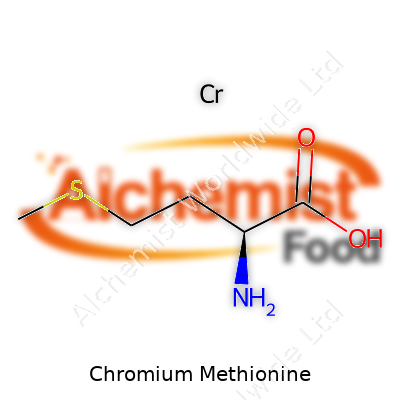
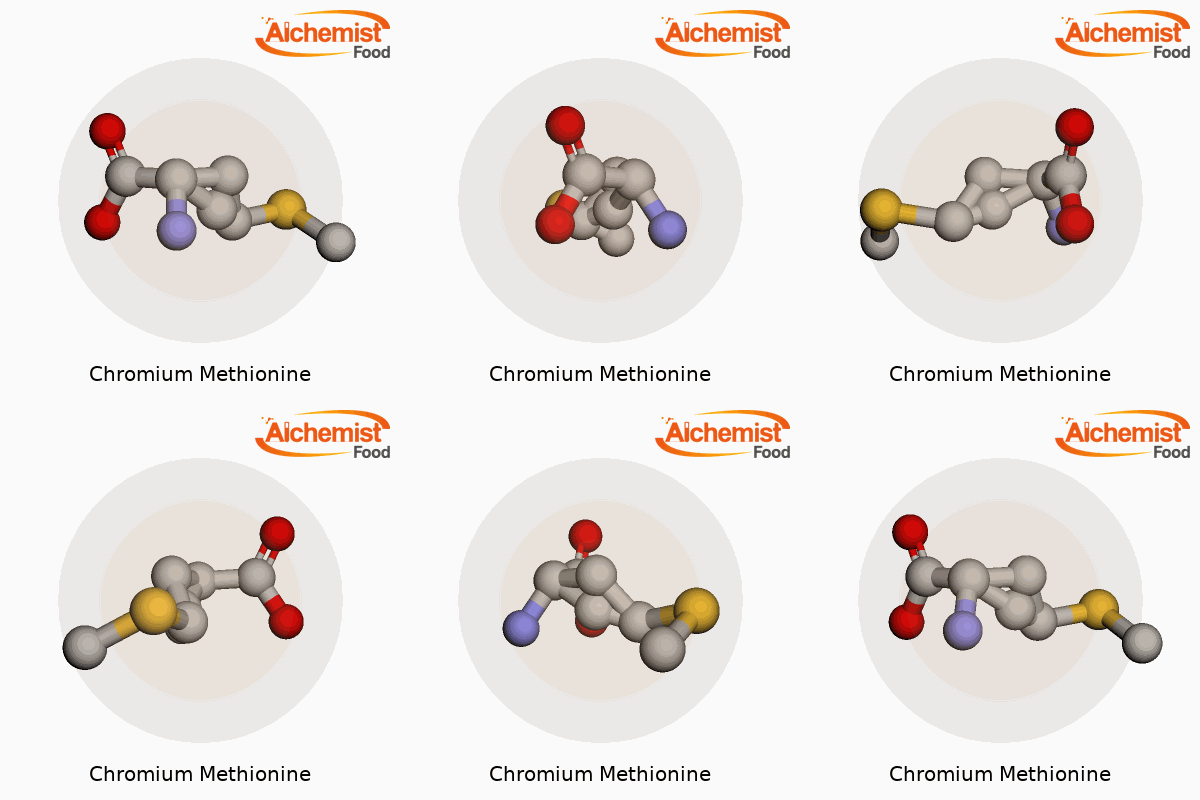
| Names | |
| Preferred IUPAC name | chromium(3+);2-amino-4-(methylsulfanyl)butanoate |
| Other names |
Chromium(III) methioninate Chromium methionine chelate Chromium methionine complex Chromium methionine |
| Pronunciation | /ˌkroʊ.mi.əm məˈθaɪ.oʊ.niːn/ |
| Preferred IUPAC name | Bis(methioninato)chromium(III) |
| Other names |
Chromium methionine chelate Chromium(III) methionine Chromium amino acid chelate Chromium-methionine complex Cr-methionine |
| Pronunciation | /ˈkroʊ.mi.əm mɛˈθaɪ.əˌniːn/ |
| Identifiers | |
| CAS Number | [118926-55-7] |
| Beilstein Reference | 3587182 |
| ChEBI | CHEBI:61413 |
| ChEMBL | CHEMBL613211 |
| ChemSpider | 85796393 |
| DrugBank | DB14536 |
| ECHA InfoCard | 100.202.792 |
| EC Number | 3b607 |
| Gmelin Reference | Gmelin Reference: **147600** |
| KEGG | C22176 |
| MeSH | D014914 |
| PubChem CID | 123208 |
| RTECS number | PR7510000 |
| UNII | 8E2EFB8K2Q |
| UN number | UN3077 |
| CAS Number | [55378-78-6] |
| Beilstein Reference | 3586592 |
| ChEBI | CHEBI:131434 |
| ChEMBL | CHEMBL613881 |
| ChemSpider | 540255 |
| DrugBank | DB11065 |
| ECHA InfoCard | ECHA InfoCard: 100.205.413 |
| EC Number | 3b609 |
| Gmelin Reference | Gmelin Reference: 170929 |
| KEGG | C22190 |
| MeSH | D065470 |
| PubChem CID | 2735136 |
| RTECS number | BP8300000 |
| UNII | 8PRI4XA6XR |
| UN number | UN3077 |
| Properties | |
| Chemical formula | C5H11CrN2O2S |
| Molar mass | 218.28 g/mol |
| Appearance | Light grey to green powder |
| Odor | Odourless |
| Density | 0.5 g/cm3 |
| Solubility in water | Slightly soluble |
| log P | -2.47 |
| Vapor pressure | Negligible |
| Acidity (pKa) | 3.4 |
| Basicity (pKb) | 3.4 |
| Dipole moment | 2.56 D |
| Chemical formula | C5H11CrN2O2S |
| Molar mass | 224.26 g/mol |
| Appearance | Light grey to grey powder |
| Odor | Odorless |
| Density | Density: 0.8 g/cm³ |
| Solubility in water | Slightly soluble |
| log P | -2.44 |
| Acidity (pKa) | ~7.4 |
| Basicity (pKb) | 6.88 |
| Refractive index (nD) | 1.531 |
| Dipole moment | 0.00 D |
| Thermochemistry | |
| Std molar entropy (S⦵298) | 211.6 J·mol⁻¹·K⁻¹ |
| Std molar entropy (S⦵298) | 324 J·mol⁻¹·K⁻¹ |
| Pharmacology | |
| ATC code | A12CC05 |
| ATC code | A12CC06 |
| Hazards | |
| Main hazards | May cause irritation to the eyes, skin, and respiratory tract. Harmful if swallowed. |
| GHS labelling | GHS07, GHS09 |
| Pictograms | GHS07, GHS09 |
| Signal word | Warning |
| Hazard statements | H302: Harmful if swallowed. |
| Precautionary statements | PRECAUTIONARY STATEMENTS: Wash thoroughly after handling. Do not eat, drink or smoke when using this product. |
| NFPA 704 (fire diamond) | 2-0-0 |
| Lethal dose or concentration | LD50 (oral, rat) > 2000 mg/kg |
| LD50 (median dose) | LD50 (median dose): >5000 mg/kg (Rat, oral) |
| PEL (Permissible) | PEL (Permissible Exposure Limit) for Chromium Methionine: 0.5 mg/m³ (as Chromium III) |
| REL (Recommended) | 0.4 mg/kg |
| Main hazards | Harmful if swallowed. Causes serious eye irritation. May cause an allergic skin reaction. Suspected of causing genetic defects. |
| GHS labelling | GHS07, GHS08 |
| Pictograms | GHS07,GHS09 |
| Signal word | Warning |
| Hazard statements | Hazard statements: H317: May cause an allergic skin reaction. |
| Precautionary statements | Keep container tightly closed. Store in a cool, dry place. Avoid contact with eyes, skin, and clothing. Wash thoroughly after handling. Use with adequate ventilation. Do not ingest or inhale. |
| NFPA 704 (fire diamond) | 2-1-0 |
| Lethal dose or concentration | LD50 (oral, rat) > 10000 mg/kg |
| LD50 (median dose) | 5000 mg/kg (rat, oral) |
| NIOSH | Not Listed |
| PEL (Permissible) | PEL: 0.5 mg/m³ |
| REL (Recommended) | 0.2-0.5 mg/kg |
| Related compounds | |
| Related compounds |
Chromium(III) chloride Methionine Chromium picolinate Chromium nicotinate Chromium propionate Chromium yeast |
| Related compounds |
Chromium(III) picolinate Chromium(III) nicotinate Chromium(III) chloride Chromium propionate Chromium yeast |



