Carvacrol: Past, Present, and Future in Science and Industry
Historical Development
People have used thyme and oregano for centuries to ward off infection and flavor food, reaching back to Ancient Greece and Roman times. Carvacrol, the molecule largely responsible for oregano’s punchy aroma, started attracting attention as a separate entity in the late nineteenth century. Researchers isolated it from essential oils, noticing its role behind the antimicrobial actions that folk medicine praised long before laboratories ever proved them. By the mid-20th century, its role as an active ingredient emerged more clearly. The food and pharmaceutical industries began tracking it and exploring ways to draw out its most useful properties. Decades of research piled up, each generation finding new tools to probe its structure and function. Today’s batches can be traced, measured, and tested far beyond anything our ancestors imagined — a far cry from rustic bunches of herbs drying in a sunbeam.
Product Overview
Carvacrol goes by a few different names, including 5-isopropyl-2-methylphenol and cymophenol. To the naked eye, it’s a colorless to pale yellow liquid. Open a bottle and you’ll notice a scent that hammers home Italian cuisine and hints at herbal cleaning products. Modern extraction usually starts with raw oregano, thyme, or savory essential oils, from which carvacrol can be separated in high concentration. Food grade and pharmaceutical grade products both exist, meeting strict requirements for purity and labeling. The food industry values carvacrol for its flavor consistency and food-safety properties, while the pharmaceutical world digs into its spectrum of biological actions. It shows up in everything from chicken feed to antimicrobial coatings and even toothpaste.
Physical & Chemical Properties
At room temperature, carvacrol settles as a slightly oily liquid, sometimes forming crystals if cooled. It melts at around 0°C and boils off near 237°C. Its distinctive spicy, herbal odor comes from its phenolic structure — a single benzene ring with a methyl and an isopropyl group attached. Carvacrol isn’t afraid of a challenge when mixed with other substances: it dissolves well in alcohol and organic solvents, while showing only modest solubility in water. Its chemical resilience under moderate heat lets it survive most food processing steps, yet it still manages to break down in the right environmental conditions so it does not hang around in landfills or waterways for years. On paper, these physical traits often decide whether manufacturers use it as a flavor, an antimicrobial, or a building block for something new.
Technical Specifications & Labeling
Industry and regulators keep close tabs on any chemical going into food or medicine, and carvacrol is no exception. Purity records often boast figures above 98%. Labels include chemical names, batch numbers, country of origin, and the specific ratio of carvacrol to its close cousin, thymol. Some suppliers highlight non-GMO sourcing or organic farming practices. Toxic metals and solvent residues face tight restrictions. Analytical reporting digs into heavy metals, pesticide residues, and even the presence of select allergens that could trigger regulatory headaches down the supply chain. For bulk buyers and food technologists, exact melting points, boiling points, and assay protocols tend to matter more than marketing claims. Few things move forward without a certificate of analysis signed and stamped by accredited labs.
Preparation Method
Most commercially produced carvacrol comes from distilling essential oils of oregano or thyme using steam, then separating out carvacrol with fractional distillation or crystallization. Solvent extraction plays a supporting role depending on target purity and starting material, especially when speed or cost shape decisions. A few chemical synthesis routes exist, usually tapping cymene as a starting point, but natural extraction dominates today’s market thanks to consumer and regulatory pressure. The final liquid often runs through activated carbon filtration and vacuum distillation to hit target purity for medical or food use. Thanks to improvements in column design, large processors extract and refine kilos of carvacrol far faster and with less solvent waste than ever before.
Chemical Reactions & Modifications
Carvacrol’s structure opens the door to useful chemical tweaks and reactions. Its phenolic group stands ready for etherification, esterification, and oxidative coupling. Adding halogens or nitro groups turns plain carvacrol into potential pharmaceutical or agrochemical intermediates. In the lab, mild oxidation can shift carvacrol to carvacrol quinone or related compounds, sparking fresh interest for roles in drug discovery or materials science. Sometimes, hydrogenation leads to reduced derivatives showing different bioactivity. Food technologists experiment with encapsulating carvacrol inside cyclodextrins or liposomes to mask strong flavors or stretch shelf life. Every new twist leads to more data and sometimes a brand new market use, each one tested carefully before real-world rollout.
Synonyms & Product Names
Chemists know carvacrol as 2-methyl-5-isopropylphenol or cymophenol, though product packaging usually just says carvacrol. Older literature sometimes mentions "5-isopropyl-2-methylphenol" or "isothymol." Retail supplements, if using carvacrol, might hide it under “oregano oil extract.” Food grade batches might carry country-of-origin tags like “Turkish oregano carvacrol” or “Greek mountain savory extract.” Pharmaceutical suppliers mark vials with “carvacryl alcohol” or “2-hydroxy-p-cymene.” In all cases, batch information and CAS numbers guide procurement and regulatory reviews.
Safety & Operational Standards
Safety practices have kept pace with carvacrol’s expanding profile. In food, acceptable daily intake values help set dosing for use in flavorings or preservation. Lab and industrial operators usually work with carvacrol inside fume hoods or with gloves, since direct skin contact can irritate sensitive hands and eyes. The US FDA, EFSA, and similar authorities enforce labeling, purity, and maximum residue restrictions for carvacrol in food or feed. Occupational exposure limits exist in the EU and US for bulk handlers, not only to avoid irritation but also repeated low-exposure risks over long years. Companies keep standard operating procedures ready, complete with spill kits and training updates. First aid protocols prepare for accidental skin, eye, or inhalation exposure. No lab or production line skips the safety data sheet.
Application Area
Carvacrol’s resume keeps getting longer. In food, it flavors sausages, baked goods, and savory snacks. It preserves cheese, extends the shelf life of meat, and cuts back on spoilage. Antimicrobial coatings for produce or packaging use carvacrol to slow bacteria and fungi. In animal feed, it bolsters gut health for poultry and swine, offering an alternative to antibiotics. Topical creams and ointments sometimes tap carvacrol for antifungal or anti-inflammatory effects, while some oral healthcare products claim to freshen breath or target bacteria. Some research teams look at its potential in agriculture to keep pests and soil-borne disease under control. Manufacturers of cleaning agents and air fresheners lean into carvacrol’s scent and “natural” positioning to draw the wellness crowd. The list grows each year as more data supports new uses or improved combinations with other functional ingredients.
Research & Development
R&D teams across food science, pharma, and materials engineering pore over carvacrol’s structure and bioactivity. Each new study aims to find safer or more effective delivery systems, target unwanted side effects, and prove bioactivity. Scientists have used nanotechnology and biopolymer encapsulation to regulate carvacrol release, stretch antimicrobial action, and control flavor impact in food or feed. Medical researchers design trials to compare carvacrol’s effects with synthetic antimicrobials, probing health benefits and metabolic fate. Chemists in green manufacturing tinker with biosynthesis and renewable routes to cut down on environmental impact. Researchers test synergistic effects with other essential oil components. High-throughput screening and computational modeling probe proposed targets in cancer, neuroprotection, and metabolic health. Most successes still need large, long-term clinical trials or field tests before full adoption, but promising data keeps the pipeline busy.
Toxicity Research
Decades of animal and cell-based studies, plus monitoring in food and feed, keep a close watch on carvacrol’s safety. At high concentrations it irritates skin and eyes in rabbits and rodents, and inhalation of concentrated vapor can stress respiratory systems. Longer term exposure in animal trials has not raised red flags for major organ damage or cancer risk, though high doses may alter liver enzyme action. Regulatory scientists use this data to set allowable use levels, with built-in safety margins. Food safety reviews track potential metabolites and their toxicity, in line with the tolerances set for human and animal diets. Clinical reports in humans remain rare, thanks to the wide margin between industrial exposure and what consumers or animals get per kilogram of body weight. Reproductive, developmental, and genotoxicity studies continue as market interest grows in supplements and alternate medicine.
Future Prospects
No sign suggests carvacrol’s arc will slow down soon. Antibiotic-free livestock production creates strong demand for natural antimicrobials, and carvacrol leads that pack. Food producers keep searching for ways to nudge shelf life without worrying about resistant bacteria or regulatory whiplash. Medicine looks at carvacrol and its derivatives as templates for new drugs, with special focus on fighting drug-resistant microbes. Agriculture experiments with carvacrol as a more sustainable crop-protection agent. Packaging innovators roll out tests for active materials that release carvacrol vapor on demand to keep food safe longer. Chemists race to leverage green extraction methods, cut down solvent waste, and improve biosynthetic routes from plant tissue culture instead of wild harvests. Long-term, expect to see more from this ancient compound — more studies, more applications, and more debate between natural and synthetic camps about how best to harness its strengths without overreaching on safety promises or sustainability claims.
What is Carvacrol used for?
The Taste of Oregano and Beyond
Most folks recognize carvacrol from the scent and flavor of oregano. This compound packs a punch in Mediterranean food, but its value climbs way past the kitchen. My first brush with it came during a backyard barbecue, when a friend brought her own jar of “oregano oil” to fight off a stubborn cold. I thought it was just folklore, but digging in, I found real science backing up her claim.
Natural Antimicrobial Fighter
Sharp minds in the lab have studied carvacrol for decades. This compound, part of essential oils from oregano and thyme, has real muscle against germs. Tests show it takes down E. coli and Salmonella, both big troublemakers in foodborne illness. The chemical pokes holes in the outer layer of bacteria, causing them to collapse. I worked in a pizza shop once, and the cooks liked to sprinkle extra oregano on fresh pies, partly for flavor but also because their grandmothers swore it kept food fresh longer. Turns out, that tradition has some teeth—studies confirm it helps slow spoilage.
Carvacrol in Health Products
Walk into any health store, and you’ll spot bottles of oregano oil on the shelves. Many people grab these for homemade remedies, hoping to ease sore throats or ward off colds. While carvacrol won’t cure the flu, trials hint at its anti-inflammatory and mild pain-relieving abilities. Some research points to it taming swelling in the body, which would matter for arthritis or muscle strains. I tried an oregano supplement one winter; I’m not selling anything here, just sharing how a week later my sinuses felt clearer. Of course, doctors remind everyone not to toss out proven medicine—carvacrol helps, but it doesn’t replace antibiotics or allergy meds.
Safer Food with Essential Oils
The food industry searches for better ways to keep products fresh without heavy use of synthetic preservatives. Carvacrol steps up as a natural option, often combined with other oils to wash fresh produce or shift into edible films that line deli meats and cheeses. It keeps bread from getting moldy, too. One bakery in the neighborhood tried out these films a few years ago and saw their organic loaves last twice as long. People want fewer chemicals in food, so natural helpers like this get a warm welcome.
Potential in Livestock and Farming
Farmers wrestle with disease in herds, and antibiotic-resistant bacteria add pressure. Some have moved toward natural supplements, like carvacrol, to support animal health and cut the need for medication. Poultry operations blend it into chicken feed, which seems to cut down on digestive illness and boost growth. Science still works to pin down the best ways to use it—no one wants to overdo it and create new problems.
Looking Forward
Carvacrol keeps turning heads in labs and kitchens. Ongoing research challenges scientists to unlock new uses, with a firm eye on safety. One option: more studies on how it acts in combination with other natural compounds. Real answers come only with careful trials and clear guidelines, so consumers know what they’re getting and what to expect. Until then, folks continue to experiment behind home stoves, on farms, and in food plants, all drawn to a simple plant molecule with surprising reach.
Is Carvacrol safe for human consumption?
Experience in Kitchens Gives Clues
Carvacrol comes from oregano oil, and if you’ve tasted pizza or Greek salads, you’ve brushed up against it. Chefs and home cooks rarely think twice about oregano-flavored dishes. I’ve seen countless friends and family use dried oregano straight from the jar to put on roasted vegetables or chicken, and nobody ended up with a problem from those meals. So far, so good at the typical dinner table.
Research Backs Up Common Sense
Food safety groups and researchers have dug into what carvacrol does in the body. The United States Food and Drug Administration lists carvacrol as “Generally Recognized as Safe” (GRAS) for food use, which brings peace of mind. Studies on animals show that taking moderate amounts through the mouth or in mixed foods doesn’t create health issues. Still, scientists raise eyebrows at mega-doses far beyond regular seasoning. Too much of any essential oil—including carvacrol—can lead to upset stomach, burning sensations, or headaches. Some people experience allergic reactions, just like with other intense flavors and oils.
Why Some People Start Adding Carvacrol
Word travels fast when someone calls a kitchen ingredient a “super compound.” Some turn to concentrated forms of oregano oil, seeking relief from coughs, sore throats, or upset stomachs. The urge to try natural options feels familiar, especially in cold and flu season. Studies show carvacrol may fight off certain bacteria and even fungi in test tubes. This gives hope to folks tired of chemicals or worried about antibiotic overuse. Still, the jump from promising lab results to guaranteed, safe cures hasn’t happened yet.
Regulation and Transparency Stay Critical
Buy a bottle of essential oil at a health food store and the label might mention carvacrol, but the percentage varies wildly. Supplement stores rarely offer the strict testing or dosing you find with prescription medication. If a person takes too much, side effects like nausea, dizziness, or allergic rash become real risks. Doctors see these reactions from patients who thought “natural” and “safe” meant the same thing. Mixing concentrated carvacrol with prescription drugs without guidance can mess up your medication or lead to new health problems.
Solutions for Sensible Use
Sticking to amounts found in typical food feels like a safe bet for most people. Reading ingredient labels and checking dosing with health care providers protects from nasty surprises. Pregnant women, children, and folks with known health conditions benefit from extra caution. Only approved and regulated supplements should go in the medicine cabinet, since purity and concentration matter for safety.
Researchers recommend more trials on long-term carvacrol use in people rather than just lab animals or petri dishes. Health agencies update advice as new science rolls in, so paying attention to their announcements makes sense before chasing trends.
Everyday Wisdom About Carvacrol
Carvacrol works fine in oregano-flavored meals and simple home cooking. No harm shows up at those levels in healthy people, according to major food safety groups. Chasing miracle claims with extra-high-dose oils brings extra risk, especially in a world where regulation is spotty and marketing is loud. Sharing information with your doctor and respecting dosage advice gives the best shot at staying healthy while enjoying what’s on the plate.
What are the health benefits of Carvacrol?
Digging Into Carvacrol’s Healing Power
Carvacrol shows up in oregano oil, thyme, and a few other common herbs. If you’ve ever crushed fresh oregano between your fingers, that sharp, almost spicy aroma points you straight to this compound. Many people know oregano as a pizza topping, but in some homes, a small bottle of oregano oil holds a place in the medicine cabinet right next to band-aids and cough drops.
Solid Scientific Backing—Not Just Folk Wisdom
Scientists have paid plenty of attention to carvacrol. Researchers at European universities studied its antimicrobial effects and saw it can help slow bacterial growth, even sometimes fighting off strains that don’t respond to antibiotics. This isn’t magic—carvacrol punches holes in the outer layers of those germs, making it tougher for them to stick around. I remember battling a stubborn case of athlete’s foot in college, and after a string of creams, it was a friend’s suggestion of dabbing diluted oregano oil on the rash that got me some relief. That kind of advice has roots in real research.
Inflammation Doesn’t Stand a Chance
Carvacrol helps with inflammation, too. Researchers at universities in the U.S. and Turkey offered proof with animal studies—mice treated with carvacrol after a lab-induced injury didn’t swell up as badly as others. This helps explain why people struggling with joint soreness or even mild toothaches sometimes reach for herbal remedies containing oregano. My grandmother used to brew oregano tea, pouring it over sore knuckles from a lifetime of working with her hands. Sometimes, the simplest tricks are the most comforting.
Mental Health Gets a Lift
Recent studies link carvacrol to better mood and less anxiety. Researchers found this compound shifts how brains react to stress by increasing levels of dopamine and serotonin. These neurotransmitters aren’t a cure for everything, but anyone coping with burnout knows that every little boost counts. The idea of using plants to help manage mood runs deep in family traditions—passing down simple teas and tinctures that take the edge off a rough day. Today’s science backs up what those old remedies hinted at: sometimes mind and body benefit from the same leafy bottle.
Fighting Cellular Damage
Oxidative stress contributes to disease and aging. Eating a poor diet or living with constant stress means more free radicals in the body, which slowly cause damage. Carvacrol possesses antioxidant abilities, neutralizing some of this harm. Nutrition journals show evidence that carvacrol cuts risk for heart problems by slowing the oxidation of cholesterol and supports healthy cells. In practical terms, this can be another reason to sprinkle real oregano into homemade meals, not just for flavor but also for its quiet protective power.
What’s Next for Carvacrol?
No supplement fixes all health troubles. Getting carvacrol in the diet calls for balance—fresh herbs, thoughtful doses, and common sense. Drug interactions or allergies demand respect, and no bottle from a health store trumps professional advice. The promise of carvacrol keeps growing with new studies. Until more gets confirmed, keeping a spot for oregano in the kitchen and garden stands as one of the simplest steps for natural support. Good health depends on small, steady choices—and a sprinkle of strong-scented, time-tested herbs never hurts.
Are there any side effects of using Carvacrol?
What Happens When People Use Carvacrol?
Carvacrol shows up often in stories about natural remedies. It’s one of the main ingredients in oregano oil and gives that sharp, herbal kick to the scent of Mediterranean cooking. Lots of folks look to it hoping for antibacterial or anti-inflammatory help, but like anything you swallow or rub on your skin, it deserves scrutiny.
Gut Reactions and Digestive Trouble
People who turn to concentrated oregano oil or a carvacrol supplement sometimes get more than they bargained for. One common side effect is digestive upset—things like nausea, stomach pain, or even diarrhea. I’ve tried an oregano oil capsule during cold season myself. Like many who go with herbal solutions, I didn’t expect problems but wound up with an unsettled stomach that lasted an afternoon. Turns out, concentrated plant compounds can be rough on the belly, especially in supplement form.
Allergies and Skin Irritation
Allergies to oregano oil, and by extension carvacrol, do exist. Anyone who’s sensitive to mint family plants needs to stay alert. Topical application sometimes ends in stinging or redness. This isn’t just my story – I’ve seen it in practice on nutrition forums where people reach for homemade remedies and wind up with irritated skin, especially if they don’t dilute these oils.
Possible Interaction With Medications
People who use blood thinners, diabetes drugs, or lithium face real risks mixing botanicals with prescriptions. Carvacrol can affect blood clotting and metabolism. Someone close to me with a clotting disorder mentioned their doctor’s strong warning: any new supplement, especially strong herbal oils, must be cleared first. Bloodwork can go off track, or medication might become less effective or too strong. This isn’t a small issue considering how many try self-medication before talking to a doctor.
Hormonal and Long-Term Concerns
Animal studies hint that at high doses, carvacrol can mess with thyroid hormones. While more research needs to fill in the gaps for people, I don’t see good reason to ignore findings like these. Food isn’t medicine, and concentrated plant chemicals hit harder than seasoning your salad. People love “natural,” but natural doesn’t always mean risk-free. High doses taken repeatedly haven’t been well-studied outside of small experiments.
Quality and Purity Problems
Supplements vary so much in strength and purity. Some show inaccurate labels, so someone might take more than they expect. One quality report published in ConsumerLab tracked several brands and found that some oregano oil capsules contained none of the promised carvacrol—and others packed in amounts way above what’s printed on the bottle. Without verified sources, it’s impossible to judge what’s really going into the body.
Solutions and Smarter Choices
Transparency matters. Any company selling supplements should publish lab tests that show carvacrol content and check for contaminants. Labels need to spell out how much is in there. For people, a good starting point is treating carvacrol more like a strong spice than a cure-all. Before swallowing it or rubbing it on, ask a doctor—especially if you already take other medication or have allergies. Look for brands that submit to third-party testing, and follow the lowest effective dose. Respect for both modern medicine and herbal tradition doesn’t mean taking either lightly.
How should Carvacrol be stored and dosed?
Carvacrol: An Overview from Everyday Experience
Carvacrol often pops up in discussions about plant essential oils, especially oregano and thyme. In kitchens, I’ve dealt with it to test natural cleaning solutions. In labs, I’ve seen it being handled for research into food safety, animal feed, and more. With its sharp scent and potent attributes, the way you store and measure carvacrol seriously affects its strength and shelf life.
Best Storage Practices for Carvacrol
Let’s talk storage. Carvacrol comes in a clear, oily liquid form that reacts badly to heat, light and air. In my experience, storing it in dark, tightly sealed bottles makes sense. Amber or cobalt glass works best because light still sneaks through clear glass. If you use a plastic container, make sure it’s high-density polyethylene, not something that can leach or warp.
The spot you choose matters. Forget windowsills and steamy kitchens. A cool, dry cupboard away from direct sunlight does the trick. If you open a bottle, close it tight right away. Exposure to oxygen can slowly change its makeup and blunt its punch. At home, I check the caps every couple of weeks because even a tiny leak can speed up spoilage.
Don’t stick it in a fridge unless you’re planning to keep it long-term and temperature swing isn’t an issue. Low temps can change the texture and sometimes make it cloudy. In food labs, we keep it at room temperature between 18-22°C (64-72°F), which most homes can match. Proper labeling with purchase date helps track freshness; ideally, use within two years for best results.
Dosing Carvacrol: Getting It Right Without Guesswork
Getting the dose right matters, whether for flavoring or functional uses like animal feed. It’s tempting to eyeball drops, but a kitchen scale that measures down to tenths of a gram gives more consistent results. If you’re dealing with concentrated solutions, even a little too much can overpower a dish or a feed mix.
In food use, regulatory groups like the European Food Safety Authority set intake recommendations based on studies. Safe daily consumption sits around 0.5 mg per kilogram of body weight in humans. Always read product labels, because carvacrol strength in oils can swing wildly. Some oregano extracts hover near 90% carvacrol, others much lower.
For livestock feed, carvacrol often gets blended into premixes. Reliable dosing relies on careful mixing and scaling. I’ve seen farms use pre-measured sachets to avoid slips. For small-batch applications at home—such as cleaning—you might see advice like “add 10 drops per cup of water.” In practice, weighing out 0.05 grams per recipe keeps things consistent and avoids the strong taste or skin irritation that can come from overdoing it.
Handling and Safety Concerns
Pure carvacrol burns if it hits bare skin. I always wear gloves in the lab. If spilled, wipe with an alcohol-dampened cloth and ventilate the space. Cashiers and handlers can build up a skin sensitivity over time, so prudent precautions spare you later trouble. Keep it away from kids and pets—just like any concentrated essential oil.
As a rule from both kitchen and lab life: open, dose, and close. Don’t linger or leave the cap off. That holds for big industrial setups and for a home cook testing out a new blend. Consistent storage and measured dosing deliver the dependable results people look for, both in food and in practical household uses.
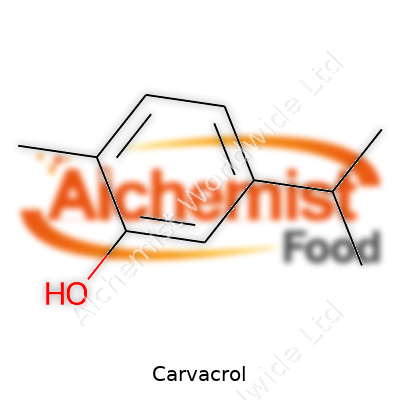
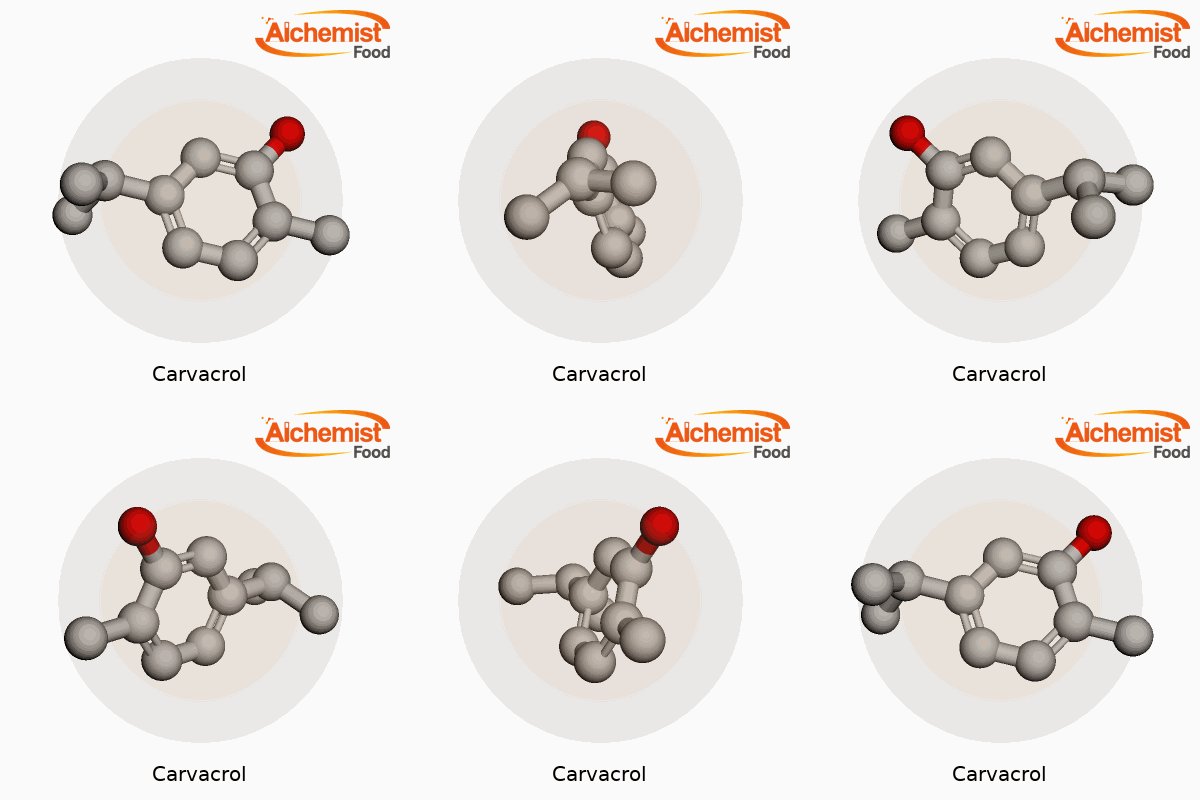
| Names | |
| Preferred IUPAC name | 5-Isopropyl-2-methylphenol |
| Other names |
2-Hydroxy-p-cymene 2-Methyl-5-isopropylphenol Isopropyl-o-cresol |
| Pronunciation | /ˈkɑːrvəkrɒl/ |
| Preferred IUPAC name | 5-Isopropyl-2-methylphenol |
| Other names |
2-Methyl-5-(1-methylethyl)phenol Isopropyl-o-cresol 5-Isopropyl-2-methylphenol |
| Pronunciation | /ˈkɑːrvəkrɒl/ |
| Identifiers | |
| CAS Number | 499-75-2 |
| Beilstein Reference | 471049 |
| ChEBI | CHEBI:25547 |
| ChEMBL | CHEMBL14343 |
| ChemSpider | 5050 |
| DrugBank | DB03482 |
| ECHA InfoCard | 100.063.499 |
| EC Number | EC 201-944-8 |
| Gmelin Reference | 6138 |
| KEGG | C07630 |
| MeSH | D04.210.500.347.205 |
| PubChem CID | 10364 |
| RTECS number | SE5684000 |
| UNII | B5SYR3730P |
| UN number | UN1987 |
| CAS Number | 499-75-2 |
| Beilstein Reference | Beilstein Reference: 1900225 |
| ChEBI | CHEBI:2579 |
| ChEMBL | CHEMBL1631 |
| ChemSpider | 5191 |
| DrugBank | DB02568 |
| ECHA InfoCard | 100.007.732 |
| EC Number | EC 4.2.1.140 |
| Gmelin Reference | 13659 |
| KEGG | C08298 |
| MeSH | D04.210.500.747.091 |
| PubChem CID | 10364 |
| RTECS number | SE5850000 |
| UNII | FST467XQ5N |
| UN number | UN1993 |
| Properties | |
| Chemical formula | C10H14O |
| Molar mass | 150.22 g/mol |
| Appearance | Colorless to pale yellow liquid |
| Odor | Spicy, warm, pungent, herbaceous |
| Density | 0.976 g/mL |
| Solubility in water | 0.11 g/L |
| log P | 3.4 |
| Vapor pressure | 0.08 mmHg (25°C) |
| Acidity (pKa) | 10.0 |
| Basicity (pKb) | 10.47 |
| Magnetic susceptibility (χ) | -73.0·10⁻⁶ cm³/mol |
| Refractive index (nD) | 1.521 |
| Viscosity | 1.07 mPa·s (25 °C) |
| Dipole moment | 2.33 D |
| Chemical formula | C10H14O |
| Molar mass | 150.22 g/mol |
| Appearance | colorless to pale yellow liquid |
| Odor | warm, pungent, thyme-like |
| Density | 0.976 g/mL at 25 °C (lit.) |
| Solubility in water | slightly soluble |
| log P | 3.4 |
| Vapor pressure | 0.02 mmHg (25°C) |
| Acidity (pKa) | 10.0 |
| Basicity (pKb) | 10.41 |
| Magnetic susceptibility (χ) | -77.0e-6 cm³/mol |
| Refractive index (nD) | 1.521 |
| Viscosity | 3.6 cP (20°C) |
| Dipole moment | 2.33 D |
| Thermochemistry | |
| Std molar entropy (S⦵298) | 163.0 J·mol⁻¹·K⁻¹ |
| Std enthalpy of formation (ΔfH⦵298) | -269.0 kJ/mol |
| Std enthalpy of combustion (ΔcH⦵298) | −3257 kJ·mol⁻¹ |
| Std molar entropy (S⦵298) | 176.7 J·mol⁻¹·K⁻¹ |
| Std enthalpy of formation (ΔfH⦵298) | -305.1 kJ/mol |
| Std enthalpy of combustion (ΔcH⦵298) | -3197.0 kJ/mol |
| Pharmacology | |
| ATC code | **'D08AX13'** |
| Hazards | |
| GHS labelling | GHS02, GHS07 |
| Pictograms | GHS07,GHS09 |
| Signal word | Warning |
| Hazard statements | H226, H315, H319, H335 |
| Precautionary statements | P261, P264, P273, P280, P301+P312, P302+P352, P305+P351+P338, P332+P313, P337+P313, P362+P364 |
| NFPA 704 (fire diamond) | 2-2-0 |
| Flash point | 107 °C |
| Autoignition temperature | 530 °C |
| Explosive limits | 1.2–7% |
| Lethal dose or concentration | LD50 (oral, rat): 810 mg/kg |
| LD50 (median dose) | LD50 (median dose) of Carvacrol is "810 mg/kg (rat, oral) |
| NIOSH | RN875-66-5 |
| PEL (Permissible) | 5 mg/m³ |
| REL (Recommended) | 50 mg/m³ |
| GHS labelling | GHS02, GHS07 |
| Pictograms | GHS07 |
| Signal word | Warning |
| Hazard statements | H302, H315, H319, H411 |
| Precautionary statements | P264, P270, P273, P280, P301+P312, P305+P351+P338, P330, P337+P313, P501 |
| NFPA 704 (fire diamond) | 2-1-0 |
| Flash point | 104°C |
| Autoignition temperature | 428 °C |
| Explosive limits | Explosive limits: 1.2–7% |
| Lethal dose or concentration | LD₅₀ (oral, rat): 810 mg/kg |
| LD50 (median dose) | LD50 (median dose) of Carvacrol: "810 mg/kg (rat, oral) |
| NIOSH | MW6460000 |
| PEL (Permissible) | 50 ppm |
| REL (Recommended) | 0.5 mg/m³ |
| Related compounds | |
| Related compounds |
Thymol Cymene Isopropyl cresols Eugenol Oregano oil |
| Related compounds |
Isopropyl cresols Thymol Acetomicroxam Eugenol Methyl eugenol |



