Carbon Dioxide: Past, Present, and What Lies Ahead
Historical Development of Carbon Dioxide Research
Carbon dioxide has long woven through science and industry, finding mentions as early as the seventeenth century. The Scottish chemist Joseph Black brought it into sharper focus by identifying it as “fixed air.” For much of that time, researchers understood carbon dioxide mostly as a byproduct of combustion or fermentation. By the mid-1800s, careful experiments with ice houses and growing city pollution started giving people concrete proof about its impacts, not just in factories but in the air itself.
After Svante Arrhenius linked carbon dioxide to the planet’s temperature, the path was set for a flood of climate research. Measurement tools improved year after year, from chemists collecting gasses over water using simple flasks to Charles Keeling’s iconic Mount Mauna Loa curve. Today, scientists work with satellites and precision sensors, tracking carbon dioxide almost in real time. These efforts haven’t just shaped environmental debates—they forced heavy industries to design new capture and utilization strategies, highlighting how an invisible molecule shapes economies as well as weather patterns.
Product Overview and Key Properties
Carbon dioxide appears everywhere, from bubbling soda water at home to the exhaust fumes of trucks hauling groceries. Chemically, it’s a simple compound: one carbon atom bonded to two oxygen atoms, written as CO₂. At room temperature, it sits as a colorless, odorless gas, and nobody mistakes it for anything pleasant until it’s pumped into beverages or used to pack fresh food. Solid CO₂—commonly called dry ice—turns straight from a solid to a gas at -78.5°C without melting, making it ideal for chilling or shipping perishables.
As for pressure, CO₂ liquefies only under high pressure and cool temperatures, so storing or transporting it often takes insulated tanks built to handle tens of atmospheres. Once it’s inside a gas cylinder or steel flask, workers trust labels, color codes, and strict handling procedures—nothing gets left to chance because a rapid release can cause frostbite or breathing hazards. A fire extinguisher in businesses and labs might look basic, but it relies on CO₂’s ability to smother flames and keep oxygen away from burning material.
Physical & Chemical Properties
Carbon dioxide dissolves into water with surprising ease, producing a weak acid—carbonic acid. This might seem a minor point until acid rain eats away at limestone buildings or extra greenhouse gasses shift ocean chemistry and leave corals gasping. CO₂ keeps a molecular weight of around 44 grams per mole. In solid form, it never pools into puddles but sublimates, which makes it popular beyond labs, from stage fog effects to shipping ice cream across continents.
Chemical stability means carbon dioxide rarely reacts without encouragement. It won’t catch fire or explode, but in the presence of strong bases or certain biological processes, it finds ways to fit back into the global carbon cycle. Plants, algae, and some bacteria thrive on it, converting it into sugars using sunlight through photosynthesis, a fact that supports farms and helps offset human emissions—though not enough to keep up with fossil fuel burning.
Technical Specifications & Labeling Practices
Manufacturers provide CO₂ in several grades, depending on the customer: beverage grade, industrial, medical, or food processing. Each cylinder arrives stamped and tagged, showing purity percentages often above 99.5%, batch numbers, and expiration dates for safety. Hazard diamonds warn of compressed gas dangers, while government regulations dictate valve designs, fill weights, and trace contaminants—like traces of hydrocarbons or moisture—all meticulously tracked. Every shipment needs careful signatures and logs, especially for medical use in hospitals or lab settings, since mishaps carry risks both to health and machinery.
Preparation Methods Across Industries
Industry sources CO₂ with a mix of old-school and modern processes. Fermenting sugar creates carbon dioxide and ethanol, a trick as old as winemaking. Many breweries and distillers capture what fizzes out and repackage it. On a much larger scale, fertilizer plants extract CO₂ from natural gas during ammonia production. Power stations sometimes concentrate flue gasses, compress the CO₂, and send it for storage or recycling. Increasingly, chemical engineers build capture stations on exhaust stacks or design bacteria that churn out pure CO₂ streams. Some plants even scrub atmospheric air, using filters loaded with amines, though costs still run high.
Common Chemical Reactions & Modifications
In labs and factories, carbon dioxide steps into countless transformation reactions. Adding water yields carbonic acid, which can become bicarbonates or carbonates under the right catalysts. Mixing CO₂ with magnesium or lithium under pressure produces useful chemicals like organometallics. Sometimes, CO₂ helps to make plastics or fuels through catalytic conversions with hydrogen, pushing chemists to dream up more ways to use waste as a resource. Basic cement production flips the script, though—converting limestone into lime and releasing more CO₂ than almost any other process, driving research for less damaging alternatives.
Synonyms & Trade Names
Carbon dioxide doesn’t hide behind many aliases, but a few old names linger. In conversation, people use “dry ice” for the solid form, and “carbonic acid gas” creeps up in older texts. Farmers sometimes call it “plant food,” a phrase that gained traction as greenhouses piped it in to spur plant growth. On shipping labels and inventory lists, technicians read CO₂, and rarely mistake it for anything else. For specialty gases, names vary with brands or distributors but the core identity remains clear.
Safety & Operational Standards
Facilities handling carbon dioxide stick to rigid safety routines. Gas leaks in breweries or factories prove deadly—CO₂ pushes oxygen out of confined spaces, turning simple breakdowns into life-threatening traps. Sensors watch the air in cold rooms, soda plants, and underground work, ready to blare alarms if CO₂ rises. Firefighters and confined space workers know the drill: full-face masks, forced air, buddy checks for any sign of dizziness. Labels and training underline the risk, and rarely does a serious operation cut corners after hard lessons from past accidents.
Application Areas Spanning Daily Life and Industry
Carbon dioxide may look like a scientific curiosity, yet it shapes entire business models and household routines. Beverage makers keep huge cylinders on hand to carbonate water, beer, and soda. Food warehouses spray CO₂ to chill meat and vegetables, delaying spoilage during long hauls. Greenhouse growers inject it to accelerate plant growth in closed systems. Welders rely on CO₂ shielding gas in fabrication shops; hospitals stock it for respiratory procedures and medical imaging. Even soft plastic production draws upon CO₂ as a chemical feedstock. As a fire suppressant, it finds its way to engine rooms, server farms, and museum storage, protecting assets worth millions. Every sector thinks about sourcing, storage, and emissions differently, yet the same molecule keeps all these connections running.
The Push for Cleaner Tech: Research & Development
Since the world began tracking emissions, research dollars poured into new ways to control carbon dioxide flow. Scientists engineer scrubbers to trap CO₂ from smokestacks and design catalysts that stitch the carbon atom into useful fuels or polymers. Academic labs study ways to harvest CO₂ directly from air and pump it underground, locking it away for centuries. Synthetic chemists, driven by rising energy demands, tweak catalysts to lower costs when turning CO₂ into formic acid, methanol, or plastics. Engineers experiment with algae farms that gulp down CO₂ next to factories, producing oil and capturing carbon at once. With each breakthrough, more companies try capturing their own waste before it escapes, arguing over cost and regulation but following the same trend.
Toxicity Research and Health Insights
For all the talk of carbon dioxide in the news, poisonings still happen in workplaces and poorly ventilated spaces. I remember stories where brewery tanks, left open too long, claimed lives before anyone noticed an accident. CO₂ acts quickly—levels over 5,000 ppm cause headaches and sleepiness, and higher concentrations turn fatal fast. Medical research tracks chronic exposure in submarines, indoor offices, and poorly vented apartments, showing impacts on attention, mood, and decision-making even at lower levels. Proper alarms, training, and ventilation keep most places safe, but every year brings fresh reminders not to ignore a danger you can't see or smell.
Future Prospects and the Ongoing Challenge
Climate change and carbon accounting dominate public conversation more day by day. Policymakers call for carbon capture incentives, and global treaties set new limits. Engineers work to corral CO₂ from industrial exhaust and blend it into building materials, fuels, or agricultural products. Factories now use captured carbon in plastics and concrete instead of treating it as waste. Families unknowingly play their part by choosing food packed in CO₂ or riding electric buses whose batteries charge on grids running emission cuts. The hope lies in switching from seeing CO₂ as just a problem to treating it as a raw material—a shift I see growing with each new research center and green startup. Solutions won’t look the same in every country or sector, but the lessons learned shape business, science, and daily routines, giving fresh urgency to a story several centuries in the making.
What are the main uses of Carbon Dioxide?
Everyday Uses Most People Forget
People often think of carbon dioxide only as the gas warming the planet, but there’s a lot more to the story. I remember learning in school that without the fizz from CO₂, most sodas would taste flat and lifeless. Beverage companies use it both for the bubbles and as a way to keep drinks fresh, protecting them from unwanted microbes. Next time you pop open a cold can of soda, you’re opening a little science experiment fueled by pressurized CO₂.
It doesn’t stop at drinks. Those same bubbles show up in sparkling water, in whipped cream chargers, and even in some bakery items. In my kitchen, dry ice comes out during parties, making spooky punch bowls and adding some excitement with its chilly fog. It’s just CO₂ in solid form, but it sets a mood that never fails to get people talking.
Supporting Food from Farm to Table
Food isn’t just about taste; safety plays a big role. In the food industry, carbon dioxide gets used to freeze, chill, and transport meat and perishables. I talked to a butcher once who explained how rapidly frozen meats keep flavor and texture better, thanks to the powerful cooling from CO₂ snow or dry ice. Bulk transport trucks rely on it because it doesn’t leave a watery mess and creates a harsh environment for bacteria.
Even before we see those foods in stores, CO₂ helps crops grow. Commercial greenhouses sometimes fill the air with extra carbon dioxide, especially in colder months. More CO₂ leads to fatter tomatoes and crunchier lettuce. I toured a hydroponic greenhouse where employees tracked CO₂ levels closely, saying the difference in yield paid for itself within a single season.
Medicine and Industry Get a Boost
Healthcare has found its own uses. Surgeons often use carbon dioxide to inflate body cavities during procedures like laparoscopies, making it easier to see and work inside the body. I once watched a hospital demonstration where CO₂ cleared out tissue spaces in a way that regular air just couldn’t match. Manufacturers also rely on it to test respiratory devices or calibrate equipment.
In fire safety, CO₂ extinguishers are a mainstay. Unlike water, they leave electronics dry and undamaged, so server rooms, museums, and even boats all trust them for emergencies. I remember the relief of seeing one discharge after a friend’s car engine caught fire—a plume of white vapor killed the flames fast, with no messy residue.
Processing and Environment
Factories capture carbon dioxide for processes that seem small but matter a lot. Breweries and wineries use CO₂ to keep air away from fermenting liquids, helping prevent spoilage. Chemical makers use it in reactions, from making plastics to curing certain metals. Oilfields sometimes inject CO₂ into the ground to push out hard-to-get crude, stretching old wells further.
The hard truth is CO₂ comes with risk. Release too much, and you contribute to rising global temperatures. I’ve followed stories about companies catching waste carbon dioxide from smokestacks and trying to store it underground. These carbon capture ventures won’t solve everything, but they point toward smarter ways to use this gas. Balancing benefits and harms means we need thoughtful rules and smarter technology instead of tossing blame or pretending it’s just a villain. If there’s one thing CO₂ teaches, it’s that even the most ordinary stuff shapes our modern world in ways we rarely notice—until someone shines a light on it.
Is Carbon Dioxide safe to handle and store?
Everyday Exposure Can Be Deceiving
Carbon dioxide shows up all around. We exhale it. Plants absorb it. It's in every fizzy drink. That routine exposure can give a false sense of comfort. In my years working with gases in labs and food processing, I've noticed people often overlook some risks just because CO2 feels benign. That’s a mistake. The world saw that in 1986, Lake Nyos in Cameroon released a massive burst of CO2 that killed over 1,700 people. Admittedly, that’s a rare event, but it sets a baseline for how wrong things can go.
Risks: Not Just a Laboratory Concern
Carbon dioxide displaces oxygen. Leak enough gas in a closed space, and you lose breathable air. At just 0.5% in the air, people start feeling drowsy. Bump the level to 3%, and headaches and increased heart rate hit hard. Beyond 10%, unconsciousness comes fast, then death if nobody reacts. As someone who once walked into a poorly ventilated brewery cell and broke into a sweat within seconds, trust me: invisible danger can sneak up. CO2 doesn’t smell or set off many alarms on its own.
Food and drink industries use compressed CO2 for carbonation, while agriculture relies on it for greenhouse enrichment. Welders work around it. Hospitals store it for medical uses. Each industry trains staff carefully, but accidents still happen. In 2022, a restaurant worker in Georgia died because of CO2 buildup in a soft drink closet. These stories rarely make big headlines.
Storing It Sounds Simple, Yet...
Storing carbon dioxide brings its own list of hazards. Bottled or tanked gas sits under high pressure. Mishandling the valves or letting tanks fall can mean explosive bursts. In liquid form, CO2 chills tanks to -78°C. That’s cold enough to freeze skin instantly—nobody wants frostbite from a quick grab. Improper storage can create pressure build-ups. I’ve witnessed a poorly maintained valve shoot dry ice pellets across a shop floor, startling a team but thankfully injuring no one.
Facilities ought to use strong ventilation and regular leak checks. Detectors for CO2 concentration should be immediate investments. Emergency training must be frequent, not just a box checked off during onboarding. Transporting tanks or cylinders asks for upright positioning and secure strapping to keep them from tipping.
What Works and What Still Falters
Most incidents I’ve read about come from neglected basics: a sensor left uncalibrated, a vent cover forgotten, a new team member skipped over in safety briefings. Plenty of guides and rules exist, but pressure for speed or cost-cutting can erode habits. I’ve noticed it in small eateries and big factories alike—it only takes one shortcut before serious harm appears.
Building a real safety culture means reporting near-misses, investing in reliable equipment, keeping doors and hatches open during deliveries, and refreshing policies when new science or technology comes in. Community education plays a role too. People working with or around CO2 tanks—delivery drivers, cleaners, cooks—should feel responsible for noticing leaks, weird hissing, or anyone acting confused or sleepy in storage areas.
Paths Toward Safer Practice
As we push for carbon capture and more food processing that involves CO2, every business using the gas benefits from practical vigilance. Equipment gets old, new staff come in, and old risks come back if we don’t stay alert. Choosing best-in-class sensors and automatic shutdowns help cut mistakes. Quick, clear escape plans and easy-to-find first aid could save lives. Industries that treat CO2 with respect teach others to do the same, one safe habit passed down at a time.
What are the available grades and purities for Carbon Dioxide?
Why Carbon Dioxide Quality Matters
People cross paths with carbon dioxide daily, whether sipping a carbonated drink or walking into a hospital. Not all carbon dioxide gets made equal, though. My first hands-on lesson in this came during a stint in a food processing plant. There, the staff took CO2 levels seriously, because even small impurities altered the taste and quality of their beverages.
The range of grades available covers everything from industrial to medical and food purposes. The difference between these stems mostly from the source, refinement steps, and how tightly the producer controls traces of water, hydrocarbons, and other gases.
Industrial Grade CO2
Most construction sites, welding shops, and water treatment facilities use industrial grade. Purity runs somewhere between 95% to 99.5%. Traces of oil vapor, nitrogen, and oxygen stick around. In my experience, farms also use this for greenhouse enrichment since plants care little about those extra traces.
People should know that this isn’t the stuff that goes into food or medicine. A cheaper price draws in businesses when ultra-high purity just doesn't add value. Still, when purity slips too low—say below 99%—it can gunk up sensitive equipment or lower crop yield.
Food Grade CO2
Think of drink fountains, brewery tanks, and meat processing plants. Food grade CO2 boasts a minimum purity of 99.9%. It comes with strict testing to keep out hydrocarbons, sulfur, and heavy metals. Right down to the fillings in an ice cream factory, regulations keep close tabs on these standards. According to US FDA and European regulations, food grade CO2 cannot hold on to toxins above certain limits. Producers must check for residues you might never consider, such as benzene or aromatic hydrocarbons.
A plant manager once told me food grade shipments arrived with certificates documenting every test. Anything less led to returns and strict government penalties. If you’re working around food, you want this level of control.
Beverage Grade CO2
Beverage grade sits just above food grade. Some companies aim for 99.95% purity to guarantee the final pint or soda tastes fresh without any strange aftertaste. Canning facilities and breweries insist on it, since trace contaminants spoil both taste and shelf life.
In brewing circles, a single batch contaminated with extra sulfur ruined thousands of dollars of product. The flavor profile tells on any shortcuts, so most beverage-grade suppliers offer detailed lab reports for every delivery.
Medical and Pharmaceutical Grade CO2
Hospitals and labs trust only the purest forms—sometimes called medical or pharmaceutical grades. Here, purity rises above 99.99%, with tighter restrictions on water, carbon monoxide, and any reactive chemicals. The risks involved with patient safety force regular audits and third-party certification.
I’ve watched operating room teams crack open sealed canisters labeled with batch codes and tracking information. Even the equipment used for surgery or respiratory therapy can detect tiny impurities. Medical suppliers rely on international pharmacopoeias to ensure they don’t put anyone in danger.
Pushing For Cleaner CO2
Challenges pile up as more industries demand high-purity carbon dioxide. One clear solution comes from pushing recycling and refining further. CO2 capture projects at power plants and ethanol facilities collect gas before it escapes, then filter out residues. Investment in new membranes and absorbers, paired with tighter government rules, is driving the market toward cleaner supplies across each grade.
For buyers, insisting on documentation and routine testing bolsters trust. Whether it goes into ice, medication, drinks, or a soldering kit, the story behind each grade matters more than ever as stakes rise.
How should Carbon Dioxide cylinders be transported and stored?
Why CO₂ Cylinders Deserve Respect
Carbon dioxide cylinders look simple—just metal tanks with valves and gauges—but treating them like heavy-duty soda bottles invites trouble. Each cylinder holds gas at pressures that can reach well over 800 psi. I worked in a brewery for years, and every delivery brought the same warnings: mishandling can turn one of these into a projectile or worse. It’s not just about avoiding fines or ticking off the health and safety guy. An accident here is dangerous, disruptive, and expensive.
The Basics of Getting Cylinders from Point A to B
On a loading dock, it’s easy to lose respect for the risks when CO₂ becomes routine. Cylinders roll, and I’ve seen plenty of corners where people just prop them up with an old broomstick. Each cylinder must ride upright and secured—either with purpose-built carts, straps, or chains anchored to the truck or van wall. Never try using a shopping cart or balancing on a dolly and hoping for the best. If a valve snaps after a fall, that tank shoots off like a torpedo. OSHA and Compressed Gas Association rules say this, but it’s common sense too.
I remember a co-worker who thought he could speed up deliveries by stacking cylinders flat; one sharp turn and the whole load shifted, damaging three tanks and nearly crushing his foot. This kind of shortcut leads nowhere good. Every cylinder that leaves the depot has to travel upright, with plastic valve guards screwed on tight.
Where Cylinders Stay: Storage Realities
CO₂ tanks need a clear, cool, ventilated space—never a closet or some forgotten backroom. Think of each tank as a pressurized can waiting for trouble if exposed to too much heat or sunlight. Each cylinder should stand upright and be restrained with chains or sturdy racks. A tank left leaning against a shelf can tip and crash down, setting the stage for chaos.
Many companies make the mistake of mixing empty and full cylinders. Marking each one keeps track of which is which; confusion sometimes leads to someone connecting an empty for a critical process. Also, don’t park cylinders near routes with forklifts or heavy pallets. Trucks running over a tank can do real harm in seconds. I have seen regulations ignored in busy warehouses, but every near-miss gets attention from everyone nearby.
Keep Sparks, Flames, and Ignorance Away
A CO₂ release won’t catch fire, but a sudden leak can suffocate people or displace oxygen in a small room. No smoking or welding near cylinder banks. Education matters—nobody can treat these tanks with respect if they don’t understand the risk.
Simple things help: training everyone on the site, having up-to-date signage, and making sure every cylinder has a clear inspection record. Every accident I’ve seen started with someone thinking it could never happen to them. Safe handling and storage protect more than property—they safeguard everyone in the building.
What are the environmental impacts of Carbon Dioxide?
Everyday Choices, Lasting Effects
Walk through a busy city or drive along a country road, and you’re surrounded by the effects of human activity. Much of what powers our lives—cars, factories, electricity—releases carbon dioxide. This invisible gas leaves a mark everywhere. I grew up on a farm, watching seasons shift and noticing the way plants responded, whether from late frosts or parched summers. It took a while before I learned about the connection to carbon dioxide, but now you would be hard-pressed to ignore the headlines or the science behind its environmental footprint.
Rising Temperatures and Changing Patterns
Carbon dioxide traps heat. This is no secret—scientists have talked about it for more than a century. Once CO2 goes up in the atmosphere, it lingers, sometimes for hundreds of years. Earth’s blanket of gases keeps the planet warm enough for life, but loading it up with too much CO2 tips the balance. According to NASA, average global temperatures have climbed by over 1 degree Celsius since the late 1800s, with carbon emissions as the chief driver. My own family watched old apple varieties in our orchard struggle as winters got milder and pests multiplied.
The planet responds to warming in ways that hit close to home. Glaciers shrink, less snow packs the mountains, and rivers run low earlier in the year. Some communities see longer droughts, while others face freak storms and flooding. Farmers can’t rely on the same planting dates or harvest windows. Fish move northward or deeper to escape warming seas. These aren’t distant scientific predictions—they show up on weather forecasts, supermarket shelves, neighborhood bills for air conditioning, and insurance rates.
Effects on Oceans and Ecosystems
Oceans soak up a huge share of the carbon dioxide pumped out of smokestacks and tailpipes. As the seas absorb more, their chemistry leans toward acid. Coral reefs, which shelter about a quarter of marine life, can’t build skeletons as easily. The impact ripples up the food chain to fish, seabirds, and even the economies that depend on fishing and tourism. Around the world, oyster farmers like those in the Pacific Northwest have watched weaker shells and fewer young oysters settle because of changing water chemistry.
Forests, another vital carbon sponge, face their own challenges. Excess heat and drought stress out old growth. Outbreaks of beetles, fanned by warmer winters, chew through trees in swathes as large as cities. Fires burn hotter and longer, sometimes fueled by tinder-dry brush and deadwood. These fires pour out even more carbon, making a vicious circle.
Moving Toward Solutions
Tackling carbon emissions matters because it touches nearly every part of daily life. Cleaner energy isn’t just about saving polar bears—it protects hometowns from wild swings in weather, supports healthier air, and keeps local crops resilient. Electric transit, solar rooftops, and local tree planting aren’t abstract ideas. People from all backgrounds, including engineers, teachers, farmers, and business owners, take part.
Individual changes add up, but policy and industry shifts carry the biggest weight. Local governments switching to energy-efficient infrastructure or big companies redesigning supply chains show what’s possible. On my street, neighbors joined to support a solar co-op, making panels affordable to dozens of homes. Small steps can spark larger momentum. By recognizing what’s at stake and backing smarter, science-supported choices, we help shape a world where the next generation can still recognize the seasons—and count on them.

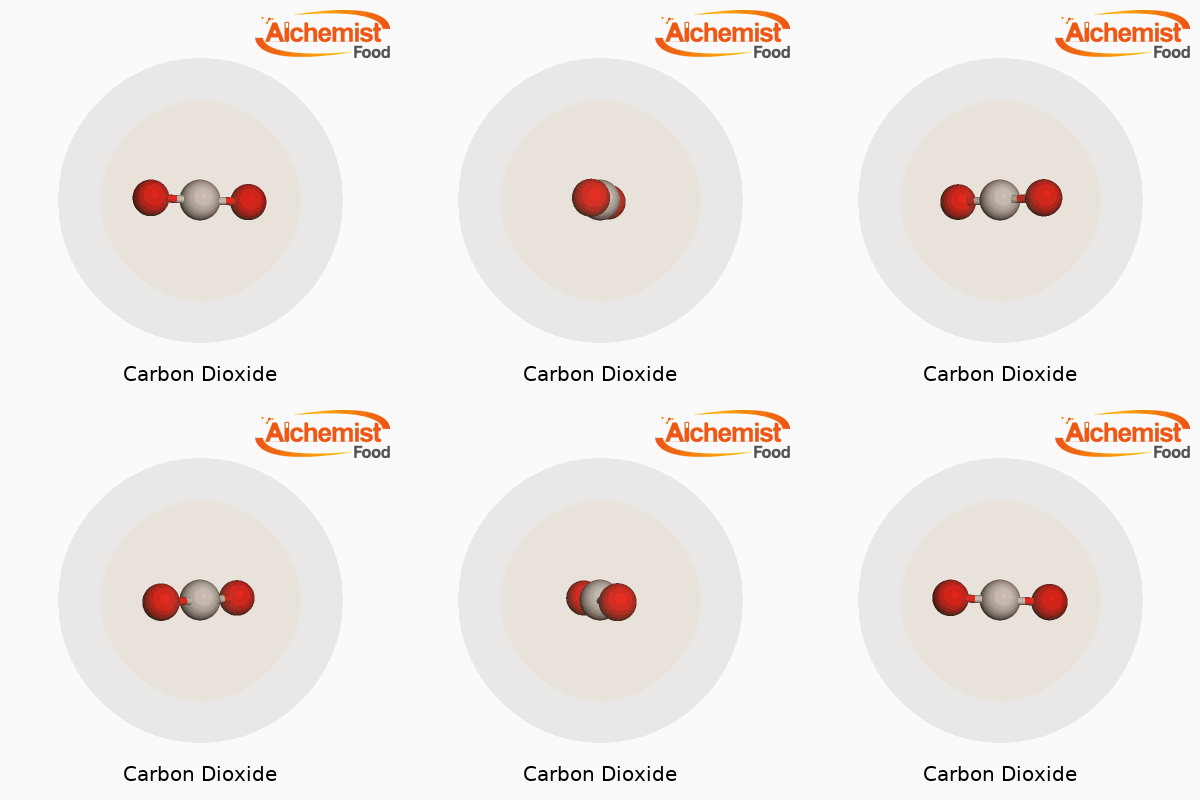
| Names | |
| Preferred IUPAC name | carbon dioxide |
| Other names |
Carbonic acid gas CO2 Dry ice (solid form) Carbon dioxide gas |
| Pronunciation | /ˌkɑː.bən daɪˈɒk.saɪd/ |
| Preferred IUPAC name | Carbon dioxide |
| Other names |
Carbonic acid gas Carbonic anhydride CO₂ |
| Pronunciation | /ˌkɑː.bən daɪˈɒk.saɪd/ |
| Identifiers | |
| CAS Number | 124-38-9 |
| 3D model (JSmol) | `3Dmol.js:JSmol_Model.load("3Dmol", "CO2")` |
| Beilstein Reference | 1905000 |
| ChEBI | CHEBI:16526 |
| ChEMBL | CHEMBL123 |
| ChemSpider | 280 |
| DrugBank | DB09544 |
| ECHA InfoCard | 03-211-585-007 |
| EC Number | 204-696-9 |
| Gmelin Reference | 184 |
| KEGG | C00011 |
| MeSH | D002245 |
| PubChem CID | 280 |
| RTECS number | FF6400000 |
| UNII | C1246KTH5S |
| UN number | UN1013 |
| CAS Number | 124-38-9 |
| Beilstein Reference | 1901200 |
| ChEBI | CHEBI:16526 |
| ChEMBL | CHEMBL123 |
| ChemSpider | 280 |
| DrugBank | DB00137 |
| ECHA InfoCard | 03-211-948-010 |
| EC Number | 204-696-9 |
| Gmelin Reference | Gmelin 127 |
| KEGG | C00011 |
| MeSH | D002245 |
| PubChem CID | 280 |
| RTECS number | FF6400000 |
| UNII | 206M86849T |
| UN number | UN1013 |
| CompTox Dashboard (EPA) | DTXSID2020525 |
| Properties | |
| Chemical formula | CO₂ |
| Molar mass | 44.01 g/mol |
| Appearance | Colorless, odorless gas |
| Odor | odorless |
| Density | 1.98 kg/m³ |
| Solubility in water | 1.45 g/L (at 25 °C) |
| log P | -1.50 |
| Vapor pressure | 5736 psia (at 70°F) |
| Acidity (pKa) | 6.35 |
| Basicity (pKb) | 7.38 |
| Magnetic susceptibility (χ) | −1.224 × 10⁻⁶ cm³/mol |
| Refractive index (nD) | 1.00045 |
| Viscosity | Gas (air = 1.0) |
| Dipole moment | 0 Debye |
| Chemical formula | CO2 |
| Molar mass | 44.01 g/mol |
| Appearance | Colorless, odorless gas |
| Odor | Odorless |
| Density | 1.977 kg/m³ |
| Solubility in water | 1.45 g/L (at 25 °C) |
| log P | -1.50 |
| Vapor pressure | 5728 kPa (at 20 °C) |
| Acidity (pKa) | 6.35 |
| Basicity (pKb) | 14.00 |
| Magnetic susceptibility (χ) | −16.5 × 10⁻⁶ cm³/mol |
| Refractive index (nD) | 1.00045 |
| Dipole moment | 0 |
| Thermochemistry | |
| Std molar entropy (S⦵298) | 213.7 J·mol⁻¹·K⁻¹ |
| Std enthalpy of formation (ΔfH⦵298) | -393.5 kJ/mol |
| Std enthalpy of combustion (ΔcH⦵298) | -393.5 kJ·mol⁻¹ |
| Std molar entropy (S⦵298) | 213.7 J·mol⁻¹·K⁻¹ |
| Std enthalpy of formation (ΔfH⦵298) | –393.5 kJ/mol |
| Std enthalpy of combustion (ΔcH⦵298) | -393.5 kJ mol⁻¹ |
| Pharmacology | |
| ATC code | V03AN01 |
| ATC code | V03AN01 |
| Hazards | |
| Main hazards | Compressed gas. Asphyxiant. |
| GHS labelling | GHS02, GHS04 |
| Pictograms | GHS04 |
| Signal word | Warning |
| Hazard statements | H280: Contains gas under pressure; may explode if heated. |
| Precautionary statements | Keep away from heat, hot surfaces, sparks, open flames and other ignition sources. No smoking. Store in a well-ventilated place. Protect from sunlight. |
| NFPA 704 (fire diamond) | 0-0-0-SPECIAL |
| Lethal dose or concentration | LC50 (rat, inhalation): 470000 ppm/30 min |
| LD50 (median dose) | 470000 ppm |
| NIOSH | NIOSH: REL: 5,000 ppm (9,000 mg/m^3) TWA; 30,000 ppm (54,000 mg/m^3) STEL |
| PEL (Permissible) | 5000 ppm |
| REL (Recommended) | 5000 ppm |
| IDLH (Immediate danger) | 40,000 ppm |
| Main hazards | Compressed gas. Asphyxiant. |
| GHS labelling | GHS02, GHS04 |
| Pictograms | GHS04 |
| Signal word | Warning |
| Hazard statements | H280: Contains gas under pressure; may explode if heated. |
| Lethal dose or concentration | LD50 (rat, inhalation): 400,000 ppm/30 min |
| NIOSH | PC 790 |
| PEL (Permissible) | 5000 ppm |
| REL (Recommended) | “Inhalation REL 5,000 ppm” |
| IDLH (Immediate danger) | 40,000 ppm |
| Related compounds | |
| Related compounds |
Carbonic acid Carbon monoxide Phosgene Urea Sodium carbonate |
| Related compounds |
Carbon monoxide Carbon disulfide Phosgene Urea |



