Understanding Calcium Stearate: Past, Present, and Future
Historical Development
The history of calcium stearate connects to how people have always searched for better ways to separate, lubricate, and manage materials. In early days, soaps made from animal fats and minerals provided the earliest clue to what later became industrial stearates. The development ramped up in the 20th century, especially after the rise of large-scale chemical manufacturing. As plastic and rubber industries boomed, companies looked for additives that prevented sticking and improved processing. Chemists noticed that mixing calcium with stearic acid, which comes from natural fats, resulted in a white, waxy powder with impressive properties. Since then, food, construction, pharmaceuticals, and plastics industries have relied on this simple chemical blend to solve complex problems—often behind the scenes.
Product Overview
Calcium stearate, known by many as a nontoxic and cost-friendly additive, serves multiple jobs across industries. It appears as a fine, white or off-white powder without much odor. In standards set by organizations like the Food Chemicals Codex and the United States Pharmacopeia, the focus falls on purity, low heavy metal content, and absence of dangerous impurities. Inventory managers in factories stock variants produced through both animal and vegetable sources, which helps address different regulatory and ethical demands. On the shelf, bags of calcium stearate might carry stamping for pharmaceutical, food, or technical grade, which gives buyers a quick idea about how clean and safe their purchase is.
Physical & Chemical Properties
This compound does not dissolve in water, which adds to its power as a moisture barrier in concrete or food. It melts above 140°C and resists most chemicals except for strong acids. Under the microscope, the powder appears plate-like and tends to float, making handling a lot easier than more compact substances. Despite its slippy feel, it forms cakes if not stored properly. The calcium ion, rooted firmly between two long stearate chains, keeps the structure stable under most industrial conditions. This simplicity serves as both its asset and limitation—users can count on predictable performance, but modifications need creativity.
Technical Specifications & Labeling
Suppliers use a set list of tests to report on quality: free fatty acid levels, loss on drying, precise melting points, and heavy metal screening. Food-grade batches, in my experience, go through tighter controls compared to those destined for plastics or paint. Labels usually call out batch number, manufacture date, country of origin, particle size, and certifications like ISO or kosher status. Auditors, especially in pharmaceuticals, look at these records closely because one off-spec batch can disrupt production for days. RFIDs and batch tracing systems help reduce counterfeiting and make recalls faster if something slips through.
Preparation Method
Factoring in environmental rules and efficiency, factories now lean toward direct reactions between high-purity stearic acid and hydrated lime under heat. Older methods relied on double decomposition, but modern lines use controlled reactors with automated stirring and temperature sensors to keep everything uniform. Workers monitor pH levels and filter out unwanted by-products, which improves color and texture. Some companies reclaim stearic acid from palm oil or tallow to reduce waste and production costs. In my view, local regulations—especially waste treatment and emissions—often dictate the chosen process as much as market demand does.
Chemical Reactions & Modifications
Not everything in chemistry class stays in textbooks; certain tweaks turn ordinary calcium stearate into a more specialized tool. Reaction with mineral acids breaks down the salt, releasing stearic acid and creating new compounds like calcium chloride. Additives like titanium dioxide mix well with it without much fuss, improving opacity or color in paints. In plastics, chemists sometimes alter the stearate’s chain length or blend it with zinc stearate to shift lubrication, heat stability, or anti-caking behavior. This thoughtful fine-tuning keeps the formula fresh for new markets while sticking to the roots of simple chemistry.
Synonyms & Product Names
Across continents, this chemical goes by many names—calcium octadecanoate, calclium distearate, and even “food additive E470b” in Europe. Regulators and buyers prefer the systematic names, while product managers often go for catchy trade names that hint at purity or a special application, like StearCal or Calstar. Catalogs and safety sheets list the CAS number (1592-23-0), which helps avoid confusion, especially in customs and legal checks. Veterans in the field see all these names but still recognize the familiar puffy white powder on sight, whatever name it uses.
Safety & Operational Standards
Care around this chemical starts in the warehouse. Workers wear masks to stop fine dust from entering lungs, because even a “safe” powder, if inhaled regularly, can irritate airways. Lab tests show the compound does not react violently or burn under normal use, but mixing with strong oxidizers brings risks. Organizations like OSHA call for clear labeling, airflow systems, and protective clothing in bulk handling. Food-grade types must avoid cross-contact with industrial oils or lubricants, otherwise the risk of contamination rises. Occasional checks on powder buildup in machinery prevent expensive shutdowns and keep output steady, so hands-on experience matters when setting up maintenance routines.
Application Area
Different sectors draw from calcium stearate’s toolkit for their own needs. Food technologists use it to keep powdered spices or mixes from clumping, while in medicine, tablet-makers value it as a lubricant to help pills eject cleanly from molds. Construction managers mix it into concrete or gypsum to slow down water penetration and extend product life. Plastic manufacturers add it to PVC and polyethylene for flow enhancement—without this additive, extrusion would slow or halt as melted polymer stuck to machine parts. Even crayon companies depend on it for that smooth glide across paper. Paints and coatings gain anti-caking and moisture resistance, which matters especially in humid storage environments.
Research & Development
Not everyone thinks of a humble salt as a research focus, but innovation teams have started to look again as regulations shift and raw material prices change. Some labs develop plant-based versions for stricter vegan labeling. Others explore nano-sized variants that could improve dispersion in sensitive electronic packaging. Tests with recycled stearic acid as the starting material help companies cut waste, trim greenhouse gases, and earn sustainability certifications. Larger companies experiment with performance boosters—blending calcium stearate with salts of magnesium or zinc—targeting noticeably longer shelf-life for paints or more consistent flow for plastics. Engineers share case studies at conferences on how one tweak saved thousands in manufacturing costs or solved a nagging quality issue in batch processing.
Toxicity Research
Studies so far place calcium stearate on the safe end of the spectrum. Toxicologists, working with both animal and cell models, see little absorption or metabolism when the compound enters the body at food-contact levels. Long-term studies in lab rats show no buildup in organs or major health risks, which explains why it appears on many regulatory lists as generally recognized as safe (GRAS). At very high doses far above typical exposure, it can result in temporary digestive distress—not different from eating too much processed fat. The story changes if the powder collects in large airborne clouds; workers exposed over many years need monitoring for respiratory irritation. Safety meetings, in my experience, focus more on good handling practices than on major health alarms.
Future Prospects
The world of specialty chemicals rarely stands still. With plant-based raw materials growing cheaper and more countries calling for low-toxicity ingredients, the demand for greener, cleaner calcium stearate rises. Companies that lock in transparent sourcing and minimize waste likely see more business, especially from multinationals chasing ESG targets. Digital sensors and smart automation promise even finer control over production, shrinking batch-to-batch variation and cutting costs. On the research front, nano-structured versions, tighter blends with other stearates, and biopolymer-composite applications keep labs busy looking for incremental improvements. Success, from what I’ve seen, goes to those who invest not only in chemistry but also in tracking regulations, supply trends, and customer feedback. Even a safe, simple compound finds new life when old problems demand better answers.
What is calcium stearate used for?
Daily Life and Industry Find Common Ground with Calcium Stearate
Factories and households both rely on calcium stearate, but most people don’t realize it. I first stumbled onto its name on a label for some baking powder, and I remember thinking I'd seen it before on other things. Digging in, I found it everywhere, playing unsung roles that keep the modern world running.
The Dusty Powder Behind Everyday Products
Calcium stearate starts as a powder that comes from stearic acid mixed with calcium salts. It feels waxy if you rub it between your fingers; some folks call it a “soap” compound. You’ll spot it on ingredient lists for food, personal care items, chalk, paint, and even plastics. My interest piqued when I discovered a huge chunk of the world’s toys—think Legos and rubber duckies—owe their smooth finish to this stuff.
Why Manufacturers Rely on Calcium Stearate
In the plastics world, calcium stearate takes on a big job. While plastics and rubber seem resilient, shaping them out of raw material gets tricky. Molten plastic wants to stick to metal molds, jam up rollers, and turn messy in a hurry. Calcium stearate steps in here. A sprinkle in the mix stops raw plastics from clumping and keeps machinery clean. Workers appreciate fewer sticky messes and broken products off the assembly line.
Paper manufacturers see good results, too. Paper used to squeak and catch inside printers more often. Calcium stearate changes the texture, giving a smoother path so paper feeds more reliably. I know someone who runs a small copy shop—they buy specialty paper, and smoother sheets cut down on jams. Small differences like this keep their business running smoothly.
Paints are another story altogether. The pigment powders in paint tend to stick together and form clumps. Calcium stearate works like a barrier between those pigment grains, keeping tubs of paint shelf-stable and easily stirred. Anyone who’s painted a living room can thank this ingredient for fewer globs and an easier time brushing across the wall.
Food and Pharmaceuticals
Food scares a lot of folks when unfamiliar names pop up, but calcium stearate passes as safe in small doses. In the food world, it sits inside baking powders and powdered drink mixes, stopping clumps before they spoil the texture. Even pills use it. Tablet manufacturers add a tiny amount, so pill presses run faster and tablets come out without sticking. Before strict controls and machines, pharmacists had more trouble getting exact pill weights. That matters for health and safety, especially for children’s doses and chronic medication.
Environmental and Health Questions
People wonder about long-term risks. Studies and food safety authorities like the FDA say there’s little to worry about within regulated limits. The main safety questions usually relate to the source of stearic acid—animal vs. vegetable fat. Plant sources ease concerns for those following kosher, halal, and vegan diets.
Plastics leach all sorts of chemicals eventually, but calcium stearate rates low for environmental harm. That said, caution pays off. Manufacturers need to trace the supply chain and limit its use to what does the job, not more.
Possible Solutions and Improvements
There’s space for smarter sourcing and making sure companies use plant-based materials whenever possible. Process improvements focus on reducing waste and making every batch count. Pushing for transparency on labels helps people make choices that fit their values and health needs. Staying informed matters for everyone, whether they work a plant floor or shop for groceries on a busy Thursday afternoon.
Is calcium stearate safe for food and pharmaceutical applications?
What Is Calcium Stearate, and Why Does It Matter?
Most folks probably never notice calcium stearate’s presence on ingredient labels. This white, powdery compound gets added to everything from candies to tablets. It’s the calcium salt of stearic acid, a fatty acid found in beef, cocoa butter, shea butter, and more. Its ability to keep powders flowing freely keeps machines running smoothly in both food processing and pharmaceutical production. Without it, there’d be a lot more clumps and mess.
Safety Evidence Drawn from Real-World Use
No one wants to learn their favorite snack or medicine delivers an unannounced risk. Years of research and regulatory scrutiny should provide peace of mind. The U.S. Food and Drug Administration (FDA) has given calcium stearate a spot on its GRAS list, which means experts have agreed it’s safe to consume in typical amounts. The European Food Safety Authority and other world agencies have reached similar conclusions for food and pill manufacturing.
Most products contain just a pinch of this compound, much less than what shows up naturally in foods like chocolate. The human digestive system breaks down stearic acid as it would any fat and absorbs calcium just as it does from dairy. No red flags in animal or human trials have come up, and doses used in industry remain far below those required to trigger harm.
Understanding Common Concerns
Plenty of people worry about food additives these days, and for good reason. Additives should never be a shortcut for poor-quality ingredients. That being said, the main debate around calcium stearate does not center on acute toxicity or cancer risk. Its real-world safety record looks clean. Some critics say that, since it often comes from animal or palm fat, it could raise ethical or environmental issues. This comes down to sourcing and transparency, more than chemistry. People following plant-based diets may want to double-check labels or ask companies for vegetable-based versions.
There’s also a question of dose. In food or medicine, the amounts people eat make the difference between sensible use and potential problems. Unusually high intakes haven’t shown any long-term buildup in the body or disruption to mineral balance. Allergic reactions are very rare and usually traceable to other compounds in a blend, not to calcium stearate itself.
Support from Research
Relevant studies help put things in perspective. After reviewing available evidence, toxicology journals continue to support its safety. Key findings show that calcium stearate does not change genetic material, cause cancer, or disrupt hormonal activity when taken in modest doses. At high doses, animals showed some stomach discomfort, but these levels far exceed any exposure through normal diets or common medicines.
Improvements in Quality and Transparency
Consumers deserve to know what’s in their food and medicine, and where it comes from. Companies have started to offer more plant-based stearic acid alternatives and to certify non-GMO or sustainably sourced ingredients. Gluten-free, vegan, and allergen-aware options make it easier for more people to use products containing calcium stearate without worry.
Safer Together, Not in Isolation
No single ingredient decides the safety of a candy bar or tablet. Healthy living depends on the whole picture: balanced diet, smart portion sizes, honest sourcing, and trustworthy suppliers. At practical doses, and with responsible production, calcium stearate holds up as a reliable and safe ingredient. People with specific health needs or dietary restrictions should check with professionals, but the science stacks up in favor of its continued use.
What are the physical properties of calcium stearate?
What Calcium Stearate Looks and Feels Like
Calcium stearate usually comes to you as a fine white, almost fluffy powder. This material reminds many people of baby powder—soft to the touch and with a certain smoothness as you feel it between your fingers. If you’ve ever worked in a manufacturing environment, you know dust isn’t just a housekeeping issue; it’s a part of the job. Calcium stearate tends to create some airborne dust when poured or handled, which means it deserves respect and the usual protective masks.
How it Reacts with Water and Solvents
One thing you notice right away: calcium stearate floats on water and doesn’t dissolve. Drop some in, and it sits on the top or clumps together, rolling off to the side. This property drives its use as a water repellent and anti-caking agent. Go beyond water—use alcohol, ether, or most organic solvents, and the material shows the same stubborn refusal to dissolve. Heating it leads to more of a greasy paste but don’t expect it to melt into your solution. In daily work, knowing this stops wasted time and keeps production lines clean.
Melting and Decomposition
Temperatures above 140°C don’t faze calcium stearate. It hangs onto its structure right up until almost 180°C, and only then does it break down, letting off a mild fatty smell as it decomposes. Experience on the shop floor tells you to keep calcium stearate away from hot surfaces not just for the chemical stability, but to avoid the potential for small fires or residues. Fire isn’t the biggest risk, but cleaning burnt residue slows productivity and risks product quality.
The Power to Repel and Lubricate
Grease on your hands after rubbing calcium stearate speaks volumes. The powder acts as a lubricant and a release agent, lowering friction and helping materials slip past one another. Factories rely on this in plastics and rubber processing. If you’ve struggled to demold a stubborn product, a pinch of calcium stearate changes everything. Sticky surfaces release their grip, production keeps moving, and downtime falls away.
Granule and Bulk Handling
Moving large quantities reveals another side: calcium stearate can turn a free-flowing blend into stubborn clumps under humidity. Even so, it's lighter than most fillers, and you can carry more in a bucket than you’d expect. Weighing just under 1 gram per cubic centimeter, you tend to double-check volume and weight calculations to avoid surprises with bulk packaging and transport.
Durability and Aging
Stored in a dry place, calcium stearate stays stable for years. Moisture is the real enemy, not time. You notice after years in warehouses, bags left open form lumps but don’t break down or “go bad.” There are few surprises—what you see is what you get, as long as you stay ahead of moisture. This reliability takes pressure off quality control and helps users trust long-term stock.
Solutions for Common Issues
Handling dust and clumping matters most in daily usage. Simple local exhaust hoods and sealed packaging reduce airborne problems. Manufacturers use pellet forms or blend with coarse carriers to keep dust down. To stop caking, climate control and silica gel packs in bags go a long way. Experience proves the product works best in places where storage and handling are taken seriously.
Understanding calcium stearate at the physical level doesn’t just make life easier. It also keeps factories running smoother, employees safer, and products more reliable.
How should calcium stearate be stored and handled?
Trusting Science and Practical Experience
People use calcium stearate in a big range of industries—from making plastics smoother to helping powders in pharmaceuticals flow better. Having spent years working around warehouses stacked with drums of this powder, I’ve watched where things go right and also how simple mistakes cost work hours and money. Fact is, this white powder looks harmless, but small missteps in storage or handling end up multiplying into bigger problems. Let’s talk about what matters in storing and handling calcium stearate so it works for you, not against you.
Moisture Kills Performance
Calcium stearate attracts moisture like a sponge left on the kitchen counter. Once it soaks up water from humid air, it clumps together and refuses to mix evenly. If you ever tried to break apart a hardened sack of powder, you know how much frustration piles up. I’ve seen entire batches tossed out because moisture worked its way in. Always keep it in air-tight, sealed containers—preferably original packaging, lined with plastic. Storage rooms need a dry climate, with humidity levels below 65%. Use moisture barriers: pallets keep containers off concrete, and desiccants in storage spaces earn their keep. Check for leaks after every rainfall. Prevention saves money, plain and simple.
Heat Shortens Shelf Life
Heat creeps in from sunlight or nearby machines, ruining the chemical stability over time. Keep calcium stearate cool, away from direct light—like you would store chocolate in summer. Place it in a dedicated storage area away from ovens, steam pipes, or heaters. Overheated powder may change texture and lose functionality, which creates more waste downstream. Stay in the 15°C to 30°C range—that’s the sweet spot for most manufacturing spaces. I’ve seen folks put bags on loading docks in direct sunlight “just for a few hours,” and those are the bags that get set aside at quality inspections later. Temperature controls aren’t just a checklist; they’re insurance.
Keep It Clean: Cross-Contamination Is Real
Calcium stearate travels through many hands and tools before it’s part of a finished product. Every scoop, funnel, or conveyor introduces risk. Dedicated equipment and labeling beat memory every time; no one wants plastic or pharmaceutical batches ruined by a slip-up. Simple practices like cleaning scoops after each use, and storing tools separately for each chemical, make a difference. I’ve seen production lines halted because a tiny amount of another powder mixed in with the calcium stearate. Pay attention to color-coded bins, clear labeling, and don’t let containers stay open longer than needed. These daily habits filter out chaos down the line.
People Safety: Respect the Dust
Fine white dust seems harmless, but enough of it in the air can bother lungs and skin. I once spent a shift working near an open mixer without a dust mask; you learn fast how easy it is to underestimate the nuisance. Workers need simple gear: gloves, dust masks, safety glasses. Training everyone to handle spills—never sweeping powder with dry brooms, always using vacuums or damp cloths—keeps people healthy and floors less slippery. Reports from OSHA and industrial hygiene guides back this up. Injury rates drop with just a couple of basic safety steps followed every day.
Documentation: Don’t Guess, Know
Every barrel or bag should carry its original lot number and safety data sheet—no exceptions. Regularly check expiration dates before pulling supplies for manufacturing. Rotate stock, keep records, and flag any damaged containers before they create bigger headaches. Good recordkeeping isn’t busywork. If something goes wrong, you trace it back in minutes instead of days. Companies end up saving thousands in recalls or lost production because someone wrote down what got delivered, stored, and used.
Solid Habits Win Every Time
Proper storage and handling of calcium stearate seem simple—until you see the costs of shortcuts. Humidity sneaks in, heat destroys batches, dust risks health, and cross-contamination triggers downtime. Every successful team I’ve worked with builds good habits and trusts in routine checks. In the long run, putting that extra bit of effort into storing, handling, and tracking pays off for any business using this common, but sometimes tricky, material.
Is calcium stearate considered vegan or animal-derived?
Unpacking the Ingredient
Many folks digging into product labels spot “calcium stearate” and wonder just what’s in it. The ingredient shows up everywhere: candy, chewing gum, supplements, even some plastics and rubbers. It plays a part in keeping powders from clumping, helps things slide easier in production, and gives coatings a smoother touch. But its origin isn’t always simple to figure out.
Where Calcium Stearate Comes From
At its basic level, calcium stearate is a salt made by combining calcium with stearic acid. Here’s where things get sticky. Stearic acid can come from animals, plants, or synthetic sources. In some cases, producers use animal fat, often beef tallow, as a stearic acid source. Many manufacturers also use stearic acid from vegetable oils—palm, soybean, or coconut oil, for example.
If you’re vegan or trying to avoid animal products, the trouble lies in how companies make this ingredient. Food labels just list “calcium stearate.” Unless companies volunteer the source, there’s no way to know for sure where they got the stearic acid. Some products do highlight “vegetable-based” calcium stearate if they want to assure vegans or vegetarians, but this is the exception, not the rule.
The Importance of Source Transparency
I’ve spent time reading ingredient lists for friends with strict diets. It’s tough making sense of hidden animal products in shelf staples. For those staying plant-based, this lack of clear labeling creates real stress. People deserve to know exactly what they’re buying, and clear labeling could solve a lot of confusion around chemicals like calcium stearate.
Some groups have pushed for stronger ingredient sourcing standards. The Vegan Society urges companies to spell out whether they use plant or animal sources. In Europe, a good number of calcium stearate suppliers now rely on vegetable sources to appeal to wider markets—both for ethical reasons and because certain religious laws require plant-based ingredients.
Still, the U.S. remains a patchwork. Dietary supplements can carry “vegan” claims if they use plant sources, but processed foods don’t have to clarify the details. We’ve all seen “vegetable magnesium stearate” labeled in vitamins. But other food products might use animal-based or mixed-source additives and only mention the chemical name. So, unless you reach out to a company or pick certified vegan-labeled goods, it’s hard to be sure.
Looking for Solutions
Clearer labeling laws could help everyone from parents shopping for their kids to older folks with dietary restrictions. A small note stating “animal-derived” or “plant-derived” on the package would take out all the guesswork. Some manufacturers already switch to vegetable-based sources, not just for ethical reasons, but to cater to global customers with diverse needs.
Sometimes, consumers take matters into their own hands. I’ve emailed companies myself and found some are proud to share details, while others only respond with vague, boilerplate replies. This leads to frustration, wasted time, and sometimes distrust. Companies that promote transparency win loyalty, plain and simple.
Staying Informed
You can look for certifications like the Vegan Society trademark, which guarantees the product avoids animal-derived ingredients. If those aren’t present, reaching out to brands or consulting vegan and vegetarian buyer’s guides helps, though it takes some extra effort. The more people demand transparency, the more likely companies will feel the pressure to ditch the vague labeling and share what’s really inside.
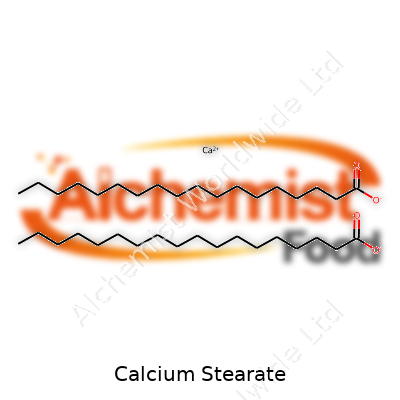
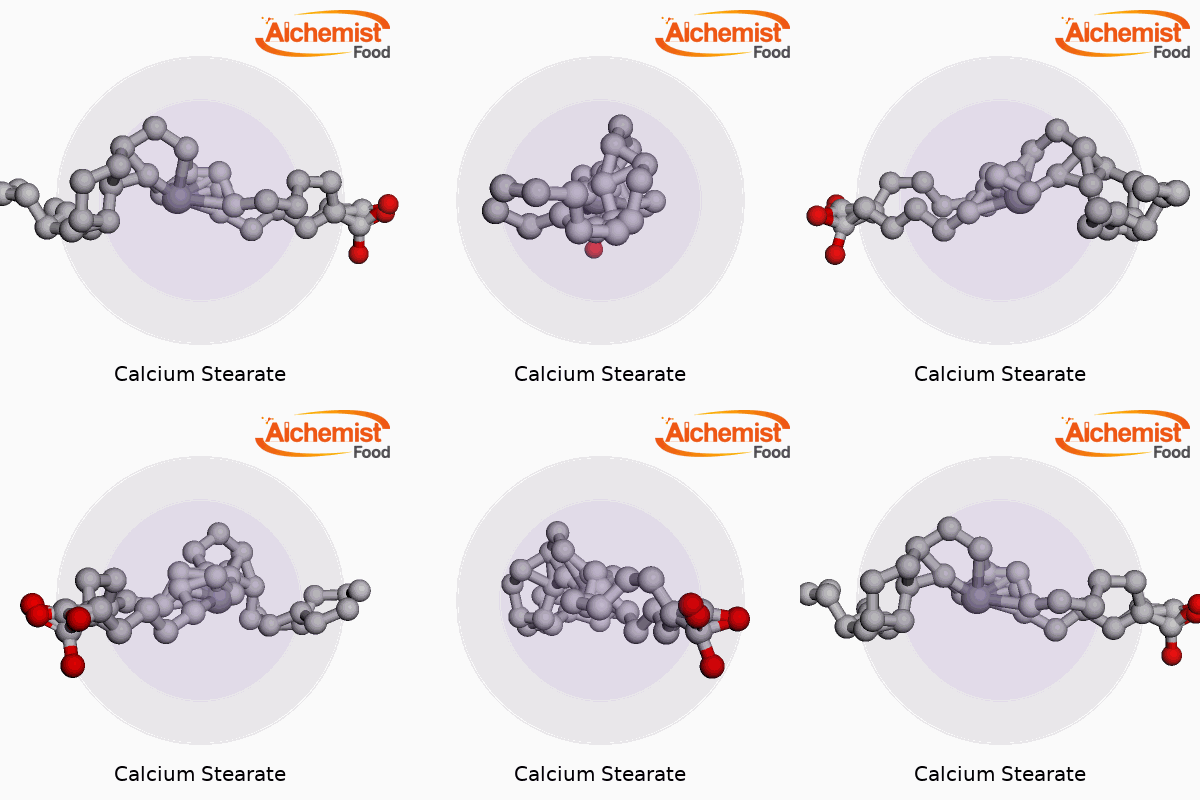
| Names | |
| Preferred IUPAC name | Calcium octadecanoate |
| Other names |
Calcium distearate Calcium octadecanoate Stearic acid calcium salt |
| Pronunciation | /ˈkæl.si.əm ˈstɪə.reɪt/ |
| Preferred IUPAC name | Calcium octadecanoate |
| Other names |
Calcium distearate Stearic acid calcium salt Octadecanoic acid, calcium salt Calcium octadecanoate |
| Pronunciation | /ˈkæl.si.əm ˈstɪə.reɪt/ |
| Identifiers | |
| CAS Number | 1592-23-0 |
| Beilstein Reference | 3919905 |
| ChEBI | CHEBI:31347 |
| ChEMBL | CHEMBL1201730 |
| ChemSpider | 53404 |
| DrugBank | DB01388 |
| ECHA InfoCard | 03e6e8e4-6e19-4969-9d5c-0d1dc82489b2 |
| EC Number | 267-008-6 |
| Gmelin Reference | 14645 |
| KEGG | C14302 |
| MeSH | D002121 |
| PubChem CID | 8663 |
| RTECS number | WLN7L7R8J8 |
| UNII | EC2R7Z81VZ |
| UN number | UN1325 |
| CAS Number | 1592-23-0 |
| Beilstein Reference | 1460725 |
| ChEBI | CHEBI:31344 |
| ChEMBL | CHEMBL1201776 |
| ChemSpider | 8132 |
| DrugBank | DB06735 |
| ECHA InfoCard | 03b8e19c-40c9-45ed-bcf2-54c1c44e5ccb |
| EC Number | 208-750-2 |
| Gmelin Reference | 60762 |
| KEGG | C01745 |
| MeSH | D002121 |
| PubChem CID | 6604209 |
| RTECS number | CAS8047 |
| UNII | VT6P1G414D |
| UN number | UN1325 |
| CompTox Dashboard (EPA) | urn:epa.compTox:DTXSID1020067 |
| Properties | |
| Chemical formula | Ca(C18H35O2)2 |
| Molar mass | 607.02 g/mol |
| Appearance | White powder |
| Odor | Odorless |
| Density | 1.08 g/cm³ |
| Solubility in water | Insoluble |
| log P | logP = 8.23 |
| Vapor pressure | Negligible |
| Basicity (pKb) | 7.09 |
| Magnetic susceptibility (χ) | Paramagnetic |
| Refractive index (nD) | 1.029 |
| Dipole moment | 2.57 D |
| Chemical formula | Ca(C18H35O2)2 |
| Molar mass | 607.02 g/mol |
| Appearance | White powder |
| Odor | Odorless |
| Density | 1.08 g/cm³ |
| Solubility in water | Practically insoluble |
| log P | 4.92 |
| Vapor pressure | Negligible |
| Basicity (pKb) | Calcium stearate is a salt and does not have a defined pKb value. |
| Magnetic susceptibility (χ) | -47.0e-6 cm³/mol |
| Refractive index (nD) | 1.029 |
| Dipole moment | 0 D |
| Thermochemistry | |
| Std molar entropy (S⦵298) | 887 J·mol⁻¹·K⁻¹ |
| Std enthalpy of formation (ΔfH⦵298) | -1610.2 kJ·mol⁻¹ |
| Std enthalpy of combustion (ΔcH⦵298) | -1640.1 kJ/mol |
| Std molar entropy (S⦵298) | “676.6 J·mol⁻¹·K⁻¹” |
| Std enthalpy of formation (ΔfH⦵298) | -1010.3 kJ/mol |
| Std enthalpy of combustion (ΔcH⦵298) | -17,990 kJ/mol |
| Pharmacology | |
| ATC code | A03AA04 |
| ATC code | A07XA04 |
| Hazards | |
| Main hazards | Not hazardous according to classification criteria. |
| GHS labelling | GHS labelling for Calcium Stearate: `"Not classified as hazardous according to GHS"` |
| Pictograms | GHS07, GHS08 |
| Signal word | No signal word |
| Hazard statements | No hazard statement. |
| Precautionary statements | P261, P305+P351+P338, P501 |
| Autoignition temperature | > 390 °C (734 °F; 663 K) |
| Explosive limits | Not explosive |
| Lethal dose or concentration | LD50 (oral, rat): > 10,000 mg/kg |
| LD50 (median dose) | > 10,000 mg/kg (rat, oral) |
| NIOSH | WI0800000 |
| PEL (Permissible) | PEL (Permissible Exposure Limit) for Calcium Stearate: "15 mg/m³ (total dust), 5 mg/m³ (respirable fraction) as nuisance particulate (OSHA PEL) |
| REL (Recommended) | 10 mg/m³ |
| IDLH (Immediate danger) | Not listed |
| Main hazards | May cause mild skin and eye irritation. |
| GHS labelling | GHS labelling: Not classified as hazardous according to GHS. |
| Pictograms | GHS07, GHS08 |
| Signal word | No signal word |
| Hazard statements | No hazard statements. |
| Precautionary statements | Precautionary statements: P261, P305+P351+P338, P337+P313 |
| Autoignition temperature | > 400 °C |
| Explosive limits | Not explosive |
| Lethal dose or concentration | LD50 (Oral, Rat): > 10,000 mg/kg |
| LD50 (median dose) | > 10,000 mg/kg (Rat, oral) |
| NIOSH | WGK 1 |
| PEL (Permissible) | Not established. |
| REL (Recommended) | 10 mg/m³ |
| Related compounds | |
| Related compounds |
Magnesium stearate Zinc stearate Sodium stearate Potassium stearate Lithium stearate |
| Related compounds |
Magnesium stearate Zinc stearate Sodium stearate Stearic acid Calcium palmitate |



