Calcium Silicate: A Closer Look at Its Past, Present, and Possibilities
Tracing the History of Calcium Silicate
Calcium silicate tells a story of utility, stretching from the late 19th century into modern industrial landscapes. Its roots trace back to experiments with Portland cement, where chemists noticed its fire resistance and structural stability. During the early years, the focus lay on leveraging these tough materials for building safer, longer-lasting structures. Its involvement with insulation materials took off during the industrial revolution. Factories needed answers to rising fire risk and heat management challenges. Calcium silicate boards and powders answered that call, shifting from specialty use to mainstream acceptance in construction, power generation, and transportation. My own trips to older industrial facilities often brought me face-to-face with insulation panels marked “calcium silicate”—a testament to its long legacy.
Getting to Know the Product
The most basic form of calcium silicate comes as a white, odorless powder or sturdy, lightweight board. This substance looks like chalk but brings unique advantages. The commercial grades typically contain between 10% and 50% calcium oxide and silicon dioxide in different ratios, processed together at high temperatures. It won’t dissolve in water or organic solvents and resists acids far better than regular lime. Manufactured boards turn up in fireproof cladding, bakery ovens, and certain piping insulation. Others might recognize it as a food additive, where it prevents clumping in powdered products. Its use in high-temperature insulation and as a reinforcing agent in rubber stems from this dependable structure.
Physical and Chemical Traits
A handful of key properties set calcium silicate apart. Density varies from 100 to 1,000 kg/m³, depending on the form—from loose powder to pressed sheets. Even with its lightness, the material manages to withstand compressive stress that would shatter lesser composites. It shrugs off heat, holding structural integrity up to 1,000°C; it sticks around when other building materials might crumble or catch fire. Chemically, it remains stable except under strong acids. Its surface shows low reactivity, so reactions are slow without a catalyst.
Technical Specs and Labeling Practices
Manufacturers provide detailed casting and pressing specs, tracking water content, density, particle size, and purity. Boards designed for insulation must meet fire ratings above 1,000°C and show no significant shrinkage after thermal testing. Labels reflect certification bodies, from ISO to national fire protection standards. Customized packaging communicates safe handling instructions and shelf life. Strict traceability requirements help with regulatory compliance, whether in food or construction use.
Preparation Methods in Industry
Solid calcium silicate takes shape through a careful reaction between quicklime and silica, often in a hydrothermal reactor. Conditions push the mix to react at around 200°C and 1-2 MPa. This steamy environment grows a tobermorite phase—one of the most valuable crystalline forms. Sometimes, you’ll see fibrous reinforcement, like asbestos substitutes or cellulose, to boost mechanical strength. Dried product passes through a fine grinder or mold press, depending on targeted applications. It reminds me of how paper mills start with benign pulp yet create material tough enough for countless cycles.
Chemical Reactions and Modifications
At its core, the synthesis of calcium silicate comes from the straightforward reaction: CaO + SiO2 → CaSiO3. Subtle tweaks, like playing with the ratios or adding mineralizers, spawn new types like xonotlite or wollastonite, each with distinct characteristics. Xonotlite brings extra thermal resistance for jet engine insulation. Manufacturers target these forms for specific jobs by adjusting temperature, pH, or using seed crystals to steer the reaction. In my own time spent in materials labs, I've seen how a shift of even a few degrees or fractional changes in feedstocks can turn out radically different textures, porosities, and strengths.
Synonyms and Product Names
This compound travels under many aliases in industry. Some call it calcium metasilicate or Wollastonite in certain natural crystalline grades. Industrial labeling often refers to “synthetic calcium silicate,” “insulating calcium board,” or “E552” in the context of food additives. Each term points to subtle changes in form, purity, or use, so anyone ordering materials pays close attention to these codes.
Meeting Safety and Operational Standards
Both handling and application face substantial regulation. Its dust can irritate the eyes or lungs, as with many fine particulates. This demands personal protective equipment and proper ventilation during processing and installation. Food-grade forms pass through strict purity and contamination audits before batch release. Building codes demand certification of structural and heat resistance before boards enter homes or public infrastructure. My work with construction teams highlighted the need for ongoing monitoring, not just at the factory, but wherever people cut, fit, or disturb these boards during renovations.
Area of Application and Value Addition
Walk through nearly any industrial facility or bakery kitchen and calcium silicate’s presence becomes clear. It covers pipe insulation in refineries, lines in ovens, and walls in high-rise construction to add fire resistance. In tire manufacturing, powdered forms reinforce rubber without compromising flexibility. As a food additive, it stabilizes salt, powdered milk, and spices on supermarket shelves. Large, lightweight panels enable architects to design larger fire-safe spaces. Water filtration has also tapped into its filtering properties as it traps tiny impurities. Each field pulls unique value from its resilience and ability to adapt.
Research, Development, and Future Frontiers
Research labs and universities keep calcium silicate at the heart of projects for better and safer building materials. Scientists investigate nanostructured forms for improved mechanical properties, hoping to replace asbestos alternatives fully. Conflict between need for fire resistance and demand for eco-safe, recyclable products drives new syntheses using recycled glass or industrial byproducts. Modified calcium silicate now pops up in biomedical research as a scaffold for bone regrowth. Experiments with composite blends yield materials that block noise, resist mold, or store thermal energy. In my collaborations with researchers, I saw first-hand the excitement when a new microstructure for the same old chemical produced surprising health or efficiency benefits.
Toxicity and Health Research
Studies over decades looked closely at inhalation risks. Workers exposed to high airborne dust concentrations saw increased lung irritation, so protocols improved and engineering controls cut those risks. Regulatory agencies keep reviewing food-grade and building material evidence to ensure continued safety. Toxicology research shows that pure forms, free from crystal contaminants or fibrous reinforcements like asbestos, don’t cause lasting health effects when used as intended. Ongoing vigilance remains part of safe manufacturing and installation, as even well-known materials can surprise if manufacturing slips.
Possibilities for the Future
Looking ahead, calcium silicate stands out as a bridge between legacy materials and future sustainability. Pressure grows to lower carbon footprints in every sector. R&D efforts focus on using waste products as feedstock, which can slash environmental impacts while opening new supply chains. Advances in material engineering now open doors to customizable pore size—allowing for lightweight panels that also cut sound or filter heavy metals from water. More construction projects move toward modular, prefabricated designs, and calcium silicate, with its machinability and fire safety, fits well into this shift. In places where wildfires and urban growth intersect, builders lean on its predictable performance. As the world pivots to greener, safer infrastructure, practical experience and ongoing research suggest this material’s story will keep expanding for years to come.
What is calcium silicate used for?
Behind the Scenes in Construction and Insulation
Mention calcium silicate in a room full of builders, and most will picture insulation boards or pipe coverings. This white, chalky material hides in the walls and ceilings of hospitals, schools, factories, even your neighborhood bakery. Calcium silicate handles heat like a champion, standing between delicate wires and blazing hot boilers, keeping both people and structures safe from fire and temperature swings. Those flat insulation boards on ceilings, those wraps around steam pipes—calcium silicate often forms the backbone. It's not glamorous, but when fire threatens or when pipes need to stay safe and hot, this mineral-based material steps up. The National Fire Protection Association points to high-temperature stability and non-combustibility as some key reasons manufacturers lean on it.
Surprising Role in Food and Medicine
Shifting to a different shelf, I once noticed calcium silicate on the list of ingredients for table salt. Turns out, it acts as an anti-caking agent. Manufacturers add it to keep salt from turning into a single, rock-hard lump, especially in humid places. So, every time you sprinkle salt evenly on fries or fish, you’ve got this mineral to thank.
And it's not just hiding in the salt shaker—pharmaceutical companies use calcium silicate during tablet production. Imagine a giant pill press smashing thousands of doses together; the powder must flow smoothly and never stick. Calcium silicate acts as a flow agent, making sure every pill presses and pops out just right.
Why Reliability Matters
Calcium silicate keeps its shape and strength in punishing environments. Buildings today often aim for better fire safety and energy savings, and this material delivers both. I’ve seen fire-damaged sites where only the calcium silicate boards survived, creating a buffer zone for rescue workers. The material resists mold, too—a small thing until a hospital ceiling drips for weeks. This property comes not from wishful thinking but from rigorous testing by groups like ASTM and the Food and Drug Administration, both setting standards that companies must follow.
In food production, using a substance that resists breaking down, won’t harm the gut, and doesn’t react with salt or flour—that’s a tall order, but calcium silicate clears the hurdle. The FDA considers it generally recognized as safe (GRAS) at typical levels, so even picky food regulators let it pass.
Environmental and Health Questions
Strong materials like this often raise questions. During the manufacturing process, dust can pose a risk, so wearing a dust mask comes as standard advice. For those working daily around this stuff, enforcing safety gear and good ventilation helps avoid trouble.
Most forms of calcium silicate don’t release hazardous chemicals once installed, and disposal does not spark major environmental panic. Some folks push for more eco-friendly insulation—think recycled paper or bio-based foams. Those alternatives can work for some uses, but when heat resistance matters above all, calcium silicate still carries the day.
Looking at Solutions and the Road Ahead
Everyday exposure to fire, moisture, and wear-and-tear shows where calcium silicate shines. If health or environmental concerns grow, cross-industry research could drive new safety guidelines or better protective gear for workers. Factories could shift to cleaner manufacturing tech to lower dust and emissions alongside traditional production. Where alternatives stack up in performance, suppliers might try hybrid insulation or more renewable sources. For now, the reliability and safety record of calcium silicate still keeps it in steady demand among builders, engineers, and food processors. Sometimes, a dependable building block makes all the difference in keeping things running smoothly.
Is calcium silicate safe for consumption?
Calcium Silicate Shows Up in Surprising Places
I first stumbled across calcium silicate while reading the label on my favorite shredded cheese. That name sounded more like something from a hardware store than my refrigerator. Plenty of people wonder: Is this stuff actually safe in our food?
Why Use Calcium Silicate?
Manufacturers add calcium silicate to things like salt, powdered coffee creamers, and grated cheese to keep those products from clumping together. You’ve probably seen those shakers of salt that never turn into one big rock, even if you stash them in a humid kitchen. Food companies count on this ingredient to fight moisture. My own kitchen experiments with flour and spices taught me how quickly things lump together without something extra in the mix.
What the Science Says
The Food and Drug Administration (FDA) places calcium silicate on its list of substances generally recognized as safe (GRAS). International food safety agencies echo this. What matters to me is whether long-term exposure causes issues—nobody wants a side of health risk with their parmesan.
Multiple studies suggest calcium silicate does not build up in the body or change how we absorb nutrients. Rats eating levels hundreds of times greater than what we’d ever get from a normal diet did not suffer health problems. In the human diet, the tiny amount used in processed foods falls far below these experimental doses.
Concerns People Raise
Some people worry about chemicals they cannot pronounce, which I get. For a long time, even I hesitated before eating “additives,” imagining mysterious science experiments. Anything added to food deserves a closer look — processed foods often seem to hide a chemistry project behind every serving.
I dug into available research for signs of allergies, stomach trouble, or effects on bones or the nervous system. No strong evidence shows calcium silicate triggers problems at the amounts we eat. Still, food science experts keep watching for new information, and food manufacturers stick within tight safety limits.
Interest in Natural Ingredients
Plenty of shoppers urge companies to use fewer additives and more whole-food options. My own preferences often lean that way. Not every anti-clumping agent comes from a natural source, and not everyone feels comfortable when a label grows longer than a shopping list. Food brands know consumers watch these details and sometimes look to switch to less-processed options.
Designing foods that stay fresh without ingredients like calcium silicate gets tricky. Salt, for example, clumps fast in humid weather if manufacturers leave out flow agents. Companies experimenting with rice flour or basic starches often run into quality issues—plus, shelf life can take a dive.
What’s the Best Approach?
Staying informed makes a big difference. Watching out for unnecessary additives and choosing fresh foods gives more control. Looking for ingredient lists with items you recognize offers peace of mind. For most people, enjoying foods that contain calcium silicate, so long as they are part of a balanced diet, seems safe.
If anything changes, food watchdogs and researchers must speak up quickly. Companies and regulators working together for transparency and ongoing safety checks matter to families and individuals everywhere.
Summary
Calcium silicate helps manufacturers solve real problems, helping packaged foods last longer and pour smoothly. Evidence so far says it doesn’t bring health risks in regular diets, though consumer demand for shorter ingredient lists continues. Balancing convenience, safety, and simple food remains an ongoing conversation.
What are the physical properties of calcium silicate?
What Calcium Silicate Looks and Feels Like
A handful of calcium silicate tells a straightforward story. This stuff looks like a fine white powder, sometimes a little off-white depending on where it’s sourced or made. It feels soft between the fingers, almost chalky. Try picking up a bit, and it leaves some powdery residue on the hands, just as you’d expect from a mineral used in construction and food industries alike.
One thing that stands out is just how lightweight it is. You can take a big volume of calcium silicate, but it doesn’t weigh down your hands the way sand or salt would. This low bulk density is one reason it gets added to products where weight can be an issue or where you want something to fill space without bogging things down.
Why It Matters in Construction and Daily Life
Stories from real-world use usually highlight one trait: calcium silicate barely flinches under heat. In fact, it’s this heat resistance that gets people talking. Toss a block of it into a kiln or around a hot pipeline, and it stands up against temperatures reaching 1,000 degrees Celsius or even a bit higher without breaking down or catching fire. In my own dealings with insulation projects for older apartment complexes, installing boards made from calcium silicate meant fewer worries about fire spreading through walls.
Moisture has a harder time with calcium silicate than, say, regular drywall. It absorbs some water, but then dries out fast. This little trick helps prevent it from warping or growing mold in humid climates. The material’s ability to ‘breathe’ keeps walls and pipe insulation safer over years of service.
Strength and Durability on the Job
In building materials, there’s often a trade-off between strength and weight. Calcium silicate doesn’t shy away from this challenge. Boards and shapes pressed from this material hold their form with a solid compressive strength (numbers often land between 12 to 20 megapascals). That’s plenty tough for supporting tiles or carrying insulation layers in industrial spaces.
More than once, I’ve seen calcium silicate products take a light knock or scrape without much fuss. They don’t crumble easily, especially those made for construction use. That reliability makes a difference during handling and installation—saving contractors headaches and money.
Safety and Everyday Impact
Calcium silicate’s lack of taste or odor lines it up for food and pharmaceutical uses. Companies mix it into table salt, powdered spices, and medications to help keep things flowing, free from clumps. The Food and Drug Administration labels it as generally recognized as safe, so kitchens and hospitals trust it to do its job quietly.
One important thing to note: this material doesn’t burn or release bad fumes at high temperatures. That helps keep workplaces safer, whether talking about fire barriers in schools or thermal insulation around industrial ovens. It’s not slippery or sharp to the touch, so working with it by hand doesn’t raise many health concerns, but dust can be irritating if inhaled, so proper protective gear makes sense during handling.
Broader Solutions and Future Steps
Industries continue to look for new ways to cut down energy use and lower risks in the workplace. Lightweight, fire-resistant materials like calcium silicate play an important part. Companies keep searching for smarter ways to produce it with less environmental impact, such as recycling byproducts from other manufacturing processes. Using more materials like this can help cities build safer, more energy-efficient homes and offices, without sacrificing safety or performance.
How does calcium silicate act as an insulator?
Understanding the Power of Air Gaps
Calcium silicate often gets labeled as an industrial solution, but its magic comes down to something pretty simple: lots of trapped air. This material forms with a kind of honeycomb structure. Pockets of air get caught between tiny solid particles, so heat doesn’t travel through easily. You see this even in old college physics labs—a solid with air spaces won’t move heat like dense rock does. In real-world factories, this difference spells safer pipes and lower energy bills.
Working in High Gear: Heat, Fire, and Safety
High-temp sites like power plants, steel mills, or refineries need more than wool or foams. Pipes there can run hotter than a pizza oven, and insulation must handle punishing temperatures without losing its shape. I’ve watched pipes wrapped in cheaper materials blister, sag, and even catch fire during emergencies. Calcium silicate doesn’t just survive—its structure stays solid up past 1,000°C, so even direct flame exposure buys workers time to react.
Why Water Doesn’t Ruin the Job
Water often spoils other fiberglass or foam insulation after a leak or drenching downpour. Fungi and mold move in fast, so repairs stack up. With calcium silicate, water still poses problems, but it dries out and springs back to work. I can’t count how many piping retrofits I’ve seen where the old wet insulation had to go because it turned to mush. Calcium silicate blocks this cycle; it dries, shakes off mold, and keeps doing its job.
Real-World Numbers Back It Up
Independent testing from groups like ASTM shows calcium silicate insulates better than many conventional choices, especially in environments above 400°C. This comes back to its low thermal conductivity, which stalls heat from passing straight through. For factories facing energy costs, that extra performance means more savings month by month. In a world where every kilowatt counts, this isn’t just science talk—it's dollars back in the company’s budget.
Installation and Worker Exposure
Cutting and fitting chunks of insulation onto hot pipes gets messy. Some materials create clouds of irritating dust; others crack if jostled too much. Calcium silicate needs some care when shaping, but it doesn’t crumble or leave dust in the air if handled right. Health studies in the US and Europe have shown exposure levels on regular jobsites fall well beneath regulatory danger lines if workers use the usual masks and gloves. This means the teams installing it stay safer, and long-term risk drops.
Looking Ahead: Smarter Buildings and Greener Choices
Demand for safe, efficient insulation keeps growing. Buildings and plants want to shrink their carbon footprints and shield workers from scalding surfaces. Calcium silicate’s resilience to heat, water, and fire keeps it in play for new industrial builds and old retrofits. Smart upgrades start here—rolling out a better insulator where it matters most, and letting the numbers speak in energy savings and worker safety.
Is calcium silicate environmentally friendly?
Common Ground: Calcium Silicate’s Everyday Impact
Walk into any construction site or food processing plant, and chances are calcium silicate is quietly at work. It keeps bread from caking, strengthens cement, insulates pipes — a jack-of-all-trades created from limestone and sand. With the world’s concerns leaning hard into sustainability, folks keep asking: does calcium silicate fit the bill as an eco-friendly material?
Seeing Environmental Impacts Through Direct Use
I grew up in a city where construction dust seemed to drift down with every breeze in summer. Working manual jobs through my teen years, I learned to spot which materials left the biggest mess. Calcium silicate, at least after installation, rarely showed up in those clouds or wastewater trickling into nearby streams. The stuff doesn’t leach toxins, doesn’t break down into harmful fragments, and, because it doesn’t burn, it won’t release smoke or irritating fumes if a fire breaks out. Food inspectors like it too, since it doesn’t sneak new allergens or synthetic chemicals into flour or spices.
The Price Tag Hidden in Production
Still, people forget that no industrial process is invisible. Making calcium silicate isn’t magic. It takes heaps of heat to bake limestone and sand together. Picture giant kilns, often fired with fossil fuels, and you get a sense of the greenhouse gases tagging along for the ride. Transport pushes that number up, especially when the material travels cross-country on diesel trucks.
Mining operations for primary ingredients upend landscapes. Quarries gouge open hillsides, disturb groundwater, and carve scars we all notice. Even recycling options rarely enter the conversation — used building materials often land in dumps, where chunks just linger. Reuse gets complicated since calcium silicate products like insulation and boards absorb contaminants over decades of use.
How It Measures Up to Alternatives
People sometimes compare calcium silicate with fiberglass or traditional Portland cement. From what I’ve seen, calcium silicate insulation releases less particulate during cutting or installation compared to fiberglass, and doesn’t irritate skin as much. Cement, though cheap and widely used, comes with even higher carbon emissions because of the energy needed to make clinker, the backbone of most cement mixes.
Pathways to Cleaner Use
Producers chip away at environmental costs by switching to renewable power for their plants. Familiar brands like Promat and Johns Manville have started using waste heat and exploring carbon capture at bigger facilities. Some local projects experiment with recycled glass as a sand replacement — reducing raw material digging, cutting down on landfill glass, and often lowering the heat required for production.
Regulations nudge companies to clean up, but everyday demand for sustainable materials speaks louder. As a shopper or builder, checking for certified green labels or asking suppliers about recycled content does make a dent. Neighborhood demonstration houses, where crews salvage old insulation and brick before burlap wraps and calcium silicate get added, prove what’s possible on a practical level.
Moving Past Labels and Finding Balance
Eco-friendly isn’t a black-and-white sticker slapped on a bag of powder. I’ve watched cities struggle to balance what they need for safe, dry homes with tough choices about manufacturing and waste. Calcium silicate brings solid gains where fire resistance, chemical stability, and low toxicity count. The harder part lies upstream, in cleaner production and making sure old boards or powders don’t just rot behind fence lines.
At the end of the day, calcium silicate sits among many materials vying for a share of greener building and safer food. The real push comes from each person who asks questions, demands improvement, and supports responsible businesses. Pushing the industry toward lower emissions and smarter recycling can lift calcium silicate from just a useful powder to a cleaner, smarter pick for future projects.
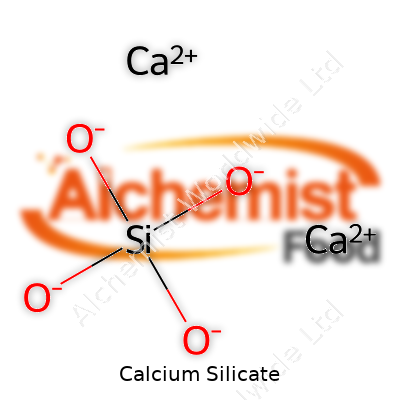
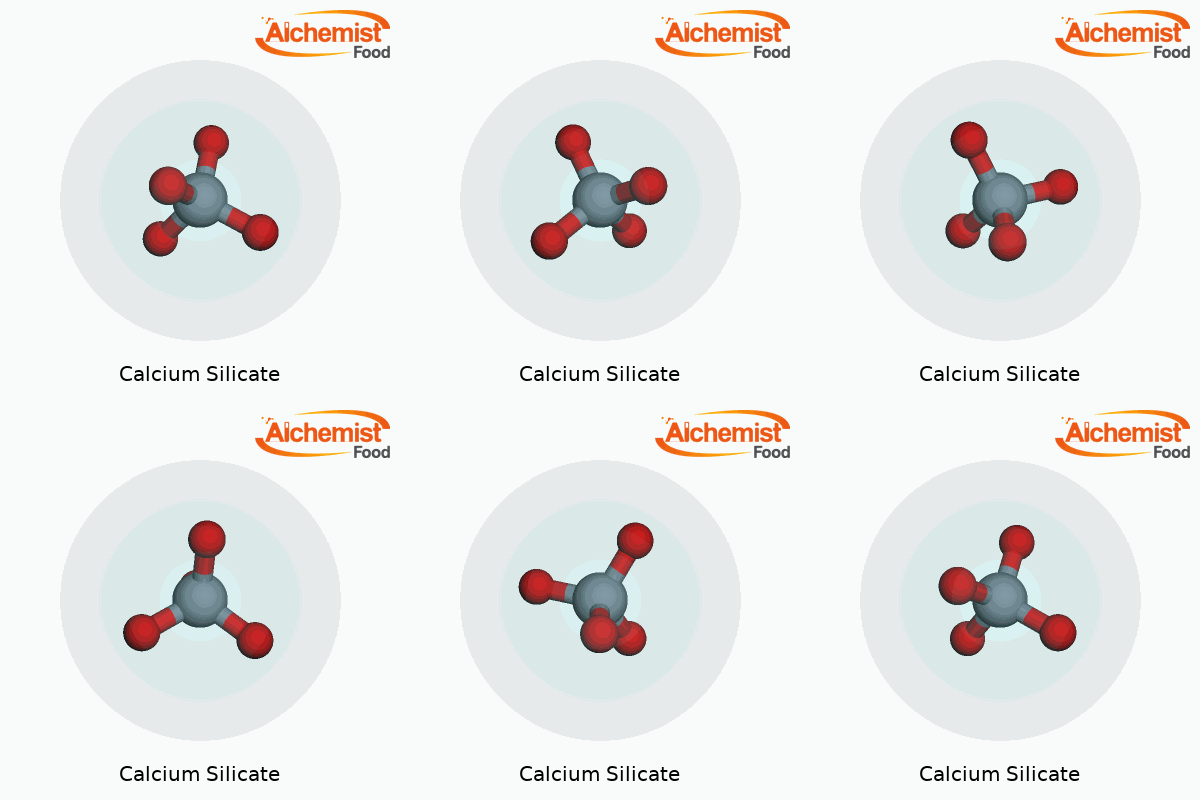
| Names | |
| Preferred IUPAC name | Calcium oxidosilicate |
| Other names |
Calcium orthosilicate Wollastonite Calcium metasilicate |
| Pronunciation | /ˈkæl.si.əm sɪˈlɪ.keɪt/ |
| Preferred IUPAC name | Calcium oxosilicate |
| Other names |
Calcium metasilicate Calcium orthosilicate Wollastonite |
| Pronunciation | /ˈkæl.si.əm sɪˈlɪ.keɪt/ |
| Identifiers | |
| CAS Number | 1344-95-2 |
| Beilstein Reference | 35324 |
| ChEBI | CHEBI:31343 |
| ChEMBL | CHEMBL1201742 |
| ChemSpider | 83401 |
| DrugBank | DB09449 |
| ECHA InfoCard | 100.028.293 |
| EC Number | 1344-95-2 |
| Gmelin Reference | Gmelin Reference: 14431 |
| KEGG | C02524 |
| MeSH | D002121 |
| PubChem CID | 24599 |
| RTECS number | VV8780000 |
| UNII | CX868U69V9 |
| UN number | UN1356 |
| CompTox Dashboard (EPA) | AH398WT5D3 |
| CAS Number | 1344-95-2 |
| Beilstein Reference | 3920600 |
| ChEBI | CHEBI:31343 |
| ChEMBL | CHEMBL1201757 |
| ChemSpider | 27010 |
| DrugBank | DB11093 |
| ECHA InfoCard | 07a6b266-4210-4822-935d-eafbe2c7df44 |
| EC Number | 1344-95-2 |
| Gmelin Reference | Gm.400 |
| KEGG | C06838 |
| MeSH | D002121 |
| PubChem CID | 24597 |
| RTECS number | VC8750000 |
| UNII | C459C69V9U |
| UN number | UN1325 |
| CompTox Dashboard (EPA) | 1b514ef0-01a5-41a4-a90b-4ef756f352e2 |
| Properties | |
| Chemical formula | Ca2SiO4 |
| Molar mass | 172.24 g/mol |
| Appearance | White or off-white powder or crystalline solid. |
| Odor | Odorless |
| Density | 0.5-1 g/cm3 |
| Solubility in water | Insoluble |
| log P | 0.00 |
| Vapor pressure | Negligible |
| Basicity (pKb) | 11.2 |
| Magnetic susceptibility (χ) | −32·10⁻⁶ cm³/mol |
| Refractive index (nD) | 1.50 |
| Dipole moment | 0 D |
| Chemical formula | Ca2SiO4 |
| Molar mass | 172.24 g/mol |
| Appearance | White or off-white powder |
| Odor | Odorless |
| Density | 0.5-1.0 g/cm³ |
| Solubility in water | Insoluble |
| log P | 0.00 |
| Vapor pressure | Negligible |
| Basicity (pKb) | 9.93 |
| Magnetic susceptibility (χ) | -22.0 × 10⁻⁶ cm³/mol |
| Refractive index (nD) | 1.52 |
| Dipole moment | 0 D |
| Thermochemistry | |
| Std molar entropy (S⦵298) | 98.1 J·mol⁻¹·K⁻¹ |
| Std enthalpy of formation (ΔfH⦵298) | -1,679 kJ/mol |
| Std molar entropy (S⦵298) | 97.3 J mol⁻¹ K⁻¹ |
| Std enthalpy of formation (ΔfH⦵298) | -1677 kJ/mol |
| Pharmacology | |
| ATC code | A12AX |
| ATC code | A12AA13 |
| Hazards | |
| Main hazards | Dust may cause irritation to the respiratory tract, eyes, and skin. |
| GHS labelling | GHS07: Exclamation mark |
| Pictograms | GHS07,GHS08 |
| Signal word | Warning |
| Hazard statements | H319: Causes serious eye irritation. |
| Precautionary statements | P261, P264, P271, P272, P280, P285, P302+P352, P304+P340, P305+P351+P338, P312, P332+P313, P362+P364, P501 |
| NFPA 704 (fire diamond) | 1-0-0 |
| Explosive limits | Not explosive |
| Lethal dose or concentration | LD50 (oral, rat): >5000 mg/kg |
| LD50 (median dose) | LD50 (oral, rat): >10,000 mg/kg |
| NIOSH | VW0400000 |
| PEL (Permissible) | PEL: 15 mg/m³ (total dust), 5 mg/m³ (respirable fraction) |
| REL (Recommended) | 6 mg/kg |
| Main hazards | May cause mechanical irritation to eyes, skin, and respiratory tract. |
| GHS labelling | GHS07, GHS08 |
| Pictograms | GHS07,GHS08 |
| Signal word | Warning |
| Hazard statements | May cause respiratory irritation. |
| Precautionary statements | Precautionary statements: P261, P264, P271, P280, P304+P340, P312, P305+P351+P338, P501 |
| NFPA 704 (fire diamond) | 1-0-0 |
| Lethal dose or concentration | LD50 (oral, rat): > 5000 mg/kg |
| LD50 (median dose) | LD50 (oral, rat): >10,000 mg/kg |
| NIOSH | KW297 |
| PEL (Permissible) | 15 mg/m3 |
| REL (Recommended) | 1000 mg |
| IDLH (Immediate danger) | 1,000 mg/m3 |
| Related compounds | |
| Related compounds |
Calcium oxide Silicon dioxide Portland cement Calcium aluminate Sodium silicate |
| Related compounds |
Sodium silicate Magnesium silicate Aluminium silicate Calcium aluminosilicate Calcium carbonate |



