Understanding Calcium Formate: Beyond the Basics
Historical Development
Calcium formate didn’t always have a spot on the shelf in chemical stores or in construction yards. Early research in the 20th century, much of it in continental Europe, started exploring the role of formates as byproducts in various refining processes. Calcium formate stood out when industries looked for non-toxic alternatives to calcium chloride and other salts for applications like concrete acceleration and animal feed preservation. Old mining regions in Germany and experimental agriculture researchers from Scandinavia helped draw attention to the possibilities locked in this simple compound. As production of synthetic compounds expanded in the post-war years, focus shifted to cost-effective production routes using formic acid and calcium sources, allowing applications to go beyond niche sectors and into mainstream industrial use.
Product Overview
Calcium formate, known among chemists as the calcium salt of formic acid, shows up in a white, crispy, almost odorless powder. This is not just some obscure chemical; it has become a reliable tool in the hands of industries from construction to leather tanning. Its solubility in water offers practical value, and you’ll find it working its way through everything from feed additives to concrete additives and even as an alternative deicing agent. The spectrum of applications looks ordinary at first glance, but experience shows its versatility stands out clearly once you get familiar with the product.
Physical & Chemical Properties
The structure of calcium formate, Ca(HCOO)2, reveals plenty about its character. It carries a formula weight of 130.1, making it compact enough for precise dosing. Monoclinic crystals remain stable under ordinary storage, with a melting point around 300°C and decomposition that tips the reaction towards release of formic acid and calcium oxide. Water interacts with it easily, granting high solubility: nearly 16g dissolve in 100ml at room temperature, a figure that makes it handy when quick dissolution is key. As a non-volatile salt, users can store and handle the stuff without grappling with strong odors or rapid degradation — a practical boon for everyone from farmers to concrete batchers.
Technical Specifications & Labeling
Suppliers label calcium formate for purity — and users take this seriously. Top-quality product meets purity above 98%, checked for heavy metals like lead, arsenic, and cadmium with tight limits far below 10ppm. Moisture content gets special attention: too much water disrupts product stability and muddles dosing accuracy. A technical data sheet usually carries a spec for particle size distribution, a trait often skipped over but critical in applications demanding fast reaction or dissolution. These standards, informed by ISO benchmarking and extensive industry feedback, help everyone from bulk purchasers to smaller feed mixers avoid expensive missteps in downstream use.
Preparation Method
The most common method sticks to a straightforward chemical reaction. By neutralizing formic acid with calcium carbonate, producers capture calcium formate and carbon dioxide while bypassing dangerous byproducts. Industrial set-ups tweak the ratio of acid to carbonate for higher yield and less waste. A more technical approach, less common because of cost, uses calcium hydroxide instead, bringing a more rapid but pricier reaction. In some modern plants, high-purity formic acid produced in continuous reactors pushes scale and responsiveness of output, helping control particle shape and size. As countries tighten regulatory controls on effluents, companies attach attention to water reuse and scrubbers, working hard to keep raw material conversion high and impact on local environments low.
Chemical Reactions & Modifications
Chemists have explored dozens of reaction pathways involving calcium formate. In soil stabilization, it gets introduced with cement to generate pore-blocking calcium silicate hydrates. In concrete acceleration, the compound increases the speed of hydration, contributing to faster curing. Reaction with strong acids, especially mineral acids, liberates formic acid, allowing recovery and reuse. Thermal treatment raises the potential for creating highly porous calcium oxide, valued by material scientists in specialty ceramics. This versatility traces back to the dual character of the formate group, acting as both reducing agent and precursor for other functional materials. Crafting custom reaction environments, from pH buffers to temperature control, extends its use across new research sectors, including catalysis and advanced composites.
Synonyms & Product Names
You’ll find calcium formate under a couple of labels depending on geography and sector. “Formic acid calcium salt,” “E238” (used in EU food and feed additive circles), and “calcium diformate” all point to the same chemical. Technical catalogs might use “Calcium methanoate.” In feed and agricultural supply lines, trade names often emphasize rapid absorption or preservation qualities, but these don’t change the core identity. Experienced buyers check CAS number 544-17-2 to track consistency, especially in cross-border shipments, sidestepping confusion from shifting labeling.
Safety & Operational Standards
Calcium formate came into wider use in part because of its safety profile. Still, responsible handling counts. Inhalation of fine dust may irritate the respiratory tract, so operators rely on particulate masks or ventilation. Contact with eyes or open skin prompts rinsing, but unlike calcium chloride or quicklime, calcium formate rates low on causticity. In animal feed, regulators mandate strict adherence to purity and contaminant controls, referencing Codex and FAO/WHO guidelines to protect end users. Environmental fate studies address solubility and potential leaching in sensitive regions, leading operations to design containment around wet process areas and storage silos. Regular audits and updated safety datasheets, as well as employee training and hazard communication, shape real-world safety culture for everyone working near this product.
Application Area
Experience in the field confirms the wide reach of calcium formate, not just in textbooks but at job sites and farms. Concrete workers value it as a setting accelerator — useful for cold-weather pours or tight construction timelines. Agriculture and animal husbandry find it critical for feed preservation and acidification, where it holds back harmful bacteria and helps maintain palatability during storage. Leather tanneries make use of its gentle acidity during pickling, preventing over-acidification while softening hides more consistently than legacy products. Industrial deicing started picking up in North America and Scandinavia as cities look for safer, less corrosive options than straightforward salts. Even fish farms and specialty water treatment outfits are looking to it for its buffering capacity and mild antimicrobial properties. Each of these sectors builds on published research and decades of in-field feedback, pushing the product into new niches every few years.
Research & Development
Innovation in the calcium formate field moves at a steady pace. Recent university studies have examined its impact on reducing ammonia in poultry houses, with promising results for both bird health and worker comfort. Civil engineers, always chasing stronger, faster-setting concrete, test new blends with calcium formate for infrastructure in extreme climates. Research groups in materials science focus on using calcium formate as a template for novel ceramic synthesis or as a precursor for nanoparticle production. Across Europe and Asia, feed additive scientists document its interaction with probiotics, searching for feed solutions that may reduce antibiotic reliance. Every new study or patent carries potential for wider adoption, lower production costs, and smarter use in evolving industrial processes.
Toxicity Research
Animal and environmental toxicologists have scrutinized calcium formate with a critical eye. Most studies agree that it breaks down into formate and calcium ions, which both occur naturally in the body and environment. At everyday concentrations in feed or construction, it carries a low risk profile. Researchers conducting long-term feeding trials in swine, poultry, and fish haven’t observed harmful buildup in tissues — a key concern for food safety regulators. For plant and aquatic life, standard acute and chronic toxicity tests come back with low hazard ratings, giving operators room to work without complex risk mitigation. That said, deliberate overdosing or poor ventilation may irritate mucous membranes, and occupational guidelines set strict exposure limits for dust generation to keep job sites safe. These facts surface in review articles and government advisories, shaping industry norms and public perception.
Future Prospects
Calcium formate finds itself on a promising path as industries adapt to climate pressures, tighter food safety standards, and calls for greener chemistry. Construction sectors see potential in further lowering cement curing times and extending cold-weather operations with more predictable outcomes. Animal nutrition continues to push for new blends that help curb antimicrobial resistance, with calcium formate playing a leading supporting role. Feed scientists look for additive combinations that might improve digestion or reduce greenhouse gas emissions on large farms. Environmental engineers expect increasing interest in calcium formate for remediation work, where its solubility and mild reactivity fit delicate cleanup jobs. As big manufacturers invest in cleaner and more energy-efficient production methods, the appeal grows for a product that checks safety, practicality, and flexibility boxes, paving the way for both incremental and step-change advances in multiple sectors.
What is Calcium Formate used for?
Turning Cement from Weak to Strong
Anyone who has worked in construction knows how rain or cold can ruin your plans. The job stops, and fresh concrete sits helpless. Calcium formate steps in here. By adding it to cement, workers find that concrete sets faster, even when temperatures drop. This means less time spent waiting, less worry about unpredictable weather, and projects keep moving.
I remember helping a friend pour a garage floor during an autumn chill. Without an accelerator, the concrete stayed wet way too long, attracting trouble. Calcium formate pushes the reaction along, so jobs that used to take all day become manageable. Builders trust it because it actually works, cutting those heavy downtime costs.
Keeping Animals and Feed Safe
On farms, feed spoilage hits hard. Mold and bacteria flourish in storage bins, and sick animals cost money. Feeding trials have shown that calcium formate in animal feed knocks down the chance of bacterial growth. This preservation means animals get better food—less spoiled, fewer trips to the vet. Many poultry and pig farms use it to keep the health of their stock in line, supporting higher yields.
European studies point to calcium formate’s impact in reducing the presence of Salmonella and mold in feed, especially for pigs and chickens. Less illness in livestock results in safer meat on the table and less reliance on antibiotics, something every consumer should appreciate.
A Cleaner Edge in Leather and Textile Production
Few people think about what softens leather or gets fabrics ready for dye, but calcium formate helps here, too. Tanneries rely on it because it reduces the swelling of hides in acid baths. Finished leather ends up smoother and stronger. Workers in textile mills know it as a pH controller, helping dyes set more reliably on fabric so colors actually last through many washes.
These uses might sound technical, but they make real differences in quality—from the shoes you wear to the jeans in your closet. Factories using calcium formate find fewer batches ruined and less waste piling up. That keeps costs low, which matters to anyone checking prices in stores.
Solutions for Safer Handling and Environmental Protection
Factories and farms do need to handle calcium formate properly. Workers should avoid breathing in dust or letting it linger on their skin for long. For large operations, access to gloves, masks, and good ventilation keeps risks small. Proper training goes a long way.
Research shows calcium formate breaks down easily in the environment. Its safety profile stands out against other chemical additives, which often leave behind toxic residue. By switching to this compound, companies can shrink their environmental footprint.
Why Paying Attention to Additives Matters
In each role—from construction to food—toxins and waste threaten our health and environment. Calcium formate stands as a tool, not just another chemical in the mix. Using it means faster roads, healthier livestock, longer-lasting products, and less damage to the world outside our jobs. For anyone who cares about quality and safety in daily life, it pays to know what goes into the things around us.
Is Calcium Formate safe for humans and animals?
Scratching Beneath the Label
Calcium formate pops up more and more in feeds and construction materials. I remember seeing it listed among the additives on a bag of pig feed at a local co-op and wondering if anyone really checks into these “safe” additions. Food safety, animal health, and consumer trust deserve more than broad claims. People want to know what really happens with a compound like this, both inside a barn and in our own homes.
Understanding the Use
Manufacturers use calcium formate as a livestock feed additive, a cement accelerator, a preservative, and sometimes in leather tanning. The calcium in it sits in an ionic bond with formic acid—something that, on its own, can burn skin and sting eyes. Mixing it with calcium tones down that aggression. In animal feed, the idea is to make digestion easier and stomachs less welcoming to bacteria. In cement, it helps speed up curing, especially in chilly weather.
What Does Science Say?
European Food Safety Authority (EFSA) and US regulators have both dug into data on calcium formate. Studies in pigs, poultry, and humans show the compound generally passes through the body without stacking up to toxic levels. Researchers fed animals far higher amounts than they'd usually eat, reporting mild digestive irritation at worst. The World Health Organization recognizes formates as having low toxicity, with a wide margin between the amount that helps and the amount that harms.
Of course, numbers on a spreadsheet don't erase real-life mishaps. Dust from calcium formate powders can irritate eyes or respiratory tracts, especially for people working without masks in feed mills or mixing plants. Swallowing vast amounts at once—well above what’s mixed into feed or building products—can lead to nausea or mild acidosis. Everyday use hardly reaches anywhere near such doses.
Animal Health Matters
Farmers, especially those raising young pigs or chickens, watch their animals’ gut health closely. Clinical reports and years of practical experience show calcium formate can lower gut pH and reduce the load of harmful bacteria. Less aftertaste of antibiotics and antimicrobial resistance means a lot in today’s farming. It’s not a miracle powder, but it sits in the “generally recognized as safe” zone for animals when blended into feed at recommended levels. Free access to water matters anytime acidic salts are present in a diet.
What About Humans?
If you work with the pure powder in a factory or on a job site, gloves and dust masks still make sense. Food-grade calcium formate meets high purity standards. Health agencies in Europe and North America allow it for use in animal feed and indirect food contact, but not as a food ingredient for humans. Accidental spills or dust exposure call for good hygiene—wash your hands, avoid touching your eyes, and don't shake off dust clouds indoors.
How Can We Stay Smart?
Looking through the facts, it’s clear calcium formate isn’t a hidden danger waiting to strike. Proper handling and signage, clear instructions on use, and decent ventilation prevent the rare stomachaches or itchy eyes. Feed suppliers hold the responsibility of following recommended dosing and alerting workers about safe handling. Regulators should continue reviewing long-term studies and farm feedback.
Every person has a role to play—read labels, ask suppliers questions, and keep up on new research. Staying informed means less worry for those raising animals, working in construction, or even growing food for the rest of us.
What are the storage and handling precautions for Calcium Formate?
Why Careful Storage Makes a Difference
Anyone working with industrial chemicals knows the routine of checking packaging, reading up on labels, and making sure they’re following the right steps. With calcium formate, skipping those basics can actually cost a lot more than a safety infraction. Even though it might look harmless—a white, crystalline or powdery solid—it brings some risks if managed carelessly.
Dust seems trivial until it sneaks into the air. Breathing in calcium formate dust or getting it on your skin leaves you with irritation that lingers longer than expected. Think of all the times workers forget to use gloves or a mask during quick tasks. Small shortcuts build up over days, and before long, minor irritations can grow into bigger health problems. In my years around warehouses and feed plants, I’ve seen employees write off protective gear because “it’s just one bag,” then regret that choice by lunchtime. It’s another reminder: gear only works if you wear it every single time.
Storage: Clean, Dry, and Away from Trouble
Storing this chemical calls for more than an empty corner in the shed. Dampness breaks it down, forming a clumpy mess that’s both harder to work with and more likely to cause spills when moving bags or drums. I remember opening a delivery after a summer thunderstorm swept water through the loading bay—what should have been easy to handle inside secure drums turned into hours of chipping and clean-up. Keep it bone-dry, and you skip half the hassles.
Stacking bags carefully and avoiding piles right under leaking roofs or against outside walls sounds simple. Still, low-budget setups sometimes ignore this advice, leading to ruined product and extra waste for the landfill. I always tell new workers: check for leaks, keep pallets off the bare ground, and focus on keeping things dry. The same goes for containers. Any opening—no matter how small—leads to moisture getting in, which shortens its shelf life and makes accurate measurements tough. A clumpy chemical can throw off batch formulas in feed or construction products, causing headaches for quality teams and frontline operators alike.
Preventing Chemical Mix-Ups and Reactions
Calcium formate stands up fairly well on its own, but trouble starts if it mixes with strong acids. Rapid reaction means unexpected heat or even splatter. I tell everyone: don’t store acids and formates together, even for an hour. Labels on drums matter, and separate shelving saves far more than it costs in extra steps. If a spill happens, cleaning up with water works, but don’t let runoff go just anywhere—local regulations set strict limits since every drop can push water chemistry in the wrong direction. Good practice includes catching runoff and reporting it if any hits drains or soil. I’ve worked places that ignored these rules and ended up with surprise inspections, which is never a fun way to end a shift.
Personal Safeguards and Emergency Plans
Gloves, dust masks, and eye protection become basic requirements around open formate containers. One missed afternoon might not feel important, but it adds up. If exposure happens, washing with water right away usually clears things up, but there are always a few that push through burning skin or coughing fits rather than step out and handle the spill safely. Supervisors and management need to keep emergency showers and eyewash stations working and easy to reach—waiting until someone needs them to realize one’s broken is just asking for trouble.
Training matters as much as technical data sheets. Regular talks on safe practices stop bad habits before they turn into incidents. Repeating reminders, posting procedure cards, and encouraging workers to speak up about risky setups pay off with less lost product and fewer medical complaints. Calcium formate, just like any industrial chemical, requires respect. That respect comes from paying attention, learning from past mistakes, and never assuming a bag of powder is as harmless as it looks.
What is the chemical formula of Calcium Formate?
Understanding Calcium Formate’s Formula
Calcium formate offers more than a textbook answer of Ca(HCOO)2. It blends one calcium ion (Ca2+) with two formate ions (HCOO-). Each formate group hangs onto its single hydrogen and a double-bonded oxygen, hooking itself up to calcium. Simple as the sum looks, it opens up plenty for discussion that matters far beyond the classroom.
Real-World Relevance
On construction projects, I often came across bags labeled “Calcium Formate: Ca(HCOO)2.” Most folks working on-site talked more about how fast it would help concrete set on cold mornings and less about its actual ingredients. In safety meetings, we’d dig a bit deeper. The formula—two formate molecules per calcium atom—means calcium formate acts fast, releasing calcium ions for the curing reaction without breaking down into dust or fumes the way other accelerators have in the past. This solid structure makes it friendly enough for those of us in the trenches handling it all day.
Importance in Livestock and Food Safety
On farms, calcium formate grabs headlines for its use as a feed additive. The chemical’s stability comes straight from the formula—calcium hooks tightly to formate. No loose bits floating off, so it doesn’t sour feed or bring unexpected effects to animals. Studies from the European Food Safety Authority have shown that the simple Ca(HCOO)2 structure passes through digestive systems cleanly, breaking down to basic elements our bodies recognize. In the feed, it balances pH, making it a safe tool against spoilage. The predictable chemistry means fewer headaches for regulators watching food chains for contaminants.
Role in Green Chemistry
The demand for sustainable production keeps moving higher. Calcium formate, because of that dependable Ca(HCOO)2 backbone, meets several green criteria. No harsh halogens, no hidden heavy metals, and it gets synthesized from common starting materials. Thanks to how the formula works, factories can recover both calcium and formic acid from other industries’ byproducts, cutting out waste. In my own time consulting for eco-focused projects, calcium formate often turned up as a solution where other chemical accelerators brought baggage: extra emissions or higher risks. Teams liked that every calcium and every formate part had a role and nowhere to hide—a traceable, transparent choice.
Safety and Handling Considerations
Workplace safety officers love straightforward compounds. Every atom in Ca(HCOO)2 lands in a place that makes sense, so safety data sheets can stay lean. You won’t see the complex breakdown products that sometimes surprise you with other treatments. In accident response drills, I learned that this clarity means spills aren’t disasters—cleanup is more about sweeping than worrying about toxicity. That ease gives real peace of mind.
Solutions Through Chemistry
The market keeps changing; material shortages, evolving regulations, and new sustainability goals create real pressure. Efficient calcium formate production—from formic acid and calcium carbonate—hits those targets. The plain, reliable formula allows upcyclers to catch calcium from industrial waste streams, and researchers keep tweaking production methods to drive carbon footprints down. I see opportunity here for both big manufacturers chasing volume and startups chasing cleaner chemistry.
Can Calcium Formate be used as a food additive or preservative?
Understanding Calcium Formate in Everyday Terms
Calcium formate pops up more and more in industrial and agricultural circles. Folks in construction use it to speed up cement setting, and animal feed producers add it for its mild acidifying effects. The question on a lot of minds is whether this white crystalline powder could safely join the ranks of food additives and preservatives. The idea gets tempting—markets like longer shelf lives, and most businesses hunger for cheaper ways to fight off spoilage.
Diving into the Chemistry
On a chemical level, calcium formate carries the formula Ca(HCOO)2. It breaks down into calcium and formate when it meets bodily fluids. Calcium shows up all over the human diet already, in dairy, greens, and fortified foods. Formate doesn’t get the same spotlight—our bodies usually convert it quickly into carbon dioxide. That rapid breakdown actually matters. Regulatory agencies look at how a food additive behaves after we swallow it, not just at what it does in a beaker.
Safety and Regulation
Calcium formate hasn’t landed on the list of approved food additives in places like the United States, Canada, or the European Union. Food and Drug Administration (FDA) and European Food Safety Authority (EFSA) documents flag up a lack of safety data for daily human consumption. Their job means looking after everybody—toddlers, elders, people with health conditions, and folks who already get loads of calcium from other sources. Without enough hard numbers on what long-term exposure does, these organizations hold back from putting it near the family table.
High calcium or formate intake for long stretches can lead to trouble. Medical journals warn that runaway formate in the blood can put stress on the liver and kidneys. Drinking contaminated alcohol or methanol, for example, turns into a dangerous spike of formate in the body. Food-grade substances must meet a higher safety bar than industrial raw materials. The same bag of white powder that mixes safely into animal feed doesn’t automatically pass muster for bread or canned soup.
Value as a Preservative
One thing calcium formate does best is resist mold and bacteria. This draws attention from food scientists hunting for new preservatives, especially in baked goods and processed cheeses. But other acids—citric, sorbic, propionic—already win trust because chefs, parents, and doctors know what they do. These older preservatives support shelf life without added risks or surprises. Until calcium formate clears more hurdles, it remains stuck behind the starting line.
Looking for Solutions
Anyone interested in using new additives needs to gather evidence. Universities and companies wanting to bring calcium formate into the pantry have to run long-term studies. They test how much people can eat daily, check for allergies, watch long-term effects on gut health, and share results in peer-reviewed journals. Regulators depend on these numbers. Without them, public trust falls apart, and shelves fill up with older, proven products.
Food safety isn’t open to shortcuts. The simple, familiar stuff often ends up safest—salt, vinegar, the preservative agents everyone recognizes. Exploring new preservatives makes sense as food chains get longer and consumer habits change, but every candidate must earn its place through careful science, open data, and a commitment to well-being.
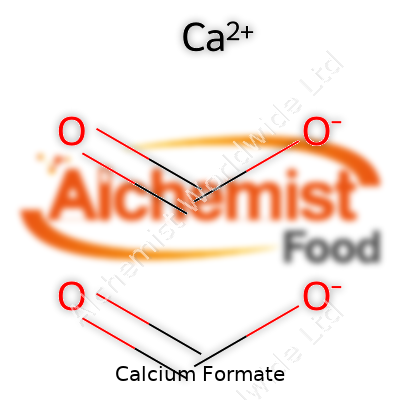
| Names | |
| Preferred IUPAC name | calcium methanoate |
| Other names |
Formic acid, calcium salt Calcium diformate Calcium methanoate |
| Pronunciation | /ˈkælsiəm ˈfɔː.meɪt/ |
| Preferred IUPAC name | Calcium methanoate |
| Other names |
Formic acid calcium salt E238 Calcium diformate |
| Pronunciation | /ˈkæl.si.əm ˈfɔːr.meɪt/ |
| Identifiers | |
| CAS Number | 544-17-2 |
| 3D model (JSmol) | Calcium[2+].O=C([O-])C.[O-]C(=O)C |
| Beilstein Reference | 1621426 |
| ChEBI | CHEBI:33197 |
| ChEMBL | CHEMBL1201785 |
| ChemSpider | 5039 |
| DrugBank | DB11210 |
| ECHA InfoCard | 100.011.788 |
| EC Number | 544-17-2 |
| Gmelin Reference | Gmelin Reference: 19968 |
| KEGG | C10808 |
| MeSH | D017615 |
| PubChem CID | 2723792 |
| RTECS number | FH8440000 |
| UNII | M7P27195AG |
| UN number | UN3077 |
| CAS Number | 544-17-2 |
| Beilstein Reference | 1723794 |
| ChEBI | CHEBI:33141 |
| ChEMBL | CHEMBL1201717 |
| ChemSpider | 74121 |
| DrugBank | DB11110 |
| ECHA InfoCard | 03-2119482363-44-0000 |
| EC Number | 208-863-7 |
| Gmelin Reference | 13340 |
| KEGG | C14826 |
| MeSH | D016723 |
| PubChem CID | 15915 |
| RTECS number | NJFA4702000 |
| UNII | 9G3S5A564M |
| UN number | UN3077 |
| Properties | |
| Chemical formula | Ca(HCOO)₂ |
| Molar mass | 130.114 g/mol |
| Appearance | White crystalline powder |
| Odor | Odorless |
| Density | 2.02 g/cm³ |
| Solubility in water | 16.1 g/100 mL (20 °C) |
| log P | -2.0 |
| Vapor pressure | Negligible |
| Acidity (pKa) | 2.02 |
| Basicity (pKb) | 11.4 |
| Magnetic susceptibility (χ) | −32.9·10⁻⁶ cm³/mol |
| Refractive index (nD) | 1.50 |
| Dipole moment | 0 D |
| Chemical formula | Ca(HCOO)₂ |
| Molar mass | 130.11 g/mol |
| Appearance | White crystalline powder |
| Odor | Odorless |
| Density | 2.02 g/cm³ |
| Solubility in water | 16.1 g/100 mL (20 °C) |
| log P | -2.0 |
| Vapor pressure | Negligible |
| Acidity (pKa) | 12.0 |
| Basicity (pKb) | 10.38 |
| Magnetic susceptibility (χ) | -32.4·10⁻⁶ cm³/mol |
| Refractive index (nD) | 1.497 |
| Dipole moment | 0.69 D |
| Thermochemistry | |
| Std molar entropy (S⦵298) | 95.5 J·mol⁻¹·K⁻¹ |
| Std enthalpy of formation (ΔfH⦵298) | -947.5 kJ/mol |
| Std enthalpy of combustion (ΔcH⦵298) | -1205.6 kJ/mol |
| Std molar entropy (S⦵298) | 87.2 J·mol⁻¹·K⁻¹ |
| Std enthalpy of formation (ΔfH⦵298) | -1034.0 kJ/mol |
| Std enthalpy of combustion (ΔcH⦵298) | -636.2 kJ/mol |
| Pharmacology | |
| ATC code | A12AA23 |
| ATC code | A12AA23 |
| Hazards | |
| Main hazards | Irritating to eyes, respiratory system and skin. |
| GHS labelling | GHS07, Warning, H319 |
| Pictograms | GHS07 |
| Signal word | Warning |
| Hazard statements | H319: Causes serious eye irritation. |
| Precautionary statements | Wash thoroughly after handling. Do not eat, drink or smoke when using this product. IF SWALLOWED: Call a POISON CENTER or doctor if you feel unwell. Rinse mouth. |
| NFPA 704 (fire diamond) | 2-0-0 |
| Autoignition temperature | > 650 °C |
| Lethal dose or concentration | LD50 (oral, rat): 2650 mg/kg |
| LD50 (median dose) | LD50 (oral, rat): 2650 mg/kg |
| PEL (Permissible) | 15 mg/m³ |
| REL (Recommended) | 2000 mg/kg |
| Main hazards | Harmful if swallowed. Causes serious eye irritation. Causes skin irritation. |
| GHS labelling | GHS07, Warning, H319 |
| Pictograms | GHS07, GHS09 |
| Signal word | Warning |
| Hazard statements | H319: Causes serious eye irritation. |
| Precautionary statements | P264, P270, P301+P312, P330, P501 |
| NFPA 704 (fire diamond) | 2-0-0 |
| Autoignition temperature | > 650 °C (1,202 °F) |
| Lethal dose or concentration | LD50 (oral, rat): 2650 mg/kg |
| LD50 (median dose) | LD50 (median dose) of Calcium Formate: 2650 mg/kg (rat, oral) |
| NIOSH | MWG35000 |
| PEL (Permissible) | PEL (Permissible Exposure Limit) for Calcium Formate: 15 mg/m³ (total dust), 5 mg/m³ (respirable fraction) as nuisance particulates (OSHA PEL) |
| REL (Recommended) | 150 mg/kg |
| IDLH (Immediate danger) | Not listed. |
| Related compounds | |
| Related compounds |
Formic acid Sodium formate Potassium formate Calcium acetate Calcium chloride |
| Related compounds |
Formic acid Calcium acetate Sodium formate Potassium formate Calcium carbonate Calcium chloride |



