Butyl Paraben: A Ground-Level Look at a Versatile Chemical
Historical Development
Butyl paraben didn't just drop into the hands of cosmetic chemists overnight. Chemists first began synthesizing parabens after noticing how short shelf lives hobbled creams and ointments. Back in the early twentieth century, researchers looked for ways to beat spoilage in everyday products. They landed on esters of para-hydroxybenzoic acid, turning to butyl paraben for its longer alkyl chain, which showed stronger antimicrobial punch than shorter cousins like methyl or ethyl paraben. Cosmetic giants and food producers picked up on parabens somewhere after the 1920s, stamping preservative worries on the head for decades. The movement wasn't about chasing buzzwords—it stemmed from a practical itch: how can goods reach families less prone to mold, bacteria, and loss? Parabens, including butyl paraben, offered a workable answer that could keep creams soft and snacks safe across long journeys.
Product Overview
You’ll find butyl paraben listed as an ingredient in hand lotions, makeup, shampoos, and some pharmaceuticals. Its primary role is to discourage bacteria and mold growth. Product formulators like this compound because it’s stable under normal storage conditions and soluble enough to mix into various formulas without headaches. You might also track it down in processed foods and industrial lubricants, though its claim to fame hangs mostly on personal care. Across decades, it has worn many hats, partly because producers value predictable, durable shelf life without needing to rethink other ingredients.
Physical & Chemical Properties
Butyl paraben carries the formula C11H14O3. You will notice it as either a powdered solid or fine crystals, dusted in white. Its odor ranges from faint to none, which makes it easy for perfumers and cooks alike to add it without throwing off a product’s aroma. It melts at about 68–72°C, and it dissolves with ease in alcohol or ether, not so comfortably in water. For teams working with emulsions or gels, this balance matters: it slides into oil-rich blends with less fuss, and holds steady as pH edges between four and eight. These traits shape where scientists or producers use it next.
Technical Specifications & Labeling
Label inspectors in North America and Europe pin down butyl paraben with thoroughness. Most personal care versions run at 99% or higher purity, riding with tiny traces of related esters or acids as residues. You’ll spot its E number—E209—on food packaging, or find it by its INS designation in international tables. Past a faint bitterness, you won’t sense it by taste or scent. International regulators state explicit limits on levels in finished products, mainly to hedge against long-term buildup through food and daily exposure. Manufacturers legally spell out its presence on ingredient lists, tapping into growing transparency expectations.
Preparation Method
Synthesis has held steady over time. Chemists usually react butanol with para-hydroxybenzoic acid, pursuing an acid-catalyzed esterification. The backbone process involves throwing the acid and alcohol together under heat with a strong acid like sulfuric. Through constant monitoring, the mix shifts toward butyl paraben and water, which gets swept away to keep the reaction tilting forward. Post-reaction, companies wash the crude solid with water, isolate it by crystallization or distillation, then dry it fully. Most suppliers stick to this no-nonsense route because it drops the highest yields and cleanest product without too much waste or environmental stress.
Chemical Reactions & Modifications
Butyl paraben resists many breakdown routes, hardening its value as a robust preservative. It can hydrolyze back into para-hydroxybenzoic acid and butanol in heavy alkaline or acidic settings—most day-to-day environments don’t push the reaction that far, so it tends to hold its ground. Chemists can swap the butyl chain for longer or branched alcohols, making structural relatives with similar but tuned biological activity. Reactions with halogens tweak its preservative strength but make less economic sense for mass production. Research groups keep poking at these routes, trying to sharpen or soften its function where needed.
Synonyms & Product Names
Regulatory documents and ingredient panels pull up names like butylparaben, butyl p-hydroxybenzoate, and its E209 food code. Pharmacopeia digests and chemical catalogs attach identifiers like CAS: 94-26-8. Depending on who’s blending or bottling, trade names drift—Dermisoft BP, Tegosept B, or Microbicide BP crop up from different suppliers. Scientists and manufacturers keep records clear to avoid confusion, especially when matching up import codes or safety sheets.
Safety & Operational Standards
Governments keep a watchful eye on parabens now. Cosmetic chemists only reach for butyl paraben up to the tight limits spelled out in EU or FDA rules. The European Commission sets cumulative thresholds for paraben mixtures and singles. Scientists have to show that the finished product remains safe for skin, eyes, or ingestion by children and adults. Personal protective gear at production plants—gloves and goggles—take care of concentrated dust or solutions that might irritate. Good manufacturing standards stress regular audits and batch tests, aiming to head off any raw material contamination or mislabeling before goods ever meet consumers.
Application Area
Butyl paraben strengthens hand creams and body washes, especially where the recipe runs oily or rich. Makeup compacts last longer and keep free of mold spots on store shelves. In ointments or gels meant for topical treatments, it adds defense against microbes without changing texture or medicine delivery. A few manufacturers in the food sector turn to it for processed meats and baked goods—though pressure from public opinion and retail buyers has pushed many away from parabens lately, especially in snacks for kids. Away from groceries, you might see it shielding hydraulic oils and cutting coolants from unwanted bacterial growth.
Research & Development
The research pipeline buzzes around the edges of butyl paraben. Toxicologists and molecular biologists have tracked how it moves through bodies and wastewater. Newer work zeroes in on endocrine-disrupting effects and microbial resistance, prodding policymakers and the chemical industry to examine old conclusions. Development teams look for substitutes—natural acids or fermented preservatives—but face hurdles matching the low cost and proven record of parabens. Product developers run real-world shelf tests, hunting combinations where lower paraben doses dovetail with plant extracts or innovative emulsifiers. Results tend to highlight tradeoffs in stability, price, and consumer trust.
Toxicity Research
Scientists have spent years unraveling the safety of butyl paraben. They measure how much shows up in blood or urine after routine use, then estimate totals from food, lotion, or environmental spillover. Some animal studies point toward hormonal interference at doses far above real-world exposure—these links keep regulators cautious and fuel regular reviews. Researchers probe impacts on fertility, immune markers, and links to allergic reactions. Industry-funded groups say the significant risk sits well beyond daily consumer contact. Public health advocates and some scientists argue the additive effect from many small exposures in modern life can't be ignored. Debate continues, and toxicologists ask for longer-term science that tracks today's evolving formulas and how they actually show up in populations.
Future Prospects
Butyl paraben sits at a crossroads. Consumer awareness of ingredient labels puts the chemical under constant review, with demand rising for shorter and more natural-sounding ingredient lists. Industry and researchers weigh a shift: removing parabens, lowering their limits, or blending them with other defenses to lessen concern. Environmental scientists push for treatment options that break down parabens in wastewater before they slip back into rivers and landfills, reducing contamination risks over time. Reformulating old favorites and embracing green chemistry offer forward-looking solutions worth further investment. The journey ahead likely blends cautious regulation, stepped-up monitoring, and creative compromise between stability and safety.
What is Butyl Paraben used for?
Why Butyl Paraben Matters in Daily Life
Walk into any bathroom, open the cabinet, and you’ll spot a lineup of shampoos, face creams, maybe some sunscreen, or a tube of toothpaste. Tucked into the ingredients list of many of these is butyl paraben. Most people don’t stop to notice—unless allergic reactions nudge them to start scrutinizing those tiny letters. Butyl paraben shows up in toiletries for a reason.
Mold, yeast, and bacteria can ruin moisturizers and lotions long before you finish the bottle. Products like body wash, mascara, and deodorants spend much of their life exposed to air, damp bathroom shelves, or even the warmth of your gym bag—all perfect for microbial growth. Butyl paraben fights those threats. It works as a preservative, holding back bacteria and fungus, keeping creams smooth and safe. The reason butyl paraben appears alongside other parabens is each one blocks certain types of microbes, so companies often mix several for fuller protection.
Safety Concerns and Ongoing Debate
Science has followed parabens everywhere they go. Butyl paraben caught the public’s eye after researchers found traces of parabens in human tissue. Some studies explored if parabens can mimic estrogen inside the body. The concern: Does exposure add up to a health risk? The U.S. Food and Drug Administration, Health Canada, and the European Commission have all reviewed the available evidence. So far, experts support small amounts in personal care products as safe, but they keep reviewing new studies.
Experience as a pharmacy technician brought me face-to-face with questions about ingredient safety. A parent would ask if the baby lotion was “paraben-free,” or someone recently diagnosed with breast cancer wanted to avoid even tiny risks. These conversations stick with you. For people who want a low-risk option, some brands highlight their paraben-free lineups. For other folks, affordability and product performance carry more weight. There’s no one-size-fits-all answer.
Hidden in Unexpected Places
It isn’t just about beauty products. Butyl paraben’s antimicrobial skills earn it a spot in certain processed foods, especially baked goods and sauces. Take-out sauces can sit on shelves for weeks; no one wants to open a packet and find it spoiled. In food, regulatory groups limit butyl paraben to tiny concentrations.
This omnipresence has sparked environmental conversations. Parabens don’t always break down quickly. Some studies found traces of parabens in rivers and streams, possibly affecting aquatic life. Manufacturers now explore greener preservatives and recyclable packaging to go with these changes. Pressure comes partly from eco-minded shoppers, who pay attention to both product safety and sustainability.
Looking Toward Smarter Choices
Better labeling gives everyone a chance to make informed choices. Ingredient lists that use plain language instead of just chemical names help shoppers with allergies or skin conditions avoid surprises. Stronger regulations can ensure brands check both product safety and environmental impact before butyl paraben lands on shelves.
Finding the balance between keeping products fresh and reducing health or ecological risks isn’t always simple. The science continues to evolve, and so do consumer values. Whether you lean toward “clean” beauty products or stick with tried-and-true brands, knowing why butyl paraben appears and what’s being done about its safety puts control back in your hands.
Is Butyl Paraben safe for skin?
Understanding Butyl Paraben
Most drugstore moisturizers, face washes, and even some of the "clean" beauty exceptions list butyl paraben in their tiny print. This ingredient works as a preservative, fighting off bacteria and giving your favorite cream a longer shelf life on the bathroom counter. What catches attention is the word "paraben"—a name that makes many people pause.
The Paraben Debate
Parabens, including butyl paraben, joined personal care products over 70 years ago. They come from p-hydroxybenzoic acid, which pops up in some fruits and vegetables naturally, but the versions in cosmetics are typically made in labs. Their reputation took a hit in the early 2000s when research linked parabens with estrogen-like activity in the body. Scientists worried these chemicals could disrupt hormones.
The concern isn’t just academic. Some studies, such as research published in the Journal of Applied Toxicology in 2004, found traces of parabens in breast tumor tissue. Headlines followed. A report like that sticks in your memory, especially if you or someone close to you deals with cancer risk.
What Science Shows
Digging deeper, FDA and European regulators checked data and didn’t see proof that parabens cause harm when used in small amounts. In fact, the concentration of butyl paraben in most skincare falls below 0.8%. Studies designed to mimic real-world use show butyl paraben is quickly broken down in the skin and liver. Metabolism gets rid of it fast.
Though it’s true that butyl paraben binds weakly to estrogen receptors, its effect is nowhere near the body’s actual estrogen or even phytoestrogens from soy and flax. Health authorities, including the Scientific Committee on Consumer Safety (SCCS) in Europe, still allow its use with restrictions. In 2014, the SCCS set lower concentration limits for butyl paraben after finding that babies and young kids absorb chemicals faster and might face extra risk.
Rarely, people deal with skin irritation or allergic reactions. The odds rise if your skin is sensitive or already inflamed. Dermatologists who treat eczema tend to pick paraben-free products to play it safe.
Making Thoughtful Choices
Many of us want control over what we use. Butyl paraben’s safety comes down to dose and context. I’ve talked to parents, patients, and friends who toss out parabens the second they spot them. Others see “paraben-free” labels and feel relief, even if the replacement preservatives haven’t earned much long-term research.
Clean beauty brands swap butyl paraben for ingredients like potassium sorbate or alcohol-based systems. These work, but the switch sometimes introduces its own skin troubles—just with a different chemical name. Researchers still keep a close eye on alternative preservatives, looking for links between increased use and new sensitivities or contact allergies over time.
A patch test can help if you worry about reactions. Ingredients lists count: the lower butyl paraben sits, the less that product contains. For babies and kids, avoiding unnecessary preservatives remains the safest bet.
Steps Forward
If safety keeps you up at night, check product labels and seek information from qualified dermatologists or registered pharmacists. Most evidence points to butyl paraben posing little risk to healthy adults in standard amounts. Still, changing regulations and new research could shift that understanding. Consumer voices prompt companies to look for safer and simpler alternatives, making the issue one of ongoing trust and transparency.
Does Butyl Paraben cause allergies or irritation?
A Common Ingredient Raises Eyebrows
Pick up a bottle of lotion, sunscreen, or shampoo and glance at the label. Chances are, butyl paraben sits somewhere in the ingredients list. This preservative helps stop mold and bacteria from growing in products, letting them last longer on the shelf. But talk swirls in online beauty groups and dermatology circles about whether this chemical triggers allergies or irritation on skin.
Personal Stories and Dermatologist Reports
Most people glide over skincare and hair products with no problem. During my years working at a pharmacy register, customers rarely complained about redness or rashes after using common brands. For some, though, products with parabens bring itchy patches, swelling, or burning. A neighbor once told me her new moisturizer made her face break out in angry red spots; the culprit on the ingredient list was butyl paraben, her dermatologist said.
Scientific research backs up pockets of concern. Studies published in journals like Contact Dermatitis outline cases of allergic reactions. According to the American Contact Dermatitis Society, a small but steady fraction of patch test patients react to butyl paraben. One review from 2023 looked at over 20,000 patch test results across Europe. Just under 1% had a positive allergic reaction to butyl paraben on their skin. The number might seem small, but for those individuals, irritation feels anything but rare.
Understanding the Science
Most modern science says parabens, in the doses found in cosmetics, tend to be safe for the vast majority. Health agencies across Europe, North America, and Asia still allow this chemical in products, though some have tightened limits. Parabens break down quickly in the body, and severe allergy remains rare. Still, people with a known sensitivity should check products with care.
One thing to watch for: broken or damaged skin. Rashes seem to pop up more often when paraben-containing creams touch areas already raw from eczema, wounds, or recent cosmetic procedures. As someone with sensitive skin myself, I avoid heavy creams on bug bites or razor burn, since even mild preservatives can sting.
Making Safer Choices
Staying allergy-free starts with reading ingredient labels. Brands now print “paraben-free” on bottles to draw shoppers who prefer natural ingredients. This move helps, but shoppers shouldn’t assume everything labeled “free from” is automatically gentle. Some people react to natural oils or plant extracts, too. The National Eczema Association recommends patch-testing new products—even “clean” ones—on a small spot for a few days before full use.
For parents of babies or anyone with chronic skin conditions, doctors usually steer families toward paraben-free and fragrance-free products, especially for daily use. I switched my own hand cream after one season of eczema flares, choosing a gentle petro-based ointment recommended by my dermatologist. No more itching, and no fancy label needed.
What Works in the Real World
People want personal care routines that work for their own skin. If you’ve never had a rash from your moisturizer or shampoo, you can probably keep using it. For folks with allergies or sensitive skin, finding the right product often takes trial and error, and a sharp eye for labels. Regular skin checks and good communication with your healthcare provider go a long way—and if a cream ever burns or itches, washing it off and calling your doctor always makes sense.
Is Butyl Paraben banned in any countries?
Looking at the Regulations
Butyl paraben pops up in a lot of products. You might spot it on the ingredient list of your moisturizer, face wash, or even shampoo. Companies have used parabens for decades to keep bacteria out and preserve shelf life. Yet, the conversation around butyl paraben isn’t just about microbes—it circles around our health. Whether it’s linked to hormone disruption or concerns about allergies, this chemical stands in a spotlight that’s only grown brighter in recent years.
What Do the Bans Say?
I remember sorting through bathroom products with my partner and seeing so many labels shout, “paraben-free!” This isn’t marketing fluff. People care about what goes into their bodies—and governments listen. In the European Union, butyl paraben has faced intense scrutiny. The EU bans certain uses of butyl paraben in products meant for children under three years old, especially in items not washed off, like diaper creams. The cosmetics directive lays down strict concentration limits, only allowing it up to 0.14% in most cosmetic applications.
Over in Denmark, back in 2011, a sharper rule took effect. Butyl paraben and propyl paraben got banned in cosmetic products for kids under three—even in rinse-off products. That move came after Danish health experts sounded alarms about infants’ higher vulnerability to endocrine disruptors. Scientists have linked butyl paraben to potential hormone disruption—estrogen in particular—which justifies the action. I try to imagine the world of parents who see these headlines. They don’t want doubt lingering over what touches their kids’ skin.
Why This Chemical Raises Eyebrows
Butyl paraben gets attention because of how the body absorbs it. Some research, like studies from the Scientific Committee on Consumer Safety, found it can mimic estrogen in high doses. This matters because hormone disruptors mess with the endocrine system and may impact reproductive health. Lab work with rodents triggered concern, showing possible effects on the male reproductive tract, as well as the skin, when exposure lasts over time.
Other places haven’t moved as quickly. In the United States, the FDA keeps an eye on parabens but hasn’t baked bans into the law. The agency references ongoing studies—always saying current levels in cosmetics look “generally recognized as safe.” But I see public sentiment leaning cautious. Many big beauty brands voluntarily cut butyl paraben out just to avoid the questions, and shelves stacked at my local store spell it out. Markets move faster than regulators, sometimes for good reason.
What Can Be Done Next?
Europe’s stricter stance and Denmark’s child safety rules build a clear message: ongoing research and real-world exposure need attention. I talk with friends raising kids, and the prevailing thought echoed is simple—why risk it if options exist? Manufacturers can shift to milder or natural preservatives, letting consumers choose with less uncertainty. Tighter global collaboration on safety tests and information sharing would patch up confusion, because many shoppers buy the same brands worldwide.
Everyone deserves transparency about what goes into products they trust. Governments and companies should keep testing, update limits promptly, and clear up what’s fact and what’s rumor. Safe, honest ingredients bridge the gap between innovation and health, and everyone deserves that peace of mind—no matter where they live.
What products commonly contain Butyl Paraben?
Everyday Exposure in Surprising Places
Take a look at most bathroom cabinets and there’s a good chance you’ll spot butyl paraben. Flip over a bottle of body lotion or face wash. Glance at a can of deodorant, a pack of wet wipes, maybe even sunscreen. Butyl paraben slips into formulas as a preservative. The goal: keep mold, yeast, and bacteria from turning products bad. Nobody wants rancid makeup or a spoiled moisturizer. Companies count on butyl paraben’s ability to stretch shelf life and prevent changes in texture, color, or smell.
Creams and lotions top the list. I’ve seen it listed in everything from acne spot treatments to expensive anti-aging serums. You can spot butyl paraben in foundations, mascaras, and lip gloss, where it stops microbes from growing in moist environments. Haircare brings its own wave. Shampoos, conditioners, styling gels, and mousses—if it stays damp for long, odds are strong there’s a paraben involved.
Beyond Beauty: Where Else It Hides
Toothpaste and mouthwash don’t always advertise butyl paraben, but a check of the small print sometimes tells another story. Wet wipes, including those labeled for babies or for hands, rely on preservatives so users aren’t spreading germs. Given how convenient and popular these wipes are, regular contact with butyl paraben isn’t rare.
Even medicine cabinets aren’t off-limits. Topical medicated creams and ointments, especially those for rashes or eczema, frequently list it toward the end of the ingredient list. Pharmaceuticals, including some eyedrops and liquid antibiotics, take advantage of its preservative properties to keep medication stable. I’ve noticed bandages with built-in antibiotic ointments sometimes use it too.
Concerns and the Push for Change
Butyl paraben’s widespread use starts to matter once you consider ongoing questions about its safety. For years, news stories and scientific studies have raised flags about a possible link between some parabens and hormone disruption. The European Union placed tighter limits on butyl paraben in products for young children and restricted concentrations in adult cosmetics. The US hasn’t set legal limits, but the FDA keeps reviewing new data as it comes in. Health Canada continues to scrutinize research. Most scientists agree that levels in everyday products remain far below amounts that cause harm in lab tests, but questions about cumulative exposure remain.
For people looking to limit risk or follow a more cautious approach, there’s a growing selection of “paraben-free” alternatives. I remember switching my face cleanser to a version labeled “paraben-free” out of curiosity. These days, big brands and smaller ones alike have reformulated at least some of their offerings. The paraben-free route often leans on preservatives such as phenoxyethanol, potassium sorbate, or sodium benzoate. Not everyone can tolerate these replacements, but options keep expanding as demand grows.
Reading Labels and Asking Questions
Spotting butyl paraben takes a little label-reading. Ingredient lists on cosmetics and toiletries arrange compounds from highest to lowest concentration. Butyl paraben shows up near the end of formulas, which means it’s present in smaller amounts. But the more products someone uses each day, the more their total exposure rises. Parents, people with allergies, and anyone with sensitive skin might pay closer attention. For them, label literacy matters as much as the brand.
As research continues, the conversation around preservatives continues as well. Checking products, considering how many items you use daily, and keeping an eye on credible sources help make sense of what’s on the shelf and what’s going on your skin.
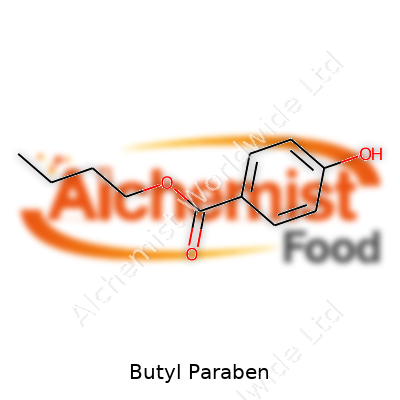
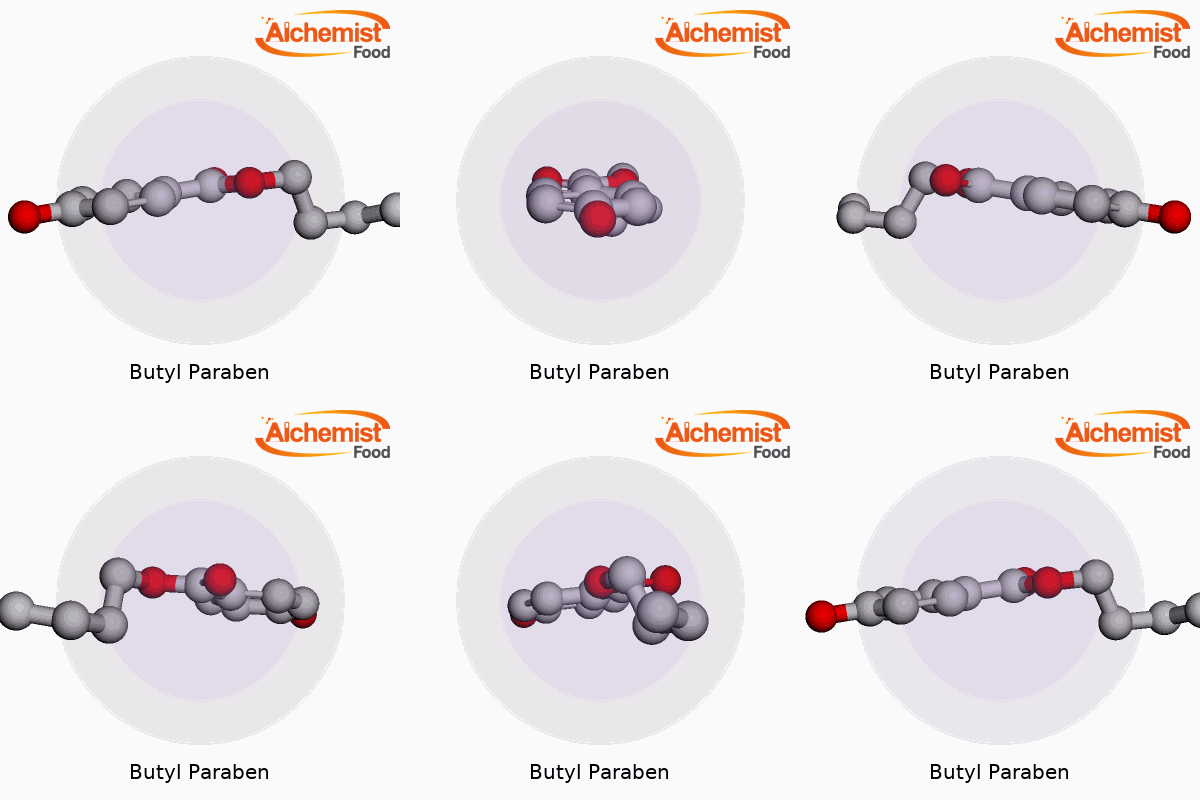
| Names | |
| Preferred IUPAC name | butyl 4-hydroxybenzoate |
| Other names |
Butyl p-hydroxybenzoate Butyl 4-hydroxybenzoate Butylparaben Butyl para-hydroxybenzoate |
| Pronunciation | /ˈbjuːtɪl ˈpærəˌbɛn/ |
| Preferred IUPAC name | Butyl 4-hydroxybenzoate |
| Other names |
Butyl p-hydroxybenzoate Butyl para-hydroxybenzoate Butyl 4-hydroxybenzoate p-Hydroxybenzoic acid butyl ester |
| Pronunciation | /ˈbjuːtɪl ˈpærəˌbɛn/ |
| Identifiers | |
| CAS Number | 94-26-8 |
| Beilstein Reference | 2021115 |
| ChEBI | CHEBI:31843 |
| ChEMBL | CHEMBL1405 |
| ChemSpider | 5286 |
| DrugBank | DB03444 |
| ECHA InfoCard | 03a1564656 |
| EC Number | 202-318-7 |
| Gmelin Reference | 6816 |
| KEGG | C14331 |
| MeSH | D016258 |
| PubChem CID | 7182 |
| RTECS number | DA4375000 |
| UNII | 8D277JH5VR |
| UN number | UN3077 |
| CAS Number | 94-26-8 |
| Beilstein Reference | 635994 |
| ChEBI | CHEBI:31843 |
| ChEMBL | CHEMBL18504 |
| ChemSpider | 64874 |
| DrugBank | DB03455 |
| ECHA InfoCard | 03e8b680-20e3-4dd2-95c9-799ff4fd87fa |
| EC Number | 202-307-7 |
| Gmelin Reference | 7048 |
| KEGG | C10793 |
| MeSH | D017366 |
| PubChem CID | 7182 |
| RTECS number | DJ1980000 |
| UNII | 4P2U7MJP5S |
| UN number | 3077 |
| Properties | |
| Chemical formula | C11H14O3 |
| Molar mass | 194.23 g/mol |
| Appearance | White crystalline powder or colorless crystals |
| Odor | Faint odor |
| Density | 1.24 g/cm3 |
| Solubility in water | Slightly soluble |
| log P | 1.96 |
| Vapor pressure | 0.00017 mmHg (25°C) |
| Acidity (pKa) | 8.47 |
| Basicity (pKb) | 8.47 |
| Magnetic susceptibility (χ) | -68.0e-6 cm³/mol |
| Refractive index (nD) | 1.506 |
| Viscosity | Viscosity: 6.1 mPa·s (20 °C) |
| Dipole moment | 3.97 D |
| Chemical formula | C11H14O3 |
| Molar mass | 194.23 g/mol |
| Appearance | White crystalline powder |
| Odor | Odorless |
| Density | 1.24 g/cm³ |
| Solubility in water | Slightly soluble in water |
| log P | 1.96 |
| Vapor pressure | Vapor pressure: <0.01 mmHg (20°C) |
| Acidity (pKa) | pKa = 8.47 |
| Basicity (pKb) | 8.62 |
| Refractive index (nD) | 1.507 |
| Viscosity | Viscous liquid |
| Dipole moment | 3.86 D |
| Thermochemistry | |
| Std molar entropy (S⦵298) | 242.2 J·mol⁻¹·K⁻¹ |
| Std enthalpy of formation (ΔfH⦵298) | -611.9 kJ/mol |
| Std enthalpy of combustion (ΔcH⦵298) | -6463.1 kJ/mol |
| Std molar entropy (S⦵298) | 397.7 J·mol⁻¹·K⁻¹ |
| Std enthalpy of formation (ΔfH⦵298) | -544.3 kJ/mol |
| Std enthalpy of combustion (ΔcH⦵298) | -6467.7 kJ/mol |
| Pharmacology | |
| ATC code | D01AE15 |
| ATC code | D04AX08 |
| Hazards | |
| Main hazards | Harmful if swallowed, causes skin and eye irritation, may cause allergic skin reaction |
| GHS labelling | GHS02, GHS07 |
| Pictograms | GHS07 |
| Signal word | Warning |
| Hazard statements | H319: Causes serious eye irritation. |
| Precautionary statements | P264, P280, P305+P351+P338, P337+P313 |
| Flash point | 103°C |
| Autoignition temperature | 410°C |
| Lethal dose or concentration | LD50 Rat oral 2230 mg/kg |
| LD50 (median dose) | LD50 (median dose): 16,000 mg/kg (oral, rat) |
| NIOSH | RT8750000 |
| PEL (Permissible) | 0.2% |
| REL (Recommended) | 0.01% |
| Main hazards | Harmful if swallowed, causes skin and eye irritation |
| GHS labelling | GHS02, GHS07 |
| Pictograms | GHS07 |
| Signal word | Warning |
| Hazard statements | H319: Causes serious eye irritation. |
| Precautionary statements | Precautionary statements: P261, P264, P271, P272, P273, P280, P302+P352, P305+P351+P338, P337+P313, P362+P364 |
| NFPA 704 (fire diamond) | 1-1-0-~W |
| Flash point | 115°C |
| Autoignition temperature | 410 °C |
| Lethal dose or concentration | LD50 Oral Rat 2230 mg/kg |
| LD50 (median dose) | LD50 (median dose): 2,700 mg/kg (oral, rat) |
| NIOSH | BYC |
| PEL (Permissible) | 5 mg/m3 |
| REL (Recommended) | 0.01% |
| IDLH (Immediate danger) | Not established |
| Related compounds | |
| Related compounds |
Methylparaben Ethylparaben Propylparaben Isobutylparaben Benzylparaben |
| Related compounds |
Methylparaben Ethylparaben Propylparaben Isobutylparaben Benzylparaben |



