Benzoic Acid: Looking at a Storied Chemical Compound
Historical Development
People have worked with benzoic acid for hundreds of years, often without fully grasping how much of an impact such a simple molecule would have. In the 1500s, European alchemists first isolated it from gum benzoin—a resin traded across continents. By the 1800s, as chemistry matured into an actual science, names like Justus von Liebig emerged, showing how benzoic acid appears naturally in many plants. The story didn’t end there. With the rise of industrial-scale chemistry in the 19th and 20th centuries, benzoic acid started showing up not just in textbooks, but in household products and factories around the globe.
Product Overview
Benzoic acid, known for its white, crystalline appearance, packs a punch far beyond its looks. It’s made up of a benzene ring connected to a carboxyl group. In day-to-day use, this compound gets pressed into action as a food preservative, a starting point for medical and industrial chemicals, and even shows up in personal care products. One can find it labeled under E210 on food packaging, and with other names when used elsewhere.
Physical & Chemical Properties
The first thing that jumps out is its high melting point—122°C. Water at room temperature only dissolves a little of it. In hot water, it dissolves more easily. In organic solvents, benzoic acid behaves obediently, blending with things like ethanol and diethyl ether. Odor is faintly sweet, almost medicinal at times. On a chemical level, benzoic acid resists breakdown, remaining stable under ordinary storage and handling, unless strong base or acid nudges it along into reactions.
Technical Specifications & Labeling
Suppliers sell benzoic acid in different grades: food, pharmaceutical, and industrial. Purity often climbs above 99%, especially for medicines or additives. Industrial grades may carry trace impurities picked up during synthesis, but strict limits make sure it doesn’t threaten end use. Labels on packaging always print batch number, expiration date, storage advice, and cautionary warnings about handling dust or breathing in crystals. Hazard statements flag possible eye and respiratory irritation.
Preparation Method
On the factory floor, benzoic acid often comes from oxidizing toluene, a cheap and widely available solvent. Oxygen from air and a metal catalyst, like cobalt or manganese salts, steer toluene into transformation under heat and pressure. Efforts go into keeping the process clean, reducing side products, and ensuring final filtration and crystallization net only the purest crystals possible. This has turned into an efficient, high-volume method, feeding the world’s appetite for benzoic acid.
Chemical Reactions & Modifications
Chemists like benzoic acid because it behaves predictably. Reacting it with alcohol builds benzoate esters, widely useful as solvents and fragrances. Introduce a base, and it yields benzoate salts—popular as preservatives. Heat it alongside phosphorus pentachloride, and it transforms into benzoyl chloride, a key player in many syntheses. Structural tweaks let it form a broad patchwork of derivatives, supporting larger families of dyes, pharmaceuticals, and polymers.
Synonyms & Product Names
Benzoic acid goes by many names: E210 in food systems, carboxybenzene in catalogues, and draconic acid in old chemistry texts. In food, people see benzoate or sodium benzoate most often, but the core molecule remains unchanged. Each name pops up in regulations, chemical supply sheets, testing guidelines, or pharmaceutical indexes.
Safety & Operational Standards
Safe handling standards set the bar for every industry using benzoic acid. Direct contact can irritate skin, eyes, and breathing passages, so workers don gloves, goggles, and respirators, at least in powder-heavy or industrial scale settings. Storage areas require ventilation and protection from open flames. In food, regulatory agencies—FDA, EFSA, others—cap daily intake: usually up to 5 mg/kg body weight for sodium benzoate. Facilities running synthesis lines check air quality, monitor for spills, and maintain emergency showers. Fire departments know it combusts, but only under higher temperatures, often producing benzoic fumes.
Application Area
Benzoic acid's best-known job remains warding off molds and yeasts in acidic foods and drinks—think fruit juices, sodas, pickles, jams. Bakers, winemakers, and soda companies keep it handy. The pharmaceutical industry, always alert to safety and cost, puts it into antifungal creams, ointments, and cough syrups. Cosmetics rely on it as a weak preservative and stabilizer. Industrial chemists count on benzoic acid to serve as a precursor for products like plasticizers, resins, and specialty polymers. Even livestock feed gets dashes of benzoic acid to control microbial growth during storage.
Research & Development
Scientists continue poking at benzoic acid, prodding for cleaner production, exploring better formulations, and improving testing devices that detect trace amounts in foods. Over the years, geneticists traced how microbes break down benzoic acid, hoping to use these tricks for greener waste management. Green chemistry pushes for biosynthetic routes, using engineered bacteria or fungi to assemble the molecule from renewable feedstocks. Some pharmaceutical labs hunt for derivatives with broader medical action—chasing new antifungals, anti-inflammatories, and metabolic regulators.
Toxicity Research
Scientists focus plenty of energy studying benzoic acid’s safety. Large doses cause stomach upset or mild toxicity in lab animals. Regulators set strict exposure margins based on animal studies and human case data. Some people, especially those with allergy-prone metabolisms, react to its food salt—sodium benzoate—sometimes linking it with hyperactivity in sensitive children, though findings remain mixed. Researchers keep tightening the numbers, testing absorption, metabolism, and excretion, hoping future studies push safety even higher.
Future Prospects
Benzoic acid keeps evolving. Market analysts expect growing food preservation needs, especially in countries rolling out modern food supply chains. Renewable manufacturing methods could lower environmental footprint, making biosynthesis a commercial reality. Pharmaceutical chemists look for new benzoic acid derivatives to address stubborn fungal infections and inflammatory diseases. As regulatory oversight expands, testing labs keep refining ways to spot even faint traces in complex foods. Green chemistry will likely shape how future generations make and use this time-tested compound.
What is benzoic acid used for?
Not Just a Preservative on a Label
Benzoic acid usually appears in the ingredient list of soft drinks, fruit juices, salad dressings, and even some medicines found in the bathroom cabinet. For most people, this isn’t a name that signals much concern—or curiosity. But its uses stretch far beyond keeping soda fizzy and cough syrup safe for months on a shelf. Benzoic acid works as a preservative, yes, but it’s a lot more than just a chemical number on the back of a food package.
Longer Shelf Life, Fewer Headaches
Benzoic acid helps preserve food by stopping the growth of mold, yeast, and some bacteria. This gives products like carbonated drinks and pickled veggies a longer life without needing refrigeration every step of the way. The impact of this plays out in groceries lasting longer, fewer headaches around spoilage risk, less food thrown out, and lower costs for families—especially for those who stock up during sales or buy in bulk.
Boosting Health and Hygiene
While food safety stands out as a big reason for using benzoic acid, this ingredient has another side—personal health. Many over-the-counter ointments, creams, and cough syrups make use of benzoic acid to keep harmful bacteria at bay. Without it, topical medications and cough relief formulas would lose their safety and effectiveness before anyone opened the blister pack. That translates to better outcomes and less money spent replacing wasted medicines, which I’ve seen again and again coming from a large family that cycles through cough season every year. For people with small children or elderly parents, that kind of reliability isn’t just handy—it’s a small peace of mind.
Cleaners and Cosmetics
Bathrooms fill up with products promising gentleness and cleanliness—lotions, shampoos, makeup removers, and toothpaste—all containing small amounts of benzoic acid as a preservative. This keeps bottles from turning rank and helps ensure the last squirt from the tube is just as safe as the first. Without preservatives, cosmetics would spoil fast, leading to irritated skin and unpredictable results. Dermatologists and skincare experts stress this point too: preservatives in low, regulated amounts can protect rather than harm, as long as allergies aren’t at play.
Factories and Everyday Life
Beyond home and grocery store shelves, benzoic acid shows up in plastics, dyes, and industrial cleaners. It acts as a building block for many other chemicals. Manufacturers use it to make things stronger, last longer, or resist breaking down in tough conditions. This cuts down on waste and keeps production affordable for lots of everyday goods.
No Silver Bullet—But Plenty of Value
Benzoic acid doesn’t do anything magical—food won’t last forever, and nobody gets perfect health from a cream or cough drop. But its track record in keeping things safe outpaces plenty of trendier “natural” preservatives. Most regulatory agencies, including the FDA and EFSA, have done their work on this additive, setting upper limits and monitoring safety. Consuming small amounts as part of a balanced diet looks safe for the vast majority of people.
Smarter Solutions Going Forward
Concerns do pop up for certain folks—some people react to benzoates, especially if they have asthma or aspirin sensitivity. Public health researchers continue to hunt for new preservatives with fewer allergy triggers and no impact on taste or nutrition. For families who want fewer additives, learning to spot benzoic acid on the label and making informed choices can help. Simple habits like rotating pantry foods, keeping leftovers cold, and eating more fresh produce all work toward safer, more nutritious kitchens.
Is benzoic acid safe for consumption?
Getting Straight to the Heart of Food Preservation
Food lasts longer on supermarket shelves than it did decades ago. A big factor has been the introduction of preservatives, and benzoic acid sits high on the list. It’s been used since the early 20th century, often added to acidic foods—think fizzy drinks, pickles, and jams—to inhibit the growth of mold, yeast, and some bacteria. On paper, benzoic acid sounds practical. In practice, many wonder if its safety matches its effectiveness.
What is Benzoic Acid Doing in Your Food?
Benzoic acid occurs naturally in some fruits like cranberries and prunes. The stuff added to foods, though, comes from a synthetic process using chemicals. Most of us don’t think twice about the preservatives in our ketchup or salad dressing, but reading the ingredient list can turn into a chemistry class.
Looking at the Safety Record
Eating food with benzoic acid hasn’t raised mass alarms in the medical world. The U.S. Food and Drug Administration, European Food Safety Authority, and other regulatory groups have reviewed loads of data over the years. They’ve all agreed on this point: In the amounts approved for food, benzoic acid is safe for nearly everyone. The maximum limit is set at 0.1% in most refreshments and processed foods. Go over that limit and the taste changes—and not for the better.
People digest benzoic acid without fuss at those approved levels. The liver converts it to hippuric acid, which heads out of the body pretty quickly. No buildup means little chance of long-term harm for the average person. Published studies back this up. Single high doses around 6 grams may lead to upset stomach, but food rarely packs even a fraction of that amount.
Where the Debate Heats Up
Skepticism grows when benzoic acid meets ascorbic acid (vitamin C), found in the same sodas and juices. This combination can form benzene, a known carcinogen, when conditions like heat or storage length come into play. In real-life testing, most drinks held well below dangerous benzene levels, but this issue pushed food companies and regulators to keep a close eye. The U.S. FDA and European studies continue monitoring for benzene, and large producers now pay more attention to how they formulate their beverages.
Personal Experience and Navigating Grocery Stores
Shopping for groceries has always been a balancing act. As a parent with young kids, I look for ways to limit additives without driving myself—and my wallet—crazy. Benzoic acid never gave my family a problem, but some people have sensitive bodies. Folks with certain allergies or inherited conditions, like those lacking a working glycine metabolism pathway, face higher risks. Allergic rashes, asthma episodes, and other reactions have popped up in isolated cases. If your doctor tells you to avoid benzoates, believe them.
Common-Sense Solutions for Consumers and Industry
Most people won’t cut out every processed food. Instead, more balanced choices help. Choosing fewer sugary sodas and more whole foods means less exposure. Checking ingredient labels still counts. On the industry side, advancements in packaging, refrigeration, and alternative preservation methods provide choices. Some companies use natural extracts or newer methods like high-pressure processing to maintain both safety and taste. Regulators can push for transparency and reformulation when emerging evidence justifies it. Everyone benefits from ongoing research into long-term health impacts, especially for vulnerable groups like children.
Building Trust in Food Safety
Confidence in what goes on your plate matters. Benzoic acid remains among the most studied preservatives out there. Staying on top of food science, making smart shopping choices, and keeping a line open with healthcare providers set up safer meals, no chemistry degree required.
What are the storage conditions for benzoic acid?
Why People Store Chemicals With Care
Any time you keep a chemical around, safety and reliability matter more than anything. I’ve spent time working in research labs and I’ve also stored chemicals at home for simple preservation projects. Some things come straight from common sense—like labeling, sealing tightly, and keeping little ones or pets away. For benzoic acid, the basics look a lot like the way you’d keep food fresh, only with higher stakes. I’ve found that bad storage wrecks chemicals, makes experiments useless, and sometimes even risks health.
The Real Risks Behind Benzoic Acid
Benzoic acid shows up in food preservation, personal care, and classroom chemistry sets. It looks pretty harmless as a white, powdery solid, but you have to think ahead. Left open to damp air, it clumps and can lose quality. Mix it with the wrong stuff, and you risk bad reactions. Keep it near anything flammable, and you invite trouble during spills. Proper storage stops these problems before they start. It also protects anyone nearby.
Everyday Storage Setup
Start with the basics: keep benzoic acid in a clean, well-ventilated spot and seal it up tightly. I’ve lost good chemicals to humidity more than once, so I always double-check container lids. Choose glass or high-quality plastic with a well-fitted cap. Skip ordinary food containers and don’t even think about using metal. Moisture in the air can react with benzoic acid and ruin your batch, so I toss in a packet of desiccant whenever possible. A shelf way above eye level keeps little fingers or paws from getting into the jar by accident.
Why Temperature Matters
Room temperature works, but hotter spaces speed up decomposition. I learned the hard way that sunlight can mess up more than just the label—it can degrade chemicals that seem stable at first glance. So the jar belongs in a cool, dark cabinet far from heaters and summer sunbeams. Sometimes, folks ask about refrigeration. If the container is strong and air-tight, a fridge can help in hot climates, though most labs keep benzoic acid at room temp so nobody runs into condensation issues later. The trick is to avoid sharp temperature swings and make sure the container never sweats.
Keeping Others Safe, Including Yourself
I always warn people against storing benzoic acid near acids, bases, oxidizers, or anything flammable. Chemical storage charts get posted for a reason. Over the years, I’ve seen forgotten storage mishaps lead to ruined experiments, ruined products, and even one trip to a hospital. No one wins in those situations. Good labeling with the chemical name and date helps you track how old your supply is, too. If it starts to change color, clump up, or smell off, toss it—playing chemist with bad ingredients just isn’t worth it.
Better Storage, Fewer Problems
All the details—container choice, sealing, darkness, dryness—line up to stop waste, protect health, and keep projects on track. In school labs and industry settings, these steps follow hard-earned wisdom. Even at home, it pays to think carefully about each one. When storage gets sloppy, nobody benefits. When it’s done right, chemicals like benzoic acid stay safe, usable, and out of the headlines for all the wrong reasons.
What is the chemical formula of benzoic acid?
Understanding Benzoic Acid: Formula and Role
Benzoic acid carries the chemical formula C7H6O2. This formula means benzoic acid has seven carbon atoms, six hydrogen atoms, and two oxygen atoms within its molecule. You might walk into any pharmacy, glance at ingredients on a food label, or work in a chemistry lab and notice this name popping up. Its use stretches wider than some might expect—a simple blend of familiar atoms, yet it pops up in medicine cabinets, canned foods, and industrial products.
Why People Should Care About C7H6O2
Anyone who has ever used a food preservative has probably encountered benzoic acid, even if the name didn’t catch their eye. In the real world, avoiding food spoilage carries big consequences. Mold growth, color changes, and off smells—nobody wants that in food. Benzoic acid slows unwanted bacteria and mold, which keeps shelf life long and food safer. That’s one of the reasons food makers rely on it.
My time watching community gardens lose crops due to spoilage makes me see this need. Not all communities have reliable cold storage or swift transportation, so stable additives offer peace of mind and food security. More than comfort, this touches affordability and health. Spoiled food can bring illness; stable food means fewer trips to the doctor.
Everyday Products Contain Benzoic Acid
Benzoic acid finds a home beyond food. Anyone with a jar of ointment or tube of toothpaste might have unknowingly used it. Skincare makers blend it into lotions and creams to keep microbial growth away, protecting customers from infections or contamination. Industry uses it in plastics, as an intermediate for dyes, and in simple household products. For anyone who has taken an interest in do-it-yourself cleaning, finding out benzoic acid acts as a mild preservative comes as an eye-opener.
In my chemistry classes, handling a white, crystalline powder that holds so much practicality shifted my view of “synthetic” versus “natural.” Benzoic acid shows up in cranberries and plums naturally. So, not every chemical formula listed on packaging carries a laboratory-only story.
Concerns and Solutions in Widespread Use
Some people raise concerns about food additives and health. That deserves attention. Benzoic acid ranks among the oldest preservatives out there. Science has offered strong data about its safety at regulated levels, though high levels can pose risks, mostly for people with specific allergies or sensitivities. Governments set legal limits for how much can be added to food. Yet, confusion lingers. The solution probably isn't avoiding preserved foods altogether, but calling out for clear, simple labeling and public education.
People deserve to understand what sits in their food and skincare, and why it's there. I remember neighbors debating food additives and wishing for straight answers. Experts—including food scientists and doctors—should connect with the public using everyday language, not jargon. More transparency leads to better choices and less fear.
Future Possibilities
Some research teams look for ways to cut down even more on synthetic preservatives or swap them for natural extracts with benzoic acid as one standard to compare. Learning from natural sources helps lower chemical accumulation in our diets. As food science grows, maybe a future with even safer and simpler labels comes closer.
Benzoic acid and its formula C7H6O2 drive home the point that science and daily life cross paths more than many realize. With a little curiosity, understanding compounds like this one isn’t just for chemists or food scientists—it becomes vital knowledge for everyone looking at labels and thinking about their health.
Is benzoic acid natural or synthetic?
The Real Story Behind Benzoic Acid
Walk through the aisles of any grocery store, pick up a bottle of soda or a jar of pickles, and odds are you'll spot benzoic acid somewhere in the fine print. This small compound manages to keep food from spoiling and drinks from growing unwelcome surprises. But people often stop, read the name, and wonder—where does this stuff really come from? Is it pulled from plants or whipped up in a lab?
Roots in Nature
Benzoic acid didn’t start its life in a factory, and that's an important point. Experts first found benzoic acid in gum benzoin, a resin from a type of tree growing across Southeast Asia. This compound also pops up naturally in cranberries, prunes, cinnamon, and cloves. The humble berry already uses benzoic acid as a natural shield against bacteria and mold. The body even breaks some foods down into trace amounts of benzoic acid as a normal process. So yes—benzoic acid exists in nature, even if eating a bucket of cranberries wouldn’t deliver much compared to what you find in a processed food label.
Synthesized for a Reason
Even though benzoic acid started off as a natural extract, most of the benzoic acid you see in foods or personal care products doesn’t come from berries or tree resin. Companies make it in large quantities by mixing chemicals like toluene and oxygen in industrial setups. Making it this way keeps prices low and supply steady. Both synthetic and naturally sourced benzoic acid share the same chemical structure—the body can’t really tell the difference between the two. The idea that “natural” always equals “safe” and “synthetic” equals “harmful” just doesn’t play out here. It's more about the dose and how the food or product gets used.
Why It Matters
People care about the origin of what they eat and use every day, and for good reason. Years of working in food safety have taught me that the smallest details in an ingredient list can mean a lot to someone with allergies or sensitivities. Many shoppers want to avoid synthetic additives whenever possible. At the same time, preservatives like benzoic acid keep food fresh, fight waste, and cut down on spoilage. A world without preservatives would see more moldy bread and spoiled juice at home and in stores.
Long-term studies and data from regulatory bodies like the U.S. Food and Drug Administration show that benzoic acid, when used within set limits, does not raise health issues for most people. Cases of sensitivity can happen, especially for those with a rare enzyme deficiency or those who eat or drink large amounts. For anyone with concerns, whole foods with clear ingredient lists offer a reset button.
Looking Ahead
More brands have started using fermented or plant-derived sources of benzoic acid to answer consumer demand, and that’s a step toward more transparency. Scientists keep searching for natural preservatives that can do the same job without the negative associations. It’s up to manufacturers to keep proving safety, and up to shoppers to choose based on real facts instead of labels alone. People deserve clear, honest answers about where their food comes from, and straightforward information is the only way to build trust.
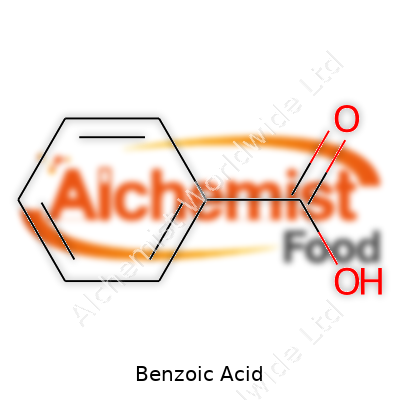
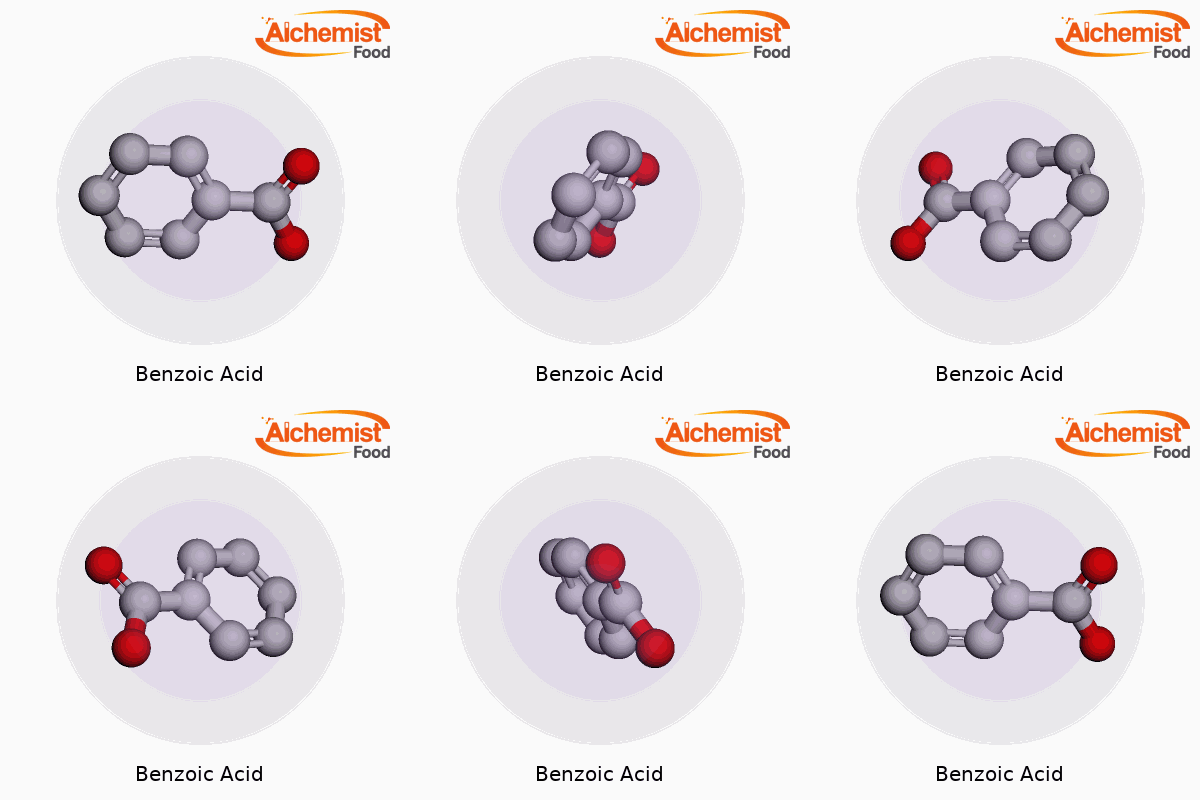
| Names | |
| Preferred IUPAC name | Benzoic acid |
| Other names |
Benzenecarboxylic acid Carboxybenzene Dracylic acid Phenylformic acid |
| Pronunciation | /benˈzoʊ.ɪk ˈæs.ɪd/ |
| Preferred IUPAC name | Benzoic acid |
| Other names |
Benzenecarboxylic acid Carboxybenzene Dracylic acid Benzeneformic acid |
| Pronunciation | /ˈbɛn.zoʊ.ɪk ˈæs.ɪd/ |
| Identifiers | |
| CAS Number | 65-85-0 |
| Beilstein Reference | बे 6 |
| ChEBI | CHEBI:30746 |
| ChEMBL | CHEMBL417 |
| ChemSpider | 5197 |
| DrugBank | DB03793 |
| ECHA InfoCard | 100.003.220 |
| EC Number | 203-632-7 |
| Gmelin Reference | 505 |
| KEGG | C00180 |
| MeSH | D001579 |
| PubChem CID | 243 |
| RTECS number | DG0875000 |
| UNII | 8SKN0B0MIM |
| UN number | UN3076 |
| CAS Number | 65-85-0 |
| Beilstein Reference | 1909639 |
| ChEBI | CHEBI:30761 |
| ChEMBL | CHEMBL277 |
| ChemSpider | 6026 |
| DrugBank | DB03793 |
| ECHA InfoCard | 03b82690-2246-487d-b77c-3e0a8a2ea63e |
| EC Number | 200-618-2 |
| Gmelin Reference | 821 |
| KEGG | C00180 |
| MeSH | D001570 |
| PubChem CID | 243 |
| RTECS number | DG0875000 |
| UNII | 8SKN0B0MIM |
| UN number | UN3076 |
| Properties | |
| Chemical formula | C7H6O2 |
| Molar mass | 122.12 g/mol |
| Appearance | White crystalline powder |
| Odor | Faint, pleasant odor |
| Density | 1.32 g/cm³ |
| Solubility in water | 3.4 g/L (20 °C) |
| log P | 1.87 |
| Vapor pressure | 0.0013 mmHg (20°C) |
| Acidity (pKa) | 4.20 |
| Basicity (pKb) | 11.3 |
| Magnetic susceptibility (χ) | -61.0·10⁻⁶ cm³/mol |
| Refractive index (nD) | 1.504 |
| Dipole moment | 1.72 D |
| Chemical formula | C7H6O2 |
| Molar mass | 122.12 g/mol |
| Appearance | White crystalline solid |
| Odor | Faint, benzoin-like |
| Density | 1.32 g/cm³ |
| Solubility in water | 3.4 g/L (20 °C) |
| log P | 1.87 |
| Vapor pressure | 0.1 mmHg (20 °C) |
| Acidity (pKa) | 4.2 |
| Basicity (pKb) | 11.0 |
| Magnetic susceptibility (χ) | -55.0·10⁻⁶ cm³/mol |
| Refractive index (nD) | 1.504 |
| Dipole moment | 1.72 D |
| Thermochemistry | |
| Std molar entropy (S⦵298) | 186.0 J·mol⁻¹·K⁻¹ |
| Std enthalpy of formation (ΔfH⦵298) | -385.2 kJ/mol |
| Std enthalpy of combustion (ΔcH⦵298) | −3227 kJ mol⁻¹ |
| Std molar entropy (S⦵298) | 269.2 J·mol⁻¹·K⁻¹ |
| Std enthalpy of formation (ΔfH⦵298) | -385.2 kJ/mol |
| Std enthalpy of combustion (ΔcH⦵298) | −3227 kJ·mol⁻¹ |
| Pharmacology | |
| ATC code | A01AB08 |
| ATC code | A01AB08 |
| Hazards | |
| Main hazards | Harmful if swallowed or inhaled, causes serious eye irritation, may cause respiratory irritation. |
| GHS labelling | Warning;H319 |
| Pictograms | GHS07,GHS09 |
| Signal word | Warning |
| Hazard statements | H319: Causes serious eye irritation. |
| Precautionary statements | P210, P233, P240, P241, P242, P243, P280, P303+P361+P353, P370+P378 |
| NFPA 704 (fire diamond) | 3-1-0 |
| Flash point | 121 °C |
| Autoignition temperature | 570°C |
| Explosive limits | Explosive limits: 0.6–7.0% |
| Lethal dose or concentration | LD50 oral rat: 3040 mg/kg |
| LD50 (median dose) | LD50 (median dose) of Benzoic Acid: 3040 mg/kg (oral, rat) |
| NIOSH | Casn: 65-85-0 |
| PEL (Permissible) | 5 mg/m3 |
| REL (Recommended) | 30 mg/L |
| IDLH (Immediate danger) | NF = Not Found |
| Main hazards | Harmful if swallowed, causes serious eye irritation. |
| GHS labelling | GHS02, GHS07 |
| Pictograms | GHS07, GHS09 |
| Signal word | Warning |
| Hazard statements | H319: Causes serious eye irritation. |
| Precautionary statements | P261, P264, P271, P280, P302+P352, P304+P340, P305+P351+P338, P312, P332+P313, P337+P313, P362+P364 |
| NFPA 704 (fire diamond) | 2-1-0 |
| Flash point | 121°C |
| Autoignition temperature | 570°C |
| Lethal dose or concentration | LD50 (oral, rat): 3040 mg/kg |
| LD50 (median dose) | LD50 (median dose) of Benzoic Acid: 2263 mg/kg (oral, rat) |
| NIOSH | DT 1400000 |
| PEL (Permissible) | 5 mg/m³ |
| REL (Recommended) | 0.5% |
| IDLH (Immediate danger) | 1,000 mg/m³ |
| Related compounds | |
| Related compounds |
Sodium benzoate Potassium benzoate Methyl benzoate Ethyl benzoate Benzoyl chloride Hippuric acid Salicylic acid Benzaldehyde p-aminobenzoic acid Phthalic acid |
| Related compounds |
Sodium benzoate Benzoyl chloride Benzamide Methyl benzoate Phenol Anthranilic acid Phthalic acid Toluic acid |



