Benzaldehyde: An Understated Backbone of Chemical Industry Progress
Historical Development
Benzaldehyde’s story stretches back to the late 1800s, when chemists first managed to isolate it from bitter almonds. For centuries before, people used natural almond extracts in food and fragrance without knowing the identity of its key aroma compound. Auguste Cahours documented benzaldehyde in 1832, marking a moment where science started to illuminate the molecules shaping flavors and scents. Over time, manufacturing transitioned from natural extraction to synthetic methods. Early commercial production met the needs of perfume makers, but by the middle of the 20th century, the versatility of benzaldehyde fostered a new era—one in which this aromatic aldehyde became a staple in the industrial toolkit, not just for its aroma but for its chemical reactivity and role in making a dizzying array of new compounds.
Product Overview
Benzaldehyde presents itself as a colorless liquid exuding a distinct scent reminiscent of almonds. Typical containers bear simple, tightly secured labels since even a small spill fills a room with fragrance. In factories, benzaldehyde often moves in steel drums, and lab workers know to handle it with care. The market offers both technical- and food-grade benzaldehyde, though most volume goes toward industrial uses: as a precursor, as a flavoring ingredient, and in organic synthesis. Multinational chemical producers and small specialty shops both contribute to a supply chain that touches everyone, whether through a marzipan treat, a bottle of shampoo, or a jar of cherry jam.
Physical & Chemical Properties
Benzaldehyde offers a boiling point near 179°C and carries a density just above water at 1.044 grams per cubic centimeter, making it easy to spot when water-white droplets bead at the bottom of a beaker. Its solubility tells a story of contrasts: it mixes well with common organics like ethanol and diethyl ether, but shuns water. Chemically, it stands out for its reactivity at the formyl group—a single carbonyl next to the six-membered benzene ring. Air oxidizes it by degrees, so it sometimes produces traces of benzoic acid in storage, leading to a whiff of vinegar behind the almonds if not properly capped.
Technical Specifications & Labeling
Every drum or bottle comes with a technical specification sheet describing purity levels, often starting at 98% for food-grade up to 99.5% for specialty synthesis. Labels display hazard symbols, reflecting both its flammability and potential for irritation. Transport follows the rules for hazardous goods, with the UN number 1990, and storage takes place in cool, ventilated spaces away from oxidizers. Producers document not only chemical composition but residual solvents, water content, and compatibility data, giving end users confidence. No matter the scale, reliable labeling and documentation anchor safe handling, helping people avoid costly shelf-life losses and contamination.
Preparation Method
Modern factories tap the liquid phase chlorination of toluene followed by hydrolysis—a method balancing yield, cost, and safety. Smaller scale labs sometimes prepare it by oxidizing benzyl alcohol with agents like chromic acid or by distilling bitter almond oil, though natural extraction has grown rare. Process engineers routinely examine these methods to reduce waste and energy. In companies obsessed with green chemistry, the drive to replace hazardous reagents and minimize toxic byproducts guides their process selection. Each method affects the impurity profile as well, making strict purification steps crucial, especially for pharmaceutical and food-grade users.
Chemical Reactions & Modifications
Benzaldehyde’s reactive core opens a world of synthetic possibilities. Grignard reagents, amines, and cyanide ions all interact with the carbonyl to build more complex molecules: hydroxybenzyl alcohols, Schiff bases, benzyl cyanides. Aldol condensation transforms benzaldehyde into cinnamaldehyde or chalcones, intermediates in dye and drug manufacture. Reductive processes yield benzyl alcohol or, with further steps, even toluene. Its mild oxidizability enables a smooth pathway to benzoic acid—one of my earliest encounters with practical organic chemistry, memorable for its convincing demonstration of structure–property relationships. As research teams seek new ligands, polymers, and catalysts, benzaldehyde continues providing a sturdy starting point for molecular innovation.
Synonyms & Product Names
Chemical catalogs and regulatory lists rarely stick to a single name. Benzaldehyde appears as benzenecarboxaldehyde, phenylmethanal, or oil of bitter almond, each echoing different facets of its structure. Trade names sometimes allude to its origins in almonds, while pharmaceutical and flavor houses might use internal codes to track purity and formulation grades. No matter the label, regulatory authorities demand clear reporting of the compound’s identity, especially when products cross borders or enter consumer goods.
Safety & Operational Standards
Safety officers train workers to respect both the irritant properties and the flammability of benzaldehyde. It can provoke skin rashes, watery eyes, and headaches, so gloves, splash goggles, and fume hoods are standard. Storage must keep temperatures down and containers sealed. Major organizations like OSHA and NIOSH regulate permissible exposure levels, and certifications like ISO 9001 or food-safety audits shape operational routines. Spills need immediate cleanup using absorbent material while keeping vapors away from ignition channels. Investing in proper ventilation and spill kits pays off by preventing chronic exposure episodes that could impact worker health.
Application Area
Across industries, benzaldehyde adds value in some surprising places. In flavors and fragrances, just a drop lends authenticity to cherry, almond, or apricot notes. Paint and plastic manufacturers use it to create more advanced resins. In pharmaceutical labs, I’ve seen benzaldehyde act as a scaffold—forming intermediates on the path to active drugs, UV blockers, and imaging agents. Agricultural products benefit from its role in fungicide production, while certain photographic and dye processes depend on its unique reactivity. Demand fluctuates with seasonal food trends and with the rise of natural fragrance claims in cosmetics, but few sectors are untouched.
Research & Development
Research teams focus both on making benzaldehyde more efficiently and finding fresh uses. Greener synthesis routes try to replace hazardous reagents, and universities chase new catalysts that cut costs. Analytical chemists refine methods for quality control—gas chromatography or NMR offers rapid routine checks for purity and residual solvents. In academic circles, benzaldehyde features in developing new ligands for catalysis, in molecular electronics, and even as a probe in biochemistry. Industry pushes the molecule into newer applications—materials with enhanced UV stability, or as a starting point for biodegradable polymers. My own involvement in small molecule R&D underscored how compounds considered “basic” can drive far-reaching technology changes.
Toxicity Research
Toxicologists point to a low-to-moderate hazard profile, with most risks coming from inhalation and skin contact. Studies in rats show mild effects at typical exposure levels but significant irritation at high doses. Regulatory panels restrict limits in food and fragrance to prevent cumulative impacts. Environmental studies demonstrate benzaldehyde’s relatively rapid breakdown in soil and water, which reduces its bioaccumulation potential. Yet improper disposal or chronic leaks can impact aquatic life, prompting tighter wastewater monitoring. Studies monitor metabolites in mammalian systems to watch for any connection to broader toxicity, though regulatory consensus holds that with proper handling, risks can stay manageable.
Future Prospects
The next decade for benzaldehyde looks dynamic. Appetite for safer, renewable chemicals pushes companies towards biosynthetic production using engineered microbes, which could help reduce dependence on petrochemical toluene as a starting point. Demand from Asia’s food and fragrance markets grows, driven by both consumer affluence and stricter regulations on authenticity. In research circles, benzaldehyde acts as a gateway to new “green” chemistries, including lightweight polymers, advanced imaging agents, and even flavor mimics using natural precursors. Firms that commit to cleaner production and responsible sourcing will find new partners and customers, while global standards for safety and traceability continue to tighten. All through this evolution, benzaldehyde remains a telling example of how a simple molecule still supports both industrial mass production and the subtle details of daily life.
What is Benzaldehyde used for?
The Scent in Everyday Life
Benzaldehyde shows up every day, whether opening a bottle of almond extract or biting into a marzipan treat. This compound gives bitter almonds their distinct, sweet aroma. For years, flavor and fragrance companies have tapped into benzaldehyde to create everything from cherry-scented lip balm to imitation almond flavoring for holiday cookies. Synthetic benzaldehyde keeps “natural” almond tastes safe, since the real thing contains cyanide, showing how chemistry keeps food and smell experiences both pleasant and safe.
Benzaldehyde in Industry
Benzaldehyde wears many hats outside the kitchen, too. Large manufacturers use it as a building block for other chemicals. For instance, engineers rely on benzaldehyde to make dyes, paints, and certain plastics. Its role there is as vital as flour in bread. I worked in a specialty chemicals plant where benzaldehyde acted like a connector in the process, linking simple ingredients into more complex, valuable products. Without it, some everyday items just don’t happen — a testament to how even small molecules end up shaping our daily environment.
In the World of Medicine
Pharmaceuticals can’t ignore benzaldehyde either. It helps chemists put together active ingredients found in some medicines, including those for coughs and allergies. During my early years as a lab technician, we trusted in benzaldehyde’s reliability for producing pure, consistent compounds. Professional oversight and quality checks keep risks low, but workers still need training and protective gear. Benzaldehyde’s usefulness in the lab highlights the balance between innovation, safety, and quality control in modern medicine.
The Darker Side: Illicit Use
Benzaldehyde isn’t just pressed into service for positive reasons. Law enforcement flags it, as some illicit drug makers pick up the scent too. Regulations now keep a tight rein on large quantities, requiring manufacturers to track and report their use. This tension between legitimate industry and criminal misuse calls for vigilance and honest conversation, showing the responsibility that comes with chemical technology. Groups like the European Chemicals Agency publish up-to-date guidelines to help everyone stay ahead of the curve and protect both industry and society.
A Question of Health and Sustainability
Concerns keep surfacing about chemicals in consumer goods, and benzaldehyde faces the same scrutiny. The U.S. Food and Drug Administration recognizes it as safe for food use within strict limits, but overexposure still carries risks like skin or respiratory irritation. Wearing gloves and working in well-ventilated areas serve as simple, effective precautions. Many companies now work on “greener” ways to produce benzaldehyde — using plant-based feedstocks or recycled waste — in response to growing demand for cleaner production and transparency. This push toward sustainability also helps build public trust and keeps workers healthy.
Finding Balance at Work and Home
People rarely realize how much benzaldehyde touches daily routines — morning perfume, bakery treats, household cleaners, and even workplace paint. Its usefulness keeps expanding as science finds new ways to deploy old tools more responsibly. Companies responding to consumer questions, regulators focusing on clear labeling, and researchers testing safer sourcing all point to a world where benzaldehyde offers more benefits with fewer headaches. That’s a goal worth pursuing, not just for industry, but for neighbors, families, and anyone who stops to appreciate the simple smell of almonds in the air.
Is Benzaldehyde safe to handle?
The Everyday Reality in Labs and Kitchens
People who spend time in chemistry labs or commercial kitchens bump into all sorts of chemicals. Benzaldehyde slips into conversations more often than you might expect because it shows up in almond flavorings, some perfumes, and even certain cleaning agents. For anyone unfamiliar, it gives that distinct almond scent we find in marzipan and amaretto. At the same time, it lives on the edge between culinary delight and chemical caution.
Experience with Benzaldehyde
I’ve worked with benzaldehyde in both academic settings and small-scale food experiments. The almond-like smell can fill a room within minutes, so ventilation quickly becomes a concern. Relying on scent alone doesn’t always tell you if you’re exposed to a safe level. Even in small amounts, a pungent chemical can be distracting or irritating. Colleagues usually agree, a fume hood or extraction system brings much-needed relief.
Toxicity and Exposure Risks
Many think benzaldehyde must be harmless because it flavors food. Nature doesn’t always play fair: plenty of food-safe chemicals turn dangerous at the wrong dose. The National Institute for Occupational Safety and Health (NIOSH) lists benzaldehyde as a potential irritant. Inhalation may cause headaches or dizziness, while direct skin contact could trigger rashes for some people. Spills on the hands or unprotected arms often lead to redness and itching if left unchecked.
The U.S. Food and Drug Administration (FDA) allows benzaldehyde as a flavoring, though that’s in trace amounts. Lab-grade solvent bottles carry warning labels, reminding users to avoid splashing or prolonged inhalation. After a colleague developed persistent coughing from careless pipetting, our department made gloves and goggles mandatory for all aromatic aldehydes. These experience-driven changes definitely cut down on minor accidents.
My Approach and Lessons Learned
Years ago, I underestimated how quickly benzaldehyde could absorb through skin or evaporate. That mistake stuck with me, because my hands tingled for several hours after a minor spill. Using nitrile gloves and working in a well-ventilated area became standard practice. Washing hands thoroughly after handling—even if gloves looked clean—makes a difference. The smell lingers, but so can the residue.
Even small labs should keep safety data sheets close by and store benzaldehyde in clearly labeled, tightly sealed containers. At home, food-grade benzaldehyde rarely causes trouble if someone follows the recipe and doesn’t go overboard. Problems often start with overexposure or careless handling, not the chemical itself.
Reducing Harm and Building Awareness
Common sense and basic protective equipment set the foundation for safer use. No one wants to risk longer-term effects like persistent respiratory irritation, which can creep up from repeated careless use. Good ventilation, proper gloves, and safety goggles cost a lot less than an emergency room visit or weeks of hand irritation. Training, ongoing supervision, and a culture that treats “just a little exposure” seriously go a long way in keeping labs and kitchens running smoothly.
What is the chemical formula of Benzaldehyde?
Looking More Closely at Benzaldehyde
Benzaldehyde smells a lot like almonds. People cross paths with it more often than they might guess, from extracts in the kitchen to those housekeeping products on the supermarket shelf. Its chemical formula is C7H6O. Seven carbon atoms, six hydrogen atoms, and one oxygen atom fit together just right, creating both the familiar fragrance and the way the compound behaves in everyday life.
Why the Formula C7H6O Stands Out
That combination—seven carbons, six hydrogens, one oxygen—isn’t picked at random. In my college chemistry labs, even jotting down a formula made the difference between understanding how reactions play out and simply memorizing names. Benzaldehyde forms from a benzene ring with an attached aldehyde group. This makes it reactive enough to show up as a building block in organic chemistry, but stable enough to take part in fragrances, solvents, and pharmaceutical research.
Folks may wonder why the exact arrangement matters. Chemistry teaches that a small change in structure and formula gives something an entirely new set of properties. Benzaldehyde’s structure lets it perform tricks not just in laboratories but in food flavoring and artificial scents—a fact confirmed by food safety agencies and regulators worldwide.
Everyday Face of Benzaldehyde
Head to the bakery aisle and the almond aroma in the air probably owes much to benzaldehyde. Bakers trust it for its punchy scent. I’ve seen cleaning companies put it to use for that same strong, pleasant smell. Health officials watch it closely to ensure how much gets used in food or products, as anything too strong can turn from beneficial to dangerous pretty quickly.
Beyond the kitchen and the supermarket, pharmaceuticals depend on benzaldehyde to build more complex molecules. Those who suffered through high school chemistry labs may remember the condensation reactions—the “do-it-yourself” processes where students and scientists combine smaller molecules to create larger, more useful compounds. Benzaldehyde doesn’t just sit on the shelf; it serves as a starting line for things like dyes, perfumes, and some medicines.
What Responsible Use Looks Like
Much like other chemicals brought into households, safety matters. Regulatory agencies—think FDA or European Food Safety Authority—keep tabs on how much benzaldehyde winds up in food and other products. Research from sources like PubChem and the National Institutes of Health backs up what most professionals see: in small, carefully measured doses, there’s little risk. Large quantities, or accidental exposure to pure benzaldehyde, can cause skin or respiratory irritation. Anyone using it in labs or industries should keep gloves handy and good ventilation, something I learned the hard way during student research.
Moving forward, transparency about chemical formulas helps keep the conversation honest. Labels with real chemical names and formulas (like C7H6O) encourage consumers to learn what’s in their products. Public health depends on people understanding what mixes into food, fragrance, and medicine.
Knowledge and Access: Getting the Right Facts
Most reliable textbooks, public chemical databases, and scientific articles provide clear explanations of the structure and function of substances like benzaldehyde. Staying up-to-date with sources that value expertise, like the National Center for Biotechnology Information or peer-reviewed chemistry journals, keeps researchers, students, and regular folks on the right track.
With a formula as simple as C7H6O, benzaldehyde shows how much chemistry shapes daily life. Asking questions, reading labels, and seeking out factual resources put power in the hands of anyone who wants to know exactly what’s hiding behind the scent of almonds.
How should Benzaldehyde be stored?
Understanding What’s at Stake
Benzaldehyde gives almond flavoring its punch, pops up in perfumes, and even helps knock out certain chemical reactions in labs. Still, the same sweet-smelling compound packs a chemical punch that gets risky when stored the wrong way. My own chemistry classroom days taught me how little mistakes with bottles and lids can turn even the mildest substance into a headache.
Getting the Environment Right
It’s hard to ignore the need for a proper place to stash things like benzaldehyde. Warm rooms or sunlight speed up reactions. This compound may not burst into flames at room temperature, but it still has a flashpoint low enough to cause real problems if someone leaves it in the wrong spot. Storing benzaldehyde cool, dark, and dry removes those risks—think locked cabinet, away from the furnace, with steady temperatures well under 30°C.
At school, a leaky bottle once filled the whole prep area with a bitter almond smell. The real risk was less about the odor and more about what else sat nearby—strong acids and bleach. With benzaldehyde, mixing with oxidizers tops the list of things you never want to do. Peroxides, nitric acid, and chlorine can all turn this stable liquid hazardous. One quick splash or fume can trigger reactions strong enough to endanger health and safety.
Pick the Right Container
Glass wins out for storing most aromatics, benzaldehyde included. Plastic can crack or seep over time. Metal reacts, especially those without special linings. Always use tightly sealed glass bottles, preferably with screw caps. I remember our professor’s rule of thumb: if the bottle doesn’t “click shut,” pick another one. Good seals keep fumes in, water out, and keep the contents potent longer.
For inventory, clear labeling makes a difference. Marking the purchase date helps answer the big question: is it still fresh? Old benzaldehyde oxidizes into benzoic acid, clumping up and losing its edge. That process sneaks up faster in open or loosely capped bottles.
Thinking About Safety
Proper storage goes beyond just putting a bottle on a shelf. Store benzaldehyde where only trained people can get to it. Lock those cupboards, especially in public buildings or schools. Keep a sheet with emergency info—spill cleanup steps, fire advice, first aid. After all, preparation matters more than luck. One model I saw at a research facility improved safety through clear walkthroughs before handling supplies.
Ventilation counts, too. Even capped up, small leaks or spills can quickly fill a closed area with fumes, which irritate eyes and lungs. Chemical store rooms need good airflow—my local college had fans that kicked on the second someone opened the door, keeping air moving. Personal experience taught me that a quick sniff of benzaldehyde lingers on skin, in hair, and on coats. It’s best not to tempt fate.
Looking to the Future
Too many labs or small businesses skimp on safe storage, figuring accidents “don’t happen here.” Accidents don’t send reminders ahead of time. Simple steps—fresh containers, steady climate, training—pay off every single day. As more DIY chemistry crosses into homes and online sales take off, keeping the basics front and center helps everyone stay safe and avoid costly mistakes. Prevention comes from everyday habits, not just reminders taped to the wall.
What are the physical properties of Benzaldehyde?
What You See, What You Smell
Benzaldehyde might stand out in a high school lab or a flavor factory, but most folks pick up its signature scent in almond extract or cherry cola. The clear, colorless liquid brings a strong, sweet aroma that reminds a lot of us of marzipan. If you pour a little into a beaker, you’ll notice it looks and pours like water, but it clings with a certain thickness—a sign of its density and viscosity.
How It Holds Up Under Light, Heat, and Air
Anyone who’s watched benzaldehyde in glass can see how easily it fogs up a room—vapors waft up at room temperature thanks to its modest boiling point near 178 °C. It doesn’t freeze until just above water’s freezing mark, solidifying around -26 °C, so keeping it stored in a regular lab fridge won’t turn it to ice. Its refractive index sits close to 1.545. That shows up in the way it bends light, giving it a slight shimmer under direct lamp glare. Benzaldehyde tends to brown in open air, thanks to oxidation, which can ruin its flavoring quality and hint at chemical change over time.
Mixing, Floating, and Dissolving
Benzaldehyde doesn’t want to mingle with water. About 3 grams dissolve into 100 grams of water at room temperature, so if you pour benzaldehyde into a glass of water, you’ll find two layers. Researchers and flavor makers reach for ethanol or diethyl ether to dissolve it. Once mixed in alcohol or most organics, it blends right in, opening up its use in perfumes, solvents, and flavorings.
Its density clocks in around 1.044 grams per cubic centimeter at room temperature. Drop it into water, and it sinks. This property matters in chemical extractions or purification, because separating layers becomes much simpler compared to substances that float.
How It Moves and Escapes
Benzaldehyde evaporates faster than syrup but hangs around longer than ether. That’s why chemists need decent ventilation or a fume hood. Its vapor pressure sits at 1 mmHg at 25°C, which means some of it is always ready to slip into the air. If you spill a little, you catch its almond scent for hours because those molecules aren’t shy about escaping the liquid. Proper storage in tightly sealed bottles cuts down on spoilage from oxidation and keeps the aroma fresh for lab or kitchen work.
Where These Traits Matter
These facts connect directly to how benzaldehyde shapes food safety, lab handling, and even environmental controls. Breathing the vapors causes irritation, so lab folks see goggles and gloves as must-haves. In manufacturing, benzaldehyde’s easy mixing with solvents lets it shape the taste and smell of thousands of products, but those same properties mean spills or leaks require careful cleanup. In my work at a university lab, a cracked bottle forced us to clear the room for half an hour to clear the air.
Simple controls work. Keep the bottle capped, store away from strong oxidizers, and label it right. For industries, well-ventilated workspaces and basic monitoring can prevent most headaches. Knowing these basics gives confidence, whether you’re whipping up almond cookies, formulating a perfume, or running a safe chemistry bench.
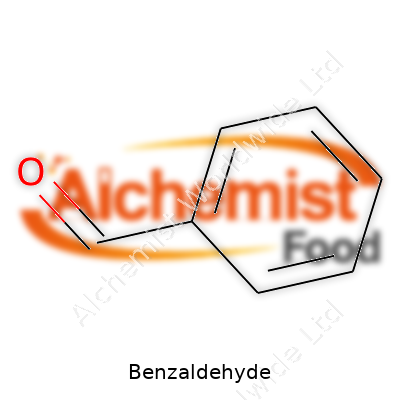
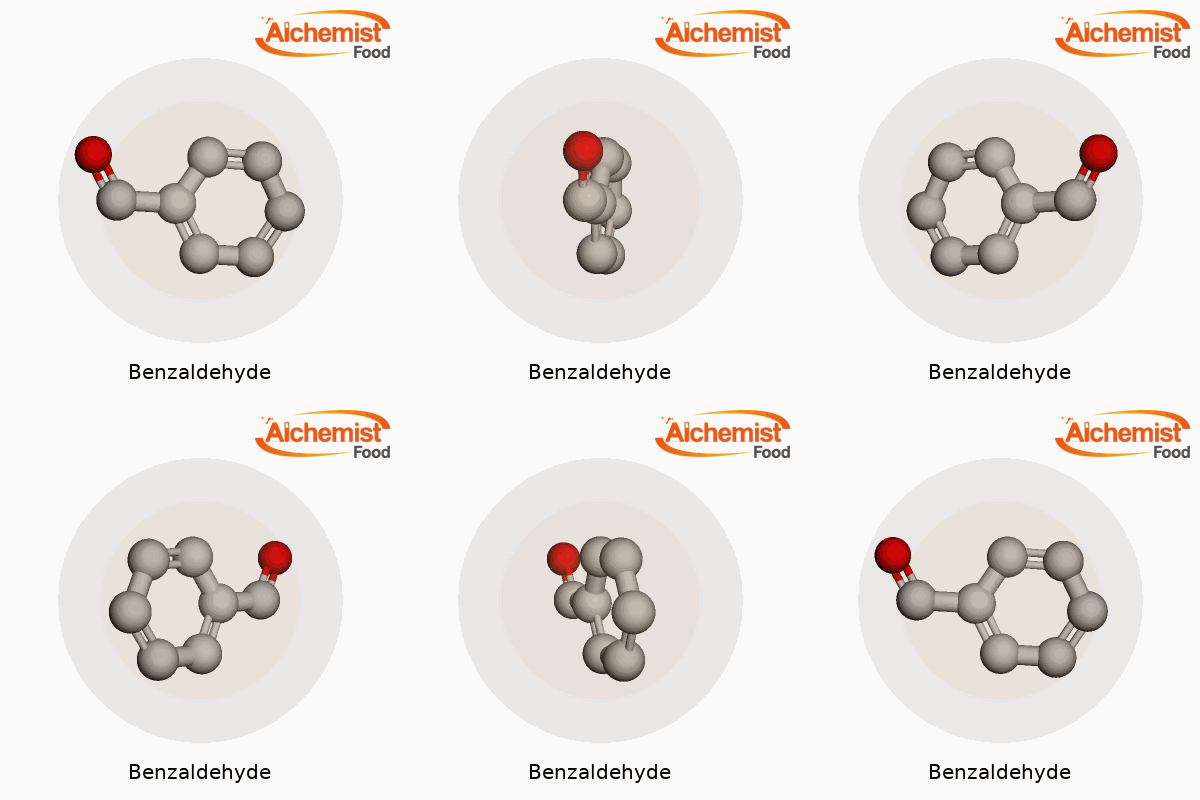
| Names | |
| Preferred IUPAC name | Benzaldehyde |
| Other names |
Artificial almond oil Benzoic aldehyde Phenylmethanal Benzal Benzene carbaldehyde |
| Pronunciation | /ˈbɛn.zæl.dɪ.haɪd/ |
| Preferred IUPAC name | Benzaldehyde |
| Other names |
Benzenecarboxaldehyde Benzoic aldehyde Artificial almond oil Bitter almond oil |
| Pronunciation | /benˈzældɪhaɪd/ |
| Identifiers | |
| CAS Number | 100-52-7 |
| Beilstein Reference | 97768 |
| ChEBI | CHEBI:17987 |
| ChEMBL | CHEMBL277907 |
| ChemSpider | 1207 |
| DrugBank | DB03580 |
| ECHA InfoCard | ECHA InfoCard: 100.003.211 |
| EC Number | 203-819-9 |
| Gmelin Reference | 821 |
| KEGG | C00180 |
| MeSH | D001568 |
| PubChem CID | 240 |
| RTECS number | CU4375000 |
| UNII | J1Z7A58A6F |
| UN number | UN1990 |
| CAS Number | 100-52-7 |
| Beilstein Reference | 635068 |
| ChEBI | CHEBI:17169 |
| ChEMBL | CHEMBL417 |
| ChemSpider | 1179 |
| DrugBank | DB03580 |
| ECHA InfoCard | 100.007.293 |
| EC Number | 203-867-5 |
| Gmelin Reference | 821 |
| KEGG | C00156 |
| MeSH | D001585 |
| PubChem CID | 240 |
| RTECS number | CU4375000 |
| UNII | J1J8A8V5S3 |
| UN number | UN1990 |
| Properties | |
| Chemical formula | C7H6O |
| Molar mass | 106.12 g/mol |
| Appearance | Colorless to pale yellow liquid with a characteristic almond odor. |
| Odor | Bitter almond |
| Density | 1.044 g/mL at 25 °C (lit.) |
| Solubility in water | slightly soluble |
| log P | 1.48 |
| Vapor pressure | 0.13 mmHg (25°C) |
| Acidity (pKa) | 8.0 |
| Basicity (pKb) | 14.84 |
| Magnetic susceptibility (χ) | -60.1·10⁻⁶ cm³/mol |
| Refractive index (nD) | 1.545 |
| Viscosity | Viscosity: 1.246 mPa·s (25 °C) |
| Dipole moment | 2.97 D |
| Chemical formula | C7H6O |
| Molar mass | 106.12 g/mol |
| Appearance | Colorless to pale yellow liquid with characteristic almond odor |
| Odor | Bitter almond |
| Density | 1.044 g/cm³ |
| Solubility in water | slightly soluble |
| log P | 1.48 |
| Vapor pressure | 0.13 mmHg (20°C) |
| Acidity (pKa) | 8.0 |
| Basicity (pKb) | 13.0 |
| Magnetic susceptibility (χ) | -49.4·10⁻⁶ cm³/mol |
| Refractive index (nD) | 1.545 |
| Viscosity | 1.246 mPa·s (at 20 °C) |
| Dipole moment | 2.97 D |
| Thermochemistry | |
| Std molar entropy (S⦵298) | 146.4 J·mol⁻¹·K⁻¹ |
| Std enthalpy of formation (ΔfH⦵298) | -38.7 kJ/mol |
| Std enthalpy of combustion (ΔcH⦵298) | -1667 kJ/mol |
| Std molar entropy (S⦵298) | Entropy (S⦵298) of benzaldehyde: 248.2 J·mol⁻¹·K⁻¹ |
| Std enthalpy of formation (ΔfH⦵298) | -19.7 kJ/mol |
| Std enthalpy of combustion (ΔcH⦵298) | -2855 kJ mol⁻¹ |
| Pharmacology | |
| ATC code | D05AE02 |
| ATC code | D02AE01 |
| Hazards | |
| GHS labelling | GHS02, GHS07 |
| Pictograms | GHS02,GHS07 |
| Signal word | Warning |
| Hazard statements | H302, H317, H319 |
| Precautionary statements | P210, P233, P280, P305+P351+P338, P370+P378, P403+P235, P501 |
| NFPA 704 (fire diamond) | 2-2-0 |
| Flash point | 64 °C |
| Autoignition temperature | 192 °C |
| Explosive limits | Explosion limits: 1.8% to 16.0% (in air) |
| Lethal dose or concentration | LD50 oral rat 1300 mg/kg |
| LD50 (median dose) | LD50 (median dose): 1,300 mg/kg (oral, rat) |
| NIOSH | NIOSH: CU4375000 |
| PEL (Permissible) | PEL (Permissible Exposure Limit) of Benzaldehyde: 2 ppm |
| REL (Recommended) | 1 ppm |
| IDLH (Immediate danger) | The IDLH for Benzaldehyde is **"immediately dangerous to life or health (IDLH): 700 ppm"**. |
| GHS labelling | GHS02, GHS07 |
| Pictograms | GHS07 |
| Signal word | Warning |
| Hazard statements | H226, H302, H317, H319 |
| Precautionary statements | P210, P233, P240, P241, P242, P243, P261, P264, P271, P301+P310, P303+P361+P353, P304+P340, P305+P351+P338, P312, P337+P313, P370+P378, P403+P235, P405, P501 |
| NFPA 704 (fire diamond) | NFPA 704: 2-2-0 |
| Flash point | 64 °C |
| Autoignition temperature | 192 °C |
| Explosive limits | 1.8–12.8% |
| Lethal dose or concentration | LD50 oral rat 1300 mg/kg |
| LD50 (median dose) | LD50 (median dose): Rat oral 1300 mg/kg |
| NIOSH | AL3150000 |
| PEL (Permissible) | PEL (Permissible Exposure Limit) of Benzaldehyde: 2 ppm |
| REL (Recommended) | 0.05 ppm |
| IDLH (Immediate danger) | IDHL: 700 ppm |
| Related compounds | |
| Related compounds |
Benzyl alcohol Benzoic acid Benzyl chloride Benzene Toluene Cinnamaldehyde Phenol |
| Related compounds |
Benzyl alcohol Benzoic acid Benzylideneacetone Cinnamaldehyde Phenol Anisaldehyde Salicylaldehyde |



