Arachidonic Acid: A Grounded Look at Science, Safety, and Its Place in Modern Life
Historical Development
People first recognized the significance of arachidonic acid in the early 20th century through its role in animal nutrition experiments. Scientists linked its presence in animal tissues to growth, immune responses, and development. Its extraction from animal fats, especially liver and brain tissues, gave early researchers a window into biochemical networks beyond carbohydrates and proteins. Back then, those who isolated the substance lacked the advanced tech we have today, relying on simple distillation, crystallization, and rudimentary chromatography to get pure samples. Over the decades, studies consistently pointed toward its involvement in human health and disease, pushing pharmaceutical and food industries to find more efficient, plant-based, and microbial approaches for production. These efforts reflect society’s hunger for both deeper understanding and practical applications for wellbeing.
Product Overview
Today, you see arachidonic acid offered in many forms: pure chemical for research, refined dietary supplement, and as a pharmaceutical ingredient. Manufacturers gear formulations toward particular markets—infant formulas, sports nutrition blends, parenteral nutrition, and skincare. Each product must meet not only technical standards but also ethical sourcing claims and allergen management, an issue that’s grown as awareness of food sensitivities has risen. Companies often use oil suspensions, encapsulated powders, or emulsions to fit various applications. The source (fungal fermentation, animal or plant extraction) deeply influences everything from label claims to acceptance in vegan and vegetarian food chains.
Physical & Chemical Properties
Arachidonic acid presents as a colorless to pale-yellow oily liquid at room temperature, often stored refrigerated to prevent oxidation. Chemically, it is a polyunsaturated omega-6 fatty acid, measured at 20 carbons long with four cis double bonds (5, 8, 11, 14). These double bonds make the molecule both interesting and tricky—great for biological flexibility, hard for shelf-stability. Exposure to heat, air, and light cause it to break down quickly into volatile, sometimes unpleasant-smelling products, so storage and packaging need careful control. Its molecular weight sits at 304.47 g/mol, and its chemical structure underpins its metabolic action in prostaglandin and leukotriene synthesis.
Technical Specifications & Labeling
Industry guidelines, such as those from Codex Alimentarius and United States Pharmacopeia, drive purity and quality standards. Purity must usually hit at least 98% for research and food applications. Labeling requires clear indication of source organism (for allergen avoidance and dietary transparency), processing conditions, and, in many jurisdictions, percentage of total omega-6 content. Storage instructions go beyond the usual “cool, dry place”—manufacturers prefer vacuum-sealed, nitrogen-flushed packaging to keep oxidation at bay. Shelf life rarely exceeds two years under best conditions, shorter once exposed to air. In infant formula, regulations demand exact concentration ranges, reflecting both safety and clinical efficacy data.
Preparation Method
Producers traditionally derived arachidonic acid from animal liver, egg yolk, and brain, but animal rights and sustainability issues, as well as regulatory hurdles, have pushed a shift toward microbial fermentation. Fungi such as Mortierella alpina serve as modern biofactories, producing high-yield oil that is later purified through solvent extraction, winterization (which separates saturated from unsaturated fats), and distillation. This method dramatically reduces contaminants and streamlines consistency. Some companies investigate genetically modified plants and algae, though most commercial supply comes from microbial cells. Many facilities recycle cell biomass into animal feed, reflecting the industry’s growing push for circular processes.
Chemical Reactions & Modifications
At the bench, chemists work with arachidonic acid using esterification, hydrogenation, and epoxidation reactions, which open the door for more stable derivatives and controlled release forms. Hydrogenation creates more saturated derivatives, but this trade-off reduces biological activity. Esterification with glycerol or other alcohols produces triacylglycerols and structural analogs central to food and industrial research. The four cis double bonds partner with reactive oxygen species, leading to peroxidation reactions—this explains why antioxidants like tocopherol are added during manufacture. Research teams also modify the backbone for drug development, applying prodrug strategies to improve oral absorption.
Synonyms & Product Names
Outside the lab, people call arachidonic acid by several names: all-cis-5,8,11,14-eicosatetraenoic acid, sometimes shortened to ARA. On supplement shelves, you might see it listed as “omega-6 highly unsaturated fatty acid,” “20:4(n-6),” or through proprietary trade names when included in infant formula blends. Pharmaceutical ingredients often use standardized chemical nomenclature in prescription information, but consumer goods rarely list the chemical formula, instead emphasizing the biological origin or function (for example, “derived from sustainable fungal fermentation”).
Safety & Operational Standards
Health agencies require strict safeguarding, as arachidonic acid serves in both beneficial and potentially risky roles. In food and formula factories, Good Manufacturing Practice (GMP) lays the foundation for sanitation, controlled atmosphere packing, and traceability. Personal protective equipment guards workers from accidental skin or eye exposure—pure arachidonic acid can act as an irritant in concentrated form. Regulatory scrutiny focuses on contamination with heavy metals, solvents, and microbial residues, especially in infant products. These safety rules aren’t arbitrary; they reflect historical cases of product recalls and consumer health scares around the globe. Modern facilities track every batch with traceability software, so swift action follows any quality deviation.
Application Area
In daily life, most people encounter arachidonic acid through dietary sources—meat, eggs, and dairy. Food fortification widens its reach, especially in growing children and people recovering from illness. Formula makers add ARA, sometimes alongside DHA, to mimic breast milk’s complex lipid profile, supporting brain and eye development. Athletes see products marketed for muscle performance and recovery, as research shows a link to anabolic processes and inflammation control. In pharmaceuticals, chemists use arachidonic pathways to target metabolic disorders and immune-dysregulation diseases. Topical creams use derivatives to modulate skin inflammation, tapping into ancient healing traditions now validated by clinical research.
Research & Development
Laboratories keep pushing boundaries, exploring not just direct effects but also network implications through proteomics and genomics. Teams focus on bioavailability—how much of the compound actually ends up active inside cells, not just in the digestive tract. Animal models test effects on cognition, metabolism, and recovery from brain injury. Collaboration between universities and biotech firms seeks cleaner methods to eliminate unwanted byproducts during synthesis. R&D does not stand still; scientists constantly re-examine recommended daily intakes, balancing the risks of omega-6 excess with the potential for cognitive and immune benefits in populations worldwide. Trials grow larger and more transparent, pressed by consumer advocacy groups asking for full access to data.
Toxicity Research
Toxicologists have taken arachidonic acid through a battery of chronic, acute, and reproductive toxicity tests, focusing on both parents and offspring in animal models. These studies show that extremely high intakes can push pro-inflammatory responses, especially where diets lack sufficient omega-3 fatty acids to balance the ratio. No credible evidence links normal dietary or supplemental amounts with acute toxicity in healthy adults, but regulatory agencies warn that excess ARA, combined with junk-food-heavy lifestyles, might nudge inflammation-related problems higher—cardiovascular risk, certain allergic conditions, and some cancers. Manufacturers continue to monitor new literature and update risk assessments for rare populations, like preterm infants or people with metabolic disorders.
Future Prospects
Arachidonic acid sits in an exciting crossroad. Synthetic biology and precision fermentation promise bigger yields, lower costs, and fewer resource inputs. At the same time, public scrutiny drives calls for better transparency and environmental accountability. The industry has a chance to answer these demands by investing in clean-label processes, partnering with third-party certification groups, and publishing lifecycle analyses of production chains. Medicine continues to probe subtle links between ARA metabolism, gene expression, and the body’s natural defense networks—an area ripe for breakthroughs in anti-inflammatory drugs and tailored nutrition therapies. Dietitians, too, push for a clearer way to help people weigh the risks and payoffs, particularly as processed food trends collide with rising metabolic health concerns. Progress will depend on open science, ethical manufacturing, and a willingness to adapt as new knowledge uncovers both promises and limits.
What is arachidonic acid and what are its benefits?
What Really Is Arachidonic Acid?
Arachidonic acid, found in foods like eggs and meat, plays a bigger role in health than most folks realize. This omega-6 fatty acid stands out because the body relies on it to build cell membranes and send important signals between cells. Many scientists have spent decades uncovering its influence on growth, healing, and even mood.
The Connection to Physical Performance and Muscle Growth
After spending years in athletics and coaching, I’d watch athletes swear by diets that didn’t just focus on protein or carbs but included fats like those from red meat. One of the reasons? Arachidonic acid helps muscles recover and build after tough workouts. Research from Baylor University showed that adding arachidonic acid supplements helped some weightlifters improve peak power. Muscles need the inflammatory signals that this fatty acid produces—the body breaks down muscle during hard training and uses inflammation as a messenger for repair and strength gains.
The Brain and Development Angle
Growing up, babies get most of their brain-building fat from mother’s milk or fortified formulas. I learned this when helping my partner choose formula for our child; arachidonic acid stood right beside DHA on the label. Both are crucial for infant brain and eye development. Studies back up this real-life lesson. Babies who consume enough of these fats tend to develop sharper vision and stronger brains. Major pediatric associations now recommend formula or toddler milk that contains both DHA and arachidonic acid.
Immunity and Inflammation: A Balancing Act
Living with autoimmune disease for years showed me firsthand how certain fats influence inflammation. Too little arachidonic acid, and people start running into weak immune reactions; too much, and inflammation spikes, sometimes making autoimmune issues worse. The body needs this acid for healthy immune responses—T-cells (the defenders against infection) depend on it to battle invaders. Still, overdoing it or mixing it with a diet loaded in other omega-6s (like cheap vegetable oils) can tip the scale toward chronic inflammation.
Dietary Sources and Modern Concerns
Egg yolks, liver, poultry, and some fish offer up most of the arachidonic acid people eat. In recent years, as more folks cut back on these foods due to cholesterol fears or plant-based trends, the average diet changed. Plant-based fats don’t fill the gap because they lack the end-product. The brain doesn’t store substitutes. Diversity in diet makes sure people get enough of each essential building block; this often means adding back foods some nutrition guidelines pushed out in past decades.
Looking Ahead: Making Smarter Choices
Boosting health with arachidonic acid works best as part of a balanced approach. More isn’t always better. Folks running marathons or lifting heavy weights might notice bigger benefits from higher levels—though too much can backfire for those with chronic inflammatory conditions. Smart eating means picking whole food sources, rotating fats, and watching for real signs that the body needs more support, not just hopping on supplement bandwagons. Doctors and dietitians know best how unique needs shape which fats deserve a spot at the table.
Is arachidonic acid safe to use as a supplement?
An Up-Close View on Arachidonic Acid
Arachidonic acid pops up in health stores and gym culture, marketed as a muscle builder and brain booster. Some fitness enthusiasts swear by it, pointing to its role in muscle repair or mental sharpness. This polyunsaturated omega-6 fatty acid comes naturally in food—think egg yolks, meats, some fish. Most folks get enough of it by eating a typical Western diet.
What Science Tells Us
Peer-reviewed research on supplements remains limited compared to whole-food intake. Nutrition experts see arachidonic acid as a building block in cell membranes, keeping our cells flexible and able to respond to signals. Our bodies turn it into signaling molecules called eicosanoids. Those signals control everything from inflammation to clotting.
A couple of small studies suggest athletes might gain a small bump in strength or muscle after supplementing with arachidonic acid, but the long-term story is foggy. The FDA hasn’t stamped any “safe and effective” seal on these products for building muscle or turbo-charging the brain.
Potential Risks That Can’t Be Ignored
Eating too much omega-6, especially without enough omega-3 from fish, can tip the balance toward chronic inflammation. That chronic inflammation isn’t good—research links it to diabetes, arthritis, heart disease, and some cancers. Early studies on arachidonic acid raise red flags about raising the risk of heart disease by promoting inflammation and blood clotting.
People with existing inflammation issues, heart problems, or autoimmune diseases should be extra careful. Many years ago, a family member ignored this and started popping high-dose omega-6 supplements, believing they’d help sore joints. Their doctor stepped in, reminding us that what a body builder swears by doesn’t always fit everyone—especially if the science is still unsettled.
Paying Attention to Dosage and Food Sources
Supplements pack large doses in pills and powders, far more than a regular diet offers. I prefer food-based sources—eating a balanced plate gives the body nutrients the way nature intended, not just in pills. Salmon, walnuts, seeds, and leafy greens give plenty of healthy fats, often without the downsides.
Research from Harvard’s nutrition team reports that most people already eat more omega-6 than omega-3, often by a wide margin. Tossing in extra arachidonic acid widens that gap. Having watched friends try to “biohack” results with powders instead of wholesome foods, I find real meals a lot less risky than experiments with single nutrients.
Making an Informed Choice
Any decision to use a supplement comes with weighing risks and benefits. A sports doctor or registered dietitian won’t suggest arachidonic acid for everyone. Questions to ask: Do you get enough healthy fats in your regular meals? Do you already struggle with inflammation or heart issues? The safest path tends to involve your primary care provider weighing in, not just a podcast or fitness forum.
Switching focus from single ingredients to overall eating habits works better for health, in my own experience and in the clinics I’ve spent time in. Diets rich in fruits, vegetables, oily fish, and nuts keep inflammation down and health up without chasing trendy supplements.
Room for More Research and Open Conversations
Arachidonic acid supplements spark debate for good reason. Too little is known about what happens with years of use—or in folks who already wrestle with chronic diseases. If you’re tempted, talk openly with a trained expert about your real-life needs and risks. That conversation stands the best chance of keeping you safe and healthy.
What are the possible side effects of arachidonic acid?
Understanding Arachidonic Acid
Arachidonic acid pops up in a lot of conversations about muscle growth, athletic supplements, and even infant formula. Present in animal-based foods like eggs, chicken, and some red meats, this omega-6 fatty acid helps the body build cell membranes and produces key signaling molecules. Athletes sometimes turn to supplements containing this nutrient with hopes of better muscle recovery or bigger gains at the gym. Yet, not everyone realizes there are potential side effects that deserve real thought.
Inflammation: The Double-Edged Sword
Arachidonic acid acts as a building block for many substances that control inflammation. Small amounts keep the immune system in check, fighting off infections and healing injuries. Higher intake, either by way of diet or supplements, can push inflammation past the healthy limits. Some studies have pointed out a stronger link between higher levels of arachidonic acid and conditions like arthritis, asthma, and some autoimmune diseases. Chronic inflammation fuels pain in the joints. For someone already dealing with inflammatory health problems, loading up on extra arachidonic acid makes things worse instead of better.
Cardiovascular Concerns
For years, researchers debated the role of arachidonic acid in heart disease. Some early studies suggested higher blood levels might increase the risk for clogged arteries, heart attacks, or strokes. While the evidence isn’t all one-sided, what stands out is the relationship between arachidonic acid and other fats in the diet. Eating a diet packed with omega-6 fats without balancing them with enough omega-3s tilts the body into a more inflammatory state, which, in turn, nudges up the odds of cardiovascular trouble. The average Western diet already leans too much toward omega-6s, so extra supplementation in this environment can worsen the imbalance.
Digestive Issues
Taking more arachidonic acid, especially as a supplement, can set off digestive troubles for some people. Upset stomach, diarrhea, and nausea come up in reports from both athletes and regular folks who try out these products. While not everyone feels these effects, it’s hard to ignore how uncomfortable they become, especially if you’re already sensitive to other fatty acids.
Impacts on Mental Health
Emerging evidence suggests a link between excess arachidonic acid and mood swings or depressive symptoms. Some animal and human studies show that diets high in omega-6s can add to the risk of anxiety and depression. There’s a delicate biochemical dance going on in the brain, and too much arachidonic acid might interfere with neurotransmitter function. It often surprises people to hear that what winds up on their plate might shape their outlook on life.
What Makes a Difference
A balanced diet goes a long way in managing the risks tied to arachidonic acid. Foods rich in omega-3s—like salmon, flaxseed, or walnuts—help counteract the effects of too many omega-6s. Getting medical advice before starting any supplement is more important than most realize, especially for people with a history of heart disease, autoimmune problems, or mental health conditions. Nutritionists and doctors can run the numbers on what works best for each person. Moderation and balance hold more weight than hype or marketing claims.
How should I take arachidonic acid for best results?
Looking at the Science: Why This Fatty Acid Matters
Arachidonic acid shows up in conversations about muscle growth, inflammation, and recovery. It’s an omega-6 fatty acid found in foods like beef, eggs, and, to a lesser extent, chicken. The body uses arachidonic acid during periods of stress or muscle repair, releasing it from cell membranes to help spark recovery processes. Researchers have studied its role in exercise adaptation, so curiosity about its use makes sense.
Supplement Forms and Daily Intake
You’ll see arachidonic acid offered as softgel capsules or powders. Most supplement companies set doses between 250 and 1,000 milligrams per day. One landmark study published in the Journal of the International Society of Sports Nutrition used a dose of 1,000 mg daily for training adults over eight weeks. Participants who trained hard and took the supplement noticed minor improvements in lean mass and strength versus the placebo group.
Most everyday meals supply some arachidonic acid, especially if you eat animal proteins. Athletes or serious lifters looking to push past plateaus might consider supplementation when natural intake falls short. For typical users, approaching higher doses calls for caution and research, since more does not always mean better and safety data is limited for prolonged use.
Timing Your Intake
Taking your dose with meals seems best since arachidonic acid acts as a dietary fat. Simple tip: Pairing it with foods higher in healthy fats promotes better absorption. Some users report splitting the dose with breakfast and dinner, others prefer taking it about 30 minutes before a workout. No widespread evidence says one time beats another, but absorption matters more than timing here. Consistency wins—pick a schedule you’ll follow daily for a cycle, usually 4-8 weeks at a time.
Weighing Benefits Against Potential Risks
Arachidonic acid stirs up debate because excessive omega-6, without enough omega-3, may worsen inflammation in the long run. Over time, high levels might tilt the body’s balance towards pro-inflammatory pathways. Someone who trains with high volume and eats lots of processed food risks pushing that balance too far. In my experience, paying attention to your body pays off. If joints ache or recovery stalls, reconsider dosing or talk to a professional before continuing.
Diet, Balance, and Respect for the Basics
Chasing a supplement shouldn’t replace sleep, solid training principles, or a well-rounded diet. No fatty acid outworks rest, hydration, or a diet packed with fruit, veggies, protein, and enough energy for your activity level. My own best periods in the gym came from consistency and tracking progress, not shortcuts. Supplements fill gaps, but getting the base right comes first.
Before starting arachidonic acid, check your health markers, especially if you deal with pre-existing inflammatory issues or cardiovascular risk. There's value in consulting a dietitian or medical professional about new routines. With scientific curiosity and honesty about personal goals, avoid chasing fads and focus on using every tool wisely for long-term results and health.
Who should avoid using arachidonic acid products?
Understanding Why Caution Matters
Arachidonic acid pops up in plenty of sports nutrition products, infant formulas, and even some supplements for inflammation. For most healthy people eating a varied diet, a typical daily intake from meat, eggs, or dairy brings in enough. Some marketers claim it can boost muscle growth or sharpen your mind. Arachidonic acid plays a role in growth and cell function, so that’s not too surprising. But not everyone should jump on the bandwagon.
People With Certain Health Conditions
Anyone who deals with chronic inflammation or auto-immune conditions—like rheumatoid arthritis, inflammatory bowel disease, or psoriasis—should step carefully around products that contain extra arachidonic acid. This nutrient is the building block for a family of molecules in the body called eicosanoids. These can kickstart or turn up inflammation. I’ve seen folks with joint problems or gut conditions report flare-ups after loading up on certain fatty-acid-rich supplements.
Those with heart disease, or whose cholesterol levels already run high, also get advice from their doctors to watch their intake. The science is still developing, but several clinical studies have linked high arachidonic acid intake with raised inflammation markers connected to heart problems.
Children and Pregnant Women
There’s a place for arachidonic acid in infant formula, since newborn brains need it to develop well. Adding large amounts to children's diets outside of what’s already present in whole foods could tip the balance for more harm than good, especially where allergies or family history of autoimmune problems exist. Pregnant women get advice from healthcare pros to focus on balanced food sources rather than supplements unless specifically told otherwise.
Those Taking Anti-Inflammatory Medications
Folks taking medicines that control inflammation, such as NSAIDs or corticosteroids, might not mix well with high levels of arachidonic acid. These medicines fight the same inflammatory molecules produced from arachidonic acid. Eating or supplementing more of it could work against what those meds try to do. Anyone with a prescription pain or immune system drug should check in with their pharmacist or doctor before picking up new supplements.
People Following Plant-Based Diets
Vegans and most vegetarians probably aren’t short on health reasons to skip animal products with extra arachidonic acid. Plant-based eaters already cut intake by not eating eggs or meat. Recent nutrition guidelines highlight the trend that vegetarian or vegan diets link to lower inflammation, which could partly be because these diets are low in arachidonic acid. Adding a supplement runs against a plant-based plan, and the medical research doesn’t support any special need for it.
Seeking a Balanced Approach
Too much or too little of any nutrient causes issues in the long run. Arachidonic acid supports brain and muscle functions, but overshooting the body’s need brings a clear risk for people already wrestling with inflammation. Medical associations point to moderation and getting fatty acids from whole, unprocessed foods where possible. If you’ve ever wondered whether those muscle-building or “brain-boosting” fatty acid pills are right for you, start by talking to someone who knows your health history.
In my own practice, the safest pick for most people involves focusing on diverse, unprocessed foods. People with heart conditions, inflammatory diseases, or those already taking anti-inflammatory medicine need to pay closer attention. Supplements rarely solve deep-rooted health problems, and decisions work best when matched to unique health needs, not just hype or marketing splash.
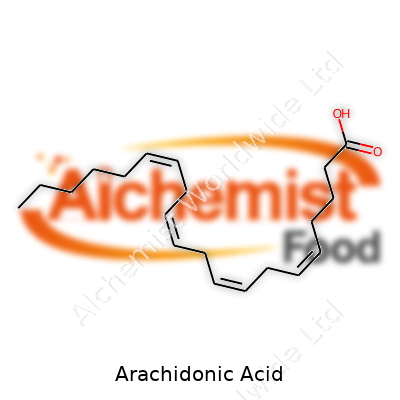
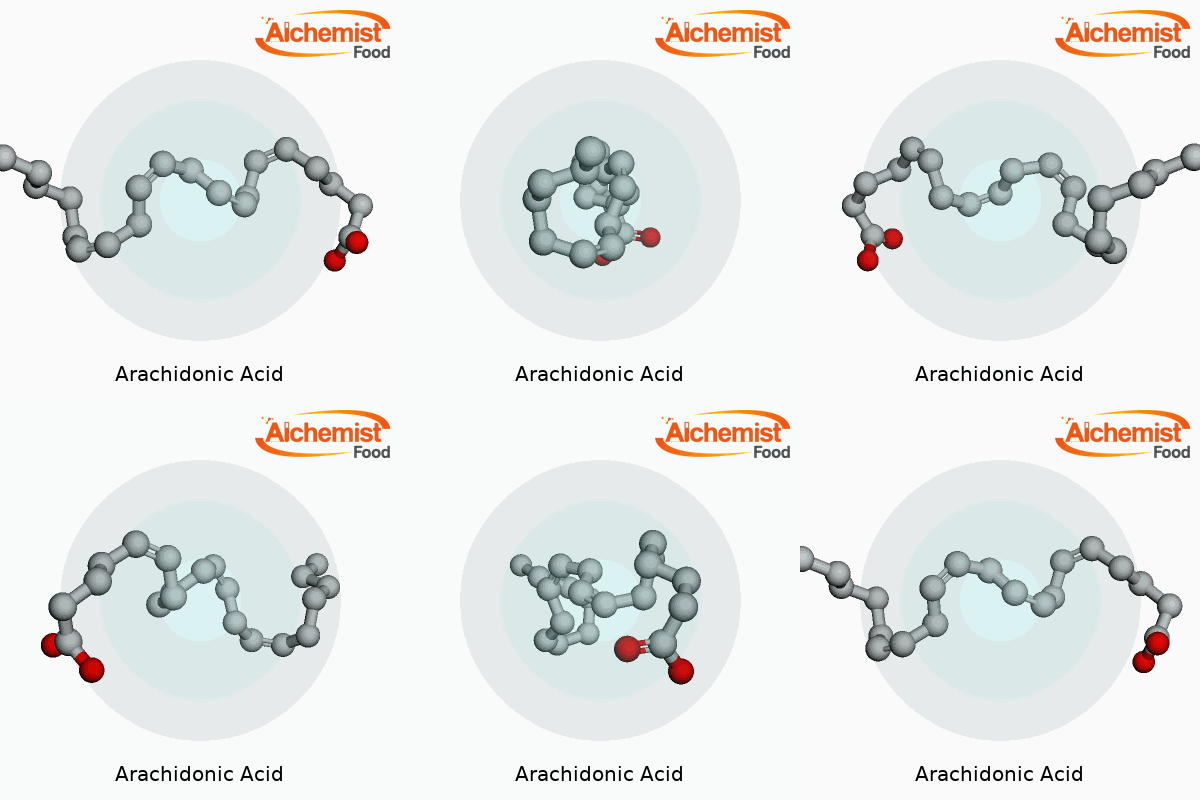
| Names | |
| Preferred IUPAC name | (E, Z, Z, Z)-Icos-5,8,11,14-tetraenoic acid |
| Other names |
ARA all-cis-5,8,11,14-Eicosatetraenoic acid 5,8,11,14-Eicosatetraenoic acid |
| Pronunciation | /ˌær.ə.kɪˌdɒn.ɪk ˈæs.ɪd/ |
| Preferred IUPAC name | (5Z,8Z,11Z,14Z)-icosa-5,8,11,14-tetraenoic acid |
| Other names |
all-cis-5,8,11,14-Eicosatetraenoic acid 5,8,11,14-Eicosatetraenoic acid AA Arachidonate |
| Pronunciation | /əˌræk.ɪˈdɒn.ɪk ˈæs.ɪd/ |
| Identifiers | |
| CAS Number | 506-32-1 |
| Beilstein Reference | 3591304 |
| ChEBI | CHEBI:15843 |
| ChEMBL | CHEMBL1407 |
| ChemSpider | 4707 |
| DrugBank | DB00162 |
| ECHA InfoCard | 100.162.091 |
| EC Number | EC 0 |
| Gmelin Reference | 76603 |
| KEGG | C00219 |
| MeSH | D001151 |
| PubChem CID | 444899 |
| RTECS number | AS1160000 |
| UNII | 2M83C4R6ZB |
| UN number | UN2810 |
| CAS Number | 506-32-1 |
| Beilstein Reference | 1908092 |
| ChEBI | CHEBI:15843 |
| ChEMBL | CHEMBL414 |
| ChemSpider | 5343 |
| DrugBank | DB00168 |
| ECHA InfoCard | 100.217.225 |
| EC Number | EC 9.1.1.6 |
| Gmelin Reference | 74143 |
| KEGG | C00219 |
| MeSH | D001151 |
| PubChem CID | 444899 |
| RTECS number | AS4020000 |
| UNII | C1L59MWS2L |
| UN number | Not regulated |
| Properties | |
| Chemical formula | C20H32O2 |
| Molar mass | 304.47 g/mol |
| Appearance | White to off-white powder |
| Odor | Odorless |
| Density | 0.94 g/cm³ |
| Solubility in water | Insoluble |
| log P | 3.47 |
| Vapor pressure | 1.03E-10 mmHg |
| Acidity (pKa) | 4.77 |
| Basicity (pKb) | pKb ~ 15 |
| Magnetic susceptibility (χ) | -86.0e-6 cm³/mol |
| Refractive index (nD) | 1.471 |
| Viscosity | Viscous liquid |
| Dipole moment | 1.364 D |
| Chemical formula | C20H32O2 |
| Molar mass | 304.47 g/mol |
| Appearance | White to off-white powder |
| Odor | Odorless |
| Density | 0.92 g/mL |
| Solubility in water | Insoluble in water |
| log P | 3.8 |
| Vapor pressure | 2.81E-12 mm Hg at 25 °C |
| Acidity (pKa) | 4.77 |
| Basicity (pKb) | pKb ≈ 15.85 |
| Magnetic susceptibility (χ) | -96.0e-6 cm³/mol |
| Refractive index (nD) | 1.477 |
| Viscosity | Viscous liquid |
| Dipole moment | 1.364 D |
| Thermochemistry | |
| Std molar entropy (S⦵298) | 568.6 J·mol⁻¹·K⁻¹ |
| Std enthalpy of formation (ΔfH⦵298) | -1024.5 kJ/mol |
| Std enthalpy of combustion (ΔcH⦵298) | -10420.7 kJ/mol |
| Std molar entropy (S⦵298) | 568.6 J·mol⁻¹·K⁻¹ |
| Std enthalpy of formation (ΔfH⦵298) | -909.4 kJ/mol |
| Std enthalpy of combustion (ΔcH⦵298) | -10122.5 kJ/mol |
| Pharmacology | |
| ATC code | C10AX11 |
| ATC code | C20AX06 |
| Hazards | |
| Main hazards | Harmful if swallowed. Causes skin irritation. Causes serious eye irritation. May cause respiratory irritation. |
| GHS labelling | GHS02, GHS07 |
| Pictograms | GHS07, GHS08 |
| Signal word | Warning |
| Hazard statements | H315: Causes skin irritation. H319: Causes serious eye irritation. H335: May cause respiratory irritation. |
| Precautionary statements | IF IN EYES: Rinse cautiously with water for several minutes. Remove contact lenses, if present and easy to do. Continue rinsing. If eye irritation persists: Get medical advice/attention. |
| NFPA 704 (fire diamond) | 3-1-4-水 Reacts |
| Flash point | 140 °C |
| Autoignition temperature | 384°C |
| Lethal dose or concentration | LD50 Oral Rat >10 g/kg |
| LD50 (median dose) | LD50: >5,000 mg/kg (rat, oral) |
| NIOSH | Not established |
| PEL (Permissible) | PEL: Not established |
| REL (Recommended) | 600 mg |
| GHS labelling | GHS07, GHS08 |
| Pictograms | GHS07, GHS08 |
| Signal word | Warning |
| Hazard statements | H315, H319, H335 |
| Precautionary statements | IF IN EYES: Rinse cautiously with water for several minutes. Remove contact lenses, if present and easy to do. Continue rinsing. |
| NFPA 704 (fire diamond) | 1-2-4-0 |
| Flash point | 152 °C |
| Autoignition temperature | 443°C |
| Lethal dose or concentration | LD50 oral rat 2,340 mg/kg |
| LD50 (median dose) | LD50 (median dose) of Arachidonic Acid: "2,300 mg/kg (rat, oral) |
| PEL (Permissible) | PEL (Permissible Exposure Limit) for Arachidonic Acid: Not established |
| REL (Recommended) | 400 mg |
| IDLH (Immediate danger) | Not established |
| Related compounds | |
| Related compounds |
Eicosapentaenoic acid Docosahexaenoic acid Linoleic acid Gamma-Linolenic acid Dihomo-gamma-linolenic acid Prostaglandins Leukotrienes Thromboxanes |
| Related compounds |
Linoleic acid Eicosapentaenoic acid (EPA) Docosahexaenoic acid (DHA) Prostaglandins Leukotrienes Thromboxanes Anandamide Docosatetraenoic acid |



