Exploring 2,4-Dichlorophenoxy Acetic Acid: A Grounded Look
Historical Development
Back in the early 1940s, chemists dug deep into plant biochemistry, hunting for tools to fight the scourge of weeds in food production. Among a crowded bench of potential candidates, one molecule started rewriting agricultural history: 2,4-Dichlorophenoxy Acetic Acid, which most just call 2,4-D. Its birth didn’t come from a modern biotech lab but from persistent research during the stress-packed war years. We saw 2,4-D lend farmers a stronger grip on weeds threatening wheat and rice. Building trust in this compound took years; its adoption didn’t shoot up in a vacuum, but rather after thousands of field trials showed healthier crops and bigger yields. No small feat for a world worried about food shortages.
Product Overview
2,4-D isn’t some mystery powder hidden behind locked doors. Crews in chemical plants turn it out in several forms: liquids for easy tank-mixing, granules for folks who work with spreaders, and water-soluble solutions for both farming and non-crop turf use. Reputable suppliers publish full labels, including concentration, inert carrier details, and recommended use rates. For anyone who’s handled this stuff, the heavy, slightly sharp smell and faint yellow cast stand out. Every bottle shares one purpose: to curb the unwanted leafy competition hogging sunlight and water. This makes it a mainstay for both family-run farms and major grain producers, as well as tree and brush clearing crews keeping public spaces clean.
Physical & Chemical Properties
2,4-D’s profile reads like a classic lab sheet: melting point hovers near 140°C, it handles moderate moisture exposure, and dissolves in water and organic solvents at useful concentrations. Packaged products contain either the acid form, sought after for liquid sprays, or salt and ester variants, which handle differently on the ground and in water. In the field, this matters. The water solubility, about 900 mg/L, gives users clear mixing instructions. Its scent, color, and powder texture give fair warning in the air and on work gloves. These tangible properties inform decisions about application—the drier and warmer the day, the more volatile the ester forms can become, leading to higher risk of off-target impact.
Technical Specifications & Labeling
Look at any 2,4-D product label, and you’ll spot technical details front and center. Active ingredient percentages run from low teens up to 80% for concentrates, with carrier solvents like oil or water surfactants spelled out plainly. Regulations demand visible hazard symbols for safety, as even seasoned crews stay cautious. Directions guide users on dilution rates, droplet size, timing, and compatible equipment, which stops accidents and helps reach target weeds efficiently. Clear batch numbers and production dates back up traceability, which builds trust from buyers and keeps quality control honest. Handling instructions lay out protective gear—chemical gloves, eye protection, long sleeves—backed by evolving research on skin and inhalation risks.
Preparation Method
Global output of 2,4-D relies on a process marrying phenol chemistry and chlorine. Factories start with chlorination of phenoxyacetic acid, dialed in through precise temperature and pH control. Production scale has everything to do with batch size and demand—industrial reactors churn out metric tons in each run, checked constantly with chromatography to verify purity and minimize byproducts. Purification isn’t just filter work; solvents, neutralization baths, and sometimes distillation strip out unwanted residues and bring the acid or sodium salt up to regulatory standard. Final steps tailor the product for liquid or powder markets. Lessons learned from early 20th-century chemistry make today’s plants cleaner, safer, and more efficient, slashing waste and protecting workers from volatile fumes.
Chemical Reactions & Modifications
Chemists don’t stop tweaking a tried-and-true compound like 2,4-D. They’ve studied how its carboxyl and aromatic groups react in the environment, aiming to convert it into safer, slower-released versions. During formulation, simple reactions bond the acid to esters or convert it to ammonium and sodium salts—these changes shift volatility and impact both shelf stability and environmental spread. Researchers in university labs test modified side chains to block breakdown by sunlight or improve weed uptake. Real-world use, though, puts most faith in traditional forms, since they balance cost, effectiveness, and safety well. That said, every year brings tweaks to formulations—microencapsulation, improved solubilizers, or adjuvants to boost leaf sticking and rainfastness. Without steady chemical innovation, these improvements wouldn’t reach the field.
Synonyms & Product Names
Brand shelves show a surprising range of names for the same active ingredient. Besides “2,4-Dichlorophenoxy Acetic Acid,” you’ll see older synonyms like “2,4-D acid,” “Weedone,” “Aminex,” “Aminol,” or “Fernoxone,” plus dozens of regional trade names tailored by big companies. Even small labels on farm co-op shelves get creative, though active ingredient labeling never changes, thanks to law. Some products camouflage the chemical in blends—mixed with MCPA, glyphosate, or other herbicides to target broader pest groups. This practice keeps the core compound in circulation, whether you’re talking to field agronomists in Iowa or golf course greenskeepers in Asia.
Safety & Operational Standards
Workplace safety practices for 2,4-D draw sharp boundaries around what matters—good ventilation, chemical-resistant gloves, dedicated spray boots, and unambiguous buffers near water. Regulations from government bodies like the EPA and European EFSA lay out maximum residue limits, prompt reporting for spills, and notice requirements before big applications. Firsthand, I’ve signed off on safety sheets spelling out spill cleanup kits, MSDS data, and restricted-entry intervals to stop accidental exposure. Disposal practices require sealed containers and no short-cuts—pouring old mixtures down a drain can mean real legal and environmental fallout. The message is clear: no employer or farmer can ignore these standards without risking consequences in field health, community trust, or legal action.
Application Area
Farmers lean on 2,4-D for small grains like wheat, corn, barley, and oats. It works best against broad-leaf weeds—dandelion, thistle, plantain—without burning the crop itself. Pasture managers, government agencies, and even those who maintain highway medians use it to keep broadleaf invaders in check while grass species thrive. Municipal parks, forestry projects, and sports turf managers depend on it for spot treatment on out-of-control ground cover. Investment in precision sprayers, computerized nozzles, and GPS guidance means the compound gets exactly where it's needed, limiting off-target hits that could damage wildlife or neighboring crops.
Research & Development
University trials and corporate labs don’t let up on continuous improvement, constantly testing ways to curb resistance in weed populations and bend application timing for even better results. Resistance studies use genetic sequencing to track adaptation, while field plots measure how tank-mixes and new formulations perform under rain, heat, or drought. Grants fund safer adjuvants or targeted release systems, keeping each product round more effective with fewer environmental knock-on effects. Some research focuses on breakdown rates in different soils or on microbial pathways that might make 2,4-D residues less persistent. These studies feed directly into smarter regulations and farmer outreach efforts, aiming to stretch both usefulness and safety for decades to come.
Toxicity Research
Toxicologists started watching 2,4-D in the 1970s, looking for risks to applicators, consumers, and ecosystems. Government-funded studies use animal and cell models to map out acute and chronic effects. Oral and dermal LD50 studies build the case for allowable exposure, and medical research screens links between exposure and common health endpoints—cancer, developmental effects, and endocrine disruption. EPA and World Health Organization panels draw from hundreds of peer-reviewed sources before setting residue tolerances in food crops. The real-world safety profile depends on strict label adherence and staying up-to-date with new findings—a fact stressed in pesticide safety training from coast to coast. Given all this, good stewardship depends on pushing for lower-toxicity alternatives where possible.
Future Prospects
Looking ahead, 2,4-D faces pressure from several angles. Newer herbicides spar with increasing regulatory scrutiny and growing weed resistance threatens overreliance. Biotech firms pitch “next generation” weed-control solutions, signaling possible shifts away from 2,4-D—unless ongoing research can guarantee safety and shore up its effectiveness. Some future work targets biodegradable variants or molecules less likely to drift, plus genetic engineering tools to tweak crops for better herbicide compatibility. Consumer trends—toward organic or residue-free foods—shape demand too, pushing companies to prove they’re minimizing offsite movement or persisting residues. What’s certain is that no compound stands alone: continued monitoring, nimble adjustment to scientific findings, and transparent communication keep both users and the public invested. Making sure 2,4-D fits responsibly in the evolving landscape of global agriculture takes vigilance and honesty, not just another rebrand or regulatory shuffle.
What is 2,4-Dichlorophenoxy Acetic Acid used for?
What Farmers Actually Use 2,4-D For
Step onto any commercial farm growing corn, wheat, or soybeans and you’ll probably meet 2,4-Dichlorophenoxy Acetic Acid—2,4-D for short. Farmers use 2,4-D because it keeps broadleaf weeds in check, letting their crops grow without fighting for water or sunlight. This herbicide has been part of large-scale agriculture since the 1940s, and those roots run deep. Farmers still prefer it over many newer chemicals, partly because weeds haven’t caught up with it the way they have with glyphosate, and partly because it’s a tool they know inside and out.
The truth about keeping food prices manageable and fields healthy isn’t always glamorous. Weeds can wipe out entire harvests, or at least slash yields enough that farmers struggle to turn a profit. By targeting only broadleaf weeds (think dandelions and pigweed), 2,4-D doesn’t knock out the grass crops that feed both people and livestock. That kind of targeted action makes a huge difference during planting season, especially for farmers trying to make every acre count. With food security challenges growing around the world, tools like this one are more important than ever.
Weighing the Safety Questions
Still, the story isn’t all rosy. Any chemical that hangs around on so many acres draws concern. The science behind 2,4-D safety is strong. The United States Environmental Protection Agency has studied it again and again, finding no solid links to cancer at approved farming levels. The World Health Organization puts it in a category lower than everyday risks like eating red meat. But people worry when something touches their land, water, or food. I’ve had family friends, good folks who live on farms, ask whether spraying this stuff could affect their kids or pets. That makes sense. The voices urging caution tend to be local, not just big organizations.
Spread on lawns in suburban neighborhoods, 2,4-D sticks to shoes, paws, and sometimes hands. Researchers at the U.S. Geological Survey have tracked it in streams near agriculture regions, too. The potential for run-off and accidental exposure isn’t just hype—these things really do happen. This is where personal experiences and professional research meet. Putting herbicides down, you always check the wind, double-check the label, and try to keep everyone safe.
Searching for Balance in Agriculture
Big agriculture leans on chemicals like 2,4-D because nobody wants fields to return to the days when half the crop failed. But as much as I respect the science, I look for ways to limit chemical use. Switching up crops from year to year (crop rotation), using non-chemical weed control, and keeping buffer zones near waterways all help. For the average homeowner, sticking to the instructions on the bottle, not going overboard, and keeping pets away after spraying lowers the risk.
The food supply chain isn’t perfect, and neither is chemical weed control, but both keep people fed. Each generation learns a bit more about staying safe while keeping weeds under control. Scientists keep digging in, listening to the public, and using the facts—not rumors—to guide the conversation. The changes might not all come at once, but the most important progress comes from paying close attention to the land, the people, and the science—together.
Is 2,4-Dichlorophenoxy Acetic Acid safe for humans and pets?
Looking Closer at a Common Lawn Chemical
Walk through just about any suburb in the US and you'll probably see green lawns treated to keep weeds down. Homeowners often turn to 2,4-Dichlorophenoxy Acetic Acid, or 2,4-D for short. It’s one of the oldest and most popular weed killers out there. Its popularity owes a lot to its effectiveness against broadleaf weeds and its low price. But the question about its safety lingers, especially for kids and pets who might roll in that grass.
What Scientists Know About 2,4-D
Doctors, toxicologists, and health agencies across the world have spent decades looking into 2,4-D. The Environmental Protection Agency says that, at approved levels, 2,4-D isn’t likely to cause harm if used correctly. But “correctly” can take a lot of discipline. Most people don’t suit up in protective gear or triple-check wind conditions before spraying. That’s where real-life risks sneak in.
Short-term health concerns can show up if it gets on skin or in the eyes. Studies say it may cause irritation, nausea, or dizziness. People have even gone to the hospital after big spills or accidents. Pets, especially dogs, often run or lay right in the treated area. They lick their fur and paws later, which means they’re more likely to swallow small amounts. That risk is something I pay attention to as a dog owner who’s learned the hard way that a trip to the vet isn’t cheap.
The bigger debate comes from the fear that long-term exposure might connect to cancer or hormone problems. The International Agency for Research on Cancer labeled 2,4-D as “possibly carcinogenic to humans.” That doesn’t mean it always causes cancer, but it does mean researchers see enough hints to stay concerned. Countries in Europe have stricter rules around chemicals like 2,4-D, just to be on the safer side.
Concerns in the Real World
Not every home user follows product labels to the letter. Spray drift happens, especially on windy days, and that means neighbors and kids might get exposed without realizing. If you’ve got a vegetable garden or beehive nearby, spray can travel further than most folks realize. Pets don’t read warning flags or wait until the grass dries. That’s why simple routines like not letting kids or animals out until the spray’s settled matter more than most pamphlets indicate.
Personally, I switched to mowing higher and pulling weeds by hand where my nephews and dog play. I work outside, and the fewer chemicals around, the better I feel. Not everyone can toss their sprayer for good, but simple steps make a difference. Spraying on calm days, cutting back on frequency, and cleaning up spills right away gives peace of mind. Wash hands and paws after being outside—these little habits stack up.
Rethinking Lawn Care Choices
Many people find greener options that don’t need sprays. Mulch, thick grass, and pulling weeds become routine. Organic weed killers may cost more, but offer safer results for people and pets. My neighborhood community garden uses vinegar sprays and hand labor. Gardeners say they trade time for health, and they find satisfaction in knowing exactly what touches their food and space.
Taking stock of what really matters—safe spaces for play, clean soil, fewer emergency trips—is never wasted effort. Anyone worried about 2,4-D should weigh the small risk against the bigger picture and consider simpler, time-tested solutions. Good information, careful habits, and practical alternatives help everyone make choices they can live with.
How should 2,4-Dichlorophenoxy Acetic Acid be applied?
What Is 2,4-D and Why Farmers Use It
A lot of people in agriculture grew up watching weeds pop up faster than the crops themselves. Every growing season brings a fresh wave of invaders. 2,4-D has been a reliable ally for decades, knocking out broadleaf weeds that try to choke out corn, wheat, and turf. I’ve seen how its targeted attack leaves the grasses standing strong while problem plants wilt away.
Getting the Timing and Dose Right
I’ve walked enough fields to know that the best results come from spraying 2,4-D right as the weeds start poking through, not after they’ve taken over. Early application keeps smaller weeds from stealing nutrients. If you miss that window, it’s like trying to bail water from a leaking boat—a lot of wasted effort.
Reading the label matters more than most folks admit. Over-application risks hurting the very crops you want to protect. Too little, the weeds barely notice. Experts recommend using 2,4-D at rates between 1 and 2 pints per acre for most cereals, but adjusting for weed type and crop size goes a long way. Local extension offices usually offer advice for your specific region, especially since drift and environmental safety vary by climate.
Spray with Purpose—Avoiding Runoff and Drift
I’ve watched farmers spray during a light breeze and seen chemical drift hit neighboring gardens and ditches. 2,4-D tends to move where you don’t want it if you’re not careful. Spraying on windless days, choosing a nozzle that delivers bigger droplets, and keeping an eye out for temperature inversions help keep the product where it belongs. Waterways, flower beds, and orchards get damaged way too often from slip-ups.
What the Science Says about Safety and Health
Research makes it clear: 2,4-D works well, but its safety depends on respecting guidelines. The World Health Organization and EPA both rank it as having low acute toxicity when used as directed, though the International Agency for Research on Cancer classifies it as possibly carcinogenic, mainly based on studies with heavy, repeated contact. From my experience, long sleeves, gloves, and a good wash-up after spraying aren’t just for show. Farmworkers who stay mindful about protective gear rarely report skin or eye irritation.
Drinking water contamination can turn up when the chemical drifts or runs off into streams. Communities in the Midwest learned this lesson the hard way, pushing for stricter buffer zones and better weed mapping. Some US states have moved to restrict use near sensitive sites like schools, sporting fields, and natural preserves.
Big Picture—Choosing Care over Convenience
Farmers feel pressure from dwindling margins and exploding weed resistance. Using 2,4-D responsibly isn’t just about following laws; it’s about protecting neighbors and water, and also keeping the tool effective for seasons to come. Rotating herbicides, combining with mechanical weeding, and planting buffer strips make a difference. Practices like these helped fields in my region stay productive without seeing a rise in herbicide-resistant “superweeds.”
2,4-D doesn’t suit every field or every situation. Paying attention to conditions, knowing your equipment, and keeping an eye on research updates goes a long way. Farmers, applicators, and anyone handling this herbicide carry more responsibility than ever—to their land, their crops, and the folks living downwind.
What are the precautions when handling 2,4-Dichlorophenoxy Acetic Acid?
Understanding the Risks
Dealing with 2,4-Dichlorophenoxy Acetic Acid, often called 2,4-D, never feels like handling any old weed killer. It’s a powerful herbicide, and anyone who’s worked on a farm or in landscaping probably has some experience with it. The stories shared among workers paint a clear picture: take shortcuts, and health problems follow. Just last spring, a friend sprayed his fields without proper gear and soon developed skin irritation that needed medical attention. That kind of wakeup call sticks with a person. The risks—skin rashes, eye burns, breathing trouble—are real. Long-term studies, like the one published in the International Journal of Environmental Research and Public Health, link 2,4-D to possible cancer risks after repeated exposure. This isn’t something to brush off.
Personal Protective Measures
Wearing safety gear seems obvious but gets overlooked on busy days. Gloves, goggles, and long sleeves turn out essential, not optional. I remember my uncle refusing gloves, thinking careful handling was enough. Splashes happen fast. Now, he sticks to nitrile gloves and synthetic overalls, no questions asked. Good boots matter too—bare ankles find every drop. The right gear keeps skin barriers strong and eyes protected. Even using a simple dust mask helps cut the risk from airborne mist.
Mixing and Spraying
Preparation makes a difference. Mixing concentrates outside, upwind if possible, helps a lot. Years of trial and error taught many of us to avoid windy days entirely. Sprayers clog and leak without warning, especially if old seals go unnoticed. Using measured amounts, not just “eyeballing it,” keeps concentrations reasonable and avoids overexposure. Even the act of pouring calls for a steady hand and a watchful eye—spills on surfaces stick around, and pets or wildlife are much more vulnerable. Never leave an open container unattended, not even during a quick phone call.
Storage That Protects People and Nature
Safe storage didn’t always make the top of the list on job sites I worked at. Some folks kept herbicide jugs in sheds next to tools and feed—a mistake that catches up to you. Nowadays, locking cabinets with clear labels, far away from fertilizers, water wells, and animal supplies, prevent confusion and accidents. Kids get curious. Unmarked chemicals end up in the wrong hands. Proper storage cuts those risks. Most extension offices recommend steel cabinets and yearly inventory checks. Storing at the right temperature and away from sunlight keeps the formulation safe and effective, reducing waste from spoiled batches.
Decontamination and Waste Disposal
Cleanup matters just as much as the actual spraying. Washing hands before eating or using the phone has become second nature for me. I’ve seen coworkers develop headaches and nausea just from not following this one rule. Leftover solution never goes down the drain—local environmental agencies have strict drop-off policies for a reason. Containers need triple-rinsing before recycling or safe disposal. Residue left in the field and water run-off from careless disposal creates real environmental damage, threatening fish and pollinators. Community collection days for hazardous waste see big turnouts—no one wants to risk groundwater poisoning.
Training and Emergency Preparedness
Safety training often comes through hard-earned experience or word of mouth, but formal courses make a difference. Knowing the signs of exposure and steps for immediate first aid, like rinsing eyes for a full 15 minutes, turns panic into action. Emergency plans must include full contact info for poison control and local clinics. When an accident happened at a neighbor’s orchard, quick thinking and proper response saved a trip to the ER from becoming something worse. Having clear safety data sheets onsite means less confusion and faster help in the moments that count.
Building a Culture of Caution
My years spent around farms, community gardens, and chemical suppliers taught me that health and safety aren’t just recommendations—they’re the foundation. Protecting yourself means protecting the land, the harvest, and those you work with. Taking time for proper handling, storage, and cleanup stops accidents before they start. Sharing real stories and sticking to these precautions gives everyone a fighting chance to work safely with 2,4-D.
Can 2,4-Dichlorophenoxy Acetic Acid be used on all types of plants?
Understanding 2,4-D and What It Does
Plenty of weed killers on the market use 2,4-Dichlorophenoxy Acetic Acid (2,4-D), one of the most common chemical herbicides since the 1940s. Folks often reach for a product with 2,4-D when broadleaf weeds start creeping into their yards or fields. It works by mimicking plant growth hormones, forcing a weed to grow so fast it can’t keep up. This stress ends the plant’s life cycle pretty quickly. That’s why so many lawns and golf courses have relied on it for decades—it takes out dandelions, clover, and plantain without much fuss.
Every Plant Reacts Differently
After working in a family garden for years, I’ve learned herbicides like 2,4-D aren’t forgiving. Not all plants react the same way, and some plants, like tomatoes or grapes, can be downright sensitive. Corn usually shrugs it off—likely one reason farmers feel confident using it—but take it anywhere near carrots or beans, and you’ll run into scorched leaves and stunted growth. The label says not to apply around certain crops, and spray drift on a windy day can take out more than expected.
What Science Says About Selective Herbicide Use
Research from university extension offices and the EPA backs up what farmers and gardeners already know. 2,4-D is a selective herbicide, which means it’s only safe for certain kinds of plants—grasses especially. Wheat, rice, and corn let 2,4-D do its job with little harm. On the flip side, most vegetables and flowers can't handle even a small dose. Backyard gardeners, and even those with bigger acreage, learn quickly to check labels and application guides to avoid costly mistakes.
Risks to People and the Environment
Concerns don’t just stop with the plants. The chemical drifts easily—sometimes traveling a few hundred yards from the original site. A neighbor growing tomatoes or an orchard nearby might pay for someone else’s decision to spray at the wrong moment. Studies show improper use leads to contamination of waterways, affecting fish and aquatic life. Health groups raise red flags about chronic exposure, with some research suggesting possible links to cancer and hormone disruption in humans over time.
Stepping Back: A Practical Approach
People motivated by convenience might think one herbicide fits all, but reality tells another story. Anyone applying 2,4-D benefits from planning. Read the regulations. Only apply on windless days, keep below the recommended amount, and cut down on repeat applications. If you’re unsure about your plants, ask a county extension officer or read up from trusted horticultural guides. Mulching, crop rotation, and pulling weeds by hand offer alternatives—especially for food gardens where chemical drift can cause more harm than good.
Better Solutions Grow from Good Information
2,4-D won’t solve every weed problem, especially in mixed plantings or kitchen gardens. Before reaching for a bottle, I talk with local growers, compare notes, and check trusted resources. Safe chemical use starts with respect for its limits—both for plant health and for the people nearby. Solutions grow best when folks understand what they’re putting on the land.
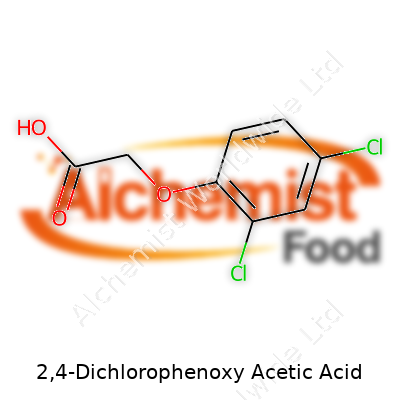
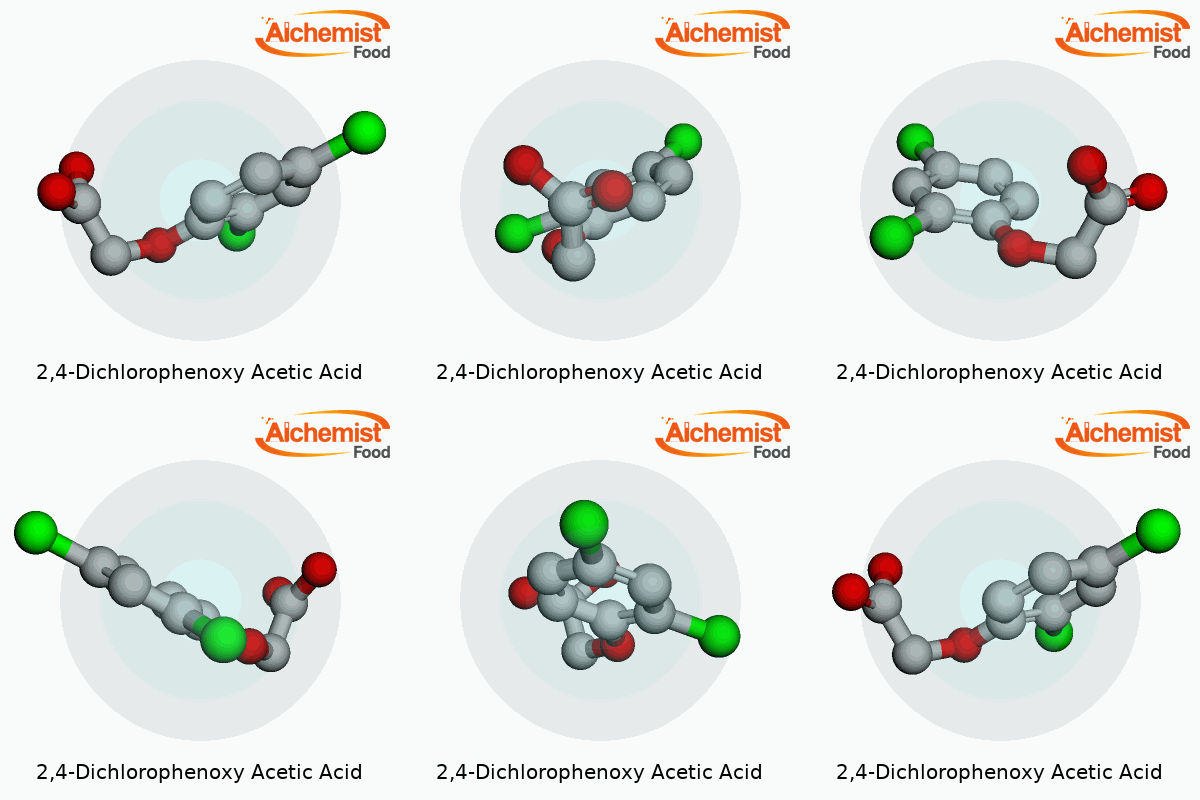
| Names | |
| Preferred IUPAC name | 2-(2,4-dichlorophenoxy)acetic acid |
| Other names |
2,4-D 2,4-Dichlorophenoxyacetic acid Dichlorophenoxyacetic acid Planクーラー Weedone Acetic acid, (2,4-dichlorophenoxy)- |
| Pronunciation | /daɪˌklɔːroʊ.fɪˈnɒksi əˈsiːtɪk ˈæsɪd/ |
| Preferred IUPAC name | 2-(2,4-dichlorophenoxy)acetic acid |
| Other names |
2,4-D 2,4-Dichlorophenoxyacetic acid 2,4-Dichlorophenoxyethanoic acid Dichlorophenoxyacetic acid Planavin Weedone |
| Pronunciation | /ˌtuː.faɪv.daiˌklɔːr.oʊ.fəˈnɒk.si.əˈsiː.tɪk ˈæs.ɪd/ |
| Identifiers | |
| CAS Number | 94-75-7 |
| Beilstein Reference | 1908736 |
| ChEBI | CHEBI:1486 |
| ChEMBL | CHEMBL220 |
| ChemSpider | 5378 |
| DrugBank | DB00738 |
| ECHA InfoCard | 03e41b34-3c72-4fa2-a441-2f46b22b08c2 |
| EC Number | 200-036-6 |
| Gmelin Reference | 77808 |
| KEGG | C06518 |
| MeSH | D004053 |
| PubChem CID | 2793 |
| RTECS number | AG6825000 |
| UNII | E8U8JF5F1G |
| UN number | UN3077 |
| CAS Number | 94-75-7 |
| Beilstein Reference | 136299 |
| ChEBI | CHEBI:2766 |
| ChEMBL | CHEMBL1426 |
| ChemSpider | 6194 |
| DrugBank | DB00190 |
| ECHA InfoCard | 03c0ae66-0547-4ff1-93a5-355f6b6db13a |
| EC Number | 204-026-5 |
| Gmelin Reference | 76608 |
| KEGG | C06535 |
| MeSH | D004046 |
| PubChem CID | 3077 |
| RTECS number | AG6825000 |
| UNII | 9DLQ4CIU6V |
| UN number | UN2765 |
| Properties | |
| Chemical formula | C8H6Cl2O3 |
| Molar mass | 221.04 g/mol |
| Appearance | White to off-white crystalline powder |
| Odor | Odorless |
| Density | 1.563 g/cm³ |
| Solubility in water | 0.63 g/L (20 °C) |
| log P | 2.81 |
| Vapor pressure | 1.48 x 10^-7 mmHg (25°C) |
| Acidity (pKa) | 2.73 |
| Basicity (pKb) | pKb: 11.27 |
| Magnetic susceptibility (χ) | -60.7·10⁻⁶ cm³/mol |
| Refractive index (nD) | 1.545 |
| Dipole moment | 2.21 D |
| Chemical formula | C8H6Cl2O3 |
| Molar mass | 221.04 g/mol |
| Appearance | White to light tan crystalline powder |
| Odor | Phenolic odor |
| Density | 1.563 g/cm³ |
| Solubility in water | 0.62 g/L (20 °C) |
| log P | 2.81 |
| Vapor pressure | 1.4 × 10⁻⁷ mmHg (25°C) |
| Acidity (pKa) | 2.73 |
| Basicity (pKb) | pKb: 3.13 |
| Magnetic susceptibility (χ) | -84.9·10^-6 cm³/mol |
| Refractive index (nD) | 1.545 |
| Viscosity | Viscous liquid |
| Dipole moment | 2.11 D |
| Thermochemistry | |
| Std molar entropy (S⦵298) | 208.2 J·mol⁻¹·K⁻¹ |
| Std enthalpy of formation (ΔfH⦵298) | -230.1 kJ/mol |
| Std enthalpy of combustion (ΔcH⦵298) | -1619 kJ/mol |
| Std molar entropy (S⦵298) | 247.1 J·mol⁻¹·K⁻¹ |
| Std enthalpy of formation (ΔfH⦵298) | -353.7 kJ·mol⁻¹ |
| Std enthalpy of combustion (ΔcH⦵298) | -1295.5 kJ/mol |
| Pharmacology | |
| ATC code | Q601 |
| ATC code | 'QH01BA02' |
| Hazards | |
| Main hazards | Health hazard, Environmental hazard |
| GHS labelling | GHS07, GHS05, GHS09 |
| Pictograms | GHS05,GHS07,GHS09 |
| Signal word | Warning |
| Hazard statements | H302, H315, H319, H351, H410 |
| Precautionary statements | P261, P264, P270, P271, P273, P280, P301+P312, P330, P391, P501 |
| NFPA 704 (fire diamond) | 2,4-Dichlorophenoxy Acetic Acid: "2-2-0 |
| Flash point | 144 °C |
| Autoignition temperature | 140°C |
| Lethal dose or concentration | LD50 oral (rat): 639 mg/kg |
| LD50 (median dose) | 639 mg/kg (rat, oral) |
| NIOSH | XP9100000 |
| PEL (Permissible) | 10 mg/m3 |
| REL (Recommended) | 1.01 mg/m³ |
| IDLH (Immediate danger) | 50 mg/m3 |
| Main hazards | Harmful if swallowed, causes serious eye irritation, may cause respiratory irritation, toxic to aquatic life with long lasting effects |
| GHS labelling | GHS07, GHS09 |
| Pictograms | GHS05,GHS07,GHS09 |
| Signal word | Warning |
| Hazard statements | H302, H315, H317, H318, H400 |
| Precautionary statements | P261, P264, P270, P272, P273, P280, P301+P312, P302+P352, P304+P340, P305+P351+P338, P312, P330, P332+P313, P337+P313, P362+P364, P403+P233, P405, P501 |
| NFPA 704 (fire diamond) | 2,4-Dichlorophenoxy Acetic Acid NFPA 704: "2-2-0 |
| Flash point | 144 °C |
| Autoignition temperature | > 215°C |
| Lethal dose or concentration | LD50 oral (rat): 639 mg/kg |
| LD50 (median dose) | 639 mg/kg |
| NIOSH | SN1575000 |
| PEL (Permissible) | 10 mg/m3 |
| REL (Recommended) | 10 mg/m³ |
| IDLH (Immediate danger) | 25 mg/m3 |
| Related compounds | |
| Related compounds |
2,4-Dichlorophenol 2,4-Dichlorophenoxyacetic acid (2,4-D) MCPA (2-methyl-4-chlorophenoxyacetic acid) 2,4,5-T Dicamba Picloram Triclopyr |
| Related compounds |
2,4-Dichlorophenoxyacetic acid sodium salt 2,4-Dichlorophenol MCPA (2-methyl-4-chlorophenoxyacetic acid) 2,4,5-Trichlorophenoxyacetic acid (2,4,5-T) Dicamba Mecoprop (MCPP) |



